
This Massachusetts Hole-In-The-Wall Still Makes Clam Chowder The Old-School Local Way
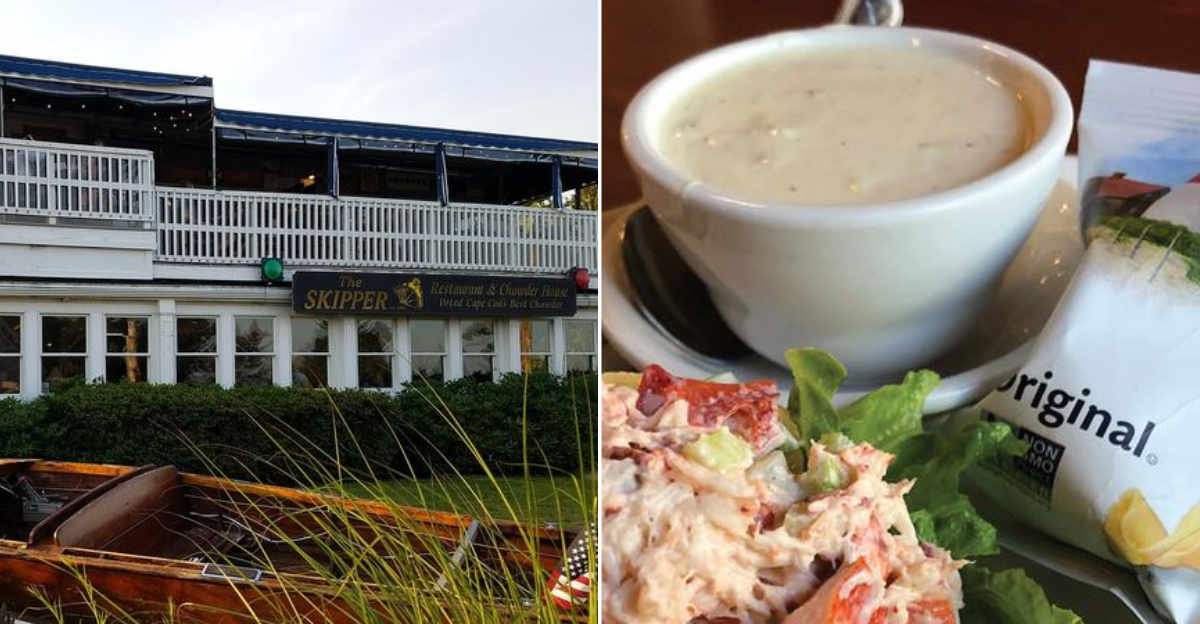
Cape Cod hides its best comfort in the quiet corners, and the bowl I keep thinking about comes from a low-slung spot that feels like it’s been waiting for you since childhood. The Skipper Restaurant and Chowder House in South Yarmou
th has been ladling out New England clam chowder since 1936, and the first spoonful hits with that unmistakable mix of cream, brine, and patience. I remember stepping onto the deck and hearing the ocean before I even sat down, the kind of moment that makes you slow your breathing a little.
Inside, the recipe speaks louder than the room, steady seasoning, tender clams, no shortcuts in sight. If you want the Cape at its most honest, this is where you pull up a chair.
White-Clapboard Cape Cod Shack On South Shore Drive
The Skipper Restaurant and Chowder House sits on South Shore Drive like a postcard that refused to age. White clapboard, blue trim, a shingled roof, and a proudly simple façade announce the priorities: chowder first, everything else second.
Locals park nose-first and walk in with sandy flip-flops, proof that this is a beach stop as much as a restaurant. The proximity to Nantucket Sound isn’t just scenery; it sets the tempo of the meal. You’ll feel the breeze, smell the salt, and understand why a straightforward, well-made chowder belongs here.
The building’s modesty is the tell. No flashy reinventions, only consistency. It’s the Cape Cod shack archetype, where regulars don’t need to look at the menu to know what’s coming in the bowl.
Triple Crown Award-Winning Cape Cod Clam Chowdah
Skipper’s chowder isn’t just beloved; it has receipts. Their “Triple Crown” wins at Cape Cod’s Chowderfest competitions are displayed with the kind of quiet pride you expect from a veteran.
What matters is how those awards translate in the spoon: balanced brine, clam sweetness, gentle cream, and a clean finish that makes you go back without thinking. There’s no theatrics, only calibration. The kitchen understands that chowder lives or dies in small decisions, potato size, bacon restraint, clam cut.
Here, the trophies are really shorthand for predictability. When a place wins repeatedly, it means you can show up on any Tuesday and get the same steady excellence. The accolades hang on the wall; the proof floats in the bowl.
Creamy Broth That Stays Light, Not Gloppy
The first thing you notice is texture. Skipper’s chowder coats the spoon but slips right off; no paste, no cling, no “stew” heaviness. That takes discipline: controlled roux, patient simmering, and enough dairy to round edges without muting the clams.
The broth is silk, not glue. It lets pepper, thyme, and the natural salinity breathe. You can finish a full bowl and still feel like a walk on the beach afterward, not a nap in the car. Achieving this lightness is surprisingly technical, and it’s where many shops wander off course.
Here, they keep the dial at “comforting” instead of “overstuffed,” which makes the final spoonful as good as the first. It’s cream-forward, sure, but never a shortcut for flavor.
Tender Local Clams In Every Spoonful
Clam presence at Skipper isn’t a lottery, it’s a guarantee. Chopped local quahogs appear in consistent bites, not rubbery pebbles or phantom flecks. They’re cooked just to tenderness, so they keep their briny snap without turning tough.
The kitchen respects the clam’s voice: clean, oceanic, slightly sweet. Potatoes play backup, cut to a size that matches the clam pieces for even spoonfuls. You taste Cape Cod in a way that’s specific, not generic. The clams don’t wrestle the broth; they harmonize with it.
That balance comes from sourcing and restraint, two words that sound boring until you’ve had chowder where either goes wrong. Here, it goes right enough that you’ll pause mid-meal and think: this is exactly the point.
Oyster Crackers Served The Only Right Way
There’s a ritual to Skipper’s oyster crackers that feels downright ceremonial. They arrive simple, fresh, and crisp, not stale, not buttered, and certainly not flavored into distraction. You scatter them with a light hand so they soften at the edges but still crunch.
A few get a pepper snowstorm; a few sink nobly. The point is texture contrast, not filler. Eating chowder here without crackers would be like skipping the first verse of a favorite song, technically allowed, emotionally wrong.
And yes, the servers will clock if you dump the entire ramekin in at once. Take it slow. Each handful is a small tide meeting warm shore, the kind of tiny pleasure that adds up to a perfectly tuned bowl.
Bread Bowl Chowder For The Full Classic Move
Order the bread bowl if you want the drama and the soak. Skipper’s version isn’t a gimmick—it’s a practical vessel with a crust sturdy enough to keep structure while the interior turns custardy with broth. The chowder seeps into the crumb so each torn piece becomes a bonus course.
Timing matters: eat the lid first, then chase the edges as they soften. It’s a satisfying, hands-on way to lean into the old-school spirit, especially after a breezy beach walk. Purists may prefer porcelain, but the bread bowl feels like Cape comfort you can hold.
By the last bites, you’ve effectively eaten the bowl, which is exactly the kind of thrift that made chowder a staple in the first place.
“Fried” Clam Chowdah Cakes As A House Quirk
Chowder cakes shouldn’t work, and yet here we are. Skipper molds their chowder into patties, gives them a careful fry, and produces something like a croquette that tastes like a wink to tradition.
The outside is crisp; the inside murmurs familiar clam-and-cream comfort. It’s a clever detour that never feels novelty-first because the seasoning matches the bowl’s profile. Order them as a shareable warm-up before the main chowder, or as a textural counterpoint for a platter.
The trick is restraint, enough crunch to intrigue, not so much to overshadow. It’s the only moment of mischief on an otherwise classic map, and it works because the map is so well drawn. Locals grin; first-timers get converted.
Ocean-View Deck Looking Out On Nantucket Sound
Few chowders come with a view that literally explains their flavor. Skipper’s deck peers out over Nantucket Sound, where the air carries that mineral-salt clarity you taste in the bowl. On bright days, the horizon line is a ruler; on foggy ones, the water is a whisper.
Either way, outdoor tables turn a simple lunch into a small Cape ritual. You watch gulls conduct their usual negotiations while steam lifts from your soup. The deck isn’t fancy, but the proximity to the shoreline makes everything taste a shade more marine.
It’s the rare setting that earns the postcard without chasing it. Order, exhale, and let the ocean do a little seasoning of its own.
Nautical Dining Room Packed With Old Cape Photos
Inside, the dining room leans into maritime memory without feeling kitschy. Weathered wood, rope details, and historic Cape Cod photographs pull you into a timeline where chowder has always been the sensible answer.
The décor whispers context: working boats, wind-worn piers, families in summer stripes. It’s the aesthetic equivalent of a warm chowder hug, unpretentious, reassuring, and grounded in local history. You can read a wall like a menu of Cape moods.
Sit, scan, and you’ll understand why the kitchen cooks like it does: steady hands, traditional choices, no need to show off. The room invites a second bowl, or at least a slow pace that lets your spoon keep time with the tide photos hanging beside you.
Shoulder-Season Visits When The Coast Goes Quiet
If you can swing it, go in the shoulder season, late spring or early fall, when the Cape exhales. Parking gets easier, the deck feels calmer, and the chowder somehow tastes even more like comfort against a crisp breeze.
Locals reclaim their haunts, and conversations drift quieter, like low tide. It’s also when the kitchen cadence feels especially assured, unhurried but focused. You’ll notice details: how steam curls in cool air, how a warm bowl heats your hands just enough.
The whole experience becomes contemplative rather than celebratory. In a place founded in 1936, time stretches differently anyway; the shoulder season just makes that more visible. Plan a weekday lunch and let the quiet do its work.
Fisherman’s Platters For The Chowder Sidekick
Chowder is the headliner, but the fisherman’s platter plays the faithful opening act. A mix of whole-belly clams, scallops, haddock, and shrimp arrives in a golden crunch that complements the bowl’s creaminess. The key is contrast: hot, crisp edges followed by a spoon of silky broth.
Alternate bites and you’ll understand why locals pair them. The platter’s seasoning stays simple, letting the seafood speak without shouting. It’s the yin-yang of Cape eating, fry basket meet soup ladle.
If you’re sharing, keep the chowder in the center and rotate the forks like a lazy Susan of good decisions. Balance accomplished, appetite satisfied, you’ll wonder why more places don’t serve comfort in calibrated duets.
Families Treating Chowder Night Like A Tradition
At Skipper, chowder night is a ritual that spans ages: grandparents reminiscing about the 70s deck, kids learning the oyster-cracker toss, parents negotiating bites of fried clams. The rhythm is gentle, predictable in the best way.
Staff greet regulars by name, and newcomers are absorbed quickly into the pattern. What keeps people coming back is not novelty but trust, the certainty that a bowl will taste like last year’s bowl, and the year before that.
Traditions are made of reliable pleasures; this is one spooned into being. If you’re visiting, you’ll feel it, an ease that makes the meal feel less like dining out and more like returning to a chapter you’ve read many times, happily again.
Parking Lot That Fills Up Fast At Supper Time
There’s nothing metaphorical about the rush at supper: the lot fills quickly, and the people who know, plan. Arrive early or aim slightly off-peak for a smoother landing.
The upside of the bustle is energy, you feel the hum before you taste a spoonful. Hosts keep things moving, and turnover stays brisk without anyone feeling rushed. If you do wait, stroll toward the beach, inhale the onshore breeze, and consider your chowder order strategy.
The crowd is a barometer of reliability; locals don’t clog lots for mediocrity. When your table’s ready, the first sip will feel like winning a small lottery you wisely entered ten minutes ahead of the crowd.
Easy Stop On A Cape Cod Beach Day Loop
Plot your beach day around Skipper and everything clicks. Park for the sand in the morning, swim until hunger taps your shoulder, then swing over for chowder and a platter. It’s close enough to feel like an edible intermission rather than a detour.
Afterward, you can drift back to the beach or roll down the windows for a scenic drive along the shore. The menu is quick to land, which suits sandy schedules.
This is the Cape rhythm: sun, salt, soup, repeat. Your towel dries, your appetite resets, and the afternoon feels suddenly longer because you ate exactly what the coastline suggested. Efficiency never tasted so classic.