
This Massive Colorado Thrift Store Is A Treasure Hunt With Dirt-Cheap Price Tags
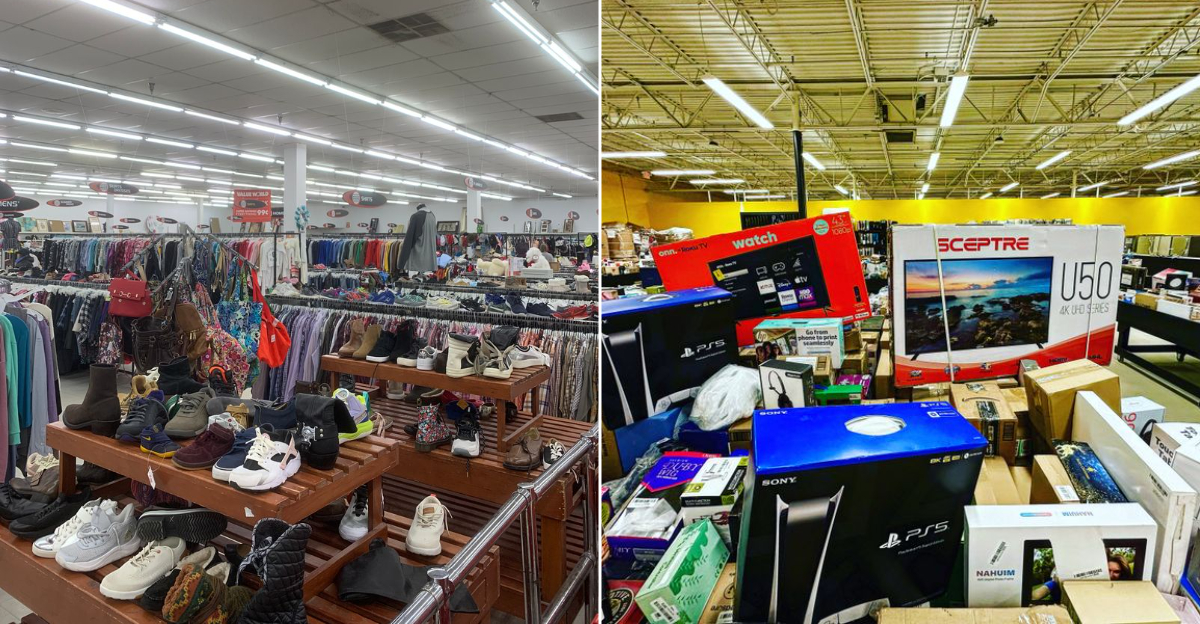
Walking into ARC Thrift Stores on South Academy Boulevard feels like discovering a treasure hunt where every aisle holds a surprise worth pausing for.
The prices immediately put you at ease, inviting you to browse slowly and enjoy the thrill of the find.
I wandered in on a weekend morning and quickly understood why locals show up early and stay awhile. The space is massive, making it easy to lose track of time among clothing racks, home goods, and furniture finds.
Every corner offers that maybe this is the one moment. Shopping here in Colorado feels both fun and meaningful.
Each purchase quietly supports programs that help people with disabilities across the state. The experience turns simple browsing into something that feels good long after checkout.
You leave with a full cart, a lighter wallet, and a sense that Colorado shopping can still surprise you.
Saturday Morning Madness
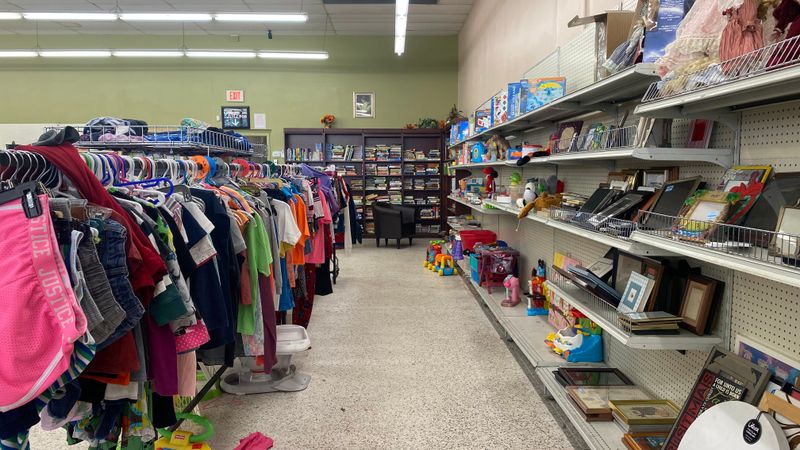
Saturday mornings at ARC transform the store into something resembling a friendly competition, with shoppers arriving before the 8 AM opening to snag the best deals during the legendary half-off sale. There is a quiet buzz in the air as people line up, coffee cups in hand, mentally mapping their first move before the doors unlock.
I watched the line wrap around to the middle of the store one weekend, carts already staged like runners at the starting line, yet the staff moved customers through checkout with impressive speed, turning what looked like a 30-minute wait into barely ten. That efficiency keeps the mood upbeat rather than tense.
The energy buzzes differently on Saturdays, with regulars trading tips about which sections just got restocked and newcomers quickly learning the color-coded tag system that rotates discounts throughout the week. It feels communal, almost instructional, like a shared ritual.
Every shopper seems to have a strategy, whether that means heading straight for furniture, scanning housewares, or making a beeline for the clothing racks before anyone else spots that perfect vintage jacket. The crowds might look intimidating at first glance, but everyone shares the same treasure-hunting spirit, turning the morning into a small adventure where patience, curiosity, and a little luck are all part of the fun.
The Color Tag Game
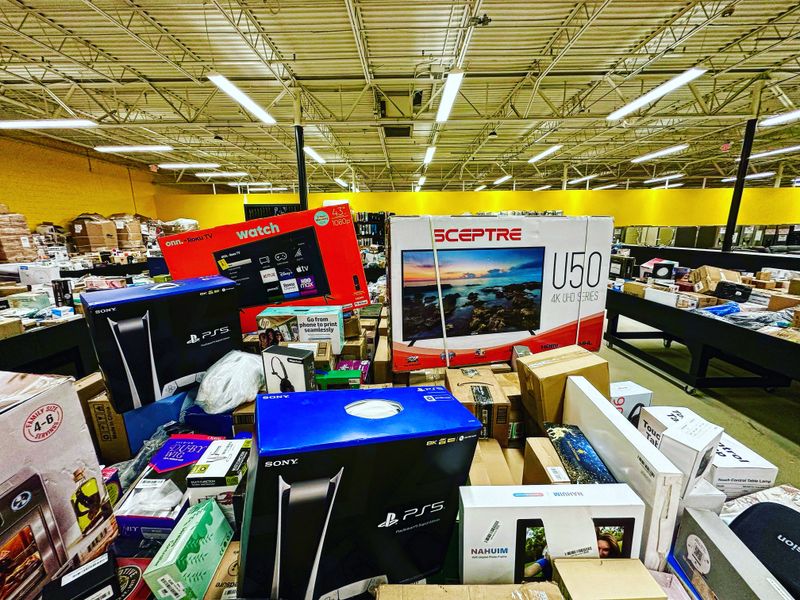
Each week brings a new color into the discount spotlight, quietly turning shopping into a strategic game where knowing which tag scores you 50% off makes all the difference. I learned quickly to check the signs near the entrance announcing the featured color before diving into the racks, a small pause that saves you from the particular disappointment of falling for a perfect sweater only to realize it is wearing next week’s discount tag.
That system reshapes how you browse. You slow down, notice patterns, and start thinking one step ahead instead of impulse-grabbing everything in reach.
The rotation keeps inventory moving while rewarding patient shoppers who are willing to wait for their wish-list items to cycle into the sale window. Staff members attach these colored tags to everything from chipped mugs to designer jeans, creating a rainbow effect across the store that somehow makes browsing more playful and focused at the same time.
You can spot the sale color from halfway down an aisle, which adds a quiet thrill to the hunt. Some shoppers build entire wardrobes by only buying items marked with the current discount color, treating it like a personal rule.
Others mentally note tags, planning return visits around future markdowns. Either way, the color system turns thrift shopping into a rhythm, part luck, part planning, and always a little satisfying when timing finally clicks.
Lemax Village Bonanza
Collectors hunting for Lemax Christmas villages strike gold at this location, where elaborate ceramic buildings that often retail for triple digits show up with price tags under $25 and the thrill is immediate. I spotted a detailed public library piece priced at $24.99 that would have easily cost three times that amount new, sitting casually on a shelf alongside churches, storefronts, and classic houses that come alive when arranged together into a winter scene.
There is something satisfying about finding these pieces outside the holiday rush, tucked between lamps and framed art, as if waiting for the right person to notice them. As the season approaches, the holiday section expands dramatically, but patient, year-round shoppers know the real finds can appear at any time.
Each village piece arrives in varying condition, so careful inspection becomes part of the ritual, checking rooflines, windows, cords, and accessories for chips or missing details before committing. That scrutiny slows you down in a good way and sharpens your eye.
Building a Lemax collection through thrift shopping turns into a long game, spread across multiple visits, with new pieces appearing unpredictably based on donation schedules rather than planned releases. The result is a collection shaped by luck, timing, and persistence, which somehow makes the finished village feel even more personal when it finally comes together.
Dishware Paradise
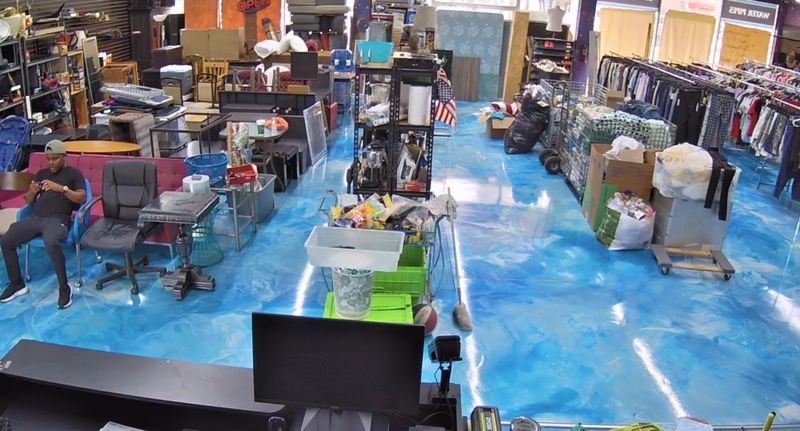
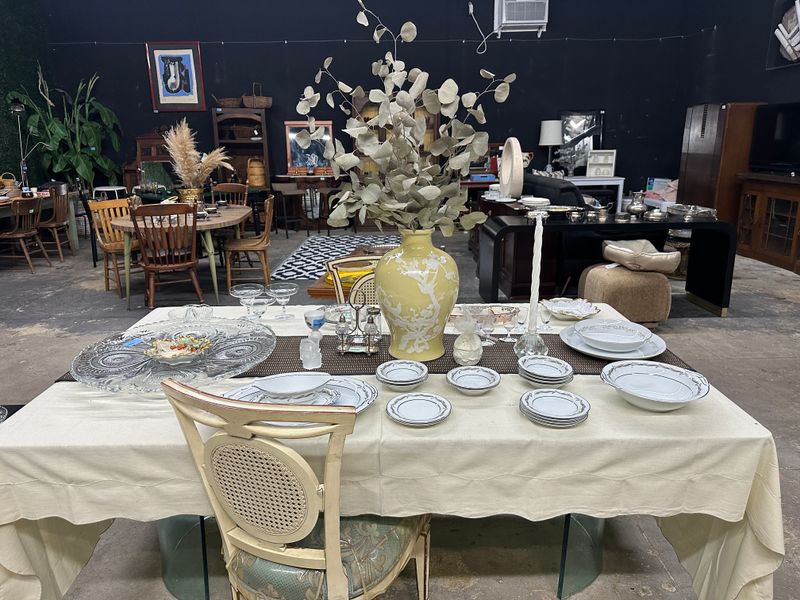
Furnishing an entire kitchen can cost less than a single department store dinner set when you shop the dishware aisles along the back wall, where shelves stretch wide with plates, bowls, and cups priced so low you might grab extras just in case. I picked up four matching coffee mugs for less than what one mug costs at a café, and nearby I watched another shopper build a full service for eight by mixing patterns that somehow came together in an intentionally eclectic way.
The selection shifts constantly as donations roll in, bringing everything from plain white everyday plates to vintage patterns that interior designers often charge a premium to track down. That variety makes browsing feel less like an errand and more like a quiet scavenger hunt.
Students outfitting their first apartments and families replacing chipped or broken pieces find equal value here, even if they are shopping for entirely different reasons. The hunt does require patience, since perfectly matching sets rarely arrive all at once, but that limitation becomes part of the charm.
Every visit reveals something new, making it worthwhile to stop in regularly if you need specific items or simply enjoy discovering dishware with a little history and personality.
Clothing Racks That Never End
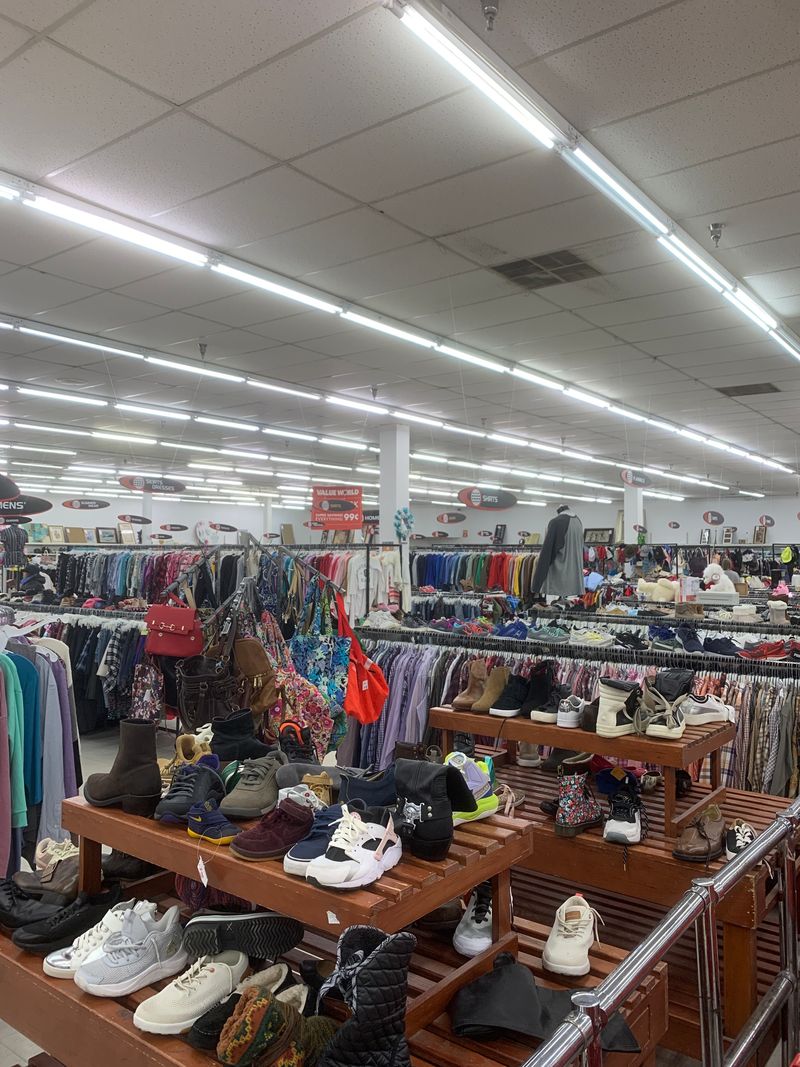
Navigating the clothing section requires stamina and strategy, with racks organized by size and type stretching across what feels like half the building and offering everything from basic tees to designer denim. The layout rewards patience, encouraging slow passes rather than quick scans, because the volume alone makes rushing a losing game.
I found True Religion and Miss Me jeans tucked neatly among the branded sections, a reminder that recognizable labels surface regularly if you keep moving. Prices on premium pieces can climb higher than strict budget shoppers expect, with some items tagged at $20 or more depending on condition, cut, and current demand, but the value still lands for those familiar with retail pricing.
The sheer scale means you can spend an hour just in the women’s section, flipping through blouses, dresses, and jackets without seeing the same piece twice, which makes every find feel earned rather than obvious.
Kids’ clothing occupies its own substantial area and becomes especially popular during the annual 99-cent sale, when parents load carts with jeans, shirts, and basics in multiple sizes to stay ahead of growth spurts. Changing rooms stay busy, particularly on weekends, with staff managing access through a doorbell system that can create short waits during peak hours.
Even with the crowds, the section runs on quiet determination, shoppers focused, arms full, confident that persistence usually pays off.
Furniture Finds With Character
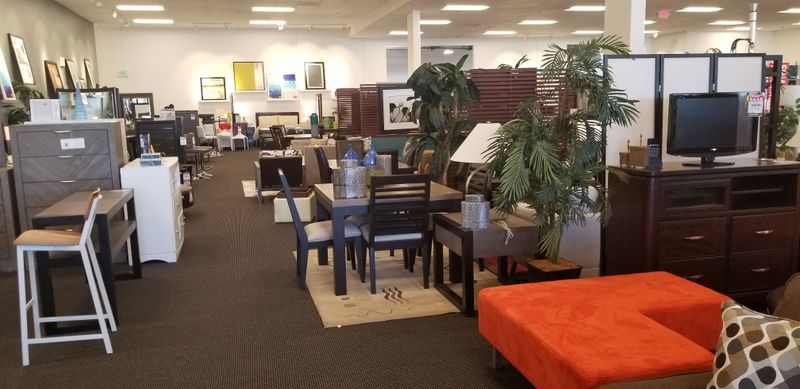
Couches, tables, and chairs fill a dedicated furniture area where every piece carries its own history, and browsing feels a little like walking through a rotating set of living rooms. Prices sometimes spark debate about whether used items should cost as much as they do here, especially when you pause long enough to picture the piece at home.
I noticed a comfortable-looking sofa that would have fit my living room perfectly, the kind you can already imagine sinking into at the end of the day, but the price tag gave me pause. It was one of those moments that makes you weigh patience against momentum, wondering if waiting for a sale day might be the smarter move.
The furniture selection depends entirely on weekly donations, which makes the inventory unpredictable and oddly exciting. One visit might lean mid-century modern, the next contemporary, farmhouse, or something delightfully odd that defies labels.
Serious furniture hunters learn quickly to stop in often, since good pieces move fast, especially during Saturday sales when prices drop by half and competition sharpens. Around the larger items, smaller finds like lamps, shelves, and accent tables cluster together, offering low-commitment ways to finish a room.
Even if you leave empty-handed, the hunt itself feels productive.