
This Michigan Bridge Is Closing To Cars On Labor Day So Thousands Can Walk Across It
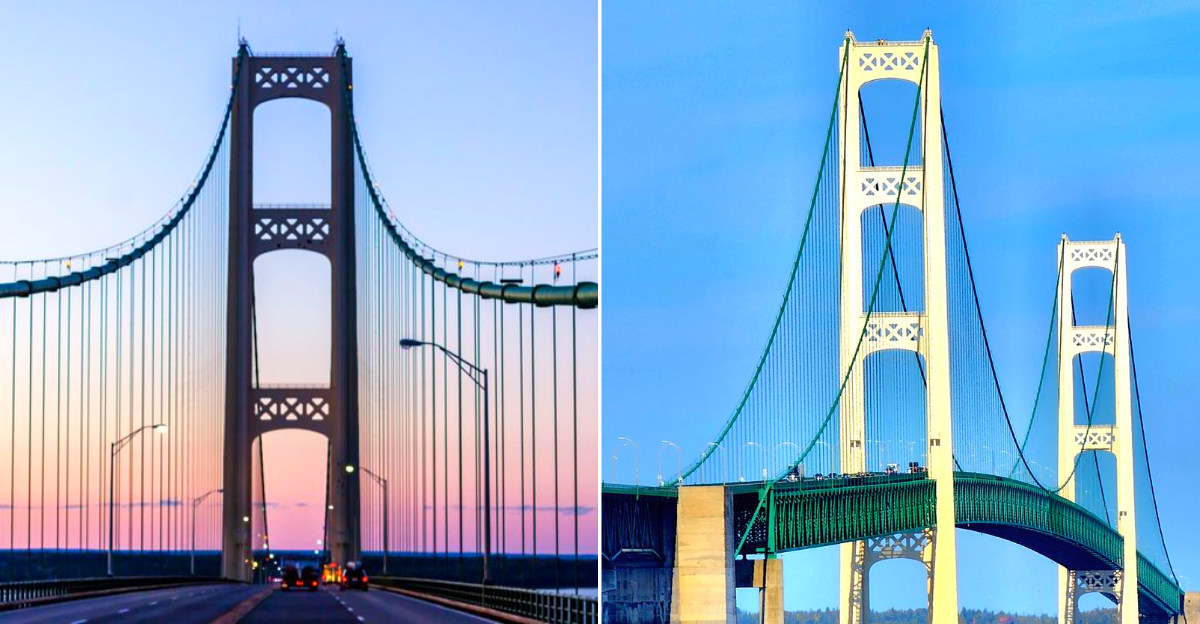
Northern Michigan does something wonderfully strange every Labor Day: one of its busiest landmarks goes quiet, the cars vanish, and thousands of walkers suddenly inherit the roadway.
For a few hours, a bridge normally experienced through a windshield becomes one enormous pedestrian lookout over the Straits of Mackinac.
The nearly five-mile crossing is beautiful, breezy, and just inconvenient enough to reward anyone who plans ahead. I would treat it less like a casual morning stroll and more like a tiny adventure involving layers, comfortable shoes, transportation logistics, and a respectful glance at the weather forecast.
Walking the Mackinac Bridge on Labor Day offers one of Michigan’s most memorable ways to experience the Straits of Mackinac on foot.
On September 7, 2026, the tradition returns, giving visitors rare access to the span between Mackinaw City and St. Ignace. The walk itself is simple.
Getting everything around it right takes a little more strategy.
Choose Your Route Before Starting
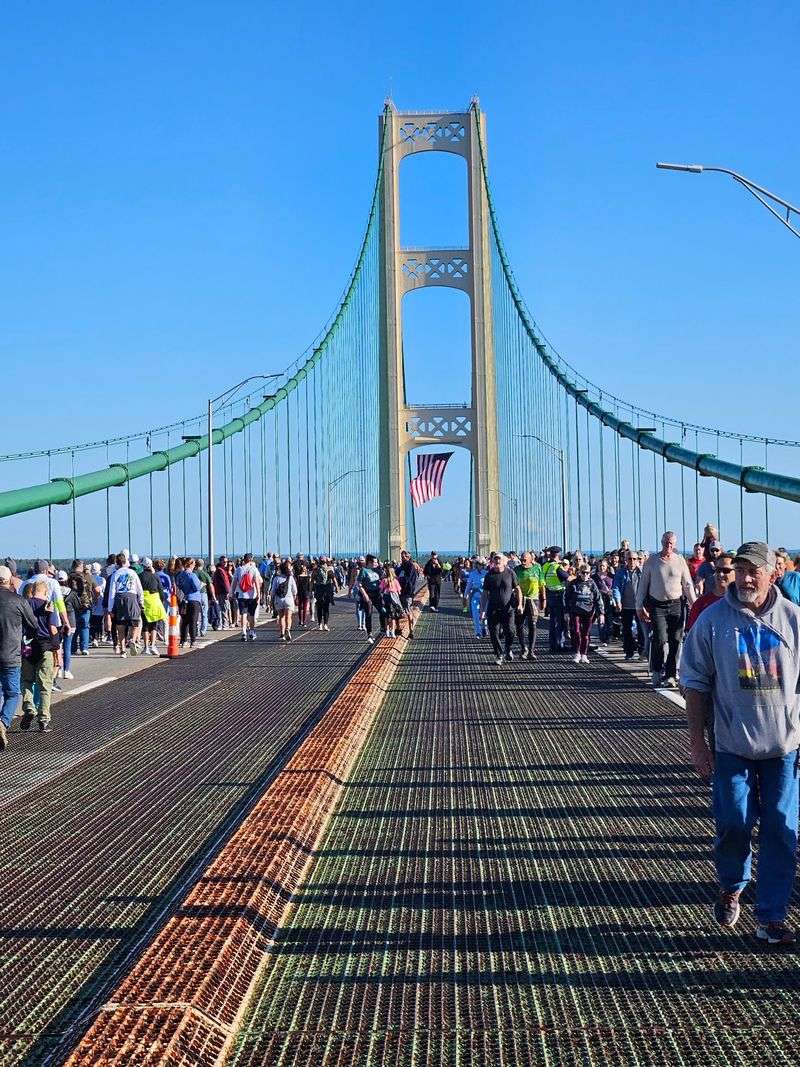
Five miles sounds simple until the opposite shoreline begins looking very far away. Walkers may start in Mackinaw City or St. Ignace, continue toward the midpoint, and return to the same community for a trip of up to five miles.
A full crossing also covers about five miles, but it leaves you on the other side with no official bus waiting to return you. Strong walkers can attempt the ten-mile Double Cross, provided they meet every timing checkpoint.
Decide before stepping onto the bridge, then tell everyone in your group the plan. Consider the slowest walker, expected weather, parking location, and how tired legs might feel later.
Changing direction is controlled by event deadlines, so spontaneous wandering is not a useful strategy on this particular morning for most visitors.
Respect The Midpoint Deadlines
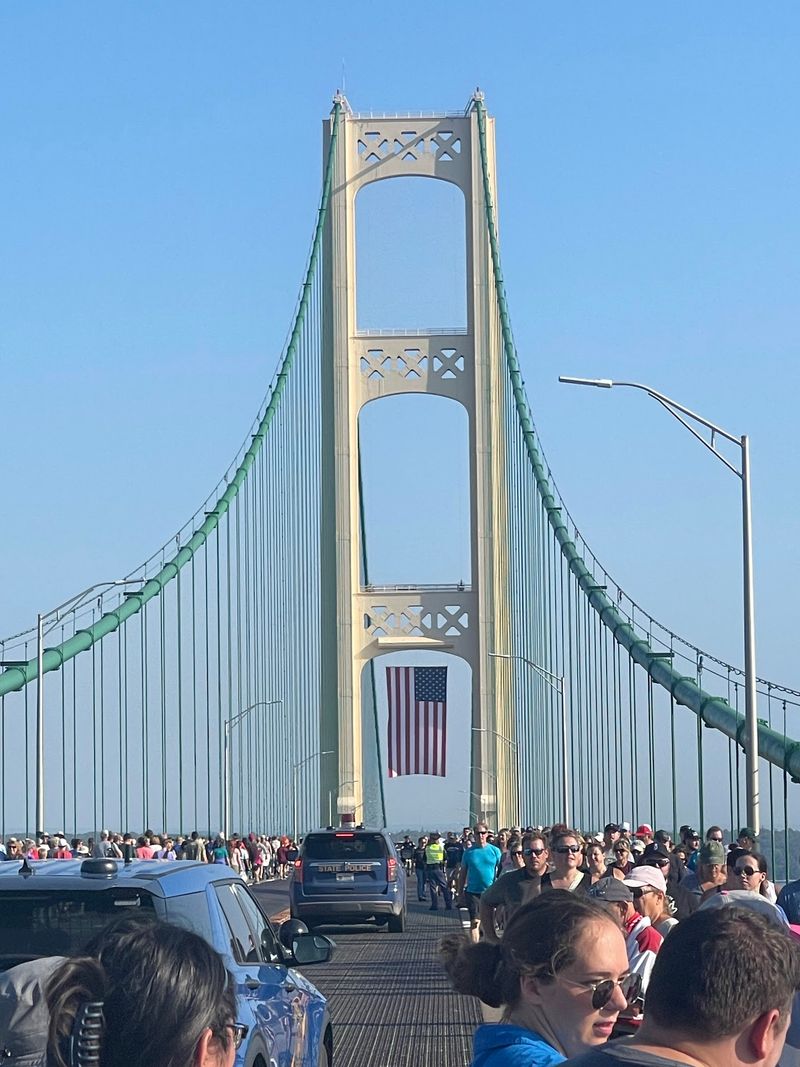
The clock matters almost as much as comfortable shoes during this event. Participants planning a halfway turnaround must be back on the side of the bridge where they intend to finish before 10 a.m., according to published walk procedures.
Anyone making a full crossing needs to reach the midpoint by 10 a.m. or may be directed back. Double Cross participants should begin promptly at 7 a.m., reach the opposite end by 9 a.m., and return to the midpoint by 10 a.m.
Those rules help officials clear the span before vehicle traffic resumes at noon. Keep moving steadily, save long conversations for shore, and follow every direction from bridge personnel.
Check the official 2026 schedule before departure because times and operating plans remain subject to confirmation.
Arrange Your Return In Advance
Finishing a full crossing brings a fine burst of pride, followed by one practical question: how do you get back? The event does not provide bus transportation across the Mackinac Bridge, so walkers must arrange their own return before starting.
Friends traveling separately can place vehicles on opposite sides, although bridge closure traffic makes careful coordination essential. Ferry services may offer connections involving Mackinaw City, St. Ignace, and Mackinac Island, but routes, tickets, schedules, and availability must be confirmed directly with each operator.
Do not assume a boat will be waiting or that space will remain on a busy holiday. Save reservation details, carry a charged phone, and choose a meeting point everyone can identify.
Planning first protects tired walkers from an unplanned travel puzzle afterward.
Dress For Two Different Mornings
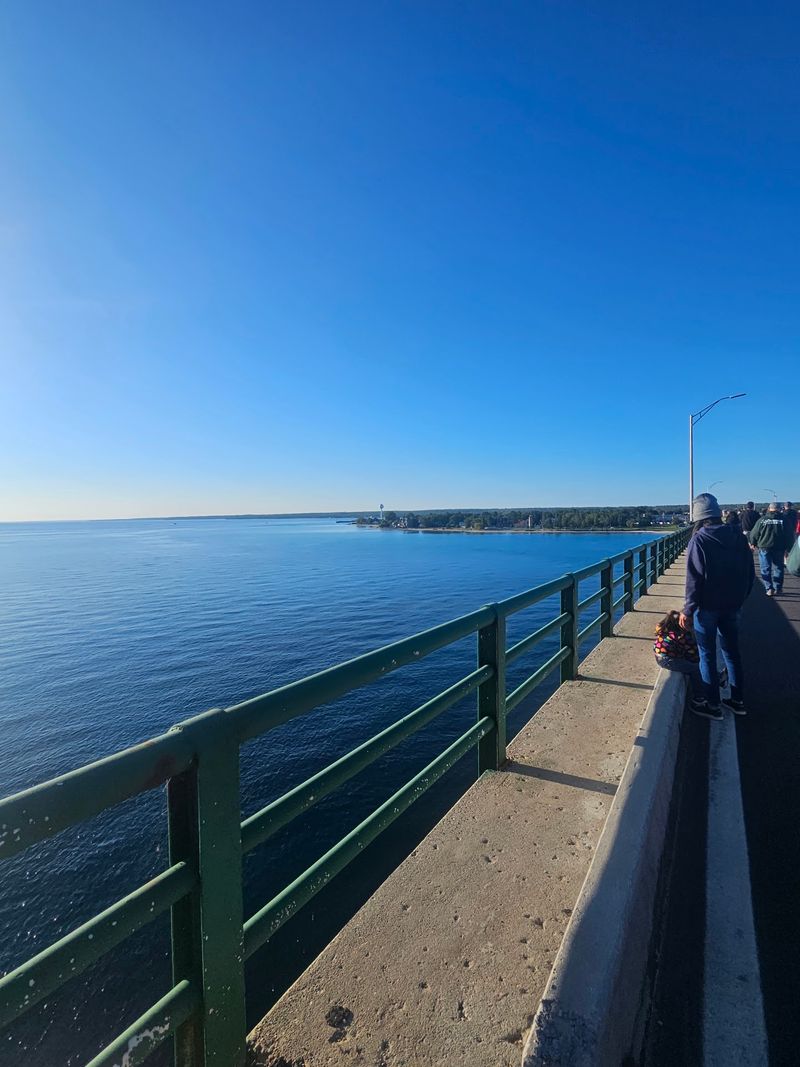
Cold air over the Straits can nip at your hands while bright sunlight promises a warmer finish. Wear light layers that can be removed and tied securely around your waist or stored in a small permitted bag.
A breathable shirt, comfortable outer layer, hat, and well-fitted walking shoes handle most early September conditions. Check the forecast for Mackinaw City and St. Ignace, since wind above open water may feel sharper than temperatures suggest.
Skip loose items that could blow away, and remember that umbrellas are prohibited during the walk. I prefer clothing with zipped pockets because keys and phones stay put when the bridge starts showing its breezier personality.
Sunscreen also belongs in the plan, even when dawn begins under gray clouds overhead.
Use Restrooms Before Stepping On
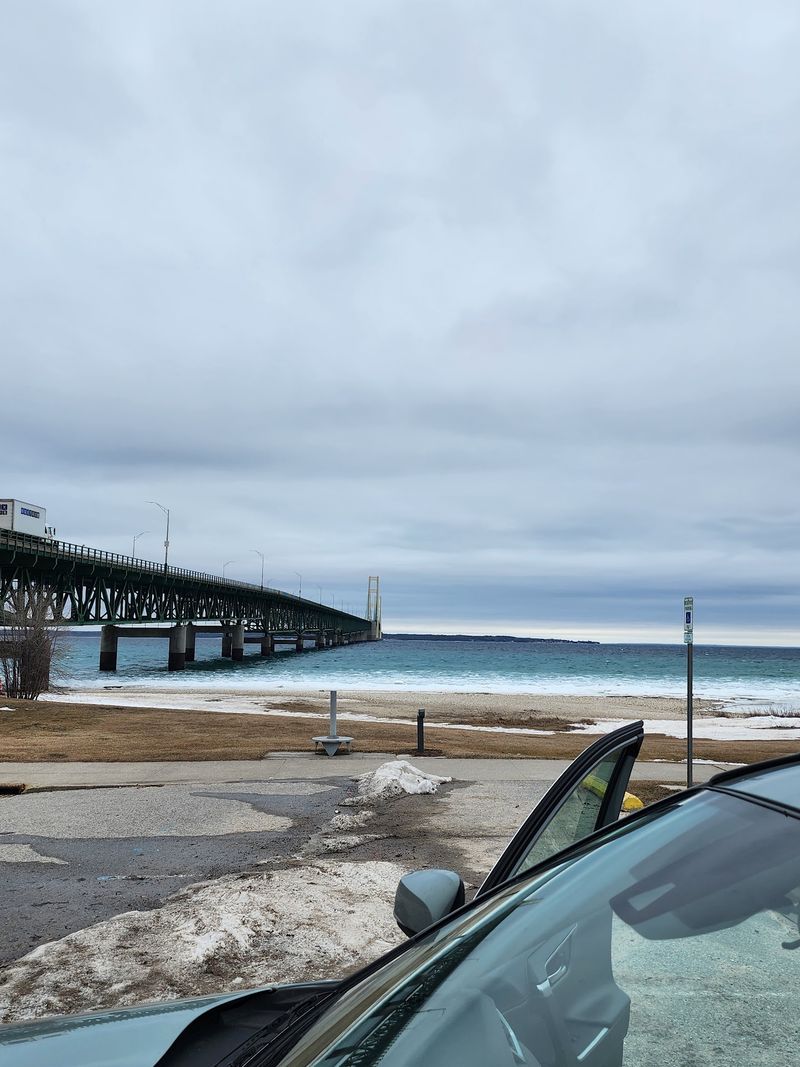
A nearly five-mile suspension bridge is an impressive place to walk, but it is not an impressive place to need a restroom. Portable toilets are provided at both ends during the event, while no restroom facilities are available directly on the span.
Use them before joining the flow of walkers, even if the line looks mildly discouraging. Families with children should make this stop part of their arrival routine rather than waiting for someone to announce an emergency near the midpoint.
Drink enough water to remain comfortable, but avoid suddenly consuming a huge bottle at the entrance. A typical full crossing takes roughly one and a half to two hours, depending on pace and congestion.
Small bits of planning keep the scenery, not your bladder, in charge.
Pack Light And Follow The Rules
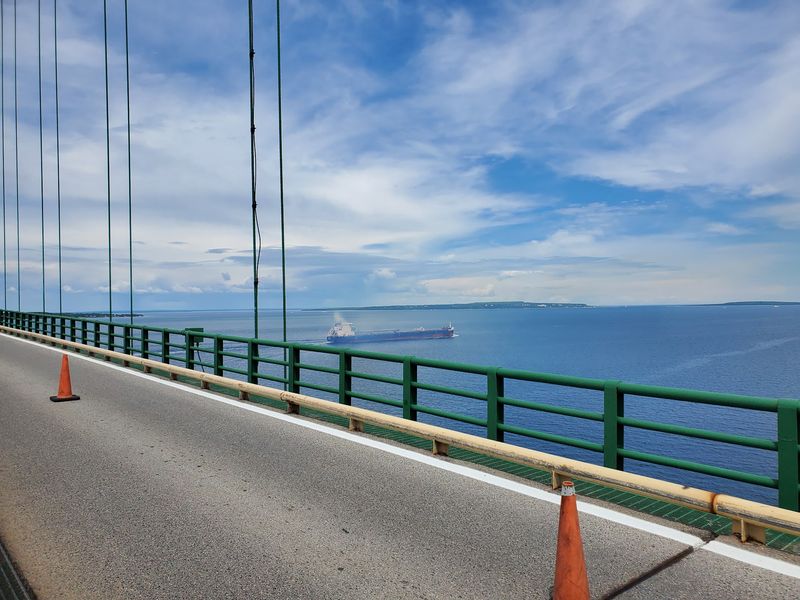
Bridge day rewards the traveler who can leave unnecessary gear behind. Signs, banners, umbrellas, bicycles, roller skates, skateboards, and wagons are among the items prohibited under the event’s published safety rules.
Only working service dogs are allowed, so pets need a safe plan elsewhere. Walkers use the left-hand outside paved lane from either starting point, while center lanes remain available for emergency vehicles and event operations.
Bring only essentials, such as identification, a charged phone, sunscreen, necessary medication, and modest water supplies permitted by current guidance. Strollers have traditionally appeared among family groups, but confirm the latest rules before assuming any wheeled item is accepted.
Staff instructions outrank personal preference, especially when thousands of people share one carefully managed route together that morning.
Prepare For Height And Open Water
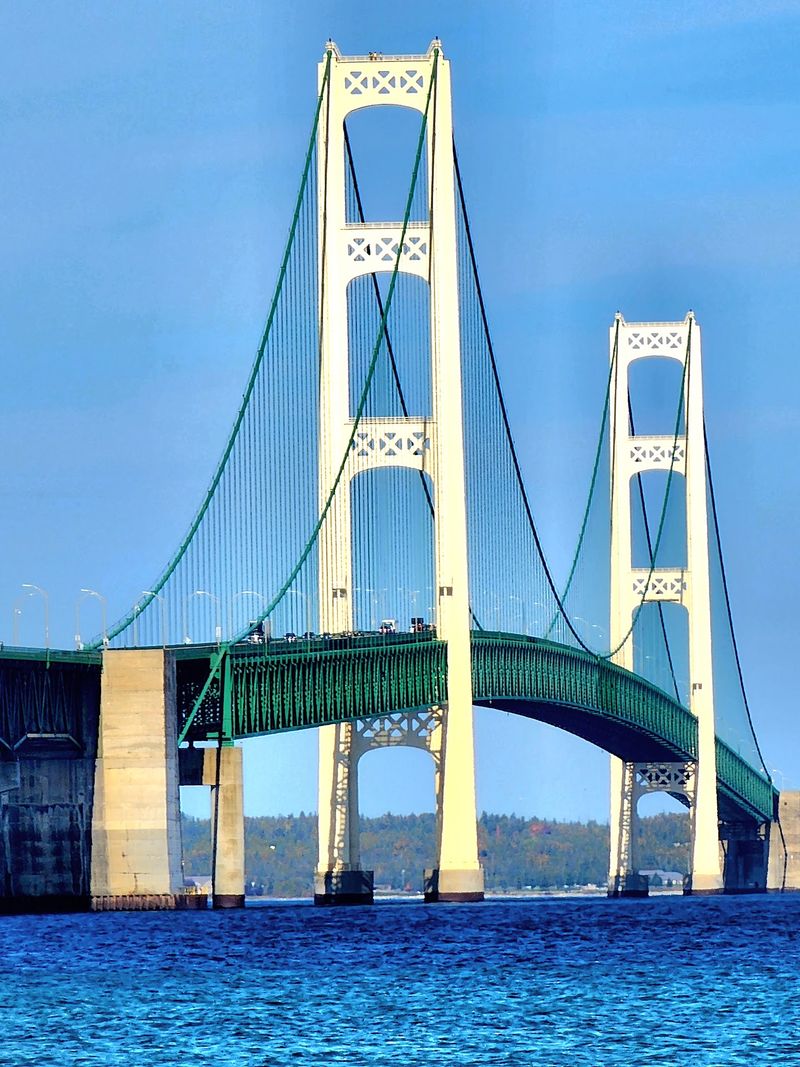
At the high point, the roadway sits roughly 200 feet above the water, and that fact feels more vivid on foot. Open views, moving clouds, wind, and glimpses through parts of the structure can unsettle visitors who dislike heights.
Stay in the assigned paved lane, look forward when necessary, and walk beside a steady companion. Slow breathing and ordinary conversation can make the scale feel manageable without blocking other participants.
The bridge was designed for demanding northern weather, with huge towers, cables, trusses, and a suspended roadway working together. Still, personal comfort matters, and turning back before a timing cutoff can be the sensible choice.
Officials may adjust operations for conditions, so follow announcements rather than treating the crossing like an independent challenge.
Notice Where Two Great Lakes Meet
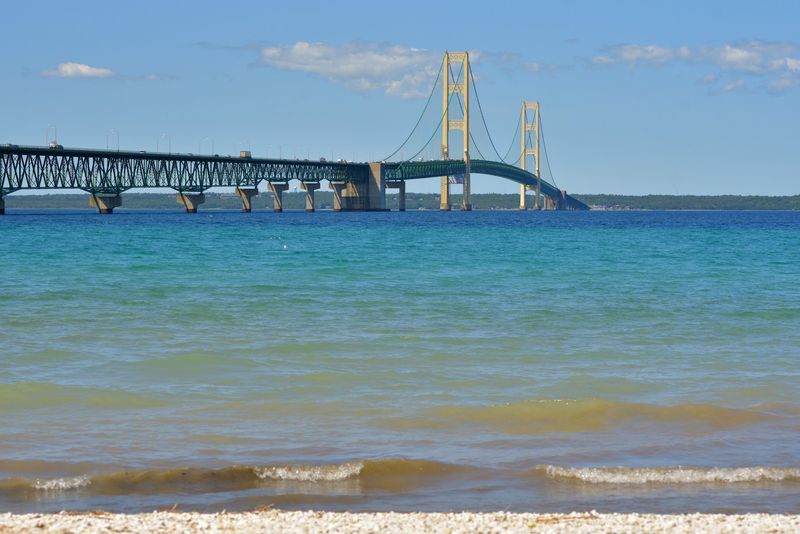
Few sidewalks offer Lake Michigan on one side and Lake Huron on the other. The Mackinac Bridge spans the Straits of Mackinac, where the connected waters spread toward broad horizons and islands appear in the distance under clear conditions.
Pause only where permitted and keep enough space for others to pass. Boats below can look wonderfully small, while the shoreline helps reveal how completely the bridge links Michigan’s Upper and Lower Peninsulas.
Morning light changes quickly here, shifting steel from gray to pale green and turning the water from slate to blue. Photographs are tempting, but watch your path and secure your phone against strong gusts.
Taking short looks in both directions often reveals more than one prolonged stop.
Look Up At The Engineering
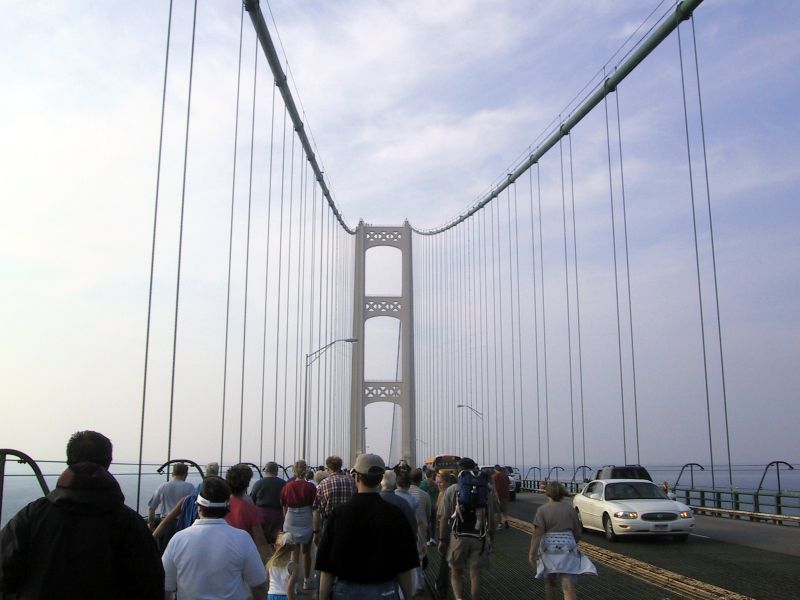
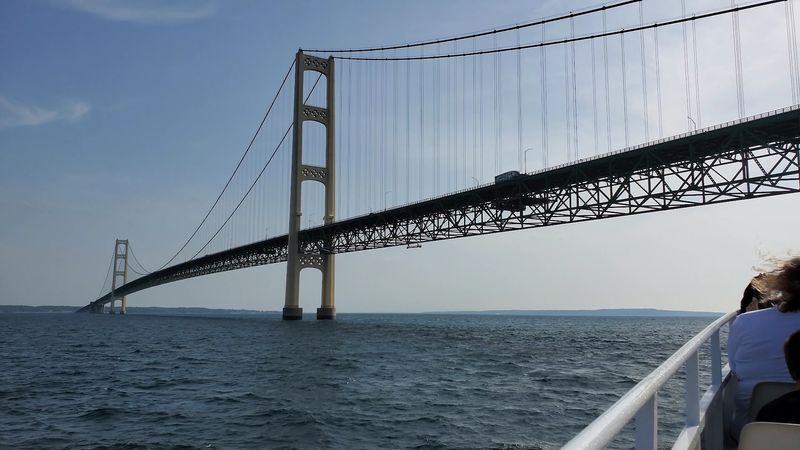
Two steel towers rise 552 feet above the water, making even a busy stream of walkers seem pocket-sized. Engineer David B.
Steinman designed the bridge, which opened to traffic on November 1, 1957, after about three and a half years of construction. Seeing those dimensions from the roadway gives the bridge a different scale entirely, especially when you remember how much water and open sky surround it.
The main cables contain thousands of miles of wire, and stiffening trusses help the suspended roadway handle changing forces. Looking upward from the pavement shows how cables curve between towers and transfer enormous loads with surprising visual grace.
Even people who normally glaze over at engineering diagrams may find themselves staring.
The annual walking tradition began soon after the bridge opened, eventually settling into Labor Day. Read about the structure beforehand, then identify its parts as you move.
Engineering becomes much less abstract when steel connections loom overhead, traffic noise disappears, and wind hums around them.
Plan For Traffic After Noon
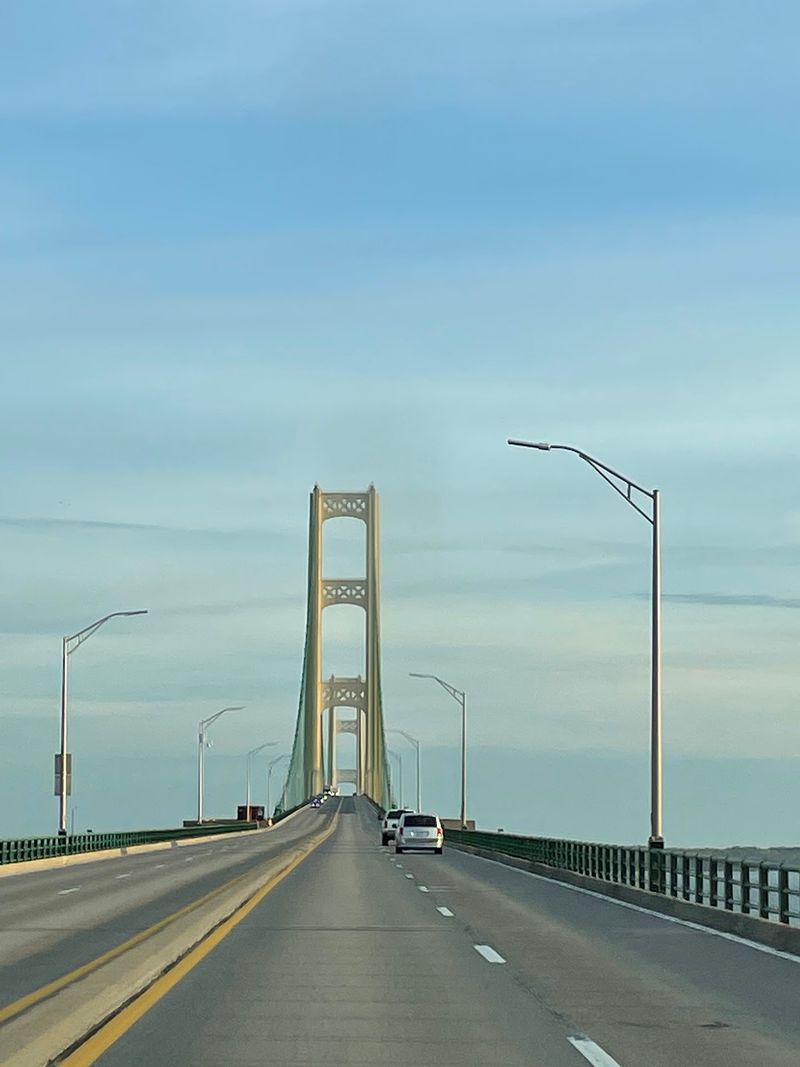
When noon approaches, the peaceful pedestrian route must return to its everyday job as a major highway link. Public vehicle traffic is scheduled to resume after the closure, but backups can develop on Interstate 75, nearby streets, and routes around both bridge communities.
Avoid building a tight afternoon schedule that depends on instant movement. Lunch, shoreline time, or a visit near the bridge can provide a pleasant buffer while traffic settles, provided parking rules and local access remain open.
Anyone driving should expect directions, lane controls, and possible delays as crews reset operations. Check live updates before leaving and keep extra travel time available.
The walk may finish at a clear line, but Labor Day transportation rarely ends with such tidy timing for everyone.