
This Michigan Bridge Offers One Of The Scariest Drives In The State
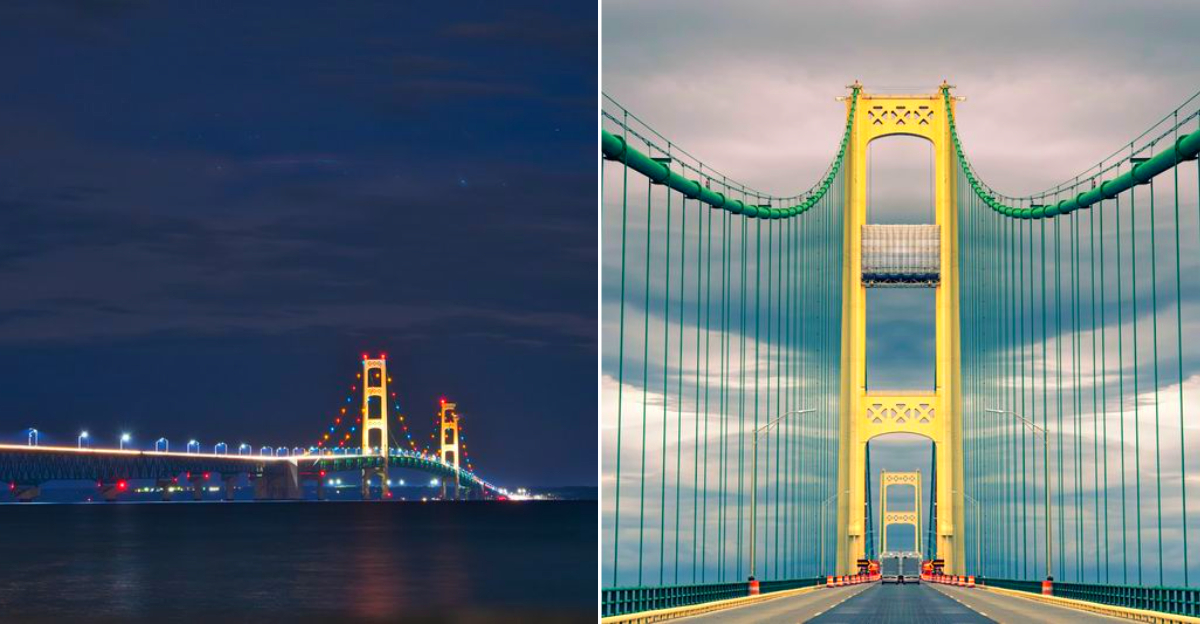
I’ll be the first to admit it: I am a world-class scaredy-cat. Give me a steep staircase or a particularly tall barstool and my palms start doing their own impression of a tropical rainforest.
But there is a specific, heart-in-throat ritual to crossing the five-mile stretch over the Straits that I simply can’t quit. As the towers sharpen against the sky and the deck rises, the water below shifts from a cold, industrial steel to a hauntingly beautiful tropical green.
I’ve white-knuckled that steering wheel more times than I care to count, but every gust of wind feels like a test of nerve that eventually rewards you with a view that is nothing short of spiritual.
Master your fear of heights with this essential guide, where legendary engineering meets breathtaking Great Lakes views.
Respecting the bridge means turning that shaky anxiety into a sharp, focused attention. By the time you reach the mid-point, the fear tends to dissolve into pure, unadulterated awe.
The First Glance From Shore
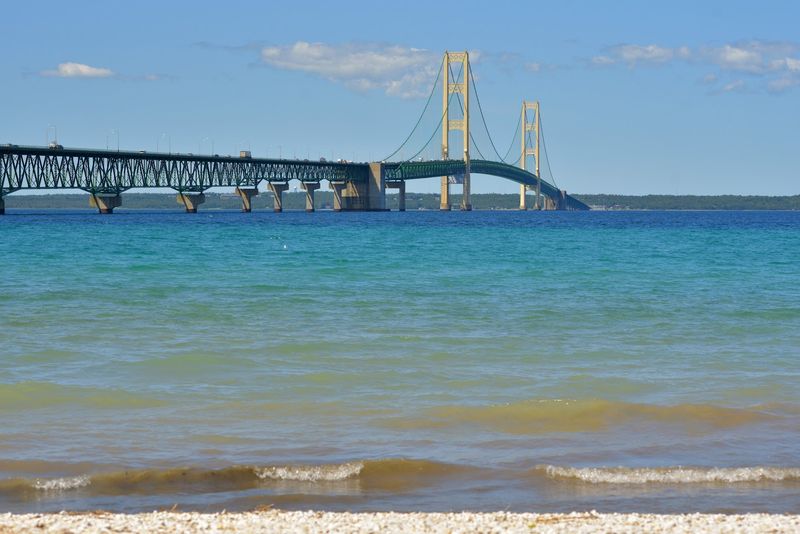
From the beaches in Mackinaw City and St. Ignace, the Mackinac Bridge looks both delicate and immovable. Water braids from Lake Michigan to Lake Huron, and freighters slide beneath that long green sweep.
The towers hold their shape against gulls and fast clouds, promising order where currents meet.
History feels near because this crossing replaced ferries in 1957, turning seasonal uncertainty into a fixed link.
Before driving up, watch the traffic and flags to judge wind, then set a simple intention for the five mile climb. Let the sight line steady you. A calm start on shore makes the height feel purposeful, not punishing, once those suspender cables begin to frame the sky. That small ritual matters.
The Mighty Mac: Michigan’s Five-Mile Marvel
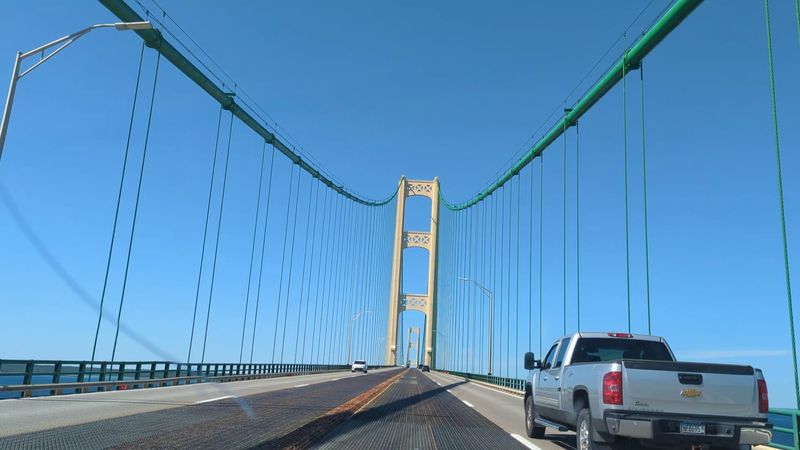
The Mackinac Bridge, affectionately known as the “Mighty Mac”, is an engineering icon that spans the Straits of Mackinac, where the waters of Lake Michigan and Lake Huron meet.
This five-mile suspension bridge is the longest in the Western Hemisphere between anchorages and serves as the literal and symbolic link between Michigan’s Upper and Lower Peninsulas.
Crossing this landmark is an essential Michigan experience, as the bridge carries I-75 directly between Mackinaw City to the south and St. Ignace to the north.
For those driving across, the toll is currently $4.00 per passenger vehicle (or $2.00 per axle), payable via cash, credit card, or the MacPass transponder.
If the height or the famous “open metal grates” on the inner lanes make you nervous, the Mackinac Bridge Authority even offers a legendary Drivers Assistance Program, where a staff member will drive your vehicle across for you.
Whether you’re heading north for a U.P. adventure or returning south, the journey begins at N415 I-75, St. Ignace, MI 49781.
Steel Grates Under Your Tires
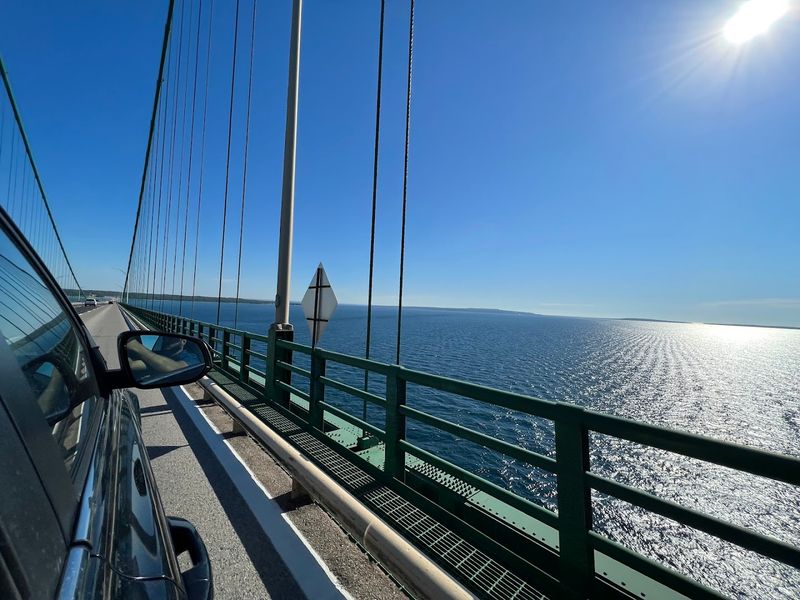
A quirk of the deck hides in plain sight: inner lanes use open steel grating that hums and gently squirms under your tires. The pattern can trigger a flutter if heights already press on your thoughts. Choose the outer paved lane if you prefer traditional traction and a bit more visual comfort.
The grates are there to reduce wind load and ice, a practical solution for a bridge spanning volatile water. Tires will wander a touch, which is normal. Hold steady inputs and let the car self correct.
If curiosity wins, try the grate for a short stretch, then switch back. Either way, the view through those geometric squares reminds you how far down the lakes breathe.
Towers, Cables, And Scale
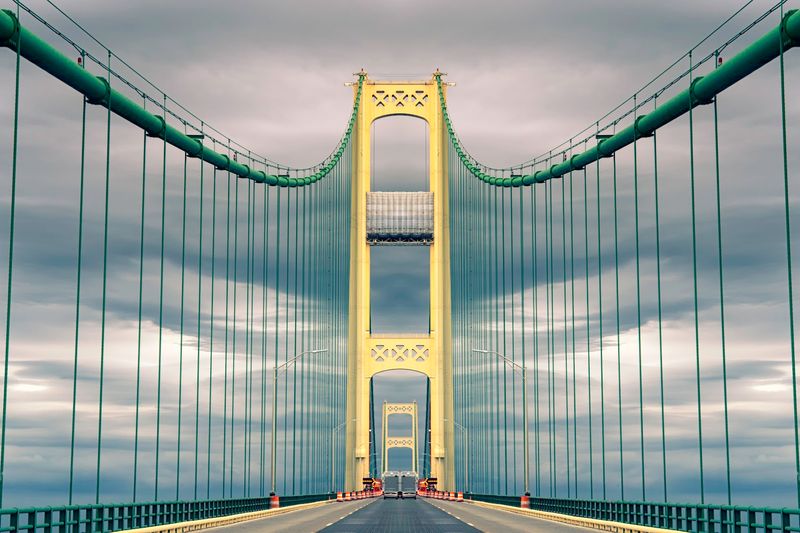
Look up when the towers arrive and the bridge suddenly frames the sky like a measured doorway. Riveted steel turns elegant at this scale, and cable bands make quiet stripes against blue. Passing beneath feels ceremonial, as if the Upper Peninsula were granting a careful welcome.
Completed in 1957 and designed under David B. Steinman, the Mackinac Bridge balanced ambition with northern weather realities. I like to count the suspenders as they sweep by, a trick that slows breathing without forcing it.
Tip for drivers and passengers alike: narrate one calm detail, then another. The mind follows. By the time daylight opens again, the immensity reads as structure, not threat, and the road continues with relief.
Choosing Lanes And Pace
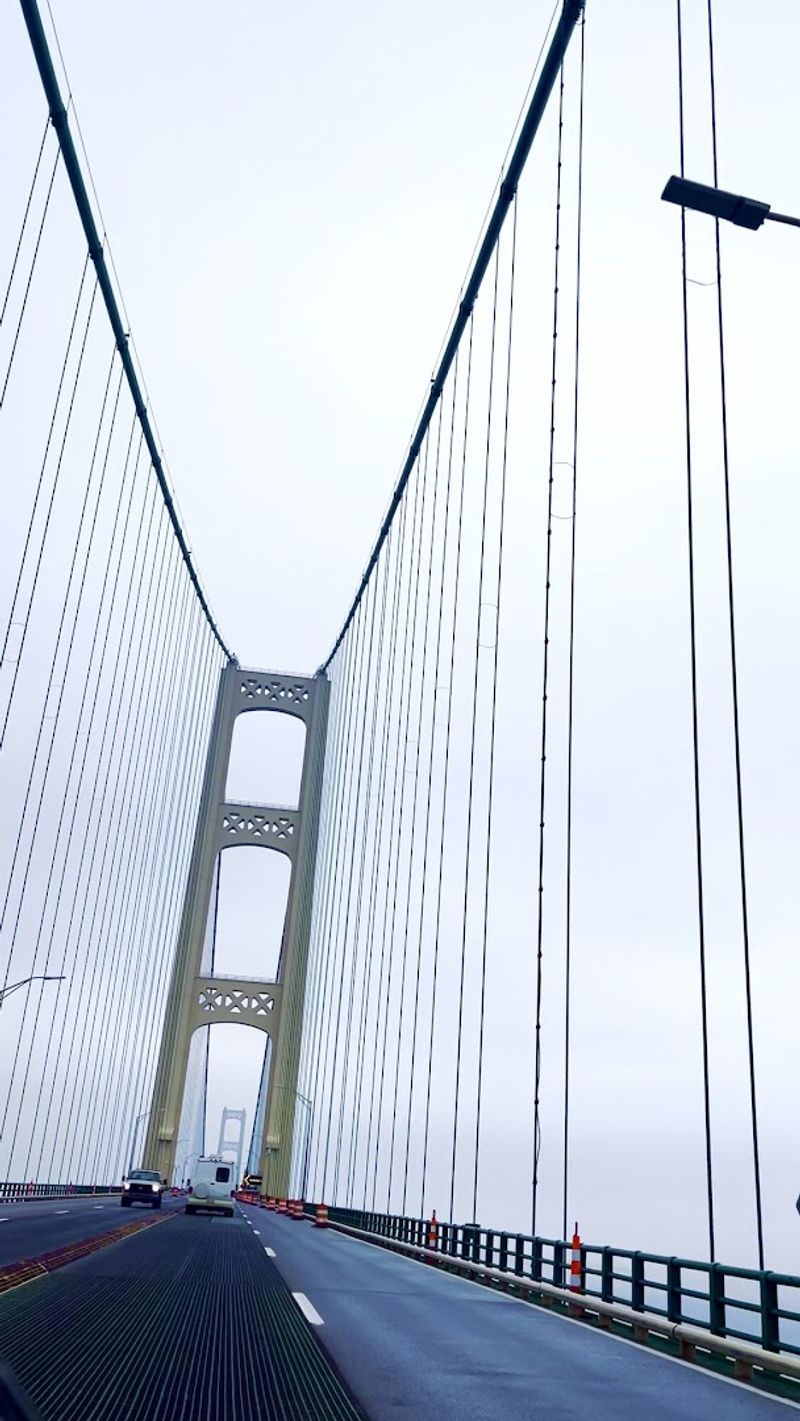
Starting in the right lane keeps merging simple near the tolls, but lane choice soon becomes about preference. Outer pavement offers opaque comfort, while inner grates trade that opacity for wind management.
Neither is wrong, and both move steadily when drivers avoid heroics. The posted limit is typically 45 mph for cars, and patrols make sure it holds. During restrictions, heavier vehicles may be guided at much lower speeds.
Keep pace with signage, signal early, and resist sudden braking. If someone rides your bumper, let them pass after the main span eases. Quiet predictability helps everyone breathe easier, and it is the difference between white knuckles and a steady, almost meditative five mile crossing. Stay smooth, stay readable.
Weather Windows And Fog
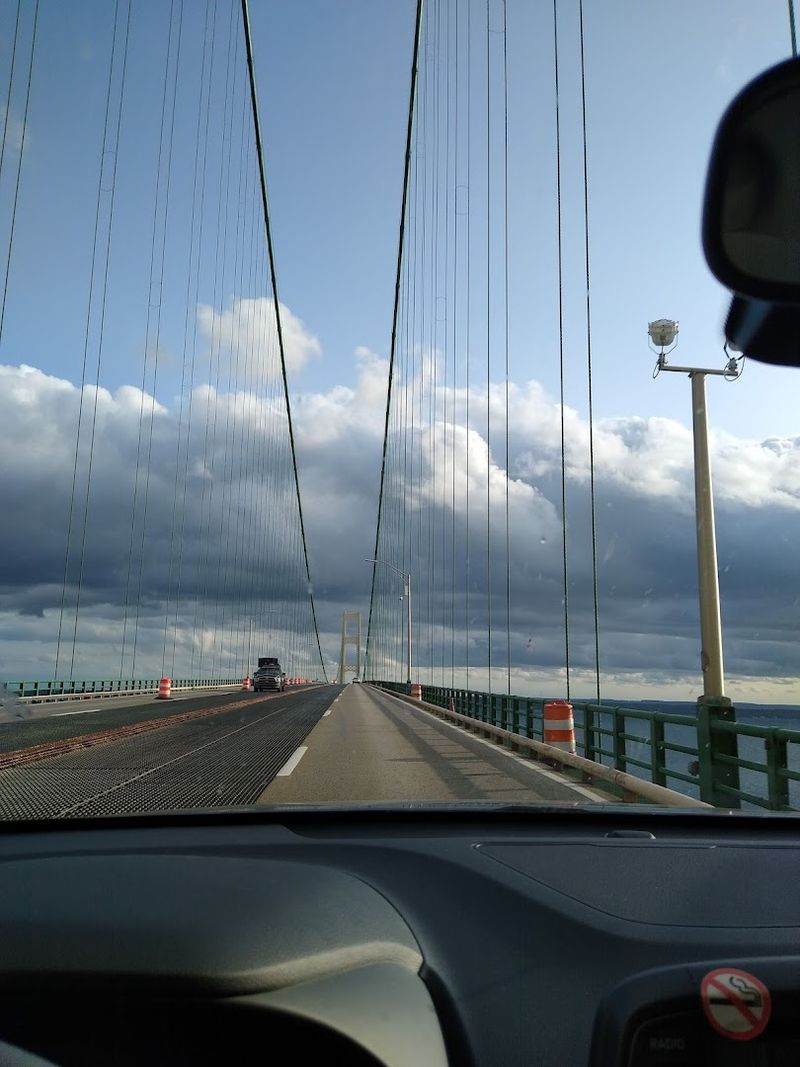
Fog can roll in from either lake like a curtain, shrinking distance until the towers feel imagined. Moisture beads on rails, horns echo, and color drains to two tones of gray and green. The bridge remains open unless conditions demand otherwise, but judgment matters long before closures.
Forecasts help, yet local weather changes fast across the Straits of Mackinac. Build a buffer in your schedule, and favor daylight if visibility is questionable. Use headlights, not brights, and trust the reflective lane markings. If it thickens, ease speed and add space.
The crossing is five miles, not forever. There is dignity in waiting out fog from a shoreline park and resuming when the horizon returns. You will thank patience later.
Night Crossings And Lights
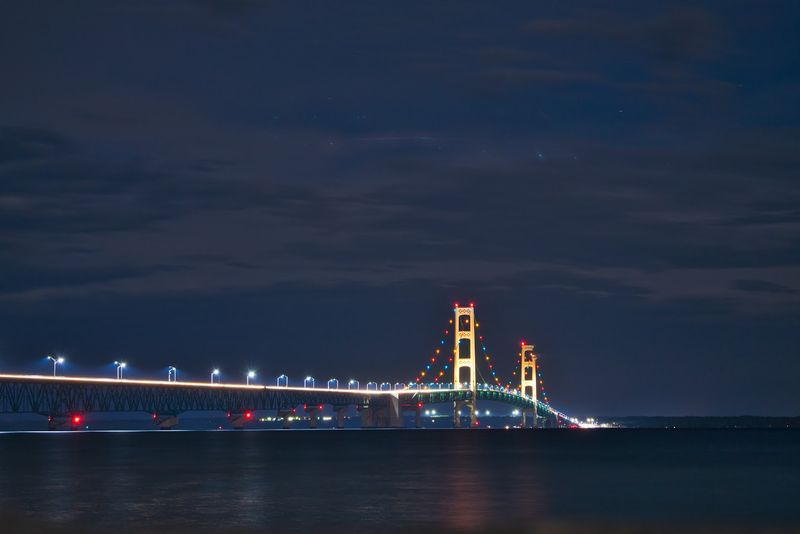
At night the bridge turns into a constellation, red aircraft beacons pricking the dark while navigation lights wink along the cables. Pavement smells colder, and the Straits feel wider without the context of shoreline barns and pines. Headlamp cones become your world, tidy and sufficient.
The lighting is meant for safety, not spectacle, but the effect still comforts. I like a late crossing when traffic thins and the toll plaza glows like a small harbor.
Set the dashboard dimmer low, reduce interior reflections, and check the radio advisories on 530 AM. If the wind sings in the guy lines, take it as a song about attention. Smooth inputs, steady breath, and the miles recede gently.
Toll Booths And Timing
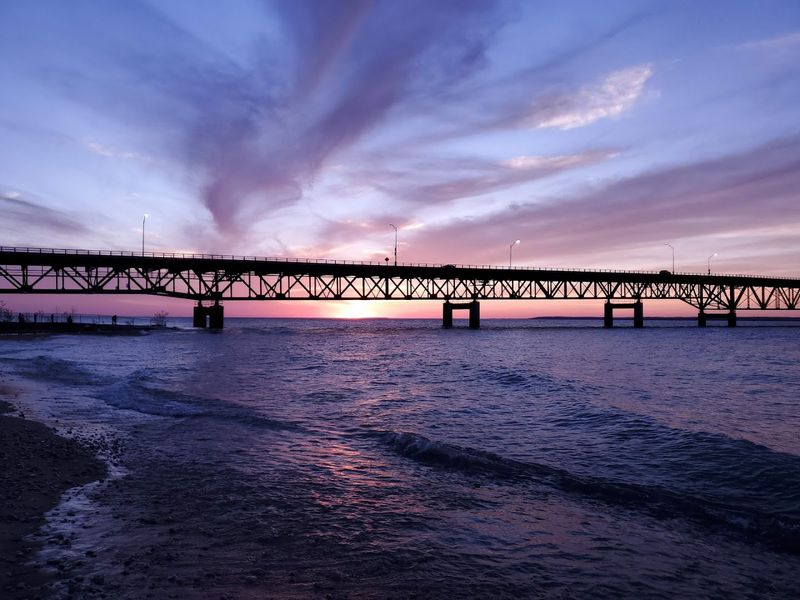
Tolls sit like a pause button before the big inhale, and the system is simple. Cars pay a small fee each way, typically four dollars, and cards are accepted. Have payment ready to avoid rummaging while nerves sharpen.
Traffic stacks during holiday weekends and the Labor Day walk closures, so aim for off peak hours when possible. The Authority’s MacPass speeds locals, but national transponders are not used here.
Watch lane signs, follow staff directions, and accelerate smoothly beyond the plaza. If a long backup forms, consider a break in Mackinaw City or St. Ignace until the line relaxes. Starting unhurried turns the next five miles into something closer to enjoyment than endurance. Your future self will appreciate it.
Labor Day Bridge Walk
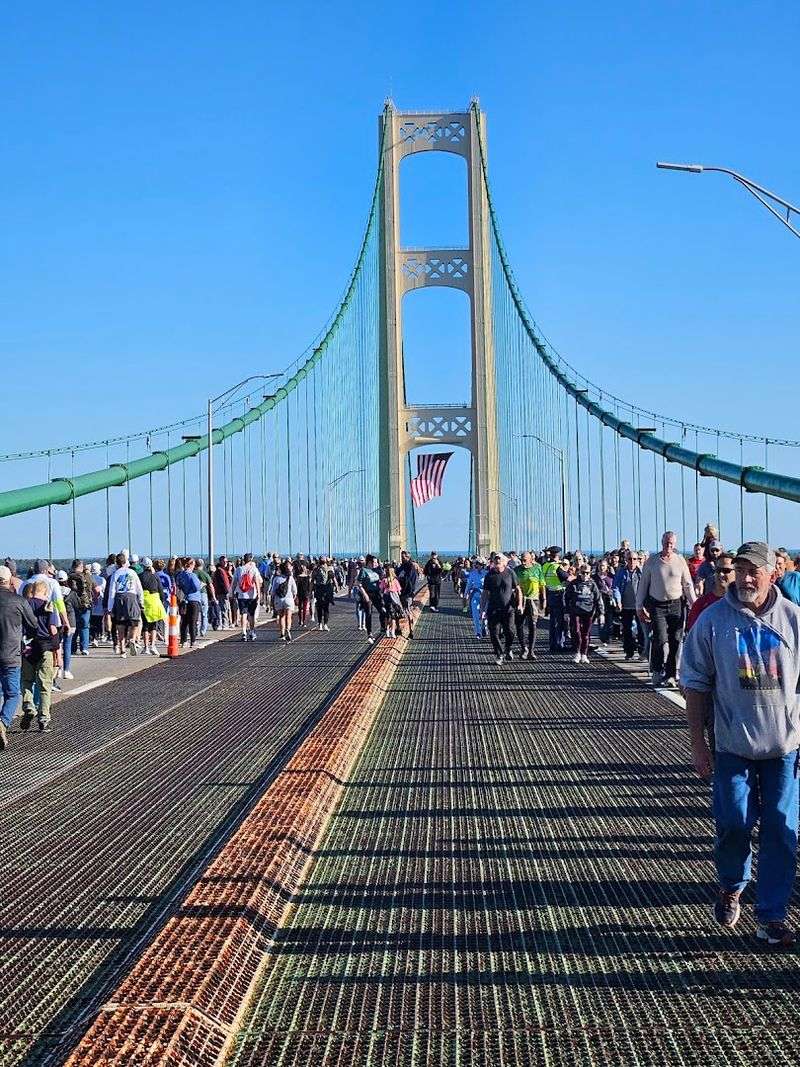
One day each year, the bridge belongs to feet. On Labor Day morning, vehicle traffic pauses so walkers can step the five mile span with guards and volunteers guiding the flow. The mood is orderly, communal, and a little giddy.
Logistics matter here. Parking fills in the dark, buses shuttle, and policies change, so read the Mackinac Bridge Authority page before you commit. You cannot linger mid span or stop for selfies, and you may finish on the opposite side unless you plan return timing carefully.
Dress for wind, pack patience, and enjoy the rare silence above ship horns. The structure feels different when it thumps beneath shoes instead of tires. It is worth one early alarm.
Assistance For Anxious Drivers
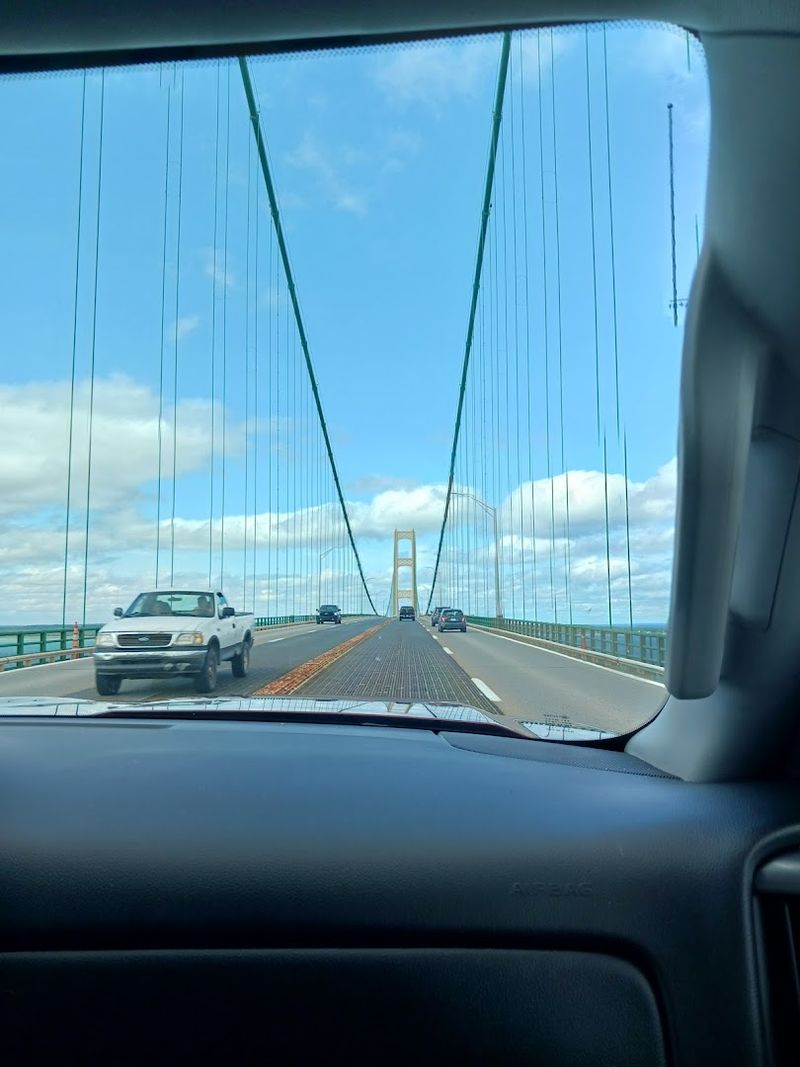
Nerves are not a flaw here, and the Authority knows it. There is a driver assistance program offering to pilot your vehicle across while you ride along. You call ahead or request at the plaza, and a trained staff member takes the wheel.
I tried it once with a friend who freezes at high rails, and the relief was immediate. Fees are modest, instructions are clear, and you reclaim the bridge without white knuckles. Confirm current procedures on the official site before you go.
Bring valid identification, arrive patient, and let competence do its work. By the north shore, anxiety had loosened, and the Straits looked possible again. Sometimes letting someone skilled lead is the bravest, smartest road choice.
Views Worth A Pull-Off
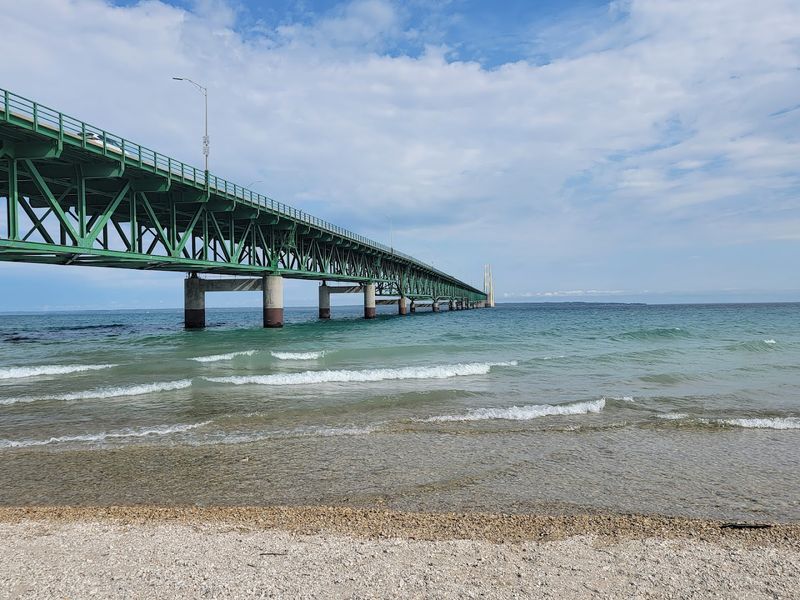
Endings shape memory, so leave time to see the bridge from below. St. Ignace’s Straits State Park and Mackinaw City’s waterfront parks deliver angles that explain the geometry you felt on the deck. Waves slap rocks, gulls argue, and the green truss becomes a ruler across sky.
Preservation here is constant, from painting cycles to deck work that keeps winter corrosion at bay. Let shore views confirm that vigilance.
Photograph if you like, but also pocket the phone and just witness. A short walk, a pause at sunset, and the mind files the crossing as story, not ordeal. You will drive away steadier, having watched the Mighty Mac hold both peninsulas without strain. That simple framing seals the experience.