
This Michigan Cathedral Has A Pope’s Chair And A Hidden Lourdes Grotto
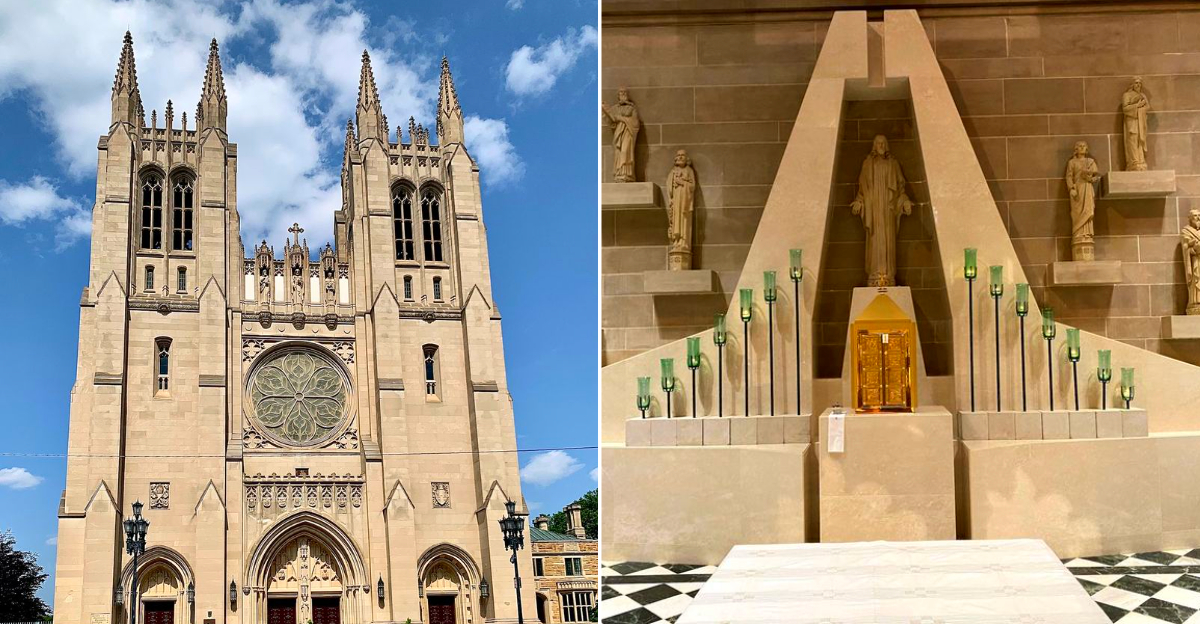
Detroit has no shortage of buildings that demand a second look, but this cathedral manages to surprise even after its twin towers and grand stone facade have done their best to impress you.
Step inside, and the scale gives way to smaller details: glowing stained glass, historic artwork, carved figures, and quiet corners that reward lingering.
Among the most unexpected treasures is a chair once used by Pope John Paul II, tucked into a space already layered with decades of religious and architectural history.
Stained glass, historic art, papal artifacts, and striking architecture make this Detroit, Michigan, cathedral one of Woodward Avenue’s most fascinating landmarks.
Outside, a Lourdes grotto adds another contemplative layer, while apostle statues, impressive organs, and an unusual baptismal font keep the interior from ever feeling predictable.
What I like most is how the building balances grandeur with intimacy. It feels monumental from the street, yet surprisingly personal once you begin noticing what is hidden inside.
Walk Around To The Lourdes Grotto
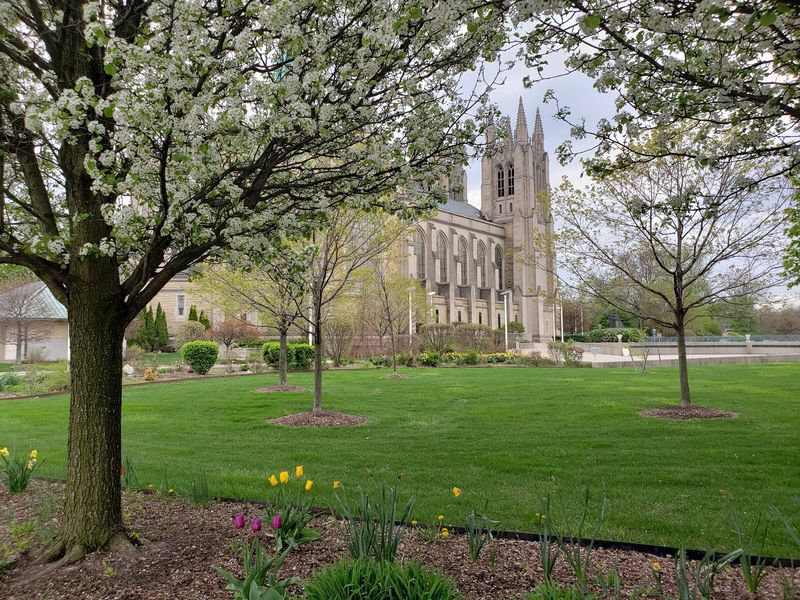
Just beyond the grand interior waits a quieter surprise. The outdoor Lourdes grotto stands beside the cathedral’s north wall, where stone, flowers, and open sky create an intimate prayer space.
Archbishop Allen Vigneron dedicated it on Mother’s Day, May 12, 2024.
The smaller-scale tribute to Lourdes, France, recalls Mary’s protection during the COVID-19 pandemic. Its statue was designed to reflect Saint Bernadette Soubirous’s description of Mary’s face.
Walk around the exterior rather than assuming every treasure is indoors, but check weather and cathedral access before arriving. Visitors should approach softly, especially when someone is praying.
A few unhurried minutes here offer a striking contrast to Woodward Avenue and the soaring sanctuary nearby, while preserving the purpose behind this thoughtful memorial.
The Twin Spires Do Most Of The Navigating
The Cathedral of the Most Blessed Sacrament stands at 9844 Woodward Avenue in Detroit, Michigan, along the city’s historic Woodward corridor near Boston Boulevard. Woodward Avenue provides the simplest final approach from either downtown or the northern neighborhoods.
As you near Boston Boulevard, the cathedral becomes difficult to miss: its tall Gothic twin towers rise directly above Woodward and provide a much better arrival cue than the street number. The main complex faces Woodward, so there is no hidden neighborhood entrance to track down.
For cathedral events, visitors can use the gated parking lot behind the building when it is open. Park there and walk around to the cathedral entrance; for ordinary visits, follow any posted access and parking instructions on arrival.
Look Up At The Twin Towers
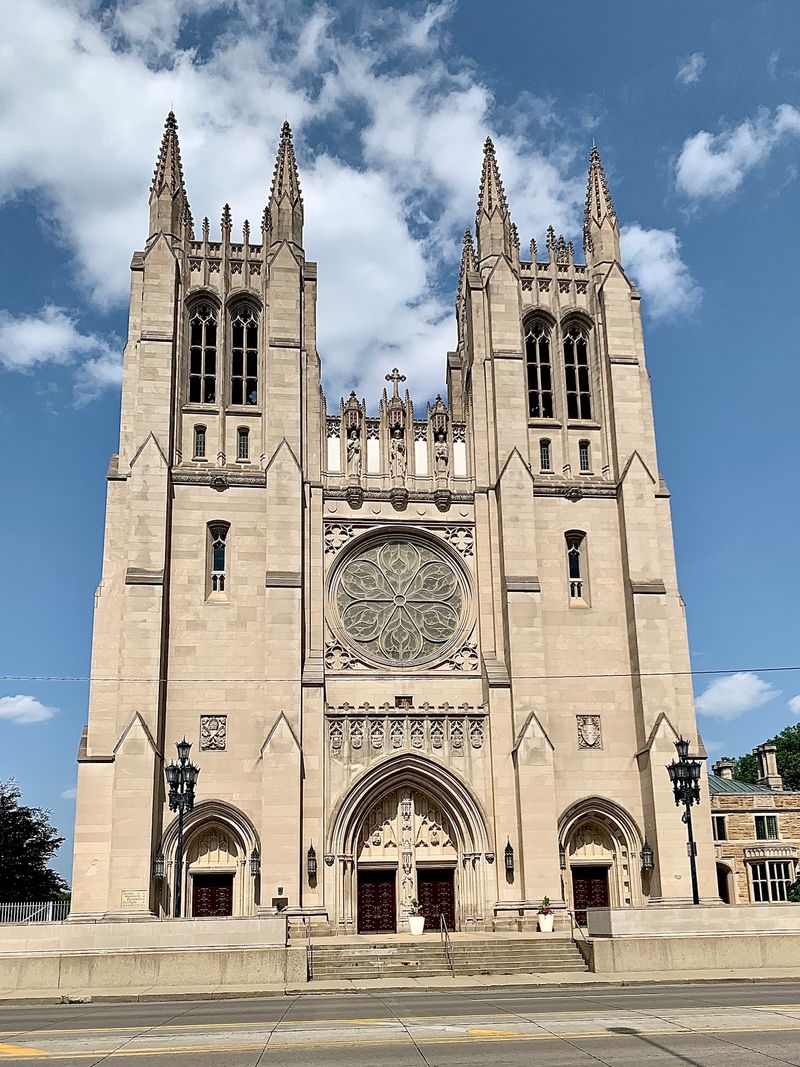
From Woodward Avenue, the facade announces itself without needing fireworks. Twin towers rise 136 feet above walls built mainly from Ohio sandstone and trimmed with Indiana limestone.
Their vertical lines give the cathedral its commanding Neo-Gothic character, although the towers arrived long after construction began in 1913.
George F. Diehl completed them in 1951, building upon the original design work of Henry A.
Walsh. Before entering, cross only from a safe viewpoint and study how the towers frame the central entrance.
Corrado Parducci’s sculptural details deserve a closer look near the facade. Morning or late-afternoon light can make carvings easier to see and photograph.
Step back afterward; distance reveals proportions that disappear when you stand directly beneath the stonework outside.
Let The Windows Tell Their Story
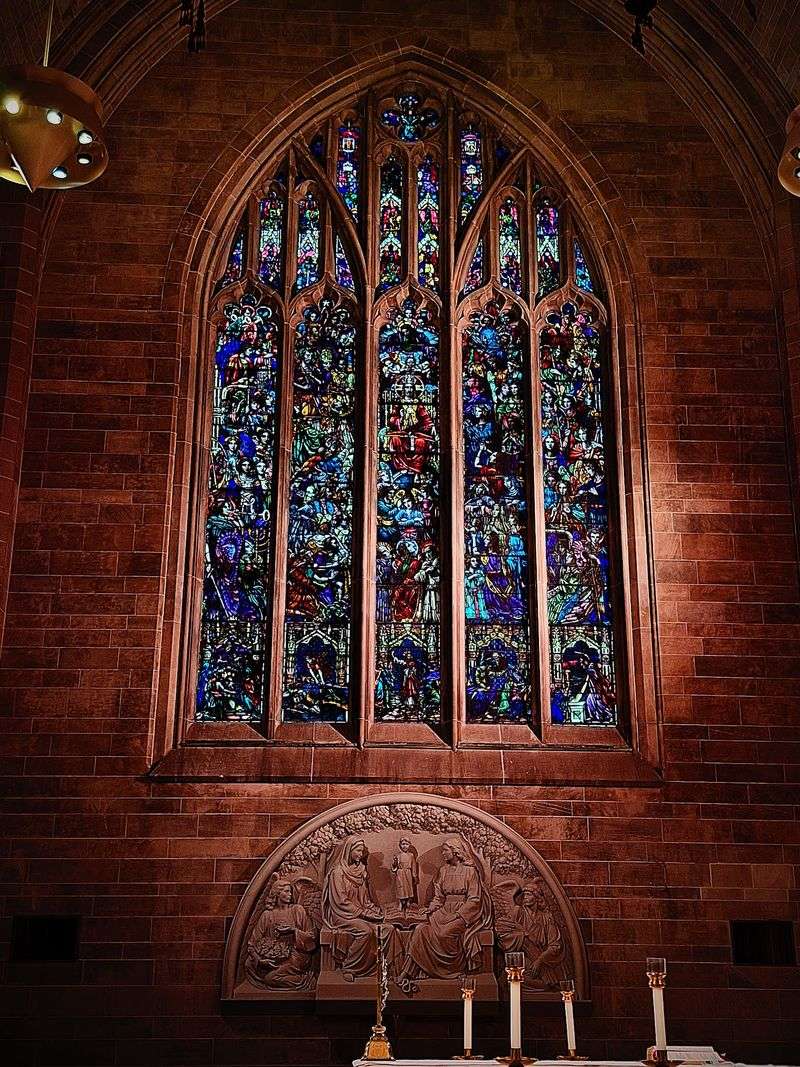
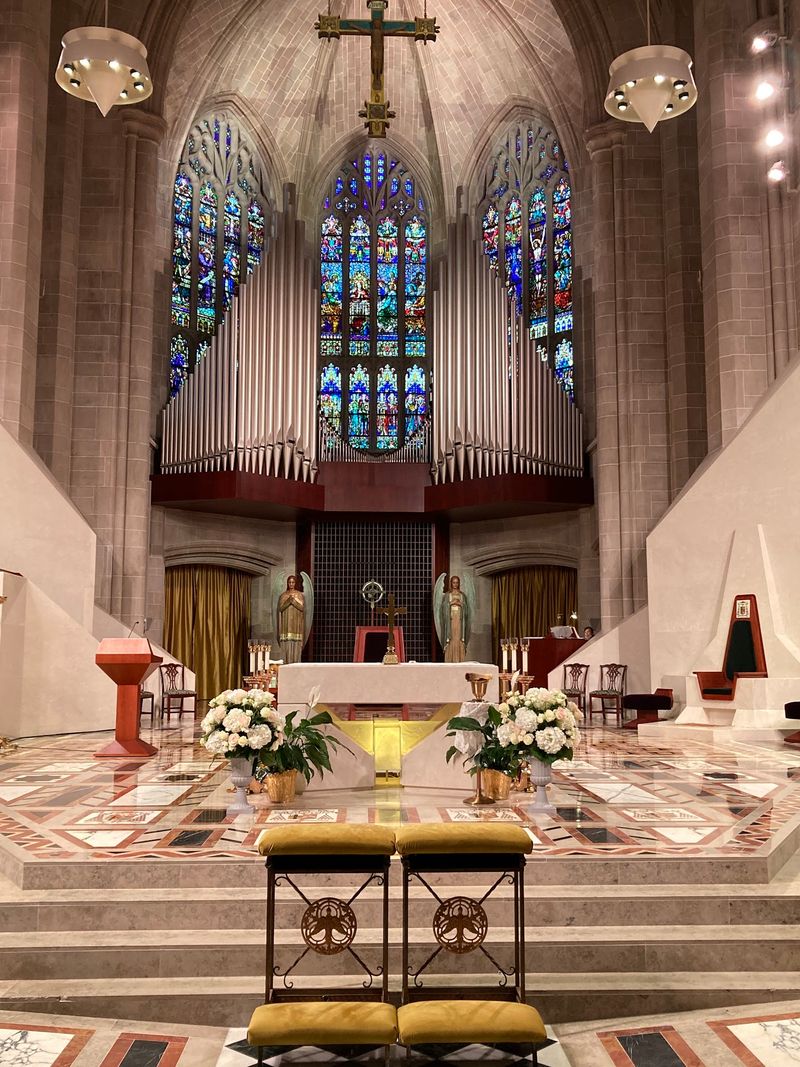
Colored light behaves like a second architecture inside the nave. Twenty-two large stained-glass windows, designed by Willet Studios of Philadelphia, present scenes from sacred history in a medieval style.
Their subjects stretch from Christ’s birth to the descent of the Holy Spirit upon the apostles.
Rather than racing from window to window, choose one panel and follow its figures, gestures, and symbols. Changing daylight can sharpen one scene while leaving another mysterious, so the room never looks completely fixed.
Early light may produce especially vivid color, but services always take priority over sightseeing. Avoid flash photography and stay clear of occupied pews.
A small pair of binoculars can help reveal higher details without wandering into restricted sanctuary areas or disturbing anyone nearby.
Know Which Chair Is The Cathedra
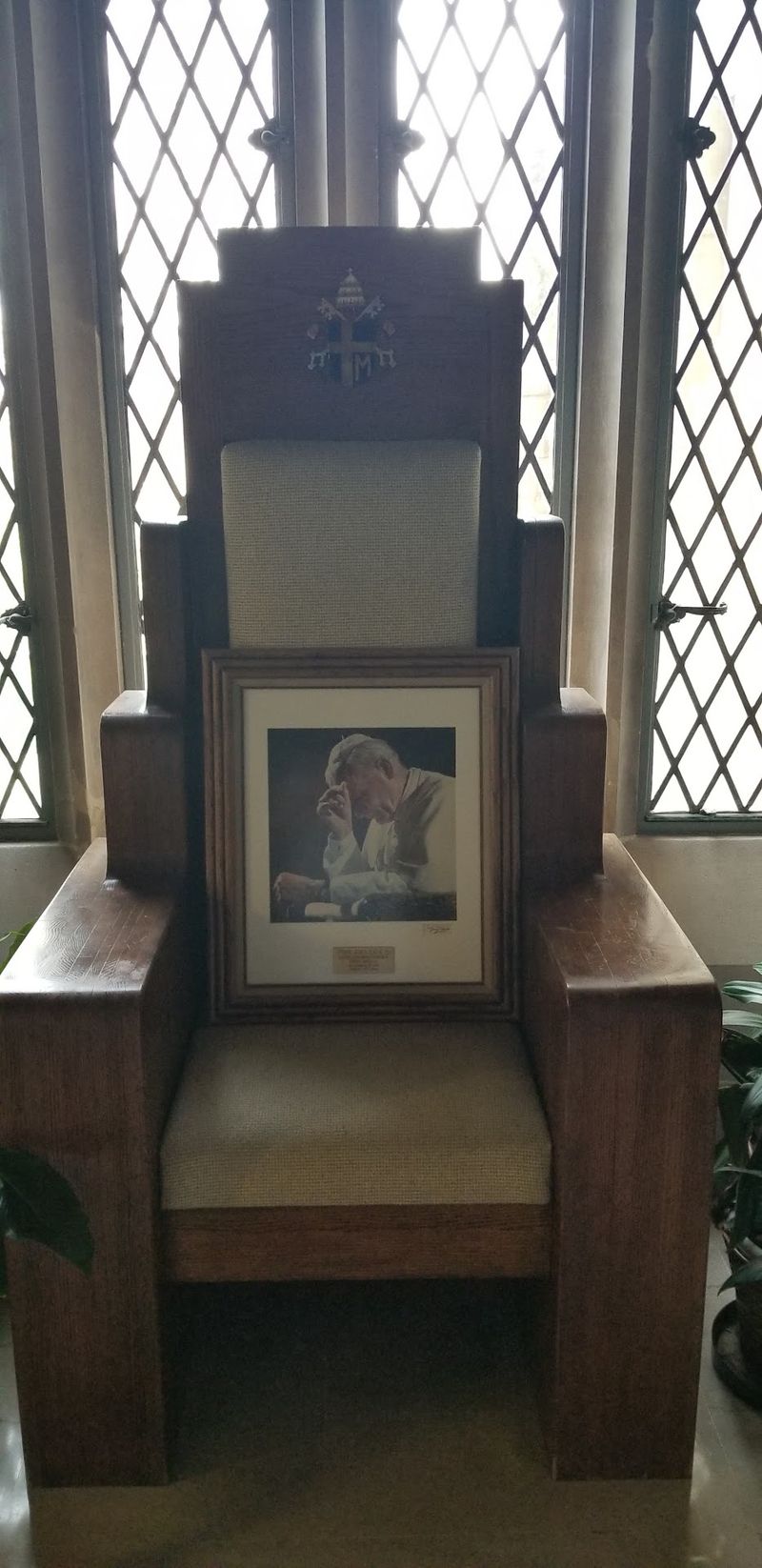
Not every important chair here tells the same story. The cathedra is the archbishop’s official seat, and its presence is what makes the building a cathedral.
It represents teaching authority and leadership across the Archdiocese of Detroit, rather than commemorating a single papal visit.
Detroit’s current archbishop, Edward Weisenburger, is the person permitted to occupy this particular seat. When viewing the sanctuary, compare its placement with the altar, pulpit, and surrounding artwork.
That arrangement helps explain how architecture supports Catholic worship. Remain outside the sanctuary unless a guide clearly invites you forward, and never treat the chair as a photo prop.
Knowing the difference between the cathedra and Pope John Paul II’s chair prevents an easy mix-up and makes both objects more meaningful.
Listen For Thousands Of Organ Pipes
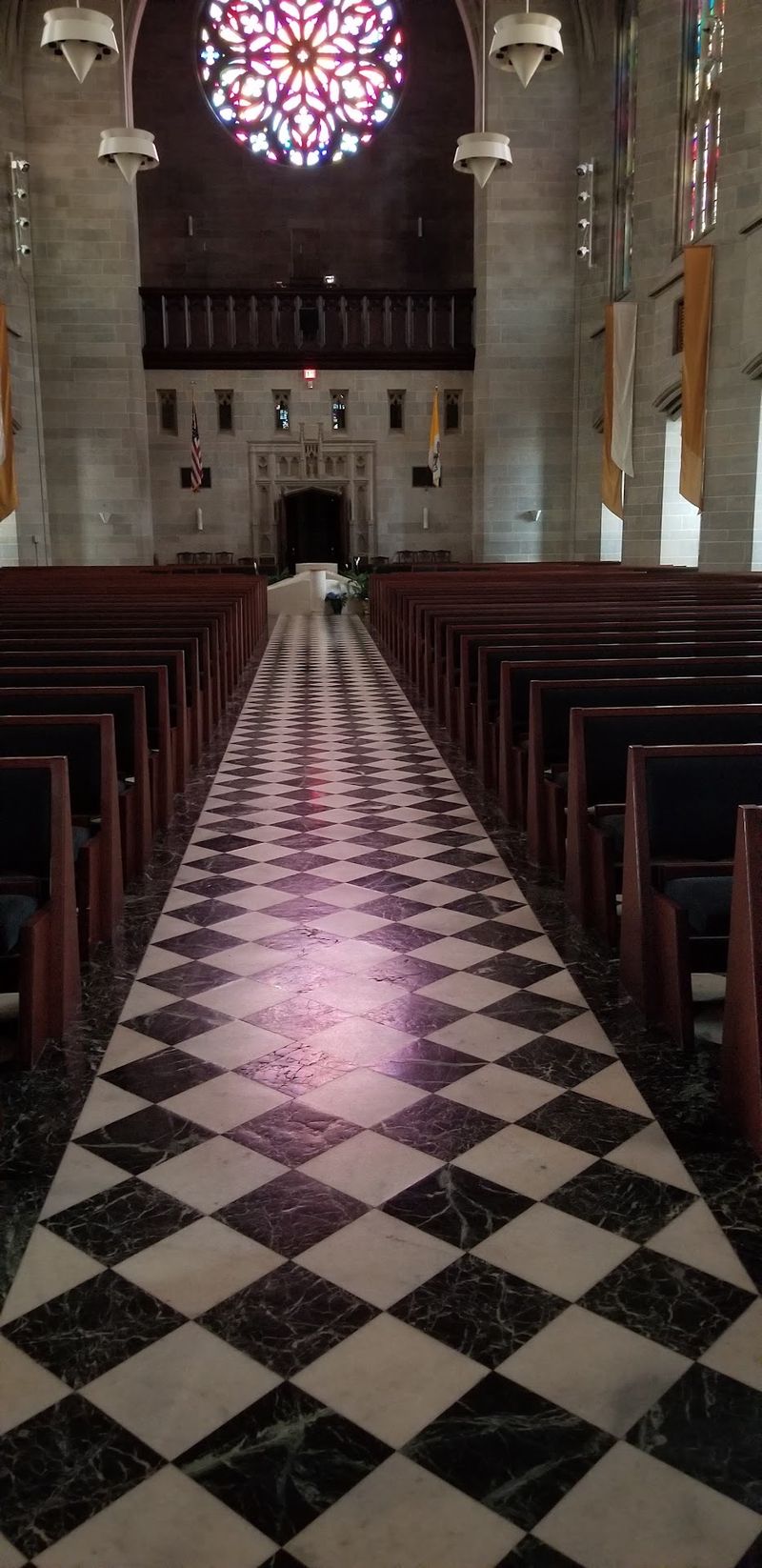
A single organ note can seem to find every corner of this enormous room. The cathedral contains two pipe organs, each serving a distinct musical role.
Its rebuilt and updated Casavant Frères instrument has more than 3,500 pipes, while the Austin organ contains 1,745.
Installed during the 2002 renovation, the Austin organ was designed especially to support congregational singing. Attend Sunday Mass or an announced musical event if you want to experience the instruments within their intended acoustic setting.
Sunday Mass begins at 11:00 AM and is also livestreamed. Sit where staff direct, silence your phone, and allow extra time before moving around afterward.
Even without music, notice the lofts and chambers that help turn carefully controlled air into a building-wide voice.
Meet The Apostles Along The Sanctuary
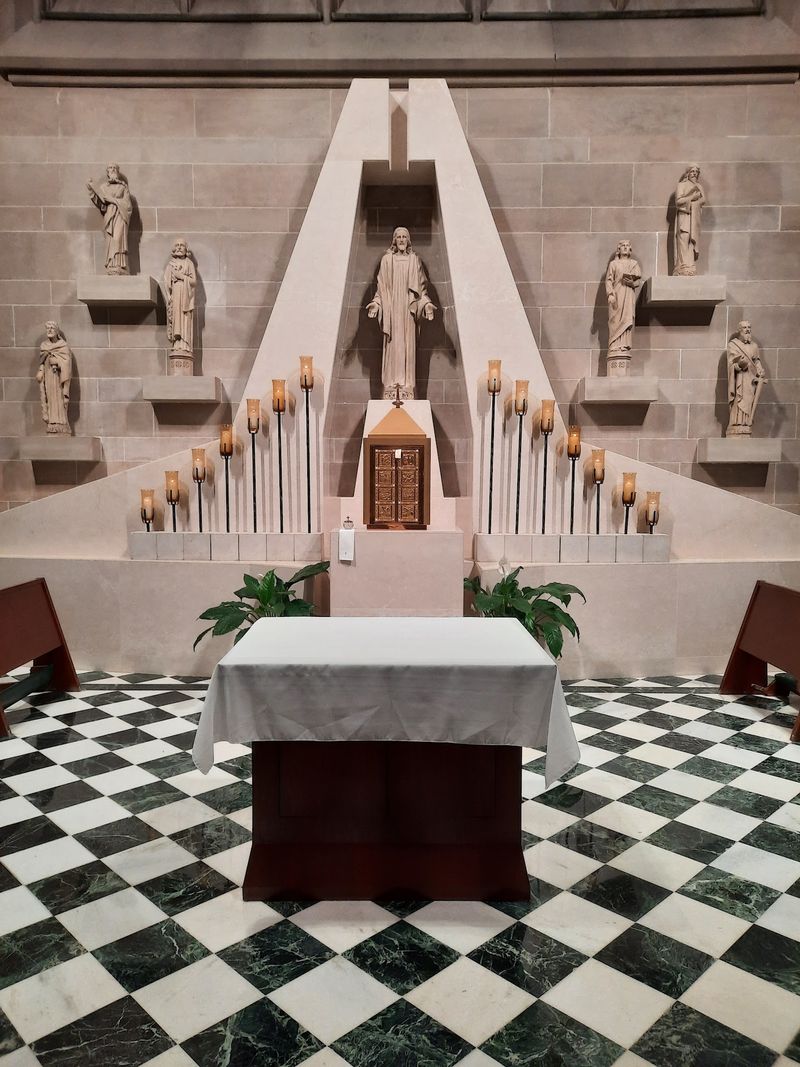
Fourteen painted wooden figures now keep watch along the sanctuary walls. Unveiled at the cathedral in January 2024, the group includes life-sized statues of the twelve apostles and two angels.
Italian craftspeople carved them in 1927, and the figures previously stood in another Michigan church.
Their move supports the cathedral’s developing role as an Apostolic Center for the Arts and Culture. Study each face and posture instead of viewing the group as one decorative border.
Nearby relics and interpretive signs can deepen a Journey with the Saints pilgrimage when access is available. Ask about organized tours if the stories matter more to you than quick photographs.
From a respectful distance, differences in color, expression, and clothing make these nearly century-old travelers feel surprisingly individual.
Respect The Reconciliation Chapel
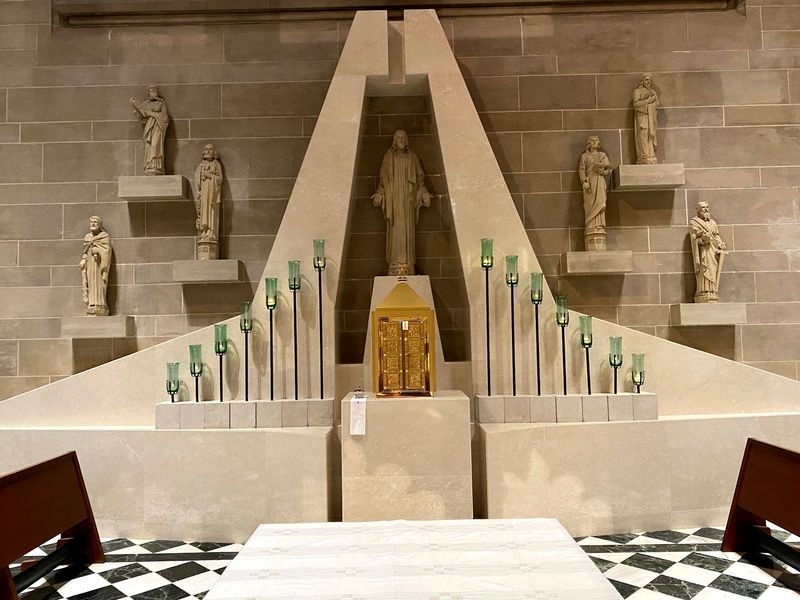
Silence takes on a practical shape in the northeast wall. The Reconciliation Chapel includes soundproof rooms lined with rosewood, creating privacy for confession and personal reflection.
Its design allows people to choose anonymous confession or a face-to-face conversation with a priest.
Visitors may appreciate the craftsmanship, yet the chapel is not simply another architectural exhibit. If it is occupied or scheduled for reconciliation, give the area generous space and avoid taking pictures.
Those wishing to receive the sacrament should confirm current times through the cathedral office rather than relying on general building hours. The restrained room offers a change from the scale of the main sanctuary.
Here, careful materials and controlled sound serve a deeply personal purpose, proving that thoughtful design can protect vulnerability.
Notice The Full-Immersion Baptismal Font
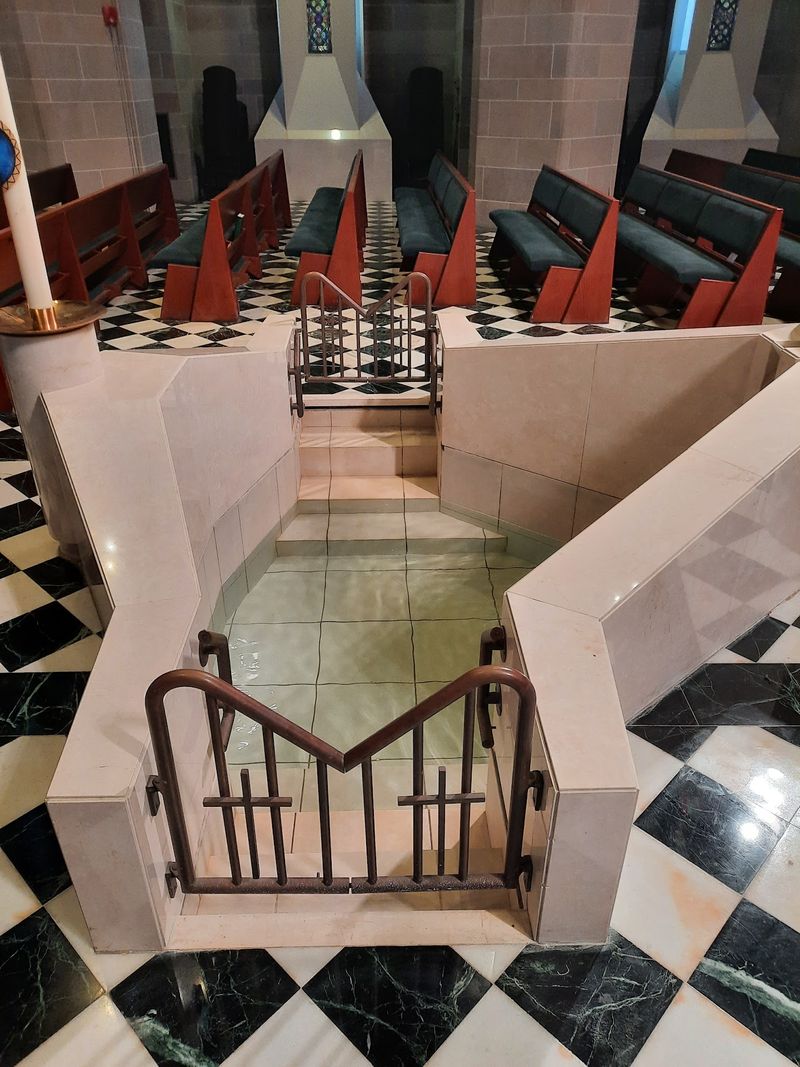
Water quietly moves through one of the cathedral’s boldest modern features. Set prominently in the main aisle, the baptismal font contains a pool made for full immersion.
Its unusual outline mirrors the human body, tying physical form to the Catholic understanding of rebirth through baptism.
Circulating water flows from an upright stone basin, while a tall Paschal candle stands nearby as a sign of Christ’s light. Notice how the font interrupts an ordinary walk toward the sanctuary; that placement is deliberate, reminding worshippers of baptism before they reach the altar.
Keep children close around the water and do not toss coins into it. A slow walk around the permitted edge reveals how stone, movement, sound, and light work together.
Read The Building’s Layered Timeline
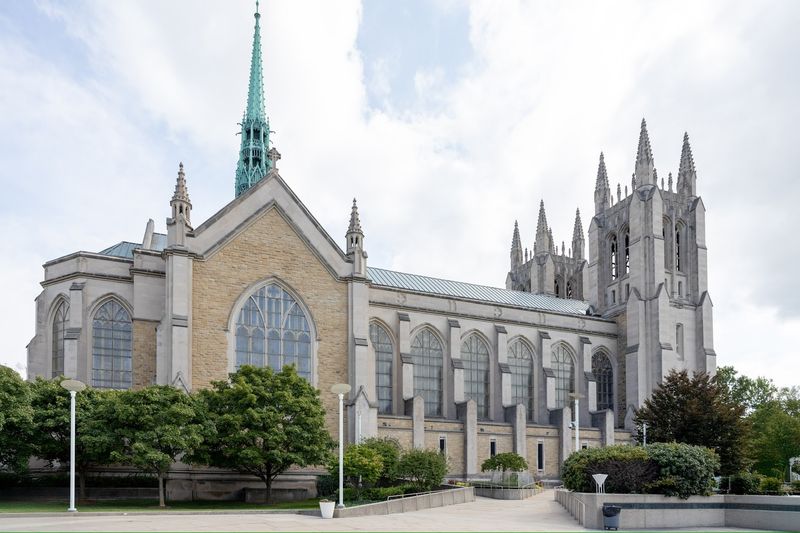
The cathedral was not completed in one neat burst of activity. Established as a parish in 1905, it saw construction begin in 1913 and its interior dedicated in 1930.
Pope Pius XI designated it the cathedral of Detroit’s newly elevated archdiocese in 1938.
Its twin towers followed in 1951, adding the skyline profile seen today. Major work during 2002 and 2003, guided by architect Gunnar Birkerts, introduced a new baptistry, altar, pulpit, and archbishop’s chair.
The renovated cathedral was rededicated on March 25, 2003. Look for the conversation between older Gothic stonework and newer liturgical forms rather than expecting one frozen period.
Its 1982 listing on the National Register of Historic Places recognizes a building that kept adapting while retaining its identity.
Plan Around Worship And Office Hours
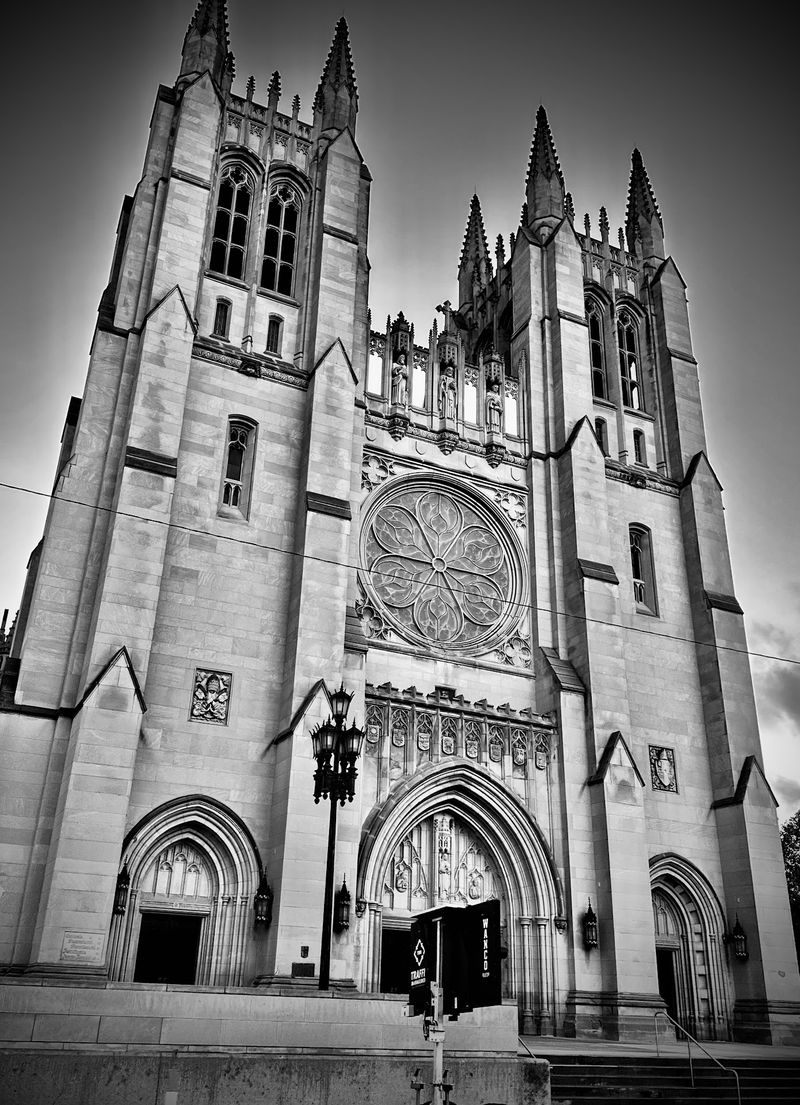
A little planning prevents a Woodward Avenue visit from becoming a tour of locked doors. Published office hours are Monday, Tuesday, Thursday, and Friday from 9:00 AM to 4:00 PM.
Wednesday hours run from noon to 6:30 PM, while Saturday access is listed from 9:00 AM until noon.
Sunday Mass begins at 11:00 AM, and sightseeing should never interrupt worship, weddings, funerals, or rehearsals. Call 313-865-6300 before making a special trip because schedules and building access can change.
Group tours and pilgrimages may cover apostle relics, statues, artwork, and signs more fully than an independent stop. The parking entrance can be easy to pass, so review your route beforehand.
Dress respectfully, allow extra time, and ask permission before photographing people or restricted spaces.