
This Michigan Cider Mill Has Been Pressing Apples The Same Way Since 1837
September does not start on the calendar. It starts when the cider mill opens.
That is not my opinion. That is fact, at least in this part of Michigan.
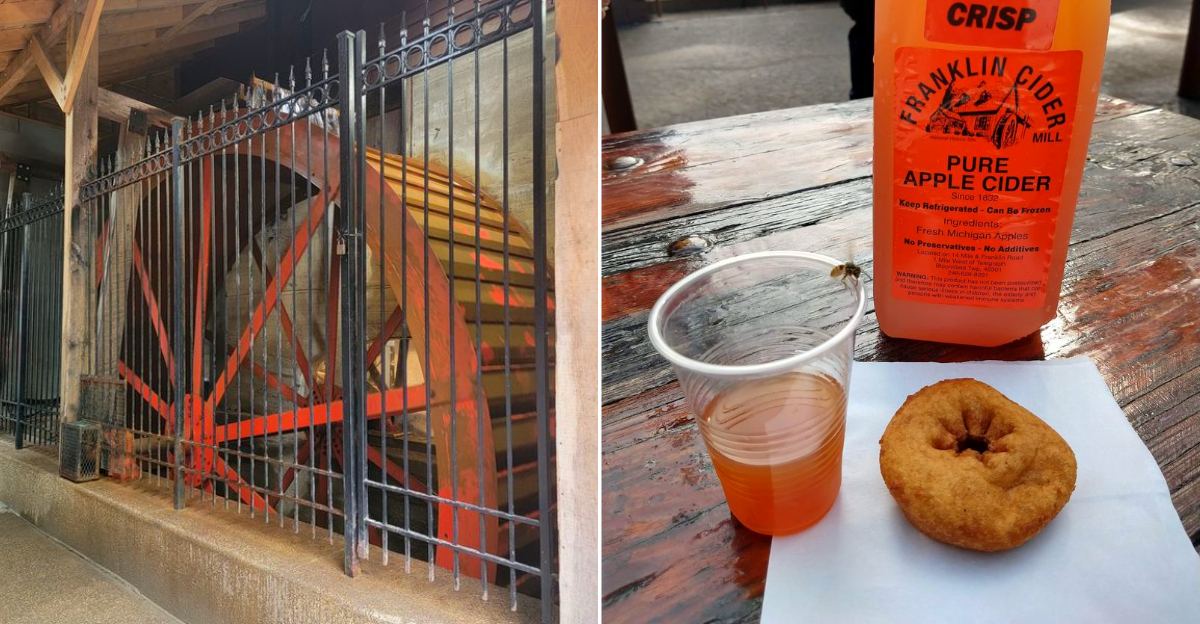
The building dates to 1837. The water wheel still turns.
The press crushes apples the same way it has for over a century, and the cider that comes out tastes like it was made this morning because it was. The donuts are the standard by which all other cider mill donuts are judged, and they all fall short.
Warm, sugar-cinnamon coated, slightly crisp on the outside, pillowy inside. I have eaten an embarrassing number in a single visit, and I regret nothing.
The line wraps around the building on opening weekend, and nobody complains because the reward is waiting inside. Every September, a cider mill in Michigan reopens with donuts and fresh-pressed cider that make fall official.
Taste The Cider Before Buying Extra
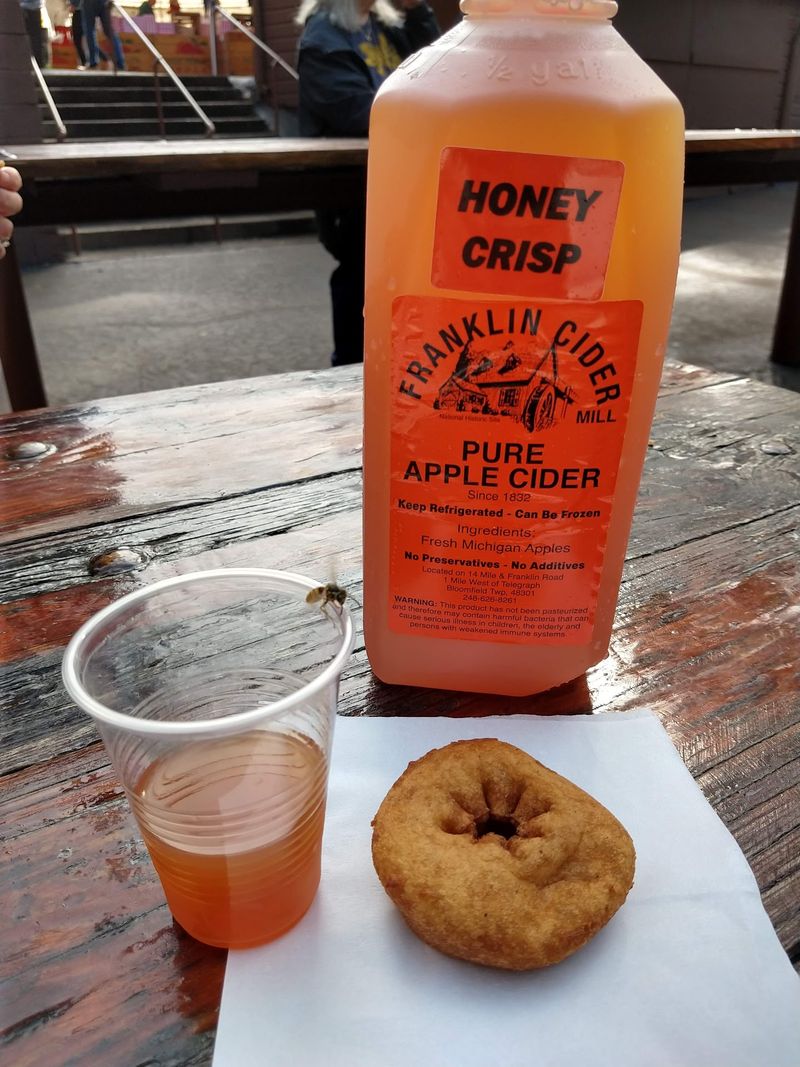
One sip can tell you where the season stands. Franklin’s cider is made from changing blends of Michigan apples, so its balance of sweetness, brightness, and apple flavor naturally shifts as different varieties become available.
The regular cider is unfiltered, unpasteurized, and made without preservatives. That produces a lively, full-bodied drink with natural apple character, but it also means take-home containers belong in the refrigerator rather than on a counter.
Buy a cup first if you are deciding whether to carry home a larger container. Cold cider highlights its crisp edge, while hot cider, when offered, brings forward rounder fruit and spice-like aromas without needing extra decoration.
Check the official menu and current availability before traveling because seasonal offerings can change. A secure cooler is useful for a longer drive home, especially on a warm September afternoon when an unrefrigerated jug may lose its freshness faster than expected.
Fourteen Mile Road Hands You Off To Franklin
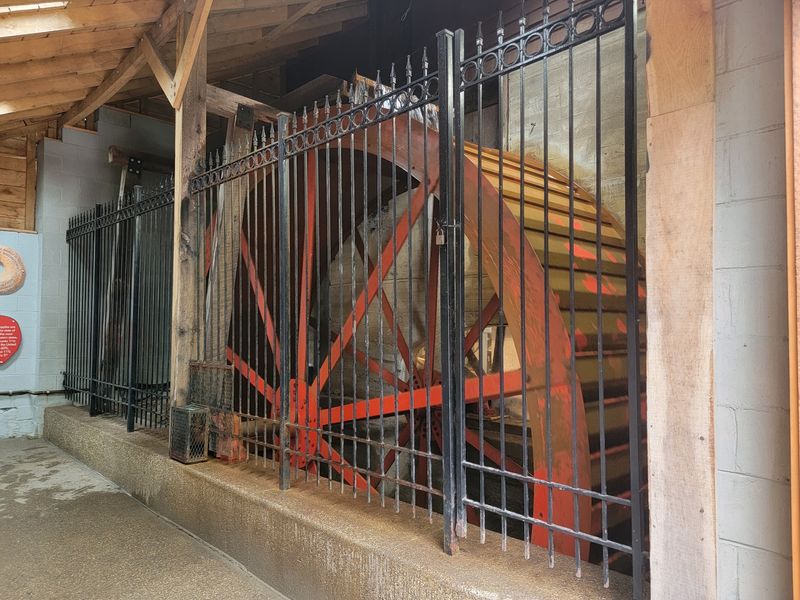
Franklin Cider Mill is located at 7450 Franklin Road in Bloomfield Hills, Michigan, near the intersection of Franklin and 14 Mile roads. From Telegraph Road, take 14 Mile Road west for about a mile toward Franklin.
Stay on 14 Mile Road until Franklin Road, where the mill sits beside the intersection along the Rouge River. The historic wooden mill makes the final stop easy to recognize once you reach the corner.
Turn toward the mill property and use the customer parking before walking to the main entrance. Fall weekends can draw heavier crowds, so arriving earlier can make the final parking step easier.
Order Donuts While They Are Warm
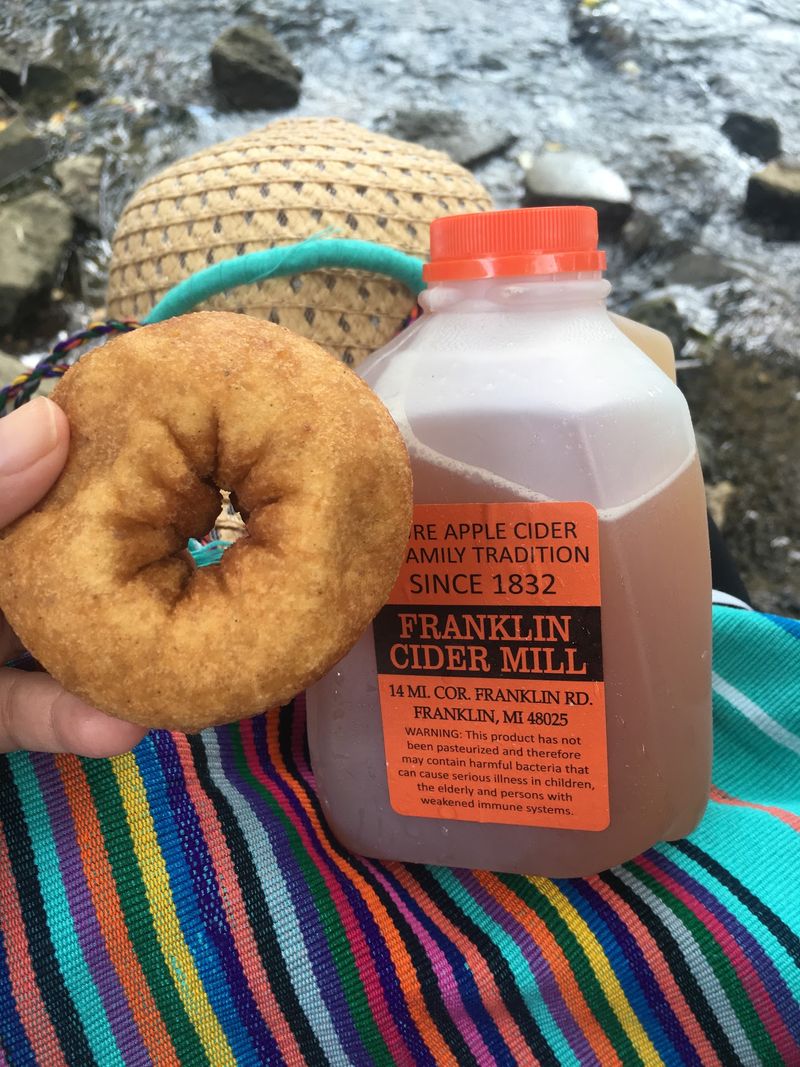
A warm paper bag leaves very little room for patience. Franklin Cider Mill makes small cake donuts throughout the day, using a German spice recipe that the mill says has been part of its tradition for more than eighty years.
The rings arrive tender inside, lightly crisp around the edges, and fragrant with baking spices. Their modest size is helpful because eating one beside the river almost always makes a second seem reasonable.
Franklin’s standard donut is spiced rather than automatically coated in cinnamon sugar. If you prefer a sweeter finish, ask about the available Donut Dust before leaving the counter instead of assuming every bag comes covered.
Eat at least one immediately, then close the bag to protect the remaining donuts from cool air. Lines can grow on sunny weekends, so ordering treats early reduces waiting and gives you time to enjoy them before browsing the market or studying the press.
Watch The Massive Press Work
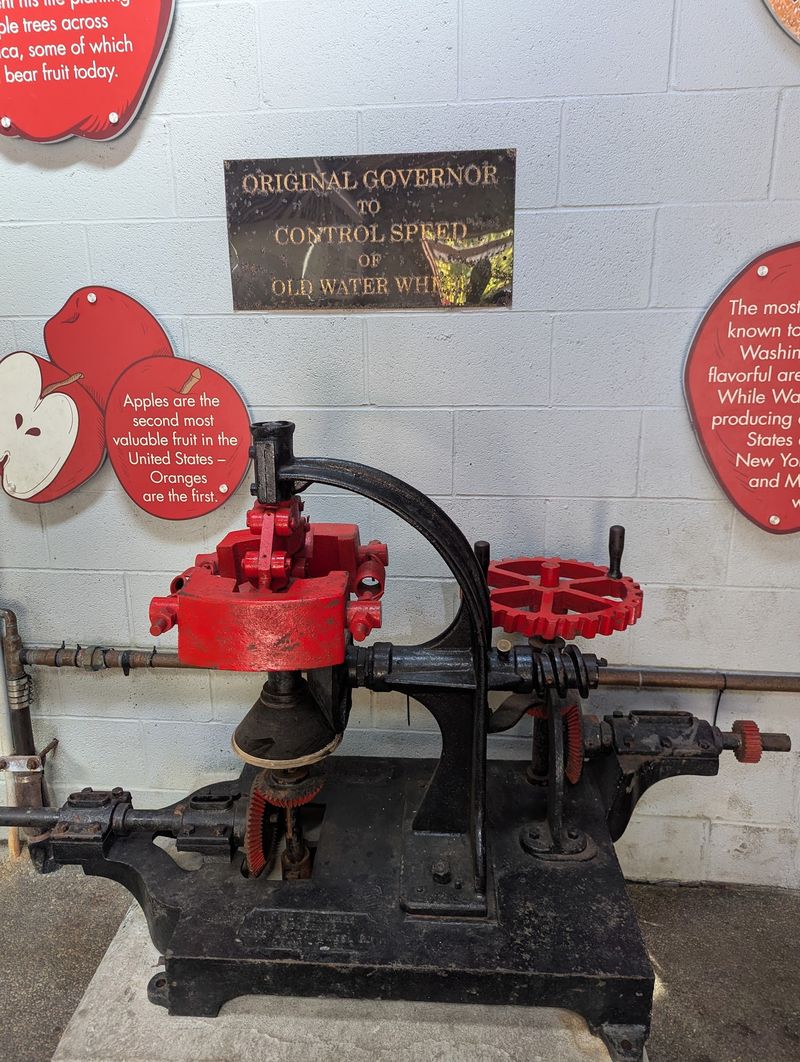
Inside the mill, the star performer weighs about 90 tons and has no interest in being graceful. The enormous cider press slowly squeezes stacked layers of chopped apples, making the process easy to understand even for young visitors.
Apple pulp is arranged between nylon cloths before pressure releases the juice. According to the mill, one pressing can use roughly 5,000 apples and produce about 150 gallons, numbers that turn a familiar drink into an impressive piece of food engineering.
Stand only in designated viewing areas and avoid blocking the narrow indoor space while taking pictures. Production timing varies, so seeing the machinery actively pressing cannot be guaranteed during every visit.
If the equipment is running, watch one full stage instead of hurrying past. The measured movement and fresh apple scent reveal more about Franklin’s craft than any souvenir, while correcting a common misconception: cider making began here in 1918, not when the building opened in 1837.
Browse Michigan Foods After Snacking
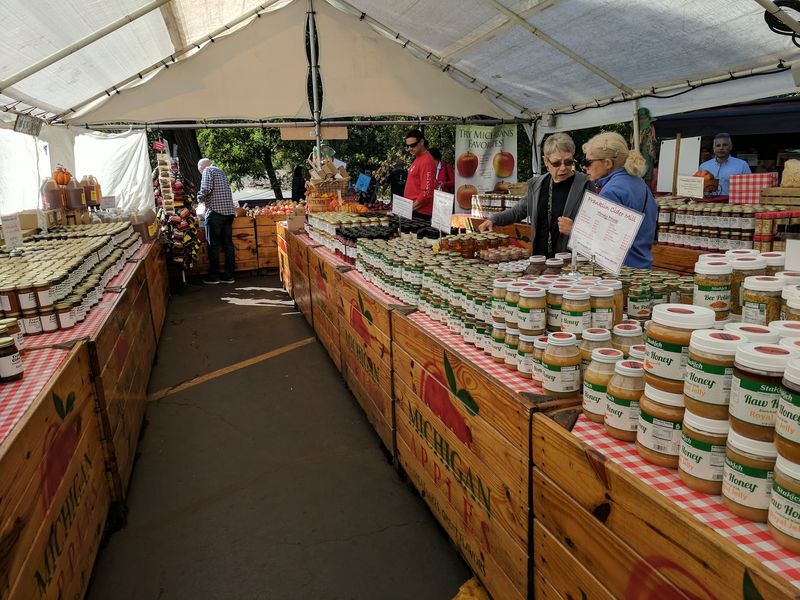
Shopping on an empty stomach can make every jar look essential, so begin with cider and a donut. Then explore the Franklin Market, where regional goods expand the outing beyond the mill’s famous pairing.
Selections may include Michigan-made honey, maple syrup, jams, apple butter, salsa, cheese, meats, baked goods, and other seasonal treats. Stock changes, which is part of the fun, but it also means a remembered favorite may not appear during every visit.
Read labels if ingredients, allergens, or storage needs matter to your household. Glass jars become heavy quickly, and a reusable tote with a flat bottom keeps preserves from rolling around in the car.
I like choosing one practical item and one curious item rather than sweeping through the displays like a hungry squirrel. A familiar maple syrup earns its pantry space, while an unusual preserve gives the trip a second life at breakfast long after autumn leaves disappear.
Save Time For The Riverside
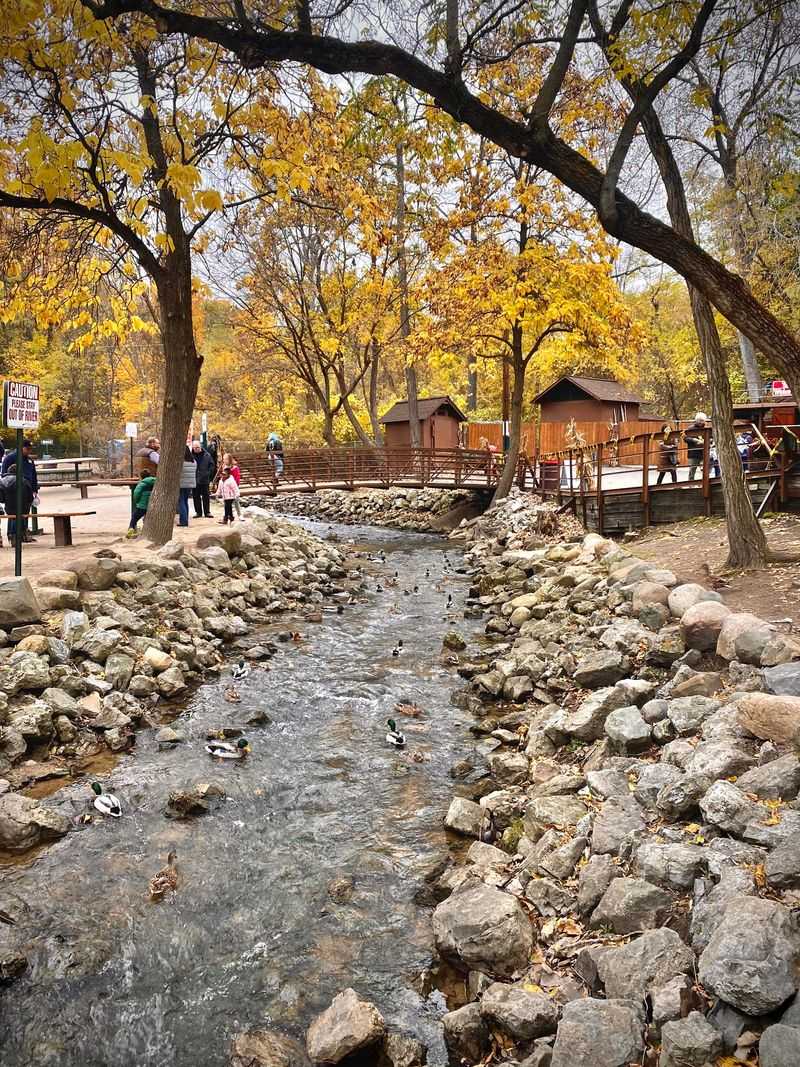
Busy counters are only half the experience. Just beyond them, flowing water softens the chatter and gives visitors a pleasant place to slow down with cider, donuts, or another market snack.
The riverside setting is compact rather than park-like, yet it creates a strong sense of escape from nearby roads. Stand-up tables and available seating provide places to pause, although weekend crowds can claim the best spots quickly.
Carry napkins, secure loose wrappers, and keep food away from the water’s edge. Families should watch children closely because the stream, bridges, traffic, and excited crowds demand more attention than a fenced picnic area would.
A weekday morning generally offers a calmer atmosphere than a bright October weekend. Even when seating is full, a short walk around the permitted grounds reveals changing views of the wheel, mill, and river.
The scenery gives a simple cup of cider an address, a history, and welcome breathing room.
Enjoy The Ducks Without Sharing Donuts
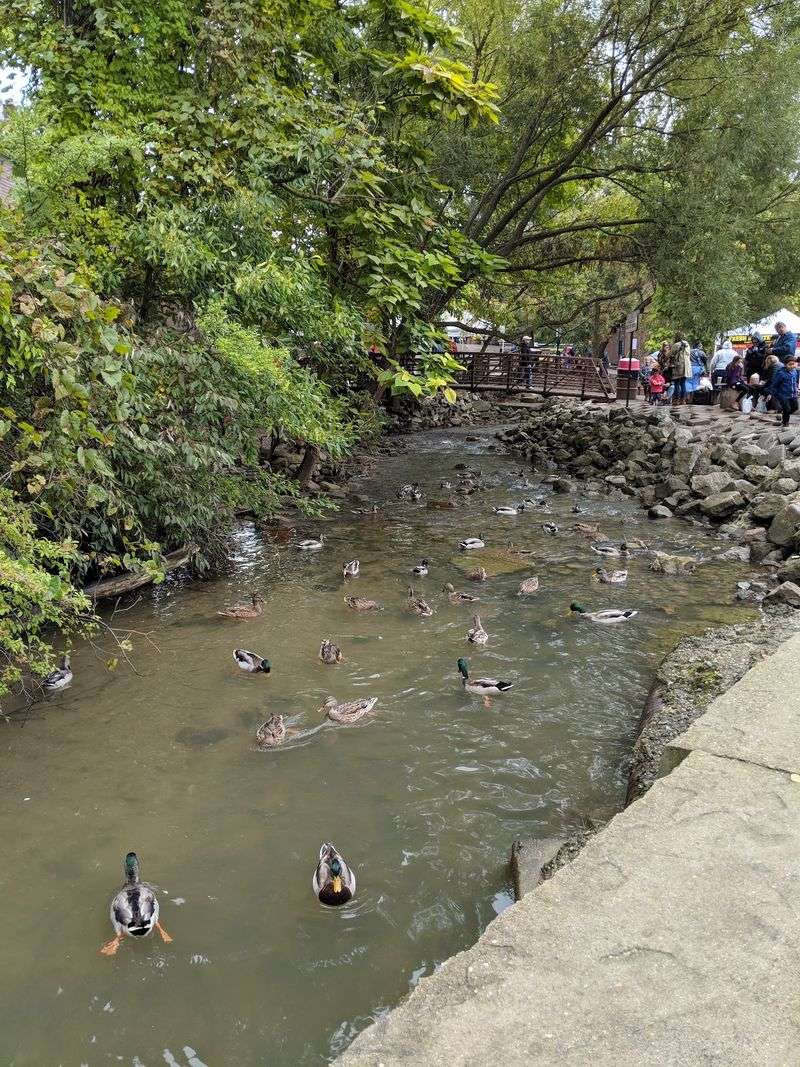
Ducks patrol the river with the confidence of tiny officials inspecting every picnic. They are a cheerful part of the Franklin Cider Mill scene, especially for children who may find the birds as interesting as the machinery.
Watching is the safest default. Donuts and other processed snacks are not suitable wildlife food, and feeding can encourage crowding, poor nutrition, and pushy behavior around visitors.
Follow current signs and staff directions because site rules may change. If approved feed is sold or permitted, use only that option, offer small amounts from a safe place, and never let children chase birds toward the water.
Keep cups, paper bags, and crumbs under control so nothing blows into the stream. A phone camera can capture the waddling comedy without altering the ducks’ habits.
Giving wildlife space protects the animals, keeps the riverside cleaner, and leaves future guests with the same lively scene beside the old mill.
Check The Weekend Music Schedule
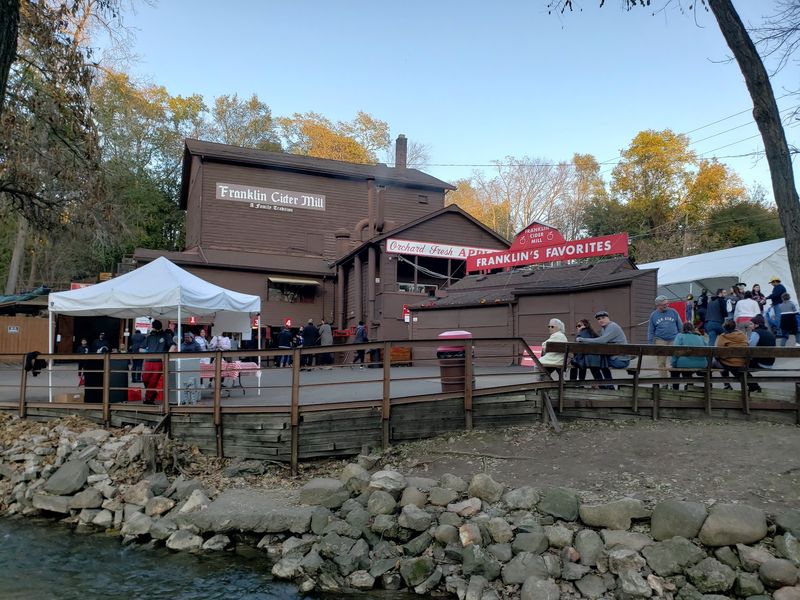
Jazz beside a nineteenth-century mill sounds like an odd pairing until the first mellow notes reach the river. Weekend performances associated with musician John Davis have added a relaxed musical layer to selected afternoons at Franklin Cider Mill.
The music changes the pace without overwhelming the main attractions. Families can listen while finishing donuts, and curious children may get a close look at instruments such as the vibraphone when the performer welcomes interaction.
Treat live entertainment as a seasonal bonus, not a guaranteed feature. Review the mill’s official website or social pages shortly before visiting because dates, times, performers, and weather plans may change.
If music matters to your outing, arrive before the posted start and choose a listening spot that does not block walkways. On quieter days without a performance, the wheel and rushing stream provide their own soundtrack.
Either version suits the mill, one polished, the other pleasantly splashy and mechanical.
Ask Which Apples Are In Season
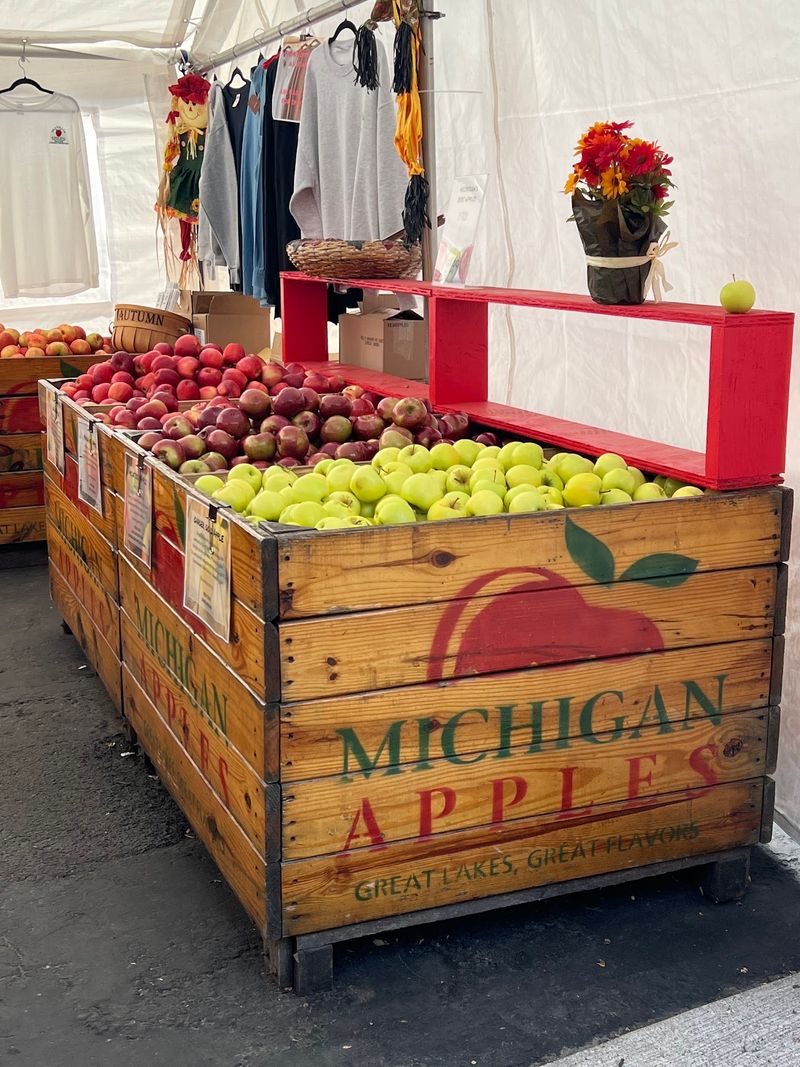
Apple names become surprisingly interesting when several varieties sit side by side. Franklin’s Apple Shack carries a rotating Michigan harvest, with choices such as Honeycrisp, Cortland, Empire, and McIntosh appearing as their seasons allow.
Each variety behaves differently after leaving the bag. Crisp, sweet apples suit lunches, while softer or more tart fruit can shine in sauce, pies, and other cooked dishes.
Ask what was recently picked and explain how you plan to use it. Staff guidance can prevent an expensive baking apple from becoming a disappointing desk snack, or help you select quantities such as a half-peck instead of an ambitious bushel.
Later in September, specialized Honeycrisp cider may also be available, but timing and supply can vary. Store apples in a cool place and inspect them before packing the car.
One bruised fruit is not dramatic, yet removing it early helps protect the rest of your edible Michigan souvenir.
Read The Family Story Carefully
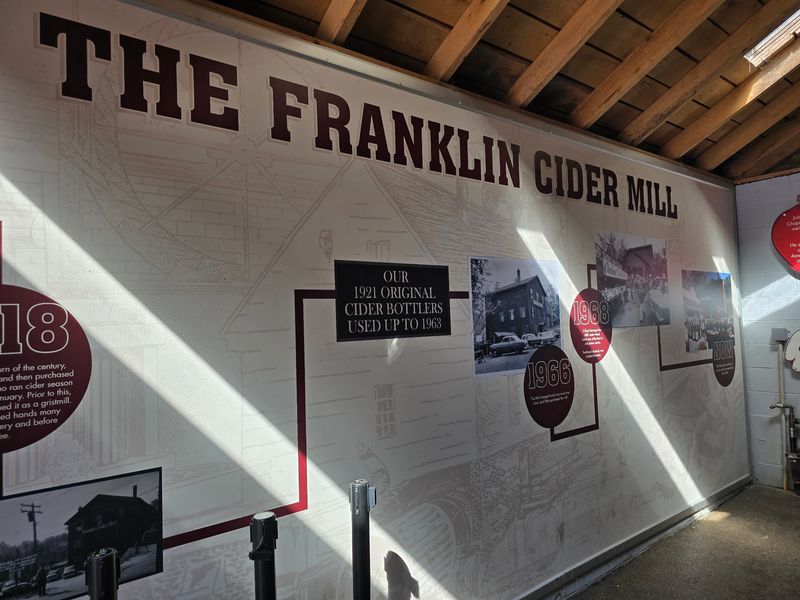
The mill’s timeline contains a useful twist that makes its story more interesting, not less. The structure dates to 1837, but it spent its early life grinding grain before Robert McKee converted it into a cider mill in 1918.
Another chapter began in 1966, when the Peltz family purchased the property. Melanee Peltz Radner, a granddaughter of former owner Jacob Peltz, has continued that family connection while preserving the site’s familiar seasonal character.
Look for posted history near the machinery and discuss the difference between a historic building and the business operating inside it. That small distinction prevents the popular but inaccurate claim that apples have been continuously pressed here since 1837.
Generations still matter, even with the corrected date. Family stewardship, an early twentieth-century cider tradition, and surviving nineteenth-century architecture combine into a rare local story.
Knowing the sequence makes the wheel, press, and old timbers feel connected rather than merely decorative.
Plan Parking And Market Purchases
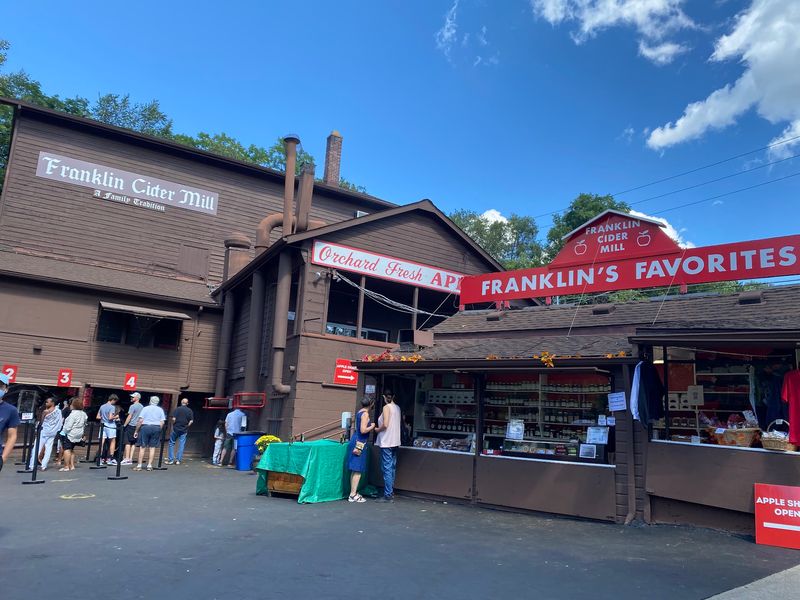
Saturday sunshine can turn Franklin Road into the least charming part of an otherwise lovely outing. The mill has limited parking, and peak fall crowds may create slow traffic, busy walkways, and lines around the compact property.
Choose a weekday or arrive early when possible, then watch carefully for pedestrians and posted parking directions. Before leaving home, confirm current dates, hours, payment options, and vendor schedules through the official mill website.
Seasonal displays may include pumpkins, gourds, caramel apples, preserves, bread, pies, gifts, and other fall goods. Availability and vendor offerings vary, so build your plans around the historic mill, cider, and donuts rather than one specific extra.
Bring a reusable bag, leave room in the trunk, and set a simple spending limit before browsing. The address is 7450 Franklin Road in Bloomfield Hills.
Practical preparation keeps the visit focused on apple aromas and turning machinery instead of parking stress or squashed pumpkins.