
This Michigan College Town Quietly Operates One Of America’s Top-Ranked Hospital Systems
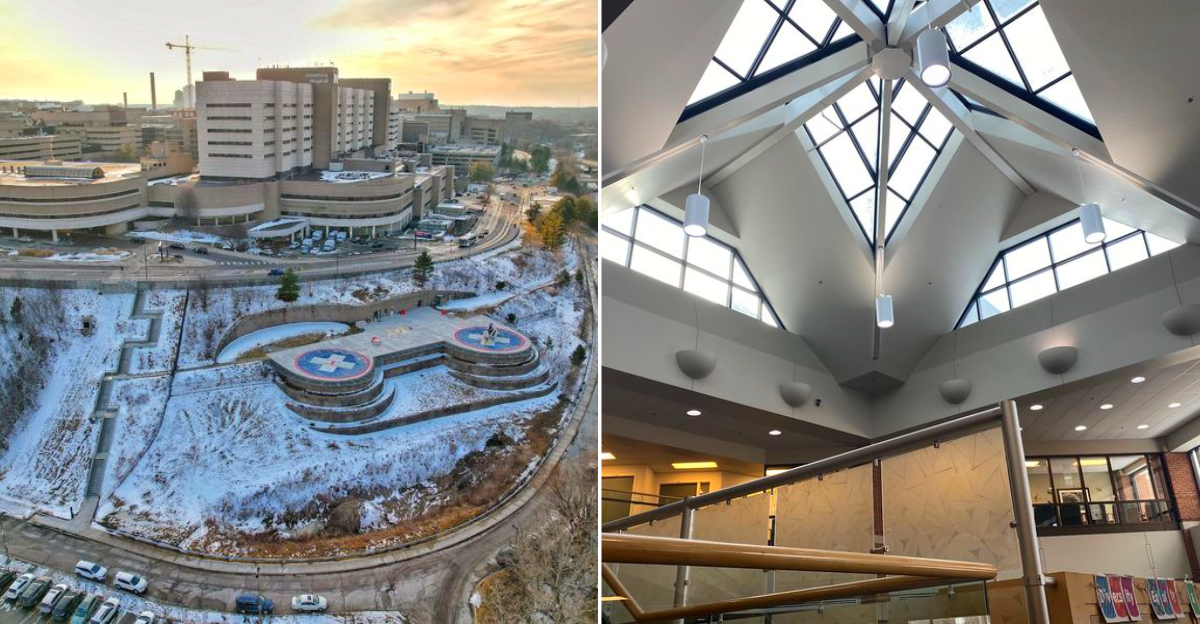
Driving past the hospital campus three times before realizing how massive it was felt embarrassing. Michigan Medicine stretches across dozens of buildings in Ann Arbor. Skywalks and tunnels connect everything into a city within a city.
It has been ranked among the top hospital systems for years. Specialties in cancer treatment, heart surgery, organ transplants, plus pediatric care draw families from multiple states. The medical school trains physicians who practice across the country.
Research labs here have produced breakthroughs I read about in headlines without ever connecting them to this campus. Ann Arbor feels like a college town first, then a medical destination second. That contrast is what makes it strange.
You grab coffee on Main Street, then walk past a building where someone is undergoing a transplant by noon. A hospital system ranked among the best in the country operates quietly inside a college town in Michigan.
Trust The Rankings, But Understand What They Mean
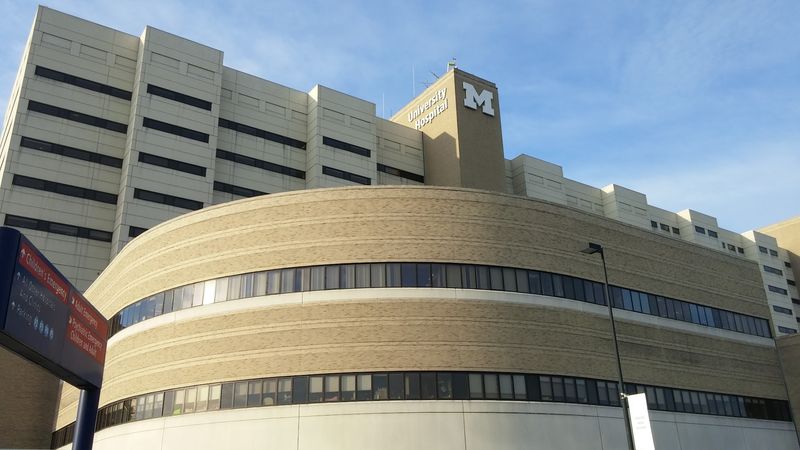
Praise can sound like marketing until you see the numbers. University of Michigan Health is ranked the number one hospital in Michigan and has earned a place on the U.S.
News Best Hospitals Honor Roll, which recognizes the top hospitals nationwide. That is not a small badge in a country with thousands of hospitals.
Another clue is its five-star CMS rating for quality, safety, timeliness, and value. Awards never tell the whole story, but they do give first-time visitors a useful map.
When a town better known for football and students quietly supports this level of care, paying attention seems wise. It suggests depth, not luck, and that matters when treatment choices feel big and personal for many families today.
East Medical Center Drive Becomes The Campus Spine
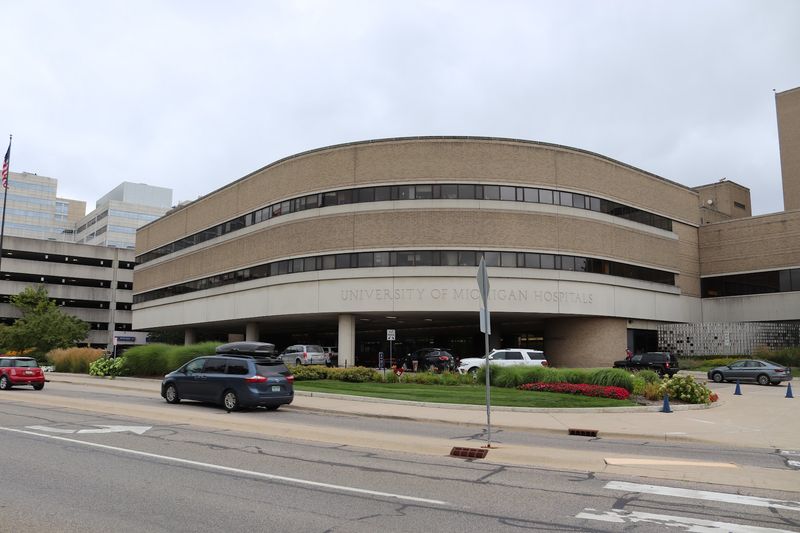
University Hospital anchors the main University of Michigan Health medical campus at 1500 East Medical Center Drive in Ann Arbor, Michigan. Fuller Road provides one of the clearest approaches, meeting East Medical Center Drive at the north side of the hospital complex.
Turn south from Fuller Road onto East Medical Center Drive and follow the road uphill into the medical campus. Hospital buildings gather quickly along this stretch, so follow the University Hospital and visitor-parking signs rather than relying only on the shared 1500 East Medical Center Drive address.
For University Hospital, follow signs to visitor parking structures P2 or P3, both beside the hospital and Taubman Center on East Medical Center Drive. From either structure, pedestrian connections lead into the hospital complex.
Look Back To See Why The System Feels So Established
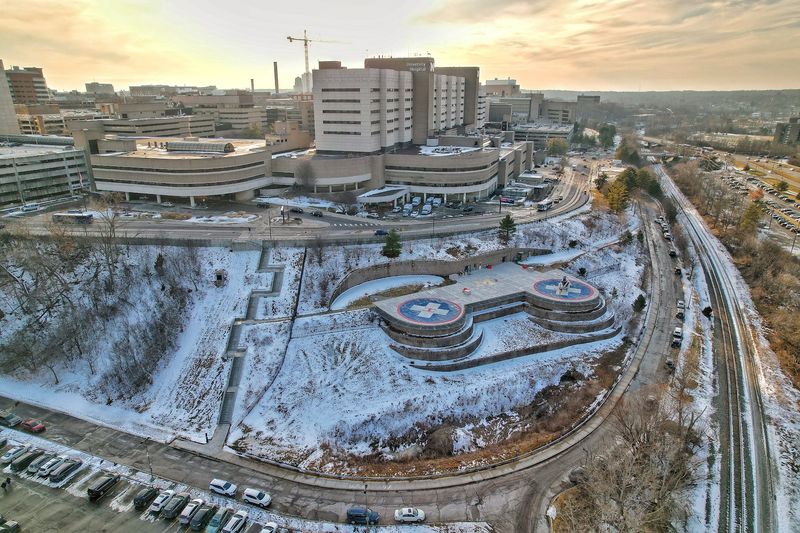
Some hospital histories begin with grand buildings. Michigan’s started more modestly, in 1869, inside a converted professor’s house, after the medical school had already taken shape in 1848.
That early link between teaching and patient care still shapes the place, which was built so students could observe medicine up close.
Female medical students were admitted in 1870, and the hospital later moved, expanded, and modernized through Catherine Street buildings, Albert Kahn’s 1925 Old Main, and the current University Hospital opened in 1986. Walking around Ann Arbor, you can feel that this system did not appear overnight.
It grew layer by layer, like the campus around it. That long timeline helps explain both its confidence and its appetite for new ideas.
Use The Campus Setting As Part Of The Experience
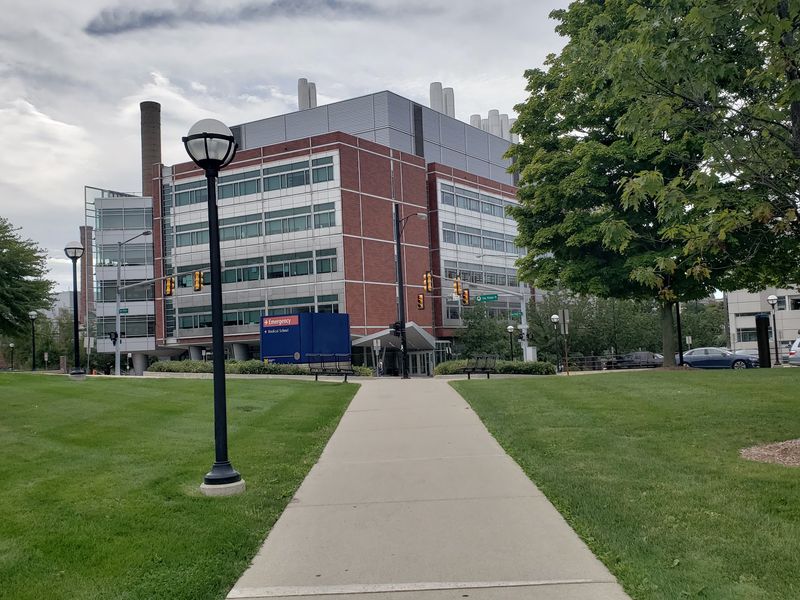
Morning light around the medical campus has a peculiar mix of calm and motion. Students hurry toward classes while patients, clinicians, and families move through the same district near Nichols Arboretum and the Huron River.
Few top hospital systems feel so tightly stitched into a university landscape.
That matters because the health system sits close to nursing, law, public policy, business, and social work, encouraging constant exchange across fields. I found that setting unusually reassuring.
It suggests that care here is part of a bigger civic project, not a siloed institution hiding behind its own walls. For visitors, that means easier connections to campus paths, nearby services, and a fuller picture of how medicine and learning meet here today.
Pay Attention To The Quiet Hours

The nicest surprise may be the sound, or rather the effort to soften it. University of Michigan Health sets Quiet Hours in inpatient areas from 1 p.m. to 3 p.m. and again from 9 p.m. to 5 a.m.
In a busy hospital, that kind of rule is more than politeness.
Staff work to reduce noise and can provide earplugs, headphones, or sleep masks. That tells you something about the culture.
Healing is not treated as a machine that runs on tests alone, but as an experience shaped by rest, light, and the tiny comforts people remember long after discharge. Visitors should follow the cue, lower voices, silence phones, and save louder conversations for lounges or outdoor walks when possible there.
Follow Visitor Rules That Actually Help

Getting the visit right helps everyone. Regular visitor hours are generally 9 a.m. to 9 p.m., though adult family members may visit a patient’s bedside around the clock when appropriate.
That flexibility feels humane, especially in a place handling complex care where timing rarely obeys a neat schedule.
Still, the hospital asks guests to do their part by speaking softly, using silent phone settings, and taking calls in lounges. Those details sound small until you stand in a hallway and hear how quickly noise travels.
A considerate visitor can be a real comfort, not just an extra body in the room. Before arriving, check unit-specific guidance online, because some floors and situations may need different rules for safety that day.
Read The Buildings For Clues About The Culture
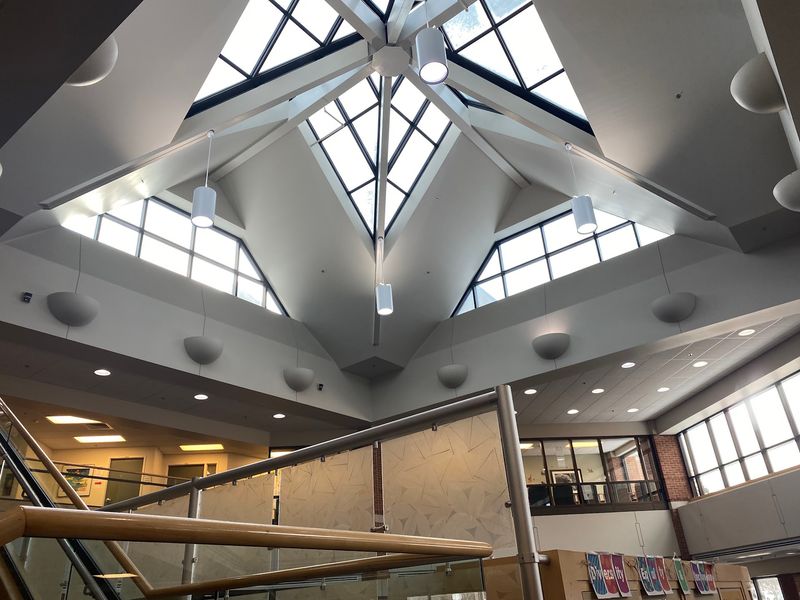
Brick, glass, and institutional geometry tell a quiet story here. Older landmarks such as Albert Kahn’s 1925 hospital remind you that design has long been part of Michigan medicine, not decoration added later.
Even now, the system uses detailed design guidelines to keep spaces compatible, workable, and easier to maintain.
That may sound technical, but patients notice the result without naming it. Hallways connect sensibly, rooms feel consistent, and the campus avoids the jumbled look some giant hospitals develop over decades.
I like that balance. It respects history while making everyday navigation a little less tiring for people who already have enough to manage.
Architecture cannot cure anyone, but it can lower stress before an appointment even begins for visitors.
Watch For The Future In The Kahn Pavilion

Fresh construction on a medical campus usually means more beds. The D.
Dan and Betty Kahn Health Care Pavilion, set to open in 2025, goes further, with 264 private rooms, 20 surgical suites, advanced interventional radiology, and a plan that lets every patient room convert to intensive care if needed.
Two floors can also become respiratory infectious containment units during public health emergencies, which is the kind of preparedness you hope stays boring but still exists. The building is aiming for LEED Platinum certification too.
Future-facing design can sound flashy, yet here it feels practical, almost humble, because it focuses on flexibility, safety, and energy use. That is a message for a hospital serving both daily needs and sudden crises.
Remember That Some Of The Biggest Advances Are Hidden

Some of the most unusual features are hidden in surgical spaces most visitors never see. The new pavilion includes a hybrid operating room with a movable MRI for real-time imaging, plus a silent operating room shielded from electromagnetic interference for delicate brain procedures.
It sounds a little science fiction, yet the goal is very grounded.
When teams can see more clearly during complex work, care can become more precise. That matters in neuroscience, where tiny differences can shape speech, movement, and recovery.
Even if you never step near those rooms, knowing the system invests in that level of capability helps explain why patients from across Michigan and beyond come to Ann Arbor for answers in especially hard cases each year.
Notice How Patient Experience Is Treated As Real Work

A hospital can have top machines and still feel cold. University of Michigan Health has an Office of Patient Experience, created in 2016, and the idea behind it is simple: listen better, explain clearly, and treat patients and families with respect.
Those basics sound obvious until you need them under stress.
The system measures patient experience through surveys that ask whether physicians showed knowledge, listened carefully, and gave clear explanations. Support services such as counseling, spiritual care, and art therapy also widen the definition of care.
I noticed how much that broader approach matters. People are not only bodies in rooms, and the hospital seems to build from that truth.
That makes a place feel more human day to day.
Plan The Logistics Before You Need Your Energy Elsewhere
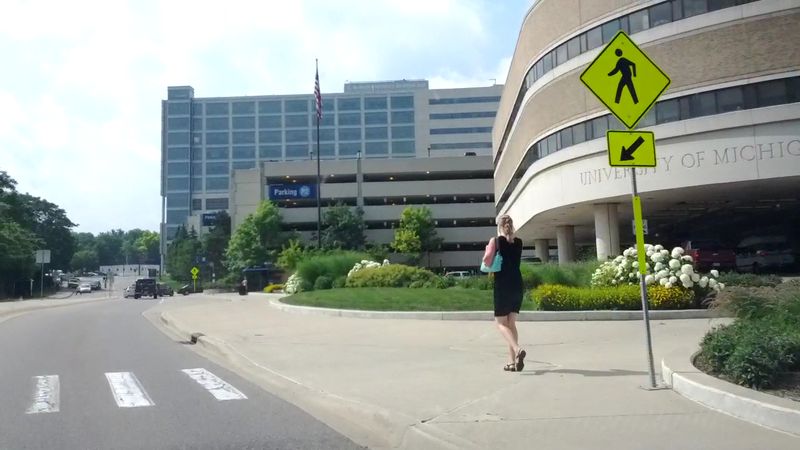
Even the best hospital can test your patience before you reach the front door. University of Michigan Health is large, active, and sometimes a little airport-like, so practical planning helps.
Visitor parking is available in designated structures such as Palmer Commons and the University Hospital Parking areas, with some metered street spaces nearby.
Give yourself extra time, wear shoes you can walk in, and save the phone number, 734-936-4000, before arriving. I learned quickly that calm logistics change the whole mood of a visit.
When directions, parking, and timing are sorted out first, you have more energy left for the part that actually matters, whether that is treatment, support, or simply being present for someone who needs you most there.