
This Michigan Fishtown Shanty Serves Lake-Caught Whitefish Smoked Over Sugar Maple Out Back
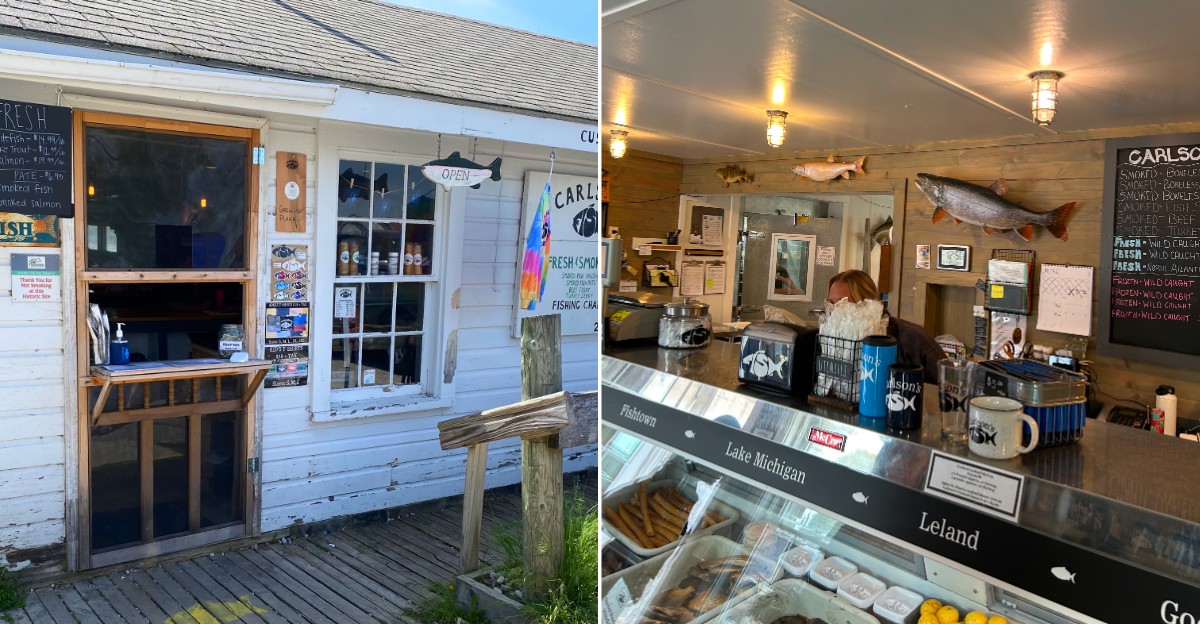
A weathered fish shanty has a way of making lunch feel closer to the lake, especially when the smoke curling from inside comes with more than a century of local history. In this historic waterfront district, a family-run fishery has been serving Great Lakes catch since 1904, and the setting still feels wonderfully tied to the water.
Smoked whitefish is the star, transformed by saltwater brining and maplewood smoke into something rich, savory, and impossible to rush.
Michigan seafood traditions come alive here through smoked whitefish, old fishing culture, and a working waterfront setting that still feels authentic.
What I like most is the lack of polish. The building is simple, the flavors are direct, and the experience feels rooted in place rather than designed for tourists.
Bring curiosity, leave room in the cooler, and expect one small bite to explain why this shoreline tradition has lasted so long here.
Start With The Smoked Whitefish
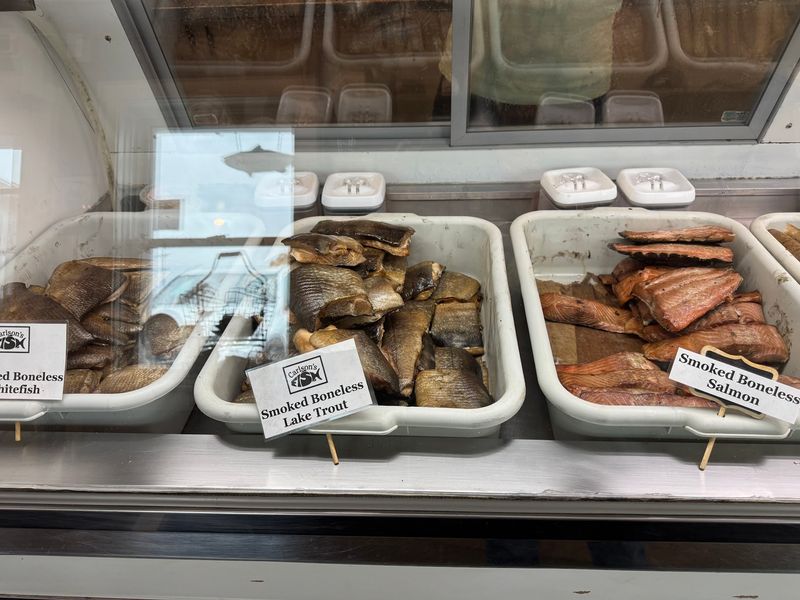
The headline attraction deserves first place in your order. Smoked whitefish is a signature at Carlson’s, and its mild flavor gives the smoke room to show without turning every bite into a campfire impression.
Ask which pieces are available and how much makes sense for your group. A smaller purchase is a sensible starting point if smoked fish is new to you.
At serving time, separate the flesh carefully and watch for bones rather than treating it like a boneless fillet. Plain crackers make an easy partner because they do not compete with the fish.
Take one bite without extras first. That simple pause helps you notice the whitefish itself, not just the smoky finish that follows each mouthful.
A Shanty With A Working Purpose
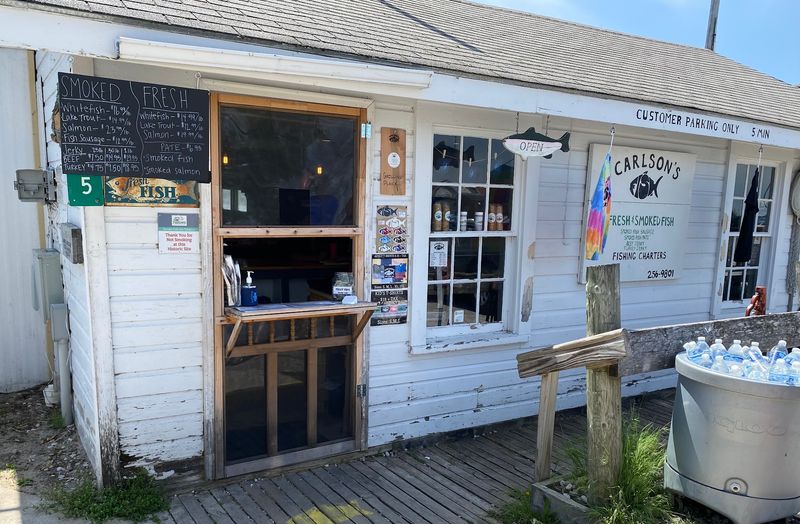
Carlson’s Fishery sits at 205 W River Street in Leland, Michigan, right inside historic Fishtown. M-22 brings you into Leland, then West River Street carries you down toward the river and harbor.
The last block is unmistakable once the weathered shanties, docks, and fishing boats start crowding the riverbank. Carlson’s is tucked into that working-waterfront cluster, so Fishtown itself becomes the landmark rather than any single roadside sign.
Try the harbor parking lot first, then use legal parking along nearby Lake, Main, River, Pearl, William, North, Cedar, or Pine streets if it is full. From there, continue on foot into Fishtown and follow the shanties toward Carlson’s by the river.
Maple Smoke Is Not Maple Syrup
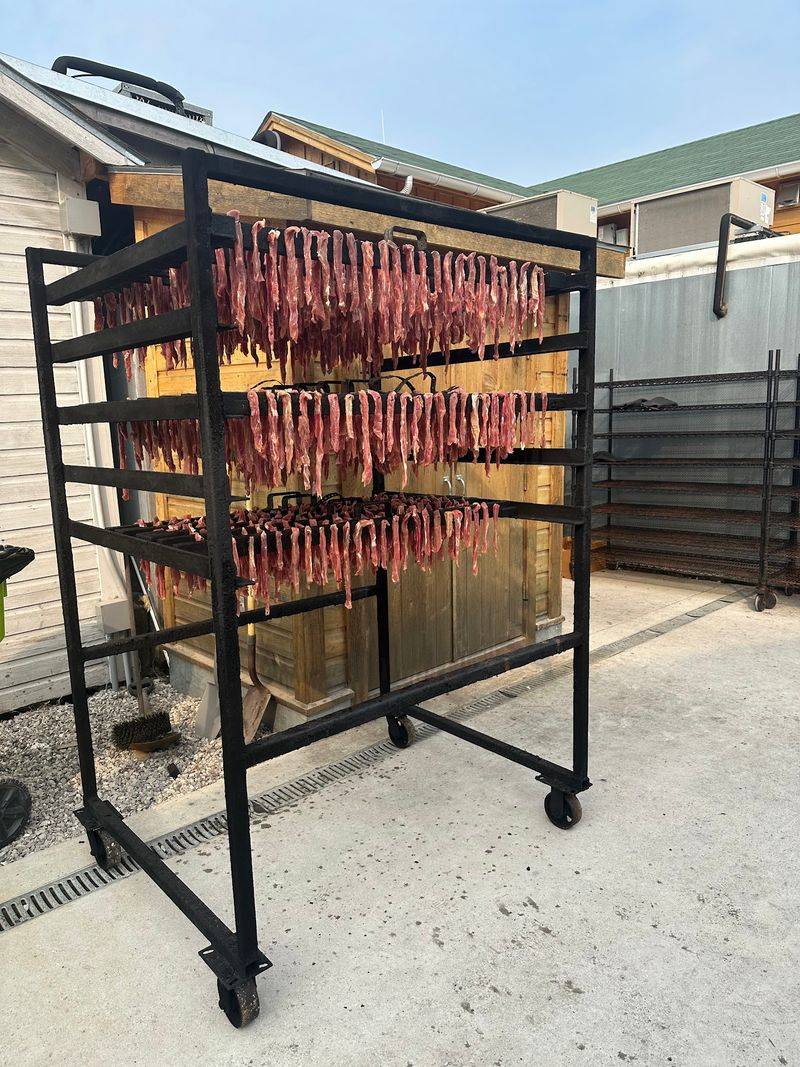
Wood supplies the flavor here, not a drizzle from a breakfast bottle. Carlson’s uses maplewood for smoking, a detail that helps explain why its whitefish is more than a plain piece of cooked fish.
The preparation includes a saltwater brine before the fish is slowly cooked in smokehouses behind the shop. Brining and smoking work together, so the finished taste comes from a process rather than a last-minute topping.
Ask staff about the method if the counter is quiet, but do not assume the smokehouses are open for tours. Looking from an allowed public area is enough.
Knowing what happens out back adds meaning to your purchase without turning someone’s workday into an unplanned demonstration for a curious visiting crowd.
The Lake Connection Matters
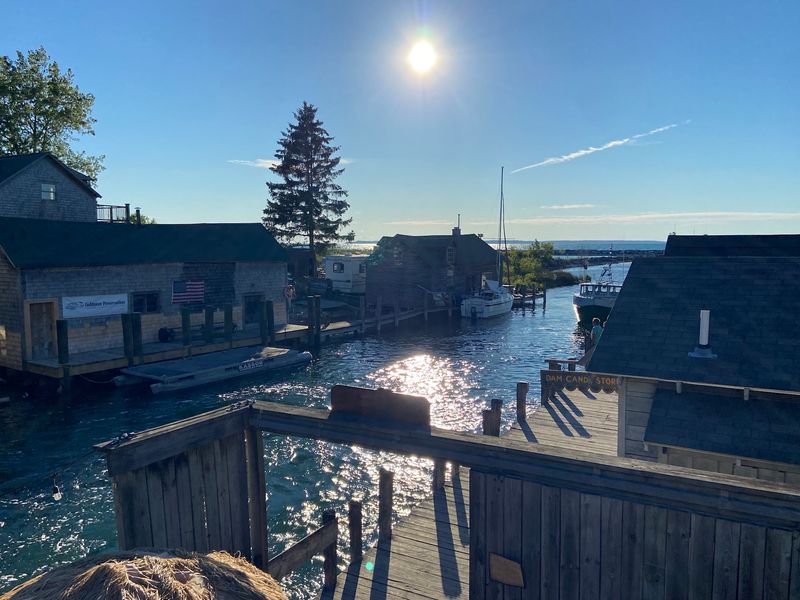
A waterfront address means more when the food has a connection to the water. Carlson’s whitefish is primarily sourced from Lake Michigan, linking the shop’s best-known offering to the Great Lakes fishing tradition around it.
Still, a fish counter can hold products from different places, and not every species should be assumed local. Ask where the particular fish you are buying came from, especially when choosing something beyond whitefish.
That question is useful, not fussy. It also gives staff a clear opening to explain what is available that day.
Avoid assuming every piece arrived that morning or came from one boat. The honest story of a working fishery is interesting enough without adding a perfect catch-to-counter timeline of your own.
More Than A Century At The Counter
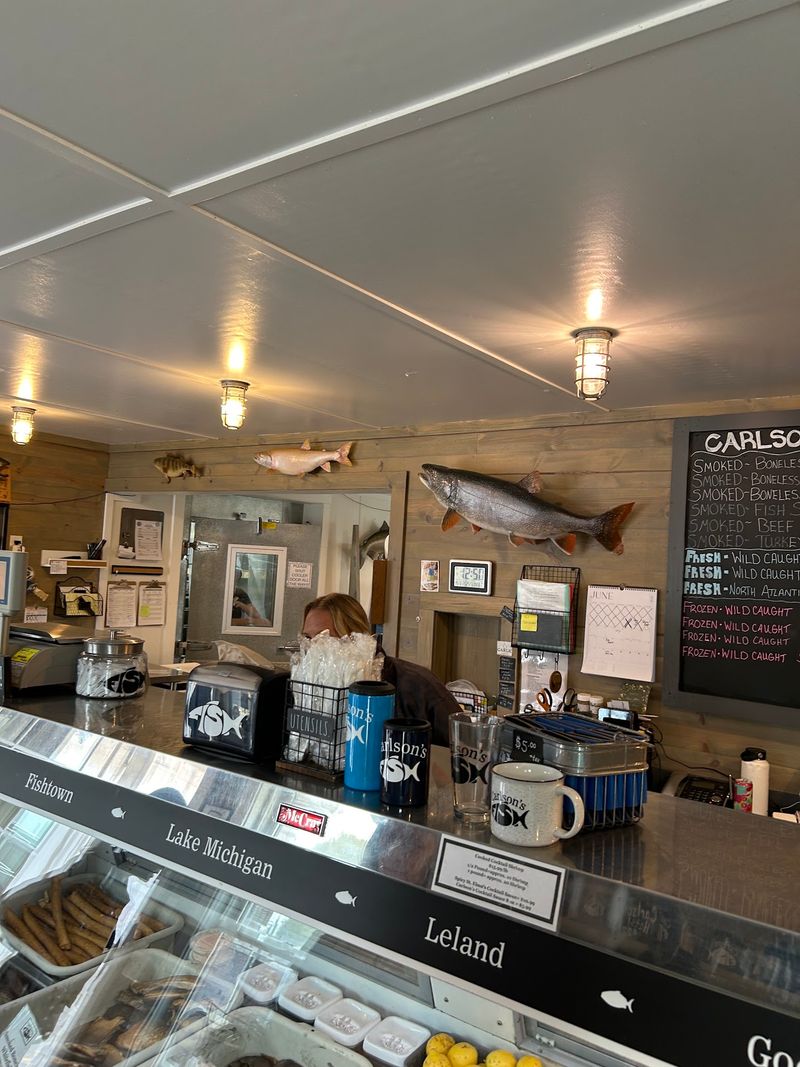
Since 1904, Carlson’s has kept fish at the center of its story. The business is known for its fifth-generation family roots, giving this small market a history much longer than an ordinary vacation stop.
Let that background shape how you look around, but resist imagining the place as a frozen museum. Fish still needs handling, customers still need serving, and the day’s work still sets the pace.
A brief question about the family business can be a welcome conversation when staff have time. During a rush, choosing your order clearly is the kinder move.
Buying something here offers a direct way to engage with the tradition: not just taking a photograph of old wood, but supporting the activity inside it.
Give The Whitefish Pâté A Turn
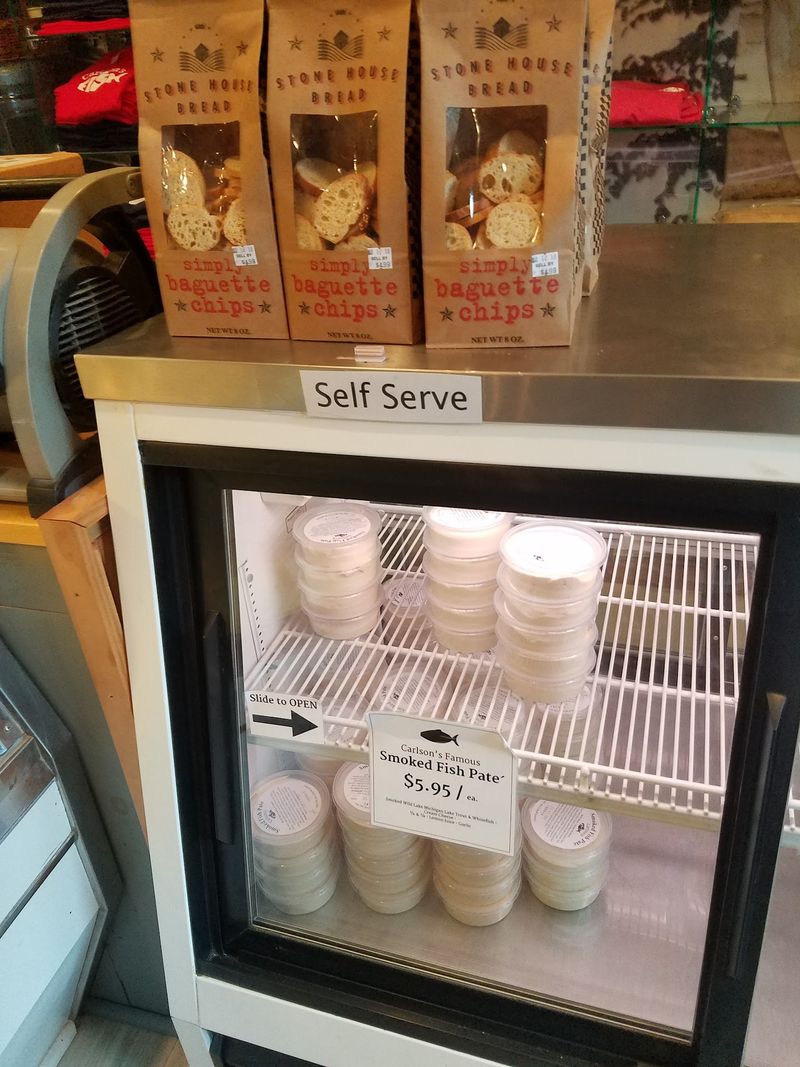
Sometimes the easiest way into smoked fish is through a cracker. Carlson’s whitefish pâté offers a spreadable alternative to a larger piece, making it a handy choice for sharing or introducing someone to the flavor.
Ask about the current ingredients rather than relying on a recipe remembered from another visit. Dairy, seasoning, and fish blends matter if anyone in your group has an allergy or a strong preference.
Bring a small spreading knife and something plain to put it on. Keep the container chilled until you are ready to eat, then return leftovers to your cooler promptly.
The appeal is practical as well as tasty: a spread can turn a simple snack break into a little waterfront meal without much preparation.
Fish Sausage Changes The Shape
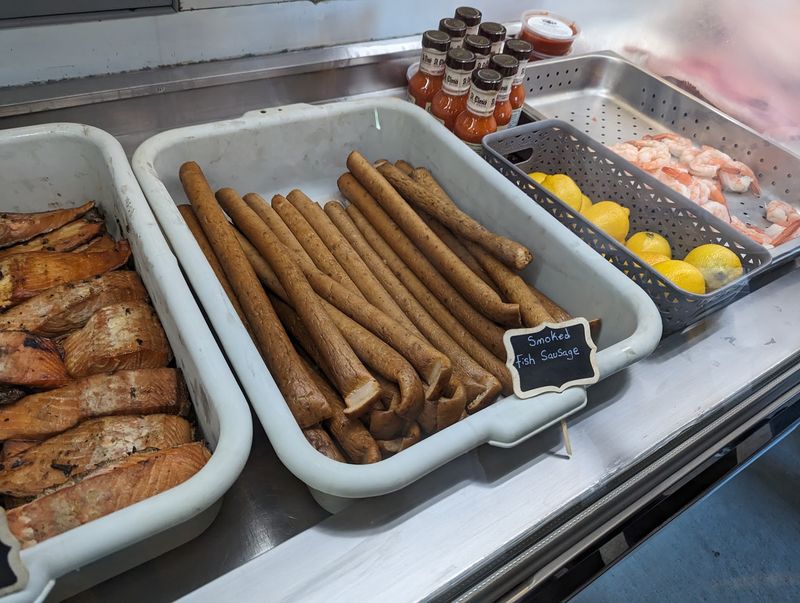
A sausage made with fish may be the counter’s most useful conversation starter. Carlson’s offers smoked fish sausage, providing another way to enjoy its smoking tradition beyond a familiar piece of whitefish.
Reported preparations combine whitefish and lake trout with seasonings, but ask staff about the current blend and how to serve it. Recipes and availability should never be treated as fixed promises.
If several people are curious, buy a modest amount to share before committing to a larger order. Check for ingredients that matter to your group, and follow the shop’s storage advice.
The unusual shape is only part of the interest. Comparing sausage with plain smoked fish shows how preparation can change the experience of related ingredients quite noticeably.
Fresh Fish Needs A Different Plan
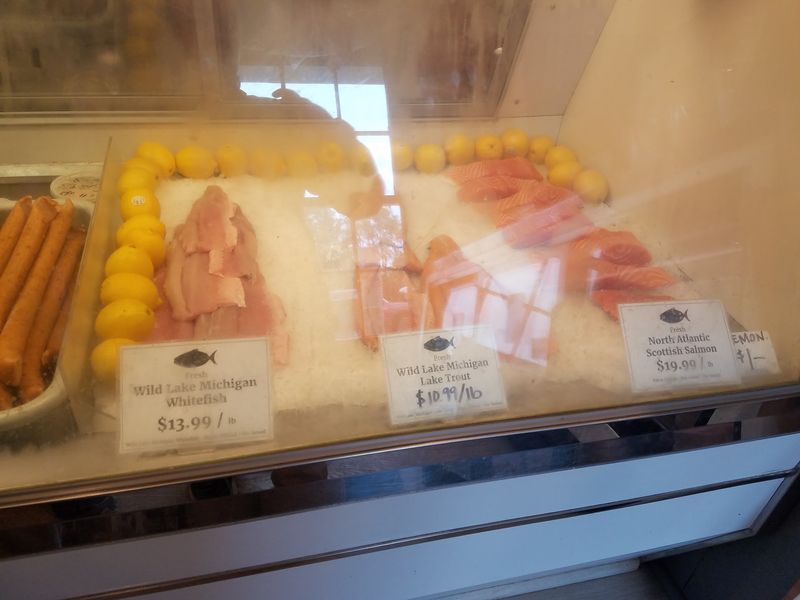
Dinner back at your rental calls for a different purchase than a dockside snack. Carlson’s sells fresh fish as well as smoked offerings, so your cooking plans should guide what you ask for at the counter.
Explain when you plan to cook and whether you have a grill, oven, or stovetop. Ask which fish is available, whether it has been previously frozen, and what preparation suits the cut.
Those details are more useful than picking by appearance alone. Buy close to the time you can refrigerate it, and carry it in a properly chilled cooler.
Fresh fish is not a souvenir for a warm back seat. A little planning protects both the meal you have imagined and the purchase itself.
The Boats Are Part Of The Story
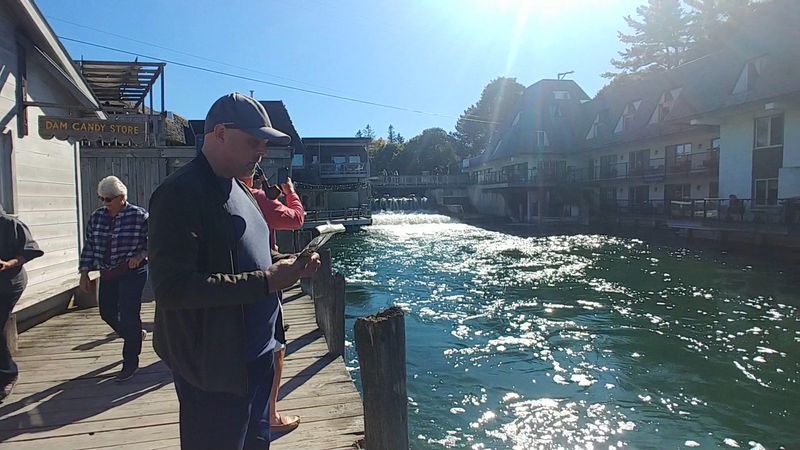
The green and white fishing tug Joy brings the waterfront’s working character into focus. It is associated with Fishtown’s commercial fishing story, a reminder that the shanties are not simply scenery arranged around a shopping stop.
Look for boats from public viewing areas while visiting Carlson’s, but let the day’s actual activity guide your expectations. Boats may be away, tied up, or quiet; unloading is not a scheduled visitor show.
Keep clear of ropes, equipment, and any area being used by workers. A photograph can capture the setting without interrupting it.
The most rewarding detail may be ordinary: a working vessel beside a place that sells fish. That connection explains more about Carlson’s than a decorative nautical display ever could.
Check Hours Before Heading Over
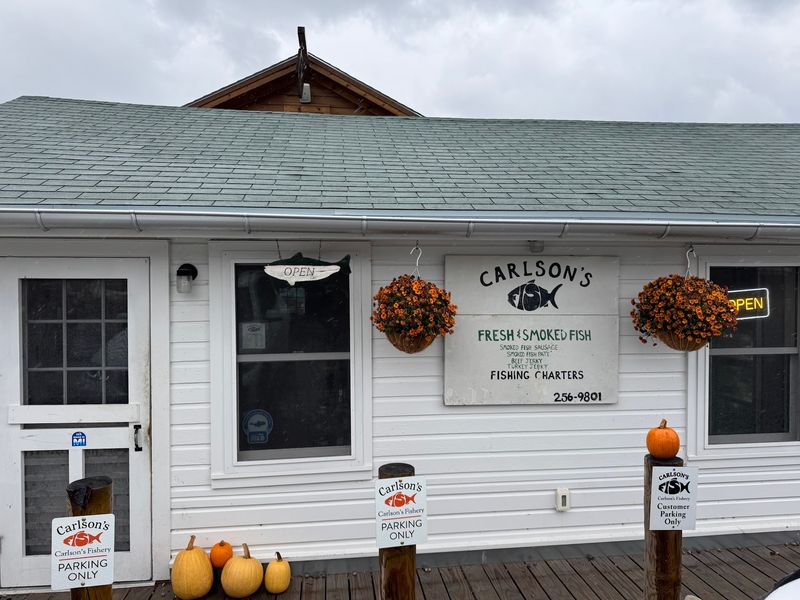
A beautiful drive is less satisfying when the shop is closed. Carlson’s has seasonal patterns, so confirm its current schedule before making the fishery the main reason for your trip to Leland.
The supplied hours list opening at 10 a.m., with closing at 5 p.m. Sunday through Thursday and 6 p.m.
Friday and Saturday. Treat those as planning information, not a guarantee for every date.
Call 231-256-9801 or check the fishery’s website for updates, especially outside the busy summer months. An earlier visit during open hours can leave more room for questions and shopping.
Arriving before opening may offer a quieter look at the waterfront, but it does not promise access to the counter or a boat unloading its catch.
Pack For The Ride Home
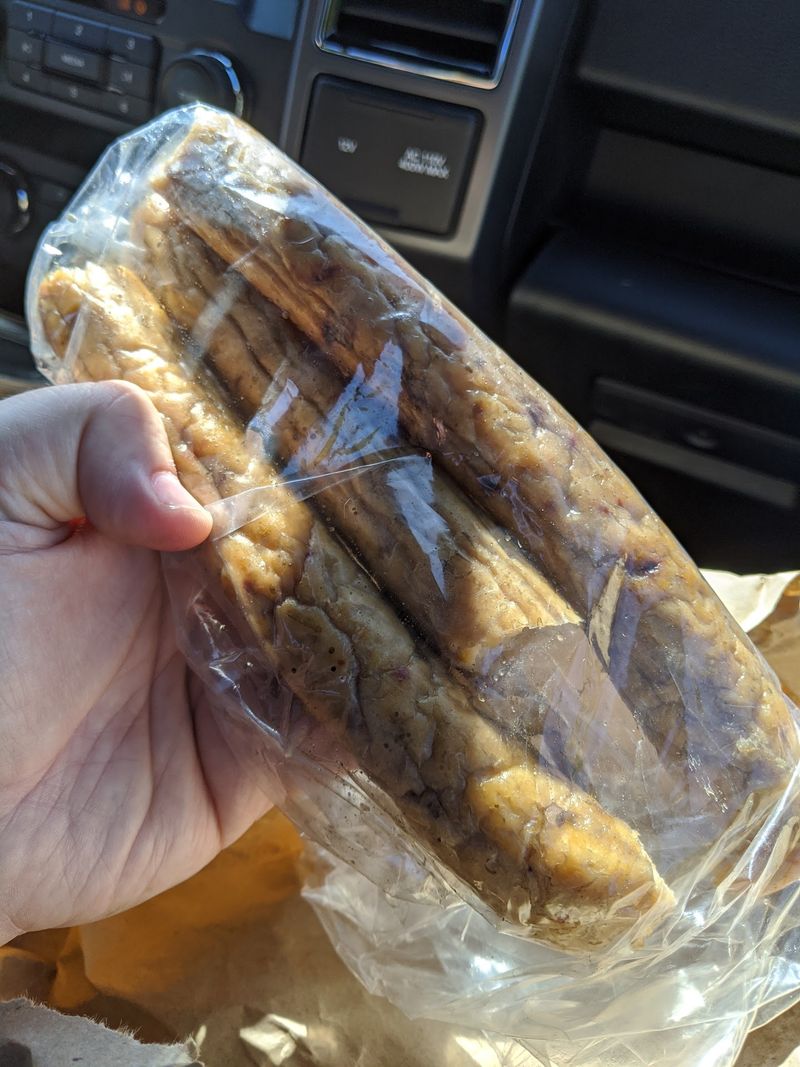
The smartest extra to bring is not another camera lens. A cooler with enough ice packs makes a Carlson’s visit easier, especially if you plan to buy fish and continue exploring before heading home.
Smoked fish still needs proper cold storage; smoke does not make it safe to leave in a hot car. Ask staff for handling guidance and any instructions that come with your purchase.
Pack fish securely, keep it cold, and refrigerate it promptly when you arrive. For an immediate snack, bring crackers, napkins, and a small utensil rather than expecting restaurant service.
Take your packaging away and leave shared spaces tidy. That quiet bit of preparation lets the visit end with good food instead of a storage problem.