
This Michigan Gemstone Museum Feels Like A Dream Come True For Rock Collectors
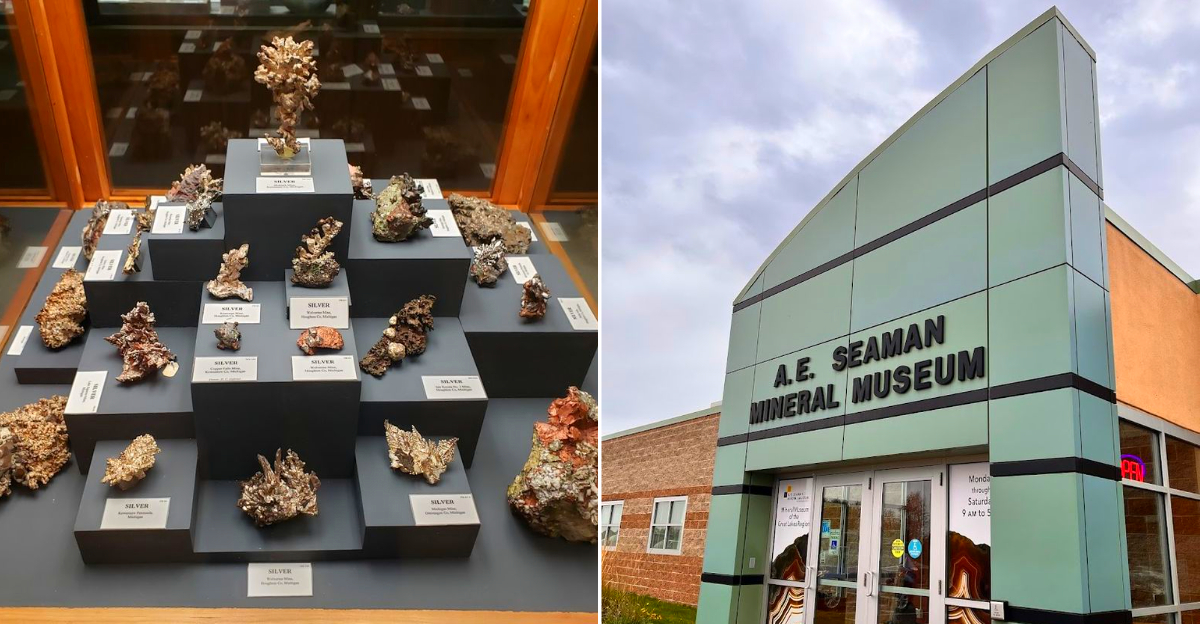
If you think “rock collecting” is just a dusty hobby for people in cargo shorts, one walk through this campus sanctuary in Houghton will completely recalibrate your reality.
As someone who spent years squinting at thin sections under a microscope, I can tell you that most museums whisper, but this one sings with the literal tectonic energy of the Keweenaw.
It’s gallery after gallery of high-grade “eye candy” where the staff actually knows their magmatic differentiation from their metamorphic facies, keeping the science sharp while the wonder stays dialed to eleven.
It’s the kind of place that turns a casual curiosity into a full-body obsession, demanding at least three slow laps just to process the sheer crystalline perfection on display.
Visit Michigan’s official mineral museum, featuring the world’s finest collection of native copper and spectacular fluorescent minerals from the region. Grab a field guide, take your time, and prepare to have your definition of “stone” permanently upgraded.
Copper Pavilion And The 17-Ton Slab
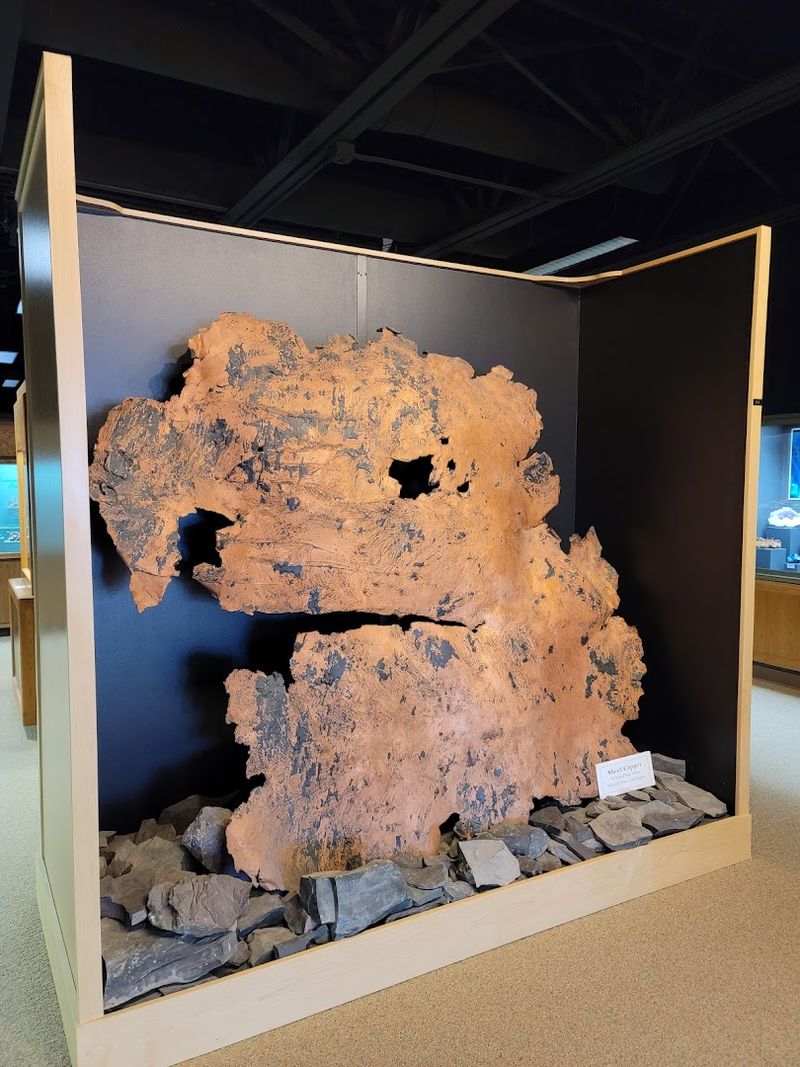
You hear it before you see it, the quiet weight of metal pressing on your imagination. Inside the Copper Pavilion, a Guinness-recognized 17-ton native copper slab anchors the room, recovered from Lake Superior and displayed with almost reverent simplicity.
The block’s rippled surface catches soft light, hinting at underwater centuries and the region’s industrial sinew. History meets physics here, and I felt time slow around that orange mass. Nearby panels outline Keweenaw mining, smelting, and the astonishing logistics of lifting copper from bedrock and lakebed.
Step back for scale, then walk the perimeter to notice tool marks and crystalline gleam. Tip: visit early, when the pavilion is quiet, so footsteps do not drown the copper’s hush. In your own head.
Getting There
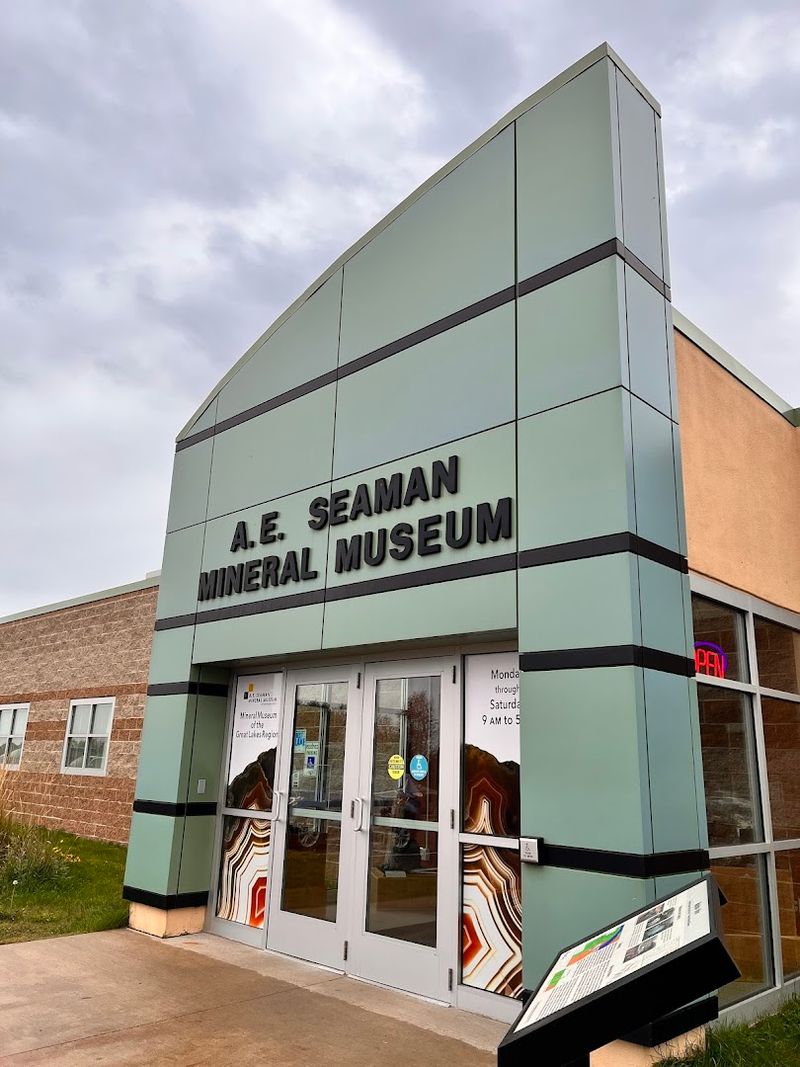
Getting to the A. E. Seaman Mineral Museum at 1404 Sharon Ave, Houghton, MI 49931 is a scenic climb that rewards you with some of the best views in the Copper Country. Most visitors arrive via US-41; once you hit the stoplight in downtown Houghton, you’ll take MacInnes Drive uphill for about a mile, following the signs that lead you deeper into the Michigan Tech campus.
For those already exploring the university grounds, the Husky Campus Shuttle makes regular stops right at the door, making it an easy add-on to a day of campus wandering.
If you’re driving yourself, you’ll be happy to find a dedicated, free parking lot directly in front of the entrance, a rare luxury on a college campus. Once you park, you’re just steps away from the Copper Pavilion and the world-record native copper slab that anchors this hilltop sanctuary.
Michigan Minerals, Mapped And Magnified
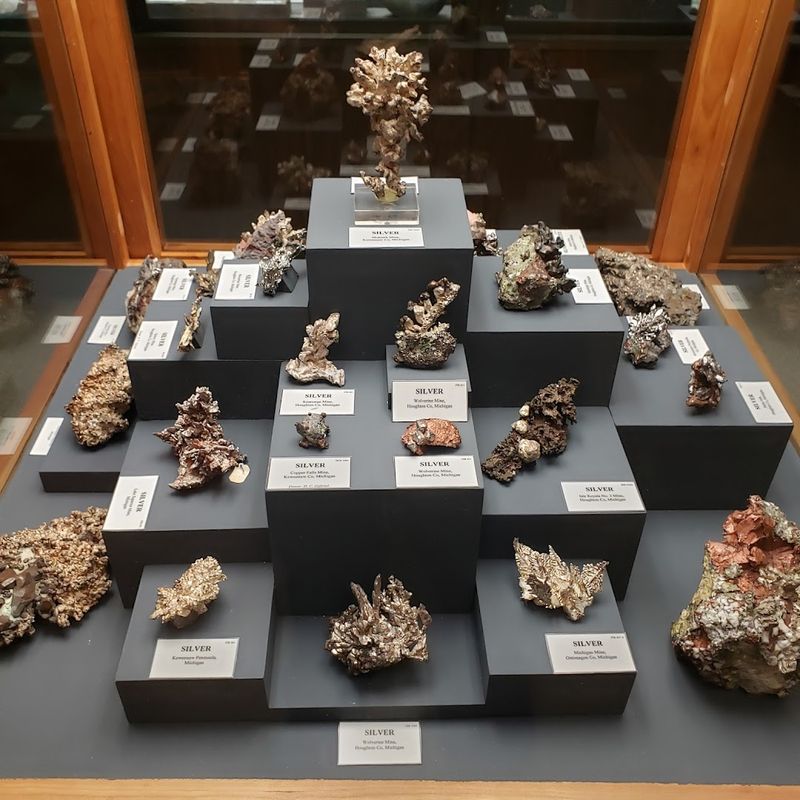
Start local and the rest of the world makes more sense. Cases dedicated to Michigan minerals map the state’s geology, from Keweenaw native copper and datolite to iron ores and Lake Superior agates.
Labels point to mines and quarries by name, turning specimens into coordinates you could chase across a weekend. History threads gently through these displays, noting Douglass Houghton’s early collections and the region’s nineteenth century copper boom. The mood feels respectful rather than nostalgic, emphasizing science, labor, and landscape.
Visitor tip: take a photo of the case maps before wandering, then compare them with roadside rock shops later. Patterns emerge fast when you notice recurrence by county, color, and luster across otherwise wildly different stones on every visit.
Conversations With Guides And Geologists
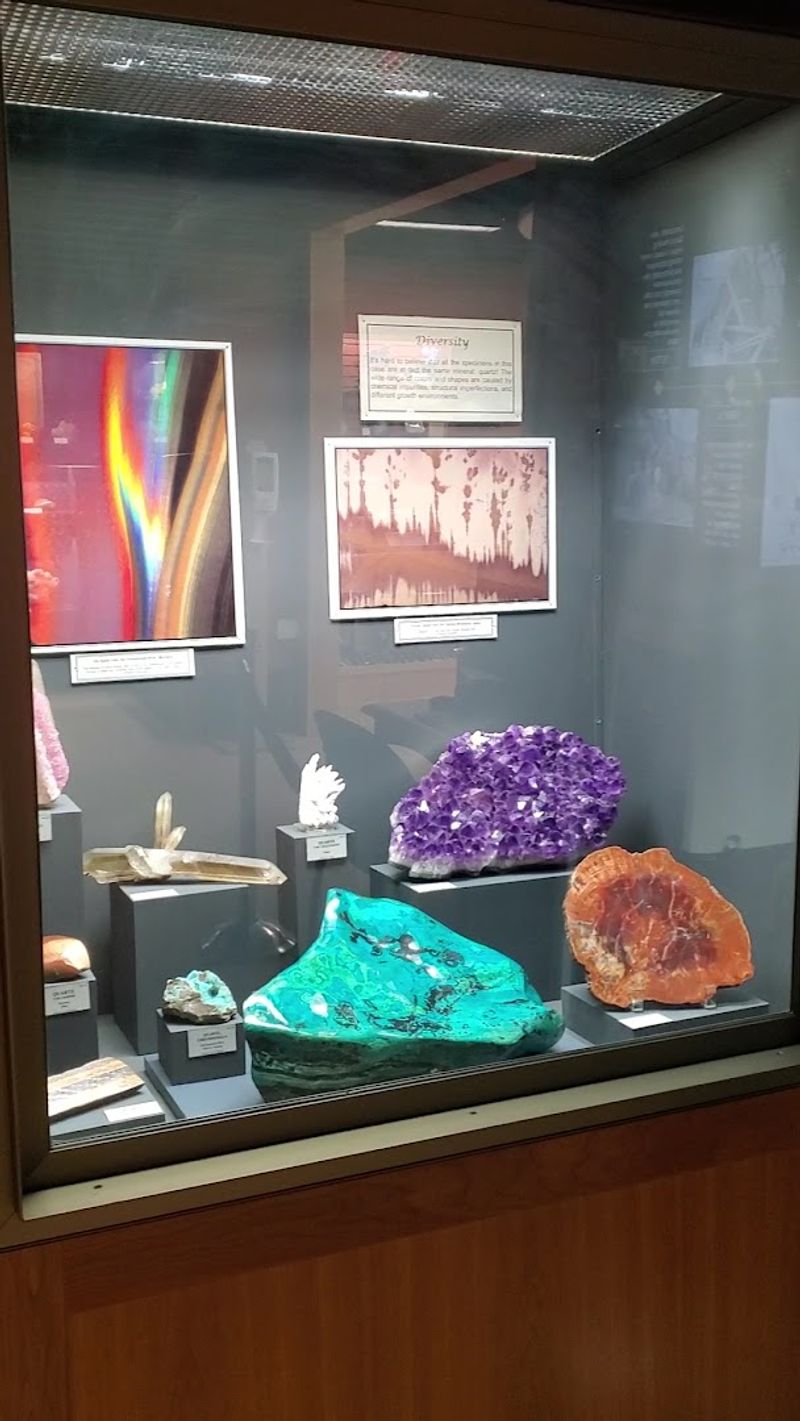
A quiet question at the front desk opened a whole seam for me. Staff here speak geology fluently, yet translate without jargon, pointing toward specimens that illustrate a concept rather than reciting a textbook. That tone sets the day’s pace, calm and curious instead of hurried.
There is institutional memory behind the counter, including stories about historic donations and how certain displays evolved. Local culture filters in too, because many visitors arrive after hiking ruins or touring Michigan Tech.
Practical advice: name your interest early, whether it is crystal systems or mining gear, and you will get a small, customized breadcrumb trail. It makes the large collection feel navigable, and the science lands exactly where attention already leans for you.
Building Flow And Calm Sightlines
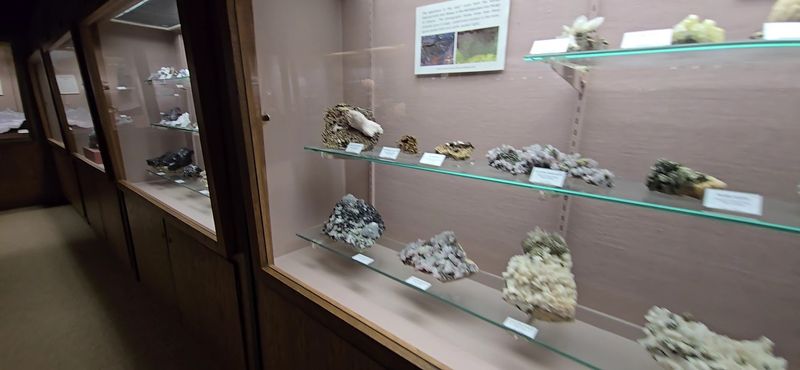
The building looks modest from the outside, but the galleries unfold like nested vugs once you step in. Wide aisles, steady lighting, and low cases create clear sightlines, letting tall specimens breathe while children see comfortably.
Labels ride at readable height, and benches appear right when your brain needs a pause. Michigan Tech roots show in the architecture’s practicality, not showiness, a good fit for collections that already sparkle. Short history panels break up longer runs and keep momentum.
Visitor tip: loop right first, then cross toward the fluorescent gallery to avoid backtracking, finally finishing near the gift shop. That route leaves hands conveniently free for a notebook scribble or a pocket agate from the tidy bins by checkout.
Historic Labels And Douglass Houghton’s Echo
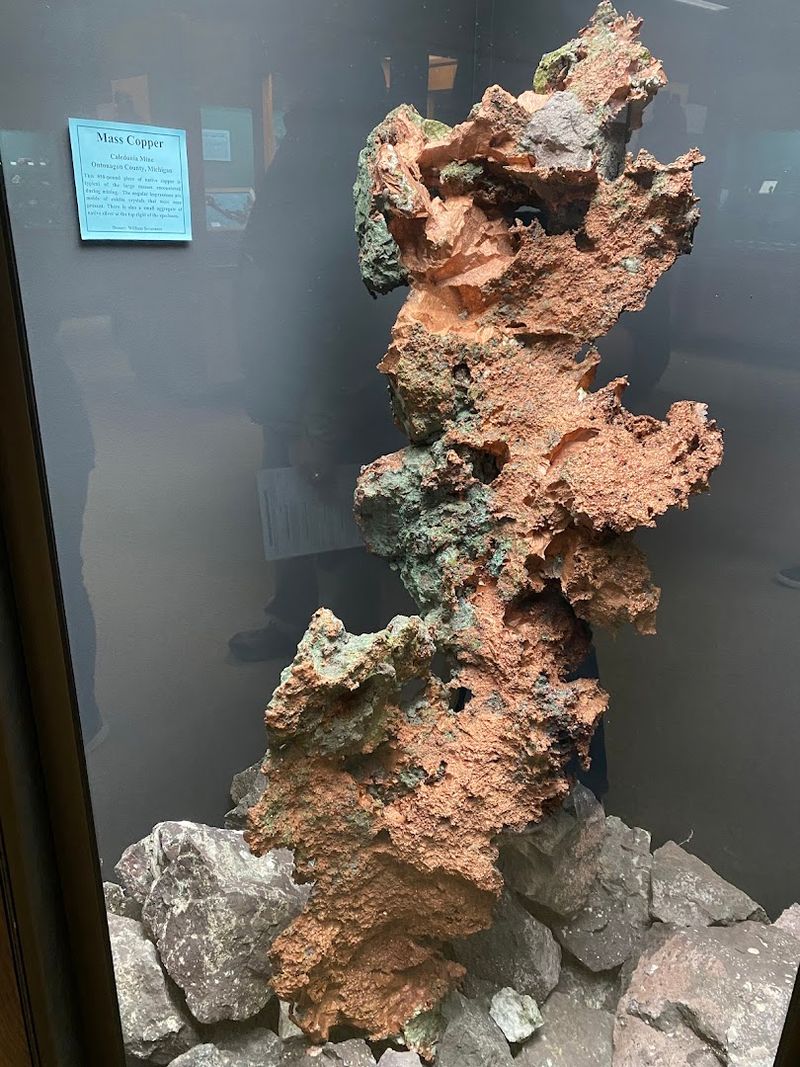
A glass case stops many people because the labels read like a century-old notebook. Among the historic specimens are pieces tied to Douglass Houghton, Michigan’s first state geologist, and others collected by early surveyors. Their tags, slightly faded, turn minerals into messengers from the era when maps were still guesses.
Conservation techniques appear quietly in the mounts, with unobtrusive cradles and minimal adhesives preserving patina. The feel is studious without being stiff. Habit to adopt: read the oldest label aloud, then look again at the crystal faces, as if greeting a correspondent across time.
That small ritual reframes the display from archive to conversation, and the room grows warmer, as though the collectors just stepped outside for a breath together.
Great Lakes Lens On Geology
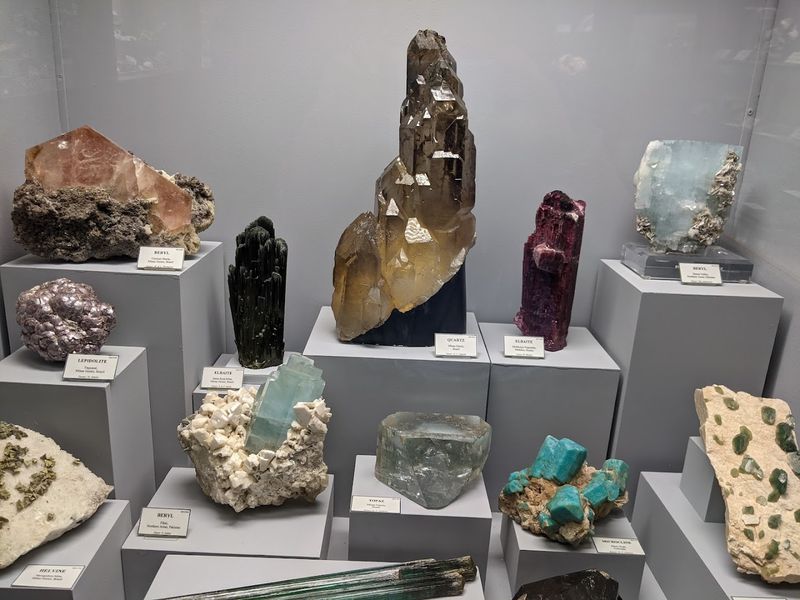
Blue hints follow you through this section, quietly echoing the inland seas. The Great Lakes emphasis frames mineral stories by watersheds, with glacial transport, shoreline agates, and iron shaping shipping routes.
Diagrams make currents and bedrock neighbors, so specimens feel less isolated and more like members of a moving archive. I found the mood contemplative, perhaps because lake narratives carry both power and pause. Preservation notes describe handling specimens susceptible to moisture changes, a practical nod in a humid region.
Visitor habit: trace a single water path on the map, then locate its stones in cases, building a tiny itinerary. Later, the outdoor air feels linked to glass, and the museum’s geography keeps unfolding as you step outside afterward today.
Designing For Curious Kids
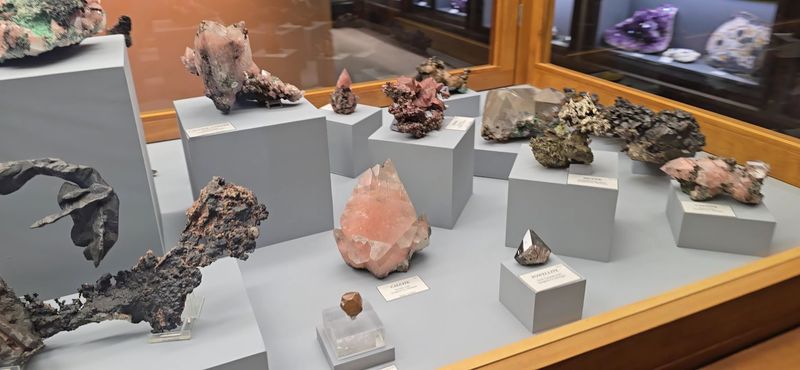
Small hands press to glass, and the exhibits seem engineered to welcome that impulse. Case heights, simple diagrams, and tactile comparisons in the education nook let young visitors hang on without dumbing anything down. A meteorite display sparks wide eyes, then labels steer attention toward formation stories and materials science.
The vibe is patient, with short narrative blocks that reward quick curiosity and deeper reading. Museum history threads in, explaining its role as Michigan’s official mineralogical museum and a Keweenaw Heritage Site partner. Practical advice: divide your visit into zones and take short breaks, using benches like geological commas. Kids absorb more when movement is part of the plan, and adults enjoy the pacing too, especially on busy days here.
Copper, Books, And Take-Home Stories
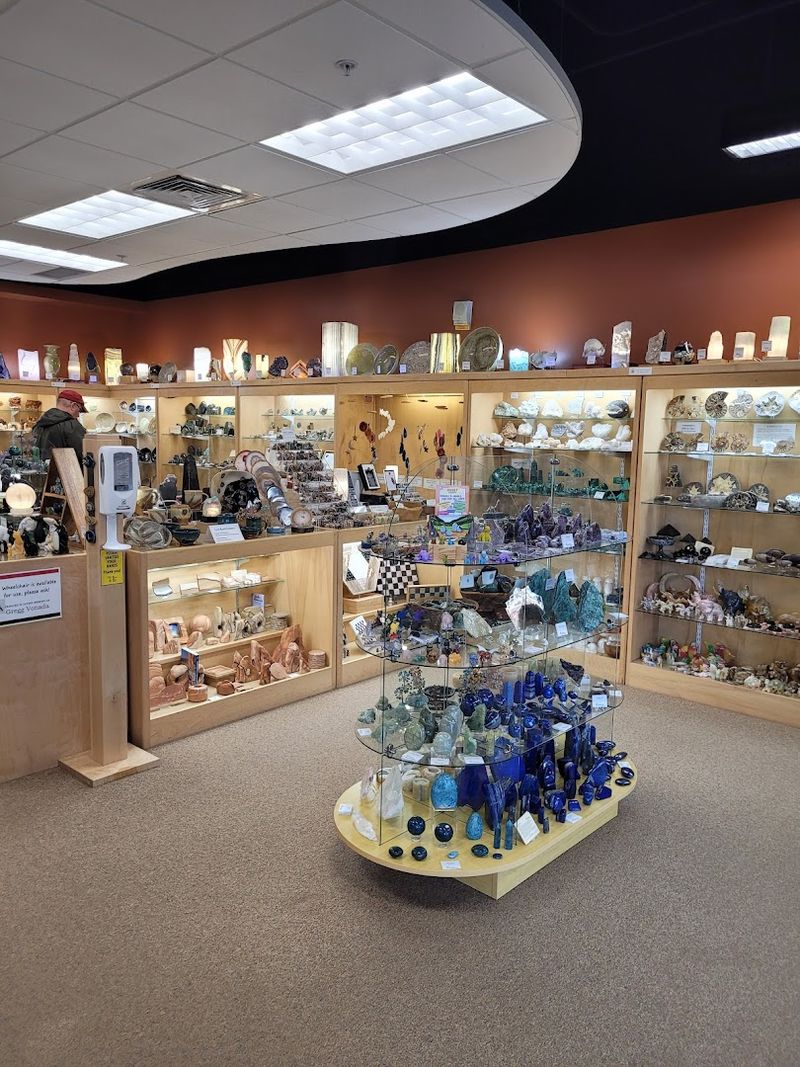
Near the exit, shelves glint with polished stones beside bins of rough Keweenaw copper. The shop balances souvenirs with solid field guides, postcards showing museum favorites, and a few irresistible datolite slices. Prices feel reasonable, making it easy to carry the day’s geology into a pocket or bookshelf.
Regional history flows through merchandise, including specimens sourced responsibly from long-closed mines and modern collections. The tone stays educational rather than touristy. Tip for collectors: ask about shipping for heavier pieces and check the provenance cards before purchasing. That simple ritual preserves context when the specimen leaves the museum, and it adds a small story you will retell whenever someone asks where the rock came from back at home later with friends.
Seasons, Light, And Easy Planning
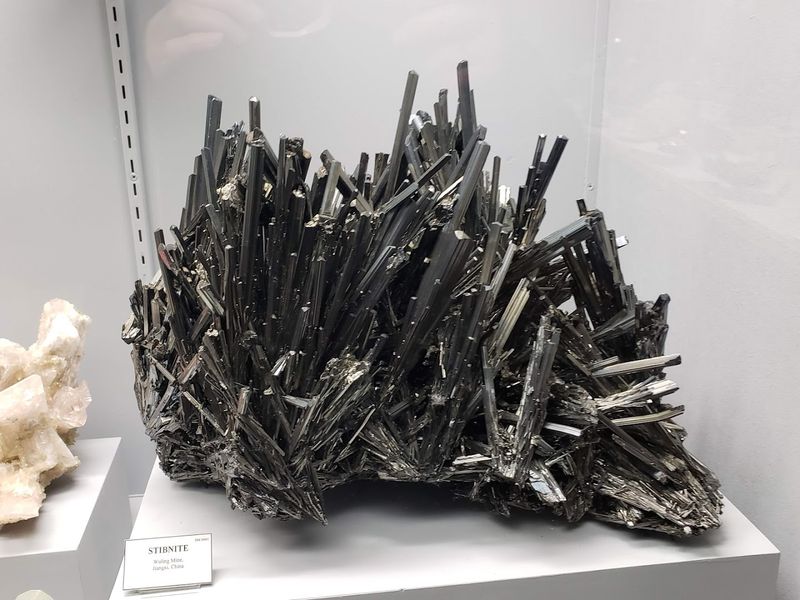
Snowflakes sometimes arrive sideways in Houghton, and the museum becomes a welcome harbor. Winter coats hang comfortably near the entrance, leaving hands free for note taking and camera work. Summer’s long light, though, pairs perfectly with a late afternoon visit that spills gently into copper colored sunsets.
I watch the hours because they are straightforward: Monday through Saturday, 9 to 5, with Sunday open in summer. That reliability helps plan around campus tours or lake drives.
Practical note: the parking is right out front, and accessibility is thoughtfully considered inside the galleries. Weather can turn fast near Superior, so stash layers in your car and let the exhibits set the pace instead of the forecast on any given day here.
Quiet Corners For Study And Sketching
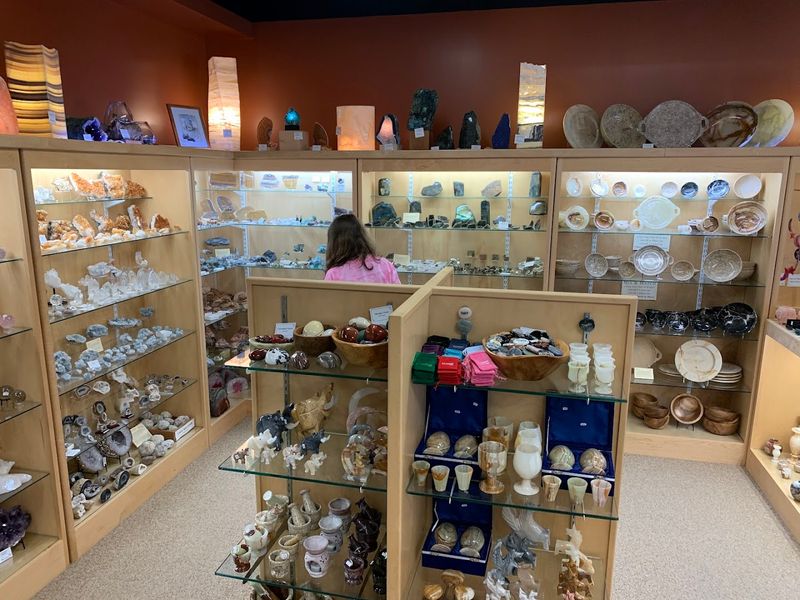
Not every highlight sparkles; some sit in the calm edges between displays. Quiet corners with benches invite longer looks at crystal systems or mineral twins, away from the main flow. A small reading area near the shop keeps field guides close, encouraging visitors to pair specimens with deeper context.
The museum’s university setting matters here, shaping a tone that respects self-guided learning and careful observation. Preservation techniques remain visible yet discreet, letting scholarship ride alongside beauty.
Visitor tip: bring a small notebook and a pencil, then sketch a crystal habit or two before leaving. Muscle memory fixes shapes that photos miss, and your memory later will open like a cabinet drawer when you revisit the details at home.