
This Michigan Iron Mine Lets You Ride Underground Trains 400 Feet Below The Surface
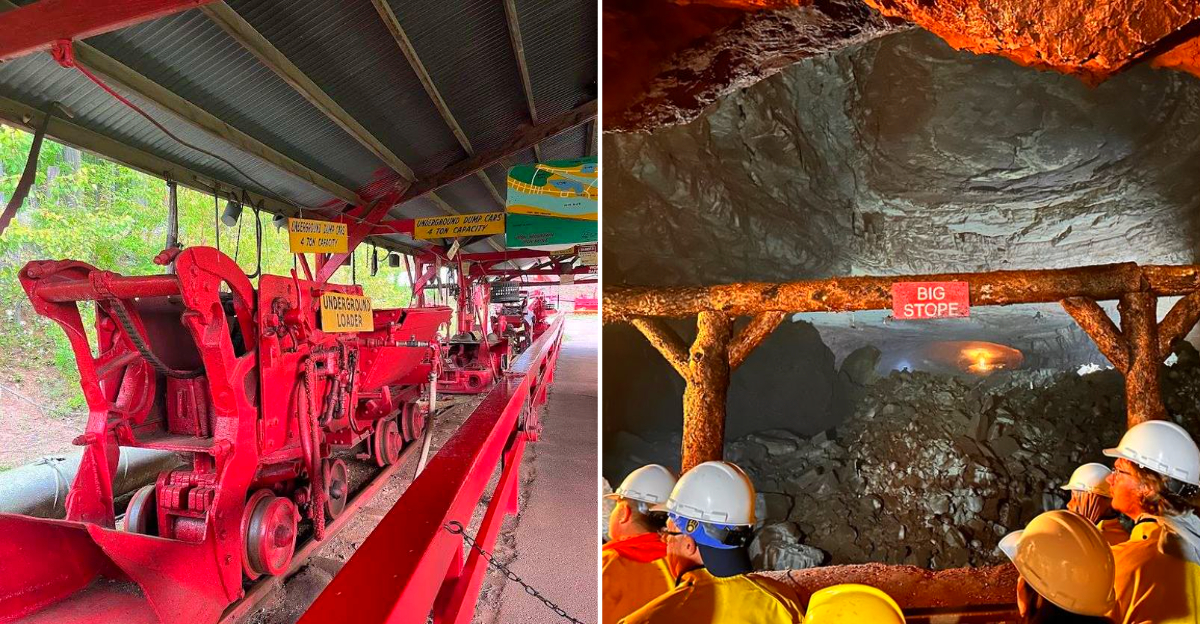
Descending into an iron mine is not something most people associate with a Michigan vacation, but the experience changes that assumption within the first hundred feet.
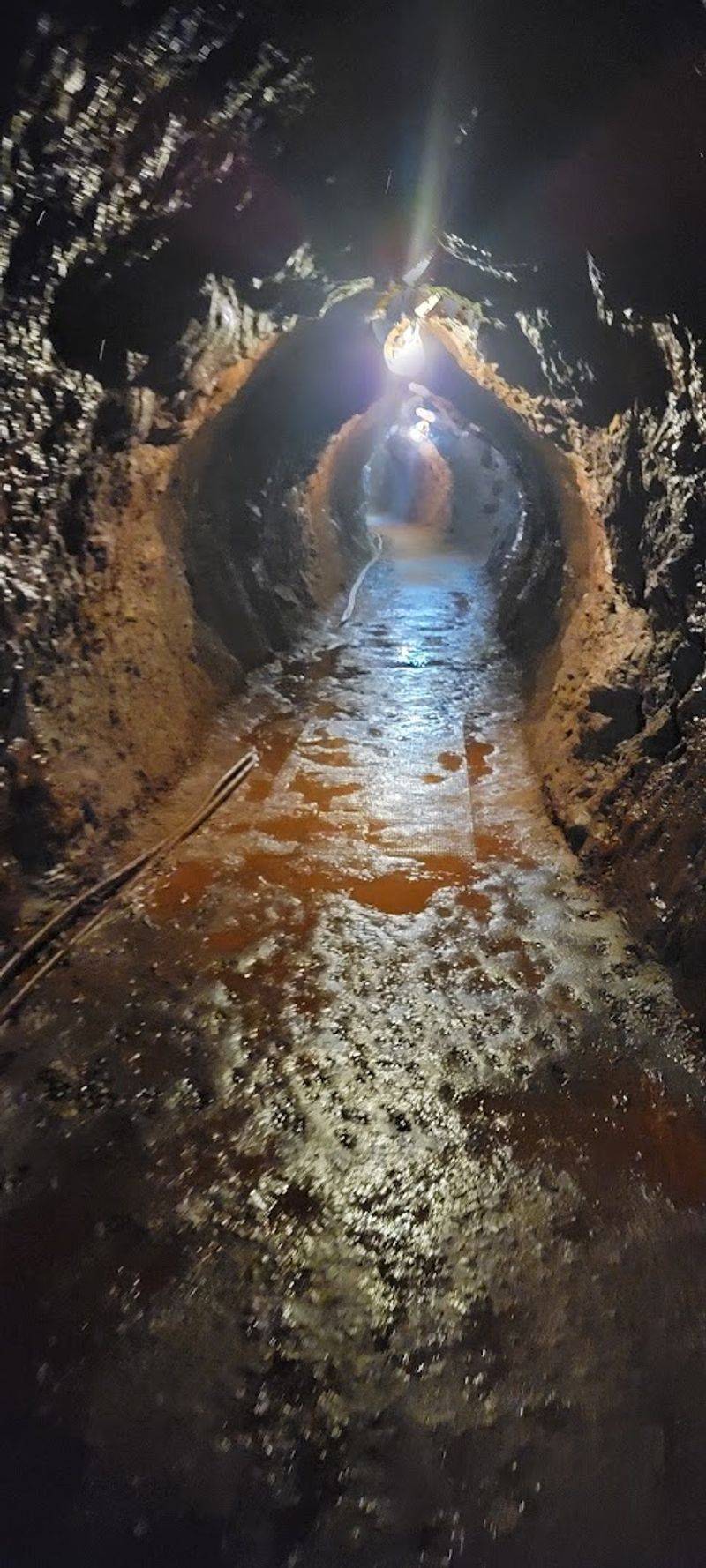
The train pulls you 2,600 feet through underground drifts and tunnels, dropping to a depth of 400 feet below the surface where the temperature drops and the air tastes like cold stone.
Guides who worked the mine themselves explain how the ore was extracted, what the machinery sounded like when the tunnels were active, plus why the region built its identity around iron.
“Big John,” a towering miner statue at the entrance, gives you a sense of scale before you even step underground. The gift shop hands out free iron ore samples, the rock collection on display could fill a small museum.
An underground train ride through a Michigan iron mine makes the history of the region something you can touch, plus the temperature never rises above 46 degrees down there.
Arrive Early For The Full Rhythm
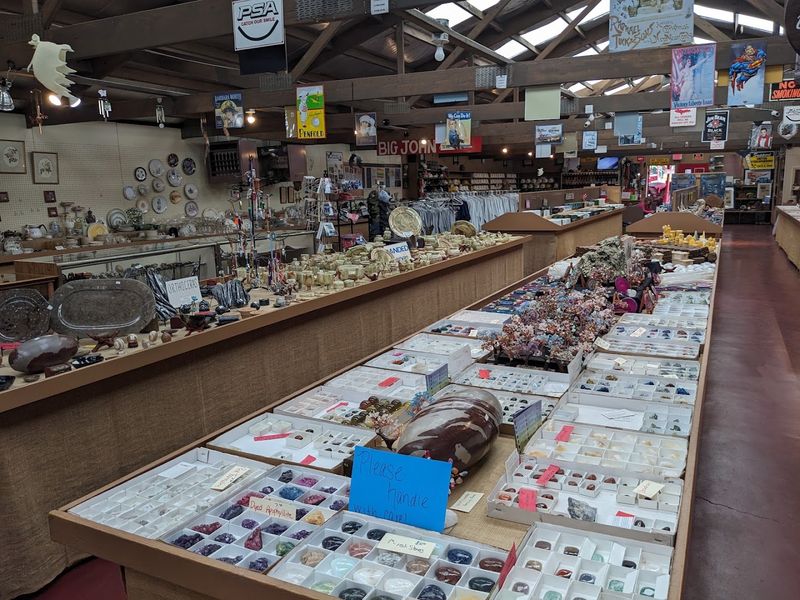
The place has a better rhythm when you arrive before your tour instead of sliding in at the last minute. The Rock Shop doubles as admissions, waiting area, and a quietly entertaining prelude, with minerals, souvenirs, and the practical business of getting ready.
That extra time helps you settle into the idea that this is both a roadside stop and a state historical landmark.
Tours run daily from Memorial Day weekend through October 15, generally from 9:00 a.m. to 5:00 p.m. CDT, with the last departure at 4:10 p.m.
Because the underground portion lasts about 45 minutes, starting unhurried makes the whole visit feel smoother. You also get a better look at the site before the temperature drops and the train carries you inside.
US-2 Disappears Into A Mine Train Detour
Iron Mountain Iron Mine sits at W4852 US-2 in Vulcan, Michigan, about nine miles east of Iron Mountain. From Iron Mountain, follow US-2 east and let the highway carry you into the small mining-country community of Vulcan.
The attraction sits right along the highway, so the final approach is straightforward but worth watching closely. Look for the mine signs and roadside setup rather than expecting a big town-center entrance.
Turn in from US-2 and park near the tour and rock shop area. Once the mine train becomes part of the directions, the drive has officially turned into an underground Upper Peninsula detour.
Treat The Train Ride As Part Of The Story
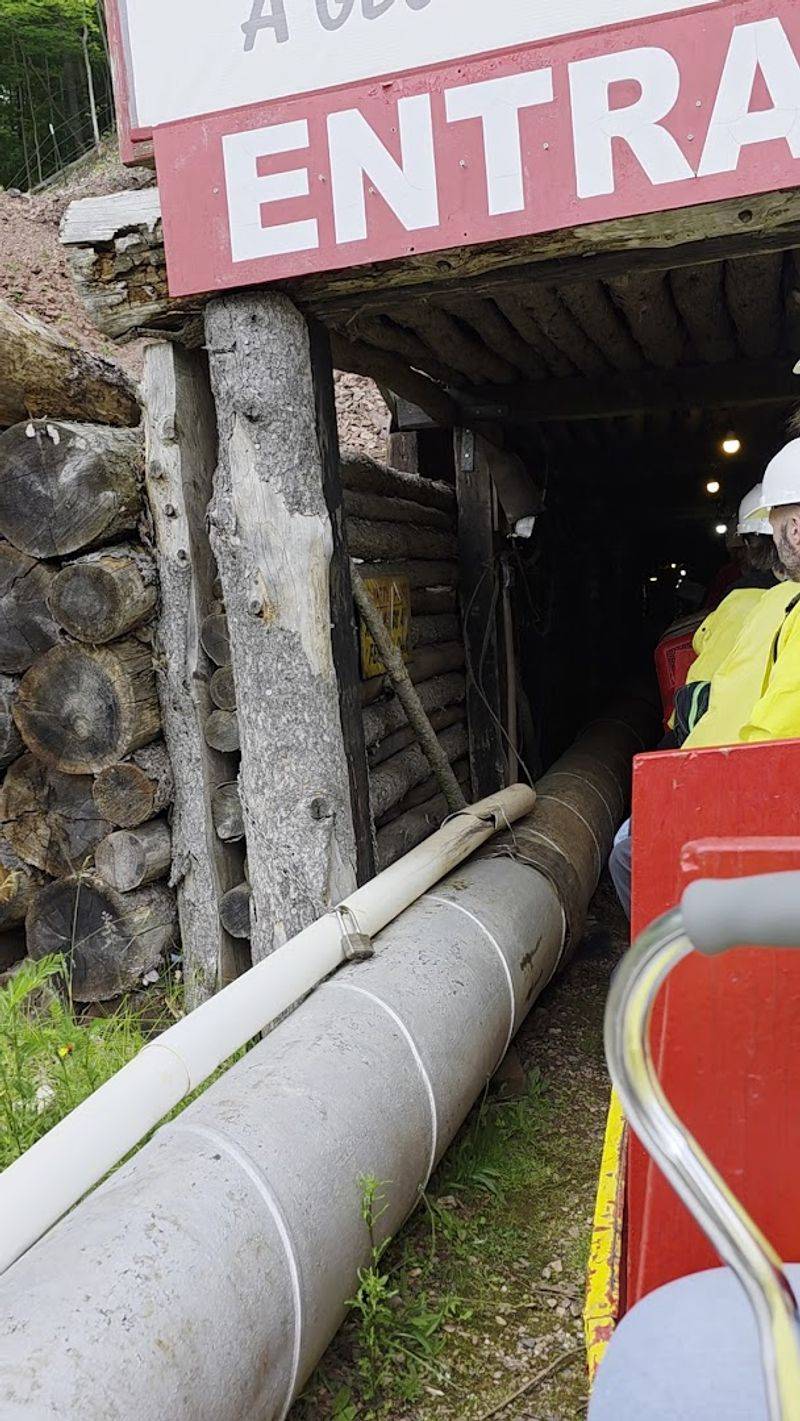
The underground train is not a mere shuttle. It is the threshold moment, the point where the attraction stops feeling interpretive and starts feeling physical, mechanical, and a little thrilling.
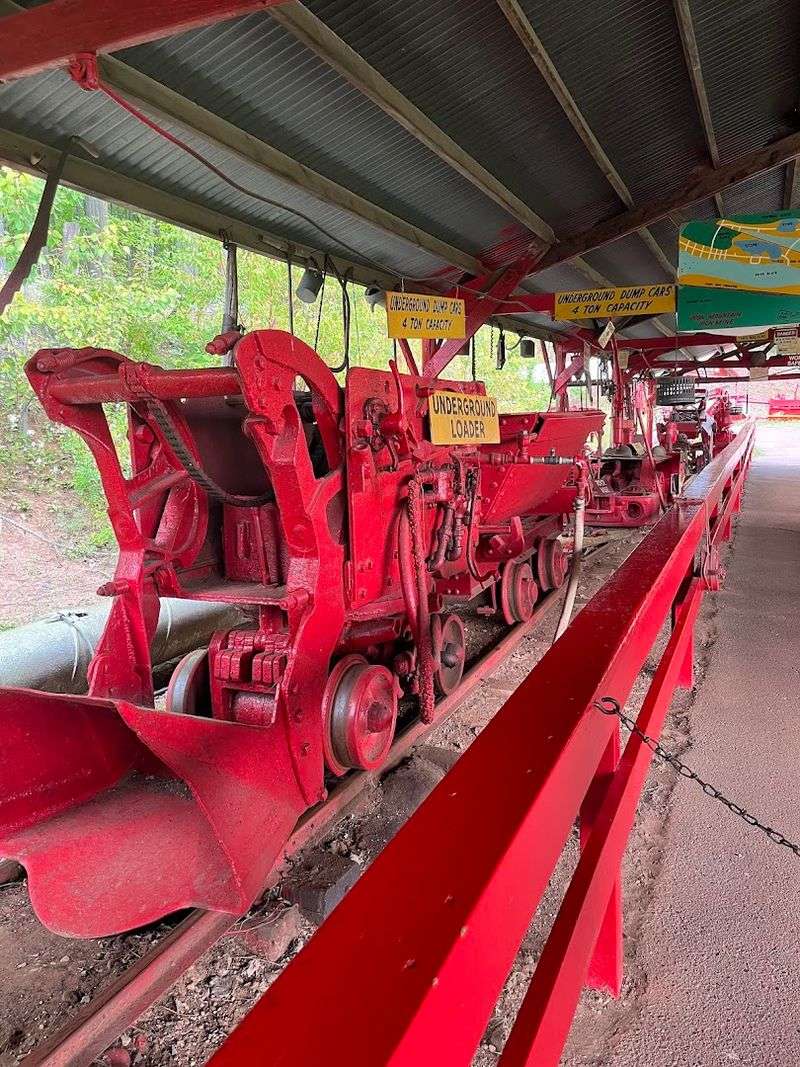
The Iron Mine Express was added for tours in 1965, long after the mine had already spent decades as a working source of iron ore.
Originally, walking tours began in 1958, but the train gives the visit its signature character. Riding into the drifts and tunnels makes the distance tangible, especially when you remember the route covers about 2,600 feet and reaches 400 feet below ground.
Sit back, listen carefully, and watch how quickly daylight disappears. The mine becomes understandable faster when you let the ride do some of the explaining.
Pay Attention To The Mine’s Working Past
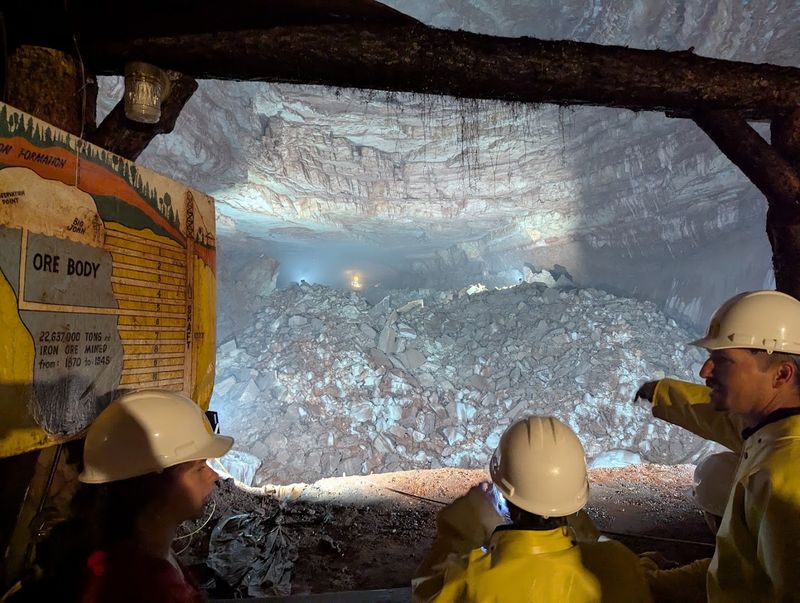
What impressed me most was how clearly the tour connects spectacle to labor. This was not a decorative cavern first and a history lesson second.
It began as the East Vulcan Mine, with substantial prospecting underway in 1872 under Dr. Nelson P. Hulst, and it started producing iron ore in 1877.
For 68 years, until 1945, the mine produced more than 21 million tons of ore. That number can sound abstract until the guide ties it to rail shipment, Lake Michigan ports, and Midwestern steel mills that depended on material from this exact place.
The result is a visit grounded in industry rather than nostalgia. You are not just entering tunnels.
You are stepping into a former engine of regional infrastructure and work.
Look Up In The Big Stope
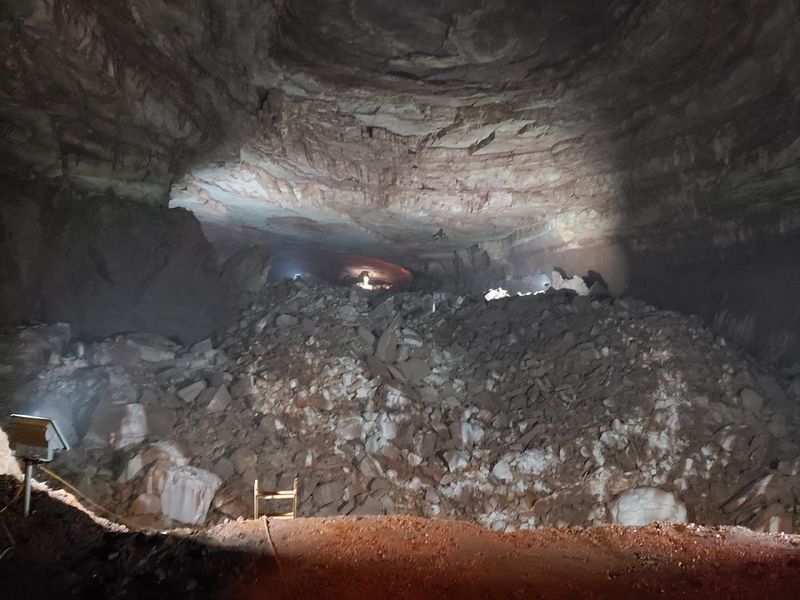
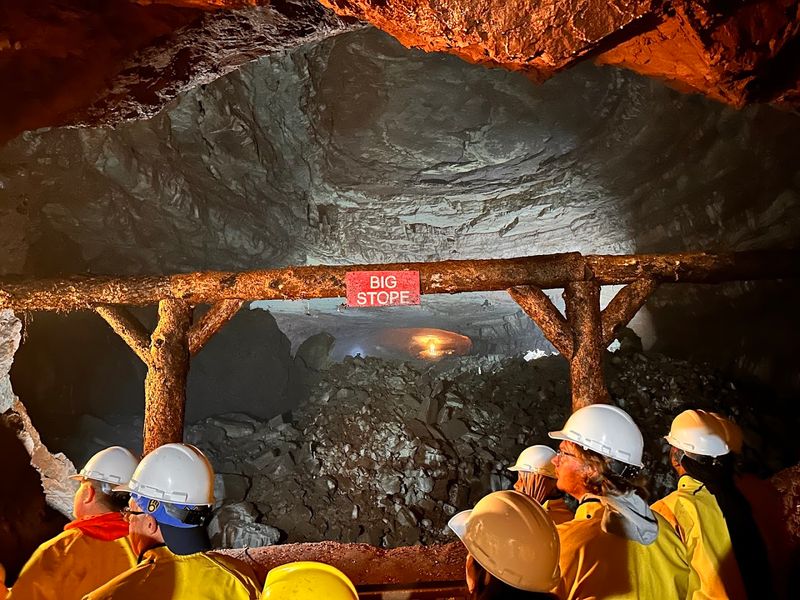
Then there is the big stope, which changes the scale of everything you thought you were seeing. Up to that point, the mine can feel intimate, almost corridor sized, with tools, walls, and drifts that keep your attention close.
Suddenly the space opens into a man made chamber so large that your sense of proportion has to catch up.
The dimensions are striking: roughly 600 feet long, 300 feet wide, and 180 feet from floor to ceiling. This is also where a large share of the ore came from, which gives the room a practical history, not just drama.
I found it oddly moving. Human effort is written into the walls at a scale that feels both impressive and a little sobering.
Listen Closely To The Guides
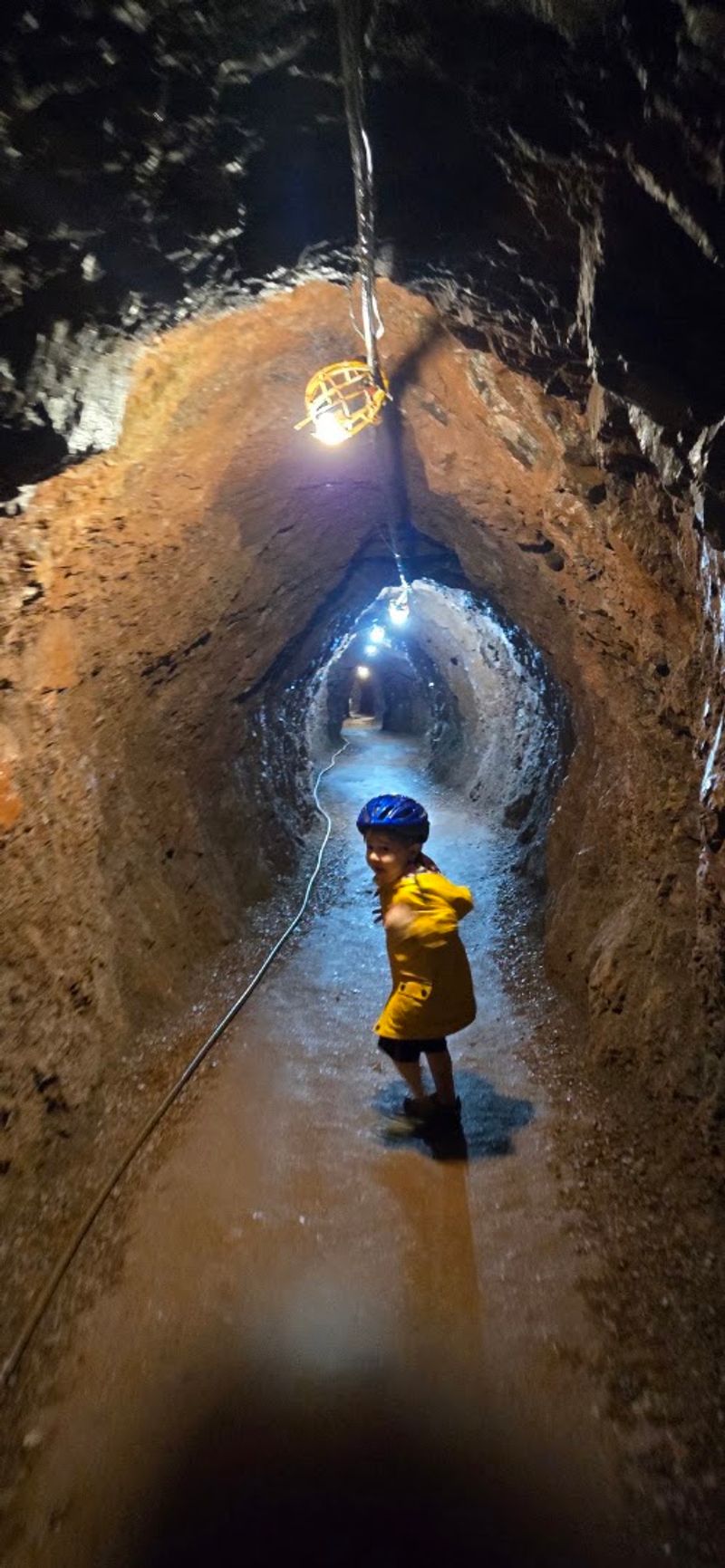
A mine tour can easily become a blur of cool air, damp rock, and half remembered dates, but good guiding prevents that. Here, the guides do more than move people safely through the route.
They explain mining methods, point out old equipment, and translate the underground environment into something legible.
Some guides have worked at the attraction for 10 to 20 years, and that experience shows in the pacing and clarity. Instead of overwhelming you with technical detail, they usually give just enough to make each chamber and demonstration meaningful.
Ask a question if you have one. This is the kind of place where practical curiosity pays off, because the human explanation is what turns a cold tunnel into a vivid piece of Upper Peninsula history.
Notice How Bright The Mine Actually Is
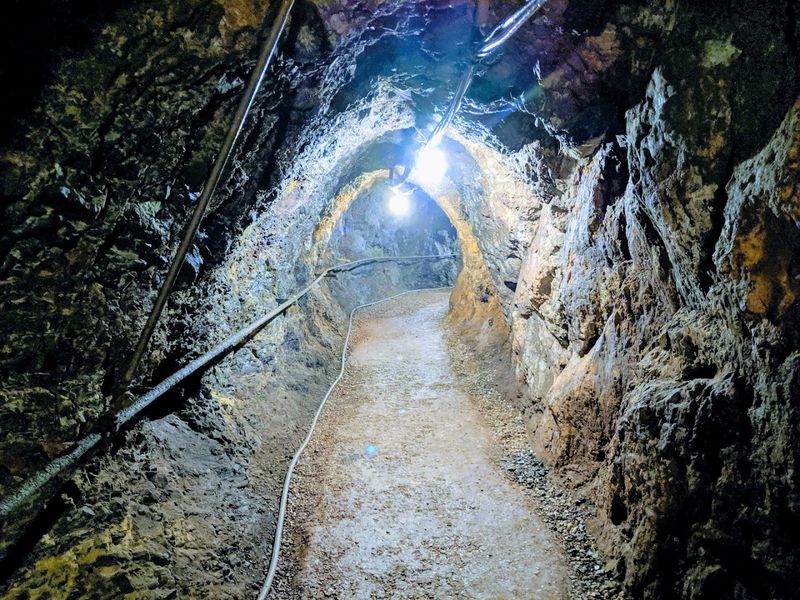
People often imagine mine tours as murky, flashlight dependent affairs, but this one is brighter than you may expect. The interior is lit well enough to reveal the texture of the rock and ore formations, which matters because the visual detail is part of the experience.
Instead of peering into darkness, you spend much of the tour actually reading the walls.
That lighting changes the mood. The mine still feels underground and enclosed, yet it also feels curated for understanding rather than mystery alone.
You can see how the surfaces shift, where the space tightens, and how the excavated forms relate to the mining story being told. If you like places where infrastructure becomes unexpectedly beautiful, this is where the visit starts to linger in memory.
Give Big John His Due
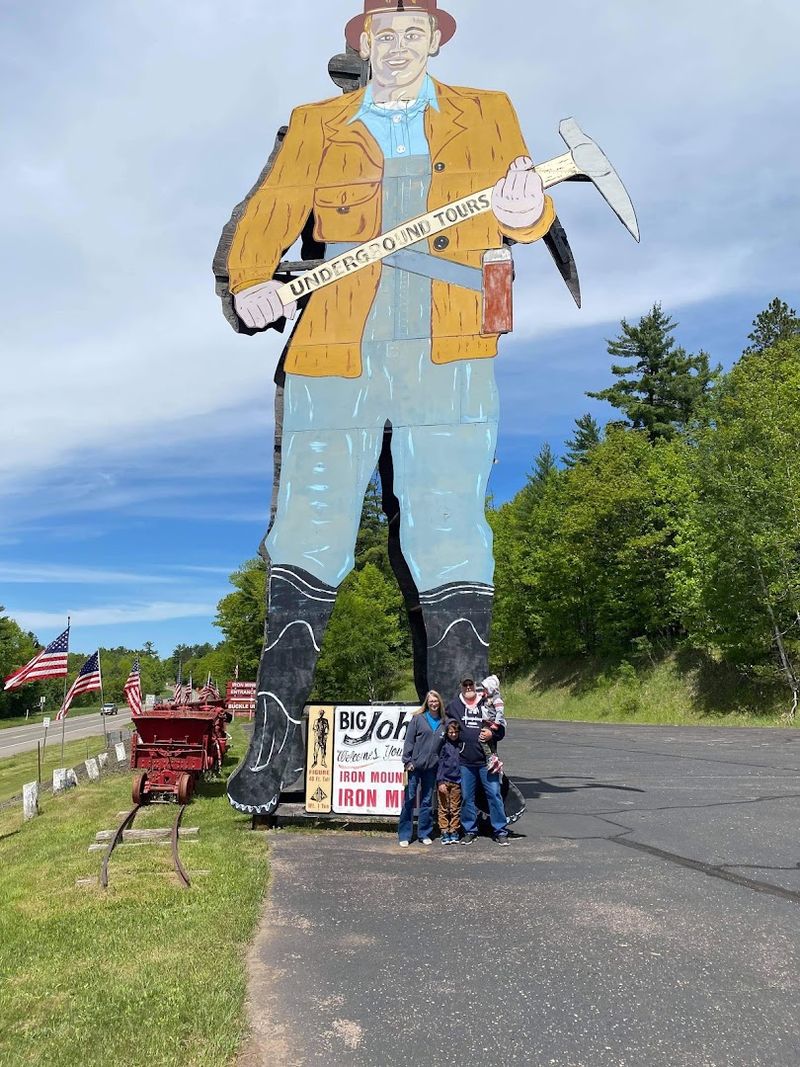
Roadside Americana usually works best when it is confident, and Big John is certainly that. The replica miner standing in the parking lot is 40 feet tall, 12 feet wide, and impossible to mistake for subtle landscaping.
Before you even enter the Rock Shop, the statue tells you this attraction understands scale, labor, and a touch of playful theater.
Still, Big John is not just a photo stop. He frames the visit by turning an industrial story into something immediately visible from the highway.
I liked seeing people pause there first, because it creates a useful transition from ordinary travel mode to mine mode. Take the picture, of course, but also read the gesture correctly.
The site is announcing its history before you ever go underground.
Use The Rock Shop As More Than A Gift Stop
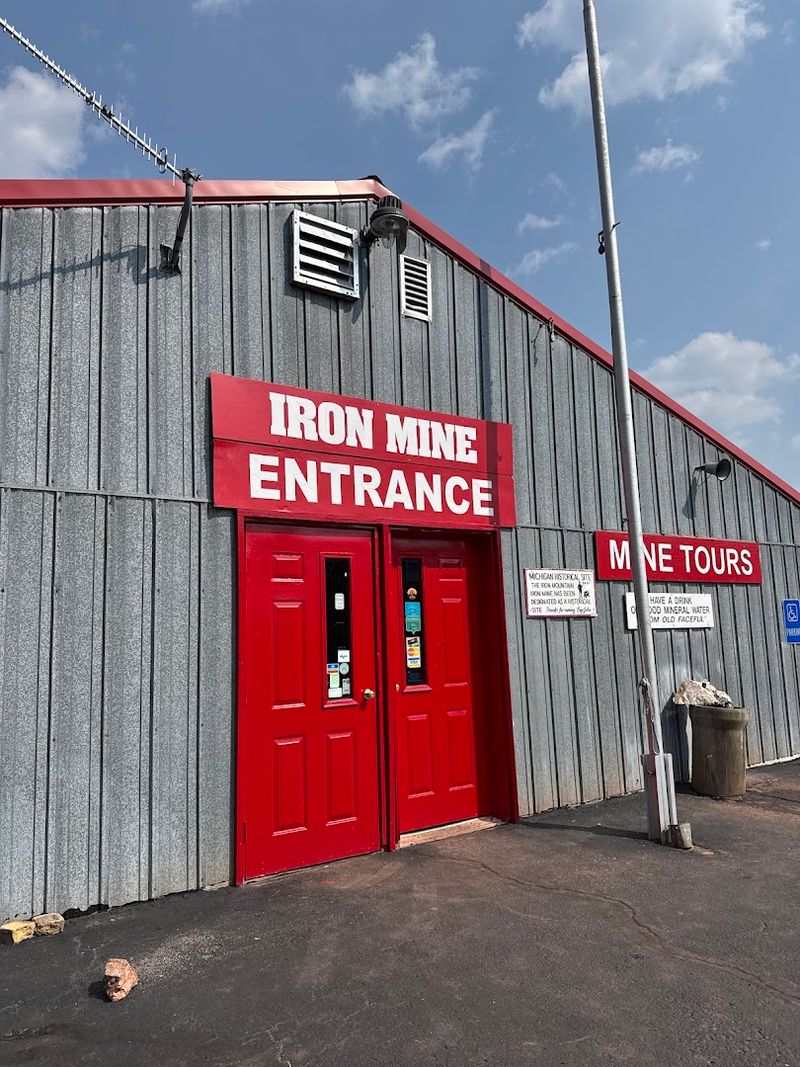
The Rock Shop has an appealingly old fashioned usefulness. It handles admissions, sends you out equipped, and gives the visit a tactile afterglow through rocks, minerals, and mining themed souvenirs.
That combination sounds practical on paper, but in person it helps the attraction feel cohesive rather than split between museum and store.
There is also free artesian well water outside, which feels exactly right after coming back up from the cool underground route. The contrast between chilly mine air and fresh water at the surface is one of those small details that makes a place feel cared for.
Spend a few extra minutes here. Even if you buy nothing, the shop extends the mine’s texture and makes the return to daylight less abrupt.
Time The Stop With A Wider Upper Peninsula Day
This is an easy place to fit into a broader Upper Peninsula itinerary, but it deserves deliberate timing. Because the mine is about nine miles east of Iron Mountain on US-2, it works well as either a focused destination or a substantial stop while moving through the region.
The daily operating season is limited, so checking the calendar matters. The mine opens from Memorial Day weekend through October 15, with tours generally running 9:00 a.m. to 5:00 p.m. CDT.
I would not aim for the final departure unless your schedule demands it. Giving yourself room for the Rock Shop, Big John, and a slow reset afterward makes the visit feel complete.
Some attractions are boxes to tick. This one improves when you leave breathing space around it.
End With A Miner’s Lunch Mindset
The tour ends underground, but the experience keeps unfolding once you are back in the daylight thinking about the workers who spent years in that cold environment. In the local tradition, a Cornish pasty is the classic miner’s lunch, available at nearby off site spots after your visit.
That detail belongs to the story because mining history here was never separate from daily life. What stays with me is not only the novelty of riding below the surface. It is the way the site connects geology, industry, and regional culture without straining for effect.
By the time you leave, the mine feels less like an attraction and more like a compact lesson in how the Upper Peninsula was built, fed, and remembered.