
This Michigan Mural Is The Second-Largest In America And Almost Impossible To Miss
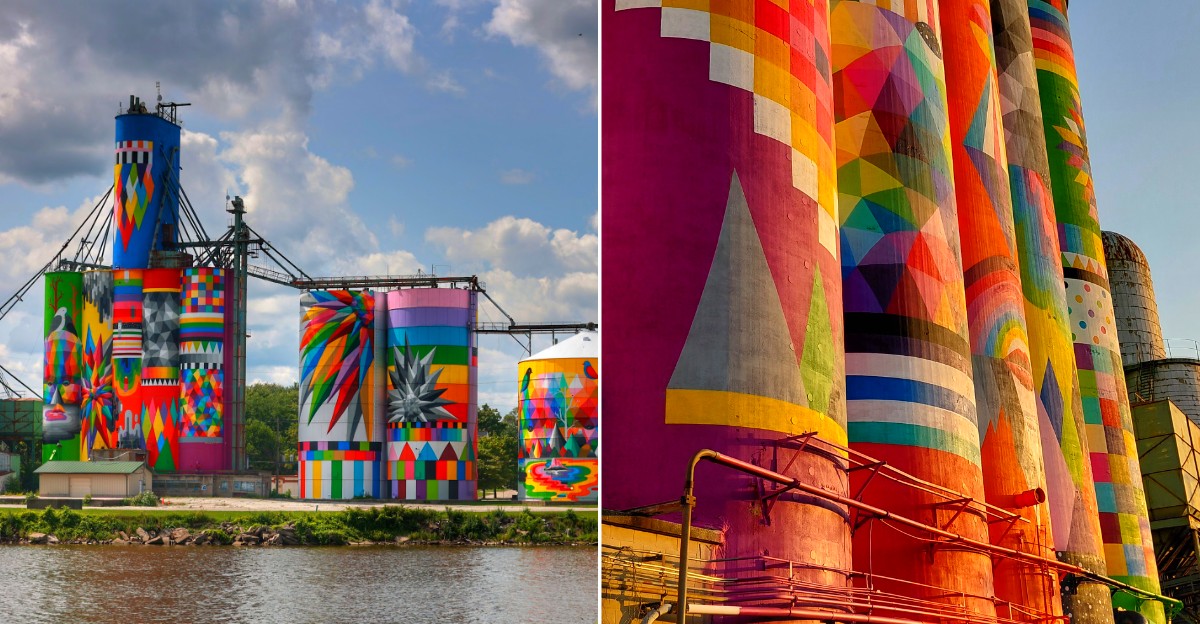
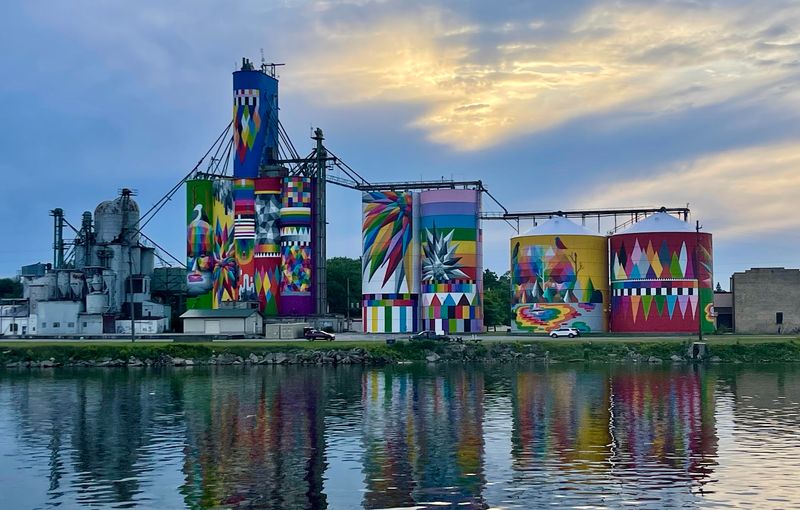
Industrial silos are not usually the first place I expect to find a burst of color, which makes this riverfront landmark so satisfying. Towering above the Saginaw River, the former grain structures now carry roughly 70,000 square feet of geometric shapes and brilliant color.
Spanish artist Okuda San Miguel transformed the concrete into something impossible to ignore, while the weathered silos underneath keep the city’s industrial past visible.
Few public artworks in Michigan make such a dramatic first impression, combining monumental scale, bold contemporary design, and the bones of Saginaw’s working waterfront.
What I like most is how the mural changes depending on where you stand. Step back for the full scale, then move closer to notice individual shapes, surfaces, and old structural details.
Its size gets the headlines, but the contrast between bright paint and aging concrete is what makes the whole place worth exploring slowly.
Seventy Thousand Square Feet Of Color
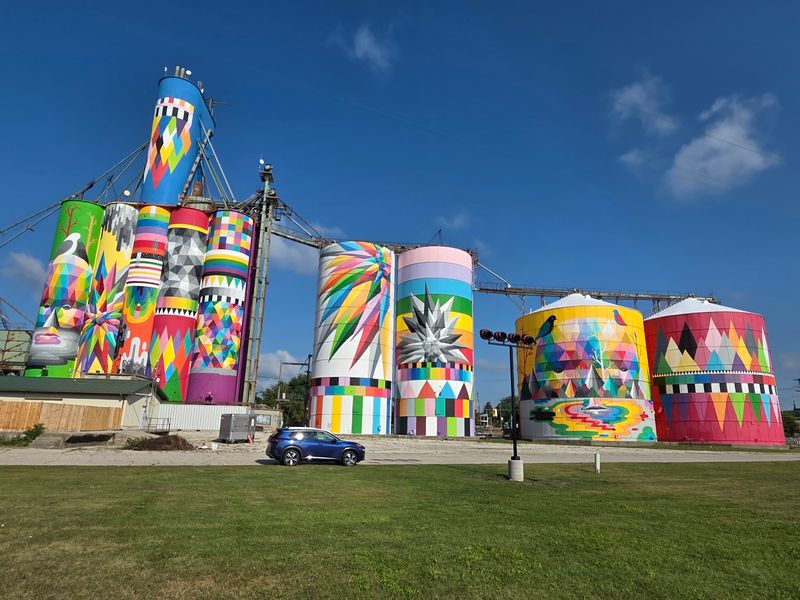
Numbers usually make dull travel companions, but these deserve a moment. The mural covers roughly 70,000 square feet and reaches about 150 feet high, turning a cluster of silos into an artwork with serious vertical ambition.
It is widely described as the second-largest mural in the United States, behind Toledo’s Glass City River Wall. Treat that ranking as a reported distinction, since comparisons can depend on how painted surfaces are measured.
For your first look, choose a safe spot with enough distance to see the overall composition. Resist zooming straight into one detail.
The scale makes more sense when the silo tops, curved walls, and surrounding ground fit into the same view, giving your eyes a useful reference point.
The Silos Do The Navigating
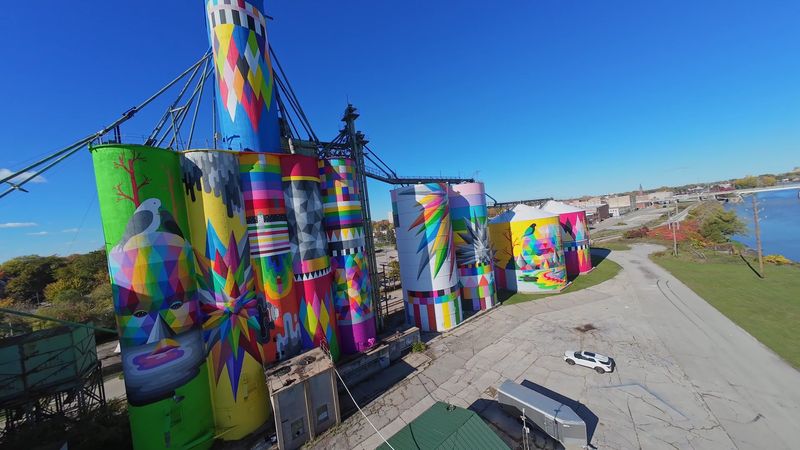
Shine Bright Saginaw Mural sits at 105 Lyon Street in Saginaw, Michigan, along the riverfront edge of Old Town. Lyon Street gets you into the right pocket of the city, but the towering grain silos quickly become more useful than the street number.
The last stretch is hard to miss once the geometric blocks of color start rising above the surrounding buildings. The mural covers the full height of the old silos, so it comes into view well before you are standing directly beside it.
Use legal parking around Lyon Street and the surrounding Old Town blocks, then finish the trip on foot for the closest view. The mural is also visible from across the Saginaw River, but 105 Lyon Street puts you right beside the painted silos.
Old Silos Still Tell Their Story
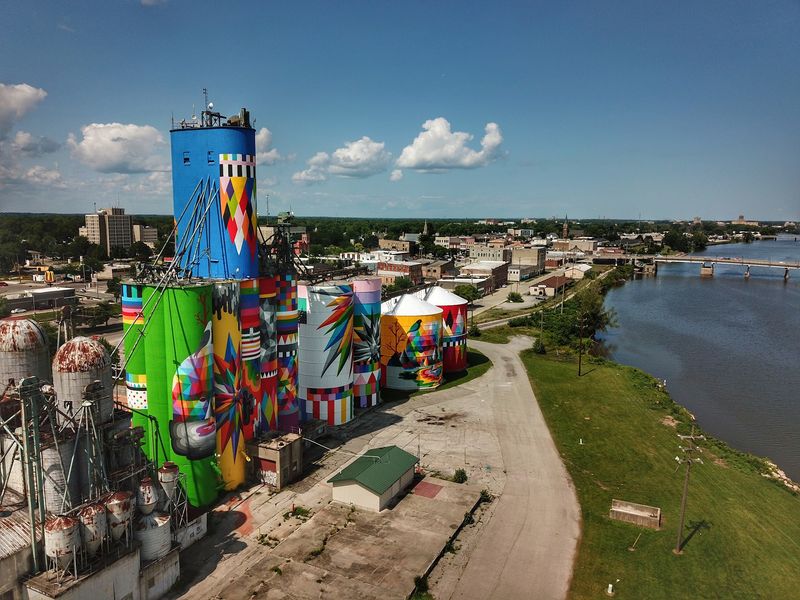
Under the bright paint sits a much older chapter of Saginaw. These roughly seventy-year-old silos once belonged to the Frutchey Bean Company, linking the artwork to the city’s working riverfront and industrial past.
The building has not disappeared behind a tidy new facade. Its tall cylinders still shape the picture, and their curves make the colors behave differently than they would on a flat wall.
Look for the meeting between painted areas and the remaining industrial surfaces. That contrast helps explain why this project feels different from a mural on a purpose-built panel.
Stay in public viewing areas while studying the structure, and never treat an old industrial building as an invitation to climb or explore inside it.
Meet The Artist Through His Shapes
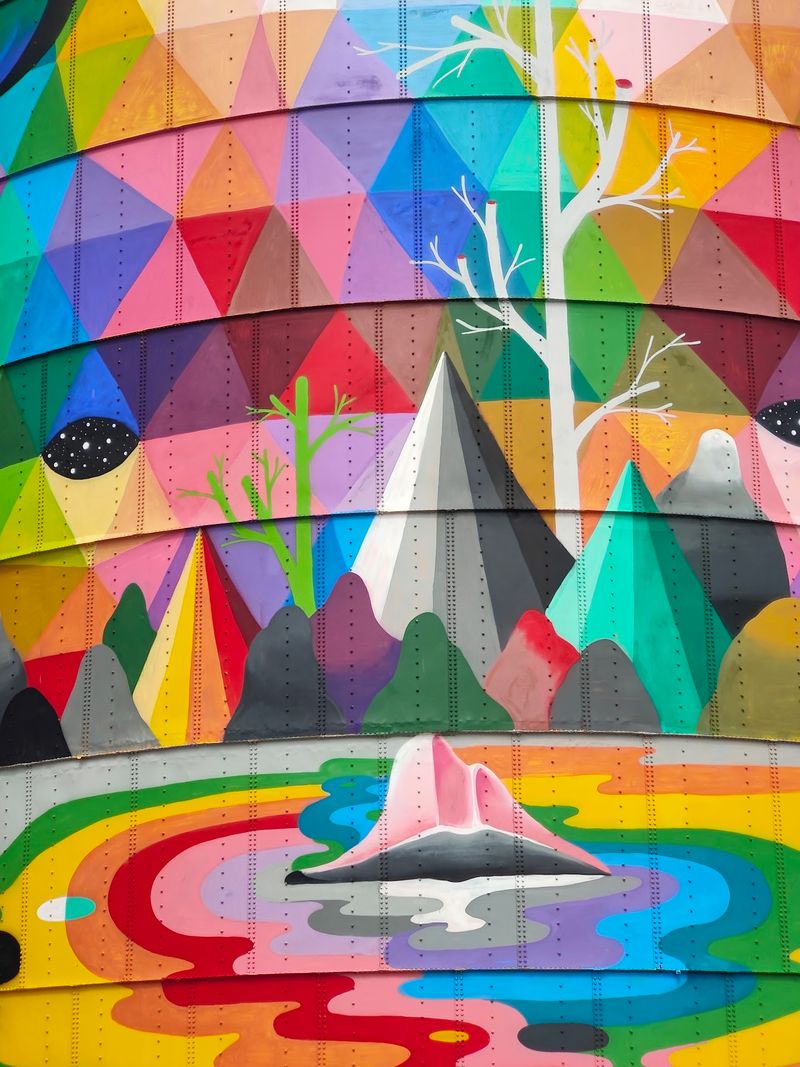
Triangles and bold color blocks give the surface a lively rhythm. Spanish artist Okuda San Miguel, known as OKUDA, created the mural in his distinctive pop surrealist style, mixing geometric forms with imaginative visual elements.
His name for the work is The Evolution of Language. He described its concept in terms of freedom and diversity, offering a helpful starting point without requiring every visitor to reach the same reading.
Choose one section and follow how its shapes connect across the rounded silos. Then step back and see how that smaller pattern belongs to the larger image.
You do not need an art vocabulary to enjoy the exercise. Careful looking is enough, and the shifting connections reward a second glance.
A Big Idea With Local Roots
The idea began with someone seeing a familiar industrial shape differently. Mark Flegenheimer, retired president and CEO of Michigan Sugar, drew inspiration from silo murals at his alma mater, DePauw University.
That spark became a project meant to improve an overlooked site, strengthen the riverfront, and encourage visits that could support local businesses. Community contributions raised more than $50,000 toward a reported total project cost of $750,000.
Keep that shared effort in mind while looking at the finished walls. The artwork is not simply a large painting dropped into town.
It reflects decisions, fundraising, and a belief that an aging structure could serve a new purpose. Respecting the grounds is one easy way to honor that investment during your visit.
An Astonishingly Short Painting Schedule
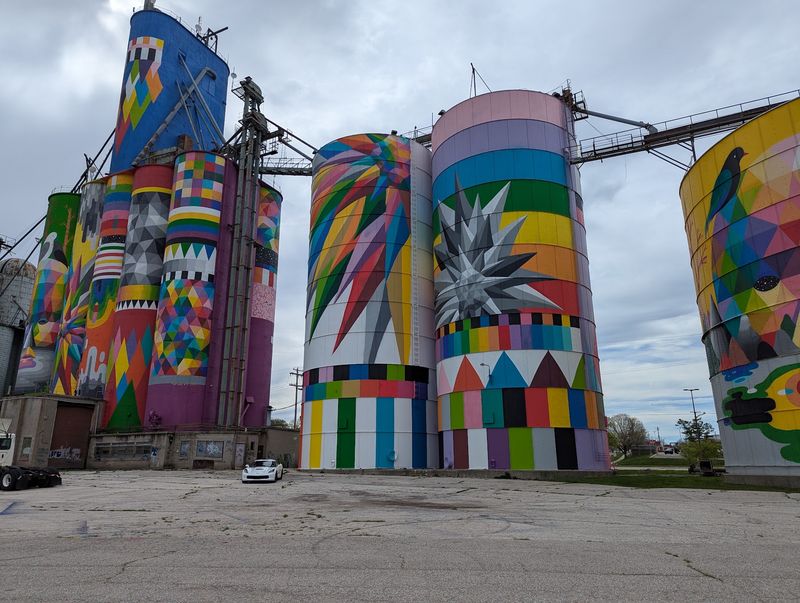
Less than three weeks is a startling deadline for something this tall. The mural was completed on June 12, 2024, after roughly eighteen to nineteen days of painting by OKUDA and a team of artists.
Spanish collaborators included Chelo Cuenca, Alvaro Gurillo, and Tatu Rock. Local contributors included John Vasquez, DeVaughn Collins, James Hughes, Nyesha Clark Young, Jim Perkins, and Susie McColgan.
Knowing those names changes the way the finished surface reads. Large public art depends on teamwork, not only one signature.
Try tracing a crisp edge across the curved walls and imagine the planning needed to keep the design connected. The short schedule becomes even more impressive when you consider the height, surface area, and many separate forms involved.
Two Distances, Two Different Pictures
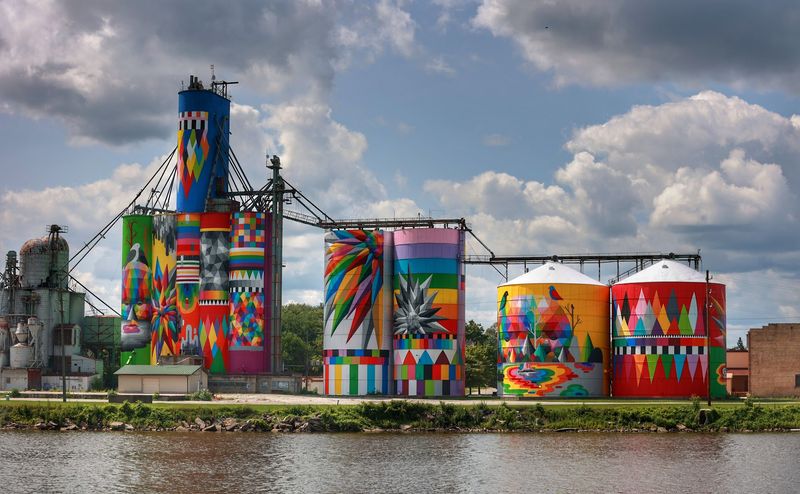
Distance gives this artwork a second personality. Close views reveal how paint follows concrete curves, while a view from across the Saginaw River makes the silos read more clearly as one connected composition.
Allow time for both perspectives if your route and mobility permit. Use established public paths and safe crossings, and check the walking route before assuming the opposite bank is a quick hop away.
Across the water, include some river in your photograph instead of cropping tightly around the paint. Reflections may appear when conditions cooperate, but wind and moving water can break them apart.
That is part of the setting, not a failed photo. The wider view also explains how the mural changes the riverfront skyline itself.
Let The Riverfront Slow You Down
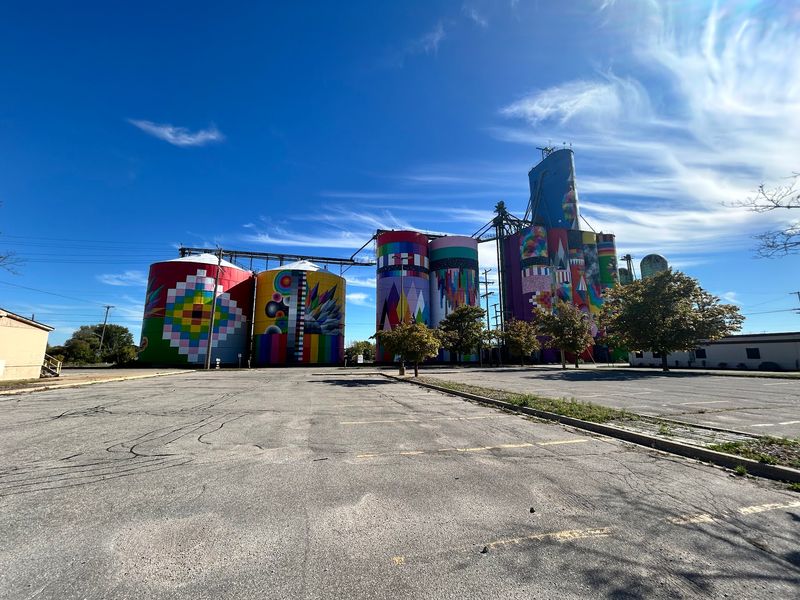
A bench can improve an art visit more than another camera setting. The space between the silos and the Saginaw River has been developed with green areas, benches, a staging area, and parking.
The goal reaches beyond giving visitors somewhere to stand. This riverside setting was planned to support art gatherings, cultural festivals, concerts, and exhibitions, making the mural part of a usable community space.
Take a short seated pause if a bench is available, especially after walking between viewpoints. Notice how the image changes when you stop moving.
Before expecting an event, check the project’s current announcements rather than assuming something is scheduled. On a quiet day, the same space offers room to appreciate the artwork without a busy agenda.
Photograph The Curves, Not Just The Colors
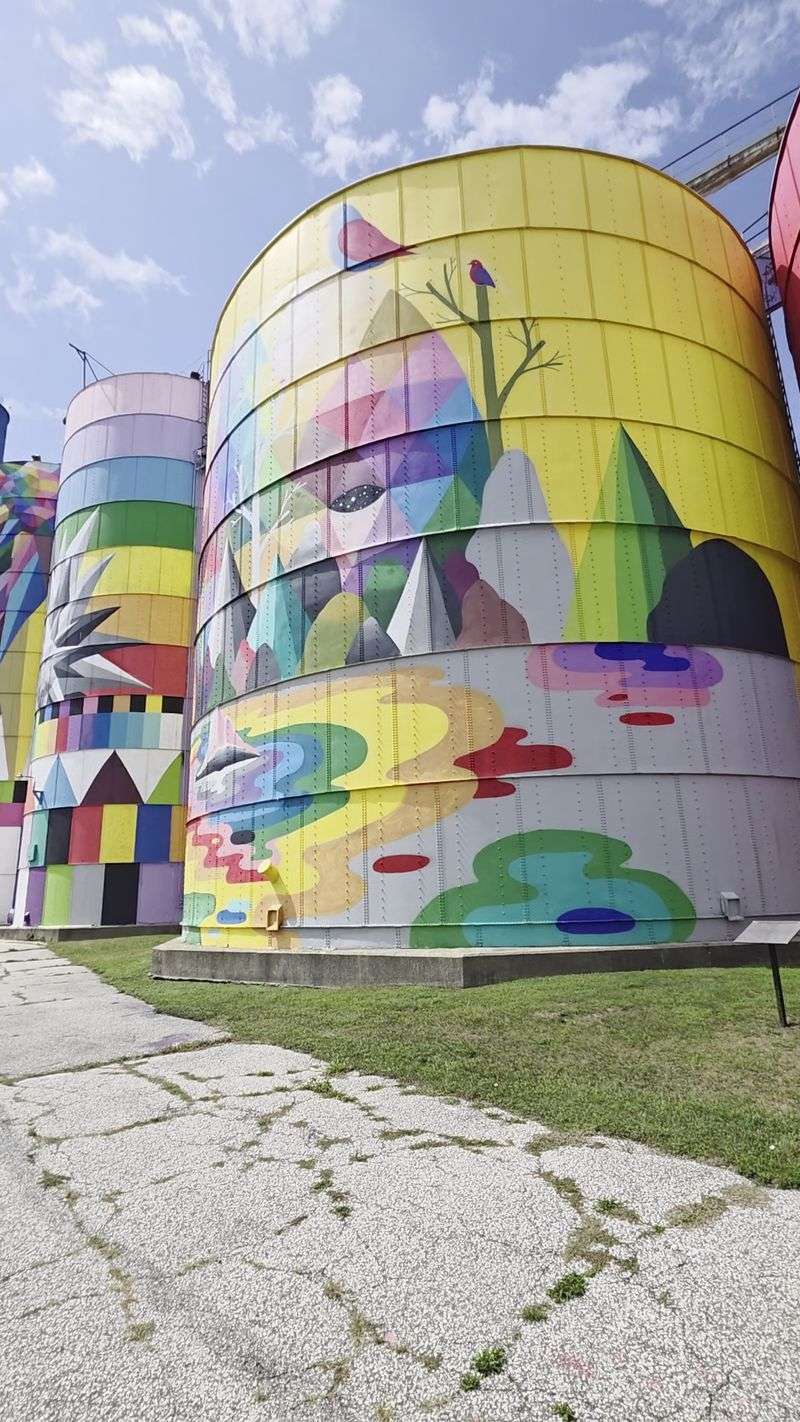
Your phone may want to flatten everything into a bright rectangle. Give it a harder assignment by showing the rounded walls, their edges, and the gaps that reveal the mural’s unusual canvas.
Take one wide frame for scale, one angled frame for depth, and one closer image for pattern. Move only within permitted areas, and keep your attention on the ground while changing positions.
Avoid standing in vehicle routes or backing toward the water to squeeze more into the picture. If the entire mural will not fit, a thoughtful partial view is better than an unsafe wide shot.
Leave room around the silo tops when possible. That small margin helps communicate their height instead of making the structure feel accidentally cropped.
Weather Changes The Viewing Experience
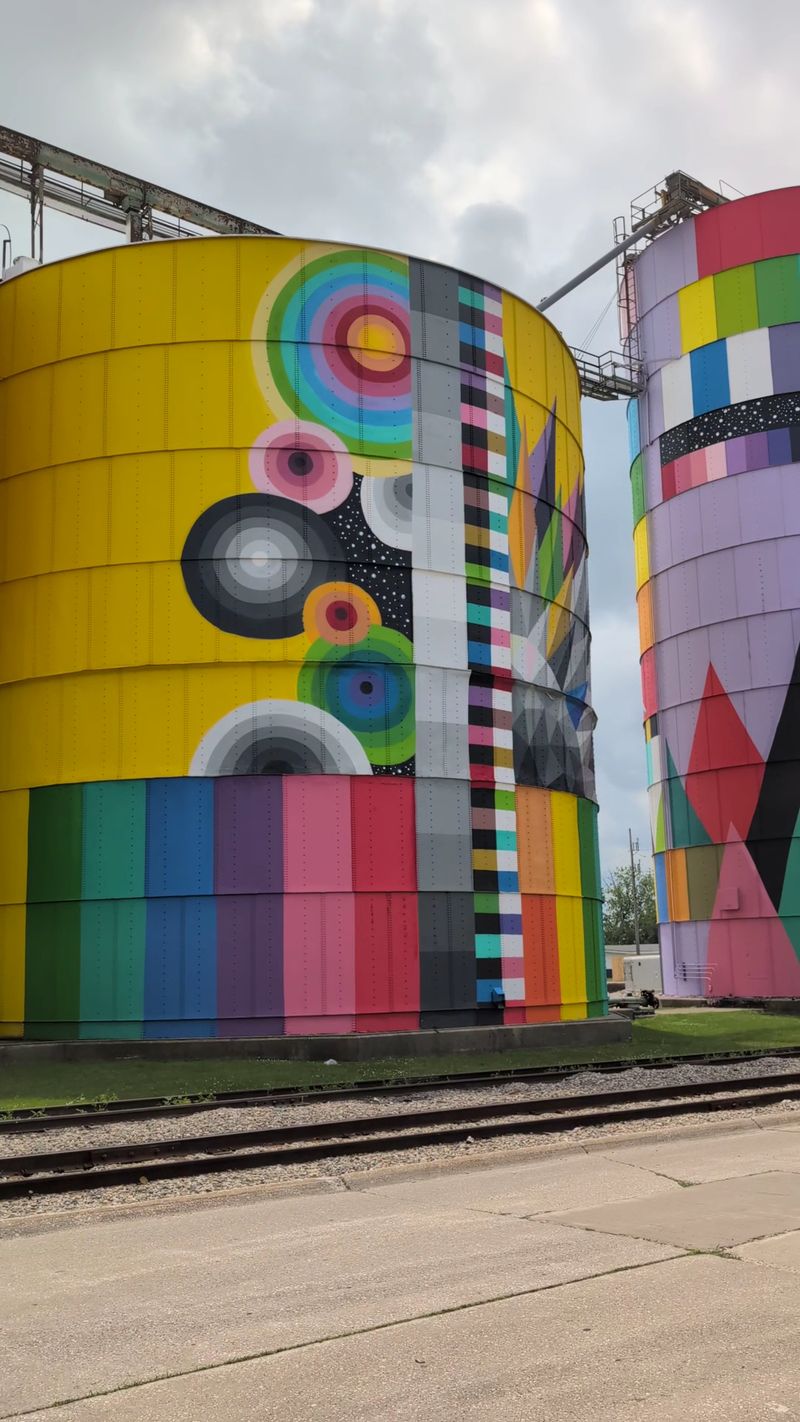
Cloud cover does not cancel the color show. An overcast sky can soften harsh shadows, while brighter sunlight may make the painted forms stand out differently against the old concrete and surrounding sky.
Since this is an outdoor riverfront visit, check the forecast and dress for the conditions. Bring water in warm weather, choose shoes with reliable grip, and protect your phone or camera if rain is possible.
Seasonal comfort matters more than chasing a supposedly perfect photograph. Cold, wind, heat, or slippery ground can shorten the time you want to spend looking.
Plan a flexible visit and leave if conditions become unsafe. The mural’s size gives you plenty to notice even during a brief stop from a sensible viewing spot.
Check Updates Before An Evening Visit
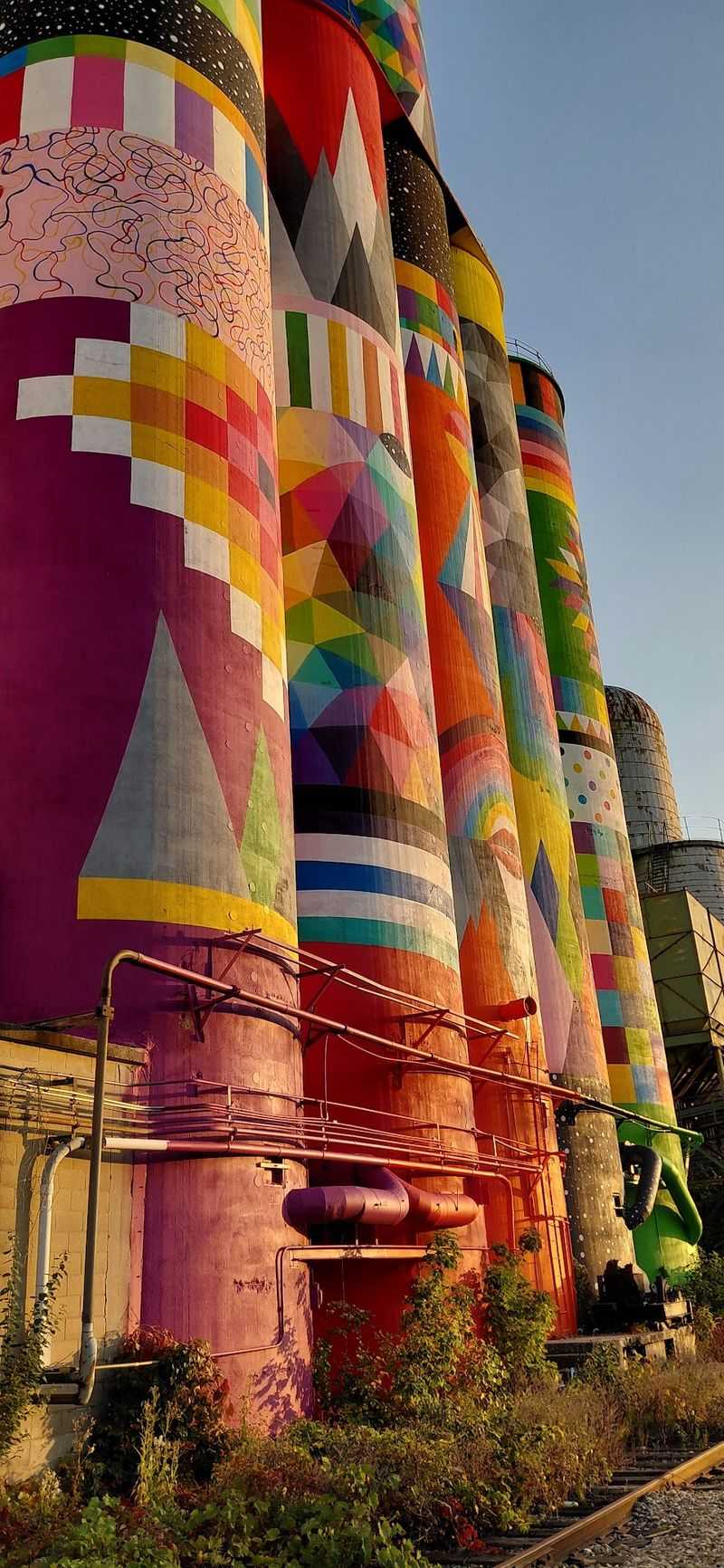
After-dark plans deserve a little homework rather than hopeful guessing. Project updates supplied for this mural report that lighting was installed by July 2026, adding another way to see the painted silos.
Because lighting schedules, access, and site conditions can change, confirm current details through the Shine Bright Saginaw project’s official page before making a special evening trip. Do not assume that illumination means every path or entrance is available.
Arrive with enough daylight to understand your parking spot and walking route. Carry a charged phone, remain in public areas, and pay attention to signs.
If current lighting information is unclear, choose a daytime visit instead. The work needs no special effects to make its scale and bold design worth seeing.