
This Michigan Narnia Trail Turns A Simple Family Hike Into Something Magical
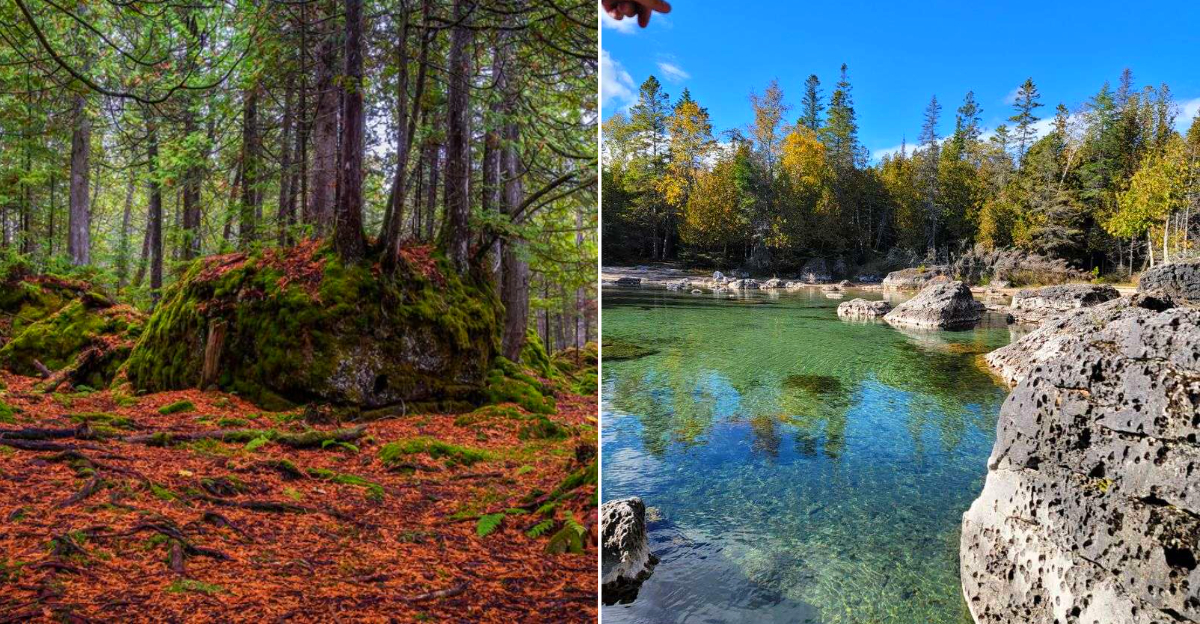
Along the rugged edge of Lake Huron in the eastern Upper Peninsula, there’s a trailhead that feels less like a hiking path and more like a secret passage. Stepping out of a simple gravel lot, I was immediately swallowed by shade so thick with cedar and lime-green moss that the air itself felt different.
Locals call this stretch “Narnia,” and frankly, I expected to see a faun behind every ancient boulder. These rocks gather in groups like a quiet, stony council, watching as the rooty, uneven path winds its way toward the water.
The terrain is delightfully messy, all tangled roots and limestone, but it’s richer for the effort it demands.
Michigan’s trail is a breathtaking Upper Peninsula hiking destination known as the “Narnia of Michigan” for its enchanting rock formations and cedar forests. I spent hours wandering these woods with wide eyes, so I’ve put together some advice on how to navigate the roots and find the most magical hidden limestone crevices.
Start Smart At The West Trailhead
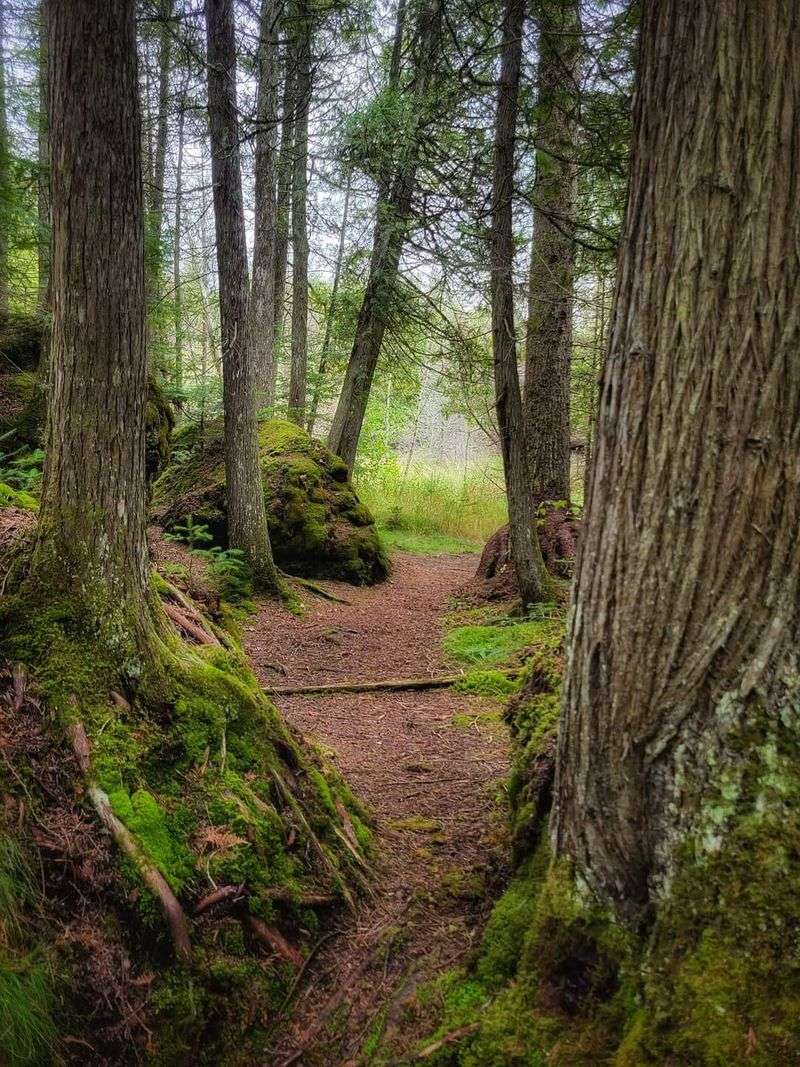
Early light makes this place feel generous. The west trailhead begins near a small horseshoe gravel lot facing Lake Huron, with orange markers about six feet up guiding the first steps. The breeze carries lake-cool air that settles nerves and sharpens eyes.
History hums nearby, a working gravel plant across the water whose low drone contrasts with the hush of cedars. That juxtaposition reminds you this trail was once hard to access, landlocked by private parcels until it was opened for everyone. Respect boundaries by staying on the marked route.
Visitor tip: lace sturdy shoes, expect roots and rocks, and note there is no big entry sign. Let the shoreline pull you forward patiently.
Follow The Orange Tags Without Rushing
Bright tags blink like breadcrumbs. They ride high on cedar trunks, steadying your choices when the ground braids into roots and side paths tempt detours. Pausing often helps you notice tiny moss gardens clinging to dolomite chunks.
The Cedarville’s Bush Bay Trail is intentionally light, a holdover from the days when this shoreline felt secret and word-of-mouth famous. You are between the lake and the main road, so orientation rarely slips far. The absence of big maps keeps the mood exploratory.
Practical advice: stop every so often and scan for the next tag before committing. If the ground grows muddier, look for slightly raised lines where feet have packed drier passage. Patience here protects ankles and moss both.
Embrace The Cedar Shade And Lake Breeze
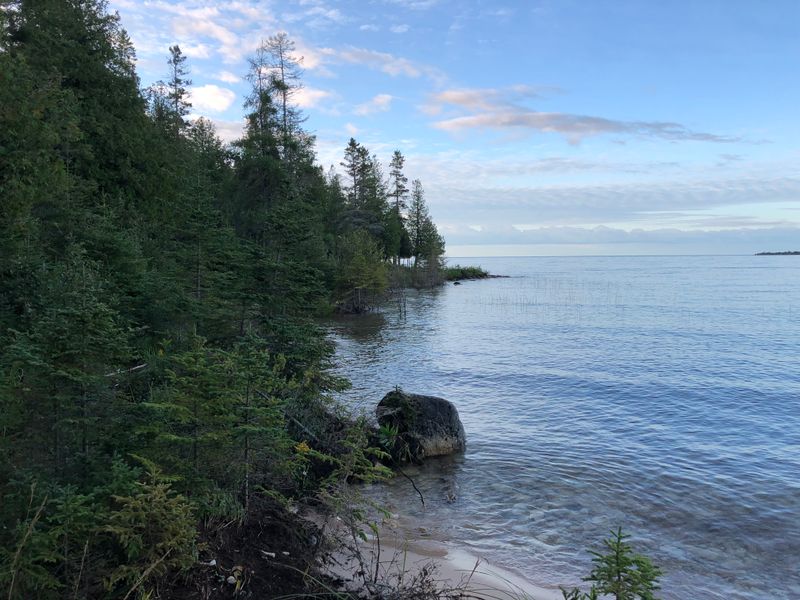
Cool air rolls off Lake Huron like a quiet companion. Under cedar canopies, the temperature softens, and the trail’s scent turns resinous and clean. Needles hush your steps until rocks demand attention again.
Cedar has long colonized these shorelines, thriving in thin soils over dolomite and shaping a dim, cathedral feel. The forest stands as a living archive of wind and water, with shallow roots knotting into patterns that look deliberate. That shade keeps afternoons kinder.
Visitor habit worth copying: treat breezy pockets as rest stops. Sip water, listen for gulls beyond the trees, and watch how waves pulse through sunlight. Those tiny breaks make the later rock gardens feel playful rather than punishing.
Navigate Roots Like A Local
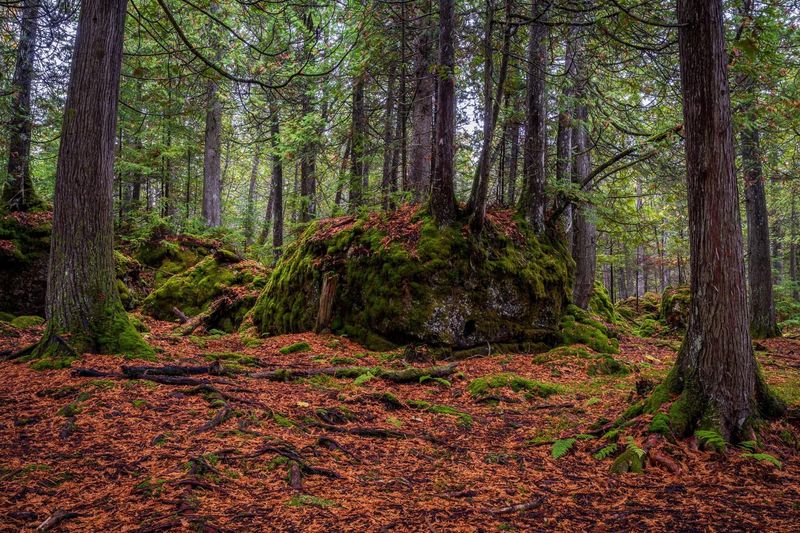
Underfoot, the trail braids into a lattice of roots that catch inattentive toes. Slowing the stride and lifting feet a little higher turns the tangle into rhythm. The ground tells you where to look if you let it.
Roots cling to shallow soils above bedrock, a living response to limited depth. Decades of water and wind coaxed this pattern, which now doubles as a reminder that speed belongs to the road, not the woods. The result is challenging but fair.
Practical move: shorten your steps when the path narrows and keep weight centered. Trekking poles help on wet days, though empty hands manage fine if you place feet deliberately. Save conversations for smoother stretches and scan two steps ahead.
Seek The Narnia Sign And Lamp
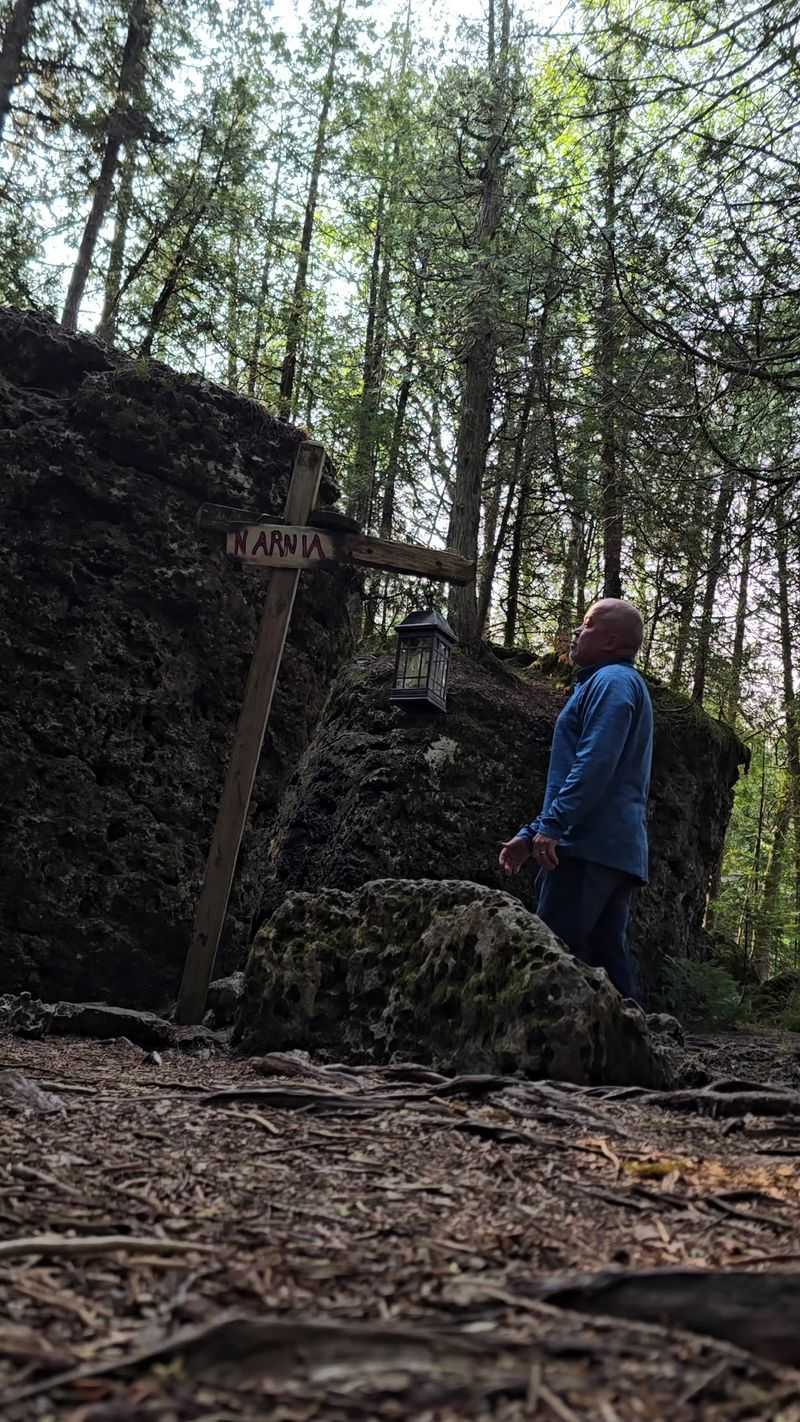
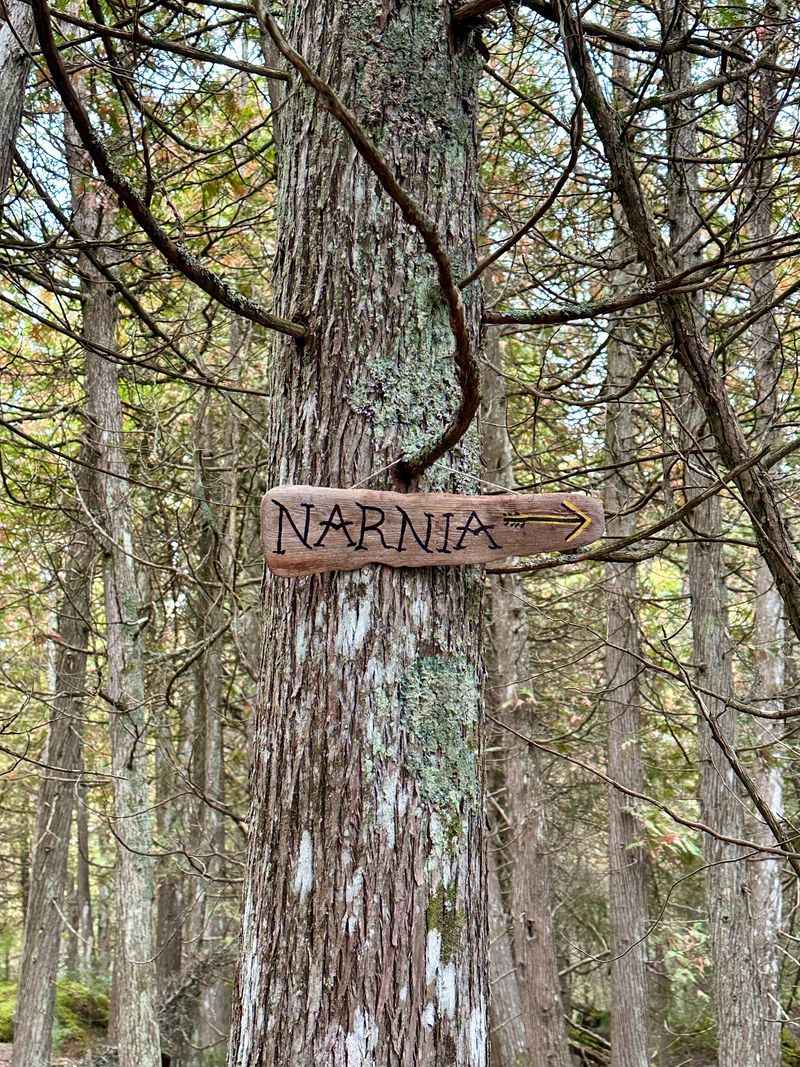
A modest wooden sign with a hanging lamp marks the fabled pocket. It is not grand, which is exactly the point. The reveal happens in your chest first, then your eyes catalog the scale of mossy stone around you.
Locals adopted the Narnia nickname after stumbling on these boulders that feel storybook-worthy. The lamp is a wink, not a theme park cue, and it frames photographs without stealing the scene. The real star is the geology arranged like frozen waves.
Tip: reach the sign, then drift left between the huge blocks to find more. Let hands brush lichened surfaces lightly. Photos are tempting, yet try a minute of stillness before the shutter.
Do Not Stop At The First Boulders
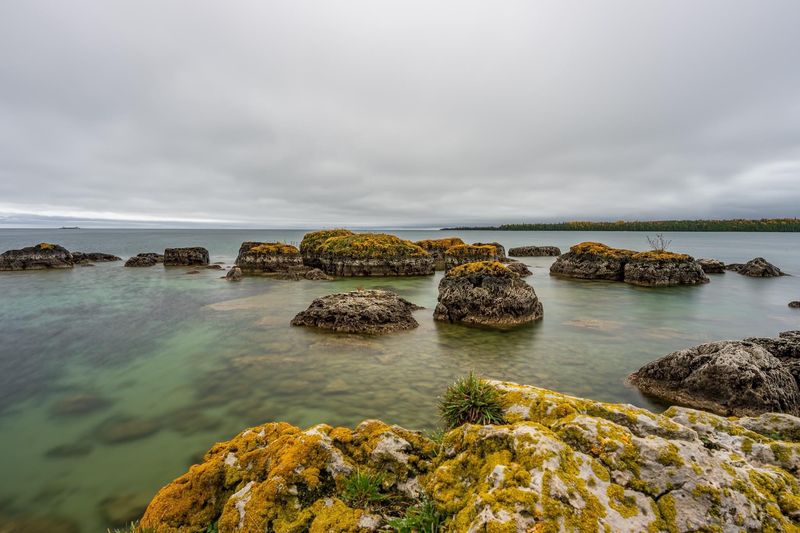
Those first stones are only the prologue. Keep moving and the formations widen, stacking into improbable stairways and ledges that make legs itch to scramble. The lake flashes silver between trunks, pulling the scene together.
These boulders likely cleaved from shoreline bedrock and glacial deposits, sculpted by freeze-thaw and wave energy over long, patient time. Their arrangement invites exploration without shouting for it. The farther you go, the more scale shifts.
Visitor tip: test holds with three points of contact and skip damp patches that darken to near-black. Children often lead here, but adults set the pace. When in doubt, step down rather than leap, and circle to the water side for gentler ramps.
Let The Shoreline Reset Your Sense Of Distance
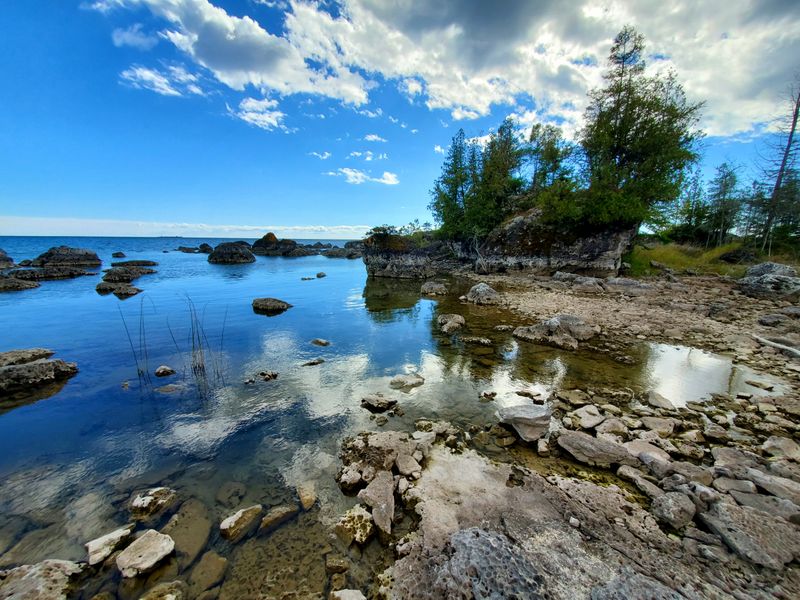
Distance shrinks when the lake keeps interrupting. Every twenty yards invites another pause for wave patterns, driftwood, or a gull scribbling the sky. The walk becomes less linear and more conversational.
Historically, this stretch felt semi-hidden, bordered by private parcels, and reportedly boat-accessed before the land changed hands to permit public use. The openness now feels earned, which makes lingering feel like good manners. Quiet wins over haste.
Practical advice: budget extra time for stopping and call the out-and-back roughly two miles one way, depending on your turn-around. If wind rises, tuck into cedar breaks to warm back up. The best spots to touch water appear as pale shelves under clear shallows.
Step Lightly Through The Moss Rooms
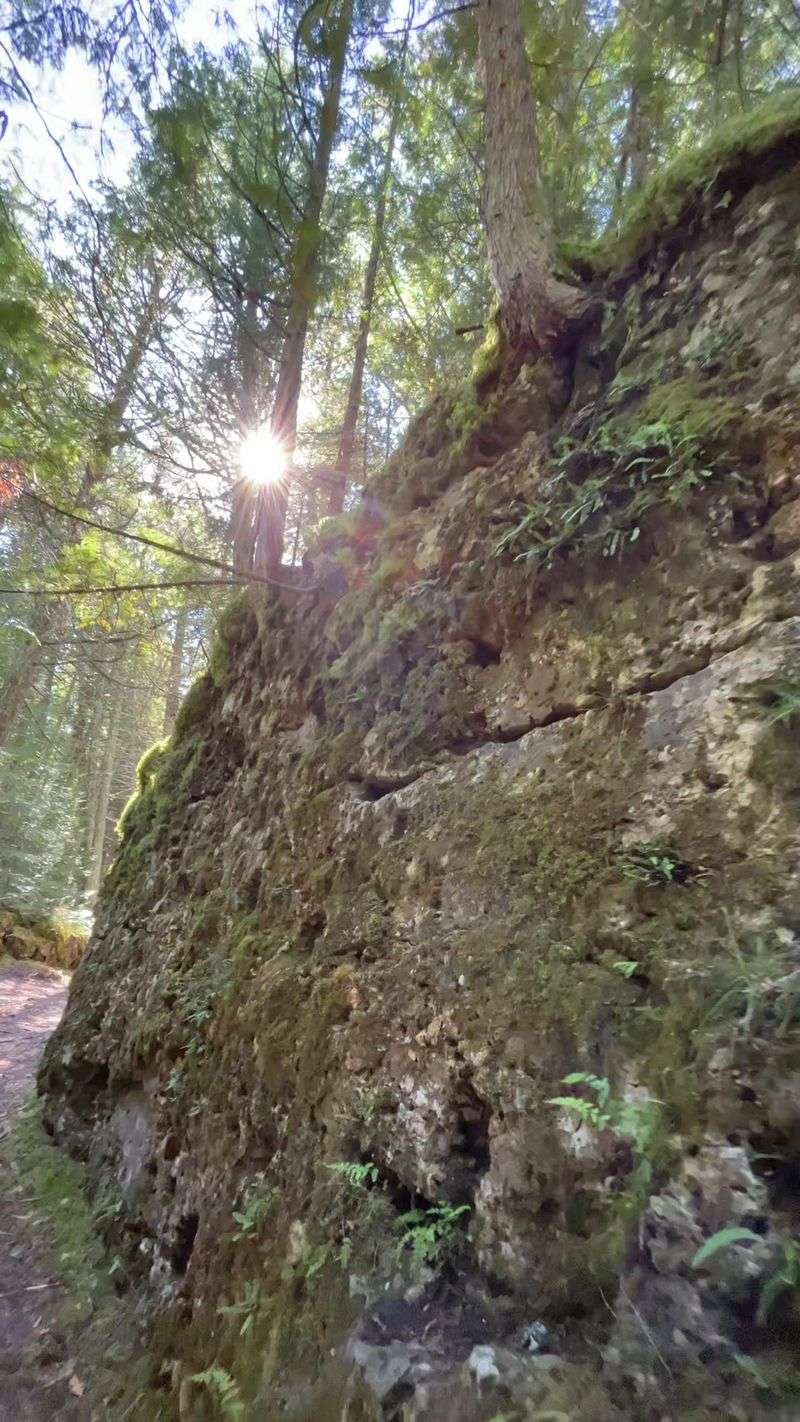
Moss turns stone into velvet. In shaded pockets, green spreads across dolomite like carefully laid felt, cushioning sound and sharpening color. It looks tough, but those tiny structures crush easily under careless boots.
These colonies stitch moisture and stone together, slowly building the thin soils that feed cedar roots. Treat the soft bits as galleries, not doormats. The whole trail feels richer when the brightest patches remain undisturbed.
Visitor habit: step on durable surfaces like bare rock or mineral soil, avoiding spongy mats. If a photo angle requires a crouch, plant feet wide on firm edges. After rain, let slickness dictate the route and consider poles to keep balance from biting the green.
Plan For Sound And Silence
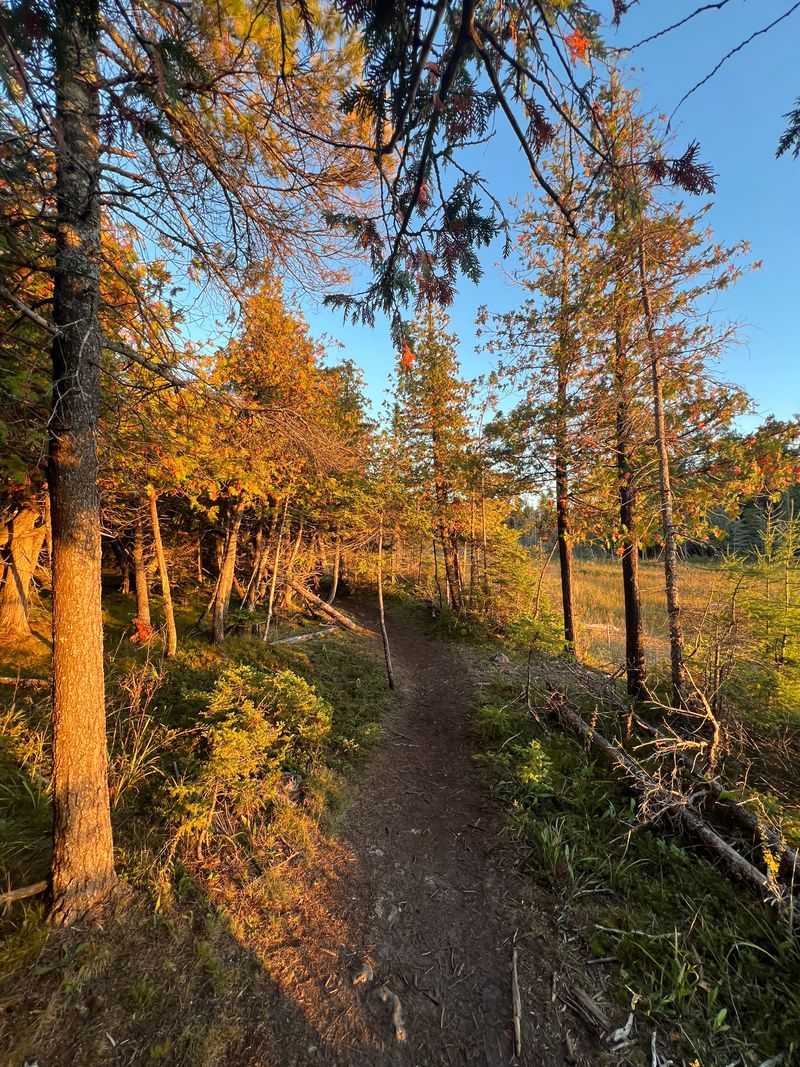
Silence is not absolute here. The gravel plant across the water hums low, a bass line under birdsong and wave hush. It fades as you move deeper or when wind swings offshore, but it never entirely leaves.
That blend tells the truth about this coastline, where industry and wonder coexist. It does not cheapen the magic, just frames it differently. Tuning your ear to layers becomes part of the walk’s character.
Practical note: aim for sunrise or late evening if you prefer quieter hours, when traffic lightens and birds take the mic. Pick pull-offs near thicker cedar if sound bothers you. Otherwise, treat the drone like distant surf and keep moving.
Handle Wet Spots And Seasonal Shifts
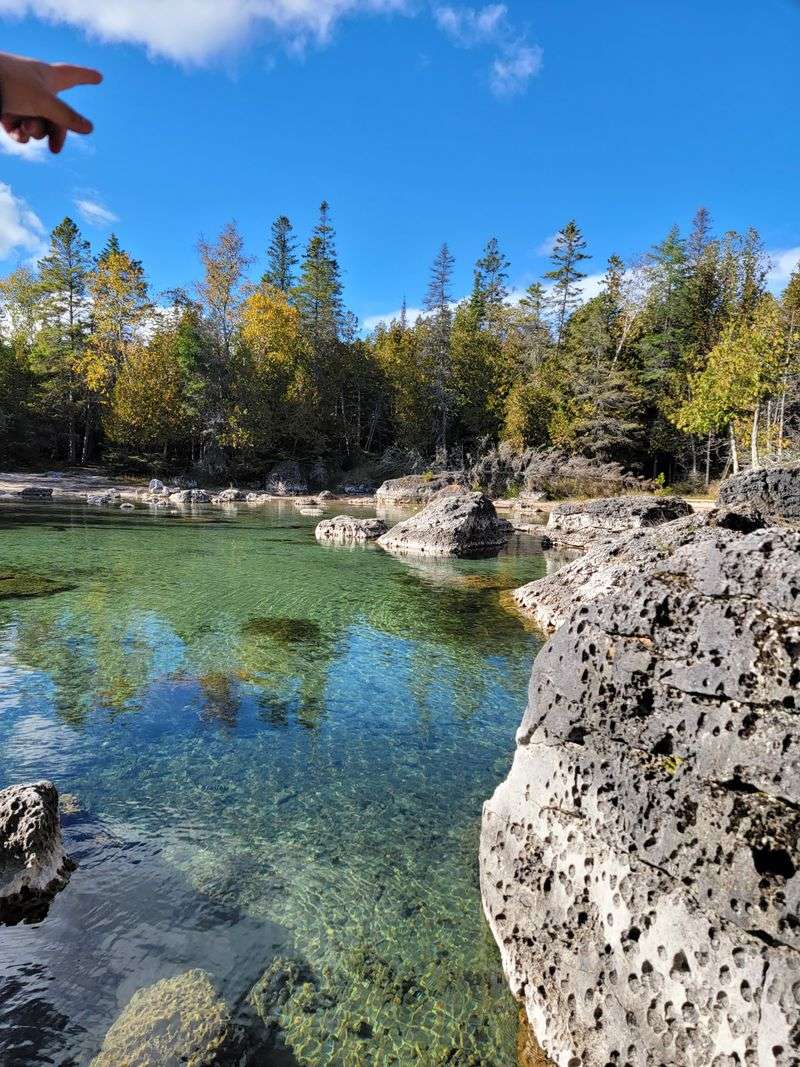
After rain, low pockets gather water and turn the path into a choose-your-own stepping puzzle. Cedar roots sometimes serve as dry rungs, though they can be slick. The trick is letting ankles float while eyes plan three moves ahead.
Seasons nudge the experience. Spring brings damp clarity and cool air, summer softens light under dense needles, and fall tilts gold into the understory. Winter hikers should verify access and conditions, as ice can armor rock.
Advice that saves socks: skirt the edges on mineral soil rather than widening the trail through plants. Rock-hop only where lichen is sparse. If water wins, accept wet feet and keep moving.
Dry socks waiting in the car feel heroic.
Finish Strong And Turn Back With Care
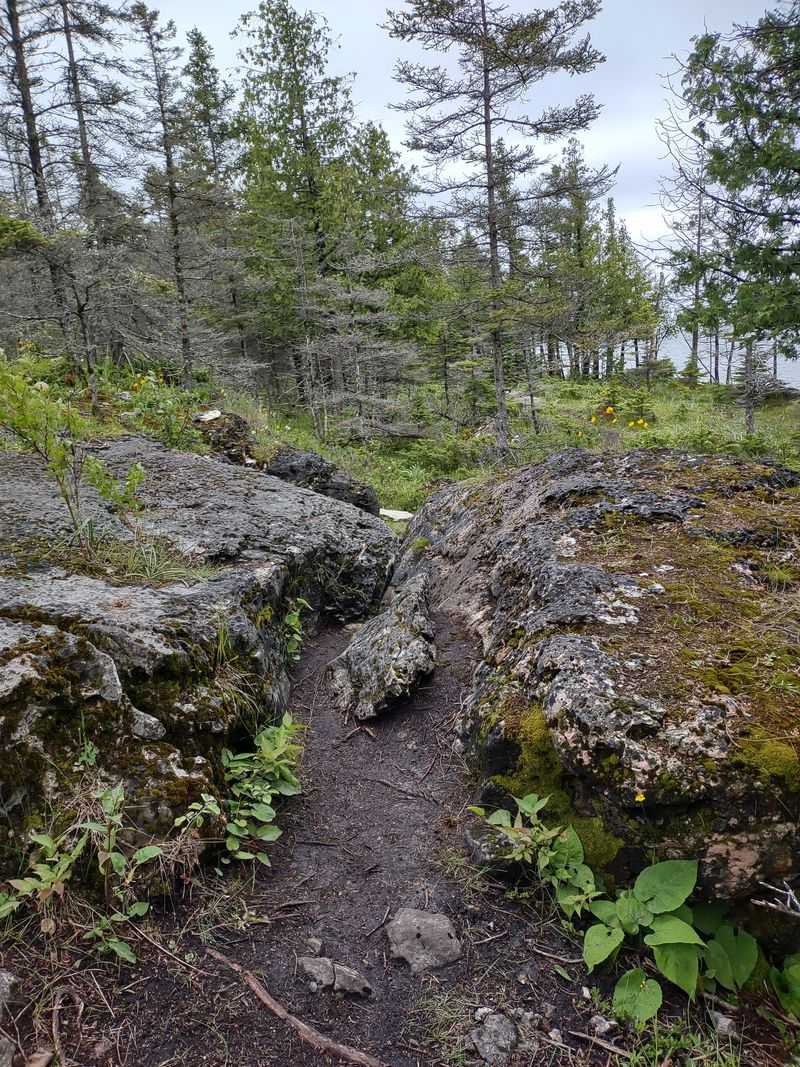
Reaching the far clusters feels like completing a sentence you started in the parking lot. The rocks near the water grow broader, and perspectives open wider than expected. Even the return walk feels newly composed.
Trails may connect onward, but most visitors pivot here for an out-and-back to the lot beyond the railroad overpass. Fatigue hides in ankles on the way home, where roots seem bolder than before. Allow attention to swell rather than shrink.
Visitor tip: snack before turning, re-lace shoes, and set a slower pace for the first five minutes. Watch late-day glare through trees. When the gravel lot appears, you will have earned the stillness that settles after stepping from shade to sky.