
This Michigan Pier Walks You Half a Mile Into Lake Michigan Toward a Slightly Tilted Lighthouse
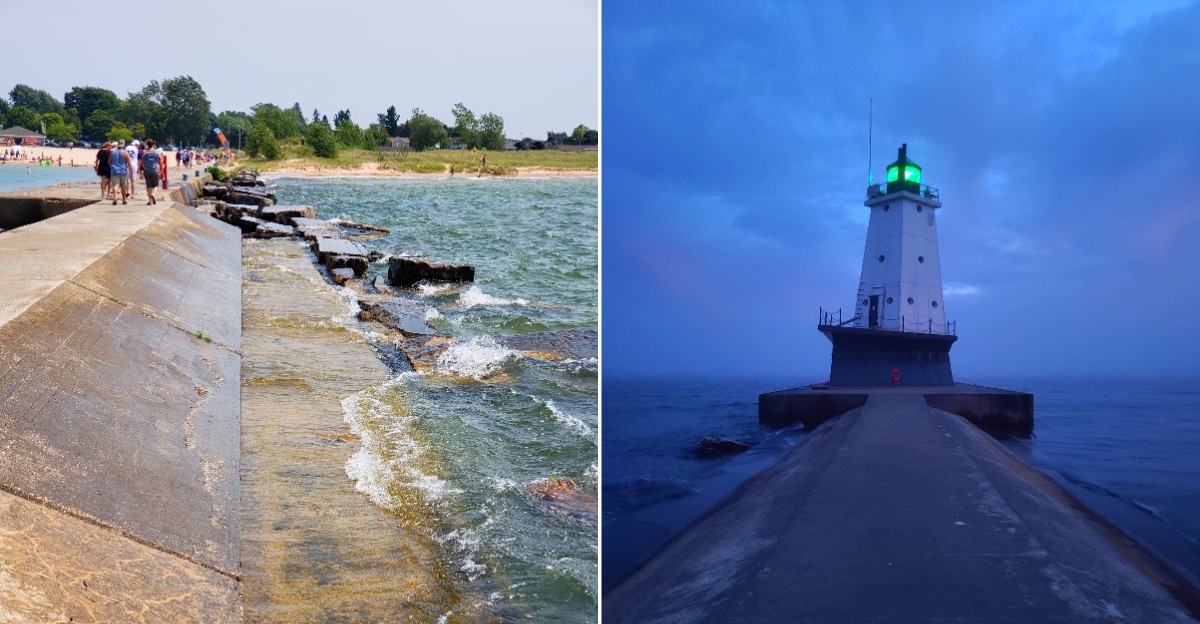
Half a mile of concrete stretching into open water. Waves break on both sides.
The wind picks up the further you walk until the shore behind you looks like a postcard and the lighthouse ahead is the only thing keeping the horizon anchored.
I walked this pier on a September afternoon and counted at least thirty other people doing the same thing, which tells you something about a structure that has been drawing visitors since 1924.
The lighthouse tilts slightly. Not enough to feel dangerous but enough to make every photograph look a little more interesting than a standard lighthouse shot.
If the American flag is flying, you can climb to the top.
I paid the donation and stood in the lantern room watching the car ferry cut across the harbor below. Michigan does not have a shortage of lighthouses, but this one earns its reputation one step at a time.
Allow Time For The Full Mile
Treat the outing as a one-mile round trip, not a quick hop to a nearby marker. The breakwater reaches approximately half a mile from Stearns Park Beach, and open water makes the lighthouse look closer than it is.
A steady walking pace leaves time for photographs, passing anglers, and watching boats use Pere Marquette Harbor. Bring water on hot days, but keep belongings compact so your hands remain free for balance.
The walkway narrows visually as shore recedes, which adds drama without changing the basic route. Plan at least an hour for the walk alone, then add extra time if the tower is open and you intend to climb, browse exhibits, or simply study that curious lean from nearby before returning.
Park At The Beach, Then Walk Into Lake Michigan
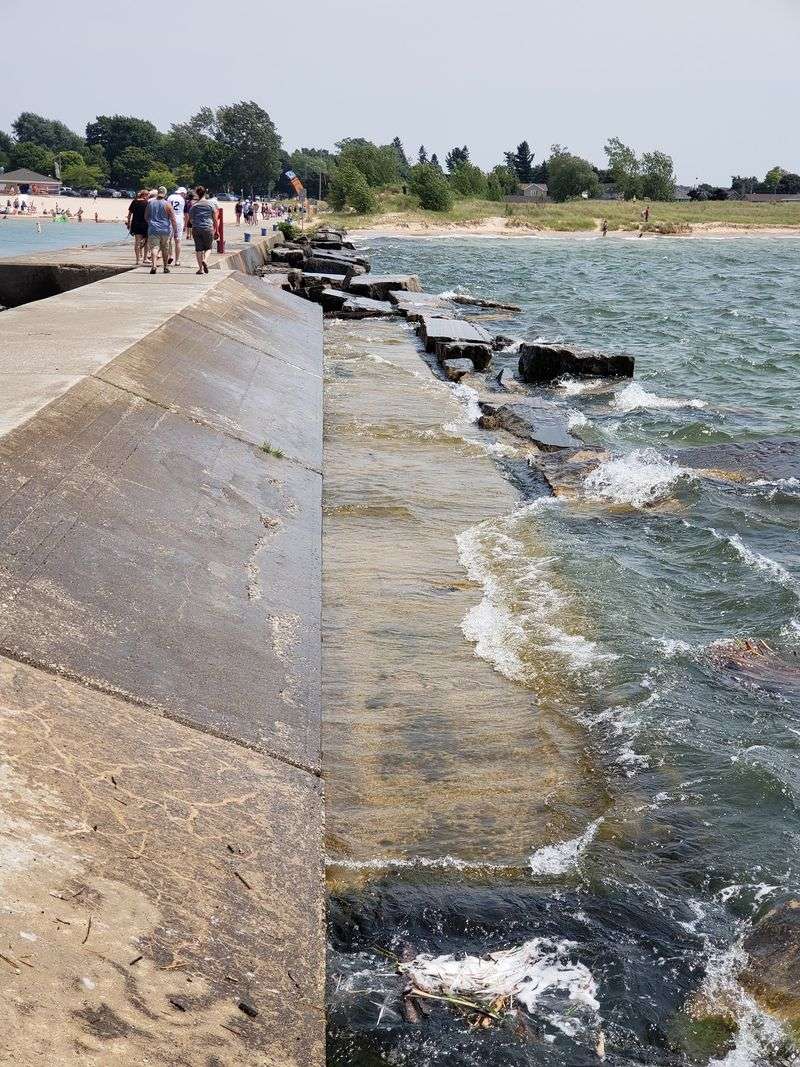
Ludington North Breakwater Light sits at the end of the north pier off Stearns Park Beach in Ludington, Michigan. Lakeshore Drive is the practical final approach, with the beach opening up along the Lake Michigan shoreline before the lighthouse itself comes into view offshore.
The last part of the trip happens on foot. Once you reach Stearns Park, the broad beach and long concrete breakwater make the route obvious, with the white lighthouse waiting at the far end of the pier roughly half a mile out.
Use the visitor parking in or around Stearns Park, including the pull-in diagonal spaces along one-way Stearns Outer Drive, then walk across the beach area to the north breakwater. From there, the pier itself becomes the trail all the way to the lighthouse.
Check The Wind Before Walking
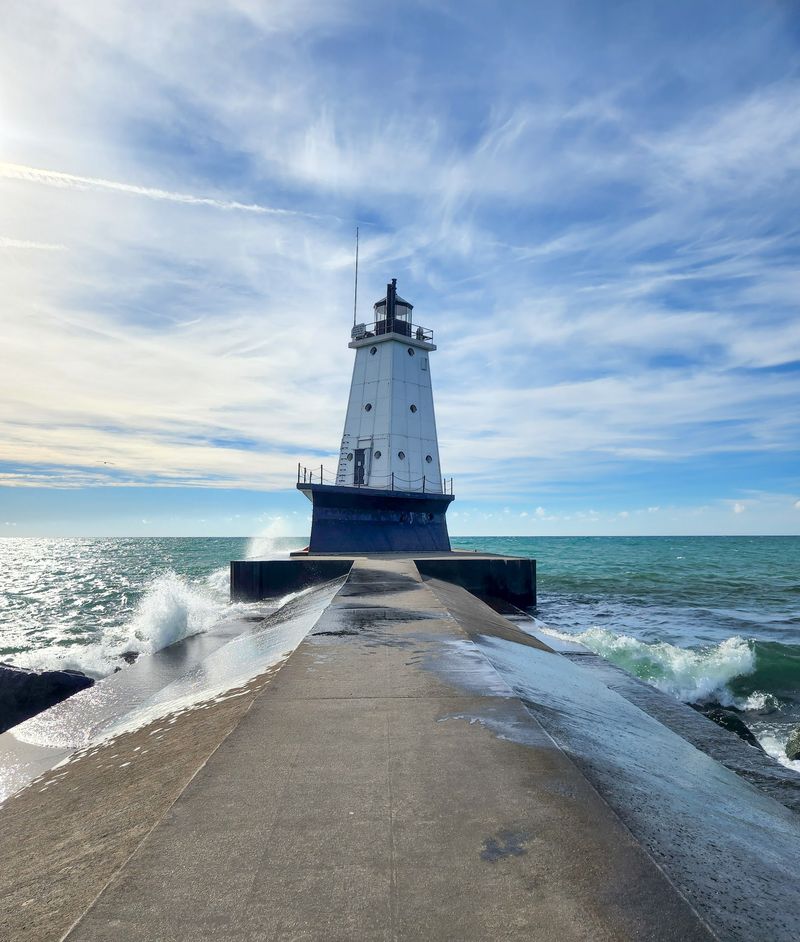
Wind announces itself quickly here, tugging at hats and pushing spray across the concrete. Check the local forecast before leaving Stearns Park, and turn around whenever waves begin washing over the walking surface.
The breakwater has no railings, so calm judgment matters more than reaching the end. High winds can also close the tower, even during its regular visitor season.
Wear secure shoes with useful grip, zip phones into pockets, and avoid carrying loose towels or umbrellas onto the pier. Children should remain close to an adult throughout the walk.
Winter ice and storm waves can make the route especially dangerous, and admiring the lighthouse safely from shore is never a poor substitute. Lake Michigan sets the schedule, not the traveler.
Look Closely At The Famous Lean
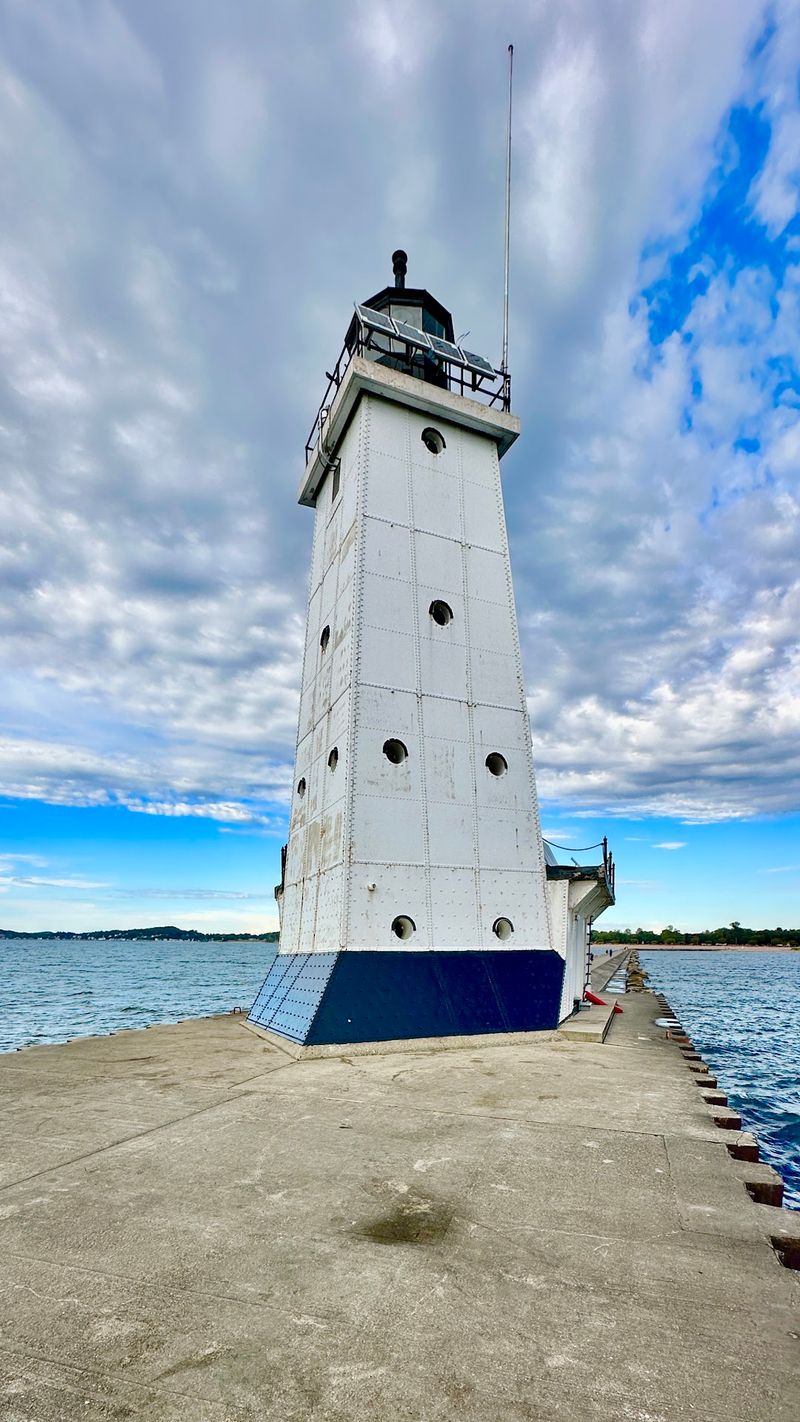
A slight tilt gives the lighthouse an expression that feels almost puzzled. The tower leans about four degrees toward the northeast, a change caused when its supporting crib settled in 1994.
After examining the structure, the Army Corps of Engineers determined that it remained safe. Repair would have been extremely costly, so the lighthouse kept its unusual stance.
Walk around the accessible base area and compare the tower’s edges with the horizon or nearby vertical features. The angle is easier to spot from certain positions, particularly when viewed from the side.
Photographers can show it honestly by keeping the camera level rather than tilting the frame for extra drama. The lean is small, real, and far more interesting without visual tricks added.
Notice A Tower Shaped For Waves
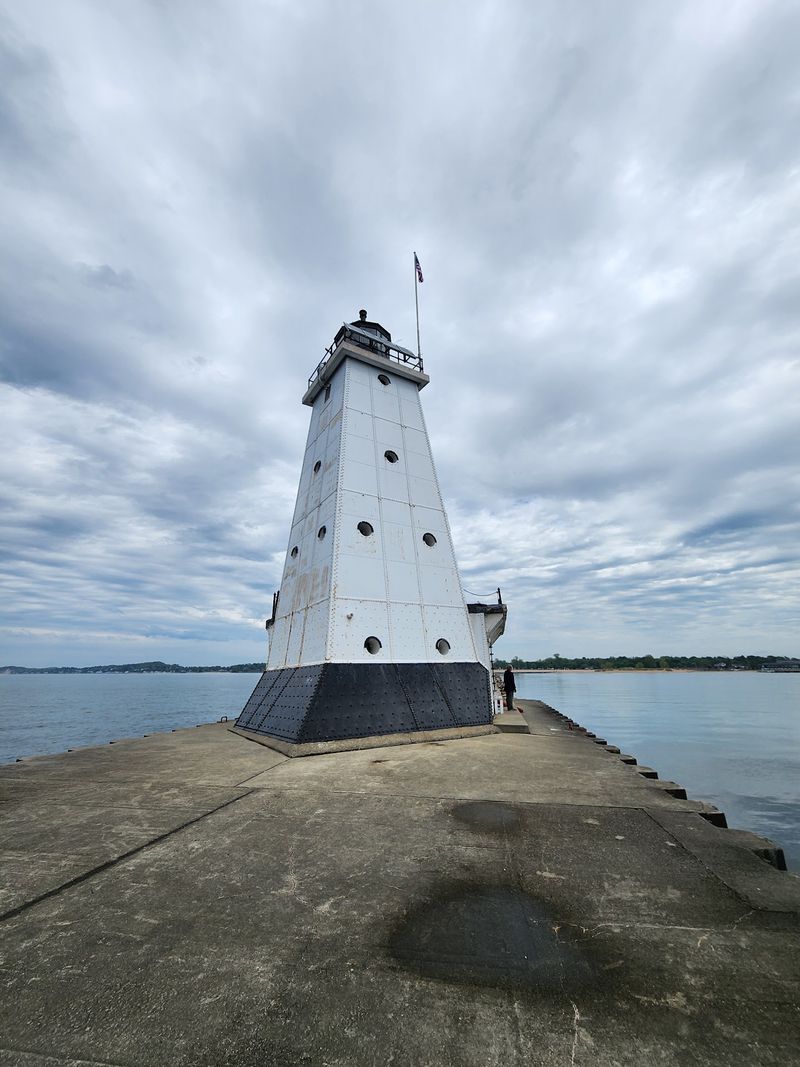
Unlike a storybook lighthouse with a round brick body, Ludington’s tower resembles a sturdy white ship pointed toward rough water. Its four-sided pyramidal shape was designed to deflect powerful Lake Michigan waves rather than meet them with a flat wall.
The current 57-foot, steel-plated structure was built and first illuminated in 1924. Its crisp geometry also carries an Art Deco influence, giving practical engineering a handsome period style.
Look for the black lantern and round porthole windows placed across the three interior decks. Those nautical details fit a building standing so far from shore.
From the breakwater, step back enough to see how the sloping sides, broad base, and narrow crown work together against the open horizon.
Watch For The Green Flash
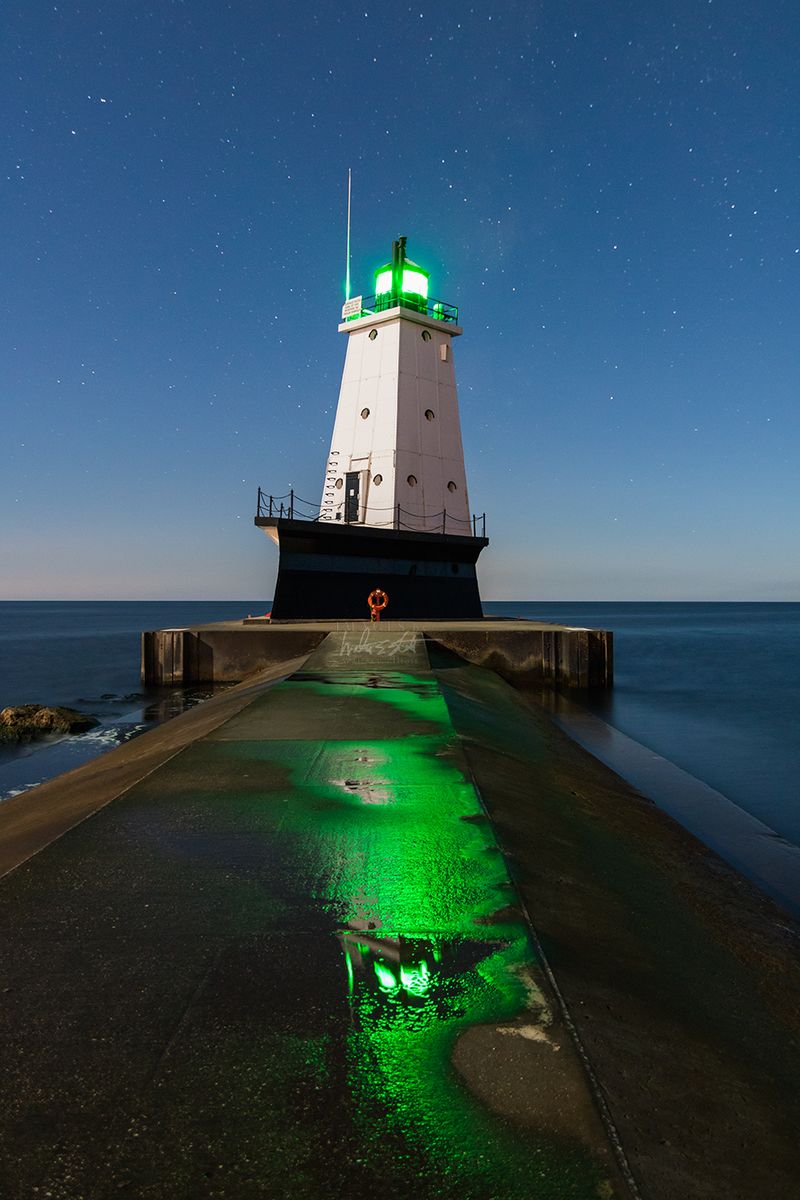
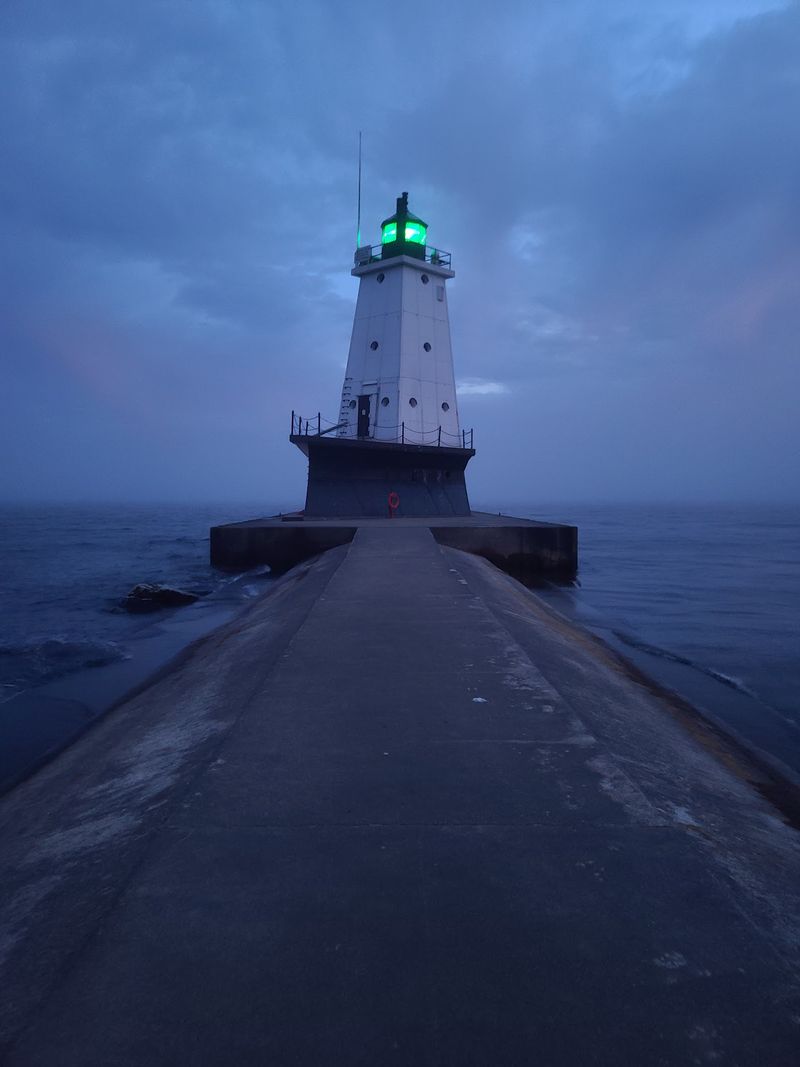
After daylight fades, the lantern adds a quick green punctuation mark to the darkening lake. Its active signal flashes every six seconds, helping vessels identify the entrance to Pere Marquette Harbor.
The color also separates this beacon from nearby navigational lights with different patterns. Rather than staring constantly, watch the black lantern room and count the quiet interval between flashes.
Bring a small flashlight for the walk back, but aim it toward the pavement and away from other visitors. Twilight photographs may capture the green signal if the timing and camera settings cooperate.
Stay alert to changing waves and wind because visibility drops rapidly after sunset. The beacon is lovely, yet safe footing should receive more attention than getting one perfectly timed picture.
Climb Only When The Flag Is Flying
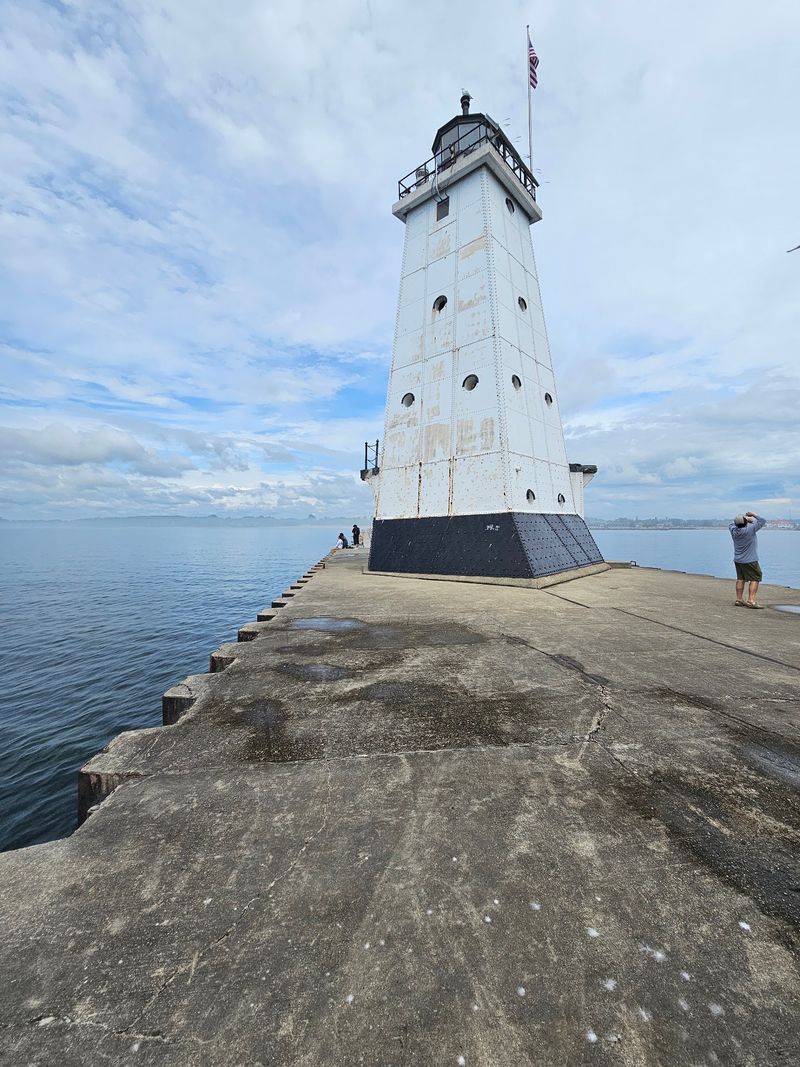
An American flag flying above the light provides a useful clue: the tower is open for visitors. Operations are seasonal, generally running from May through September, but hours and closure days can change.
Sable Points Lighthouse Keepers Association manages the tours and may close the building when high winds or strong waves create unsafe conditions. Confirm the current schedule before making the half-mile walk specifically for a climb.
Admission to the breakwater remains free, while entering and climbing the tower requires a donation fee. Discounts are offered for children, and active-duty military members and veterans receive free admission.
Even when the door is closed, the exterior, harbor views, and long walk remain rewarding. Treat an interior visit as an excellent bonus, not a guarantee.
Prepare For A Steep Climb
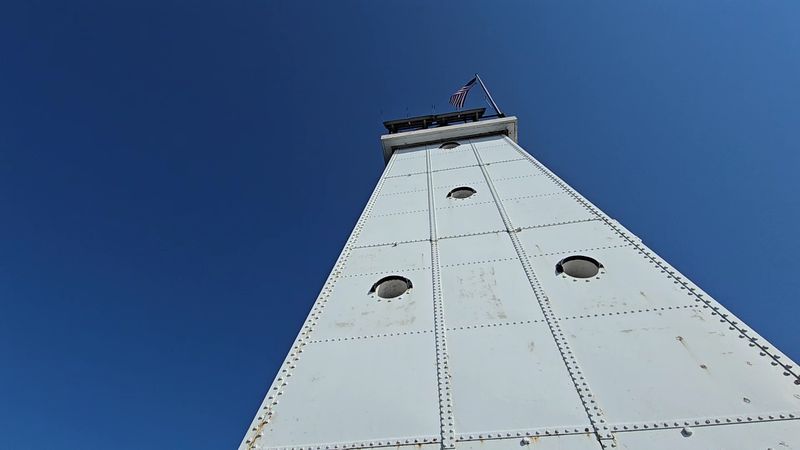
Inside, the climb feels more nautical than domestic, with 53 steep steps leading upward through compact levels. Some sections resemble ladders, so anyone uneasy with heights or tight spaces should consider staying on the ground floor.
Children must measure at least 40 inches tall, and every climber needs shoes secured by heel straps. Flip-flops and loose backless footwear do not meet the safety requirement.
Move slowly, follow keeper instructions, and leave enough room for people using narrow passages. Four round porthole windows on each of the three decks break up the climb with framed views and bits of history.
Reaching the top reveals broad sights across Lake Michigan, the channel, and Ludington, but careful descending deserves equal patience and attention afterward.
Find The Original Lens In Town
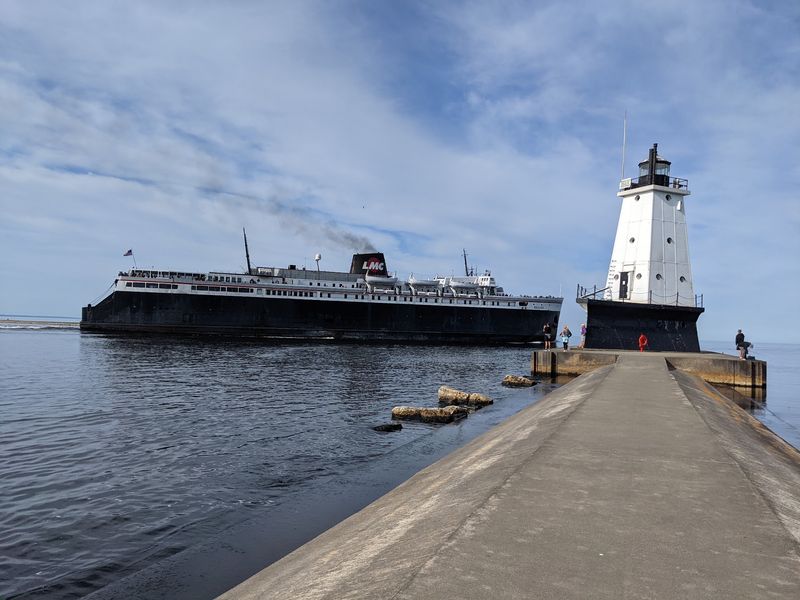
The light shining today is not produced by the tower’s original optical treasure. A Fourth Order Fresnel lens once focused the beacon, but it was replaced by modern equipment in 1995.
Travelers interested in seeing that intricate glasswork can find the preserved lens at the Port of Ludington Maritime Museum. Pairing the museum display with the pier walk helps explain how lighthouse technology changed over time.
The station itself was established in 1871, long before the present tower appeared in 1924. Automation followed in 1972, ending the need for constant manual operation by keepers.
Remembering those dates turns the white structure from a scenic endpoint into part of a longer working harbor story. Its equipment changed, but its navigational purpose continues today.
Pause For Harbor Traffic
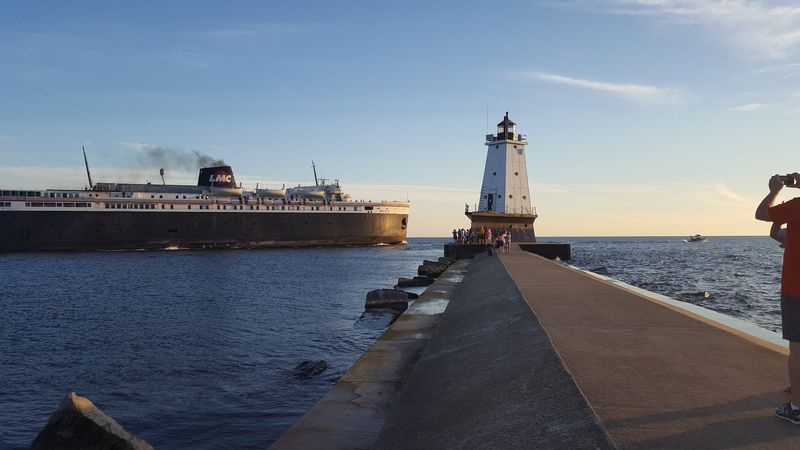
A low engine sound may signal one of the pier’s grandest moving sights before the vessel appears. The S.S.
Badger car ferry uses Ludington Harbor, and the breakwater offers a clear perspective when it arrives or departs.
Fishing boats and other harbor traffic also pass near the lighthouse, adding motion to a walk dominated by water and sky. Remain behind anglers rather than stepping over rods, tackle, or lines stretched along the breakwall.
Check the ferry schedule if seeing the Badger matters, while remembering that operating conditions can affect timing. Keep cameras secured when wind rises, and never block the route while taking pictures.
Boats look impressively close from the end, but the marked channel must remain clear for navigation.
Save The Return For Sunset
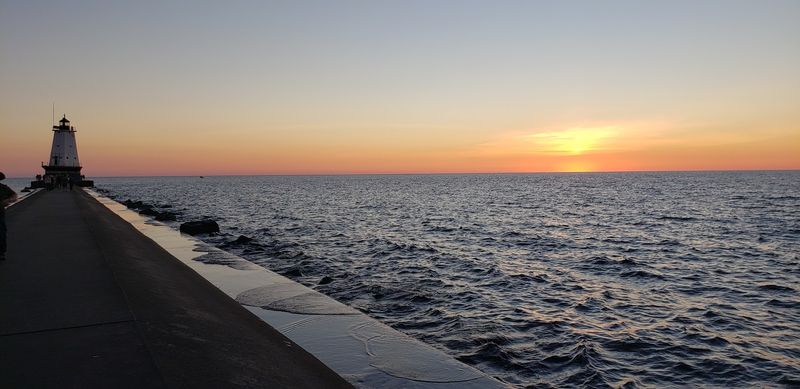
Evening rearranges the whole scene, turning the lake copper while the lighthouse becomes a sharp white silhouette. Stearns Park is well known for western views, and the breakwater places sunset watchers well beyond the beach.
Begin walking back before darkness if you are unfamiliar with the unrailed route. The changing color remains visible from shore, where the sand provides a safer place to linger after daylight fades.
Free angled parking makes a sunset stop easy, though popular evenings attract plenty of company. Pack insect repellent during warmer months and carry a light layer because temperatures over the water can fall quickly.
One final look from the beach reveals the pier’s full length, the tilted tower, and its green signal offshore.