
This Michigan Pizza Landmark Still Does The Square Pie That Started A Whole Style
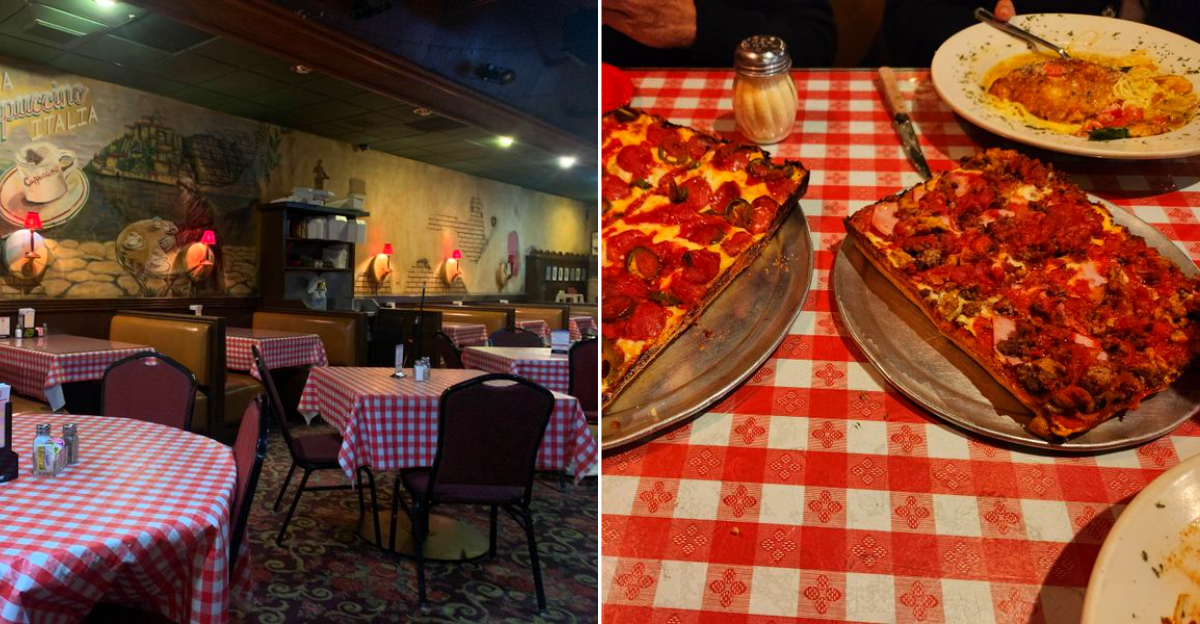
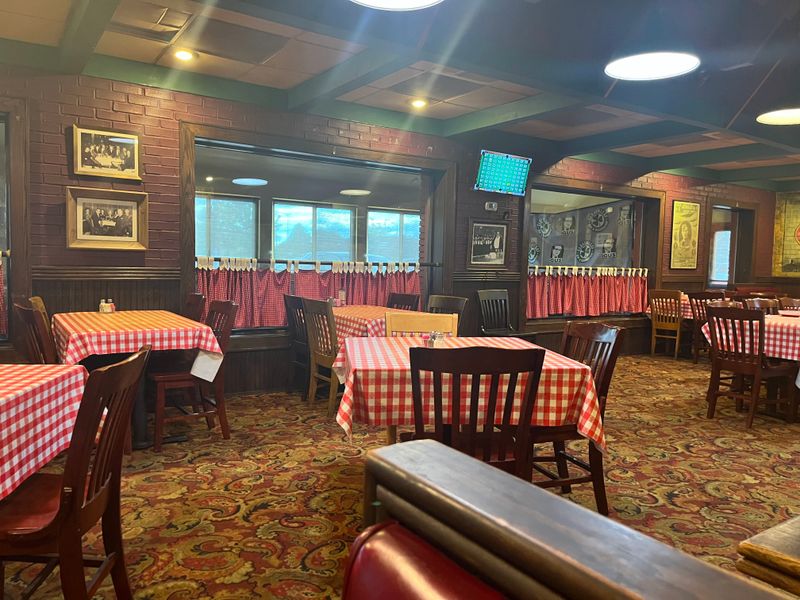
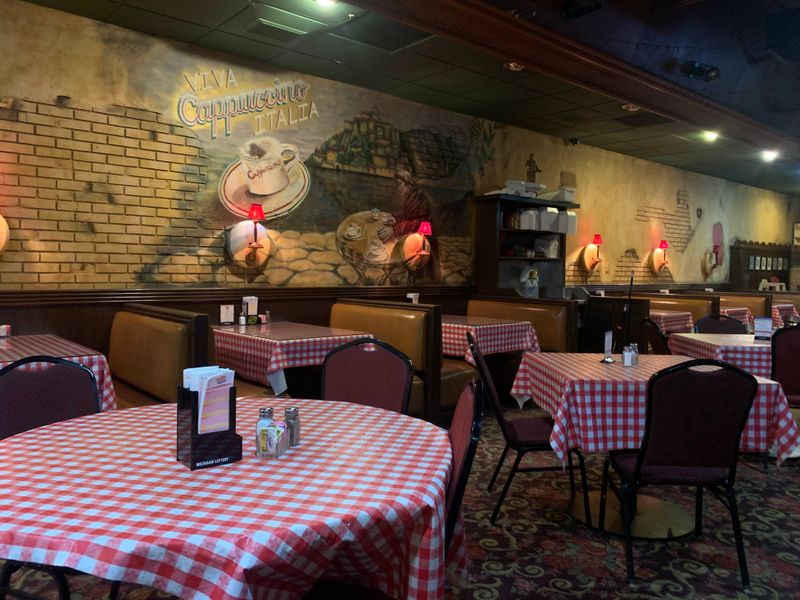
Eastpointe’s Cloverleaf Bar & Restaurant is where the square legend keeps its corners crunchy and its history close. Walk in for the checkered tablecloths and family photos, and stay for the caramelized cheese lace that defines Detroit style. The original square technique that began with Gus Guerra still hums from these blue steel pans, and you can taste the lineage in every airy bite.
In the landscape of 2026, where “Detroit style” has gone global, this neighborhood anchor remains the source code. The air is thick with the aroma of bubbling tomato sauce and toasted yeast, a scent that hasn’t changed since the pans first moved from the city to the suburbs.
It’s a space that feels like a shared living room for the Eastside, where the red-sauce nostalgia is real and the “frico” crust is a crispy, savory law of physics. This is where you go to see what the hype was about before it was hype, a place where the recipe is a relic and the flavor is a revelation.
Crispy edges and a century of soul collide in every slice at the birthplace of the Detroit square. To help you tackle this menu with the respect it deserves, I’ve broken down the anatomy of the perfect Cloverleaf order, from the specific topping ratio that lets the crust shine to the “secret” menu staples that regulars never skip.
This playbook is made for navigating the weekend rush and ensuring you get a seat near the memorabilia that tells the story of how a simple pan changed Michigan’s food scene forever.
Corner First, Always
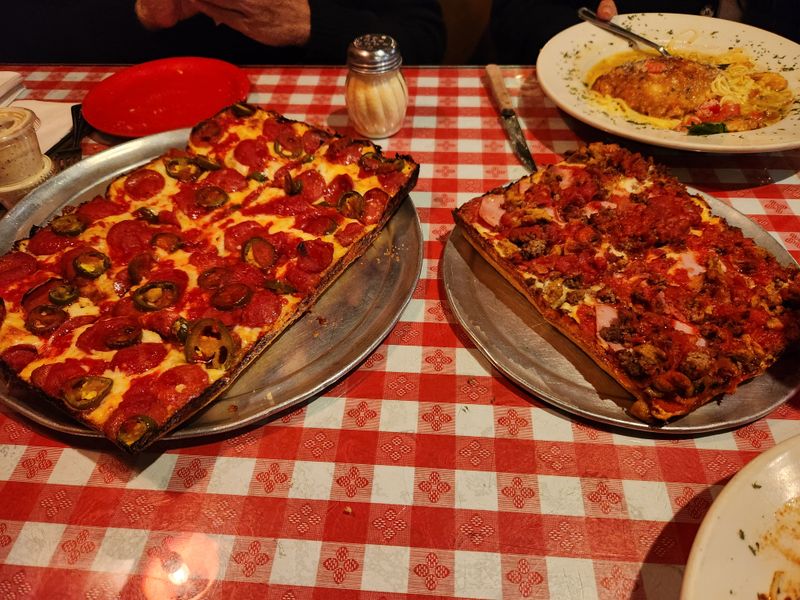
The moment a tray hits your table, listen for the soft crackle along the edges, because that caramelized cheese frill forms where brick cheese kisses the pan, creating a corner that eats like a snack and a slice at once.
The texture lands somewhere between brittle and buttery, offering a quick shatter that immediately yields to a soft, airy crumb.
At Cloverleaf, the corners carry the deepest flavor, enriched by rendered oil from old-style pepperoni cups and the tangy sweetness of ladled sauce, and this is where history lives, echoing the 1940s technique that first formed Detroit’s square identity.
To experience the most intense crunch, you can ask for the pie to be prepared “well done”, and the kitchen staff knows exactly what this implies, and the pan will oblige with a darker, toastier edge that heightens the contrast with the pillowy interior. It is best to grab a corner piece before the conversation steals your attention and the cheese begins to set.
Respect The Sauce Lanes
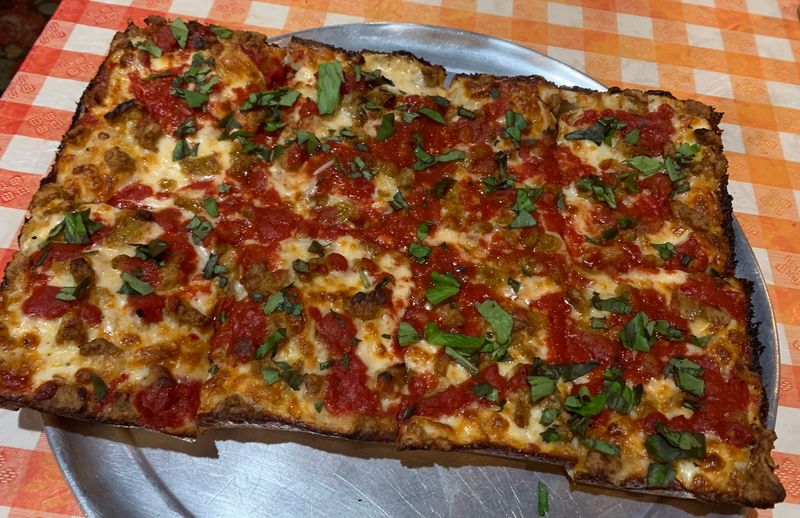
Those bright red ribbons on top are not mere decoration, because Cloverleaf’s ladle-after-bake method keeps the tomato vivid, slightly sweet, and noticeably tangy, which provides a necessary balance to the buttery crust and rich brick cheese.
Each lane of sauce delivers a small burst of acidity that resets your palate for the next bite.
The approach traces directly to the origins of Detroit style, when applying sauce post-bake was a functional choice to protect the crust’s crunch.
If you prefer a more aggressive tomato presence, requesting additional sauce on the side is a common move, and it arrives warm and ready for dipping corners.
For an at-table experiment, try one slice untouched and another with a spooned stripe of extra sauce to see how the seasoning blooms differently over the cheese. This simple tweak gives you control over the bite’s brightness without compromising the structural integrity of the crust.
Old Style Pepperoni Matters
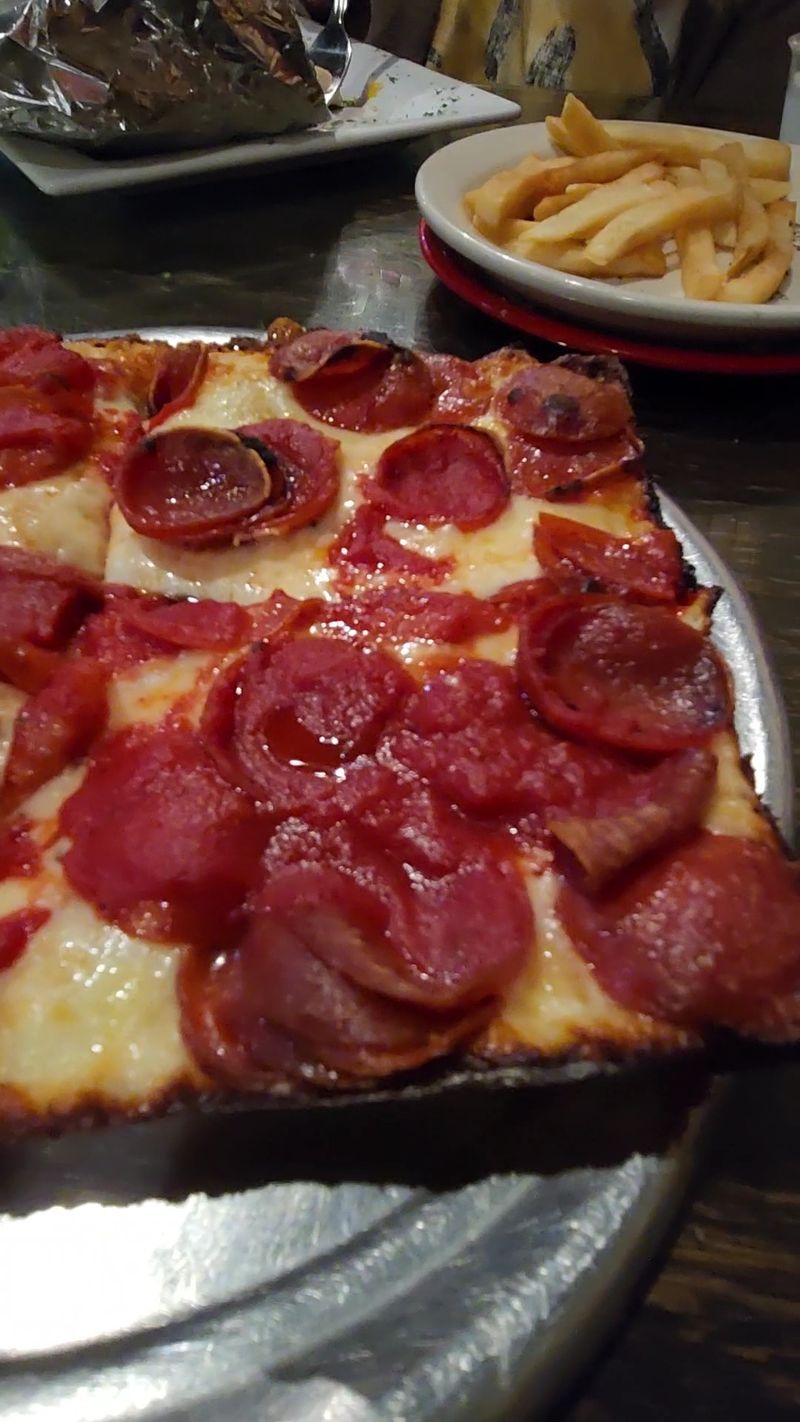
Cloverleaf’s old-style pepperoni curls into shallow cups during the bake, leaving the edges freckled and crisp, and the oil that gathers inside these cups seasons the cheese beneath, providing a consistent warmth of pepper without an overwhelming amount of spice.
It is a small topping choice that transforms a standard square into a layered experience.
Detroit pizza history favors this specific style of meat, and Cloverleaf treats it with care across the entire pan to ensure every bite gets a curl.
If you are sharing with someone who isn’t a fan of pepperoni, the kitchen can accommodate half-and-half orders while maintaining an even distribution of ingredients.
When ordering for takeout, venting the lid slightly during the drive can help keep the pepperoni edges lifted and crisp. Placing a folded napkin at one corner of the box is usually enough to hold a small gap, preventing trapped steam from softening the ruffles.
Mind The Midweek Hours
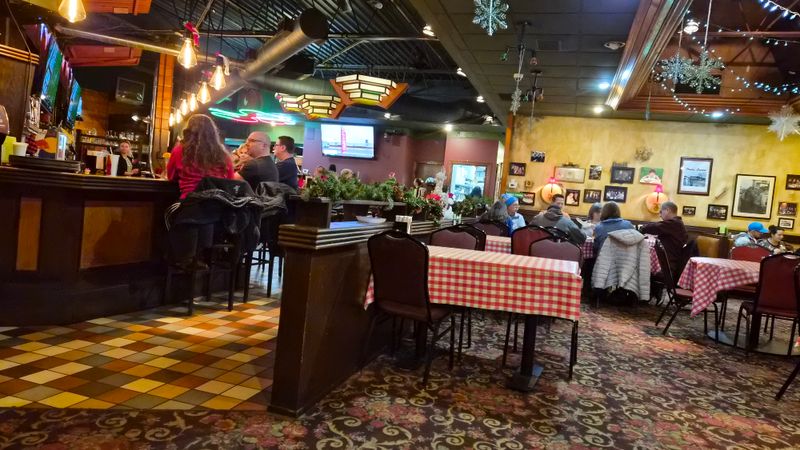
Planning is essential for a Cloverleaf visit because the restaurant maintains a specific schedule, typically opening at noon and remaining closed on Mondays and Tuesdays.
The early evening window fills quickly, particularly on weekends, as the kitchen does not treat these square pans as a rush job, and a proper Detroit bake requires a measured amount of time to achieve the necessary airy crumb and browned cheese lace.
This deliberate pacing is a reflection of the restaurant’s history, as the style was designed for an unhurried pan rather than a modern conveyor oven.
Arriving before 7:00 PM is a smart strategy for those seeking a relaxed dine-in experience, and on busy days, calling ahead for estimated bake times can help manage expectations.
For those taking their pizza to go, requesting the pie remain uncut can prevent steam from softening the underside during transport. This allows you to slice it at home and keep the edges at their maximum crispness.
Crunchy Bread Is Its Own Thing
The bread basket at Cloverleaf often surprises first-time visitors, because the “crunchy bread” arrives looking like stretched pizza dough that has been brushed with garlic butter, sugar, and Parmesan.
The result is a sweet-savory tug that defies traditional breadstick categories, and while it may not be the most photogenic item on the menu, the texture is pure comfort.
This unique side dish has a dedicated following as old as the square pie’s legend itself.
Ordering it provides something to snack on while the main pan is finishing its bake, and the sweetness provides a nice contrast that makes the first savory bite of pizza stand out even more.
For a sturdier crunch, you can ask for it to be baked a touch longer. Pairing the bread with a side of dipping sauce helps bridge the gap between the sugary coating and the tangy tomato notes of the meal.
Antipasto Ritual Before The Square
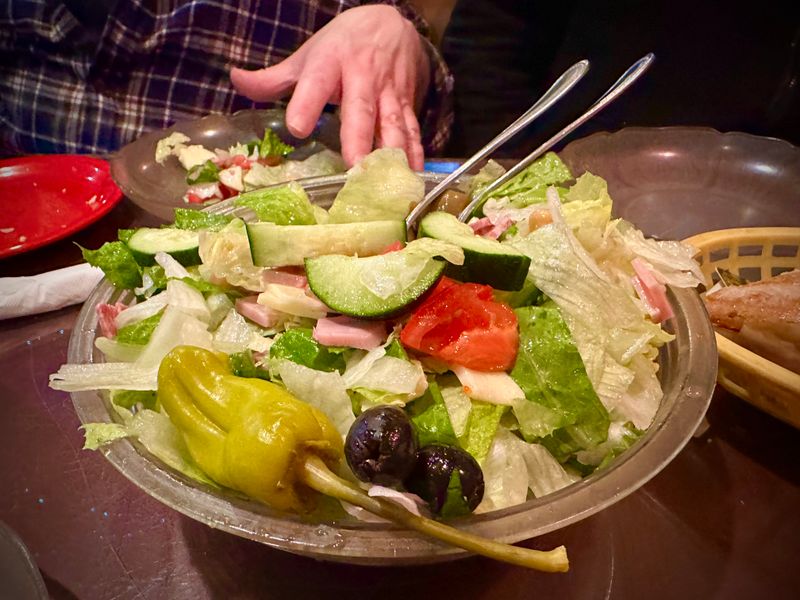
The antipasto salad plays a supporting role, but it is an essential part of the Cloverleaf ritual, and composed of crisp lettuce, deli meats, cheese, and a classic dressing, it brings the salt and acidity required to prime the palate for a rich, buttery crust.
By the time the square lands on the table, the salad’s brightness helps the heavier flavors of the pizza feel more defined.
This pre-pizza habit has been a staple of family meals at this location for decades.
Some regulars prefer a punchier finish, so requesting extra dressing on the side allows you to customize the flavor to your preference.
To keep the flow of the meal smooth, it is best to order the salad and the pizza together. This allows the kitchen to stage the timing so the greens arrive first, ensuring you aren’t trying to manage both courses at once while they cool.
Gluten Free Square Option
Gluten-free diners are not excluded from the Detroit-style experience here, because Cloverleaf offers a gluten-free square that maintains the signature sauce-on-top presentation and the disciplined cheese edge.
The kitchen takes cross-contact seriously, though it is always recommended to mention any specific sensitivities when placing your order.
You can ask the staff how they stage the pans and which tools are used to ensure your needs are met.
For the best gluten-free experience, requesting extra sauce can add moisture to what is typically a slightly crisper crust.
Choosing a smaller size can also help the gluten-free dough bake more evenly. This option captures the spirit of the landmark square without requiring any fuss or apology for the dietary substitution.
When Cheese Bread Steals The Show
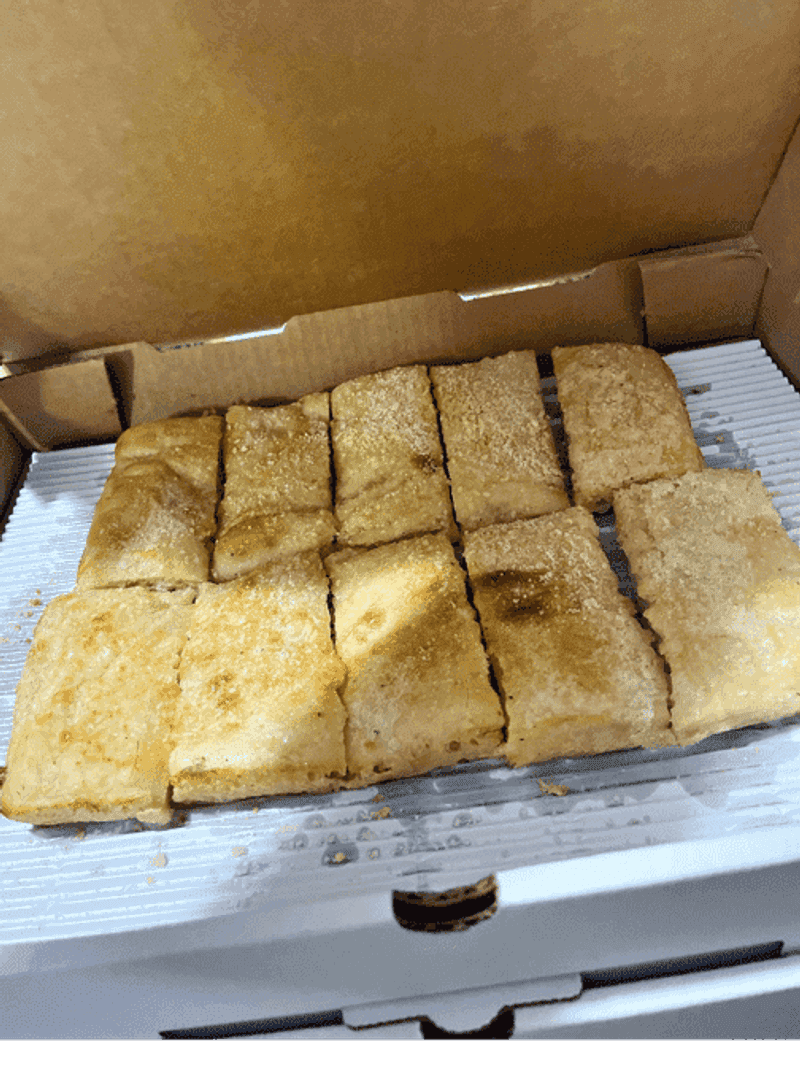
On days when the service is particularly busy, the cheese bread often stands out as a highlight, and it arrives with a molten top and browned freckles, pulling into long strands of cheese that provide a preview of the dairy richness found on the pizza.
The salty edge of the cheese pairs neatly with the house’s tangy dipping sauce.
Cloverleaf’s kitchen maintains a high level of consistency with this side even when the dining room is slammed.
If you find yourself waiting for a table or a primary dish, the cheese bread serves as an excellent holdover.
Letting it rest for a moment before cutting will help the cheese set slightly, which prevents the toppings from sliding and makes it easier to handle. Following each piece with a dip of sauce recreates the signature pizza stripes in miniature form.
Reading The Pan’s Undercrust
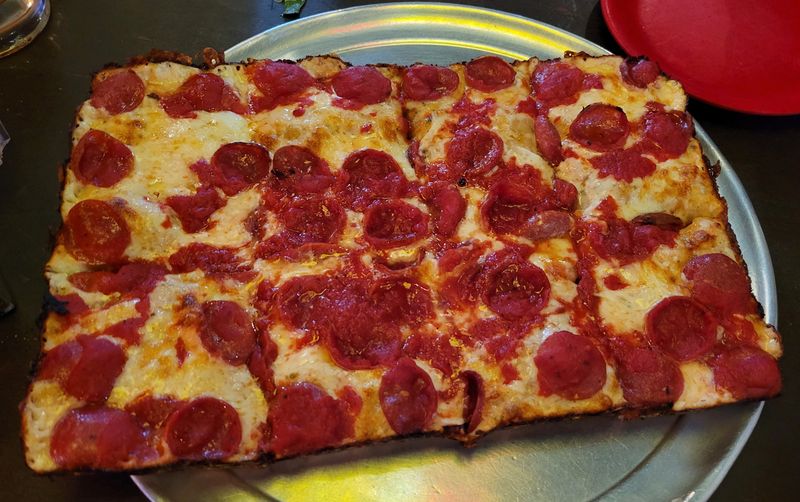
If you flip a corner of the slice, you can see the quality of the bake, and a proper Cloverleaf pizza shows a mottled golden base with visible airy bubbles and evidence of light frying from the oil that seasons the blue steel pans.
The bite should be springy rather than soggy, carrying a faint whisper of butter throughout the dough.
This technique is a direct descendant of the industrial pans that once held auto parts before they were repurposed for dough in the 1940s.
At its best, the style provides a perfect balance of lift and crispness.
If the center of the pie feels too soft for your particular taste, you can always ask for a few more minutes in the oven to firm up the base.
Takeout customers can preserve this texture by driving the pie home on a wire rack if possible, as elevation prevents steam from pooling under the crust and keeps the base lively.
Order Like A Regular
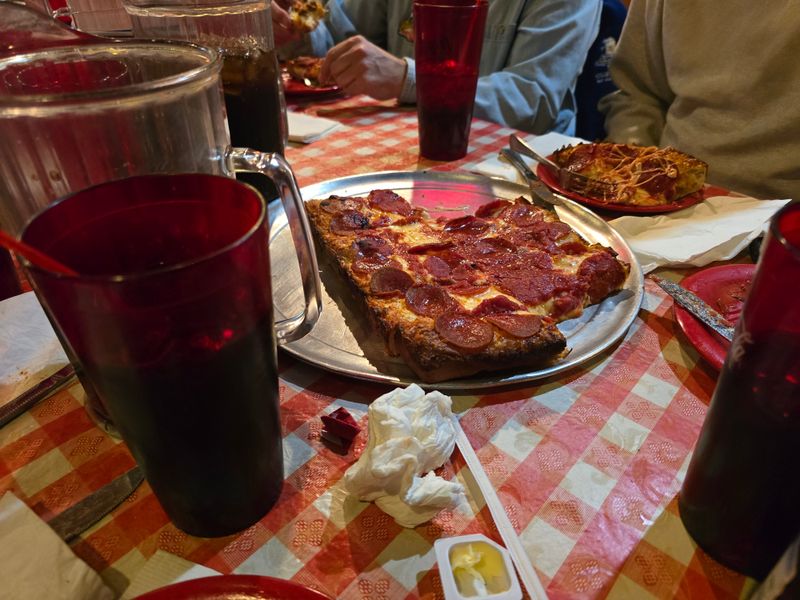
Locals who frequent Cloverleaf tend to keep their orders simple to let the craftsmanship shine, and a common “regular” order consists of a small or large square with old-style pepperoni, a side of sauce, and the crunchy bread to start.
This lineup captures the core of the restaurant’s appeal without overloading the pan with too many toppings that might interfere with the bake.
Founded by Gus Guerra after his time at Buddy’s, Cloverleaf represents a primary branch of the Detroit pizza family tree.
The square is the entire point of the visit, so it pays to trust the format and let the caramelized edges speak for themselves.
On particularly busy nights, a practical move is to place a takeout order early and then dine in for a salad while you wait. This ensures you leave with a hot pizza timed perfectly to your exit, allowing the short business hours to work in your favor.