
This Michigan Roundhouse Looks Like A Cathedral Built For Steam-Era Locomotives
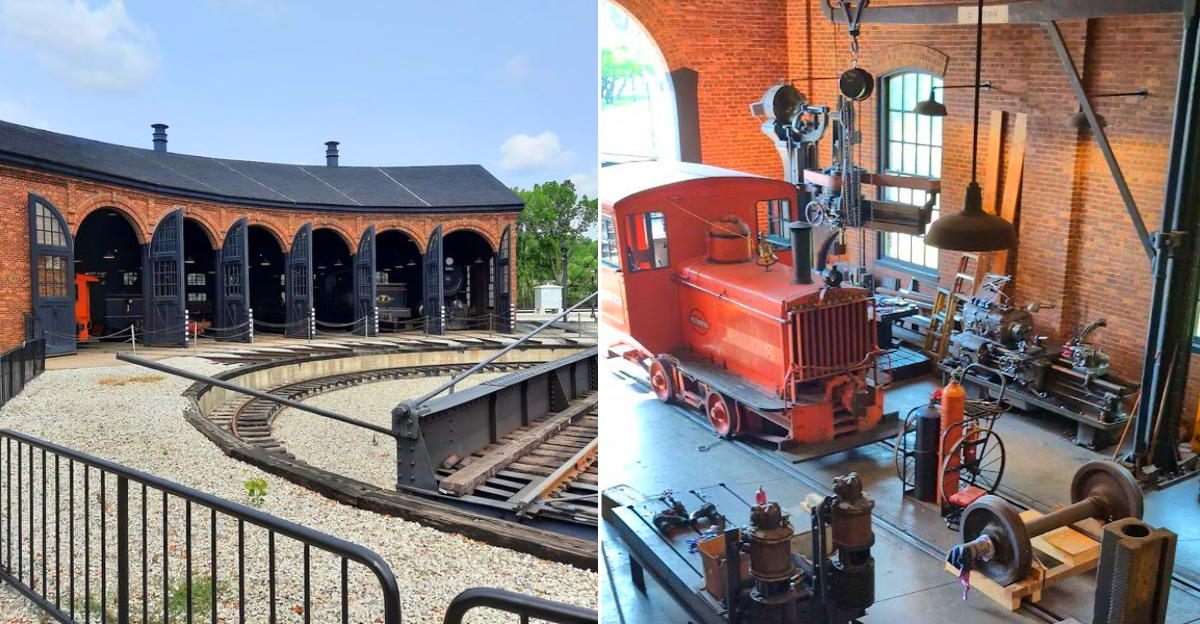
Walking through the arched entrance, the first thing you notice is the scale. Ceilings stretch overhead like a cathedral designed for machines rather than congregations.
A turntable sits at the center of a semicircle of stalls, each one wide enough to hold a locomotive that weighs more than a house. The roundhouse inside Greenfield Village does not try to be cute about what it is. Rivets the size of quarters hold iron panels in place.
Pistons rest on display like sculpture. Information panels explain how crews would spin an entire locomotive on the central turntable to point it in a new direction, a process that looks impossible until you stand on the turntable yourself and feel the heavy mechanism engage slowly beneath your feet.
Heritage spaces often feel preserved behind glass, but this one feels like the crew just stepped out for lunch in Michigan.
Look For The Reused Originals
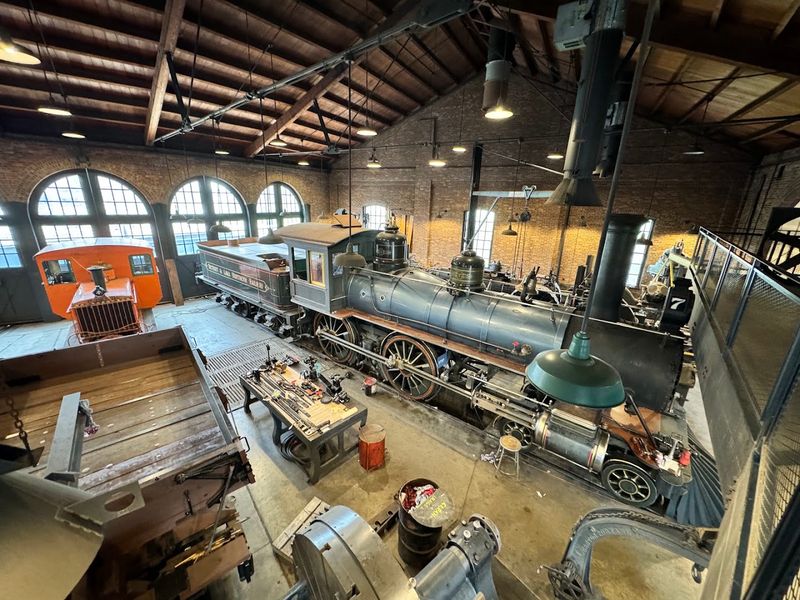
Some of the most satisfying details here are not flashy at all. The reconstructed roundhouse includes original elements salvaged from the 1884 structure in Marshall, including cast-iron columns and cast-iron windowsills that quietly anchor the space in material truth.
That matters because the building in Dearborn is not a fantasy version of railroad history. It was reconstructed to reflect the original roundhouse as it appeared around 1915 or 1920, with brick carefully matched to the earlier masonry.
You do not need specialist knowledge to enjoy this. Just look closely at what seems ordinary, because preservation often hides its brilliance in support pieces, edges, and surfaces that still carry the weight of nineteenth-century industry.
The Roundhouse Waits Beyond The Village Gates
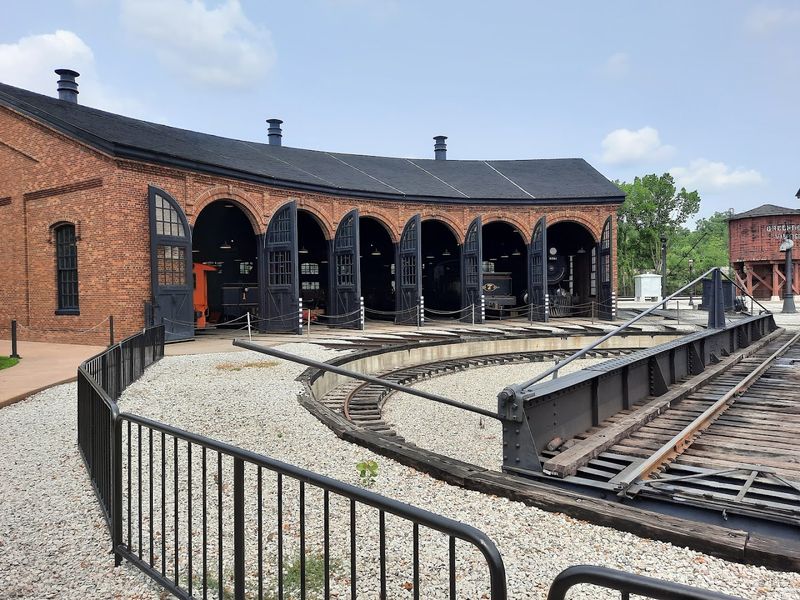
The Detroit, Toledo & Milwaukee Roundhouse stands inside Railroad Junction at Greenfield Village, 20900 Oakwood Boulevard in Dearborn, Michigan. From I-94 or I-75, use the Southfield Freeway and Oakwood Boulevard approach, then follow signs for The Henry Ford and Greenfield Village.
After entering the campus, continue toward the visitor parking areas rather than searching for a road to the roundhouse itself. The working railroad building sits deep inside the 80-acre village, beyond the admission gates and across several historic districts.
Park in the West Lot off Oakwood Boulevard or the East Lot off Village Road, then enter Greenfield Village and follow the map and Railroad Junction signs. Visitors can walk to the roundhouse or use an operating village ride to shorten the final stretch.
Treat It As A Workshop First
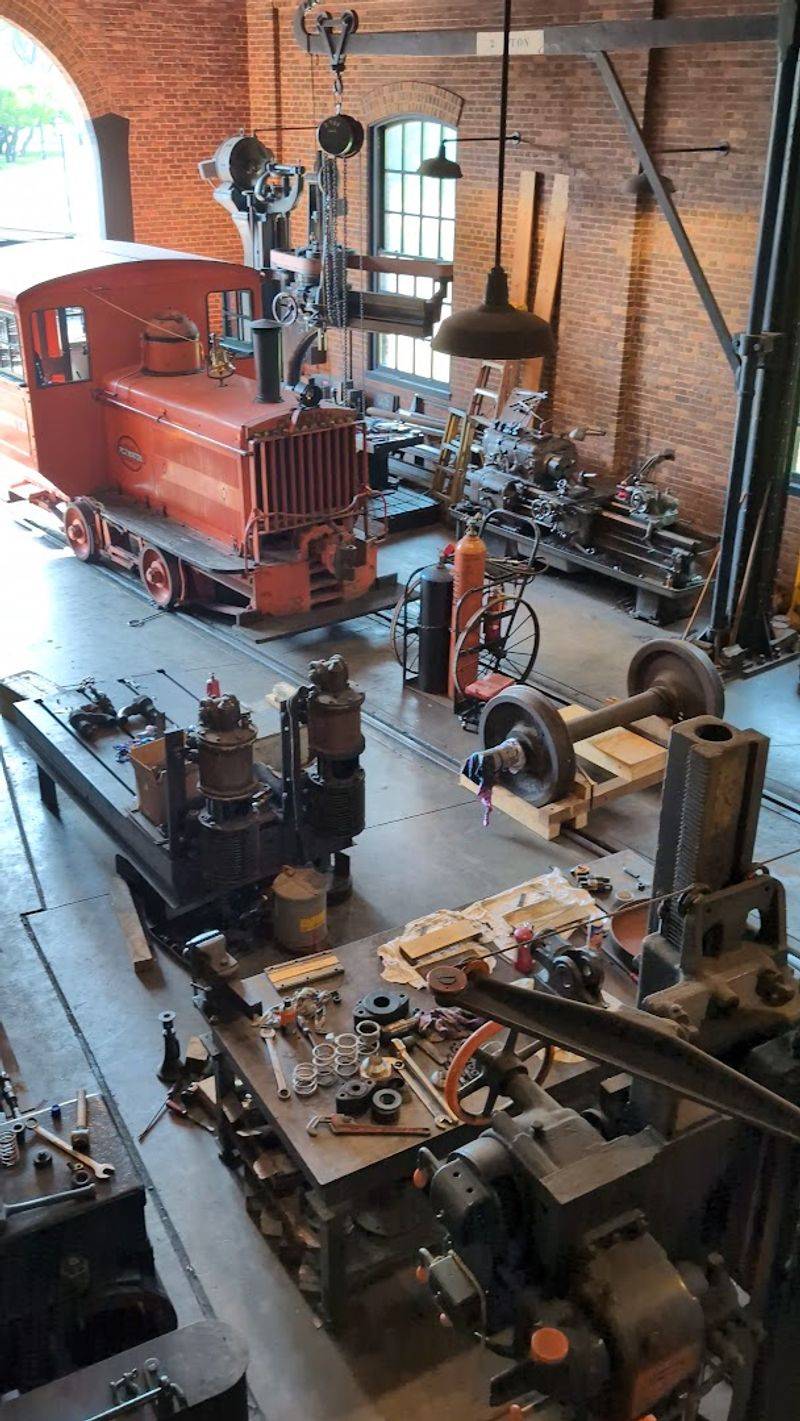
What separates this place from a handsome shell is the work. The roundhouse functions as the maintenance center for Greenfield Village’s historic railroad equipment, so the atmosphere can shift from stillness to focused activity very quickly.
That working identity changes how you should visit. Instead of expecting polished theater at every moment, expect evidence: tools, service routines, locomotives at rest, and the practical messiness that comes with keeping old machines operational.
I liked it more for that exact reason. The building does not pretend that steam power was neat, and seeing the space used for its intended purpose gives the history a muscular credibility that static displays rarely manage.
Notice The Engines As Residents
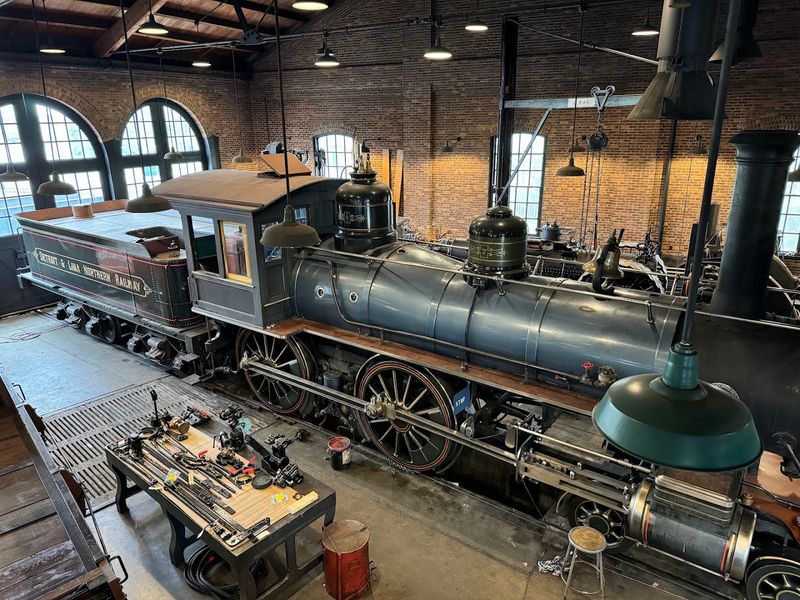
The locomotives here do not feel like random exhibits parked for convenience. They read more like residents of the building, each occupying the roundhouse in a way that makes sense once you understand the structure’s original purpose.
Greenfield Village is known for operating historic steam locomotives, including the 1873 Torch Lake and other engines tied to the Weiser Railroad. Seeing them indoors, sheltered by brick and iron, makes their size and complexity easier to grasp than on open track.
Try not to rush from one engine to the next. A slower circuit reveals how differently each locomotive sits in the light, how shadows collect around the wheels, and how the stalls frame these machines almost like altars.
Use The Turntable As Your Compass
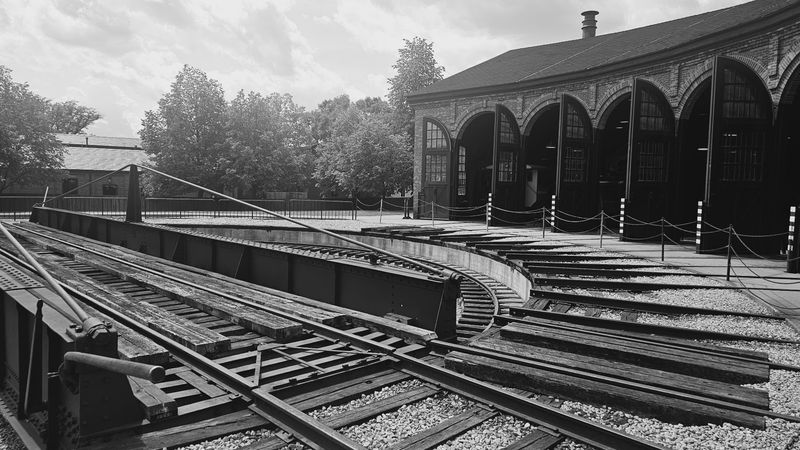
Outside the stalls, the turntable gives the whole site its logic. Without it, the roundhouse would be impressive but abstract; with it, you immediately understand how locomotives were aligned, redirected, and sent into position for service.
Greenfield Village uses a historic Pere Marquette Railroad turntable, originally built in 1901. Even when it is still, it supplies a mechanical center of gravity that pulls the building, the tracks, and your attention into one coherent scene.
Start your visit by orienting yourself here. Once the turntable makes sense, every doorway and rail line becomes easier to read, and the roundhouse stops feeling like a relic and starts behaving like a working system.
Save Time For The Inspection Pit
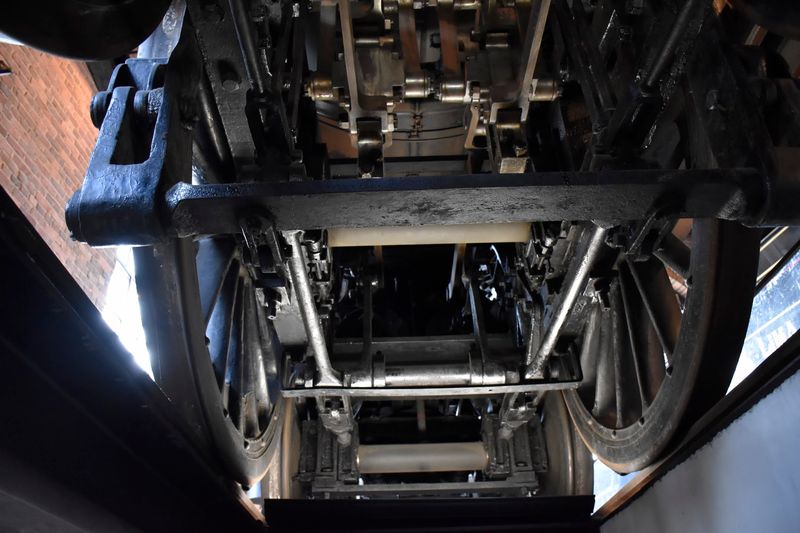
One of the oddest and best perspective shifts here happens below floor level. The inspection pit lets you stand beneath a locomotive and understand, almost physically, how much mass and mechanism usually remain hidden from ordinary viewing angles.
From above, steam engines can seem noble and composed. From underneath, they become dense assemblies of rods, bolts, surfaces, and engineering decisions, which is exactly the kind of reality check that turns admiration into respect.
If the pit is accessible during your visit, do not skip it. You will come away with a much sharper sense of why roundhouse labor required specialized skills, constant attention, and a tolerance for dirt that museum displays often tidy away.
Pay Attention To The Smell And Sound
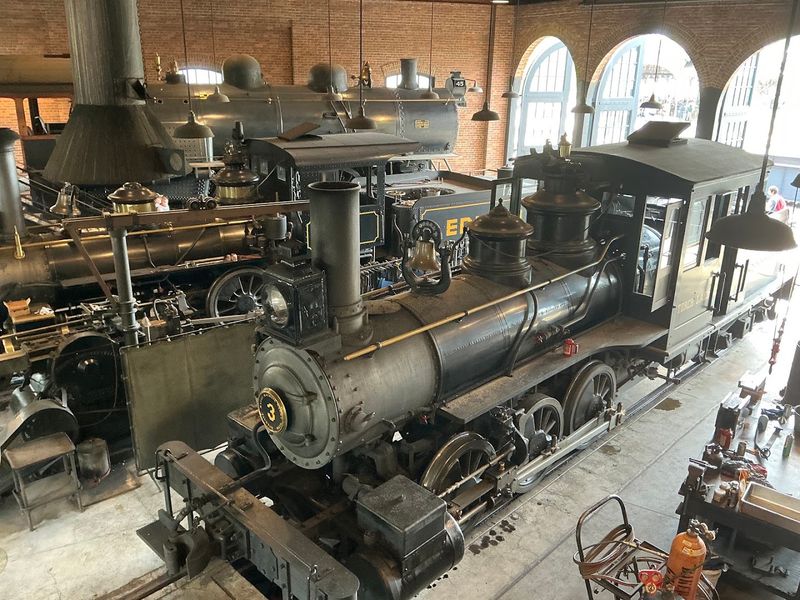
Historic places usually ask you to look, but this one asks more of your senses. Depending on the day’s activity, the roundhouse can carry the scent of lubricants, old metal, and the faint residue of coal-fired railroading that no label can adequately explain.
Sound matters just as much. Echoes move differently here, bouncing off brick and machinery so that footsteps, conversation, and occasional mechanical noise feel absorbed into the building’s long industrial memory.
I would not call it romantic exactly. It is better than that: specific, textured, and unmistakably real, the kind of sensory experience that makes the difference between learning railroad history as information and meeting it as a physical environment.
Remember It Began In Marshall
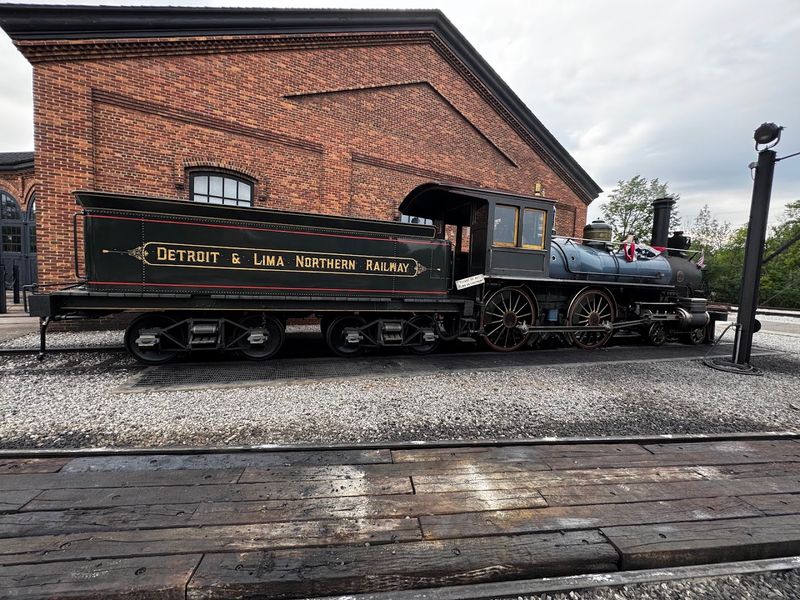
The Dearborn roundhouse carries a history that begins elsewhere, and that origin story adds depth. The original Detroit, Toledo & Milwaukee Roundhouse was built in Marshall in 1884 as a repair shop for the Detroit, Toledo & Milwaukee Railroad.
Marshall residents helped fund it, hoping the railroad would bring business to town. Its location was useful too, sitting near the midpoint of the line, which made it a sensible place for servicing locomotives that needed steady attention.
Knowing this changes the emotional tone of the visit. You are not just looking at railroad infrastructure, but at a structure shaped by local ambition, later decline, and eventual reconstruction, all of which remain legible in the building’s presence.
Go When You Can Linger
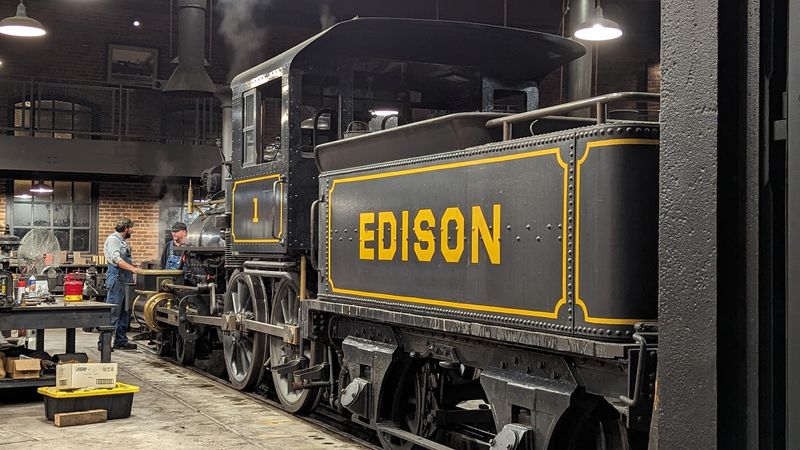
This is not a place that yields its best qualities in thirty seconds. The roundhouse rewards a slightly slower pace, especially if you give yourself time to notice how visitors circulate, where the light falls, and which details emerge after the first burst of impression.
Greenfield Village lists the roundhouse within regular village visiting hours, generally 9:30 AM to 5 PM. Earlier in the day, the space can feel calmer, which helps if you want to study the building rather than simply register that it is large.
You do not need a rigid strategy, just patience. A second pass through often reveals more than the first, particularly once your eyes adjust from spectacle to workmanship.
See It As Craft Preservation
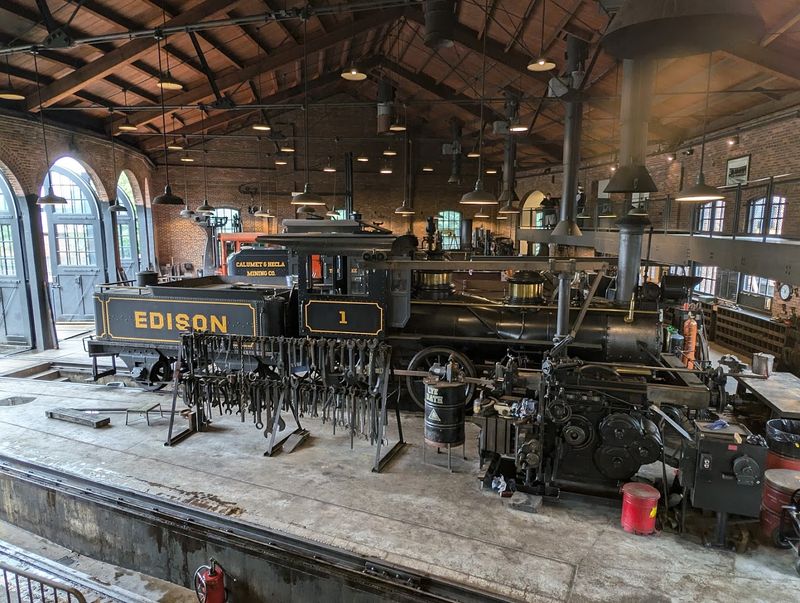
The roundhouse matters not only because it is old, but because it supports old knowledge. Steam locomotives require specialized maintenance, and this building helps preserve the craft traditions and mechanical understanding needed to keep that knowledge alive.
That educational value is easy to miss if you focus only on architecture. What you are really seeing is a rare setting where preservation includes operation, repair, and the transfer of practical skills rather than simple display behind barriers.
There is something reassuring about that seriousness. In a culture that often confuses history with decoration, this roundhouse insists that the past also lives in techniques, routines, and practiced hands willing to keep difficult machines running correctly.
Pair Awe With Practical Planning
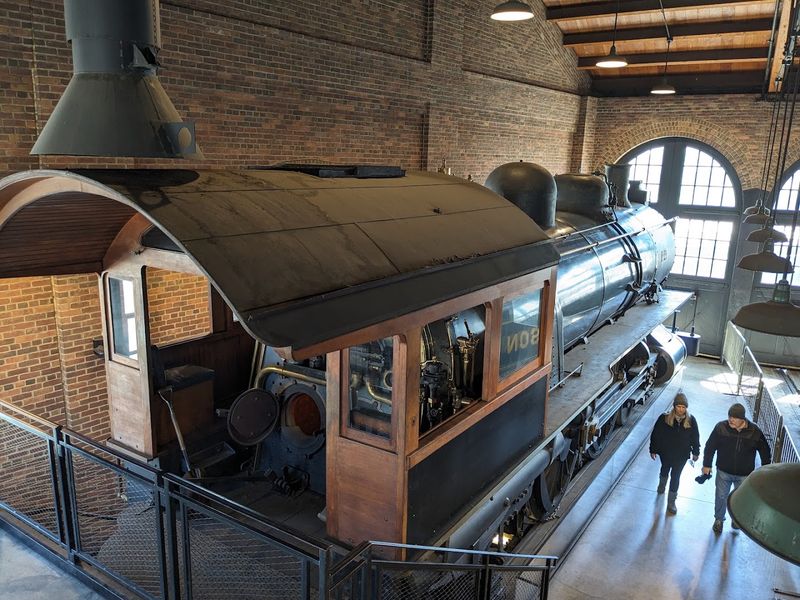
For all its grandeur, this is still a stop within Greenfield Village, so a little planning helps. The roundhouse is located at Railroad Junction within the village at 20900 Oakwood Boulevard in Dearborn, and the broader site sets the rhythm of your visit.
Check current operating information through The Henry Ford before you go, since demonstrations and railroad activity can vary. Comfortable shoes are worthwhile because the village itself encourages wandering, and the roundhouse is best enjoyed as part of that wider movement.
Leave room for surprise. Even if you arrive mainly for architecture, the combination of working railroad culture, preserved machinery, and spatial drama has a way of making you stay longer than intended.
A passing locomotive, a sudden burst of steam, or the sight of staff tending historic equipment can turn a planned ten-minute pause into a richer encounter, especially when you slow down enough to notice how the building functions around you.