
This Michigan Underwater Ghost Town Is A Time Capsule You Can’t Walk Through
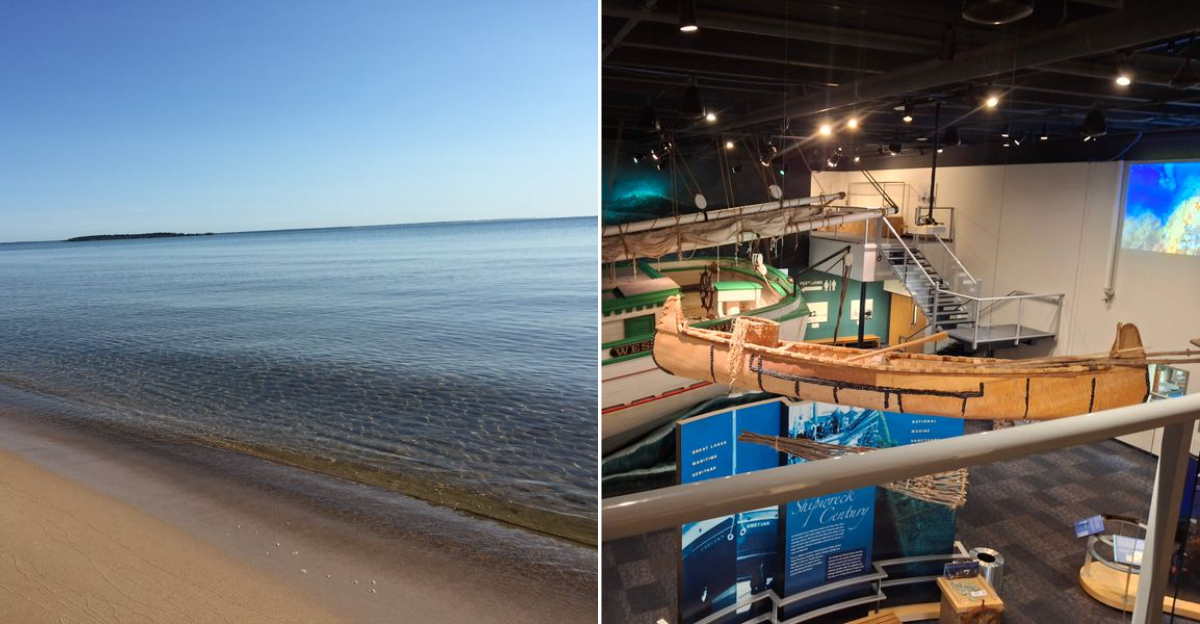
Lake Huron holds a city of stories beneath its surface, and the Thunder Bay National Marine Sanctuary acts as its quiet, diligent gatekeeper. I remember the first time I looked down through the clear water and realized that the “debris” I was seeing was actually the skeletal remains of a vanished world, preserved by cold, fresh water that turns time into a patient archivist.
More than 100 documented shipwrecks rest here, forming a maritime ghost town that you cannot walk through, but can certainly feel. These streets are made of timbers and iron, resting in an underwater landscape where the silence is profound and the history is palpable.
You notice the details of this submerged world through the glass panel of a boat or from the seat of a kayak, watching as the past hovers just beneath your reflection like tracing paper.
The sanctuary in Alpena is a place where the Great Lakes’ treacherous reputation is treated with architectural respect, and the stories of lost crews are poured as generously as the water that claimed them. To see this world right, you must seek out the shallow wrecks where the sunlight spills into the lake like a borrowed lantern, illuminating the ribs of hulls and the statuesque crouch of old anchors.
Many visitors find that a trip to the visitor center is a necessary first step, as it provides the human calculus and technological context needed to understand the leap from a museum display to the actual lake floor.
For those looking to explore Michigan’s maritime legacy, this sanctuary offers a level of preservation that resists easy mythmaking in favor of honest, disciplined history. It is the kind of experience that lingers in your memory, defined by the sight of a propeller that looks ready to push or a brass fitting that catches the light like a small, underwater fire.
You leave the harbor with a sense of lightness and a sharper eye, carrying stories that don’t need polishing; just retelling at a pace that honors the lake’s own tempo.
Clear Water, Ghostly Streets
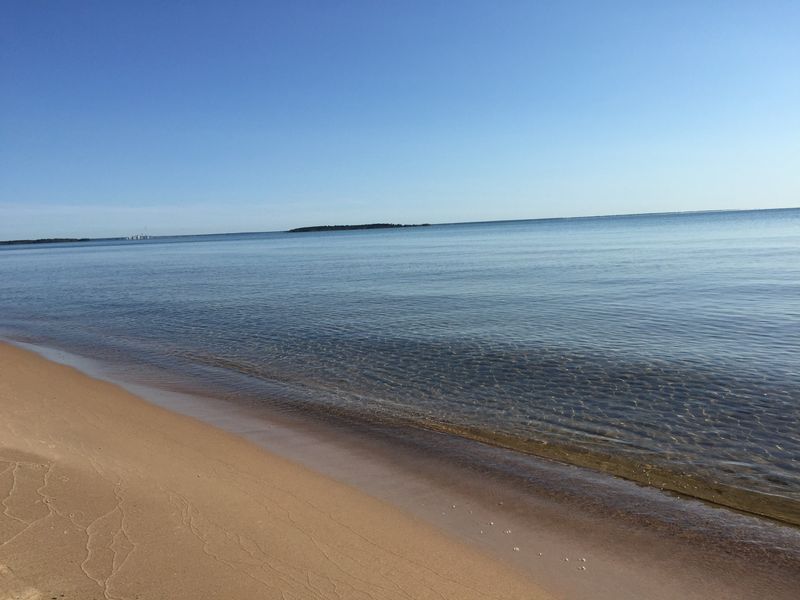
Sunlight spills into Lake Huron like a borrowed lantern, and suddenly the outlines of another century begin to appear beneath your feet. Hull ribs sketch long, straight lanes across the lakebed, anchors crouch like forgotten statues, and zebra mussels dust everything in a quiet, textured armor.
The water here can be so glassy that your reflection hovers over the 19th century, layered like tracing paper over a blueprint of the past. Thunder Bay’s protected status means these wrecks remain exactly where they settled, serving not as trophies for divers, but as a vast, underwater archive.
The cold, fresh water significantly slows the process of decay, preserving intricate carvings, heavy machinery, and even the cargo that was destined for ports long ago.
It feels like a town paused mid-errand, waiting for the next bell to ring or the next order to be barked from the pilothouse. To see it right, you should time your visit for those calm, early mornings when the surface of the lake hasn’t yet been disturbed by the wind.
Book your glass-bottom boat tickets early in the peak season to ensure you have a seat over the most dramatic viewing panels.
If you prefer a more intimate view, glide a kayak over the shallow sites near Alpena when the wind whispers rather than shouts. It is a working lesson in reading the lake, where the best views are earned by those who watch the weather as carefully as the water.
A Map Written In Timber
Not all maps use ink and parchment; here, wooden frames, iron boilers, and scattered rigging mark the trade routes and hazards of a vanished economy. Each wreck fixes a coordinate where weather, cargo, and human decision met a final, inescapable calculation.
Sanctuary staff research and document these sites through the Great Lakes Maritime Heritage Center, stitching together incomplete pages of sonar and surveys into a readable history. It is slow, disciplined work that respects the reality of the events over the “romantic fog” often associated with shipwrecks.
Bring both curiosity and patience to the visitor center exhibits to learn the context before you go chasing names like the Monohansett or the Isaac M. Scott.
Once you understand the history, the patterns you see from the boat stop being debris and start becoming sentences in a much larger story. You will find yourself reading the lakebed faster than you expect, and certainly more carefully than you originally planned.
The sanctuary encourages a “look but don’t touch” ethic that preserves these options for future study as our mapping tools improve. It turns the bay into less of a mystery theater and more of an open, underwater library for anyone willing to look.
Listening To Quiet Machinery
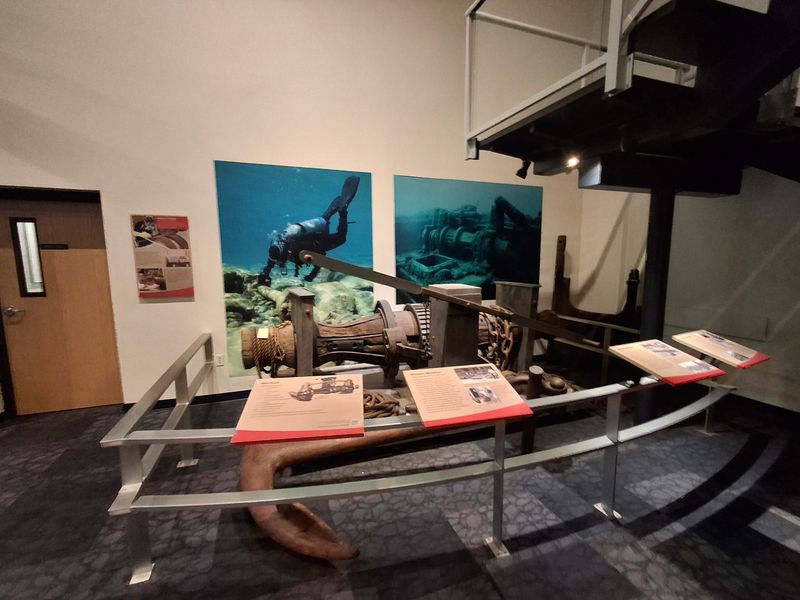
A propeller’s curve still looks ready to push against the current, though the water does all the moving now. Brass fittings catch the light like small fires when the sun hits them, only to fade back into the shadows when a stray cloud passes overhead.
Even the silence feels mechanical here, with every line of a wreck echoing a function that was finished over a hundred years ago. History is not loud in Thunder Bay; it ticks away in the corrosion patterns and the tool marks left behind by long-dead shipwrights.
NOAA teams balance the need for public access with the necessity of preservation, documenting every inch without disturbing the delicate balance of the site.
If you choose to snorkel, it is vital to keep your hands off the timbers and your fins gentle to avoid stirring up sediment or damaging fragile structures. Stay horizontal, watch your buoyancy carefully, and give plenty of space to other visitors who are sharing the experience.
From a kayak, a clear viewing bucket can provide incredible detail without requiring you to lean dangerously over the edge of your boat.
The best souvenir you can take from these waters is a sharper eye and a better understanding of the Great Lakes, not a pocket full of unsanctioned fragments. Respecting the quiet machinery ensures that the next generation can also “listen” to the stories these wrecks have to tell.
The Visitor Center’s Storm

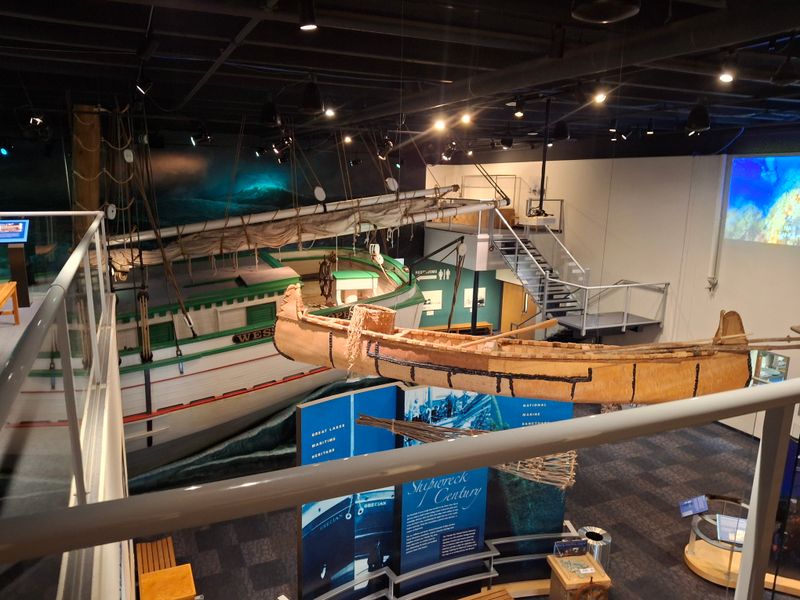
The Great Lakes Maritime Heritage Center begins with the weather in a room, where lights flicker and timbers creak to shake your perspective loose. You don’t brace yourself because you are actually afraid, but because the walls and the soundscape suggest that you must prepare for the squall.
The exhibits explain the trade, the technology, and the human calculus that was required to navigate the lakes when the wind shifted without warning. Large-scale models and authentic artifacts align perfectly with the real sites sitting just offshore, making the leap from the display to the lake feel honest.
Admission to the center is free, and the hours are generous, though it is always smart to check current listings before making the drive to Alpena.
Ask the staff for recommendations based on the specific conditions of the lake that day; they can steer you toward the sites with the best visibility. A quick conversation often turns into a tailored route that saves you time and delivers the clearest views you can reasonably expect.
It is a place where families can drop in for an hour but find themselves staying for the afternoon, caught up in the scale of the history. The center serves as a warm, informative periscope that prepares you for the cold reality of the water outside.
Shallows You Can Read
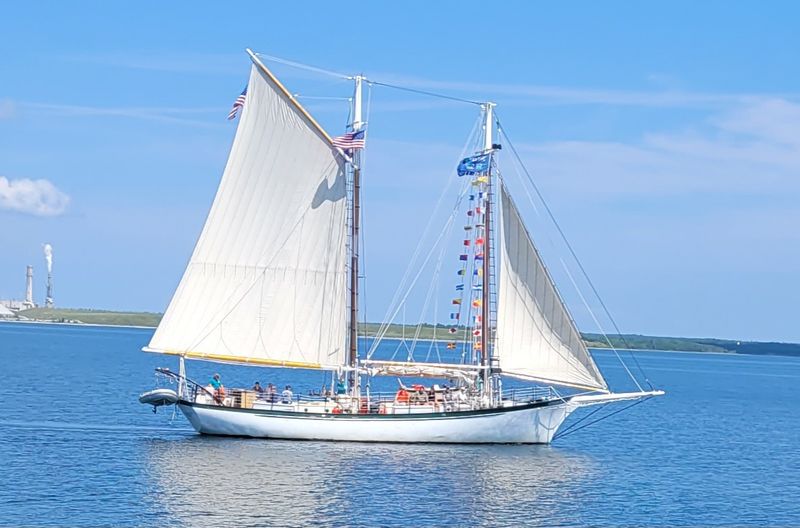
On calm afternoons, the bay turns bookish, and the water becomes a sheet of translucent parchment where keelsons and scattered tools write a tidy script. You can drift above the shallows, and the sentence structure of a ship’s construction holds firm without needing a translation.
These accessible sites are exactly why snorkeling and kayaking work so well in Thunder Bay; preservation thrives because the sanctuary teaches respectful access. The result is a transparent look at maritime history that is available to anyone with a paddle and a bit of curiosity.
Bring a polarized lens for your eyes or your camera, as glare reduction is the primary difference between guessing and knowing what you are looking at.
If you are paddling out, be sure to watch the wind direction and the forecasted gusts before you launch your boat. A five-minute check at the ramp can turn a potentially long, difficult slog back to shore into a soft, effortless glide.
The shallows are the most intimate way to experience the ghost town, placing you just a few feet away from the iron and wood that once fueled a nation’s growth. It is a quiet, meditative experience that rewards the unhurried traveler.
Names With Weather In Them
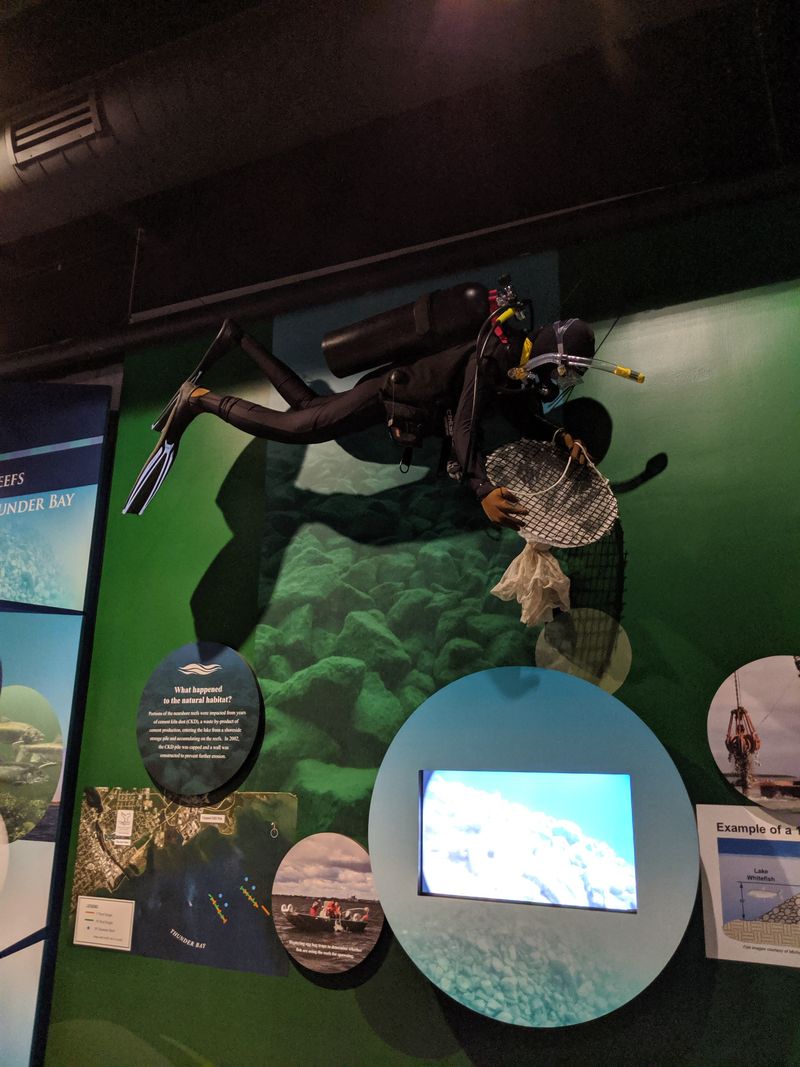
Some wreck names feel like forecasts in and of themselves: say Monohansett or Grecian out loud and you can almost taste the wind on the vowels and the steel on the consonants. They carry cargo histories and labor stories folded into their syllables, along with the precise timings of long-extinguished lighthouses.
The sanctuary’s documentation honors this exactness, presenting dates, tonnage, and causes of loss plainly and without romantic embellishment. Accuracy is its own kind of respect in a place where families still remember the stories of the ships their ancestors sailed.
When you are planning your trip, follow the sanctuary’s website for site summaries and updates on current conditions.
Having a short list of names to learn beforehand helps anchor the day’s visuals and makes the experience feel more like a reunion with history. You will likely leave with fewer questions about the spelling of the ships and more questions about the pilothouse decisions that led them here.
That transition from spectacle to understanding feels like genuine progress. It turns a tourist stop into a deep dive into the human element of the Great Lakes’ past.
Glass Bottom Timing
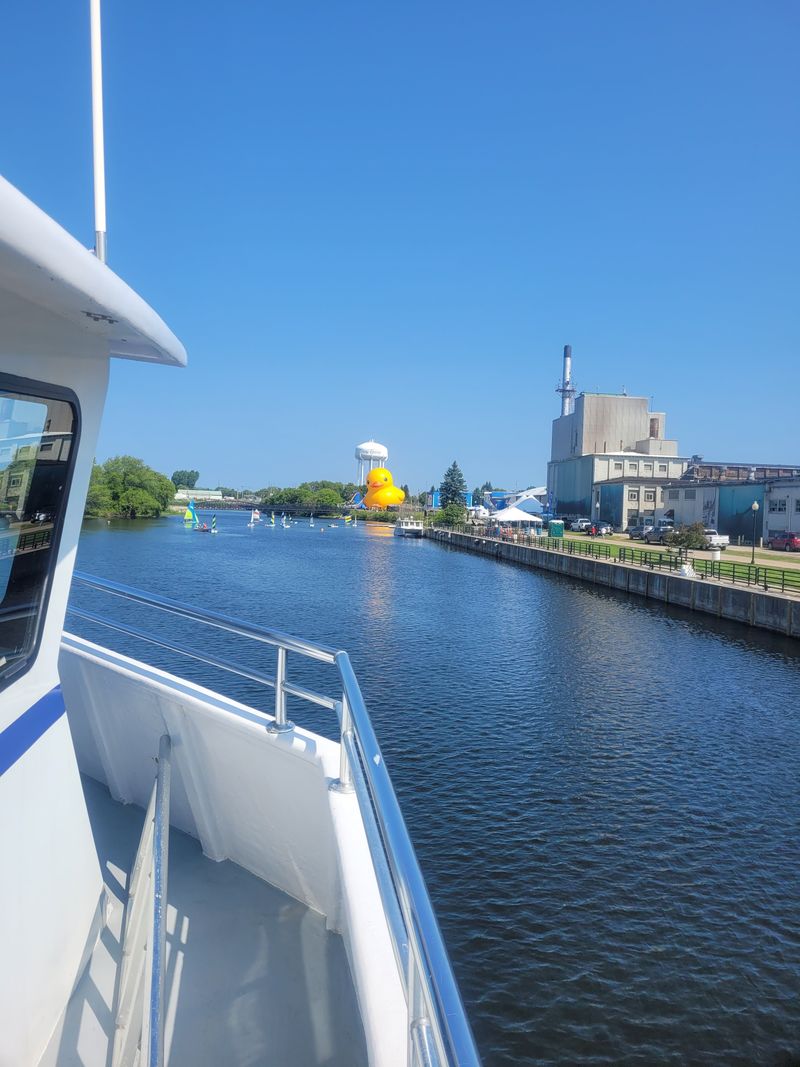
Tickets for the glass-bottom boat tours can vanish on sunny weekends, not because of artificial hype, but because clear water naturally invites a queue. The viewing panels reward those who can be patient, especially when the captain rotates the vessel to ensure equal angles and time on the glass for everyone.
Local crews know the lake’s visibility like a farmer knows his soil, watching wind shifts and sun angles to give you the best possible shot at a clear view. It is a working lesson in reading the lake, guided by people who have spent their lives on these waters.
Buy your tickets online well in advance during the peak summer months, and make sure to arrive at the dock well before your scheduled departure.
Even in the summer, the breeze on the open deck can be chilly, so bring layers to ensure you stay comfortable during the transit between sites. If you crave a quieter experience, the shoulder seasons trade a bit of warmth for much more space on the boat.
Ask the staff which side of the vessel favors today’s light and drift to find the best possible seat for the tour. It is the most accessible way to see the deep-water history without ever getting your feet wet.
Winter’s X-Ray Days
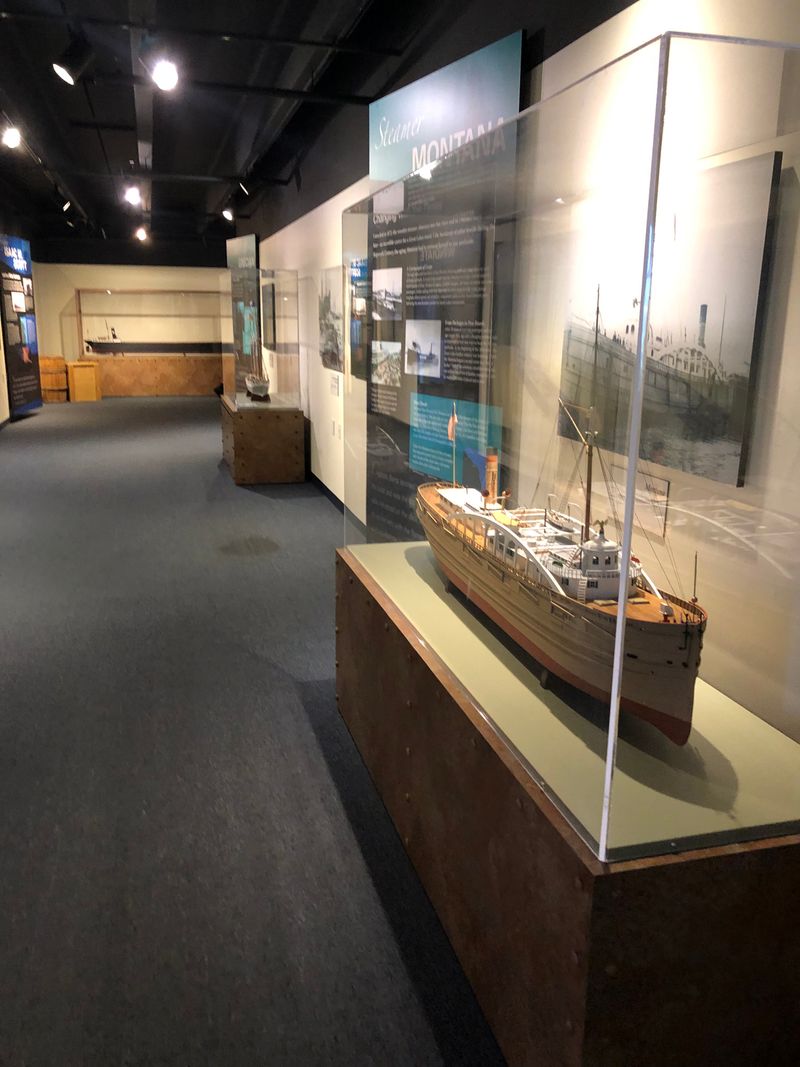
Cold air has a way of sharpening everything, and on clear winter days, the visitor center becomes a warm, inviting periscope for the frozen landscape outside. The outdoor docks may creak in a register that suggests an empty theater, but the history remains just as present.
While the lake’s surface can harden into a state of frozen patience, open water often lingers in the bay, offering a different perspective on the sanctuary. Local tradition here is one of steady curiosity, where families treat the center as both a museum and a neighborhood anchor.
Education programs continue throughout the season, scaled to the shorter daylight hours and the changing weather.
Be sure to check the hours before you visit, as winter schedules can sometimes shift based on local events. Wear proper traction if the sidewalks look glassy, and plan for a shorter, more focused loop if you are walking the riverfront.
You will see fewer boats but more interesting light angles in the galleries, and a slower cadence that lets the small details stand up and introduce themselves. It is the quietest time to visit, perfect for those who want to reflect on the stories of the bay in peace.
Tools That Measure Memory
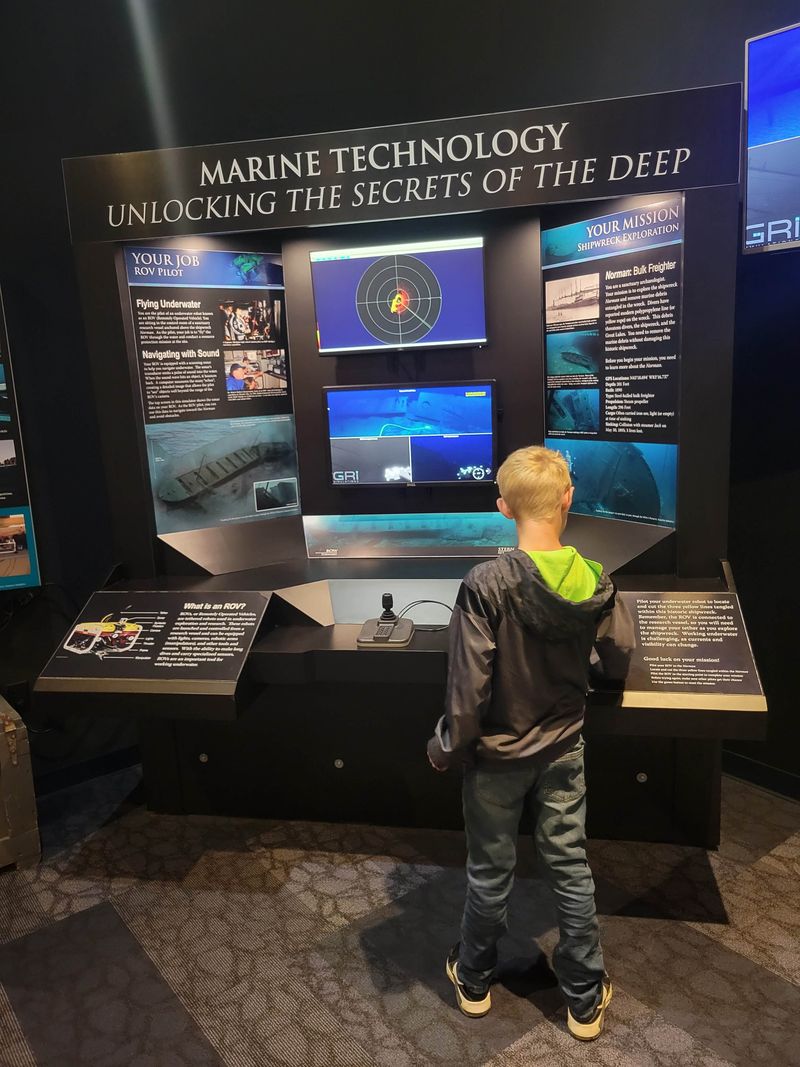
Side-scan sonar prints the lakebed like a charcoal rubbing, while multibeam bathymetry paints depth in color bands that reveal an underwater landscape. Together, these tools turn rumor and legend into verified geometry and places that can be found again and again.
The sanctuary’s technique always favors documentation over disturbance, building digital twins of the wrecks for public learning and ongoing research. This patience preserves every possible option for future study when our technological tools inevitably improve.
Your own habits as a visitor should match this ethic; photograph widely, but never disturb the sites you are visiting.
Note the coordinates shared by official materials and compare what you see in the water with the interpretive signs located back on the shore. Sharing your images with the proper context helps others learn about the sanctuary without crowding the more fragile spots.
It trains your eye to see the underlying structure of the wrecks before the spectacle, which suits the serious nature of these waters. You become part of the ongoing effort to document and remember the “city” beneath the waves.
Leaving With Lightness
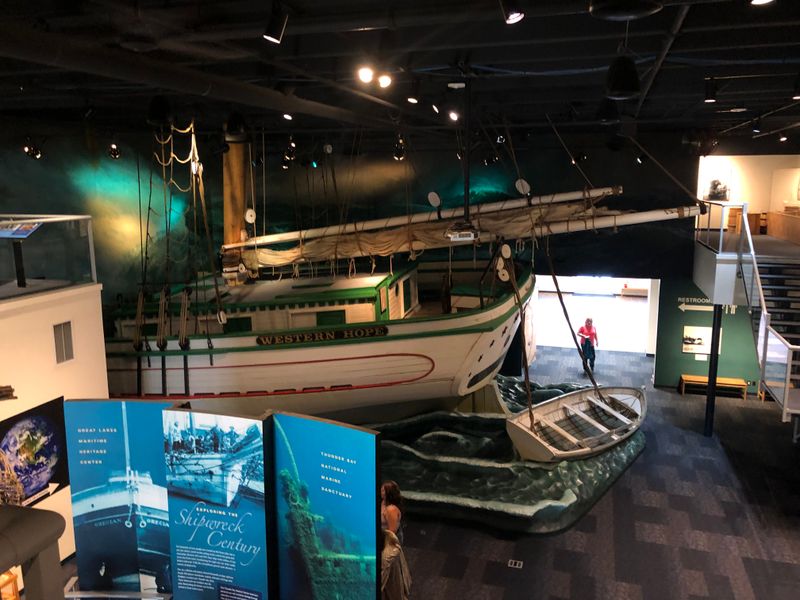
Walking out of the Heritage Center, you notice the river’s polite current and the harbor’s measured clink against the docks. Nothing here is in a hurry; everything is in practice, following a tempo set by the water rather than a human schedule.
That is the true spirit of the sanctuary, a pace that values longevity and restraint over shortcuts and quick souvenirs. Staff, volunteers, and visitors all share this compact, working together to ensure the stories remain for the next century.
Plan your next visit with the weather in mind rather than just a date on the calendar.
Pair a morning visit to the exhibits with an afternoon paddle when the winds are most likely to fall still. Thank the desk crew, grab a fresh map, and keep your curiosity warm for the next time the lake decides to reveal its secrets.
You will return home feeling a bit lighter, carrying stories that don’t need any extra polishing to be remarkable. It is a reminder that some of Michigan’s most important places are the ones we can only look at, never touch.