
This Minnesota Prairie Site Holds Ancient Rock Carvings That Feel Like Messages From Another Time
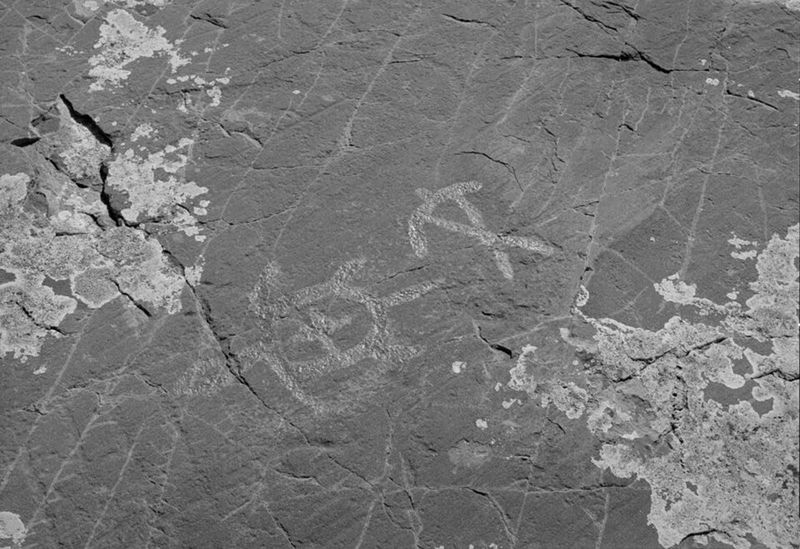
You’re looking at a turtle carved into solid rock… and the first thought that hits you is: what on earth does this actually mean? A hunting scene a few feet away. Spirals.
Footprints. Shapes that feel almost like a language, but not one you can read.
And the longer you stare, the more it stops feeling like decoration and starts feeling like a message. Just not one written for you.
Some of these carvings were made thousands of years ago on a Minnesota prairie, etched by Indigenous ancestors of Dakota and other Native nations into stone that’s over a billion years old. Imagine that timeline for a second.
An ancient hands carving meaning into something already unimaginably ancient. And yet here we are, still trying to translate it.
Still guessing. Still asking the same question over and over again.
Were these symbols stories, maps, visions… or something we were never meant to fully decode?
The Rock Itself Is Older Than Almost Everything You Know
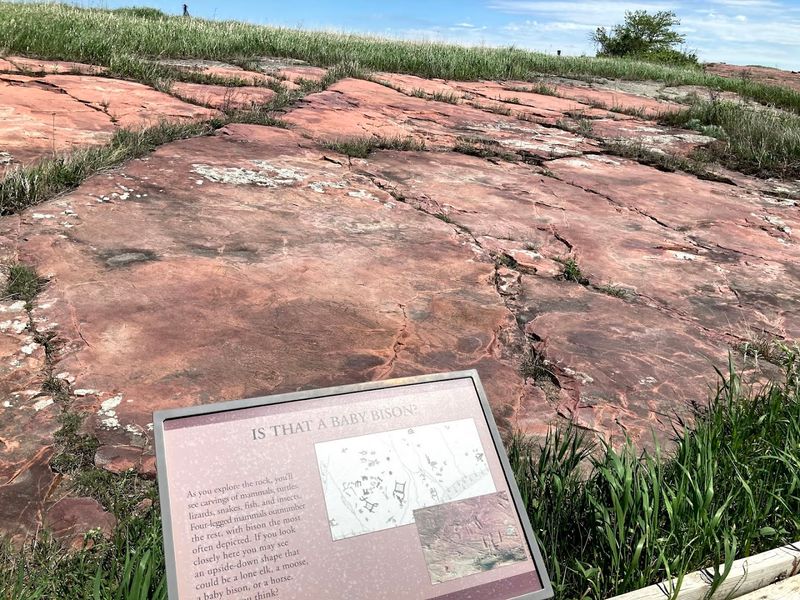
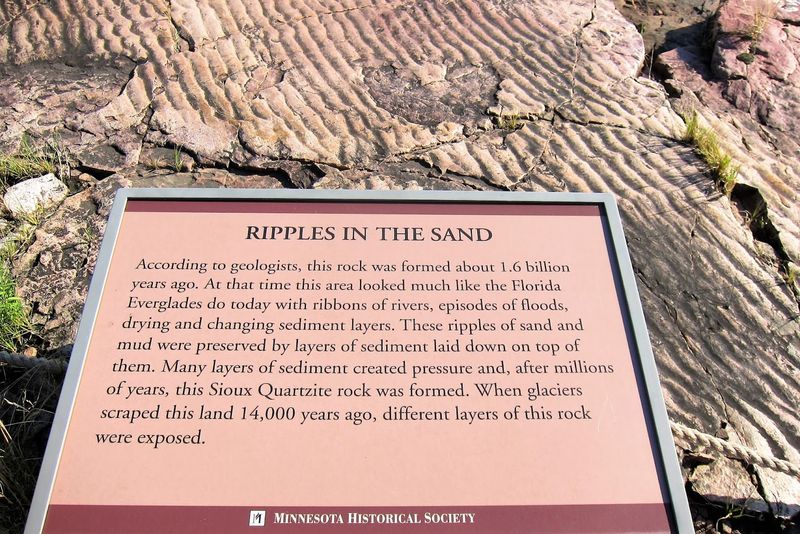
Before the carvings, before the people, before practically anything, there was the rock. The quartzite at Jeffers Petroglyphs was deposited over 1.6 billion years ago, making it one of Minnesota’s oldest bedrock formations.
Let that number sit with you for a moment.
Glaciers smoothed the surface of this rock about 14,000 years ago, essentially preparing a canvas that humans would eventually fill with meaning.
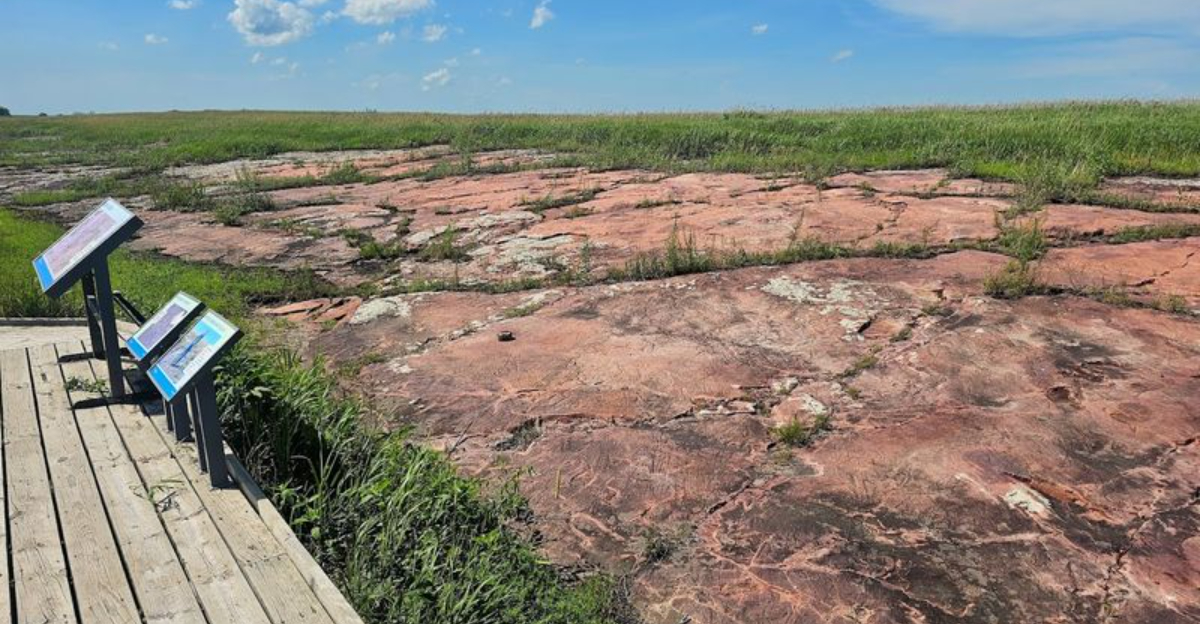
The exposed carving surface stretches approximately 150 by 650 feet, sitting at the heart of a 23-mile-long ridge known as Red Rock Ridge. It rises slightly above the surrounding native prairie, giving it an almost altar-like presence in the landscape.
The quartzite itself has a warm, reddish-pink tone that glows beautifully in low-angle morning or evening light.
That same light is actually the best time to spot the carvings, since shadows reveal the shallow grooves more clearly. Walking across this ancient surface feels genuinely surreal.
You are standing on something that predates dinosaurs, continents as we know them, and nearly every living species on Earth. The rock does not just hold history.
It practically IS history, compressed into something you can stand on with your own two feet.
Finding This Hidden Gem On The Minnesota Prairie
Getting to Jeffers Petroglyphs feels like unlocking a secret level in a video game. Located at 27160 County Road 2, Comfrey, MN 56019, the site sits tucked between prairie grasses and agricultural fields in southwestern Minnesota.
It is the kind of place you might drive past without a second glance, which would be a genuine shame.
The Minnesota Historical Society acquired this 160-acre site back in 1966, and it was added to the National Register of Historic Places in 1970. Today, the visitor center welcomes guests Thursday through Saturday from 10 AM to 8 PM and Sunday from 11 AM to 5 PM.
Planning your arrival around dusk is a smart move, since the low-angle light dramatically improves carving visibility.
The surrounding native prairie is itself a rare and beautiful sight. Much of Minnesota’s original prairie has been converted to farmland over the centuries, so what remains here feels precious.
Walking the trail out to the petroglyphs, you pass native grasses, wildflowers, and even prickly pear cactus growing naturally in the Minnesota soil. The journey to the rock is genuinely part of the experience.
Arriving here feels less like visiting a museum and more like stepping into a living, breathing chapter of human history.
Over 5,000 Carvings And Every Single One Has A Story
Here is where things get genuinely mind-blowing. The site holds somewhere between 5,000 and 8,000 individual carvings, with around 3,000 additional images discovered after a recent conservation project removed decades of lichen growth.
That is not a typo. Thousands of images, carved by hand, over thousands of years.
The subjects range from bison and elk to turtles, thunderbirds, salamanders, and human stick figures. There are handprints, footprints, animal tracks, geometric shapes, and even depictions of tools like atlatls, which are ancient spear-throwing devices.
Each image carries meaning that researchers and tribal elders have spent years interpreting together.
Specific carvings have particularly powerful symbolism. The horned turtle represents a helping spirit in many Native traditions.
The thunderbird is seen as a powerful being connected to spring rains and buffalo herds. A carving called the Hand with Eye may represent an entrance to the spirit world.
Tribal elders describe the entire site as an encyclopedia of Native American history, documenting spiritual beliefs, historic events, and the remarkable resilience of people living on the prairie across thousands of generations. Every image you see out there is a sentence in one of the world’s longest ongoing stories.
Nine Thousand Years Of Sacred Ceremony Still Happening Today
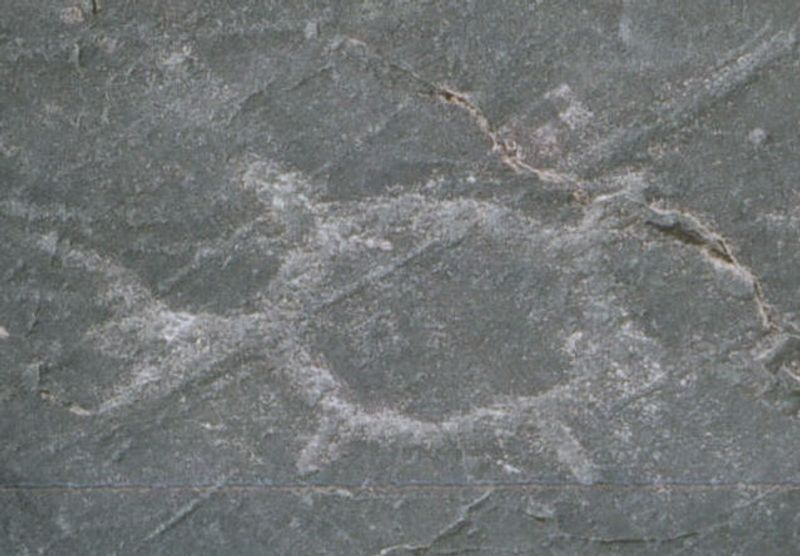
Some places feel old. Jeffers Petroglyphs feels eternal.
The earliest carvings here date back approximately 7,000 to 9,000 years, placing them in an era long before written language existed anywhere on Earth.
The most recent carvings were made around 150 to 250 years ago, meaning this site was actively used as a sacred space for an almost incomprehensible stretch of human time.
The carvings were created by ancestors of many tribal nations, including the Dakota, Lakota, Ioway, Otoe, Cheyenne, Arapaho, and Ojibwe peoples.
What makes this especially meaningful is that many of these nations still consider the site sacred today. Ceremonies and prayers continue to take place here, connecting the present directly to that ancient past in a living, unbroken thread.
Visiting with that awareness changes everything about how you experience the site. You are not just looking at old art.
You are witnessing one of the oldest continuously used sacred sites on the entire planet. Archaeologists have noted that the carvings reflect sophisticated knowledge of mathematics, geometry, astronomy, and medicine.
These were not simple scratches on a rock. They were deliberate, intelligent, and deeply intentional acts of documentation and devotion.
Walking here is walking in genuinely sacred footsteps.
The Art Of Seeing What Is Hidden Right In Front Of You
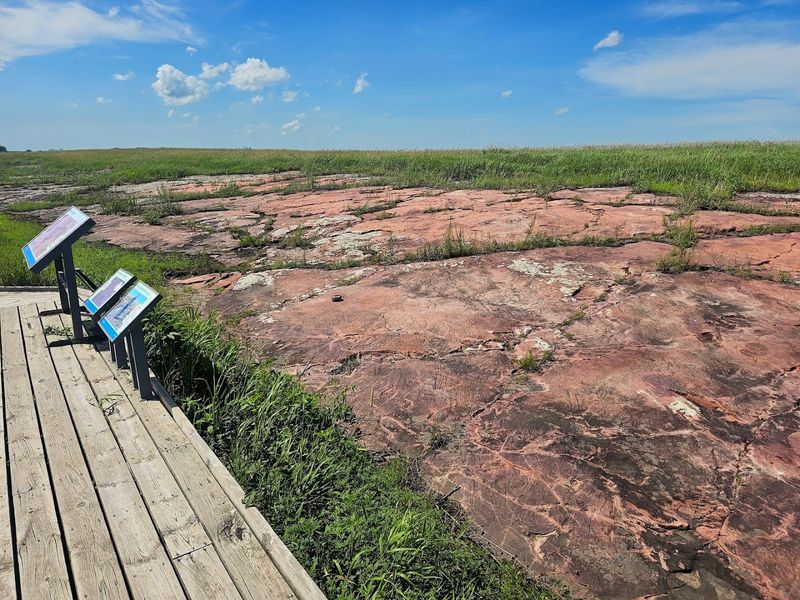
Spotting the petroglyphs is genuinely part of the adventure, and nobody warns you about that ahead of time. The carvings are shallow, worn by thousands of years of weather, and can be nearly invisible under harsh midday sun.
Coming at dawn or dusk is the single best tip anyone can give you for this visit.
Water also helps dramatically. When the rock surface gets wet, either from rain or from the water spray bottles that guides use during tours, the carvings suddenly pop into sharp relief.
It is one of those satisfying moments where your eyes adjust and you go from seeing nothing to seeing everything all at once. A bit like one of those Magic Eye posters from the 90s, except infinitely more ancient and meaningful.
Guided tours are available and genuinely worth choosing over the self-guided option for first-time visitors. The guides know exactly where to look and can point out carvings you would absolutely walk right past on your own.
Educational signs are placed along the trail to help visitors understand the context and meaning behind specific images. Even after spending an hour on the rock, you will likely realize you have only scratched the surface of what is actually there.
Pun fully intended.
The Prairie Surrounding The Site Is A Living Treasure Too
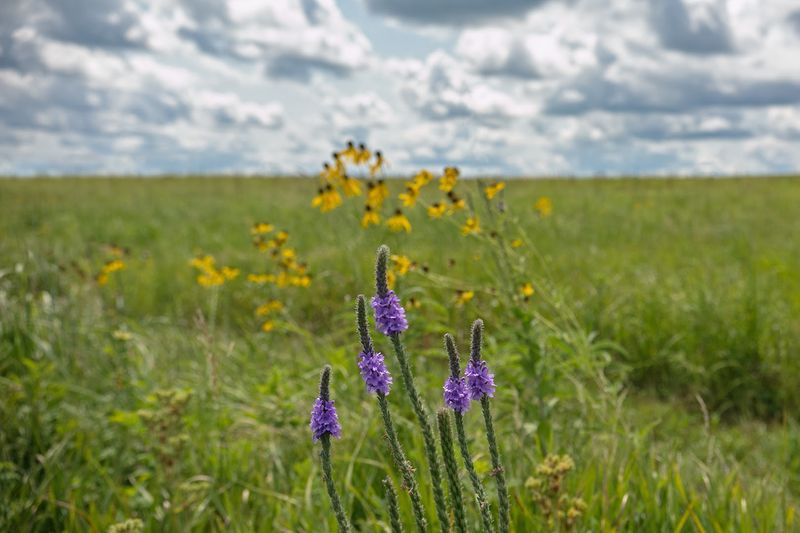
People come for the carvings and end up falling in love with the prairie. The 160-acre site surrounding the petroglyphs is one of the last surviving patches of native Minnesota prairie, and it is genuinely stunning in a way that sneaks up on you.
This is not manicured parkland. It is wild, textured, and alive with things you did not expect to find.
Native grasses sway in the constant prairie wind. Wildflowers bloom in seasonal waves of color.
Educational markers placed along the walking trail identify plants and explain their roles in the prairie ecosystem and in Native American life.
And then there is the prickly pear cactus, which surprises nearly every visitor who encounters it growing naturally in Minnesota soil. Yes, Minnesota has native cactus, and yes, it will remind you to watch your step.
The trail itself is peaceful in a way that feels almost meditative.
There is something about walking through tall grass toward an ancient rock outcrop that quiets the noise in your head. Birdwatchers will find plenty to observe, and on a clear day the sky above the open prairie is enormous and deeply satisfying to stand under.
The natural beauty here is not just a backdrop. It is an essential part of what makes this site feel so profoundly connected and whole.
Stargazing At One Of Minnesota’s Darkest Night Sky Spots
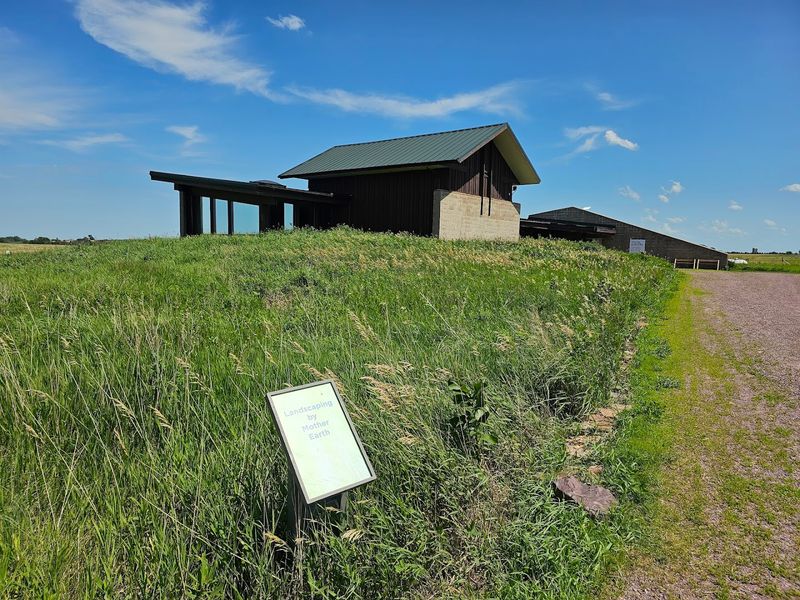
Wait until you hear this bonus feature, because it genuinely elevates this place into a full-day and full-night destination.
The Jeffers Petroglyphs site is recognized for its exceptionally dark night skies, making it a beloved spot for amateur astronomers and anyone who wants to be properly humbled by the universe.
Far from city light pollution, the prairie sky above Comfrey opens up in a way that most Minnesotans never get to experience.
On clear nights, the Milky Way stretches overhead in full visibility. Stars that are completely invisible from urban areas suddenly appear in their thousands, blanketing the sky in a way that feels almost theatrical.
Considering that the people who carved these petroglyphs were also skilled astronomers, there is something poetic about gazing at the same sky they once studied.
Some visitors plan their trips specifically around celestial events, arriving at dusk to catch the last light on the carvings before staying for the full star show after dark.
The site is open until 8 PM on Thursdays, Fridays, and Saturdays, giving you a solid window to experience both the golden-hour petroglyphs and the deepening night sky.
Honestly, bringing a blanket and lying on the prairie grass while the stars emerge above you might be the most unexpectedly perfect ending to any Minnesota road trip.
Why This Place Will Stay With You Long After You Leave
There are places you visit and places that visit you back. Jeffers Petroglyphs is firmly in the second category.
Something about standing on a rock that people have considered sacred for 9,000 years reaches past your logical brain and lands somewhere much deeper and harder to explain.
The carvings are not flashy. They are not brightly colored or dramatically lit with museum spotlights.
They are quiet, worn, and ancient, and that restraint is exactly what gives them so much power.
You lean in close, you let your eyes adjust, and suddenly you are looking at a bison carved by someone who stood in this exact same spot thousands of years ago. That connection across time is rare and genuinely moving.
Many visitors describe the experience as grounding, even transformative. It recalibrates your sense of scale in the most generous way possible.
Human history is long, creative, and filled with people who wanted to leave something meaningful behind. The carvings at Jeffers are proof that the desire to communicate, to document, and to connect is one of the most fundamental things about being human.
So when is the last time a piece of rock made you feel that deeply understood? Maybe it is time to find out for yourself.