
This Missouri Cactus Garden Feels Like A Tiny Desert Hiding Far From The Southwest
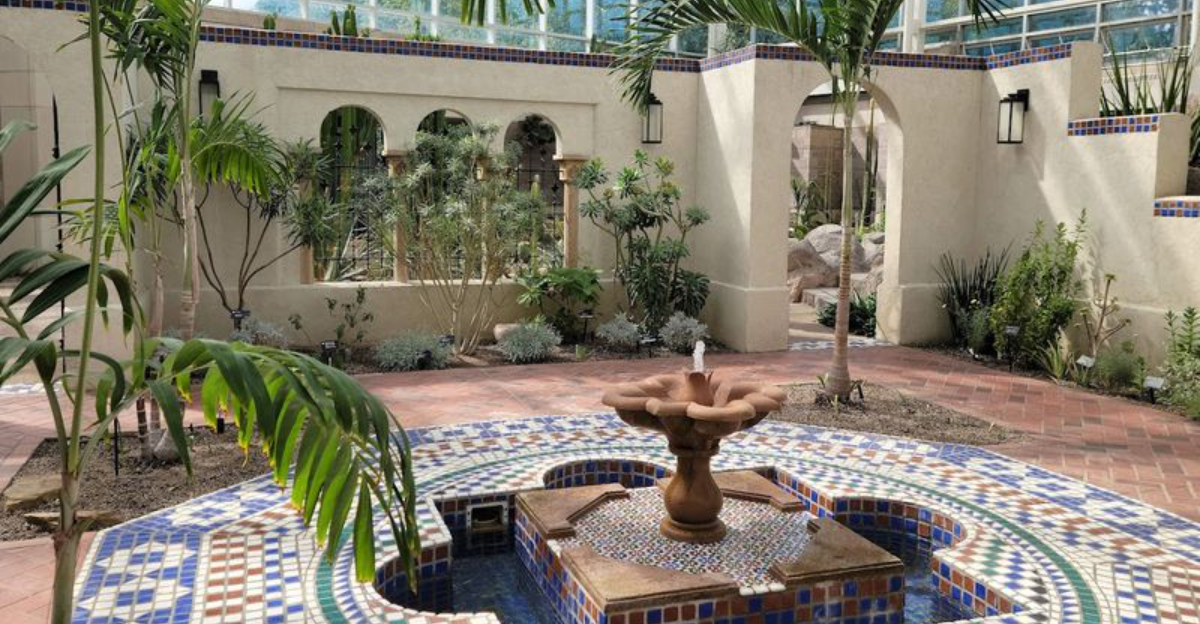
If plants could roast you, this place would absolutely do it in silence. This place inside the Missouri Botanical Garden doesn’t ease you in.
It drops you straight into a dry, sun-baked world of spines, survival, and suspiciously aggressive-looking greenery. One step inside and St. Louis disappears.
You’re suddenly surrounded by towering cacti, alien-shaped succulents, and plants that look like they survived purely out of spite and minimal water. This 8,900-square-foot space, refreshed in 2024, holds around 1,500 types of arid and desert plants.
Some so rare they’ve basically been in hiding longer than most people have been online. It’s not cute.
It’s not lush. It’s controlled chaos in plant form.
And weirdly, it works. Even if your last cactus didn’t make it past month two.
A Desert Born In Missouri
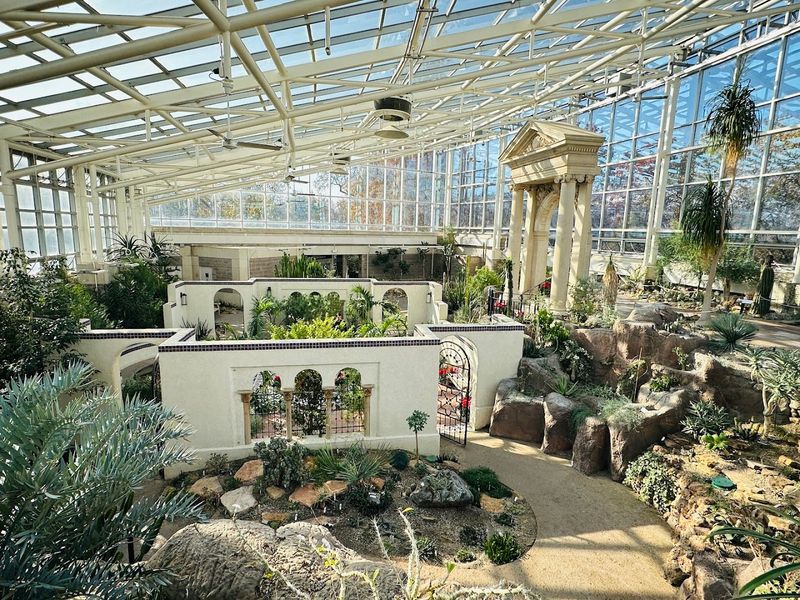
Nobody expects to find a desert tucked inside Missouri, and that is exactly what makes this place so thrilling. The Shoenberg Arid House opened in 2024 at the Missouri Botanical Garden and instantly became one of the most talked-about plant spaces in the Midwest.
It replaced the former Shoenberg Temperate House after a full renovation that transformed the entire vibe of the space.
The structure covers 8,900 square feet of carefully curated arid landscape. Every detail was designed to replicate the conditions of real desert environments.
The soil was replaced with a custom mix. New irrigation systems were installed.
Grow lights were added to mimic intense desert sunlight even on cloudy Missouri days.
The result is a space that feels genuinely transportive. You walk in expecting a greenhouse and walk out feeling like you just returned from a road trip through the Sonoran Desert.
The collection spans plants from arid and semi-arid regions across the globe, representing ecosystems that cover more than a third of the Earth’s surface.
These are not just pretty plants sitting in pots. They are survivors, shaped by millions of years of adaptation.
The Shoenberg Arid House gives them the spotlight they have always deserved, and it gives visitors a chance to witness botanical resilience up close. Is there a better way to spend a Tuesday afternoon in St. Louis?
Easier To Find Than You Think
Finding the Shoenberg Arid House is genuinely simple once you know where to look. The Missouri Botanical Garden sits at 4344 Shaw Blvd, St. Louis, MO 63110, right in the heart of the city.
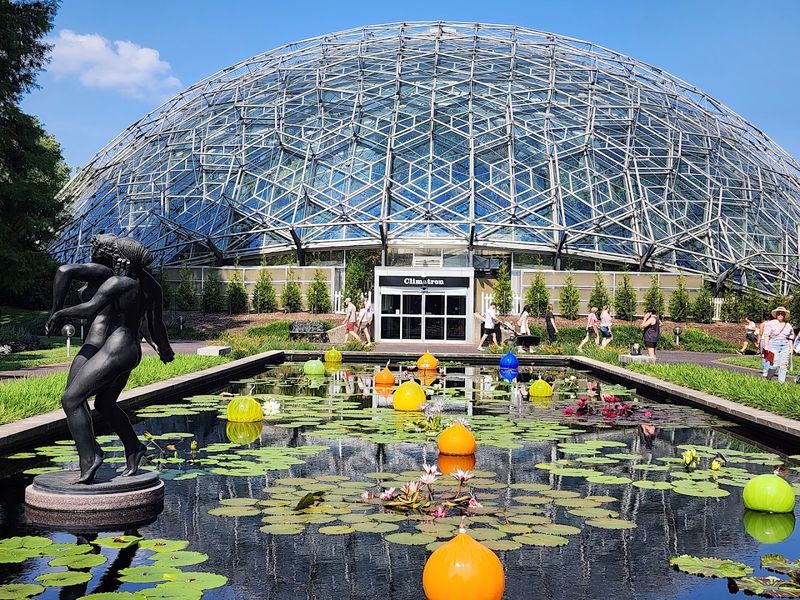
The Arid House is located just north of the iconic Climatron and connects through the Brookings Exploration Center, making it easy to stumble upon during a regular garden visit.
The Arid House is open daily from 9 a.m. to 5 p.m. Admission is included with your general garden ticket, so there is no extra cost to experience one of the most unique plant collections in the country.
That alone makes it an incredible deal for what you get to see inside.
Parking is available near the garden entrance, and the surrounding Shaw neighborhood is walkable and charming.
If you are coming from downtown St. Louis, the drive takes about ten minutes. Public transit options also connect to the area, making it accessible for visitors without a car.
The garden itself is massive, so wearing comfortable shoes is genuinely good advice.
Plan to spend at least a few hours exploring, because the Arid House alone could hold your attention for longer than you might expect. Once you see the scale of the plant collection inside, you will understand why rushing through it feels almost disrespectful to the plants themselves.
Over 150 Years Of Arid Plant History
The Missouri Botanical Garden’s relationship with desert plants is not new. It stretches back over 150 years, rooted in the work of George Engelmann, the garden’s very first scientific advisor.
Engelmann was fascinated by cacti and spent years studying and cataloging species from across North America. His influence shaped the garden’s early commitment to arid plant research.
Former Director Dr. William Trelease continued that legacy by publishing extensively on desert plants. The garden built its original Cactus House in 1904, and a full Desert House opened in 1914.
That Desert House showcased plants from the Sonoran and Chihuahuan Deserts among other dry regions.
It operated for eighty years before closing in 1994, leaving a significant gap in the garden’s living collection displays.
The Shoenberg Arid House is the modern answer to that gap. It carries forward a tradition of scientific curiosity and conservation that has defined this institution for generations.
Many of the plants now on display had not been seen by the public in decades, quietly growing in behind-the-scenes collections while waiting for the right home. Knowing that history adds a whole new layer of meaning to every cactus you walk past.
These plants are not just decorations.
They are living chapters in a very long and very fascinating story that the Missouri Botanical Garden has been telling since before most of our great-grandparents were born.
The 1,500 Taxa Collection That Will Make Your Jaw Drop

Trying to wrap your brain around 1,500 different plant taxa is a little like trying to count stars. The number sounds big until you are actually standing inside the Arid House and realizing that every single plant around you is different.
Different shapes, different textures, different survival strategies, all packed into one beautifully designed space.
The collection represents arid and semi-arid regions from around the world, not just the American Southwest. You will find plants from African deserts, South American dry zones, and remote island ecosystems.
Each specimen tells a different story about how life adapts when water becomes scarce. Some plants store water in thick stems.
Others have waxy coatings that reflect sunlight. A few look like they belong on another planet entirely.
Many of these taxa had not been publicly displayed for decades before the Arid House opened. They were part of the garden’s behind-the-scenes collection, carefully maintained by horticulture staff but hidden from public view.
Bringing them into the light was a major undertaking that required significant planning and resources. The sheer variety on display rewards slow, attentive visitors.
If you rush through, you will miss the subtle details that make each plant remarkable. Take your time.
Read the labels. Let yourself get genuinely curious.
The collection is deep enough that even plant experts find something new to appreciate every single visit.
The Custom Soil Mix That Makes The Desert Feel Real
Creating a convincing desert inside a Missouri greenhouse takes more than just buying a bunch of cacti and hoping for the best. The renovation team behind the Shoenberg Arid House replaced all existing soil with a custom arid mix designed specifically to replicate the drainage and nutrient conditions of real desert ground.
That detail alone changed everything about how the plants grow and how the space feels.
Desert plants are notoriously sensitive to overwatering and poor drainage. In their natural habitats, rainfall is rare and water moves through the ground quickly.
Standard greenhouse soil holds too much moisture, which can rot roots and kill plants that evolved to survive drought. The custom mix solves that problem by allowing water to drain rapidly while still providing enough structure for root systems to anchor properly.
Walking through the Arid House, the ground beneath the plants looks and feels authentically desert-like. Gravel, sand, and rocky textures replace the typical dark potting mix you see in most greenhouses.
It is a small visual detail that contributes enormously to the overall sense of place.
The renovation team also increased rainwater capture capacity and installed new irrigation systems to deliver precise amounts of water at the right intervals.
All of that infrastructure works invisibly in the background so visitors can focus on the plants themselves. Good design always hides the effort behind a seamless experience.
The Science Behind The Magic
Missouri is not exactly known for its blazing desert sunshine. The state gets clouds, rain, and gray winter skies that would confuse even the hardiest cactus.
So how does the Shoenberg Arid House keep its desert collection thriving year-round? The answer involves some seriously thoughtful engineering that runs quietly behind every dramatic plant display.
New grow lights were installed during the renovation to supplement natural sunlight on overcast days. These lights mimic the intensity and spectrum of sunlight that arid plants need to photosynthesize properly.
Without them, the collection would struggle through Missouri winters when cloud cover reduces available light for weeks at a time.
The lights keep the plants healthy and growing even when the sky outside looks nothing like the Chihuahuan Desert.
Rainwater capture capacity was also significantly increased as part of the renovation. Collecting and reusing rainwater reduces the facility’s reliance on municipal water and aligns with the garden’s broader sustainability goals.
Desert plants actually prefer the mineral composition of rainwater over treated tap water, so the system benefits the plants directly as well. The irrigation setup delivers water in carefully calibrated amounts that reflect natural desert rainfall patterns.
All of this infrastructure represents a significant investment in doing things right rather than just doing them quickly. The result is a collection that does not just survive in Missouri but genuinely thrives, which is its own kind of miracle.
A Garden Within A Garden
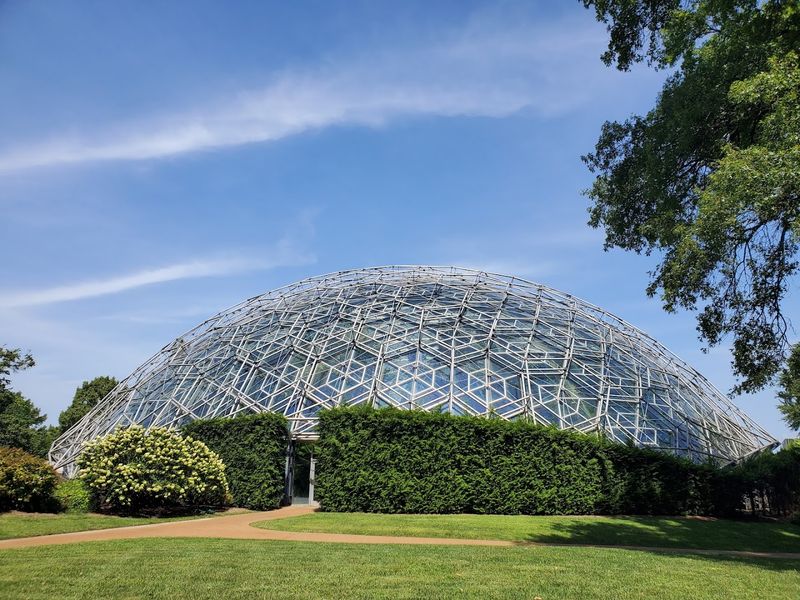
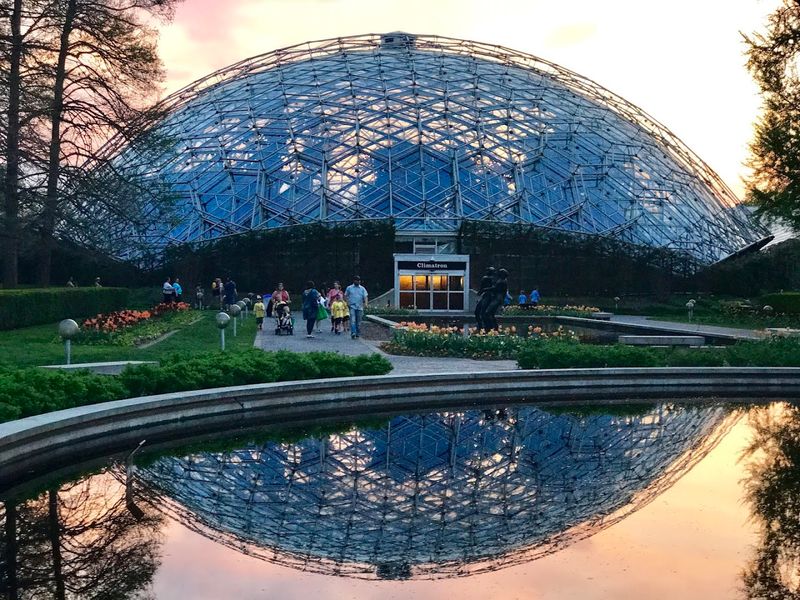
The Shoenberg Arid House does not exist in isolation. It sits just north of the Climatron, the Missouri Botanical Garden’s iconic geodesic dome greenhouse that has been a St. Louis landmark since 1960.
The two structures are connected through the Brookings Exploration Center, creating a seamless journey from tropical rainforest to arid desert within a single visit.
That contrast is genuinely striking. You can walk from humidity and dense tropical foliage straight into the dry, open landscape of the Arid House within minutes.
The shift in atmosphere is immediate and a little disorienting in the best possible way. It is like flipping channels between two completely different nature documentaries without leaving the building.
The Brookings Exploration Center itself serves as a transitional space between these two very different biomes. It offers educational displays and contextual information that help visitors understand what they are about to encounter in each greenhouse.
Moving through the full sequence of the Climatron, the Exploration Center, and the Arid House gives visitors a compressed tour of some of Earth’s most dramatic ecosystems. Few places in the Midwest offer that kind of ecological range in a single afternoon outing.
The Missouri Botanical Garden has been thoughtfully expanding its indoor collection for decades, and the addition of the Shoenberg Arid House represents one of the most significant upgrades to that indoor experience in recent memory.
Why The Shoenberg Arid House Is Worth The Detour
Some places earn their reputation through hype. The Shoenberg Arid House earns its through substance.
It is genuinely one of the most surprising and rewarding indoor experiences in St. Louis, and it consistently delivers something that is harder to find than people expect: real wonder.
Not the manufactured kind, but the kind that comes from standing next to a plant that is older than most countries and realizing the world is stranger and more beautiful than you remembered.
The combination of rare species, deep conservation history, and thoughtful design makes this more than a greenhouse visit.
It is an encounter with ecosystems that most people never think about until something like this forces a closer look. The plants here are not asking for admiration.
They have been surviving extreme conditions long before humans showed up to appreciate them. That quiet resilience is part of what makes the space so compelling.
Open daily from 9 a.m. to 5 p.m. and included with general garden admission, the Shoenberg Arid House removes every barrier between curiosity and experience.
You do not need to be a botanist or a plant enthusiast to leave feeling genuinely moved by what you see inside. You just need to show up and pay attention.
If you have been sleeping on the Missouri Botanical Garden, this is the moment that might finally change your plans for the weekend.