
This New Mexico Swimming Hole Looks Too Blue To Be Sitting Beside Route 66
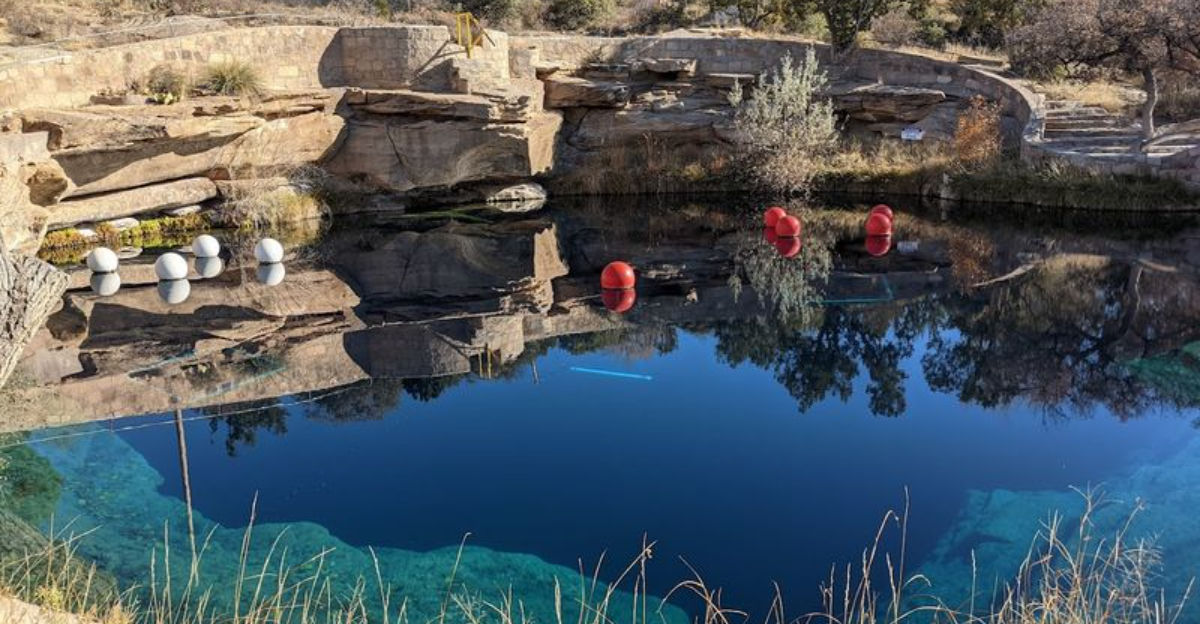
The first glimpse of this swimming hole feels like someone secretly dropped a piece of the Caribbean into the New Mexico desert.
One minute you’re cruising along historic Route 66, surrounded by classic Southwest scenery, and the next you’re staring at water so brilliantly blue it looks like it belongs on a travel poster. Or in a movie where the location budget was unlimited.
Naturally, the first reaction is skepticism. Is that color real?
Somehow, yes. And once you see it in person, your camera will work overtime trying to convince everyone back home that you didn’t crank the saturation to 100.
But this spot is more than just a pretty shade of blue. It’s a refreshing roadside surprise, a slice of summer magic hiding in plain sight, and proof that some of America’s coolest swimming destinations aren’t found on a coastline.
If Route 66 is all about unexpected discoveries, this dazzling New Mexico swimming hole might be one of its best-kept secrets.
The Unreal Blue Color That Stops Travelers In Their Tracks
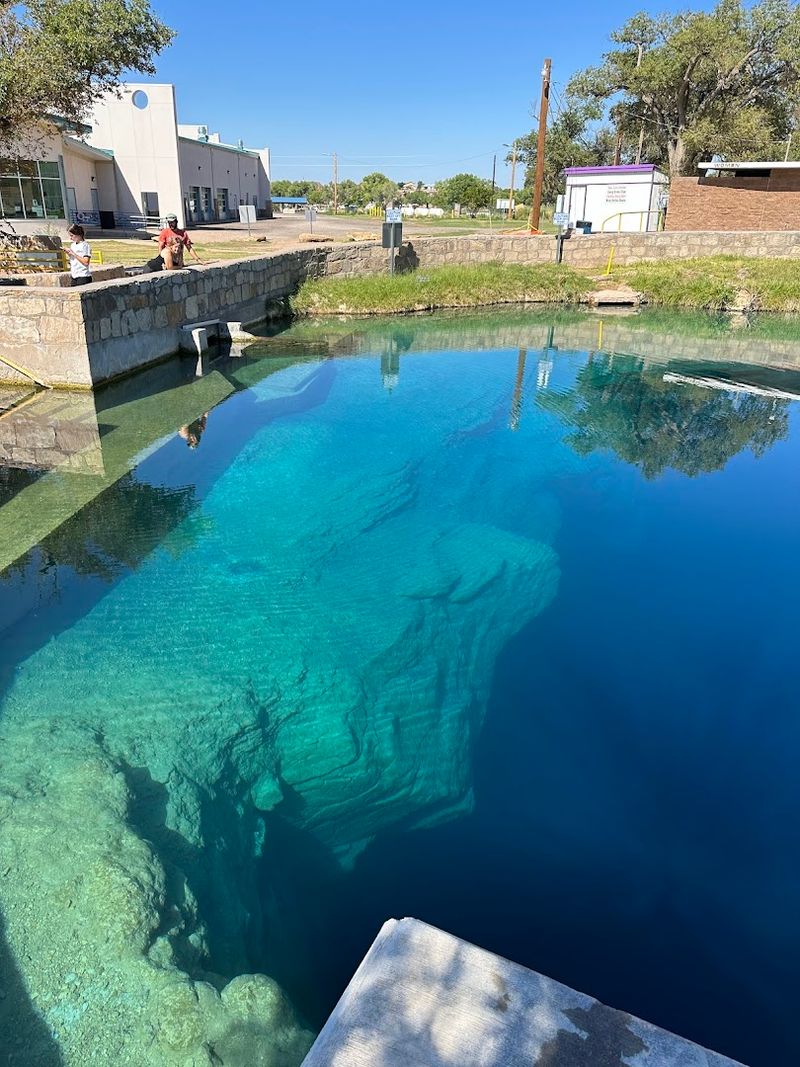
Forget every swimming hole you have ever seen, because this one plays by completely different rules. The Blue Hole in Santa Rosa, New Mexico earns its name the moment you lay eyes on it.
The water is a deep, electric cobalt that looks more like a screensaver than a real place sitting in the New Mexico desert.
The color comes from the sheer depth and clarity of the water combined with the way sunlight filters through it. Natural artesian springs feed the pool constantly, keeping the water crystal clear with visibility stretching up to 100 feet below the surface.
There are no murky patches, no algae blooms, and no muddy edges.
The circular pool measures 80 feet across at the surface and widens dramatically to 130 feet at the bottom, creating a bell shape that adds to the visual drama.
Standing at the edge and looking down feels like staring into a piece of the Caribbean that somehow got teleported to the high desert. The Blue Hole is genuinely one of those rare places that looks better in real life than in photos.
The Route 66 Connection That Makes This Stop Legendary
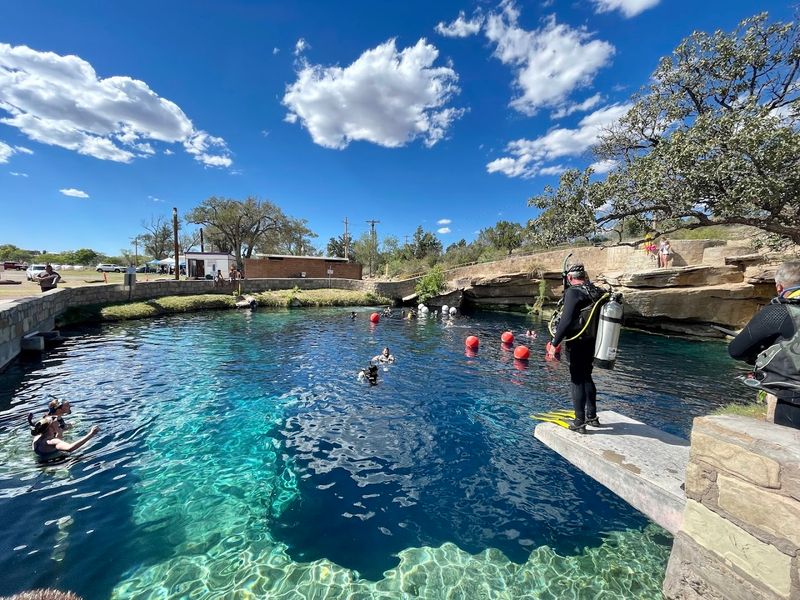
Route 66 has given America some iconic roadside attractions, but the Blue Hole at 1085 Blue Hole Road, Santa Rosa, NM 88435 sits just south of the highway and quietly outshines most of them.
When Route 66 was established in the 1920s, weary travelers discovered this glowing pool and started stopping regularly for a cool break from the relentless desert heat.
Back then, pulling off the Mother Road to swim in a natural spring was basically the original road trip hack. The Blue Hole became a legendary pit stop long before anyone had GPS or travel apps.
Word spread the old-fashioned way, through postcards, diners, and conversations at gas stations.
Today, the tradition continues strong. Road-trippers heading along what remains of Route 66 still make the detour to Santa Rosa specifically for this spot.
The combination of classic Americana highway culture and a genuinely stunning natural wonder makes this stop feel like two experiences wrapped into one unforgettable afternoon.
Some Route 66 landmarks are all nostalgia with little substance, but the Blue Hole delivers something real every single time you visit.
What Actually Makes This Water So Incredibly Clear
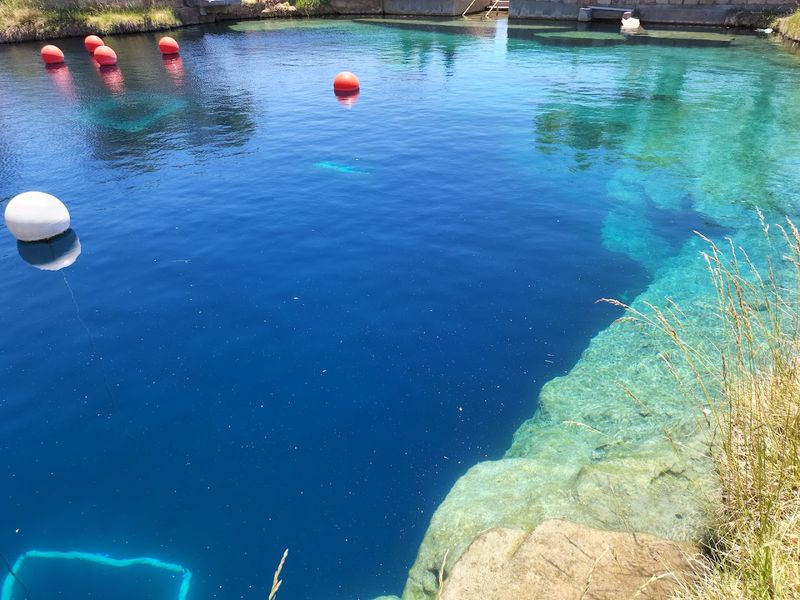
The clarity of the Blue Hole is not an accident. It is the result of a very specific and fascinating natural process that has been running non-stop for thousands of years.
The pool is fed by a deep underground artesian spring that pumps approximately 3,000 gallons of fresh water into the pool every single minute.
That constant flow means the entire volume of water in the pool gets completely replaced every six hours. Nothing sits still long enough to get cloudy.
No stagnation, no buildup, just a continuous cycle of fresh, clean water cycling through the system around the clock.
The underground water travels through layers of limestone before reaching the surface, which naturally filters out impurities along the way.
The result is visibility that stretches up to 100 feet in every direction, making it one of the clearest bodies of water in the entire American Southwest.
Divers often describe the experience as floating in liquid glass. The temperature stays locked at a steady 61 to 62 degrees Fahrenheit year-round, regardless of what the desert above is doing.
That consistency is part of what makes the Blue Hole so uniquely extraordinary.
The Ancient Geological Story Hidden Beneath The Surface
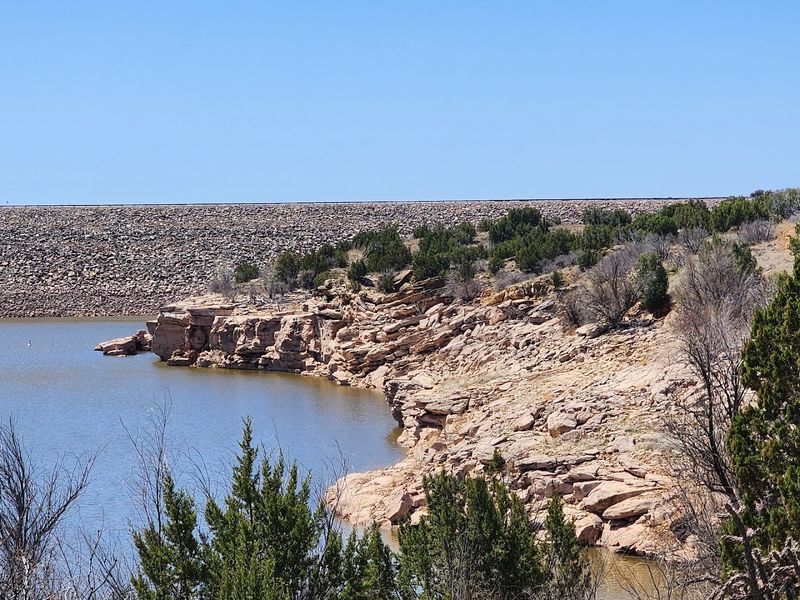
Long before Route 66 existed, long before Santa Rosa had a name, this remarkable hole in the ground was quietly forming beneath the desert floor.
The Blue Hole is a karst sinkhole, which means it formed over thousands of years as groundwater slowly dissolved underground limestone cavities until the ceiling eventually gave way and collapsed.
It is also classified as a cenote, putting it in the same geological category as the famous underwater caves of the Yucatan Peninsula in Mexico.
The Blue Hole sits at an elevation of 4,616 feet above sea level, which actually matters for scuba divers because the altitude affects water pressure calculations significantly.
Below the main pool, there is a deeper cave system that has been mapped down to 190 feet, though a metal grate at 81 feet keeps the public safely out of the unexplored depths.
The Blue Hole is one of seven sinkhole lakes in the Santa Rosa area, all connected by the same underground water network. The desert above looks completely ordinary, but underneath it runs a hidden world of ancient water systems that have been flowing quietly for millennia.
Why Scuba Divers Treat This Place Like A Sacred Destination
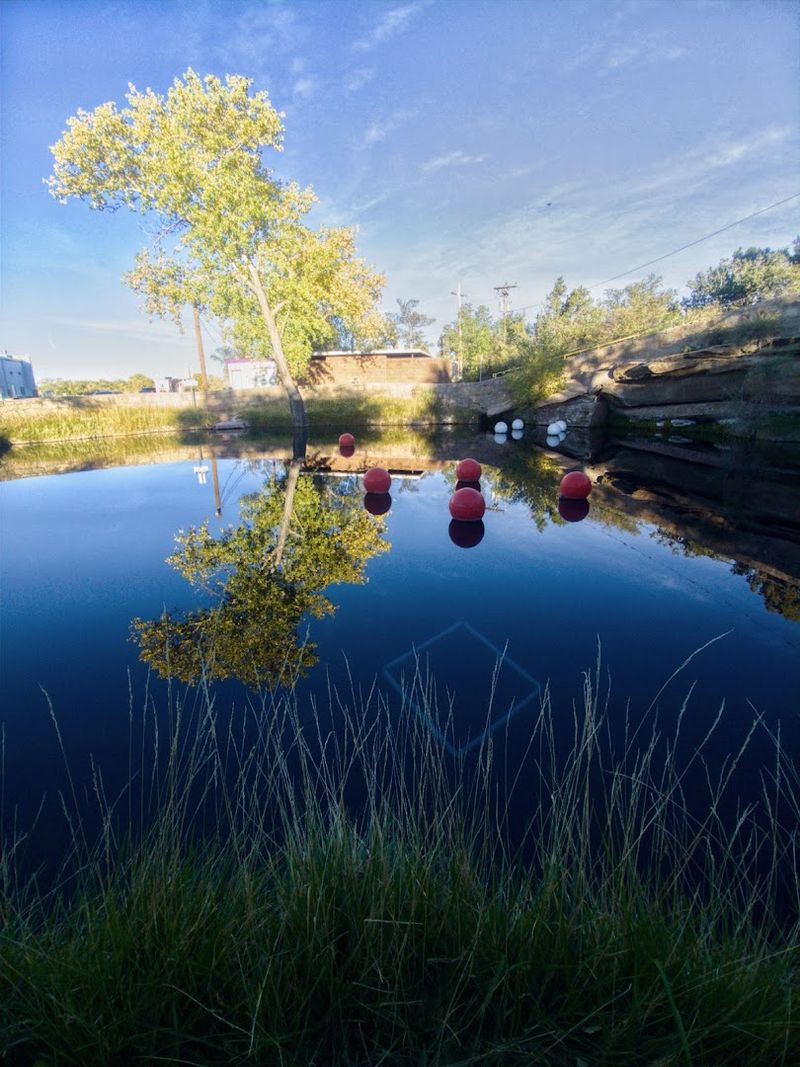
Roughly 8,000 diving permits get issued at the Blue Hole every single year, and that number alone tells you everything about its reputation in the diving community.
Divers travel from all over the country and beyond to experience the combination of crystal-clear water, consistent visibility, and a genuinely unique geological setting that the Blue Hole offers.
The pool drops to 81 feet before hitting a metal grate, giving divers a solid range of depth to work with. Below the grate lies a deeper cave system that reaches 190 feet, adding a sense of mystery and scale to every single visit.
The bell-shaped structure of the pool, widening from 80 feet at the surface to 130 feet at the bottom, creates an almost theatrical underwater environment.
Because of the altitude at 4,616 feet above sea level, divers are required to use special altitude diving tables to account for the different pressure conditions.
A diving permit is required on-site, and equipment rentals are available for those who need gear. The facilities include locker rooms, showers, and a visitors center.
For many divers, the Blue Hole is not just a training destination but a genuinely bucket-list worthy underwater experience.
Swimming Here Feels Like Jumping Into A Giant Sapphire
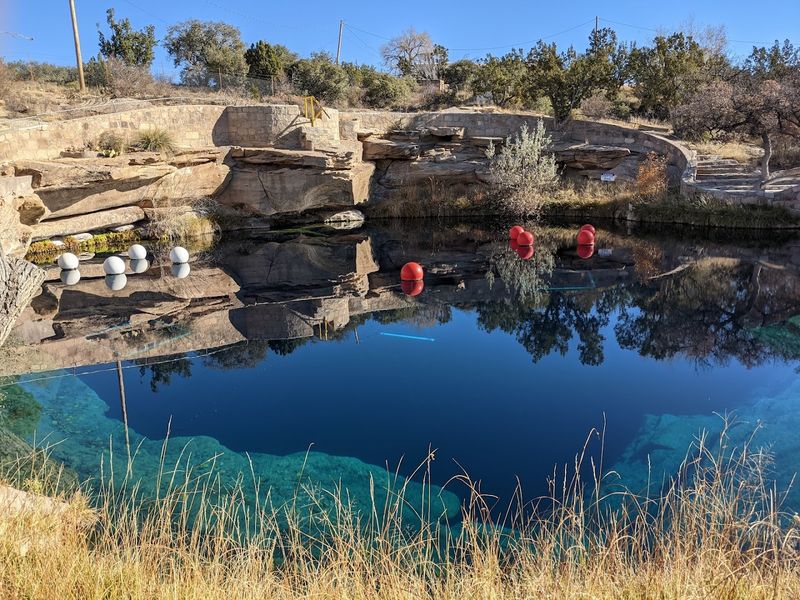
You do not need a wetsuit, a diving certification, or any special gear to enjoy the Blue Hole. Swimmers and snorkelers show up regularly just to float in one of the most visually stunning natural pools in the entire country.
The moment you slip into the water, the 61-degree temperature hits you like a perfectly timed wake-up call.
That initial chill fades quickly once you start moving, and then the real magic kicks in. The water is so clear that you can see the rocky walls of the sinkhole stretching down into the blue-green depths below you.
Snorkelers get a front-row view of the dramatic bell shape of the pool without needing any specialized training.
The circular surface of the pool measures 80 feet across, which feels surprisingly intimate once you are actually in the water. Rocky ledges and natural edges around the rim give swimmers spots to rest and take in the scenery between dips.
The surrounding desert landscape creates a stunning visual contrast against that impossibly vivid water. Swimming in the Blue Hole feels less like a recreational activity and more like stepping inside a living postcard that Route 66 has been hiding for decades.
The Fascinating History From Fish Hatchery To Iconic Recreation Spot
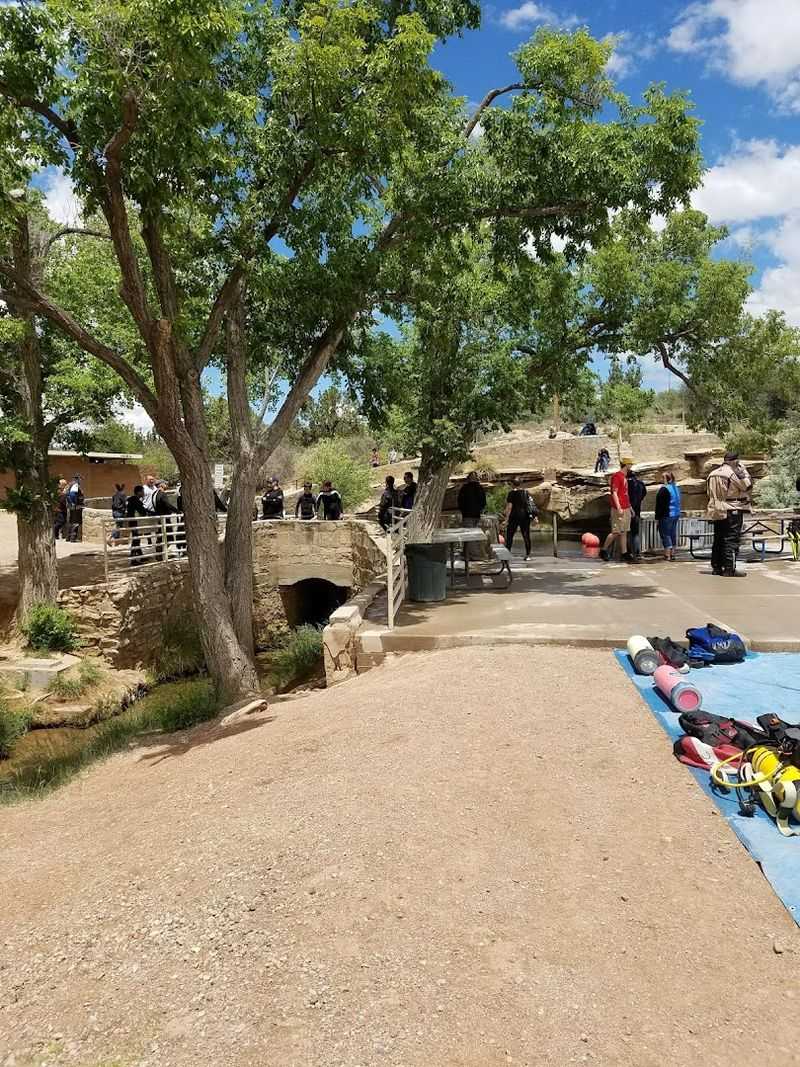
The Blue Hole has not always been a recreation destination. Back in 1932, this glowing desert pool was actually put to work as a fish hatchery, which is one of the more unexpected career paths a sinkhole has ever taken.
The constant fresh water supply and stable temperature made it a practical choice for the purpose at the time.
Cowboys and nomadic tribes used the site long before any formal development happened, treating it as a reliable watering hole in the otherwise harsh desert environment.
When Route 66 opened up the region to travelers in the 1920s, the Blue Hole started attracting a much wider audience of curious road-trippers and adventure seekers.
By the 1970s, the site officially became the Blue Hole Recreation Area, and it later evolved into the Blue Hole Dive and Conference Center.
That progression from ancient watering hole to fish hatchery to beloved tourist destination is a genuinely fascinating arc for a natural landmark. Each chapter of its history adds another layer to what makes visiting feel so rewarding.
The Blue Hole has been many things to many people over the years, but its best role has always been simply being exactly what it is.
Things To Know Before You Make The Trip
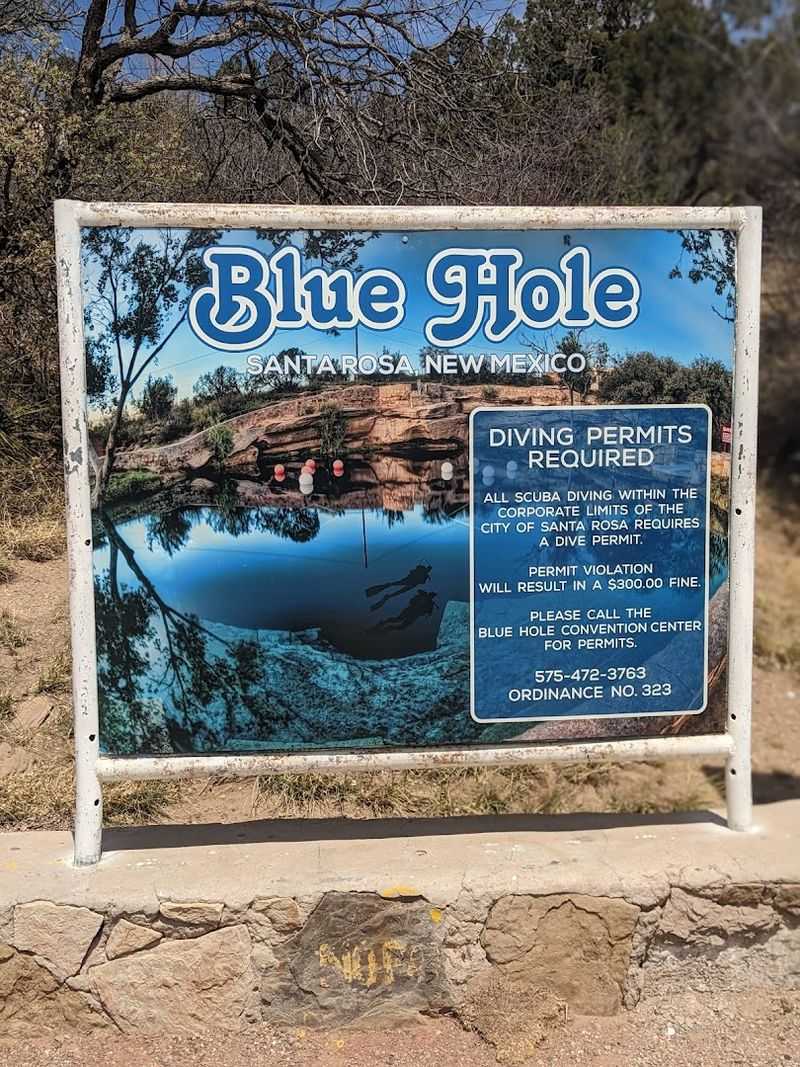
Planning a visit to the Blue Hole is straightforward, but a few key details will make your trip run much smoother.
The site is located at 1085 Blue Hole Road, Santa Rosa, New Mexico, just a short drive south of what remains of historic Route 66. Parking is available nearby, and the area is well-marked once you are in town.
Swimmers are welcome to enjoy the pool, and a diving permit is required for anyone planning to scuba. Equipment rentals are available on-site, so you do not need to haul a full kit across the desert if you are traveling light.
The visitors center is a helpful first stop when you arrive, especially if it is your first time.
Facilities on-site include locker rooms, showers, and picnic tables, which makes it easy to spend a full afternoon without feeling rushed or unprepared.
One important note: there are no lifeguards on duty, so swimming at your own comfort level is always the smartest approach.
The Blue Hole is open year-round, and the constant 61-degree water temperature means the experience stays consistent no matter what season you visit. Come prepared and you will have an absolutely brilliant time.
One Of The Southwest’s Coolest Natural Attractions
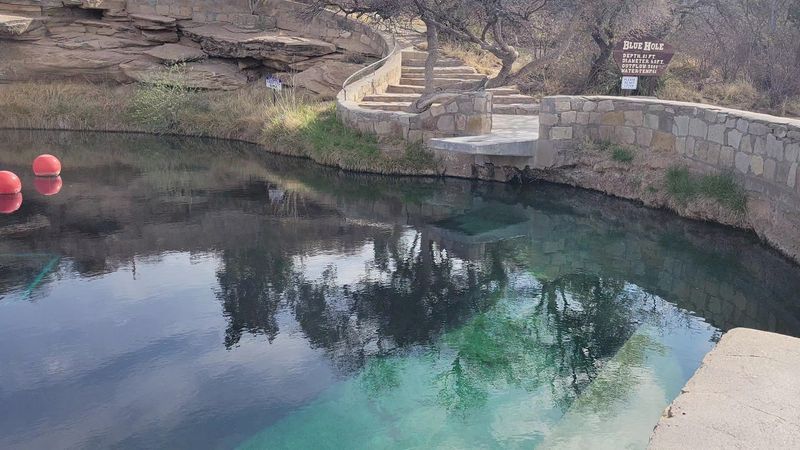
The American Southwest is full of stunning natural wonders, but most of them require serious hiking, backcountry permits, or a full day of planning. The Blue Hole in New Mexico asks almost nothing of you in return for something genuinely spectacular.
You pull off the road, walk a short distance, and suddenly you are standing in front of one of the most beautiful natural pools on the continent.
That accessibility is a huge part of the appeal. Whether you are a hardcore diver chasing perfect visibility, a casual traveler looking for a refreshing stop, or just someone who appreciates a good geological surprise, the Blue Hole delivers on every level.
It pairs perfectly with a classic Route 66 road trip itinerary and adds real depth to what can sometimes feel like a nostalgia-only route.
Santa Rosa itself is a charming small town with its own personality and history, making the Blue Hole feel like a natural anchor for a longer visit rather than just a quick photo stop.
The combination of ancient geology, clear water, and highway history creates something that is genuinely hard to replicate anywhere else. So next time the open road calls your name, maybe ask yourself: have you been to the Blue Hole yet?