
This 19 Mile Road In Arkansas Delivers One Jaw Dropping View After Another
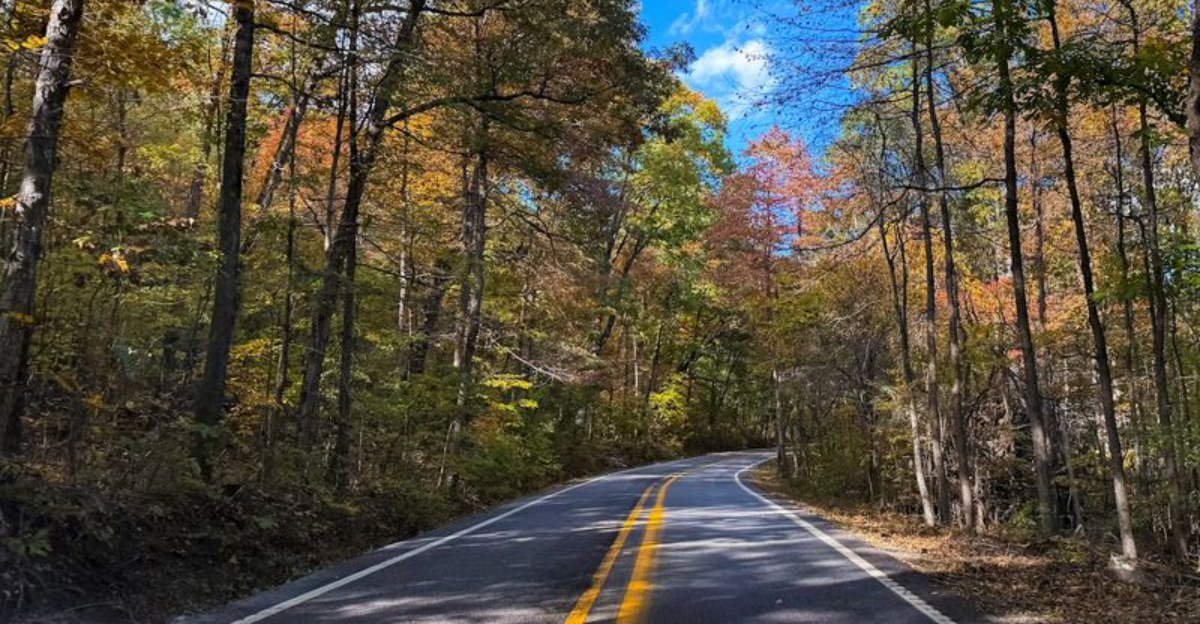
What twists, climbs, and hides surprises around every corner? I found out on a 19-mile drive in Arkansas.
I thought it would be a simple road trip. I was wrong. From the first bend, the forest hugged the road. Sunlight spilled through the trees.
Mountains rose like secret giants. Every curve revealed a new scene that made me stop, stare, and grin like a kid.
The road felt alive. Shadows danced on the asphalt. Birds called from high branches. Colors shifted with every mile, painting the hills in shades I didn’t even know existed.
I laughed at how much I’d underestimated a simple drive. By the time I reached the end, I was hooked.
Every mile had been a mini adventure. Arkansas had me completely, and I knew I’d be back. Because some roads aren’t just drives.
They’re experiences you don’t forget.
The First Curve That Tells You This Road Means Business
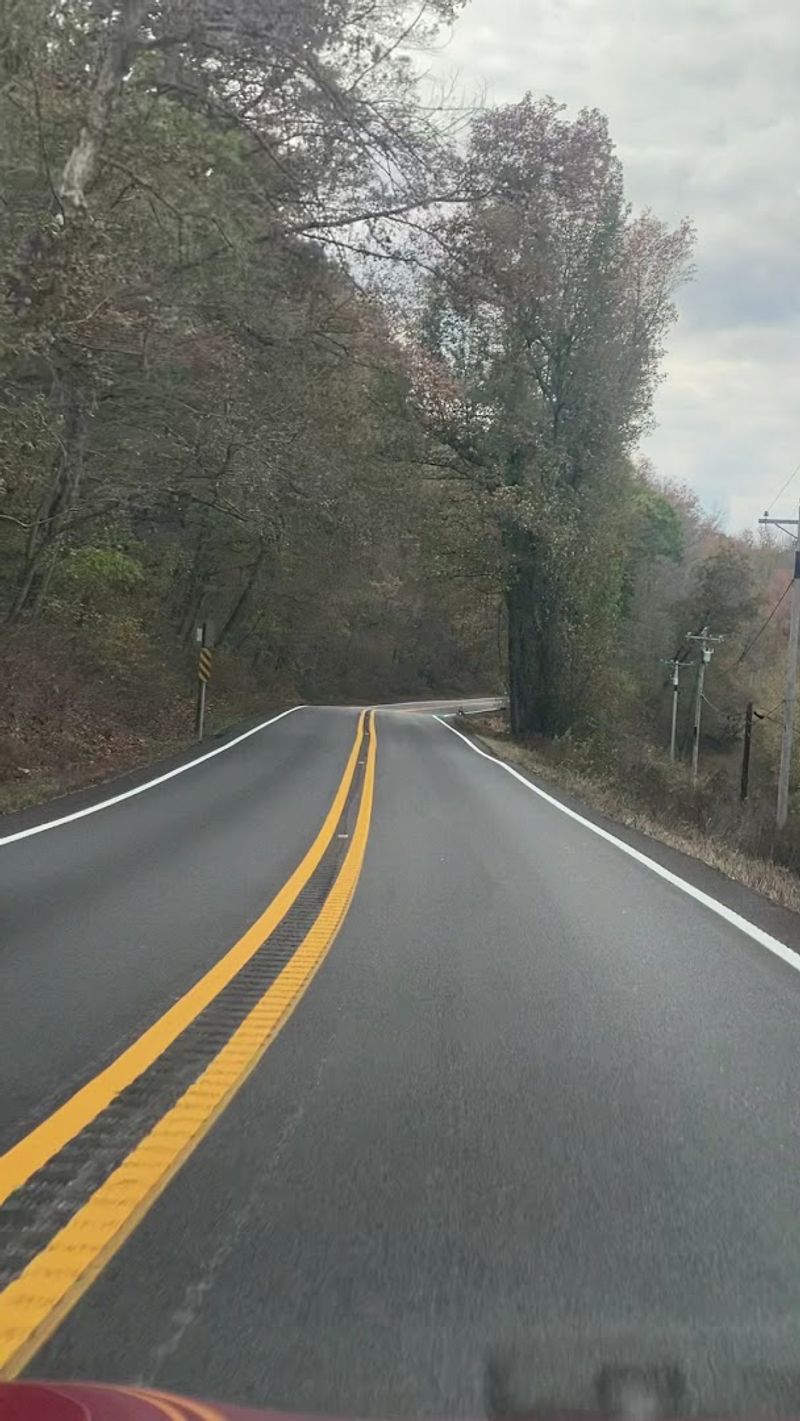
The moment I crossed into the Ozark National Forest boundary from the Interstate 40 side, the road changed its whole attitude. One minute it was flat and polite, and the next it threw a sharp left curve at me like it was daring me to keep up.
That first curve on the Pig Trail is basically the road’s way of introducing itself, and the handshake is firm.
I had been warned about the tight turns, but reading about them and actually feeling your tires work through them are two completely different things.
The curve comes with zero apology, flanked on both sides by walls of oak, hickory, and pine so thick you can’t see more than a few feet into the forest. The canopy closes overhead like a tunnel, and suddenly the outside world feels very far away.
What surprised me most was how immediately peaceful it felt despite the intensity of the driving. The road demands your full attention, which means your mind empties out completely.
No scrolling, no noise, just you and the asphalt and the trees pressing in close on every side.
I found myself exhaling in a way I hadn’t in weeks.
The Boston Mountains have a way of stripping everything unnecessary away, and that very first curve was the beginning of the whole beautiful unraveling. It set the tone for everything that followed, and I was absolutely hooked before I even reached mile two.
Climbing The Boston Mountains Like You Own The Place
Nobody told me the Pig Trail would make my little car feel like it was training for a marathon. The climbs on Highway 23 are serious business, rising through the Boston Mountains with a persistence that keeps you guessing about what’s waiting at the top of each grade.
I had my foot pressed down harder than I expected, and the engine hummed with effort as the road kept tilting upward.
The Boston Mountains are the highest part of the Ozarks, reaching elevations over 2,000 feet, and you feel every single foot of that climb behind the wheel.
The grades are steep enough that you pass signs reminding truckers to check their brakes, which is always a fun little confidence boost when you’re already navigating hairpin turns. But the effort is absolutely worth it, because every climb delivers a reward at the crest.
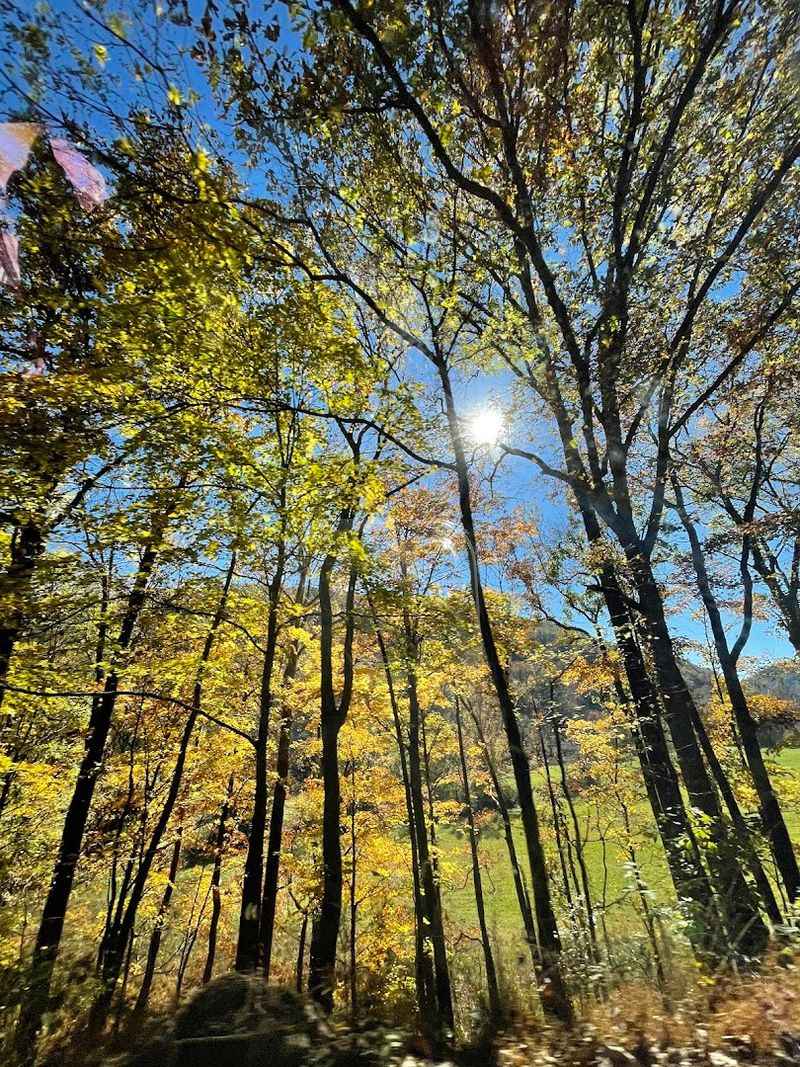
When the road finally levels out at the top of a ridge, the forest opens just enough to give you a glimpse of the layered ridgelines rolling away into the distance.
The Ozarks look ancient from up there, all soft blues and deep greens stacked on top of each other like a painting someone spent years getting exactly right. I pulled off at the first wide shoulder I found and just stood there for a few minutes, breathing it in.
The elevation change alone makes this stretch of road unlike anything else in the state.
The Forest Canopy That Feels Like Driving Through A Cathedral
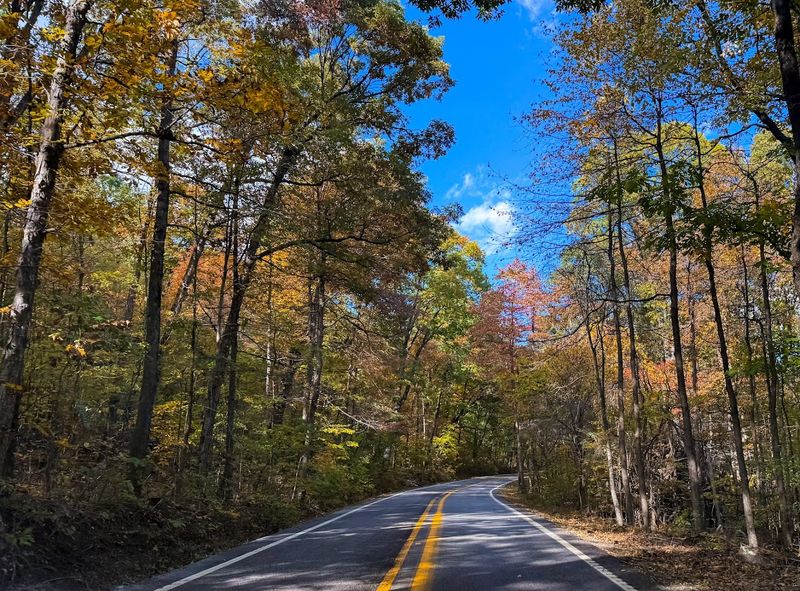
Somewhere around mile four, the trees closed in so completely overhead that driving through felt like moving through a cathedral. The branches of old oaks and hickories laced together above the road, filtering the sunlight into shifting green and gold patterns that danced across my windshield.
I actually laughed out loud because it was so much more beautiful than I had anticipated.
The Ozark National Forest covers over a million acres, and the Pig Trail cuts right through the heart of some of its most mature and untouched stands of hardwood.
These are not young trees. They are thick, gnarled, deeply rooted things that have been growing here for decades, and they lean over Highway 23 with a kind of quiet authority that makes you feel small in the best possible way.
I drove slowly through that stretch, far below the speed limit, just to stay inside it longer. The air coming through my cracked window smelled like damp earth and bark and something green that I don’t have a proper word for.
It’s the smell of a forest doing exactly what a forest is supposed to do, undisturbed and thriving. Birdsong filtered down through the canopy, and for a few miles, the whole world felt genuinely calm.
If you’re someone who finds peace in nature, this section of the Pig Trail will reach right into your chest and squeeze in the most wonderful way.
Crossing The Mulberry River At The Heart Of The Drive
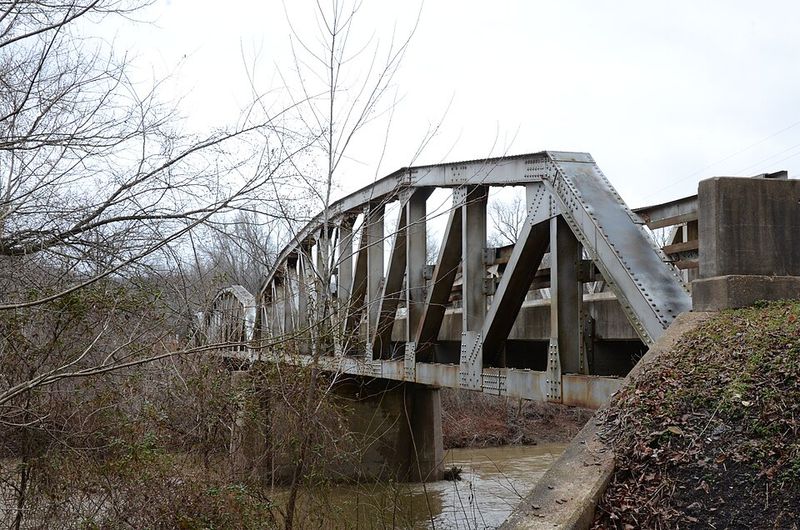
Right around the midpoint of the drive, the Pig Trail crosses the Mulberry River, and that crossing stopped me in my tracks. I had been winding through forest and climbing ridges for miles, so when the trees suddenly parted and a clear, rocky river appeared below the bridge, it felt like the landscape had been holding a secret and finally decided to share it.
The Mulberry is gorgeous, one of those rivers that looks like it belongs on a postcard.
The water runs clear over smooth limestone and gravel beds, and the banks are lined with sycamores and river birches that overhang the current.
On the day I crossed, the light was hitting the water at just the right angle to make it sparkle in a way that seemed almost unreasonably beautiful for a Wednesday afternoon in October. I pulled off just past the bridge and walked down to the bank to get a closer look.
The Mulberry is actually a federally designated Scenic River, which means it’s protected for its natural beauty and recreational value.
Paddlers use it heavily in spring when the water runs higher, and the stretches near the Pig Trail are considered some of the most scenic on the entire river. Standing there with my feet near the water, watching the current move over the rocks, I felt like I had stumbled into a scene from a nature documentary.
The Ozark Highlands Trail Intersection That Tempts Every Hiker
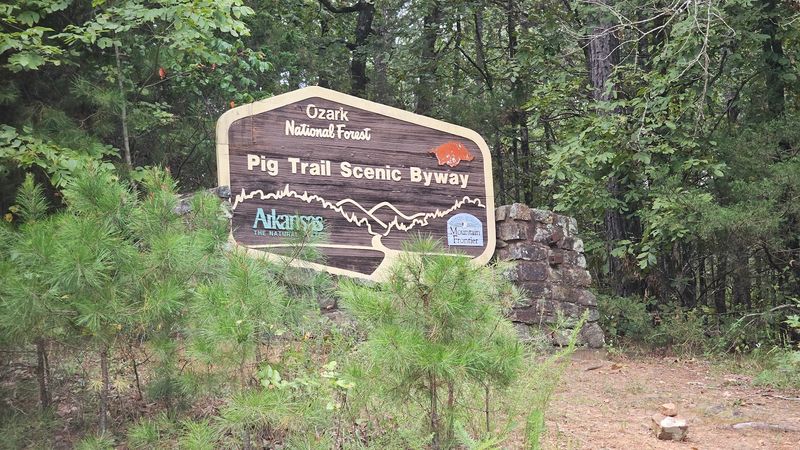
About halfway through the drive, I spotted a brown trailhead sign that made me want to abandon my car entirely and just start walking. The Ozark Highlands Trail crosses Highway 23 right along the Pig Trail corridor, and that intersection felt like a personal invitation from the mountains.
The OHT is a 165-mile trail that runs across northern Arkansas, and the section near the Pig Trail passes through some of its most dramatic terrain.
I had done a little research before the trip and knew the trail was out there, but seeing the actual sign in person made it feel completely real and completely irresistible. I didn’t have my hiking gear with me that day, which is the kind of mistake you only make once.
The forest on both sides of the highway looked deep and wild and full of the kind of quiet that only exists miles from a road.
The OHT near this section climbs through the Boston Mountains with views that rival anything you’ll see from the car. Hikers report finding hidden waterfalls, quiet hollows, and ridgeline overlooks that don’t appear on any tourist map.
The trail is well-marked and maintained, and the Pig Trail byway itself serves as a useful landmark for navigation. I made a mental note, which immediately became a written note, to come back with proper boots and a full day to spare.
Some roads make you want to stop driving and start walking, and this is absolutely one of them.
The Tight Hairpins That Make Every Mile Feel Earned
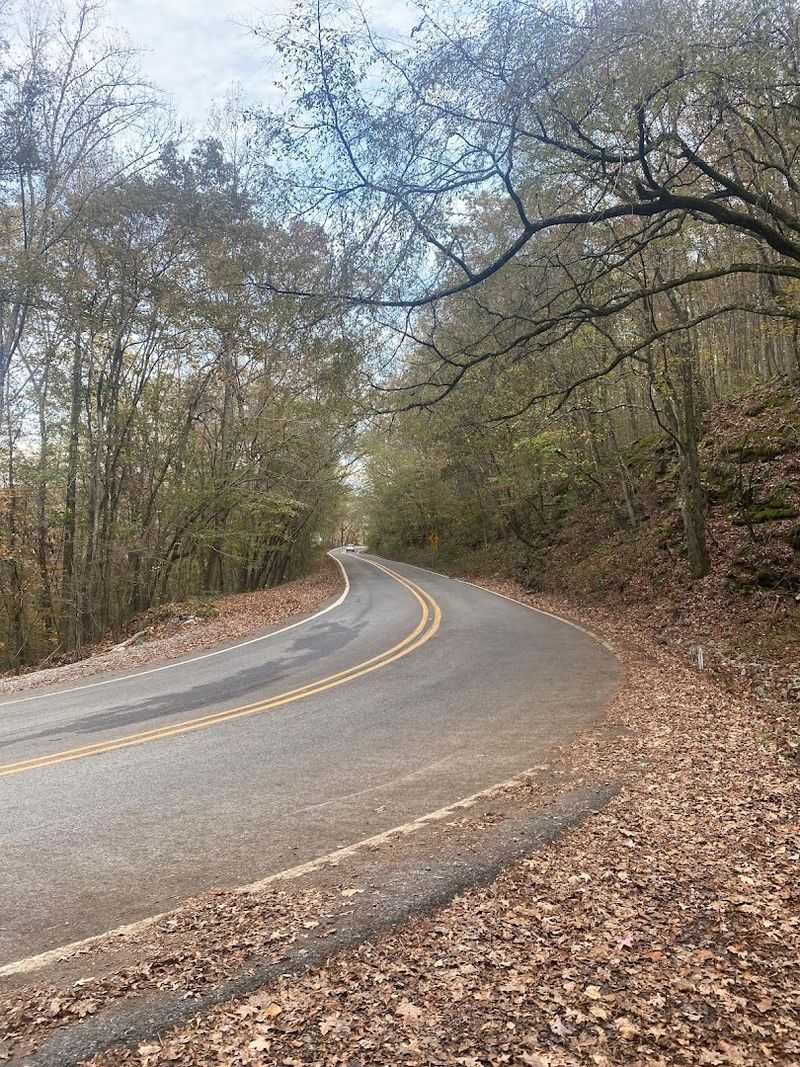
Let me be honest with you: the hairpin turns on the Pig Trail are not for the faint of heart, and that is a large part of what makes driving them so satisfying. There are stretches where the road doubles back on itself so sharply that you have to slow to a crawl and turn the wheel hand over hand just to make the corner without running out of lane.
It sounds stressful, and it is, but it’s the good kind of stress, the kind that makes you feel genuinely alive.
The name Pig Trail reportedly comes from the old days when hogs were driven through these mountain passages, and when you’re navigating one of those tight hairpins with a cliff on one side and a rock face on the other, you start to feel a certain sympathy for those hogs. The road was not designed for comfort.
It was carved through terrain that resisted every step of the process, and that history is written into every curve.
What I noticed is that the hairpins force you to slow down in exactly the right places, right where the views open up, right where the forest is most dramatic, right where you’d want to linger anyway. The road almost engineers the experience for you.
You can’t rush through it even if you wanted to, and that constraint turns out to be a gift. Every hard-earned mile of the Pig Trail feels like something you actually accomplished, not just something you passed through.
Arriving At Brashears
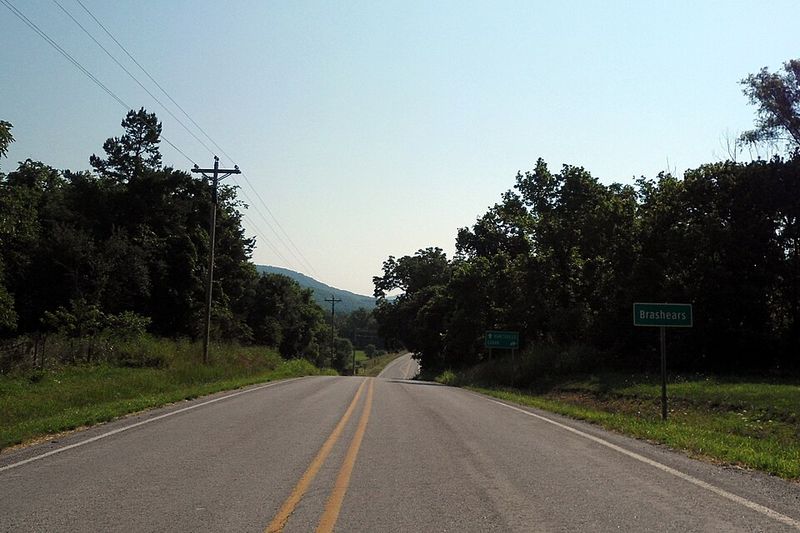
When Highway 23 finally connects with Highway 16 at Brashears, there’s a moment of quiet disbelief. The road flattens, the curves ease, and the intensity of the last 19 miles settles into something that feels a lot like satisfaction.
I sat at that intersection for a moment before turning off my engine, just processing what I had just driven through. It felt like finishing a really good book, that specific mix of fulfillment and not wanting it to be over.
Brashears itself is small and unhurried, a rural community sitting at the top of the Boston Mountains where the Pig Trail delivers you back to a more ordinary kind of road.
The contrast is almost funny. One minute you’re threading through hairpins with a river below you and ancient trees closing in overhead, and the next you’re at a quiet intersection with a clear view and nowhere urgent to be.
I turned around and drove it again from the north end, which is something I cannot recommend strongly enough. Southbound, the road shows you a completely different personality, the descents that were climbs, the curves that open up differently, the light hitting the forest from a new angle.
The Pig Trail rewards every pass you make through it, and each time feels like something fresh. If you haven’t put this road on your Arkansas list yet, what exactly are you waiting for?