
This Ohio Attraction Feels Like A Handmade Dream Full Of History And Charm
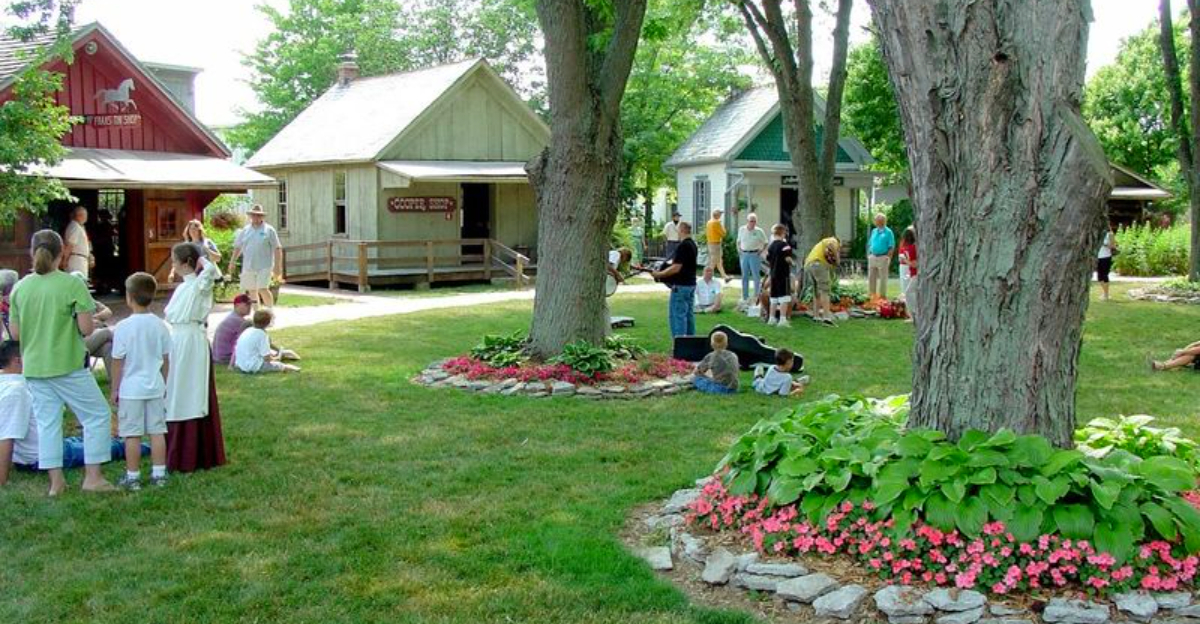
There is a place in northwest Ohio where time does not just slow down, it actually steps backward, and you get to go with it. Costumed interpreters demonstrate forgotten crafts, a 1920s Main Street hums with nostalgic energy, and the smell of fresh-baked goods drifts across a sprawling outdoor village that took decades to build.
Every corner holds something worth stopping for, whether it is a blacksmith at his forge or a potter shaping clay with bare hands. I had been hearing about this place for years before I finally made the trip, and I can honestly say the reality was even better than the story.
Please, read on, because what I found in this corner of Ohio is the kind of handmade, history-soaked experience that is genuinely hard to find anywhere else.
A Living Village With Roots As Deep As The Soil
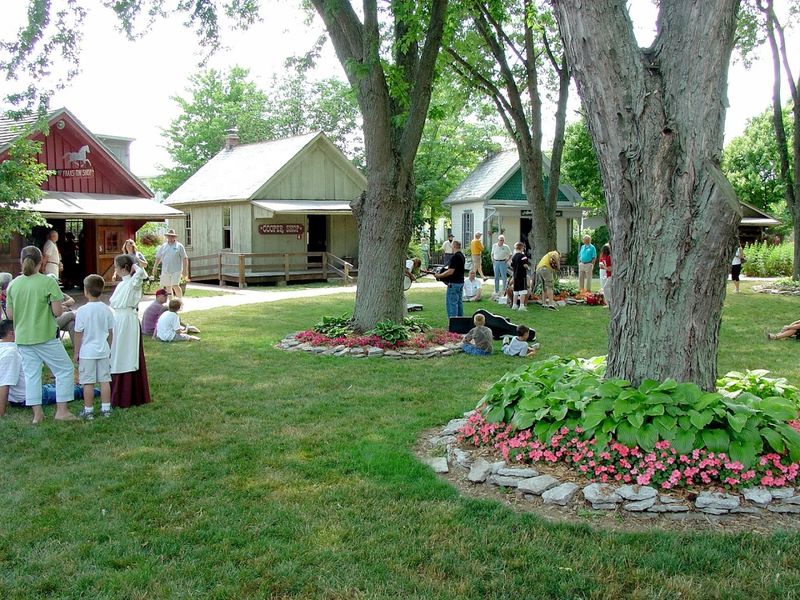
The story behind this place starts with a man named Erie Sauder, a furniture maker from northwest Ohio who believed that the crafts and buildings of his ancestors deserved to be preserved rather than forgotten.
He began collecting historic structures in the 1960s, relocating them to a single property and restoring them with careful attention to detail.
That vision grew into what is now known as Sauder Village, located at 22611 State Route 2 in Archbold, OH 43502, a fully realized living history destination that spans multiple eras of American life.
The village covers a remarkable amount of ground, with dozens of historic buildings spread across a beautifully maintained landscape.
What makes it feel different from a typical museum is that nothing here sits behind velvet ropes waiting to be admired from a distance.
You walk through the buildings, talk to the people inside them, and sometimes even try the crafts yourself.
The whole experience feels less like a history lesson and more like an actual visit to another time.
The 1920s Main Street That Feels Surprisingly Real
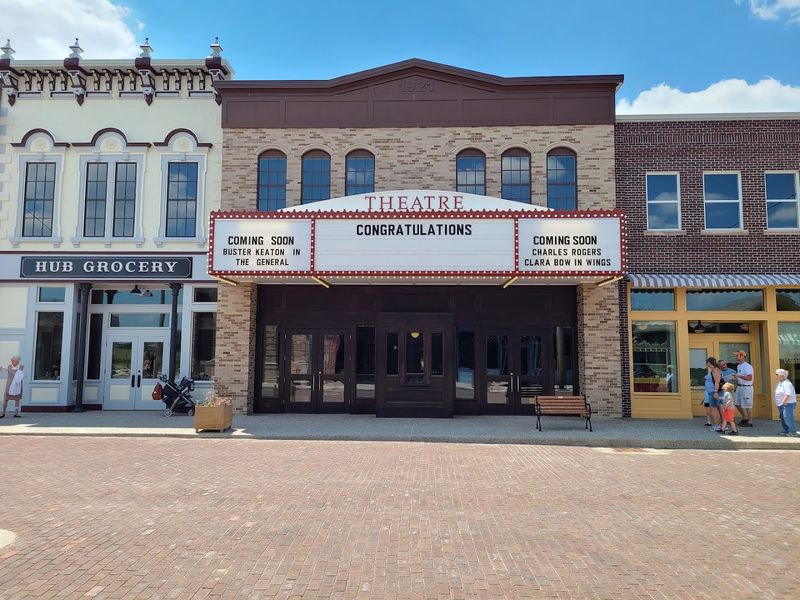
My favorite part of the entire visit was the 1920s section of the village, and I was not expecting it to hit as hard as it did.
The street is lined with period-accurate storefronts, and the attention to detail is the kind that makes you pause mid-step and look around twice.
There is a working soda fountain inside a recreated pharmacy, and the ice cream sodas served there are genuinely delicious.
A silent movie theater plays films from the era, and sitting inside that small, flickering room felt like a small act of time travel.
The cars parked along the street are authentic vintage models, and the staff dressed in 1920s attire move through the space with a natural ease that makes the whole scene feel lived-in rather than staged.
Kids and adults both seemed equally captivated by this area during my visit.
It manages to be educational without ever feeling like homework, which is a harder balance to strike than most people realize.
Costumed Interpreters Who Actually Know Their Craft
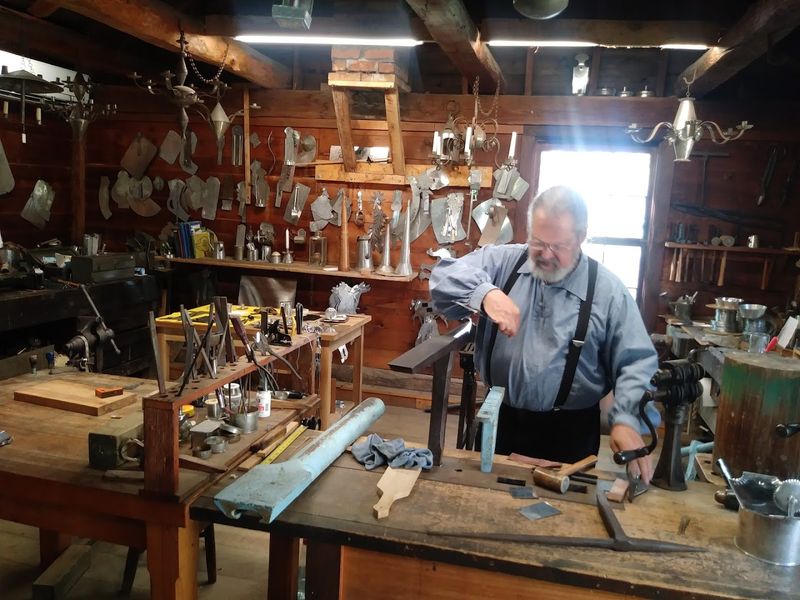
Not every living history attraction gets this part right, but the staff at this village are a genuine highlight rather than an afterthought.
Most of the interpreters are deeply knowledgeable about the crafts they demonstrate, and conversations with them tend to go well beyond the surface level.
I spent a long stretch of time talking with a coopering demonstrator who explained the entire process of building a wooden bucket from scratch, and it was one of the more genuinely interesting conversations I had all year.
You can watch blacksmiths, potters, weavers, candle makers, and glassblowers all working in real time, using tools and techniques that have not changed in over a century.
The passion these people bring to their work is obvious, and it transfers to visitors in a way that no exhibit panel ever could.
There is even a training program for teens that keeps these traditional skills alive for the next generation.
Watching a young person confidently explain 19th-century pottery techniques is one of those small, quietly impressive things that sticks with you.
Pioneer Village And The Early Settler Experience
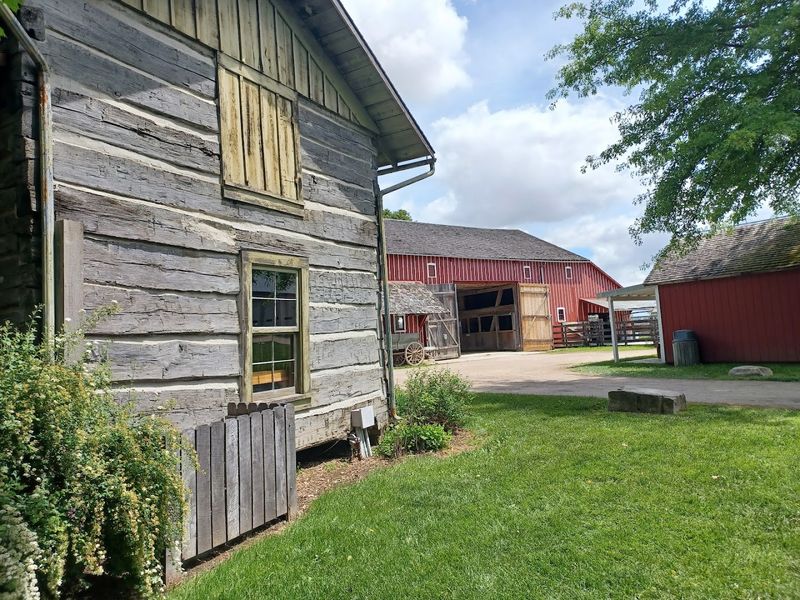
The pioneer section of the village transports you back to the earliest days of Ohio settlement, and the rough-hewn cabins and simple tools on display make the difficulty of that life feel very real.
Log structures that were originally built by settlers in the 1800s have been relocated here and restored, so the weathered wood and hand-forged hardware you see are not reproductions.
They are the actual objects people used to survive and build a life in a place that was still very much wilderness.
I found myself lingering in a small cabin where an interpreter explained how a family of six would have shared that single room through an Ohio winter, and the detail in that description was genuinely sobering.
Kids who visited seemed fascinated by how different daily life was, and several of them tried activities like writing with a quill pen or grinding corn by hand.
The Little Pioneers play village nearby gives younger children a hands-on space to act out that same pioneer experience in a more playful way.
It is one of the more thoughtfully designed sections of the whole property.
Farm Animals And The Agricultural Heart Of The Village
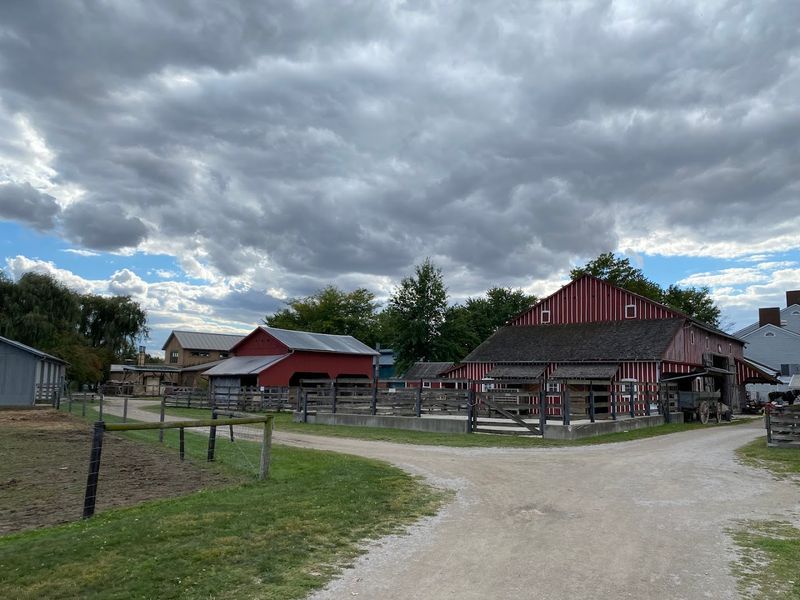
Agriculture was the backbone of rural Ohio life for generations, and the village does not let that fact fade into the background.
The farm area includes chickens, ducks, sheep, pigs, cows, and cats, all housed in settings that reflect how these animals would have been kept on a working 19th-century farm.
Younger visitors tend to gravitate toward this section quickly, and the animals are close enough to observe in real detail even if you cannot feed them directly.
A few reviewers noted that the animal viewing area could be improved, and it is fair to say that some of the enclosures limit how close you can get.
That said, the farm setting itself is attractive and well-maintained, and the broader agricultural context provided by the interpreters nearby adds genuine educational value.
There is also a simulated cow-milking activity that reliably produces laughter from children and adults alike.
The farm section works best when you take time to talk with the staff stationed there, because their explanations of how these animals fit into the daily rhythms of pioneer life turn a simple animal viewing into something with real substance.
The Barn Restaurant And The Donut Shop Worth The Stop
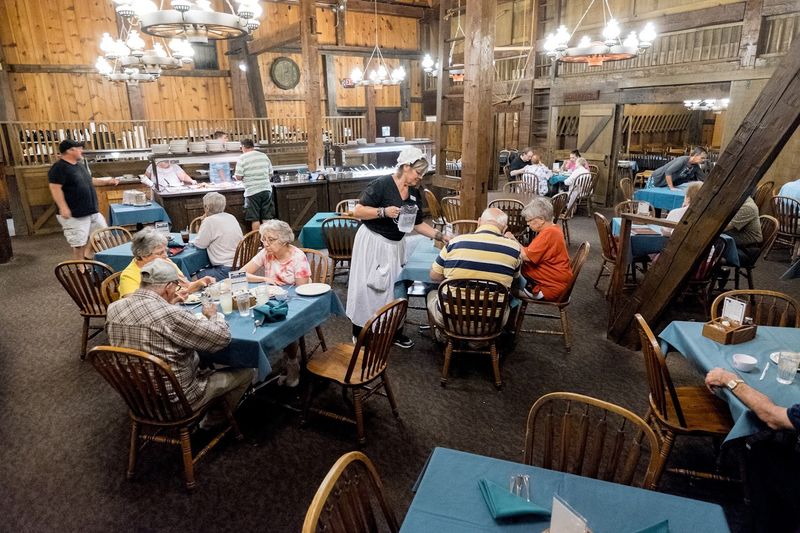
History-hopping burns more energy than you might expect, and the dining options at this destination are well worth factoring into your plans.
The Barn Restaurant sits adjacent to the village and serves a buffet-style spread that leans into hearty, comforting food.
The smell alone when you walk near it is enough to redirect your priorities entirely, and multiple visitors have described it as one of the most satisfying parts of the day.
The donut shop on the property has also earned a loyal following, with fresh treats that pair well with a coffee break mid-afternoon.
I made the mistake of skipping the donuts on my first pass and had to double back, which I do not regret at all.
The old-fashioned soda fountain in the 1920s section is another food highlight, serving ice cream sodas and shakes that fit the era perfectly.
Between the restaurant, the donut shop, and the soda fountain, you have enough food options to keep energy levels up across a full day of exploring without ever needing to leave the property.
Hands-On Workshops And Classes For Deeper Learning
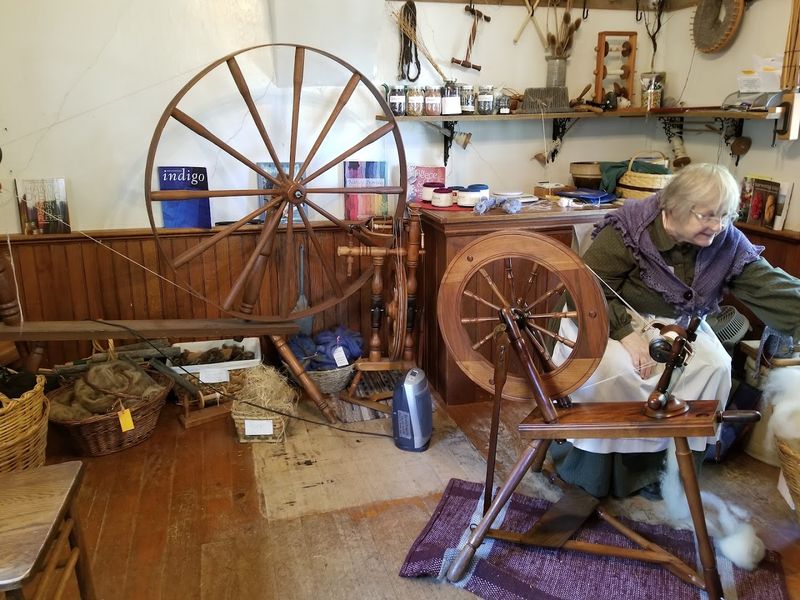
Beyond the standard walking tour, this place offers hands-on workshops and classes that let you go much deeper into the crafts on display.
Past offerings have included coopering, pottery, and various other traditional trades, and participants walk away with both a new skill and something they actually made.
One visitor shared that they took a coopering class and walked out holding a wooden bucket they had built themselves, which is the kind of takeaway that a souvenir shop simply cannot replicate.
These workshops are especially popular with homeschooling families, and the village has developed a strong reputation as a field trip and educational destination for that community.
The classes tend to fill up, so checking the official website at saudervillage.org before your visit is a smart move.
Even without a formal class, many of the interpreter stations offer short, informal try-it moments where you can handle tools or attempt a basic craft step under guidance.
Those small interactions add up quickly, and by the end of the day you realize you have actually learned something rather than just looked at things.
A Museum That Adds Context To Everything You See Outside
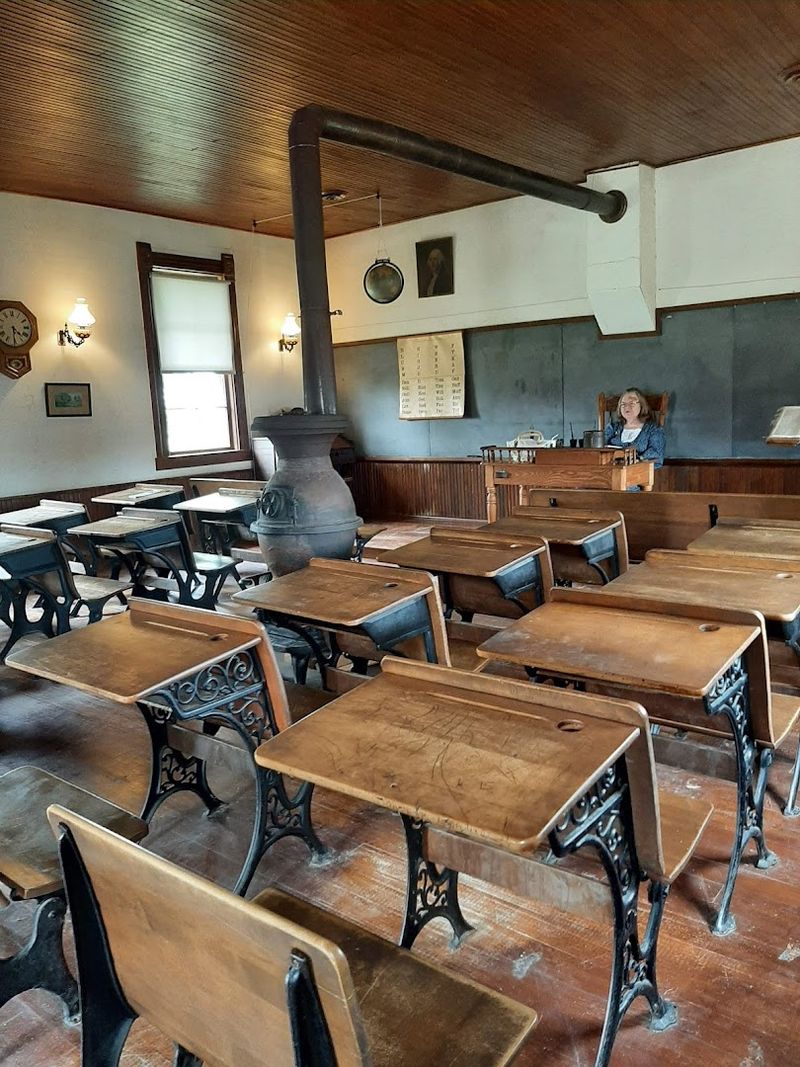
The outdoor village gets most of the attention, but the museum and exhibit spaces on the property deserve a dedicated stretch of your time.
They house artifacts, tools, textiles, and personal items that fill in the historical gaps between the buildings you walk through outside.
The exhibits trace Ohio rural life from the early pioneer period through the early 20th century, and the progression feels coherent and well-paced rather than like a random assortment of old things in cases.
I found the sections on domestic life particularly interesting, especially the displays showing how food was preserved, clothing was made, and households were managed before modern conveniences arrived.
The museum also provides good context for the crafts being demonstrated outside, so visiting it either before or after your village walk makes both experiences richer.
It is easy to fold into your route while exploring the property without much backtracking.
Spending 30 to 45 minutes inside is a reasonable estimate, though curious visitors tend to stay longer once they start reading the exhibit panels in detail.
Special Events And Seasonal Highlights Worth Planning Around
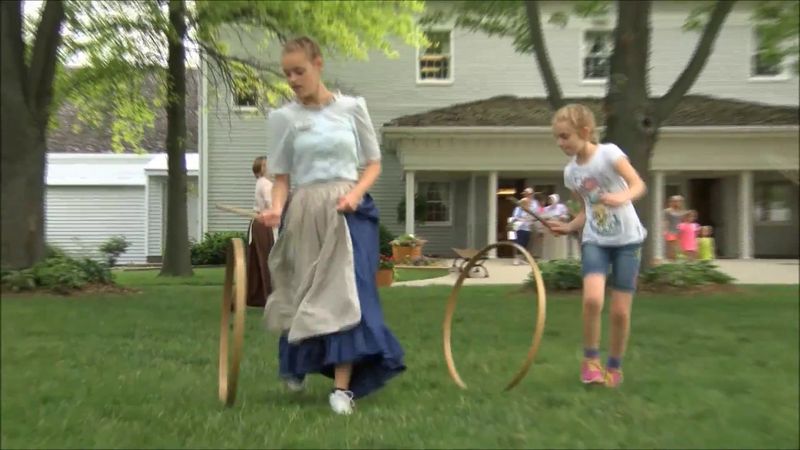
The village runs a packed calendar of special events throughout the year, and several of them are worth planning an entire trip around.
Vintage baseball games featuring teams in period uniforms are a recurring favorite, and watching players use 19th-century rules on a grass field is more entertaining than it sounds.
Model railroad exhibitions, homeschool days, and seasonal festivals bring different crowds and different energy to the grounds depending on when you visit.
The homeschool day events in particular have developed a strong following, with families driving significant distances to participate in the structured educational programming offered on those dates.
Seasonal decorations and themed activities shift the atmosphere noticeably across the year, so a summer visit and a fall visit can feel like two different experiences even though the core village remains the same.
Checking the events calendar on the official website before booking your trip is genuinely worth the two minutes it takes.
Some events draw large crowds, so arriving early on those days gives you a noticeably better experience than arriving mid-afternoon when things get busy.
Practical Tips For Getting The Most Out Of Your Visit
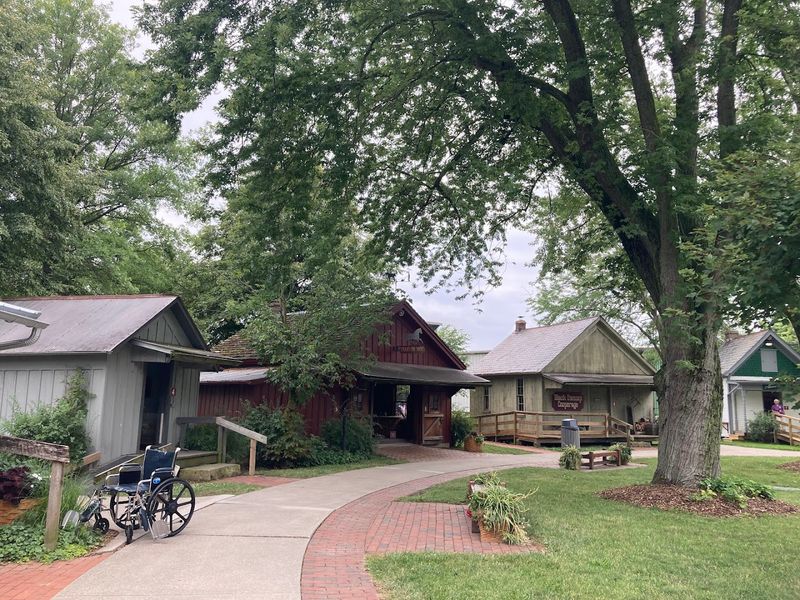
A little planning goes a long way at a destination this large, and a few practical notes can make the difference between a great day and an overwhelming one.
Budget at least three to four hours for a thorough visit, and five hours if you plan to eat at the restaurant, take the train, and linger at the craft stations.
Comfortable walking shoes are not optional here since the grounds cover a lot of ground and some paths are uneven.
The Historic Village operates seasonally and reopens April 29, 2026, so checking the official dates and hours before you go is a smart move. The Barn Restaurant and Doughbox Bakery are open year round, and the campground’s 2026 season runs from April 3 through November 1.
Student and senior admission categories are available, and the official ticket page also lists AAA, Military, Veteran, and Museum for All discounts. Memberships are available and can pay for themselves quickly if you plan to visit more than once.
Most buildings across the complex are accessible, though a few historic buildings in the Historic Village are exceptions, and nursing rooms and accessible restrooms are available on the property.
Hot days can be tiring given the amount of walking involved, so an early arrival in summer keeps the experience enjoyable from start to finish.