
This Ohio Attraction Is A Must-Visit For Anyone Who Loves The Strange And Unusual
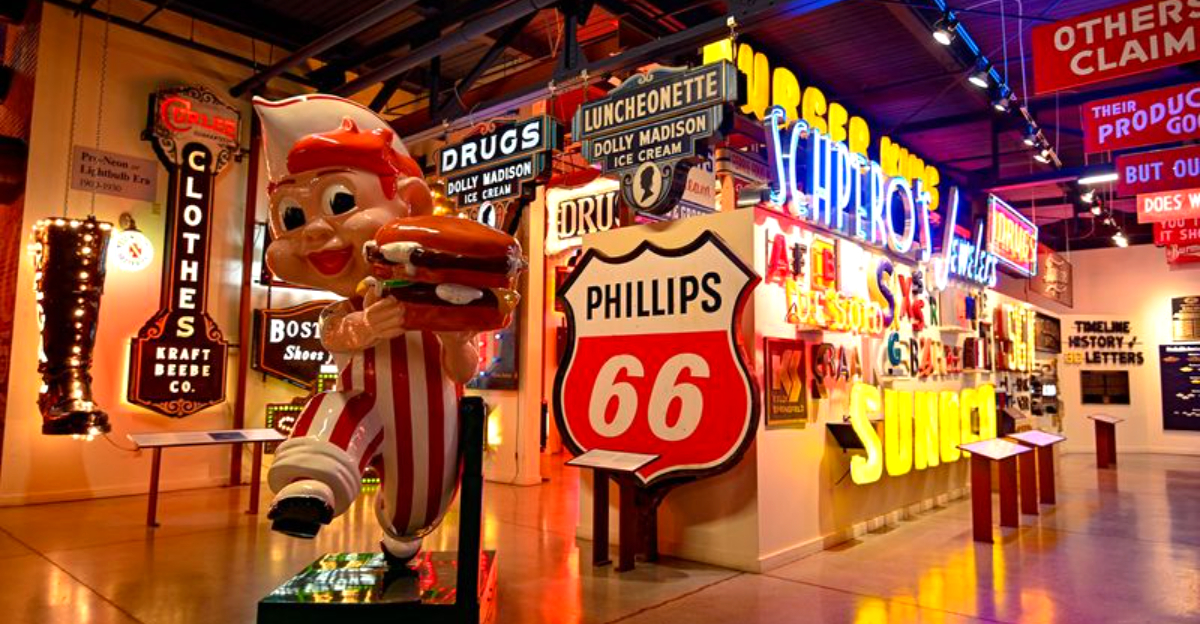
Some places catch you off guard in the best way. This Ohio museum is one of them.
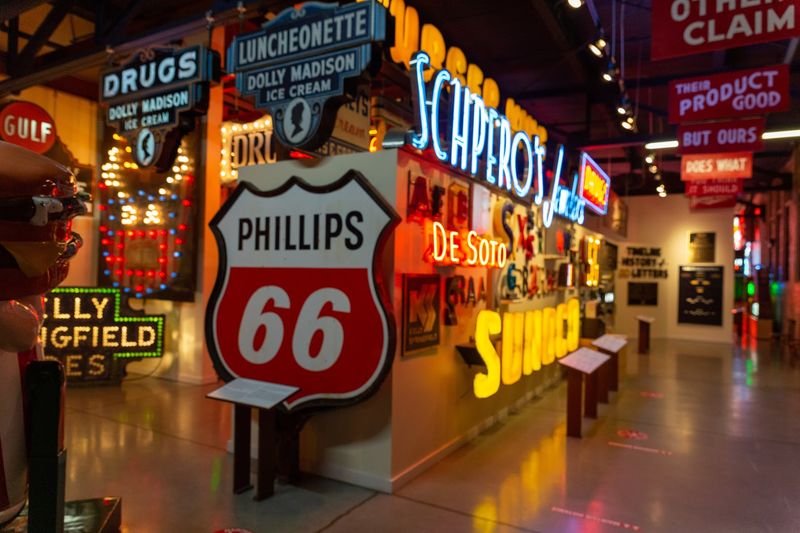
Inside, neon glows overhead, vintage storefronts line a recreated Main Street, and the story of American commercial art unfolds across a huge former factory space. I went in curious, but within minutes it was obvious this was not going to feel like any ordinary museum visit.
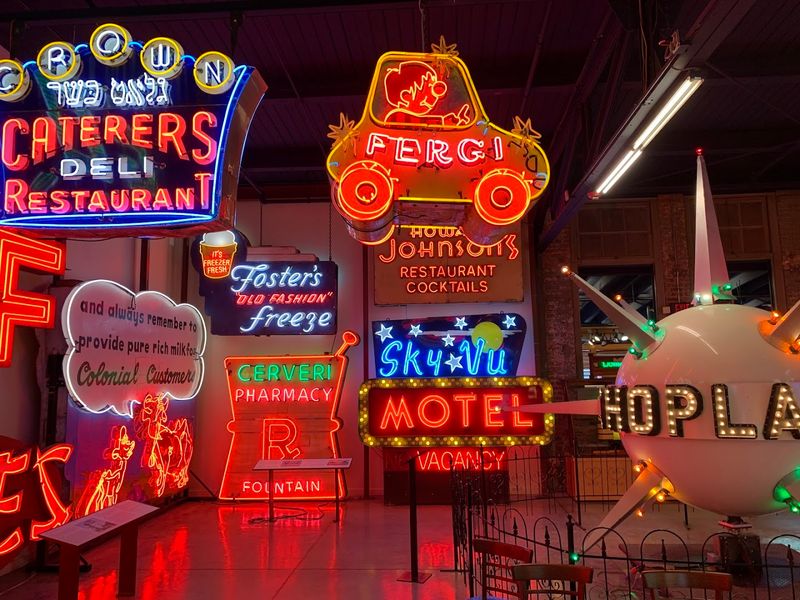
The collection is enormous, with hundreds of signs from across the country representing more than a century of craftsmanship, design, and roadside history. Even with all that visual overload, the place never feels chaotic.
It feels inviting. And if you have ever slowed down to admire an old glowing sign or felt a little nostalgic for a disappearing kind of Americana, this is the kind of place that stays with you.
A Museum Hidden in Plain Sight
The address does not exactly scream “world-class museum.” You pull up to 1330 Monmouth Ave in Cincinnati, Ohio, and find yourself in a warehouse district that looks more like a film set for a gritty detective story than a cultural destination.
I actually slowed down twice, convinced I had the wrong place. But then the signs started appearing near the entrance, and everything clicked.
The American Sign Museum sits in a repurposed factory building, and that industrial shell turns out to be the perfect home for a collection this big and this bold. The museum’s permanent collection contains more than 4,000 objects, including more than 800 signs, so the scale of the space feels genuinely earned.
Free parking is available right on site, which is a welcome surprise for any museum visit. The staff greets you warmly the moment you step inside, setting a tone that feels relaxed and genuinely excited to share what is inside.
This is one of those rare spots where the journey to find it becomes part of the story you tell later.
The Story Behind the Collection
Tod Swormstedt began this museum story in 1999 with the National Signs of the Times Museum, and the project was renamed and re-opened as the American Sign Museum in 2005 with a clear and passionate mission: preserve the vanishing history of American signage before it disappeared forever into dumpsters and scrap yards.
Swormstedt had spent years on the staff of a trade publication focused on the sign industry, so he understood better than almost anyone how much craft, culture, and history was quietly being lost every time an old business closed or a neon tube went dark.
The museum grew from that personal obsession into the largest and most diverse public sign museum in the country. That title is not just a marketing line.
The sheer scale of what has been assembled here makes it feel absolutely earned.
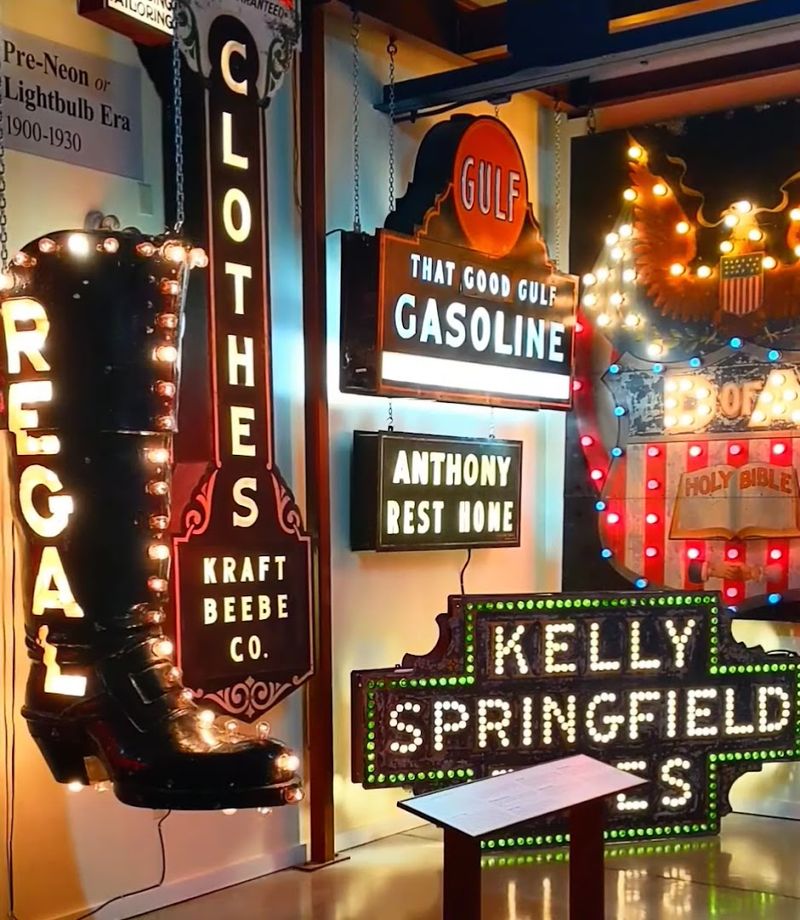
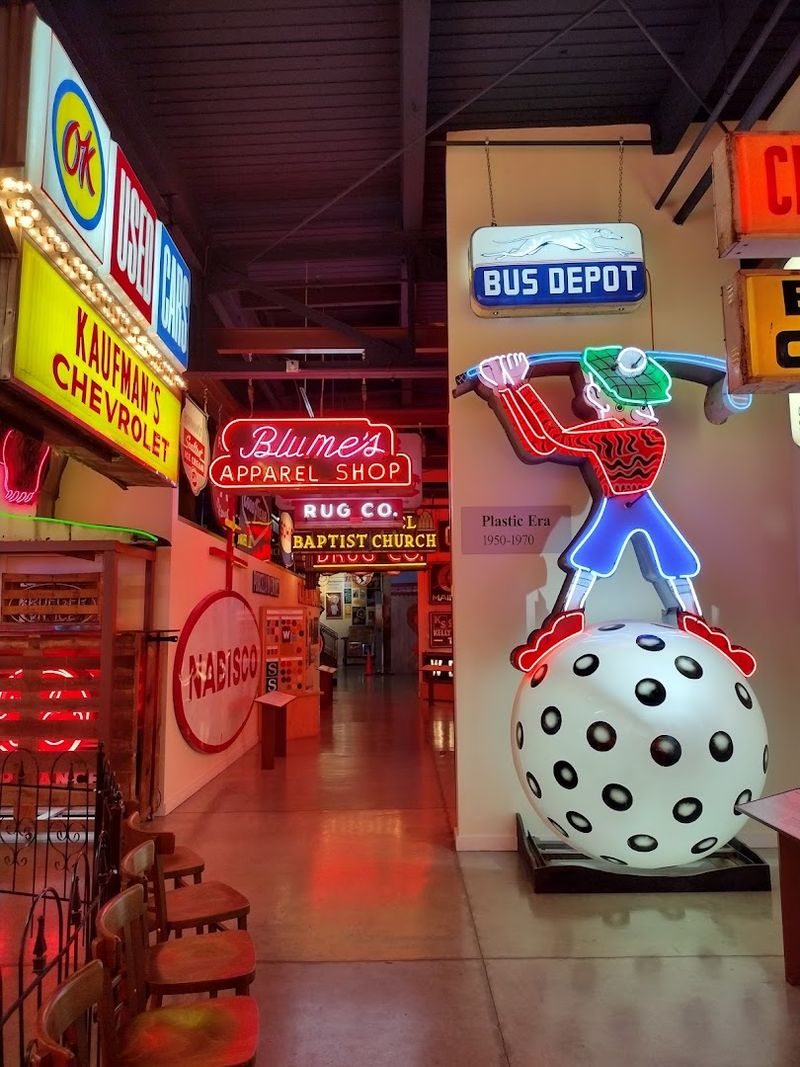
The collection charts more than a century of commercial signage, from hand-painted wooden boards with gold-leaf lettering to towering plastic and electric signs that defined the look of mid-century America.
Every object on display has a story, and the museum does a genuinely impressive job of making sure visitors understand why each one matters beyond just looking cool.
Main Street Magic
Nothing in the museum hits harder than the Main Street section, and I say that as someone who thought he was pretty hard to impress by a museum exhibit.
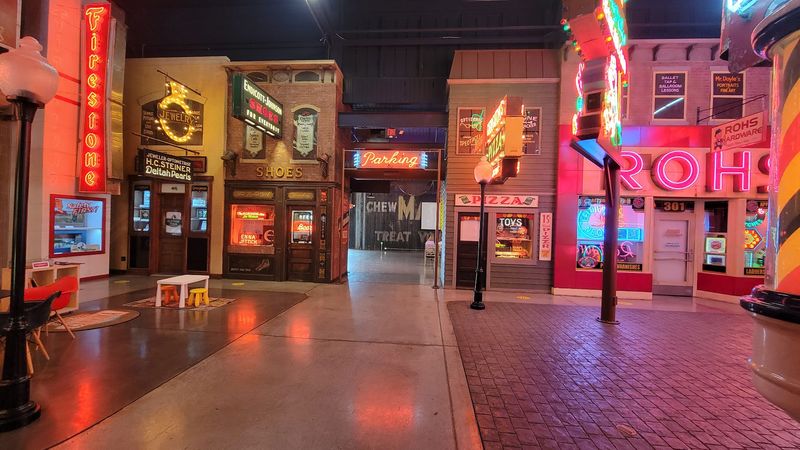
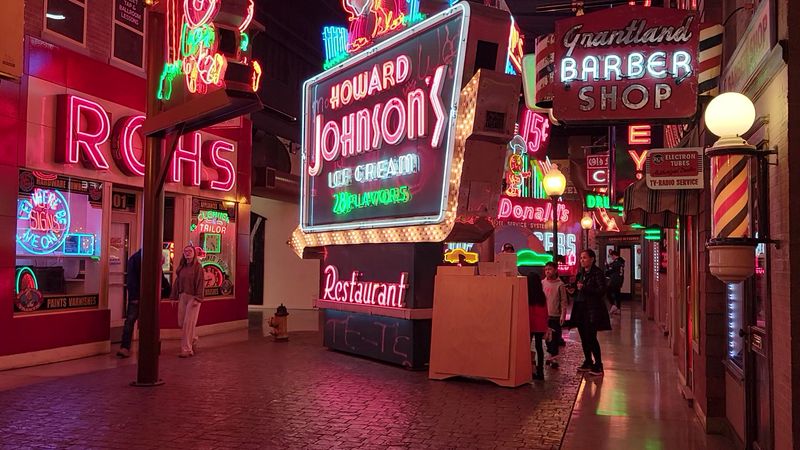
The designers recreated a full streetscape of historic storefronts, each one glowing with authentic hand-painted artistry and buzzing neon. Walking through it genuinely feels like stepping onto a 1950s film set, except everything around you is real.
The storefronts are packed with detail. Signs for barbershops, diners, pharmacies, and clothing stores line both sides, each one restored and lit as it would have appeared during its working life.
I found myself stopping every few feet to read the fine print on signs, noticing the brushwork on hand-lettered panels, and just soaking in the visual density of it all. Photographers will absolutely lose their minds in this section.
The lighting in this part of the museum deserves special praise. It creates a warm, golden atmosphere that makes every shot look effortless, and it keeps the mood feeling celebratory rather than clinical or sterile.
Iconic Signs You Will Actually Recognize
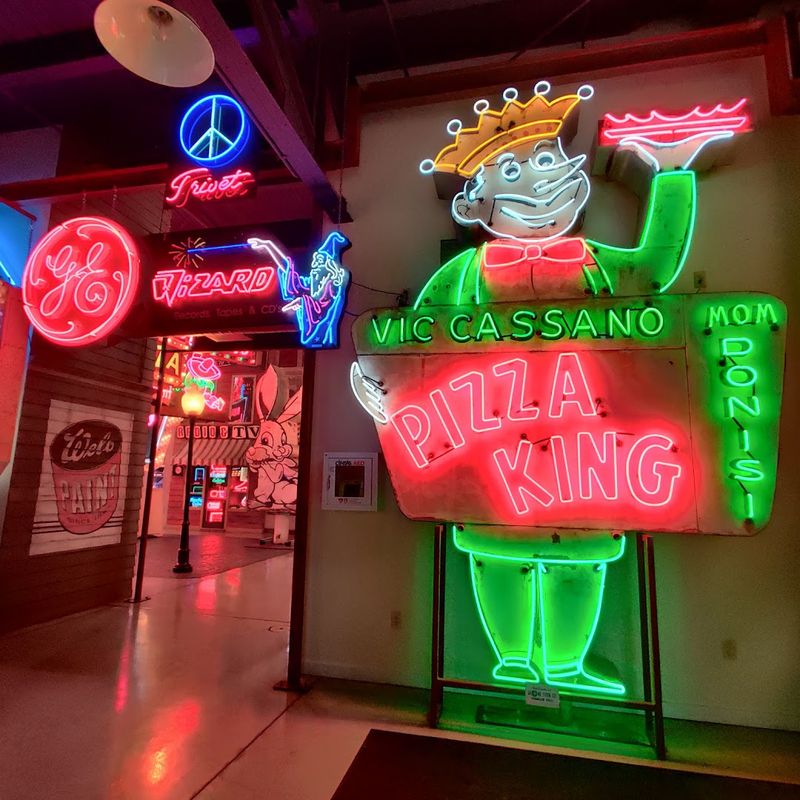
Part of what makes this place so immediately engaging is how many of the signs on display trigger instant recognition. This is not a collection of obscure objects that only specialists would appreciate.
The vintage McDonald’s sign stopped me cold. Seeing those golden arches in their original form, before decades of redesigns softened and modernized the logo, is a genuinely strange and wonderful experience.
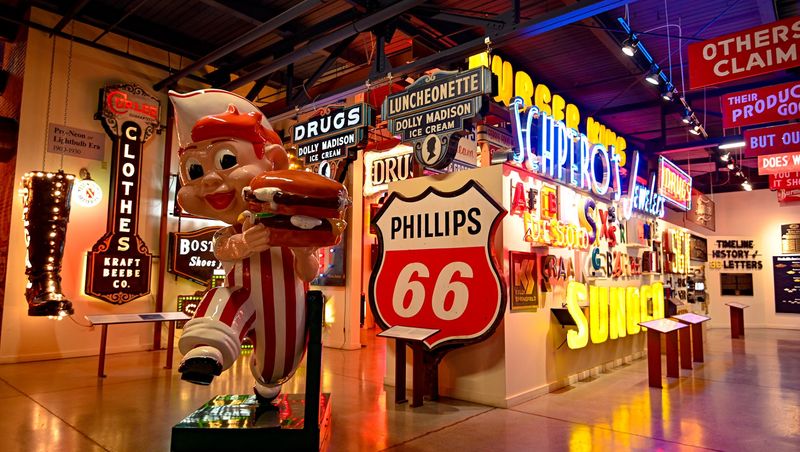
There is also a massive Satellite Shopland sign that commands attention from across the room, a giant spinning 76 sign that kids absolutely love, and pieces representing KFC, Howard Johnson, and other brands that shaped the visual landscape of American roads and towns.
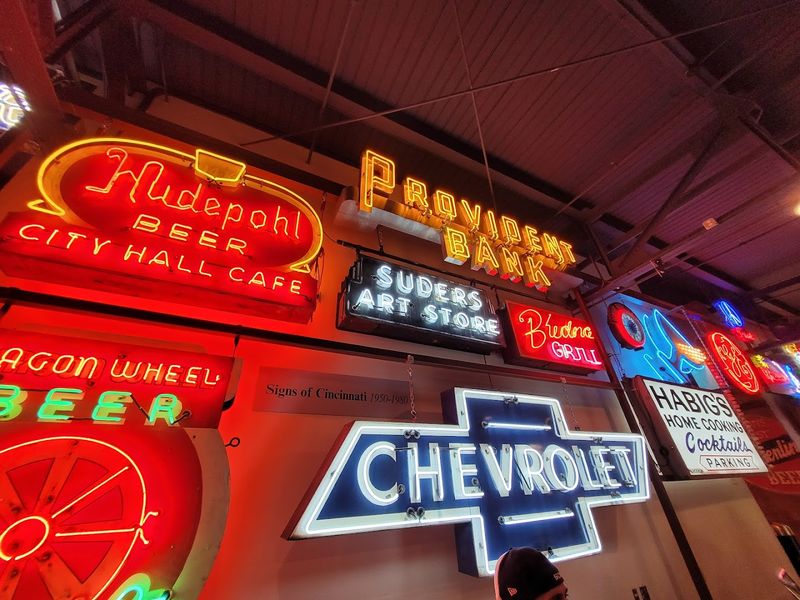
For visitors from the Cincinnati area, the local connections add another layer of warmth. Signs from LaRosa’s, Cassano’s Pizza King, the Cincinnati Pops, and Wizards Records appear throughout the collection, turning the experience into something personal as well as historical.
Spotting a sign from a place you actually remember is one of those small museum moments that quietly becomes the highlight of the whole visit.
The Neon Workshop Experience
At the back of the museum, there is a working neon shop that operates as a living demonstration of one of the most technically demanding crafts in commercial art history.
Watching a neon artist bend glass tubing over a flame, shaping it into letters and curves with practiced precision, is the kind of thing that makes you immediately appreciate every glowing sign you have ever seen on a street corner.
The museum offers neon tube-bending demonstrations on select days, particularly on Saturdays in the afternoon. I caught one during my visit, and the small crowd gathered around the workspace was completely silent, watching every movement with genuine fascination.
The shop also handles restoration work on signs brought in for display, so the craft being practiced there is directly connected to keeping the collection alive and glowing. That connection between the workshop and the exhibits gives the whole experience a satisfying sense of continuity.
Even if you have zero interest in how signs are made, watching someone transform a straight glass tube into a perfect glowing curve is quietly one of the most compelling things to see here.
Self-Guided and Guided Tour Options
The museum gives you real flexibility in how you experience the collection, which is something I genuinely appreciated. You are not forced into a single mode of visiting.
A self-guided audio tour is available through the museum’s website, and I strongly recommend downloading it before you arrive and bringing your own headphones. The audio content adds layers of history and context behind individual signs that you simply would not pick up on your own.
Guided tours are also available, led by knowledgeable staff who clearly love what they do. I caught part of a guided tour in progress and found myself drifting over to listen more than once, even though I had already been through those sections on my own.
The flexibility to pop in and out of the guided tour as you wander is genuinely one of the better visitor experience decisions the museum has made. It keeps things feeling casual rather than regimented.
Plan for at least 90 minutes if you want to read the displays carefully, listen to audio content, and catch a demonstration. A little more time never hurts here.
Photography Heaven for Neon Lovers
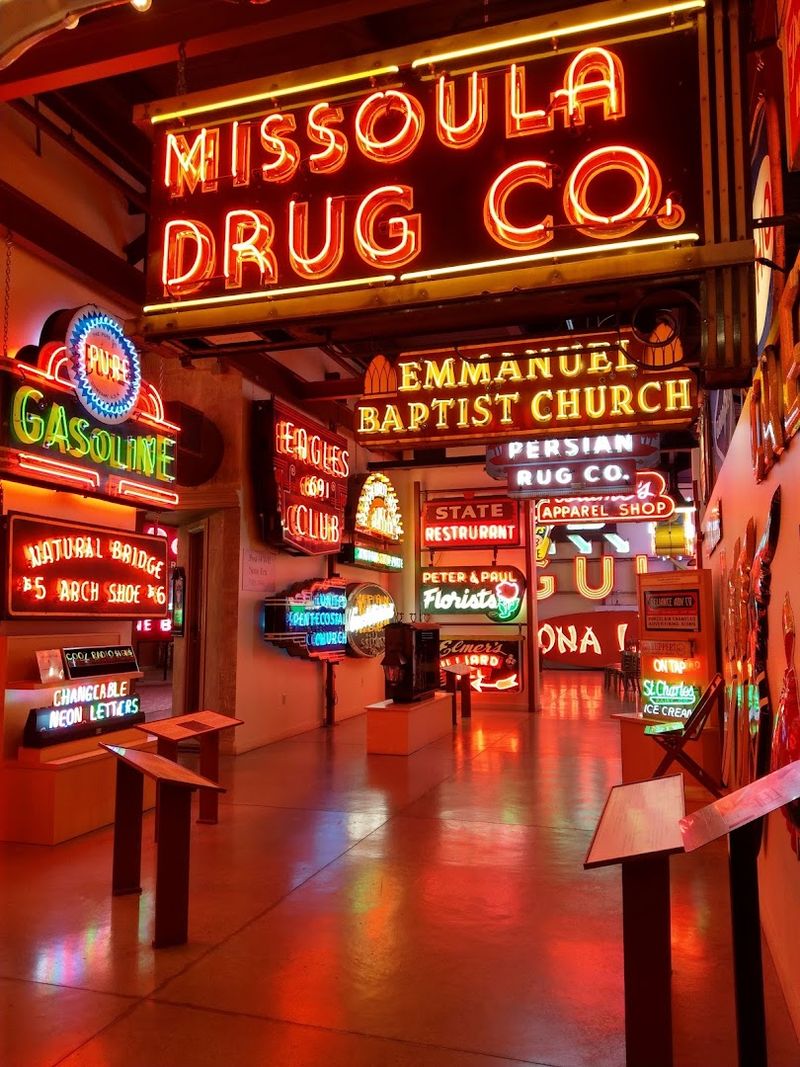
Honest confession: I took well over a hundred photos during my visit, and I am not even a serious photographer. The American Sign Museum is one of those rare indoor spaces where almost every angle produces something worth keeping.
The combination of vintage neon glow, hand-painted color, retro typography, and dramatic scale creates a visual environment that is practically impossible to photograph badly. The warm lighting throughout the museum does a lot of the heavy lifting for you.
The Main Street section is the obvious star for photos, but do not overlook the ceiling. Hanging signs and suspended displays create layered compositions that reward anyone willing to look up and slow down.
The neon signs in particular produce gorgeous light that bounces off the floor and surrounding surfaces, giving everything a cinematic quality that feels effortless to capture. Bring a fully charged phone or camera, because the battery will drain faster than you expect.
Several visitors I spoke with mentioned coming back specifically to take more photos during different lighting conditions or seasonal events. That says a lot about how photogenic this place consistently is.
Practical Tips Before You Visit
Getting the practical details right before a museum visit always makes the experience smoother, and this place has a few specifics worth knowing ahead of time.
The museum is open Wednesday through Sunday from 10 AM to 4 PM and is closed on Mondays and Tuesdays. If you are planning a weekend trip, Saturday is a particularly good day to visit because afternoon neon demonstrations are regularly scheduled then.
Tickets are priced at around $20 per person, with discounts available for seniors, military veterans, and students. Checking the website at americansignmuseum.org before you go is worth it, as online tickets and discount details are clearly listed there.
Free parking is available in a lot directly at the museum, which is a genuine convenience given the industrial neighborhood. Street parking also exists nearby if the lot is full during a busy period.
There is a small gift shop near the entrance, and restrooms are available at both the front and back of the building. A scavenger hunt option is also available if you want to add a game-like layer to the experience, especially useful for families with younger kids.
Who Will Love This Place Most
Not every museum works for every type of visitor, and being honest about that actually makes it easier to plan a great trip. This one has a pretty broad appeal, but some groups will connect with it more deeply than others.
History enthusiasts will find the timeline of American commercial design genuinely fascinating. Design and typography lovers will be in a state of near-constant visual delight from the moment they enter.
Families with younger kids, roughly ages six and up, tend to have a wonderful time here. The bright lights, recognizable brand names, and interactive energy of the neon demonstrations hold attention well for that age group.
Teenagers and pre-teens may find the experience shorter than they hoped, particularly if they do not connect with the historical context. Pairing the visit with another Cincinnati activity nearby helps balance the day for mixed-age groups.
For photographers, road trip enthusiasts, nostalgia seekers, and anyone who has ever felt a genuine thrill at a perfectly crafted vintage sign, this museum delivers something that is genuinely hard to find anywhere else in Ohio or beyond.
Why This Museum Stays With You
Most museums leave you with a vague sense of having learned something. This one leaves you with something harder to name, a kind of warm, buzzing feeling that lingers well after the neon stops reflecting in your eyes.
There is something quietly profound about seeing a century of commercial art gathered in one place. These signs were never meant to be preserved.
They were built to attract attention, do their job, and eventually be replaced. The fact that so many of them survived, and ended up here in Cincinnati, Ohio, feels like a small act of cultural rescue.
The museum has built a remarkably strong reputation with visitors, and that consistency says more than any single visit description could. People keep coming back, and they keep bringing others with them.
I left with a full memory card, a genuine appreciation for the craft of signage, and a strong urge to look more carefully at every glowing sign I pass on the road from now on. Some places just change how you see the world, and this Ohio museum is absolutely one of them.