
This Ohio Castle Comes With A Story That Makes The Whole Place Feel Creepier
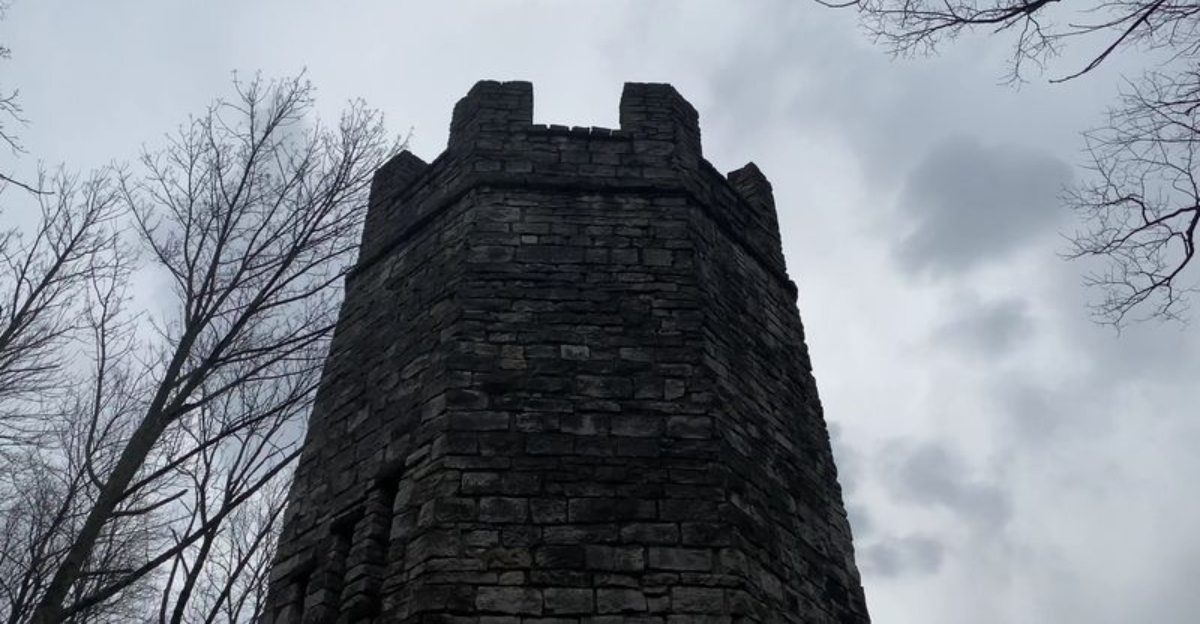
A stone tower hidden inside an Ohio park already sounds like the start of a good local legend.
This one adds a wooded hilltop, a sealed entrance, scorched rock, and the kind of backstory that makes a short walk feel much more memorable than expected. It is part history, part mystery, and part “why is this suddenly giving old black-and-white movie energy?”
The setting does plenty of work before you even learn the story. Trees crowd the trail, the tower waits at the top, and the whole place has that quiet, slightly eerie mood that makes visitors slow down and look twice.
It is not a huge landmark, and that is part of the appeal. This Kettering spot proves that Ohio’s strangest little places do not need grand entrances to leave an impression, just a good story, a short trail, and one very curious tower.
The First Glimpse: Finding the Tower
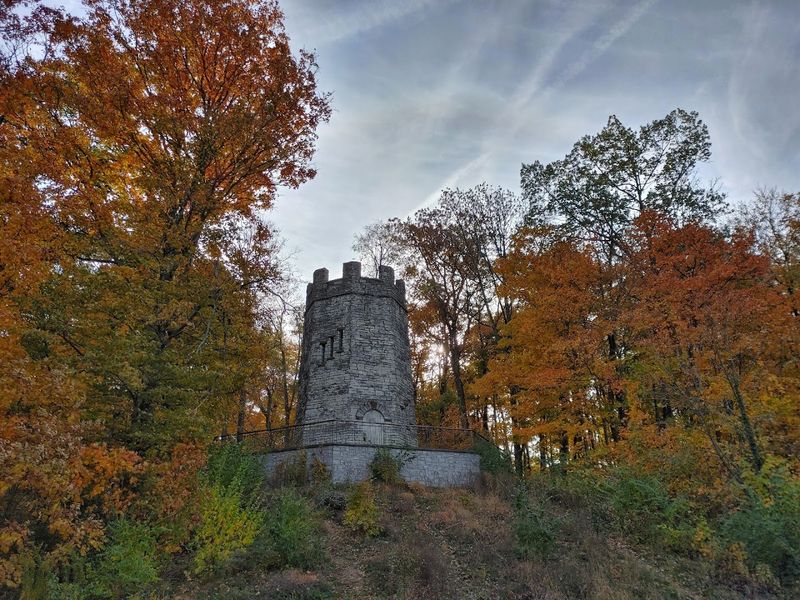
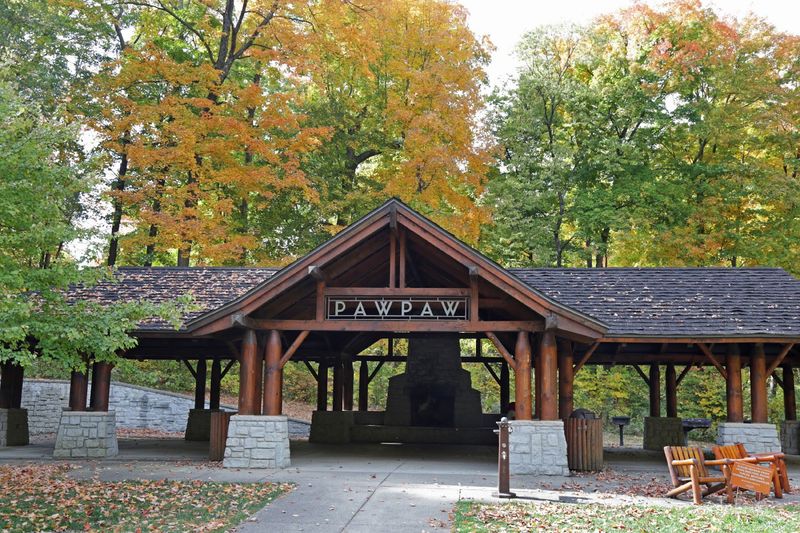
The trail keeps the surprise tucked away just long enough to make the reveal feel earned. You start near the Paw Paw Camp area at Hills and Dales MetroPark, following a shaded path that begins like a perfectly normal walk through the trees.
Then the route starts climbing, and the mood shifts a little. The incline is noticeable but manageable, wide enough for people to walk together and easy enough for kids to handle with a bit of help.
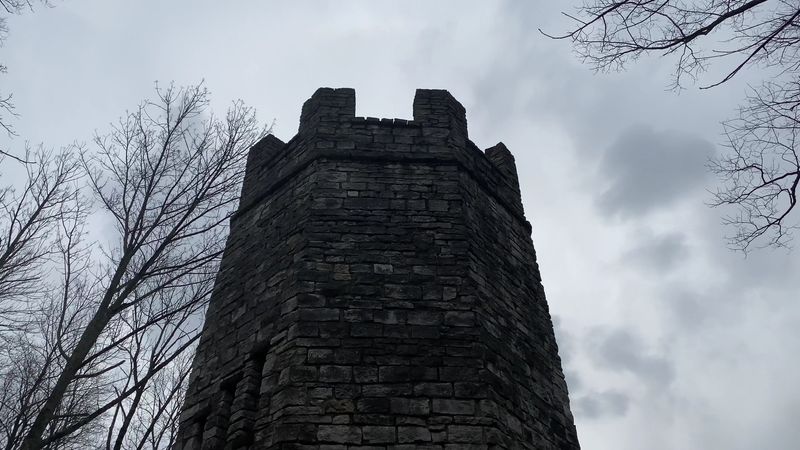
Just when the woods have done a fine job of making everything feel quiet and hidden, the tower appears. It is not huge, but sitting up on the hilltop gives it a strange little authority, like it has been watching the valley longer than it cares to admit.
The dark stone, wooded setting, and lightning-scarred reputation give the whole scene more atmosphere than you expect from such a short walk. It is odd, memorable, and just dramatic enough to make your camera work overtime.
For the easiest approach, start near the Paw Paw entrance at Hills and Dales MetroPark, 2471 Deep Hollow Rd, Oakwood, OH 45419.
The Real History Behind the Name
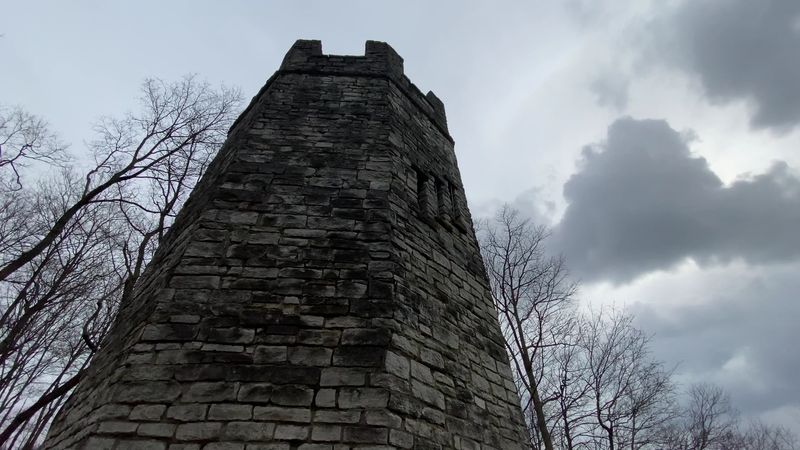
Despite the dramatic nickname, this structure was not built by a mad scientist with a lightning rod obsession.
The tower was completed in 1941 as part of New Deal-era park work in Hills and Dales Park, standing as a stone observation tower overlooking Patterson Boulevard and the surrounding golf course area.
The National Youth Administration is tied to the tower’s construction in local history accounts, while a historic landscape report identifies it as part of WPA work in the park. Either way, the real origin is much more practical than the nickname suggests.
So where does the Frankenstein name come in? Local legend and teenage storytelling did most of the heavy lifting there.
The dark stone, the sealed door, the hilltop isolation, and the 1967 lightning incident all combined to give the tower its spooky reputation over time.
History has a way of picking up ghost stories the way a wool sweater picks up lint: quietly, steadily, and almost without anyone noticing until it is already covered.
The Incident That Changed Everything
Here is the part of the story that genuinely makes the hairs on your arms stand up a little.
In 1967, a young woman and her companion took shelter inside the tower during a storm, and the tower was struck by lightning. The incident became the defining event in the tower’s modern history.
Before that, barriers had been placed over the entrance to keep people out at certain times, but visitors kept finding ways inside, again and again, determined to explore it.
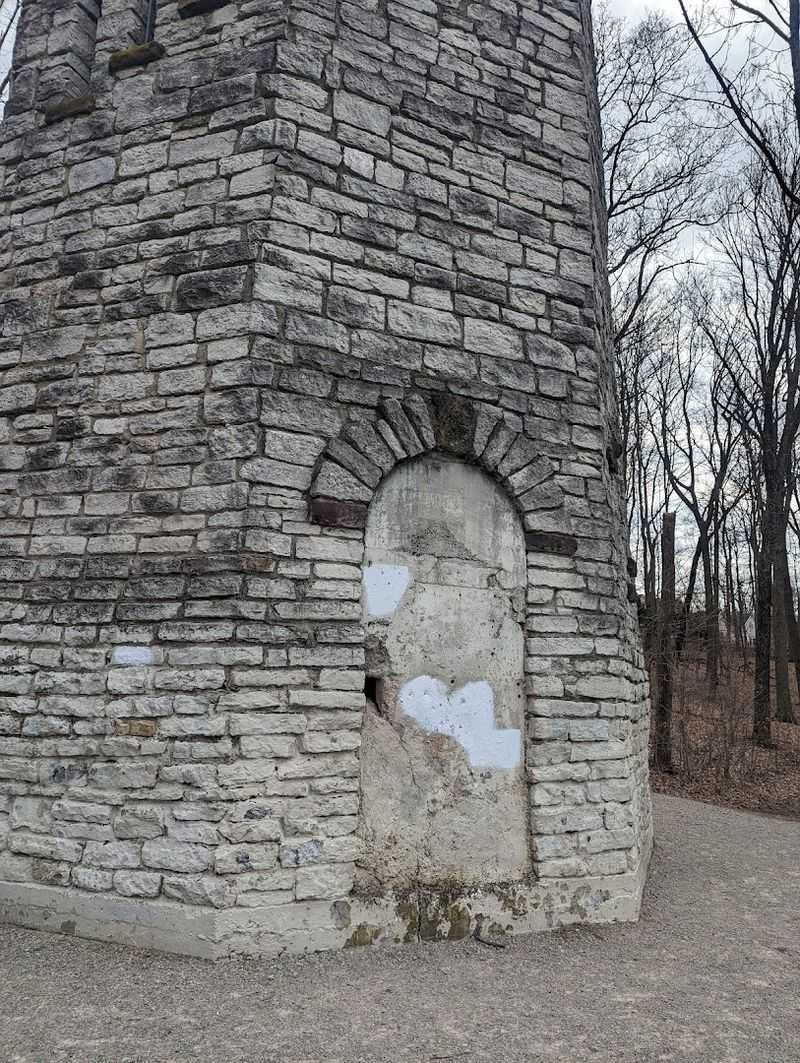
After the 1967 incident, access to the tower was eventually blocked more permanently. The doorway was filled completely with concrete, sealing the tower shut in a way that no amount of curiosity or determination could undo.
That sealed entrance is now one of the most photographed features of the entire site. There is something deeply unsettling about a door that was closed permanently because of something that happened inside.
Every time I looked at that flat slab of concrete where a door should be, I felt the weight of that decision in a way that no sign or plaque could fully explain.
What the Tower Looks Like Up Close
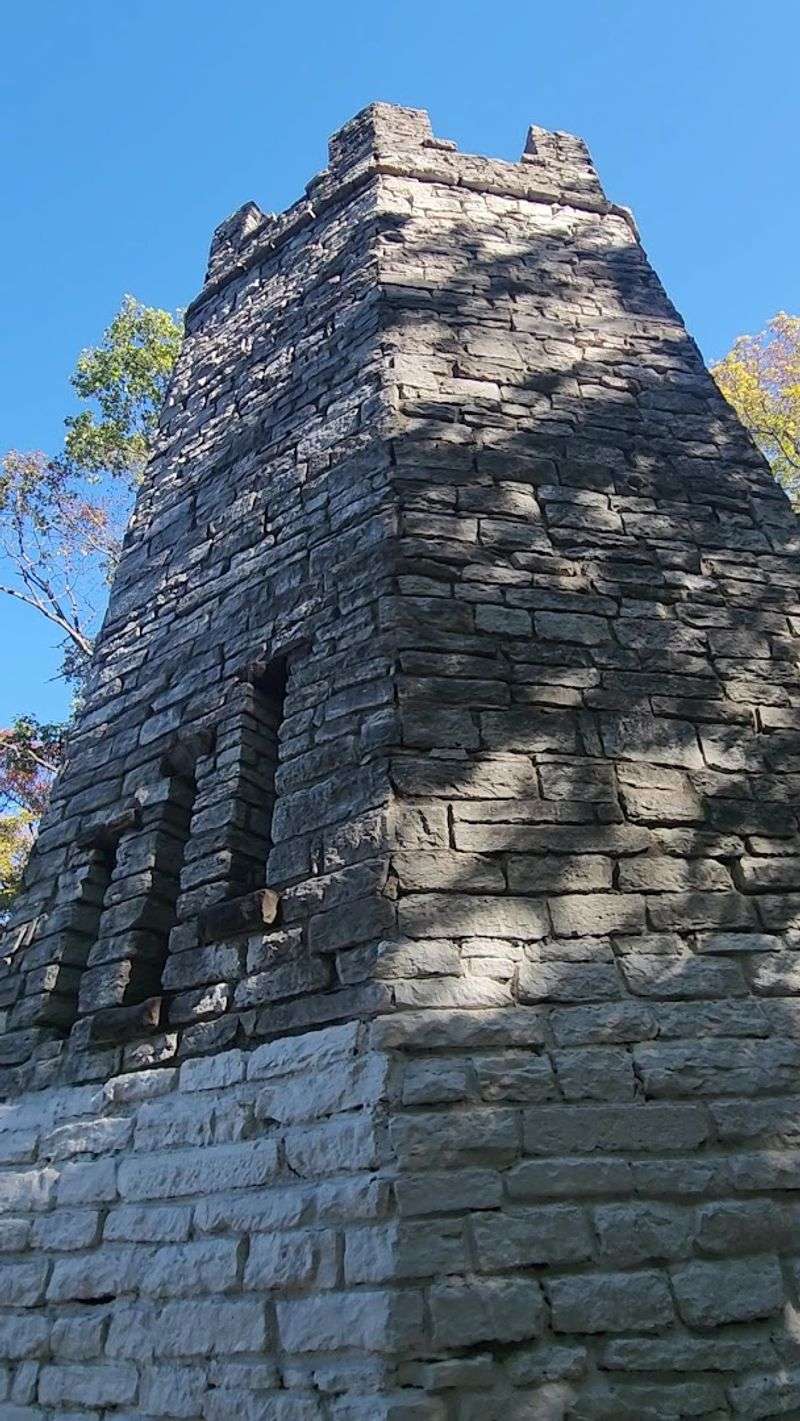
Up close, the tower has a texture that photographs simply cannot capture.
The stone is rough and uneven, the kind of masonry that was built to last rather than to impress. Darkened sections of the rock, along with the tower’s lightning history, make the lower painted portion look almost out of place by comparison.
The structure sits on the very crest of the hill, and the base area offers a natural lookout point even without being able to climb inside. You can see the golf course laid out below, and on a clear day the view across the valley is genuinely impressive.
A set of stairs leads up to the sealed entrance, and newer railings have been added along the pathway to make the approach safer and more accessible.
The tower does not try to be pretty. It is blunt and solid and a little severe, which somehow makes it more interesting than a polished attraction would be.
Standing next to it, I kept thinking about how different this spot must have felt in the early 1940s, before the legends, before the concrete, and before the name that everyone now knows it by.
The Atmosphere on the Trail
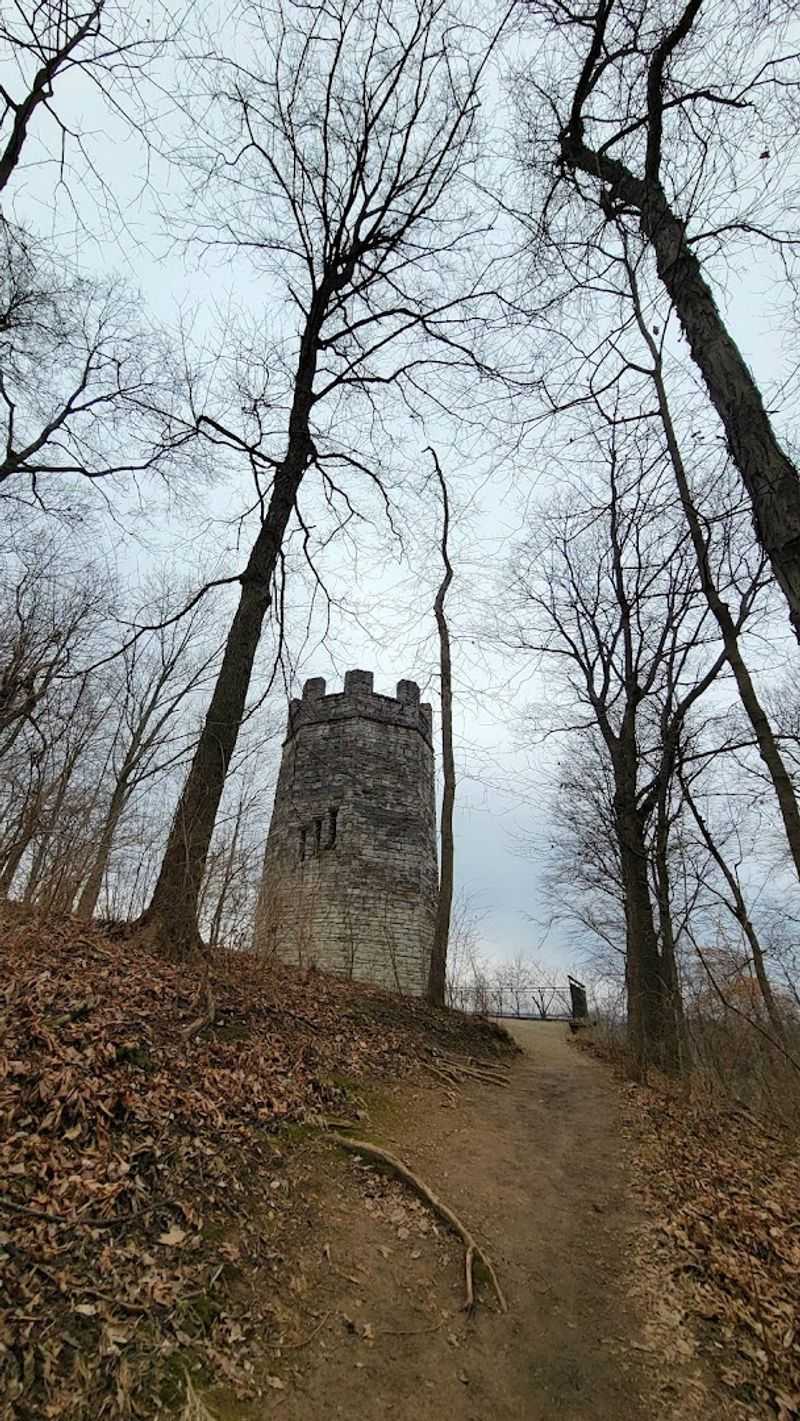
The walk to the tower is short, but the atmosphere shifts noticeably as you climb.
The trail from the PawPaw Pavilion is mostly shaded, with a canopy of trees that keeps it cool even on warm days. The path is well-maintained and wide enough for two people to walk comfortably side by side, which makes it a solid choice for families with young kids.
As you move uphill, the sounds of the park fade behind you. The woods get quieter, the light gets a little dimmer under the thicker canopy, and by the time the tower comes into view, the mood has shifted from pleasant afternoon stroll to something with a bit more edge.
I visited on a cloudy afternoon, and the overcast sky added a layer of atmosphere that I honestly could not have planned better.
The trail itself is not technically challenging, but the steady uphill grade means you will feel it in your legs by the time you reach the top. Pack comfortable shoes and maybe some bug spray, because the bugs in this park are enthusiastic and do not care about your plans.
The Park Beyond the Tower
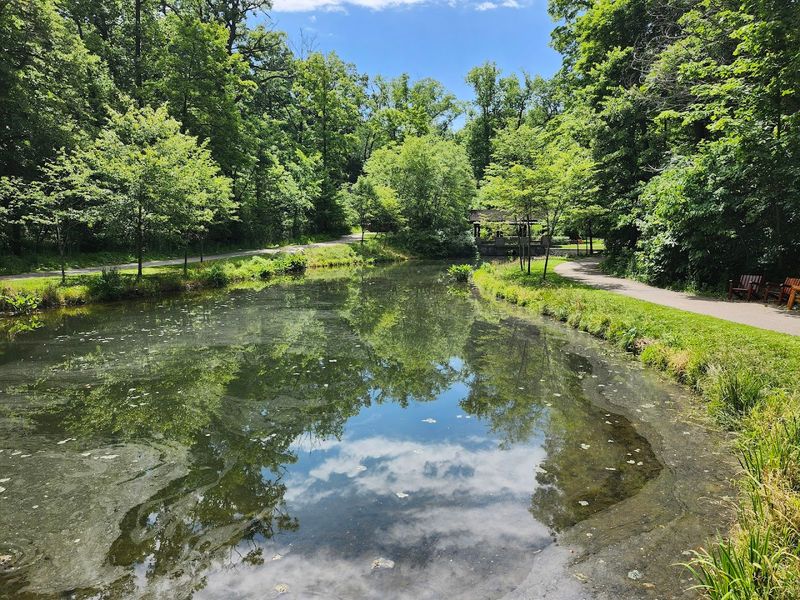
The tower gets all the attention, but Hills and Dales MetroPark is genuinely beautiful on its own terms.
Beyond the hilltop, the park opens up into a network of trails that wind through forests, past streams, and through wetland areas that feel completely removed from the suburban neighborhoods just outside the park boundaries.
One of the most peaceful spots is the pond area, which has Adirondack chairs and swings arranged around the water’s edge. There is even a small waterfall feeding into the pond, which adds a gentle, steady sound that makes the whole area feel like a natural retreat.
Fishing is not allowed, but honestly, just sitting by the water is enough. The reflection of the trees on the surface and the sound of the waterfall do a better job of clearing your head than most wellness apps ever could.
Some of the paths near the pond are paved or covered, making them accessible for strollers or anyone who prefers a smoother surface.
The park also has restrooms, a covered pavilion, and on-site parking, so the practical side of visiting is well sorted before you even start exploring.
The Patterson Statue and Other Nearby Finds

The tower is the main draw, but the area around Hills and Dales MetroPark has a few other things worth slowing down for.
Just down the road from the castle, there is a statue of John H. Patterson, the founder of the National Cash Register Company, who had deep ties to the Dayton area.
The statue sits along a scenic stretch of road that winds through wooded terrain, and it is worth a brief stop if you are already in the neighborhood.
The road itself is part of the appeal. The winding, tree-lined route through the park has a peaceful, old-money character that feels like it belongs in a different era entirely.
Several visitors have mentioned that simply driving the road through the park is a satisfying experience, even without stopping at the tower. The canopy of trees overhead and the curves in the road give it a sense of seclusion that is rare this close to a city.
For those who enjoy connecting historical dots, the Patterson legacy and the tower’s Country Club origins are part of the same early twentieth-century story of Dayton’s prosperous west side, and that context makes the whole visit feel richer.
Visiting With Kids, Dogs, and First-Timers
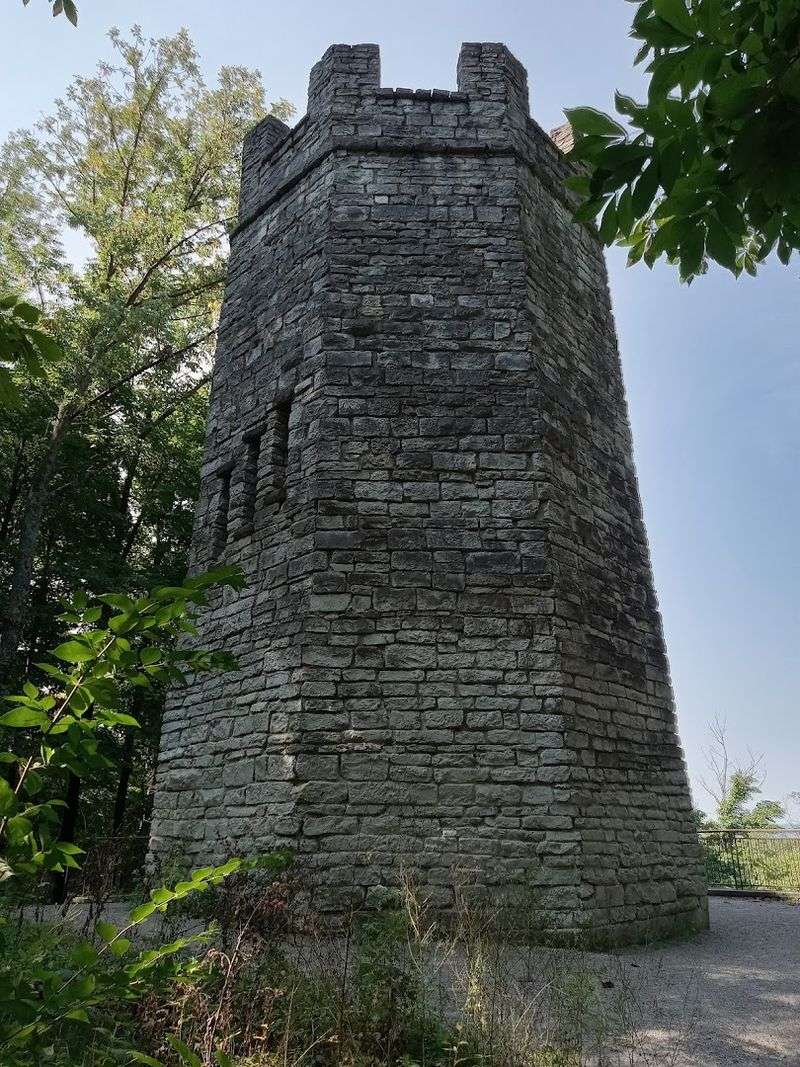
Few places manage to be both family-friendly and genuinely interesting at the same time, but this one pulls it off.
The trail to the tower is manageable for young children, and the wide path makes it easy to keep everyone together. Dogs are welcome on leash, and the shaded trail is a comfortable walk for pets even on warmer days.
The sealed entrance means there is no risk of anyone wandering into a dangerous structure, which takes a practical worry off the table for parents. Kids can get close to the tower, touch the stone walls, and hear the story without any safety concerns.
For first-time visitors, the most common piece of advice from people who have been before is to park near the PawPaw Pavilion and look to the left for the trail entrance. The parking area is not always obvious, and a few people have ended up at the wrong lot and had to backtrack through the woods.
The total walk from the parking area to the tower and back is roughly twenty minutes at an easy pace, which makes it a perfect short adventure for road trips, lunch breaks, or anyone who wants a quick dose of fresh air and local history.
The Spooky Reputation and Local Legends
Every town has a place that teenagers dare each other to visit after dark, and in Kettering, this tower has held that title for generations.
The combination of the name, the sealed entrance, the scorched stone, and the 1967 incident created a feedback loop of local legend that has kept the stories alive for decades.
People who grew up in the area remember hearing about it as kids and eventually making the trip themselves, usually with a group of friends and a lot of nervous laughter.
The spooky atmosphere is not manufactured or performed. It comes from the actual history of the place, the real decision to seal the door permanently, and the genuine sense of isolation you feel standing on that hilltop with the wind moving through the trees.
I did not see any ghosts during my visit. But I will say that when a cloud passed over the sun and the light changed suddenly while I was standing next to the tower, I moved a little faster down the trail than I had on the way up.
Some places earn their reputations honestly, and this tower is one of them.
Practical Tips Before You Go
A little preparation goes a long way at this spot, so here is what actually helps before you make the trip.
The park is free to visit and no tickets are required. You cannot enter the tower, but walking around the exterior and taking in the view from the hilltop is completely open to visitors.
Parking near the PawPaw Pavilion is the best starting point for the tower trail. The MetroPark website at metroparks.org has current trail maps and any updated access information worth checking before you head out.
Bug spray is a genuine recommendation, not just a throwaway tip. The wooded trails are beautiful, but the insects treat the area like a personal resort and they will find you quickly if you are not prepared.
Comfortable walking shoes are enough for the trail; nothing technical is needed. The path is well-maintained with newer railings along the steeper section near the tower.
The park is open year-round, and fall is a particularly good time to visit when the trees along the trail turn and the whole hillside looks like it was designed specifically for dramatic photographs of a creepy stone tower.