
This Ohio Children’s Museum Is A Secret Wonderland With 3 Floors Of STEAM Play
Most historic mansions ask kids not to touch anything. This one practically dares them to touch everything.
Behind the stately brick exterior, three floors are packed with places to climb, splash, build, paint, and pretend.
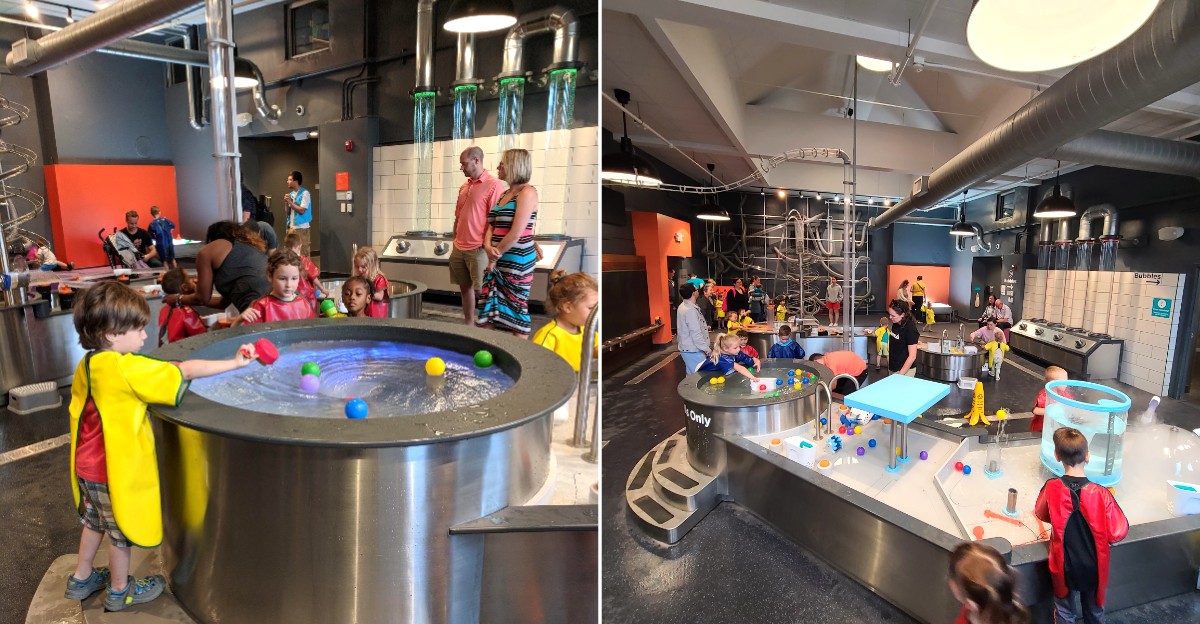
One room has a giant wooden clubhouse. Another sends kids straight toward water tables and bubbles.
Somehow, the learning sneaks in between all the running around.
That contrast is what caught me first. You walk into a piece of Cleveland, Ohio history and end up following kids from one hands-on surprise to the next.
The mansion is only the beginning, so let’s head upstairs and see what each floor is hiding.
A Historic Mansion With A Playful Second Act
Old houses usually come with velvet ropes and “do not touch” signs.
At The Children’s Museum of Cleveland, touching is basically the whole point.
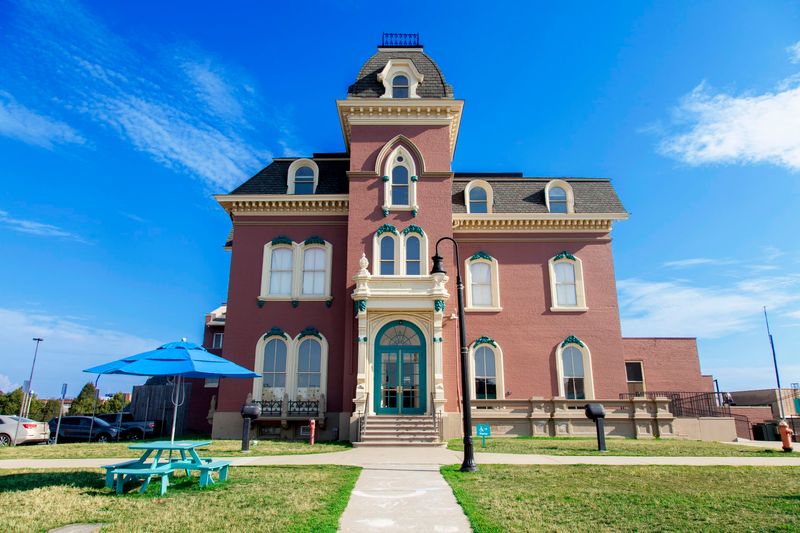
The museum now fills the historic Stager-Beckwith Mansion on Euclid Avenue, one of the surviving homes from Cleveland’s famous Millionaires’ Row.
The house dates to the 1860s and went through several lives long before kids started racing through its exhibit rooms.
Beginning in the early twentieth century, it served as the University Club, which expanded the property with spaces that included a grand ballroom, dining rooms, sleeping quarters, and athletic facilities.
After an extensive restoration, the Children’s Museum opened its new permanent home here in November 2017.
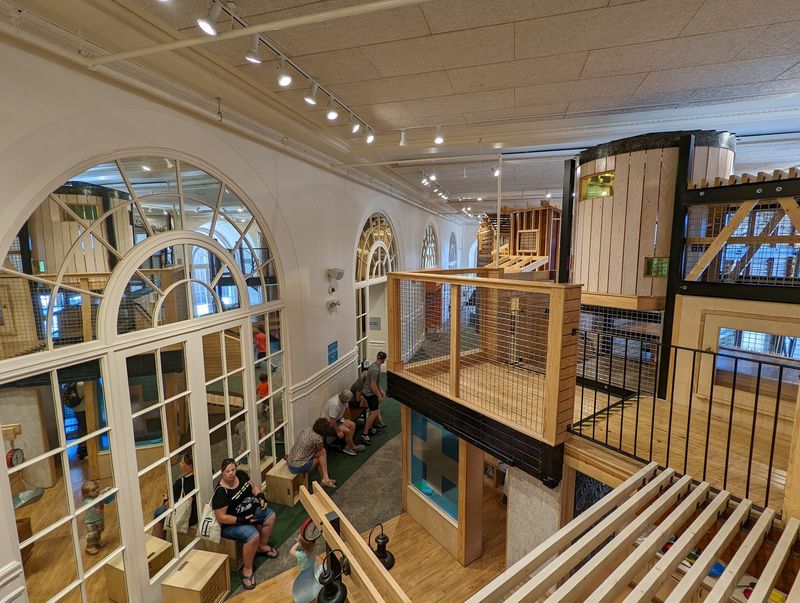
I love how that history still peeks through. Tall windows, staircases, and architectural details frame rooms now filled with climbing structures, water experiments, art projects, and pretend play.
The contrast is half the fun. One minute you are noticing the bones of an old Cleveland mansion, and the next you are following a child toward a two-story climber.
The exhibits spread across three floors, with an elevator connecting the levels for anyone who needs it.
You will find this very different kind of historic house at 3813 Euclid Ave, Cleveland, OH 44115.
A Wooden Clubhouse Inside The Old Ballroom
Grand ballrooms and climbing ramps are not a combo I expected.
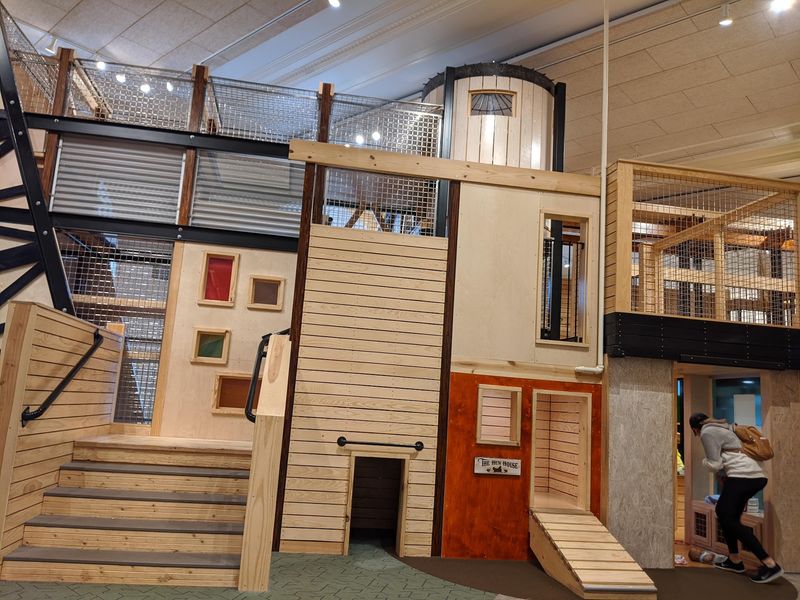
Yet right in the middle of an enormous former ballroom stands a huge wooden clubhouse called Adventure City, and it steals the show.
The structure has multiple levels connected by ramps, stairs, bridges, and cozy little lookouts. My young helpers zoomed up one side, peeked through windows, and slid back down before I even found my footing.
What I appreciated most was how the design quietly teaches engineering. Kids can see how beams support platforms and how ramps change the way they move from one level to the next.
Around the base, the clubhouse connects to pretend play corners, so a climb can turn into a trip to the market or a checkup at the doctor in seconds.
Parents can watch from open sightlines, which made me feel relaxed while the kids explored. Staff also circle the area often, tidying up and keeping traffic flowing.
My advice is to head here early, since this room fills quickly by late morning. Comfortable shoes help too, because you might end up crawling after a toddler who has decided the top level is home now.
Splashy Science In The Water Room
Fair warning: someone in your group is going to get wet.
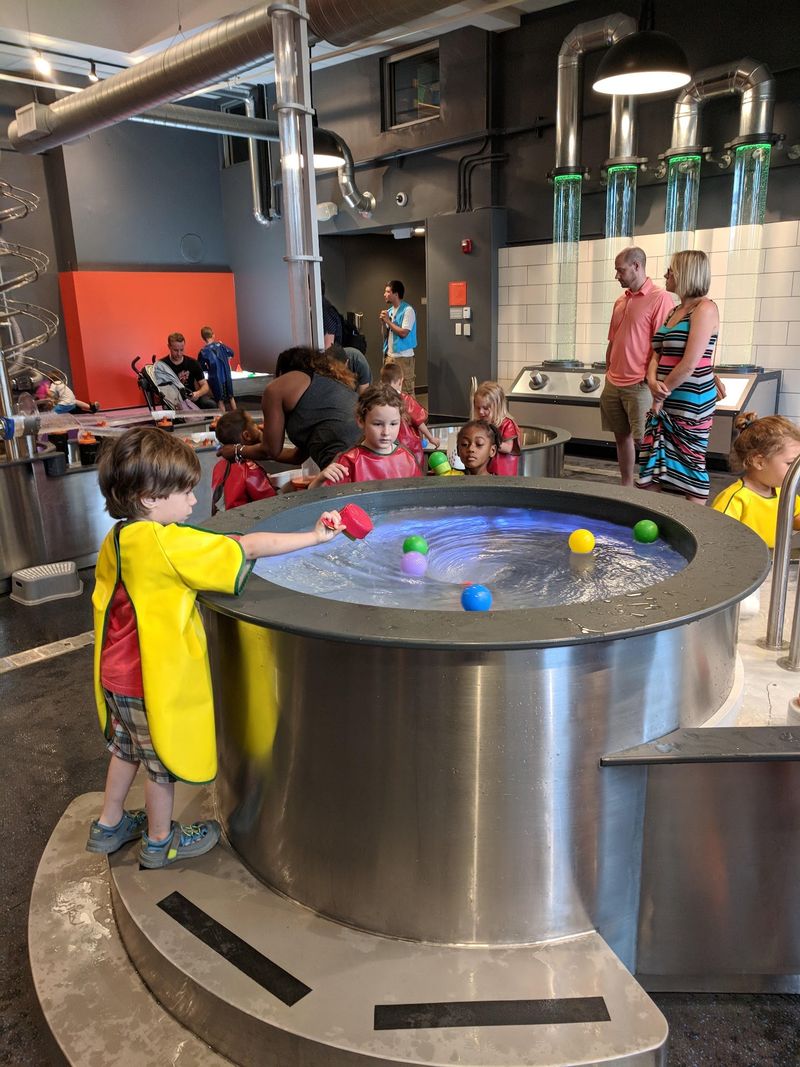
The water room is one of the busiest spots in the whole museum, and after ten minutes there, I understood why.
Long tables and channels let kids steer the flow of water, build dams, and send floating objects racing downstream. Gates and spinning wheels turn every splash into a small experiment about force and motion.
The museum provides waterproof smocks, which help a lot. Even so, I watched plenty of enthusiastic toddlers soak their sleeves within minutes.
Bring a spare shirt and a small towel. That one tip saved our car ride home from being a very soggy affair.
Staff members keep a close eye on the room, wiping up puddles and resetting pieces so the fun keeps moving. I was impressed by how clean the floors stayed despite the constant splashing.
Little ones under two seemed just as happy as the older kids here, which makes it a smart stop for families with a wide age range. Siblings of different ages can play side by side without anyone feeling left out.
Honestly, I spent more time playing with the water wheels than I would like to admit.
Bubbles That Steal The Spotlight
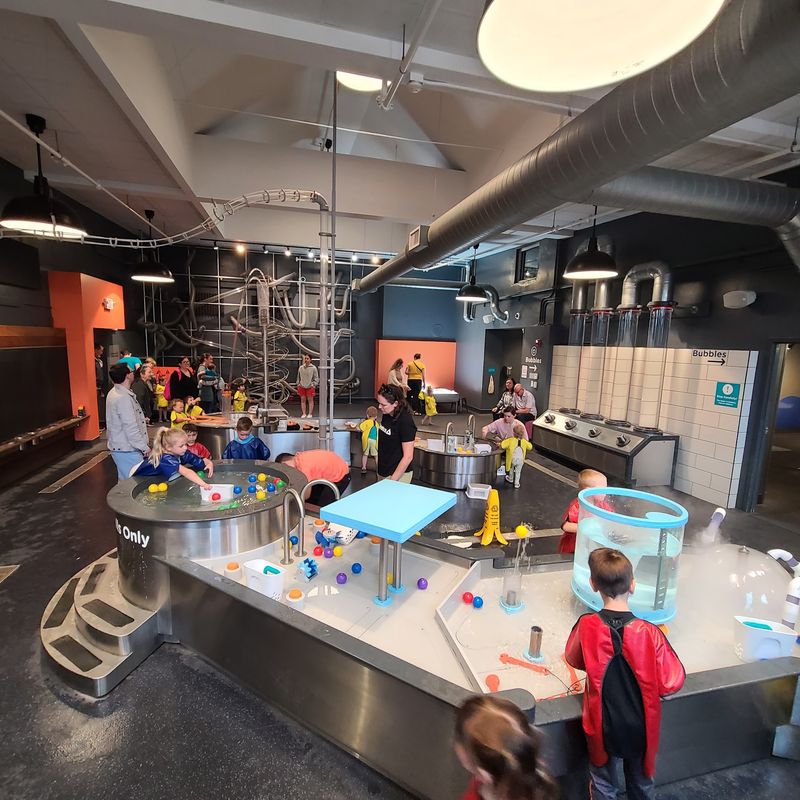
Pop quiz: how big can a bubble get before it bursts?
The bubble room lets kids find out through plenty of happy trial and error.
Right next to the water area, this space is filled with wands, frames, and trays of soapy solution. Kids dip, pull, and wave to create bubbles in all shapes and sizes.
I watched a little girl stretch a bubble wall almost as tall as she was, then gasp when it drifted away. Moments like that feel magical, but they are also real science about surface tension and air.
The best part is that bubbles work for every age. Babies stare, preschoolers chase, and older kids start experimenting with wand shapes and slow pulls.
Grown-ups get pulled in too. I confess I spent a solid ten minutes trying to perfect a giant bubble while my group had already moved on.
Floors can get slippery, so walk carefully and keep an eye on small runners. The smocks from the water room work here as well.
If your kids love this room, try mixing your own bubble solution at home with dish soap and water. It is a cheap way to keep the fun going long after you leave Cleveland.
Curtain Up On The Theater And Music Area
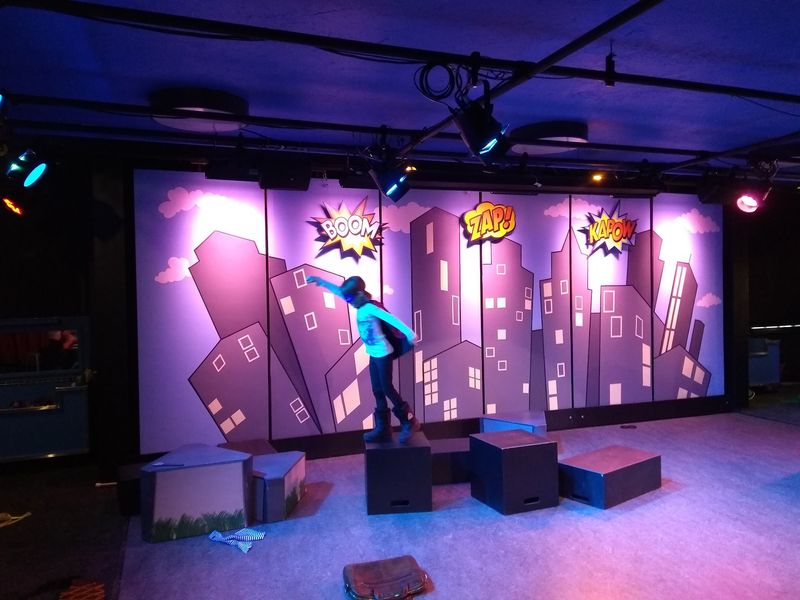
Lights, costumes, and an eager cast of preschoolers made the theater my favorite surprise.
Set off the main play area, this large room comes with a stage, a pretend sound board, and racks of dress up clothes.
Kids can slip into costumes, grab a microphone, and put on a show for anyone willing to sit in the audience. I was happy to take a seat, and I clapped through at least six encores.
The pretend sound board was a hit with the kids who prefer working behind the scenes. Pressing buttons and sliding switches, they ran the big production with total confidence.
Shadow puppets add another layer of storytelling. Holding shapes in front of a light, children learn how light and shadows work while making up silly plots.
Across from the theater sits a music area where kids can tap, shake, and strum instruments. It gets noisy, of course, but it is the joyful kind of noise.
This part of the museum suits kids who love to perform or who need a break from climbing. Budget extra time, because once the costumes come out, nobody seems in a hurry to take them off.
An Upstairs Studio For Messy Masterpieces
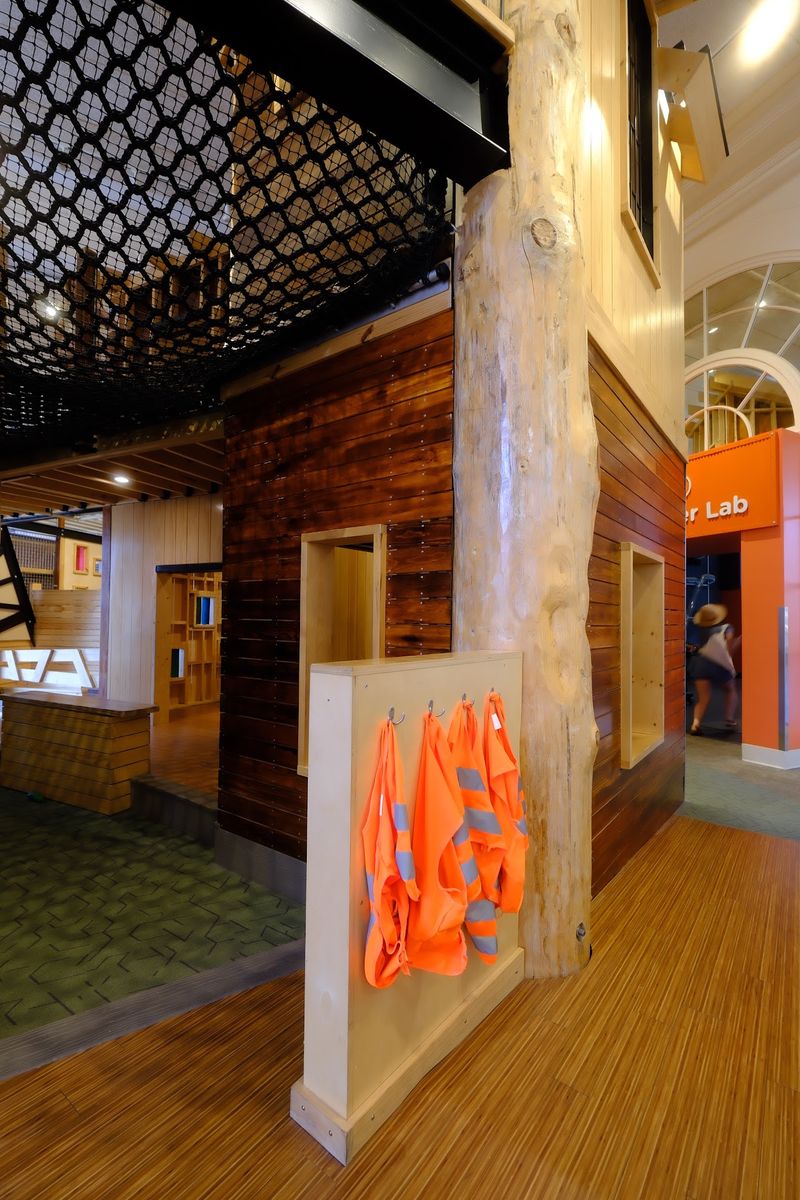
Glitter, glue, and big ideas fill every table upstairs.
The arts and crafts room is one of the roomiest spaces in the museum, and it gives young artists plenty of elbow room to create.
On my visit, the tables were stocked with paper, markers, recycled materials, and a project station with simple instructions. Kids could follow the idea of the day or ignore it completely and invent something of their own.
The activities rotate, so repeat visitors often find something new. That makes this room a big reason families keep coming back.
I loved how the space mixes art with a little engineering. One boy near me spent twenty minutes building a cardboard car, testing whether the wheels would actually roll.
Staff keep supplies organized and help when kids get stuck, without taking over. It struck a nice balance between guidance and freedom.
Expect to carry home at least one masterpiece. I recommend bringing a tote bag, since crafts can be a bit bulky or still slightly sticky.
Older kids who feel too big for toddler play tend to settle in here. Creativity has no age limit, and the projects on these tables prove it.
The Meadow Keeps Things Soft For Babies
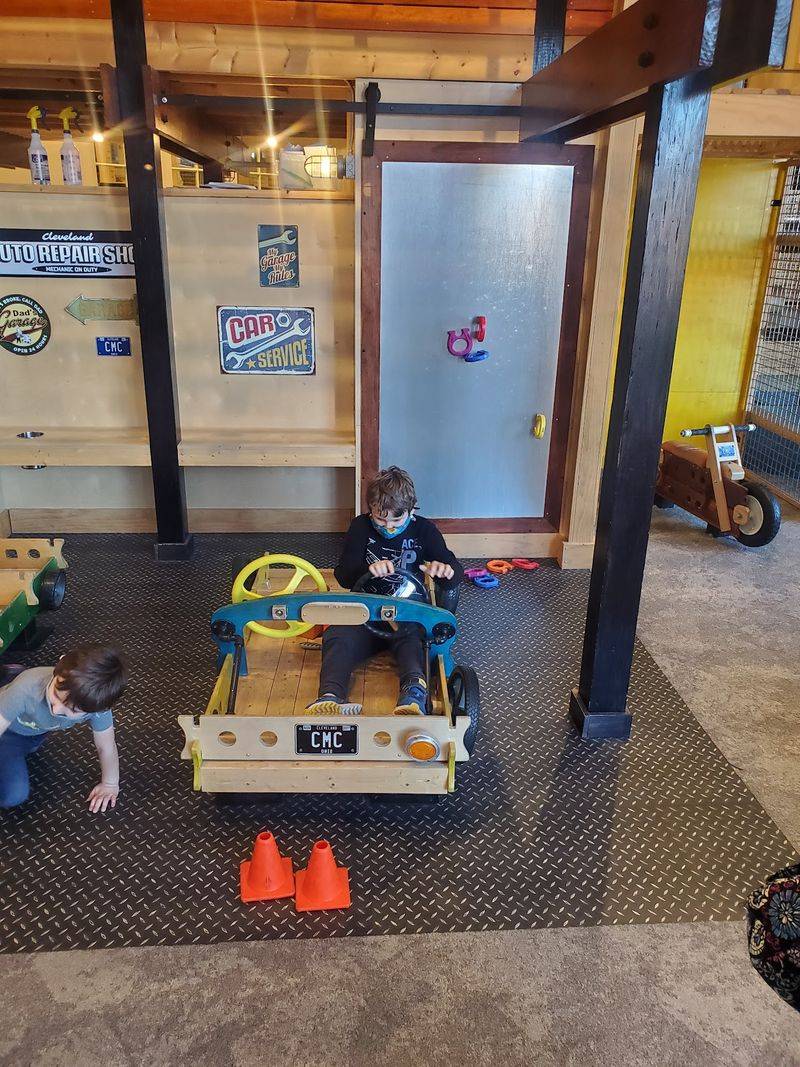
Soft floors and gentle colors greet the youngest visitors here.
The Meadow is designed for babies and toddlers from birth to about three years old, and it offers a calm escape from the busier rooms.
Cushioned floors make crawling and wobbly first steps less stressful. A small slide, simple climbing shapes, and plenty of age-appropriate toys keep little hands busy without overwhelming them.
There is also a cozy reading area, which I found perfect for a quiet book break. Parents can sit comfortably while their little ones explore nearby.
What I liked most was the peace of mind. Bigger kids stay out, so tiny explorers do not have to dodge speedy runners.
The space also works well for sensory play, with textures, sounds, and shapes that help babies learn about the world. Early STEAM learning starts with simple things like stacking, touching, and noticing.
Since shared toys see a lot of little mouths, I suggest washing hands before and after playtime. The staff clean often, but extra care never hurts, especially during cold season.
For families with a baby and an older sibling, trading turns between the Meadow and the main rooms works well. Everyone gets a slice of the fun.
Dollhouses, Books, And Quiet Corners
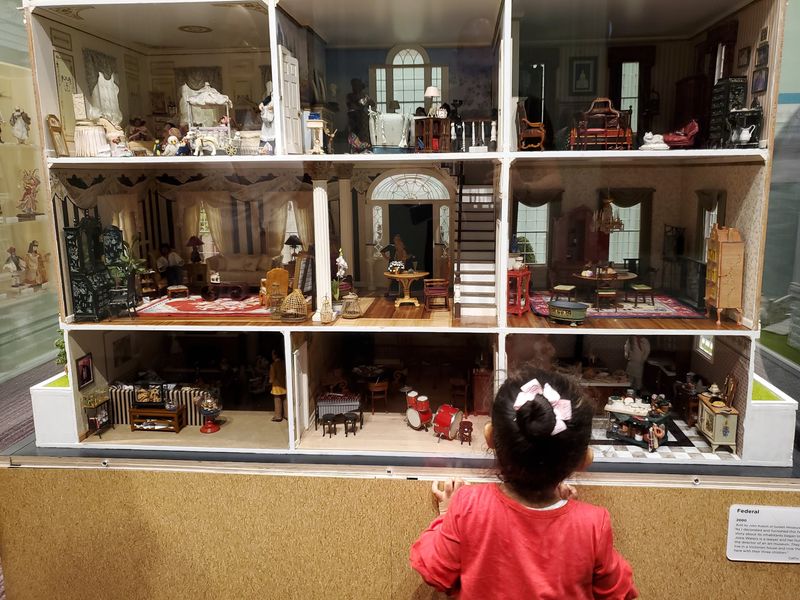
Tiny furniture has a way of making grown-ups lean in close.
At the very top of the museum, Making Miniatures fills a series of colorful rooms with detailed handmade dollhouses.
There are four galleries to explore, including a miniature version of the Stager-Beckwith Mansion itself. Kids can use flashlights to hunt for hidden details and look for the museum logo tucked into each display.
The exhibit is not just about looking. BrickWorks and BrickWorks Jr. give children another place to build structures of their own and experiment with space, design, and architecture.
The museum has quieter corners elsewhere too.
Adventure City includes a reading nook where families can slow things down between climbs and pretend-play adventures.
On Level One, across from Arts & Parts, the Sensory Friendly Room offers an even calmer break. It has special lighting, calming music, and sensory-support resources for visitors who become overwhelmed or simply need a little breathing room.
Noise-canceling headphones, sensory toys, and visual supports are also available from the front desk.
Those spaces may not generate the same squeals as the water tables, but they matter.
A few quiet minutes with a book, a miniature room, or softer lighting can make the rest of a busy museum morning much easier.
Smart Tips For A Smooth Morning Visit
Timing is everything at this museum.
Doors open at 9 am and close at 1:30 pm, and the museum is closed on Thursdays, so check the current schedule before you go.
I arrived right at opening, and within an hour the rooms were noticeably fuller. Weekends and school breaks get especially busy, so a weekday morning is your best bet for more space.
Tickets were about $15 per person during my visit, and adults need tickets too. Buying online ahead of time saves a step, and your purchase can be applied toward a membership if you plan to return.
Parking is free in the lot, which is a welcome perk in the city. The gift shop sells a few snacks, but there is no full cafe.
Packing a lunch is smart. The eating area has high chairs and a microwave, which made our midday break easy.
Remember spare clothes for the water room and a bag for craft projects. The museum also hosts birthday parties in a private party room.
By the time we left, my crew was tired, happy, and already planning a return trip. For a morning of STEAM play inside a piece of Ohio history, this mansion on Euclid Avenue earns its glowing reputation.