
This Ohio Glass Heritage Museum Makes A Fascinating 2026 Day Trip
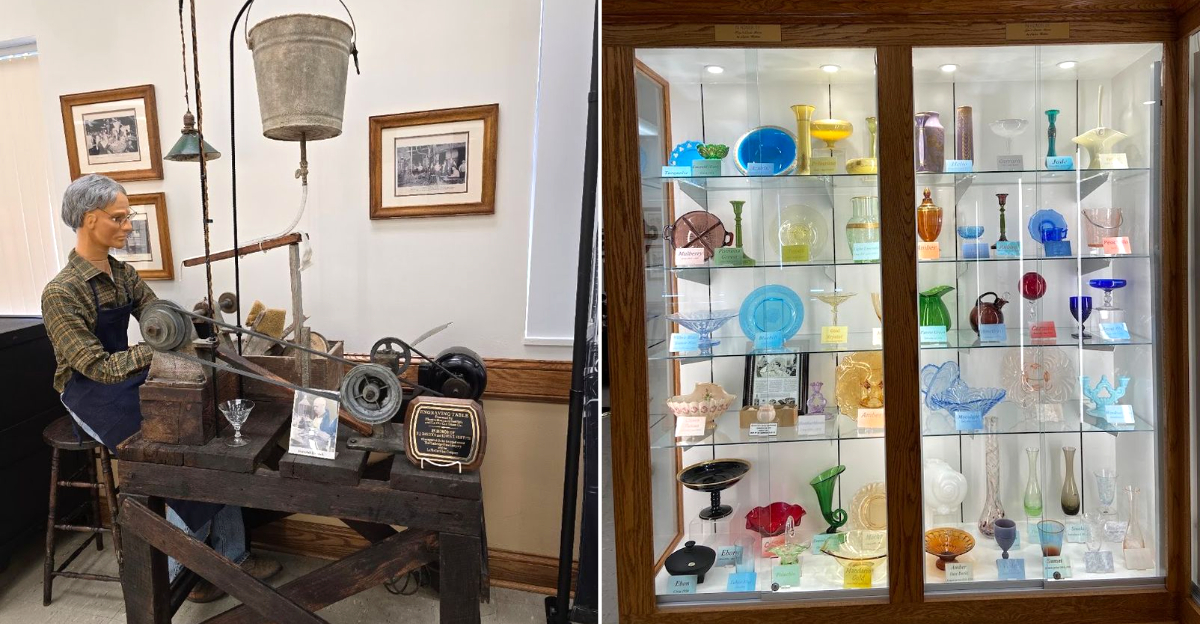
Some small museums need about five minutes to prove you seriously underestimated them.
This eastern Ohio glass museum is one of those stops.
You walk in expecting a few pretty display cases, and then the colors start glowing, the guide starts connecting the pieces to real local history, and suddenly you are paying close attention to glassware like it has been personally waiting for you.
I love places that sneak up like that.
For a 2026 day trip with beauty, craftsmanship, and a surprisingly personal story behind every cabinet, this Ohio museum deserves a real spot on the list.
A First Look At The Museum And What To Expect
Cambridge has the quiet confidence of a town that does not need to wave both arms to get your attention.
The National Museum of Cambridge Glass follows the same approach, looking modest from the street before revealing rooms filled with color, craftsmanship, and far more local history than I expected.
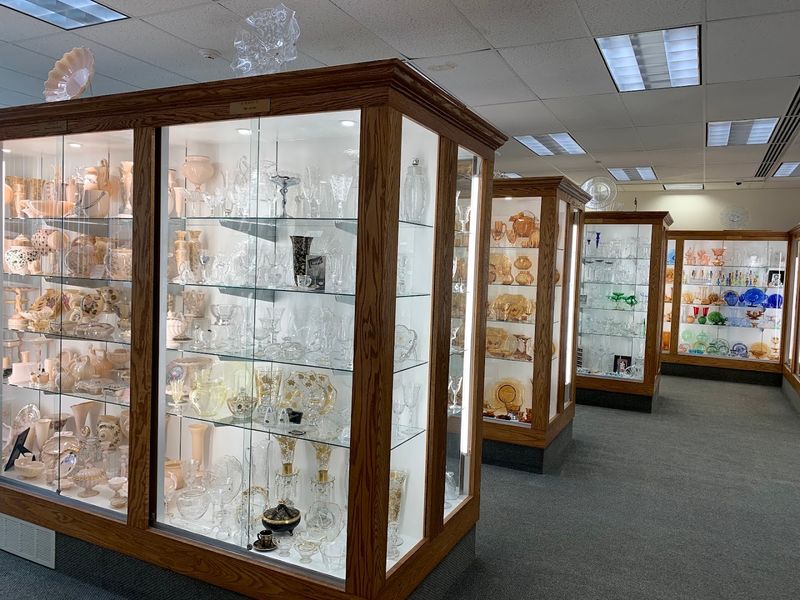
The first illuminated cabinets change the mood almost immediately. Rows of glass catch the light in deep blues, warm ambers, vivid reds, and delicate pastel shades, making a simple display case feel much more dramatic than it has any right to.
I arrived expecting to admire a few beautiful objects and move along at a sensible pace. Instead, I kept stopping to inspect etched patterns, unusual stems, decorative details, and colors that seemed to shift whenever I changed position.
The museum preserves the legacy of the Cambridge Glass Company, which produced handmade glassware from 1902 until its permanent closure in 1958.
More than 10,000 pieces help connect the finished objects with the designers, factory workers, tools, and techniques behind them.
Knowledgeable volunteers add warmth to the experience by answering questions and pointing out details that are easy to miss.
Their enthusiasm makes the collection feel personal rather than distant, especially when they begin connecting individual pieces to the people and working life of Cambridge.
That combination turns a small museum into a surprisingly substantial stop. You may enter because the glass looks beautiful, but you leave understanding why an entire Ohio community remains proud of the people who made it.
Address: 136 S 9th St, Cambridge, OH 43725
The Rich History Behind Cambridge Glass
The Cambridge Glass Company began production in 1902 and became one of the most respected handmade glassware manufacturers in the United States.
At its height, the factory employed as many as 700 workers across three shifts and operated 56 active glass pots.
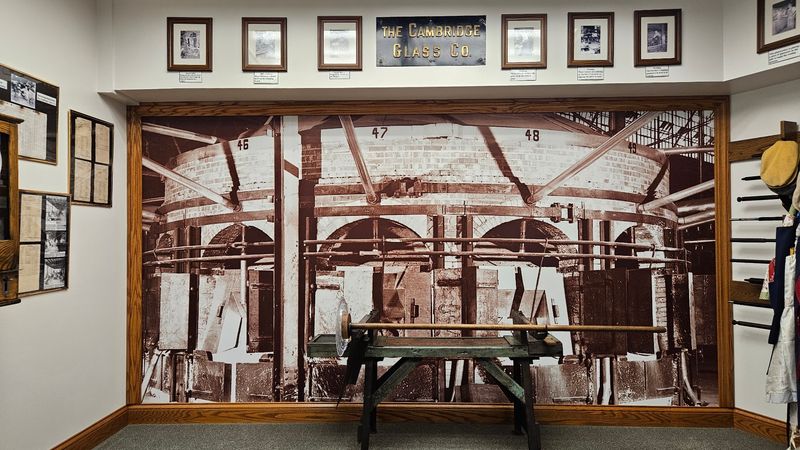
The museum tells this story in a way that feels personal rather than textbook-dry, connecting the finished glassware with the people, equipment, designs, and working life behind it.
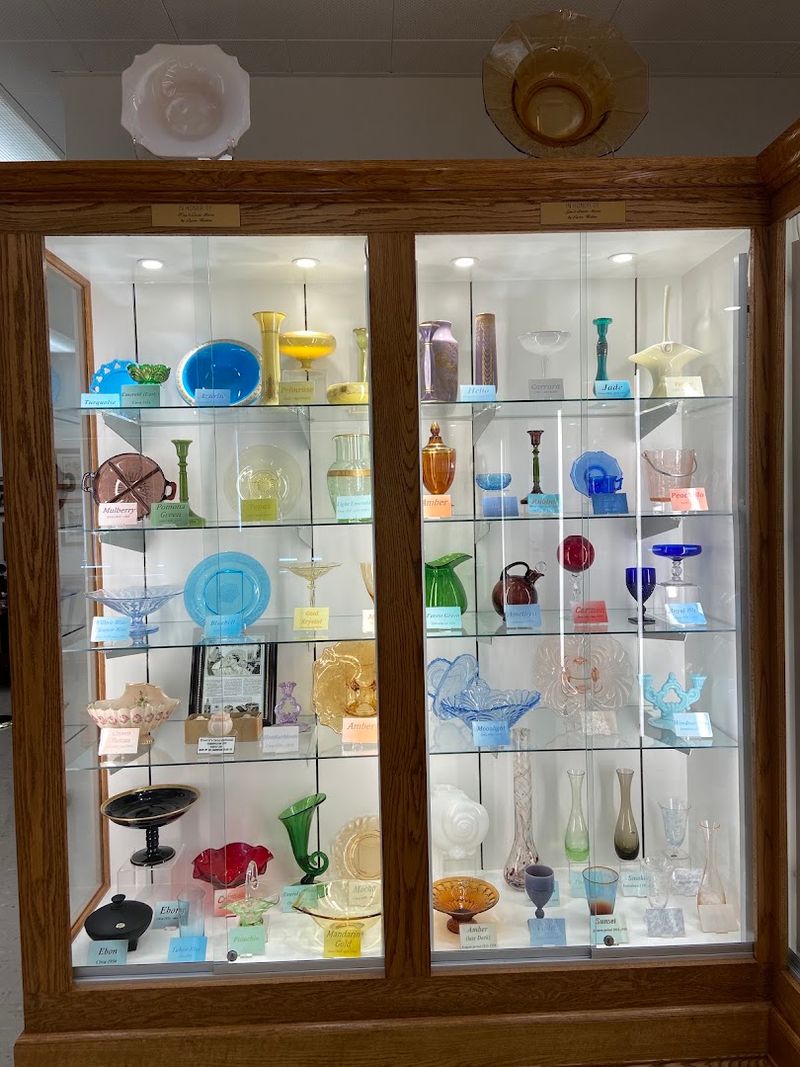
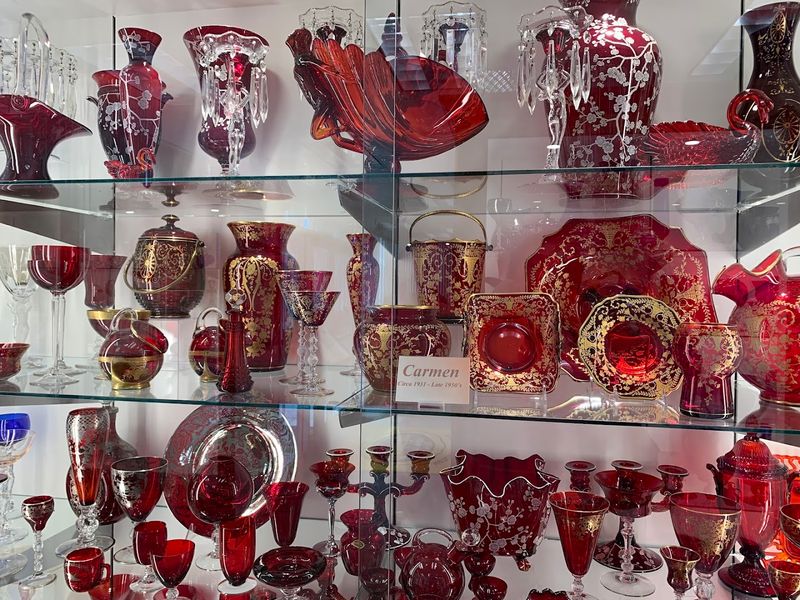
The 1930s became one of the company’s most creative periods, introducing colors such as Carmen, Royal Blue, Crown Tuscan, and Heatherbloom.
Important designs from that era included the #3400 line, Caprice, Statuesque Stem, and the Rose Point etching.
The plant initially closed in 1954 before reopening under new ownership in March 1955. The Cambridge Glass Company permanently closed in 1958.
Collectors formed National Cambridge Collectors in 1973 to preserve the company’s work, documents, equipment, and local history for future generations.
That full story makes the colorful glass in the museum feel like much more than decorative objects arranged on shelves.
The Guided Museum Experience
Most museums hand you a map and let you wander, but the National Museum of Cambridge Glass adds a much more personal layer to the experience.
Visitors can begin with a short film introducing the handmade glassmaking process and the history of the Cambridge Glass Company.
Knowledgeable volunteers then provide interpretation, answer questions, demonstrate historic tools, and point out details within the collection.
The museum contains more than 10,000 pieces, so even a focused introduction can make the displays much easier to understand.
Visitors can explore the cases at their own pace and return to particular colors, patterns, etchings, or decorative techniques that caught their attention.
The availability and format of volunteer interpretation may depend on staffing and visitor numbers, so private individual tours should not be assumed.
That combination of personal assistance and unhurried browsing turns a small museum into a surprisingly substantial experience.
The Stunning Display Of Colors And Patterns
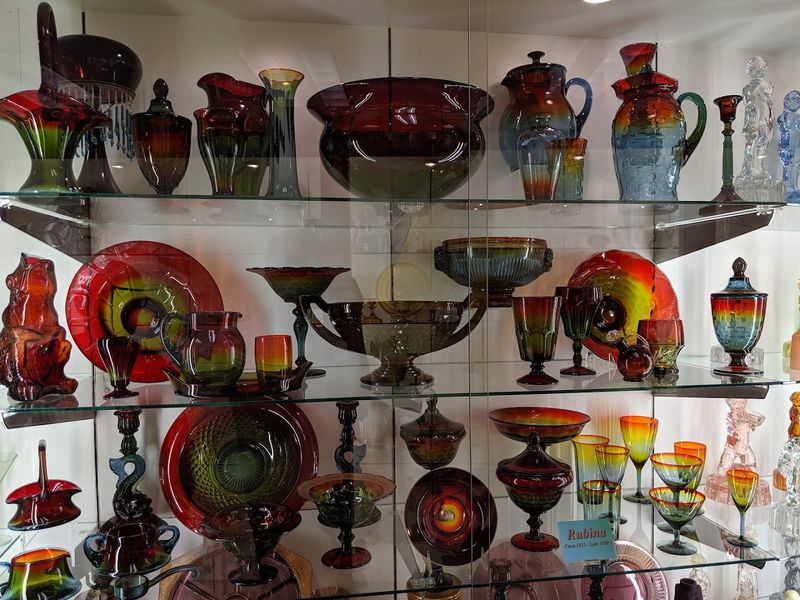
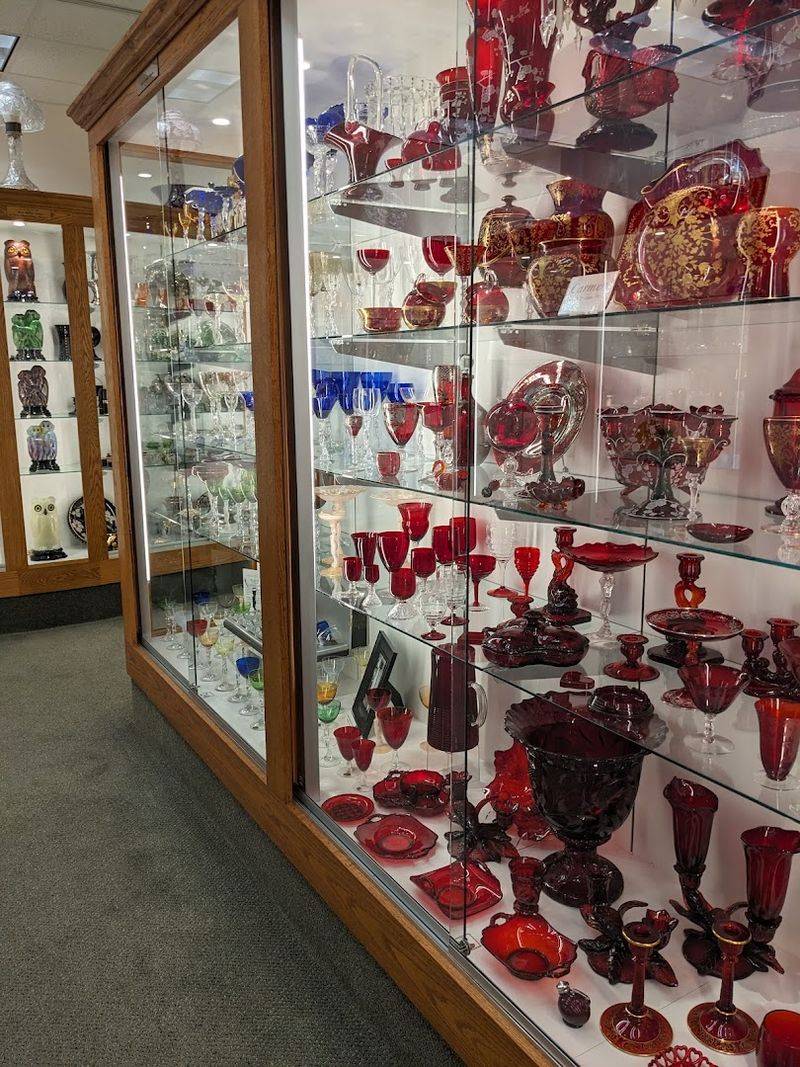
Nothing quite prepares you for the sheer visual impact of seeing so much Cambridge Glass arranged together in one place.
The cabinets are carefully illuminated, allowing the colors, cuttings, etchings, gold decoration, and detailed forms to stand out clearly.
Cambridge Glass appeared in a remarkable range of colors, including amber, light emerald, Forest Green, Moonlight, Carmen, Royal Blue, Crown Tuscan, and Heatherbloom.
The designs are just as varied. Some pieces have clean architectural forms, while others feature intricate floral etchings, hand cutting, gold decoration, or elaborate stems.
The museum’s collection reflects both everyday household glassware and highly decorative pieces created primarily for their beauty.
Displays explore different patterns, colors, forms, decorations, and periods of production, though the entire museum should not be described as following one strict chronological arrangement.
By the end of the visit, it is easy to find yourself returning to certain pieces for a second look.
The Introductory Video And Its Surprising Depth
Before the tour starts, every visitor sits down to watch a short film, and it turns out to be a genuinely smart way to start the experience.
The video covers the glass-making process in clear, accessible terms, explaining how raw materials were combined, melted, and shaped by skilled craftspeople into the finished pieces you are about to see.
It also puts the Cambridge Glass Company into historical context, which helps you appreciate the displays much more once you reach them.
I was not expecting to find a factory production video particularly engaging, but this one held my attention from start to finish.
The narration is clear, the footage is well chosen, and the pacing keeps things moving without rushing through important details.
A visitor in my group later mentioned that the video alone was worth the admission price, and I think that is a fair assessment.
It gives everyone in the group a shared baseline of knowledge before the guide takes over, which means the tour itself can go deeper without having to stop and explain basic concepts along the way.
Starting with the film is a small but clever piece of museum design that makes the whole visit feel cohesive.
The Hands-On Etching-Plate Activity
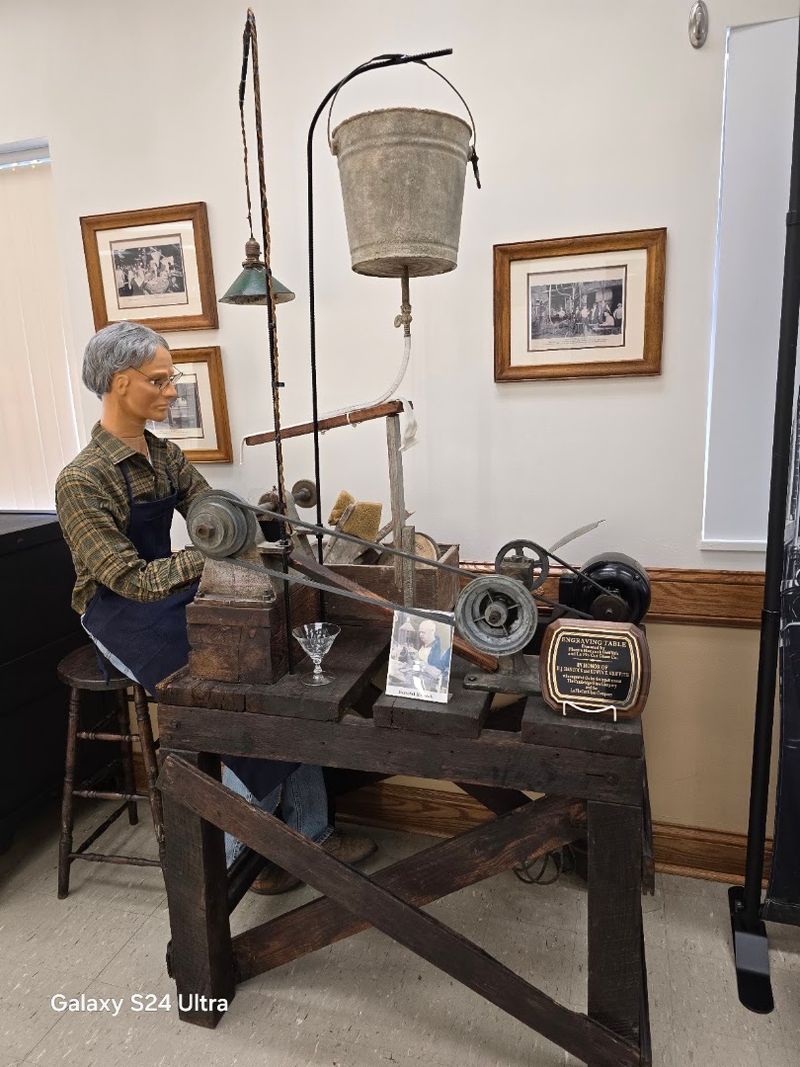
The museum offers interactive elements that help visitors understand how much specialized work went into Cambridge Glass.
One activity allows visitors to make pencil rubbings from authentic etching plates connected to the factory’s decorative processes.
The simple activity reveals the detail of the designs and gives visitors a more tactile connection with the patterns seen on finished glassware.
Children often enjoy it, but the process is just as interesting for adults who want a closer look at how decorative designs were transferred during production.
The Education Center may also include opportunities to handle safe examples, examine glassmaking tools, and learn more about daily life inside the factory.
The activities offered can depend on staffing, group size, and current museum programming.
These interactive touches make the history easier to understand and give visitors something more memorable than a passive walk past display cases.
The Gift Shop And What You Can Buy
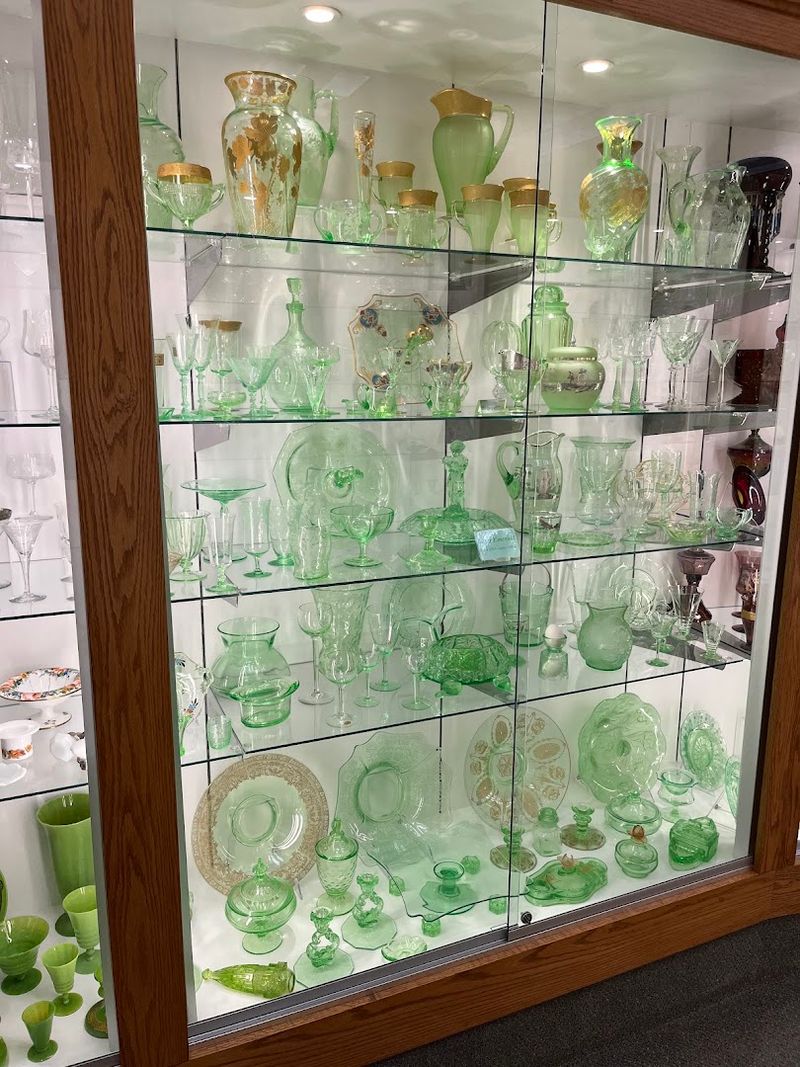
The National Museum of Cambridge Glass has two gift-shop areas. Both give visitors a chance to take home something connected directly to the city’s glassmaking history.
Genuine Cambridge Glass pieces are regularly added in a variety of colors, etchings, engravings, patterns, and decorative styles.
Because the inventory changes frequently, returning visitors may find completely different pieces from one trip to the next.
The shops also feature Christmas ornaments and jewelry made from recycled Cambridge Glass.
Staff and volunteers can help identify colors, patterns, approximate production periods, and decorative techniques when information is available.
Visitors who cannot shop in person can call the museum at 740-432-4245 to ask about available pieces, and shipping is offered.
There is no admission charge for someone visiting only to browse the gift shop.
Practical Tips For Planning Your Visit
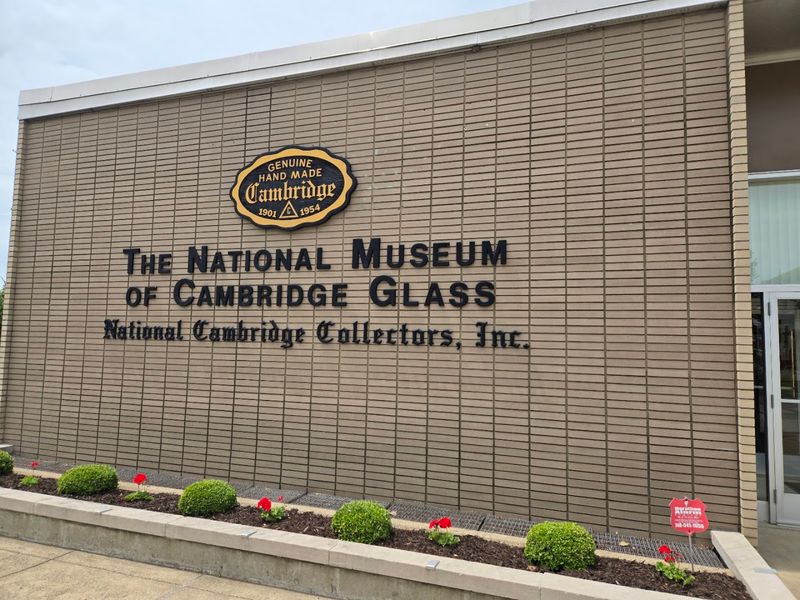
Getting to the museum is straightforward, and the address, 136 S 9th St in Cambridge, is easy to reach from Interstate 70 or Interstate 77.
The regular season runs from April through October. The museum is open Wednesday through Saturday from 10 AM to 4 PM and Sunday from noon to 4 PM.
It is closed on Easter and July 4. Special holiday hours may be offered during November and December.
General admission is $6, while seniors and AAA members pay $5. National Cambridge Collectors members and children age 12 and younger enter free.
The building is accessible, and free parking is available nearby.
Allow at least an hour, with additional time for the introductory film, volunteer interpretation, interactive activities, gift shopping, and a slower look through the collection.
You can reach the museum at 740-432-4245 or check its current official website before making the drive.
Why This Museum Deserves A Spot On Your 2026 Road Trip List
Road trips through Ohio tend to focus on the obvious stops. However, the best travel memories often come from the places you did not plan on staying long.
The National Museum of Cambridge Glass fits that description perfectly. It is the kind of stop that starts as a casual thirty-minute detour and ends two hours later with you carrying a bag from the gift shop and texting your friends about it.
The combination of stunning visual displays, personalized guided tours, hands-on activities, and genuinely passionate staff makes it one of the more complete small museum experiences I have had anywhere in the country.
The admission price is low enough that there is no financial reason to skip it, and the educational value is high enough that you will leave knowing something real and interesting that you did not know before.
Whether you are a dedicated glass collector, a casual history fan, or someone who just wandered in off the street on a whim, this museum delivers.
Cambridge, Ohio punches well above its weight with this one, and the National Museum of Cambridge Glass is proof that the most rewarding experiences are often the ones you stumble into without expectations.