
This Ohio Hybrid Coaster Plunges 200 Feet At A Perfect 90 Degrees
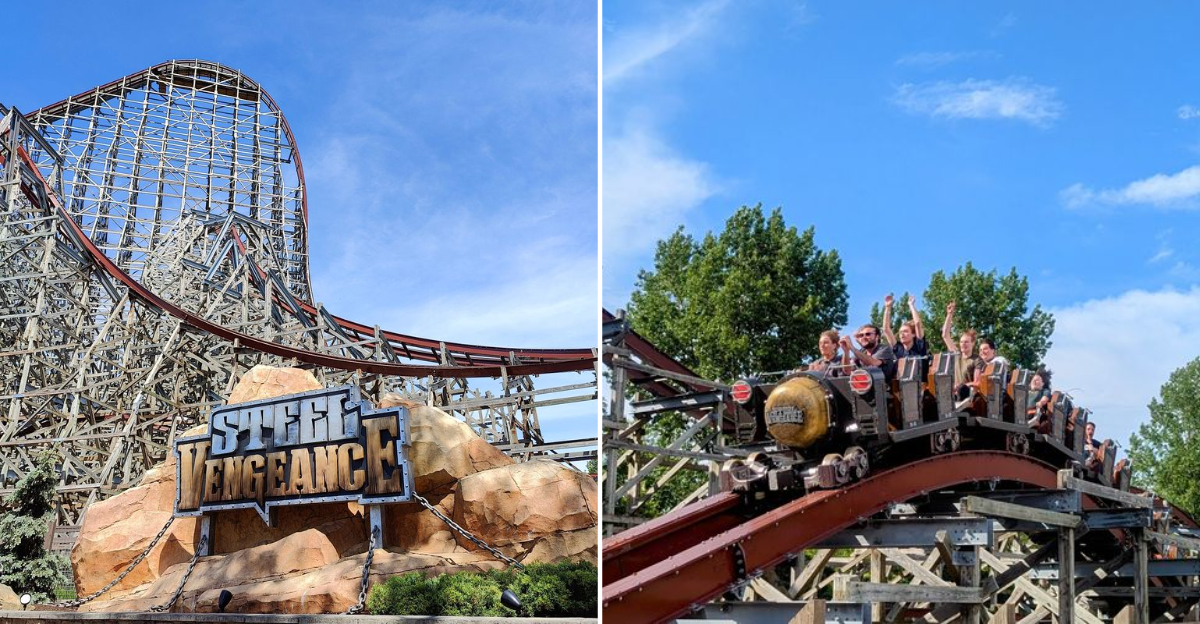
A towering coaster near Lake Erie in Ohio has a first drop that looks less like a hill and more like the edge of a cliff. Riders climb more than 200 feet before staring straight down at a 90-degree plunge that sends the train racing toward the ground at highway speed.
The ride blends a massive wooden support structure with modern steel track, giving it an old-school silhouette with a much wilder personality. Its story is just as interesting as the ride itself, since the structure once belonged to an entirely different coaster before a major transformation gave it new life.
Record-setting statistics and an unusually long stretch of airtime have helped turn this Sandusky attraction into a favorite among serious coaster fans.
The 200-Foot Vertical Drop That Started It All
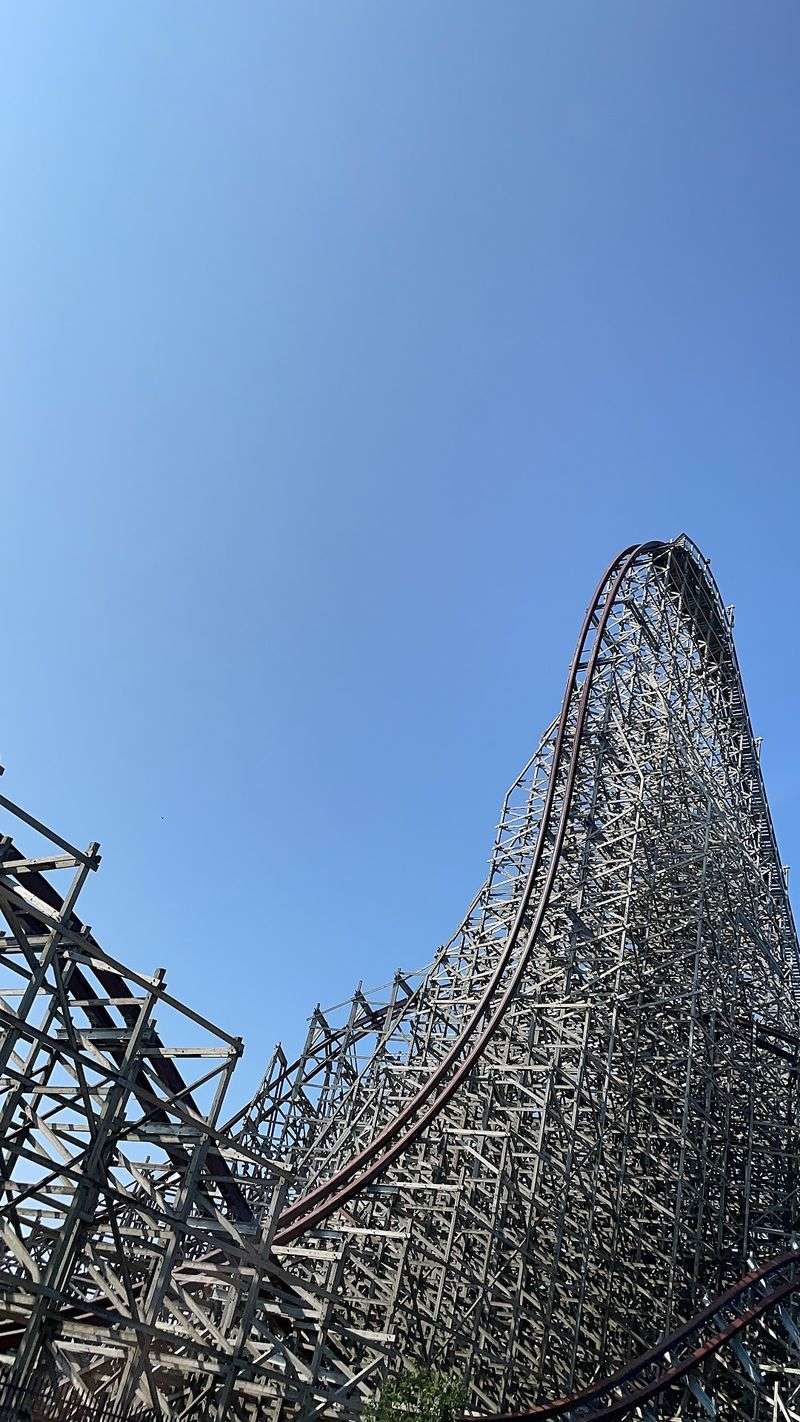
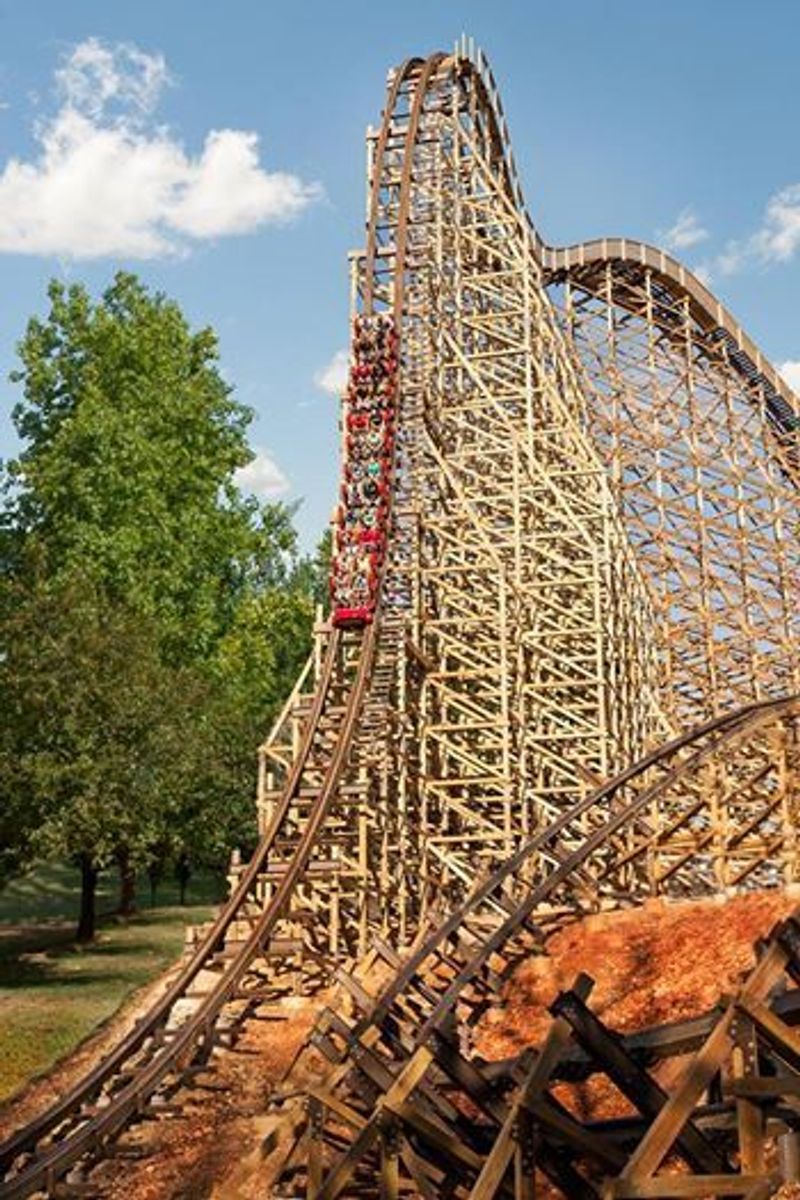
Few moments in amusement park history hit quite like the first time you crest the top of Steel Vengeance and peer straight down a 200-foot drop that is perfectly vertical at 90 degrees.
That drop is not an exaggeration or a marketing trick. Engineers built the first drop to be exactly perpendicular to the ground, meaning riders briefly feel as though they are falling off the edge of the earth rather than riding a roller coaster.
The sensation is unlike anything a traditional wooden coaster can offer, and it is one of the main reasons Steel Vengeance became an instant legend when it opened at Cedar Point in May 2018.
Most coasters in the world top out around 80 or 85 degrees on their steepest drops, so 90 degrees is genuinely rare engineering territory. The drop lasts only a couple of seconds, but those seconds tend to stay with riders for a very long time.
How A Classic Wooden Coaster Was Reborn
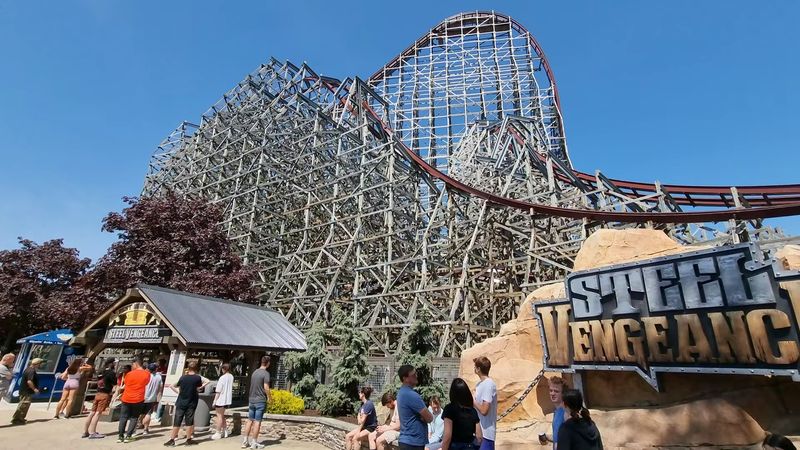
Before Steel Vengeance existed, a wooden coaster called Mean Streak stood in the same spot at Cedar Point, operating from 1991 until it closed in 2016.
Mean Streak was once celebrated as one of the tallest and fastest wooden coasters in the world, but over time the ride became rough and the experience started to feel more punishing than thrilling.
Cedar Point partnered with Rocky Mountain Construction, a company known for transforming older wooden coasters into modern hybrid machines, and the result was a complete reinvention of the structure.
The original wooden frame was preserved and reinforced, but the track was replaced entirely with steel, which allowed for much smoother navigation through twists, turns, and inversions that a pure wooden coaster could never safely handle.
What makes this transformation so fascinating is that parts of the 1991 coaster still support a ride that was promoted as breaking 10 world records when it opened in 2018.
Four World Records Set On Opening Day
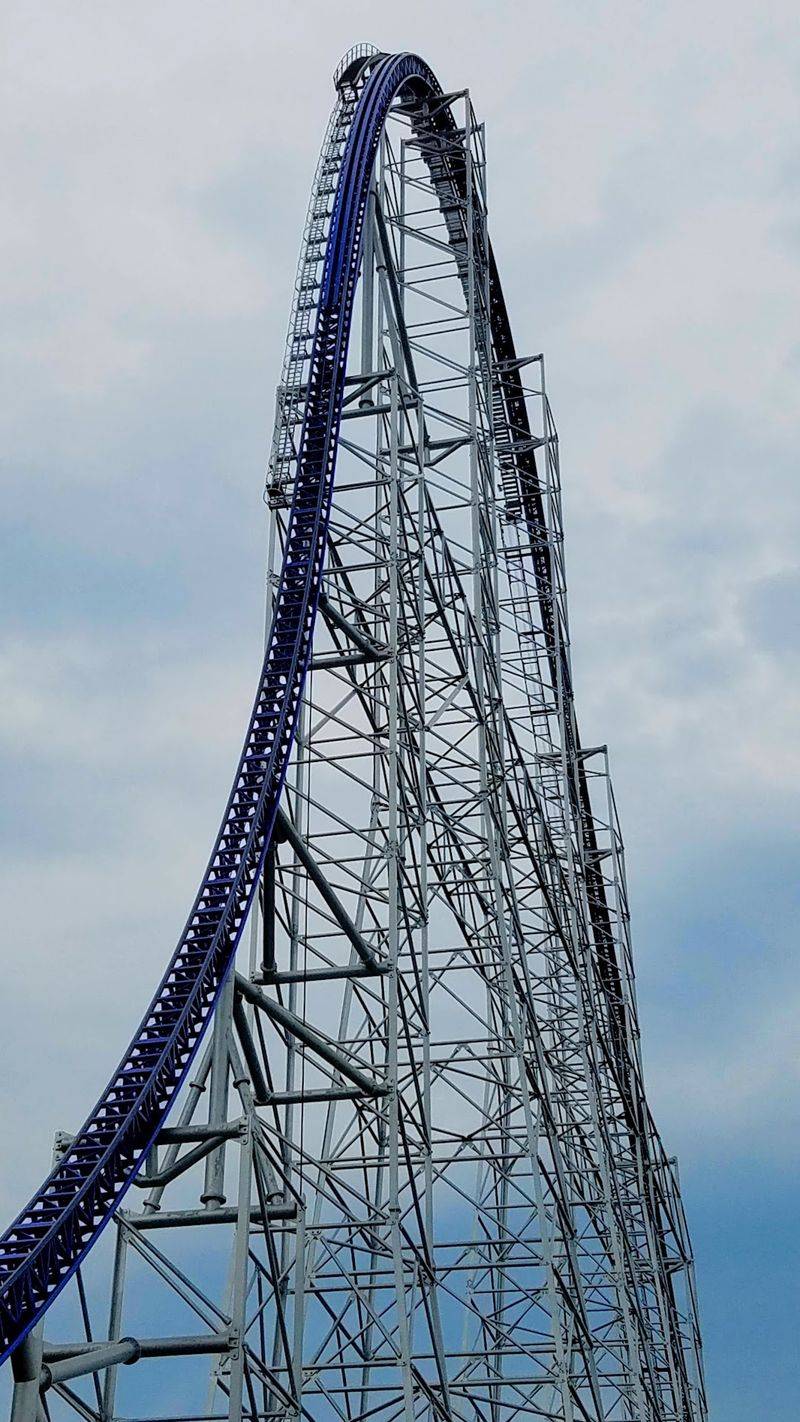
When Steel Vengeance opened to the public on May 5, 2018, it did not just open as a new ride. It opened as a record-setter, claiming four world records simultaneously.
It became the tallest hybrid coaster on the planet, the fastest hybrid coaster, the longest hybrid coaster by track length, and the coaster with the most inversions of any hybrid design in the world.
Reaching a top speed of 74 miles per hour and stretching across 5,740 feet of track, the ride delivers an experience that feels like it should not be possible for something that still has a wooden frame at its core.
The four inversions riders experience during the ride include a barrel roll, a zero-gravity roll, and two additional twisting elements that flip riders in ways that make the stomach genuinely question its loyalty to the rest of the body.
Cedar Point, located at 1 Cedar Point Dr, Sandusky, OH 44870, has long been called the Roller Coaster Capital of the World, and Steel Vengeance gave that title a whole new layer of credibility.
The Engineering Behind The Hybrid Design
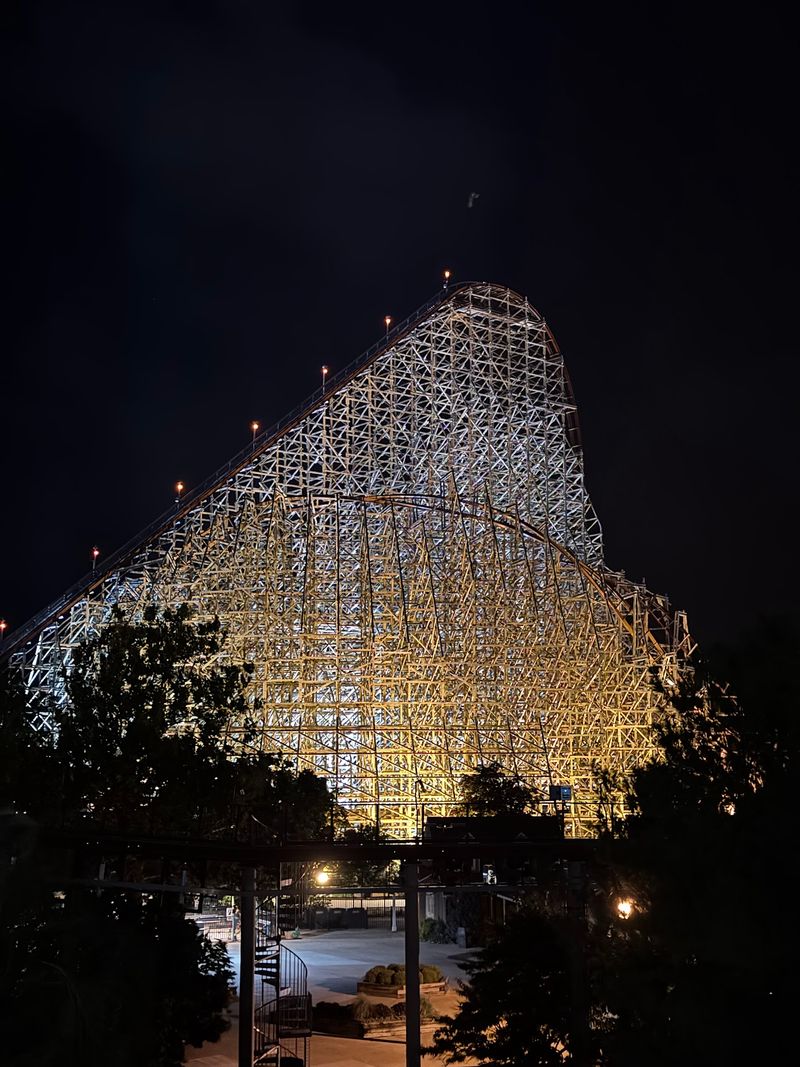
Hybrid coasters are not simply wooden coasters with a fresh coat of paint. The engineering behind them represents a genuine fusion of two different construction philosophies.
Rocky Mountain Construction developed a proprietary steel track system called I-Box track, which sits on top of the original wooden support structure and allows for banking angles, inversions, and precision tolerances that traditional wooden track simply cannot achieve.
The wooden structure provides height and a visual identity that gives the ride its classic silhouette against the Lake Erie skyline, while the steel track delivers the smoothness and dynamic shaping that modern riders expect from a top-tier coaster experience.
One of the more underappreciated engineering achievements is how the transition between banked turns and inversions is handled. The track delivers about 27.2 seconds of airtime during a single ride, giving Steel Vengeance one of the most airtime-heavy layouts in the coaster world.
More than 27 seconds of airtime on one ride is an unusually high total and remains one of Steel Vengeance’s most celebrated features.
What 74 Miles Per Hour Actually Feels Like
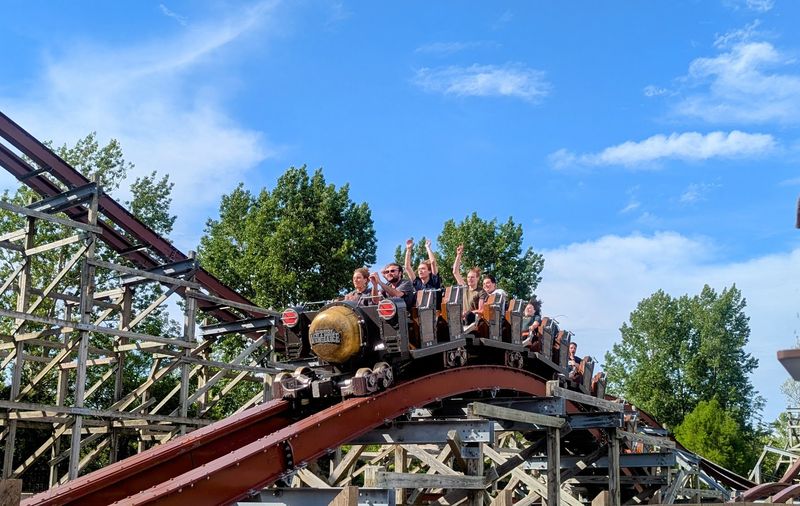
Numbers on a spec sheet are one thing, but 74 miles per hour on a roller coaster is something the body registers in a completely different way than reading it on a sign.
After cresting that 200-foot drop and plummeting straight down, the train accelerates to its top speed almost instantly, and the wind pressure against your face is strong enough to make normal facial expressions temporarily impossible.
The speed is sustained through a layout that keeps changing direction, so riders never quite settle into a comfortable rhythm before another twist or inversion reshuffles the experience entirely.
Compared to riding in a car at 74 miles per hour on a highway, the coaster version feels at least three times as intense because the track is only a few feet away on either side and the ground rushes past directly below.
What surprises most first-time riders is not the speed itself but how long the ride maintains that energy. Steel Vengeance runs for about two minutes and thirty seconds, which is genuinely long for a coaster operating at that intensity level throughout the entire run.
The Outlaw Run Connection And RMC Legacy
Rocky Mountain Construction, the company behind Steel Vengeance, built its reputation by doing something the coaster industry had never taken seriously before: saving old wooden coasters by converting them into something entirely new.
Their first major project was Outlaw Run at Silver Dollar City in Branson, Missouri, which opened in 2013 and immediately proved that the hybrid concept could produce world-class results on a relatively modest budget compared to building a new coaster from scratch.
Steel Vengeance represents the pinnacle of what RMC had been working toward since those early projects, combining everything the company learned about airtime, inversions, pacing, and structural engineering into a single ride that many enthusiasts now rank as the best coaster in the world.
The company’s approach of working with existing wooden structures rather than demolishing them also carries a certain respect for coaster history that fans genuinely appreciate.
Mean Streak was not forgotten when it became Steel Vengeance. Its identity lives on in the wooden structure that still stands, and that continuity gives the ride a story that purely new coasters simply cannot claim.
Rider Experience From Queue To Final Brake Run
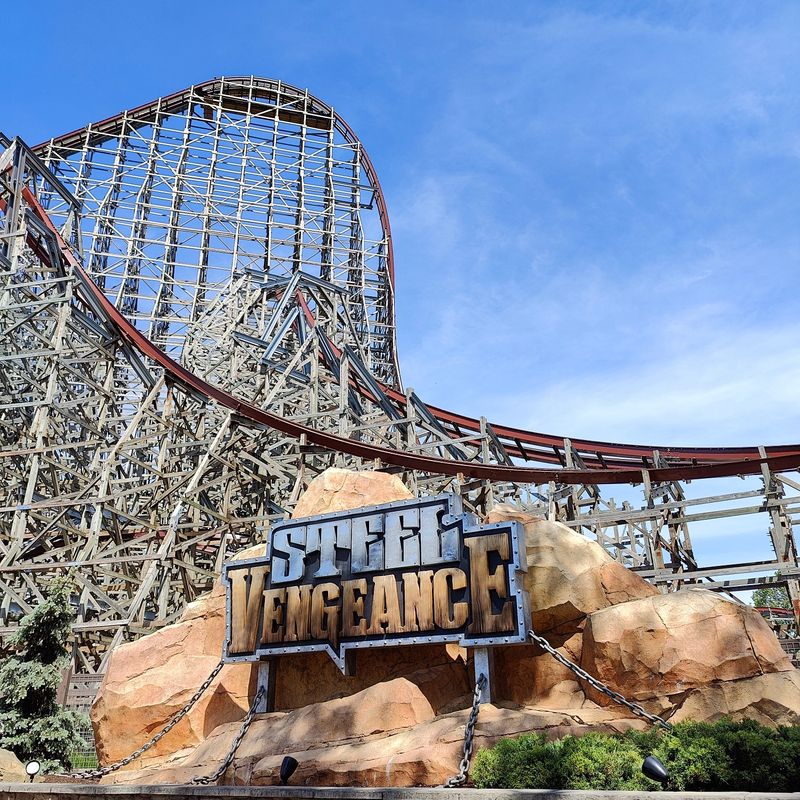
The theming around Steel Vengeance leans into a Wild West frontier aesthetic, with weathered wood, rustic signage, and a general atmosphere that fits the name and the raw energy of the ride itself.
Walking through the queue, guests pass under sections of the track and can feel the wind and hear the roar of the train passing overhead, which does a very effective job of building anticipation before anyone even reaches the station.
Riders choose between front row, back row, or middle seating, and each position delivers a noticeably different experience. The front row offers the clearest view of that 90-degree drop approaching, while the back row provides a sharper whip effect through every element.
Once the ride launches, the pacing never really lets up. Airtime hills, inversions, and high-speed turns follow each other in rapid sequence, and the two and a half minute run feels both endless and over far too quickly at the same time.
By the time the final brake run arrives, most riders sit quietly for a moment before deciding whether to head straight back to the queue or find a bench and process what just happened.
Planning Your Visit To Ride Steel Vengeance
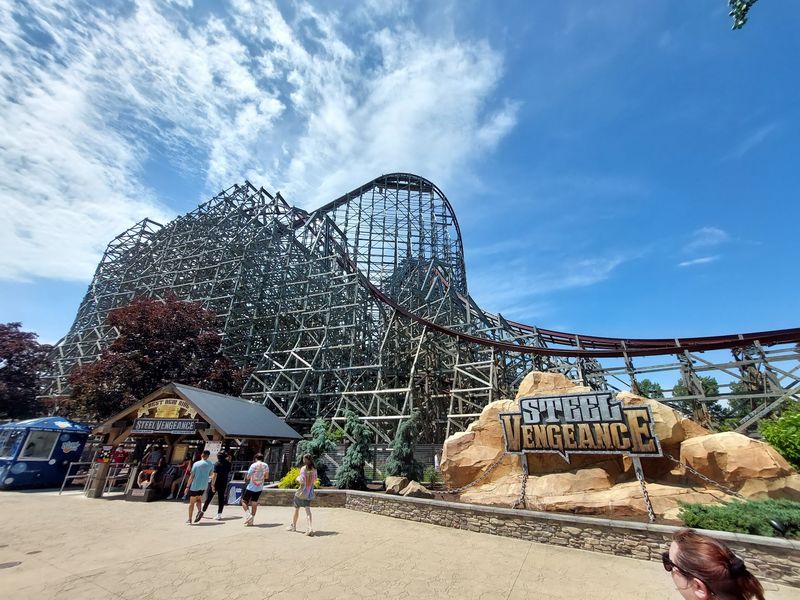
Timing a visit to Cedar Point around Steel Vengeance takes a little strategy, because this ride consistently draws some of the longest wait times in the entire park.
Arriving at park opening and heading directly to Steel Vengeance is the most reliable way to experience a shorter queue, since wait times can climb to two hours or more by mid-morning on busy summer weekends.
Cedar Point offers a Fast Lane Plus pass that grants priority access to Steel Vengeance and other top-tier attractions, and on crowded days that upgrade can genuinely save hours of standing in line.
The ride operates weather-dependent, so checking the forecast before visiting is worth the extra few minutes. High winds or storms can cause temporary closures, and nothing is more frustrating than planning a day around one ride and finding it shut down for the afternoon.
Cedar Point’s season typically runs from May through early November, with the park’s HalloWeekends event in October offering a completely different atmosphere that makes the already intense Steel Vengeance feel even more dramatic under autumn skies and Halloween decorations.