
This Ohio Monument Hides A Powerful Piece Of History In A Quiet Place
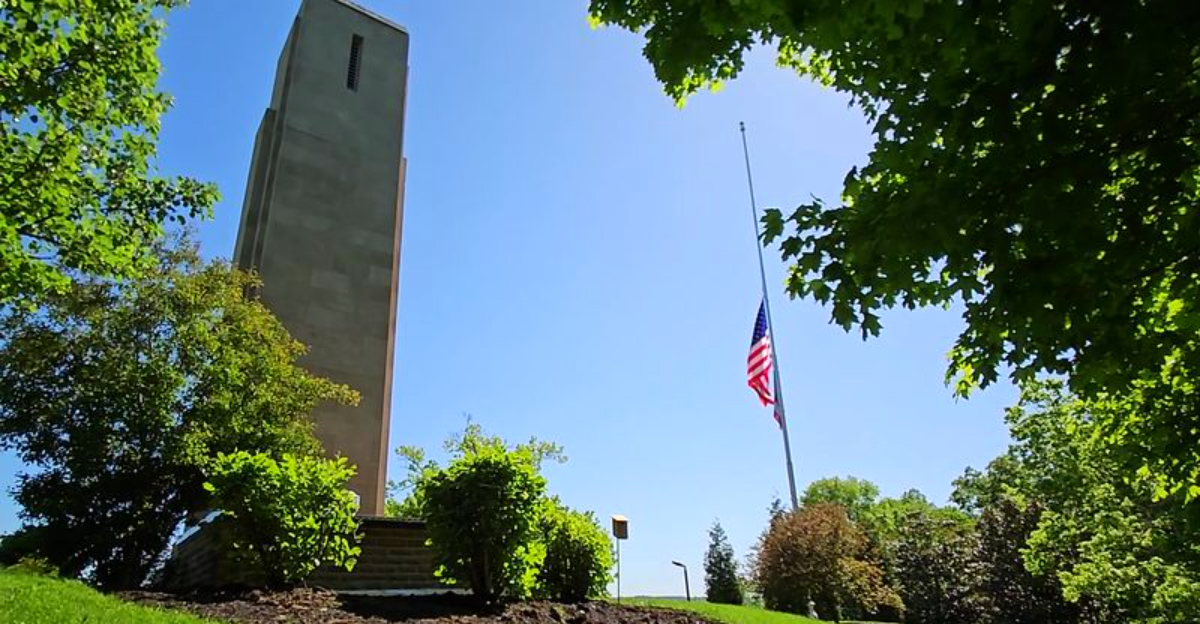
Some historic places announce themselves with crowds and grand entrances. This quiet hilltop in Ohio takes a softer approach, letting the trees, the river view, and the monument slowly pull you into a presidential story that many travelers pass without noticing.
A short presidency left a surprisingly long shadow. William Henry Harrison served just 32 days in office, but the memorial here points to a much larger life shaped by military service, frontier politics, family ties, and early Ohio history.
The setting makes the story feel even more meaningful. With peaceful grounds, interpretive signs, a wooded path, and sweeping views over the Ohio River valley, this monument turns a simple stop into a thoughtful reminder that history often waits in the quietest places.
First Look at the Memorial Grounds
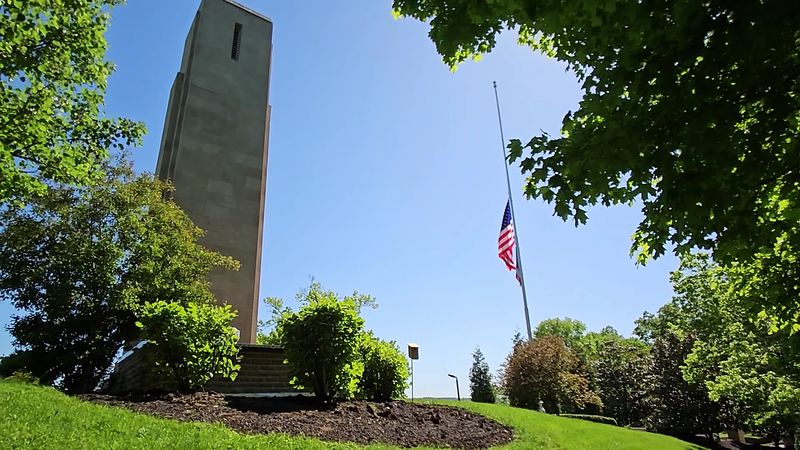
The first thing I noticed was how quietly the place pulls you in. The William Henry Harrison Memorial does not need a loud entrance or a crowd to make an impression, because the hilltop setting does plenty of heavy lifting on its own.
The small parking area near the base of the hill is easy to find, and the informational display boards are worth a pause before you start walking. I liked that they gave the visit some context right away, covering Harrison’s life in a way that felt clear instead of textbook-stiff.
From there, you can reach the monument by taking either the paved sidewalk or the wooded trail, and both routes add something to the experience. The paved path is especially helpful for accessibility, which is always good to see at a historic site where the setting could easily have made things more difficult.
The grounds felt tidy and cared for, from the trimmed grass to the flower beds and mulch around the path. Even before reaching the top, the whole place had that calm, reflective feeling that makes you slow down without even realizing it.
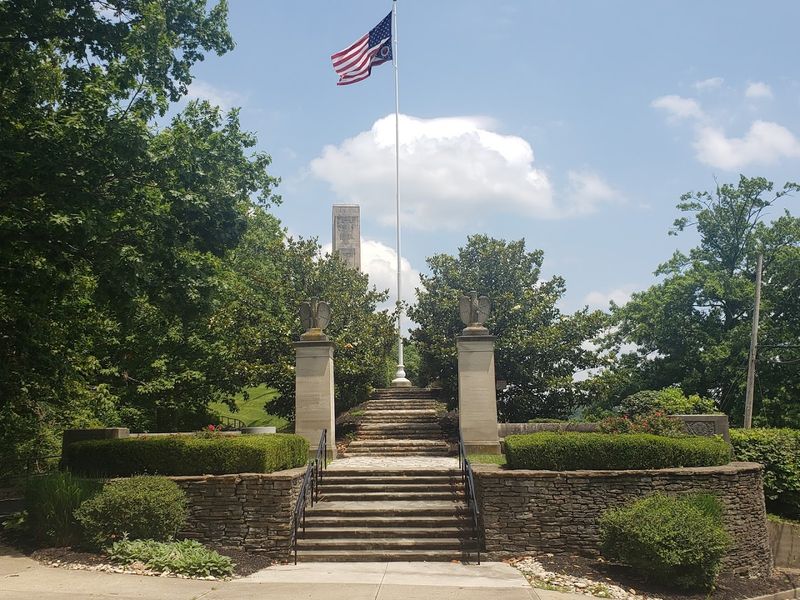
By the time the monument came into view, the walk already felt worthwhile, and the river valley setting made the history feel even more grounded in place. You can visit the William Henry Harrison Memorial at 41 Cliff Rd, North Bend, OH 45052.
The Story Behind the Monument
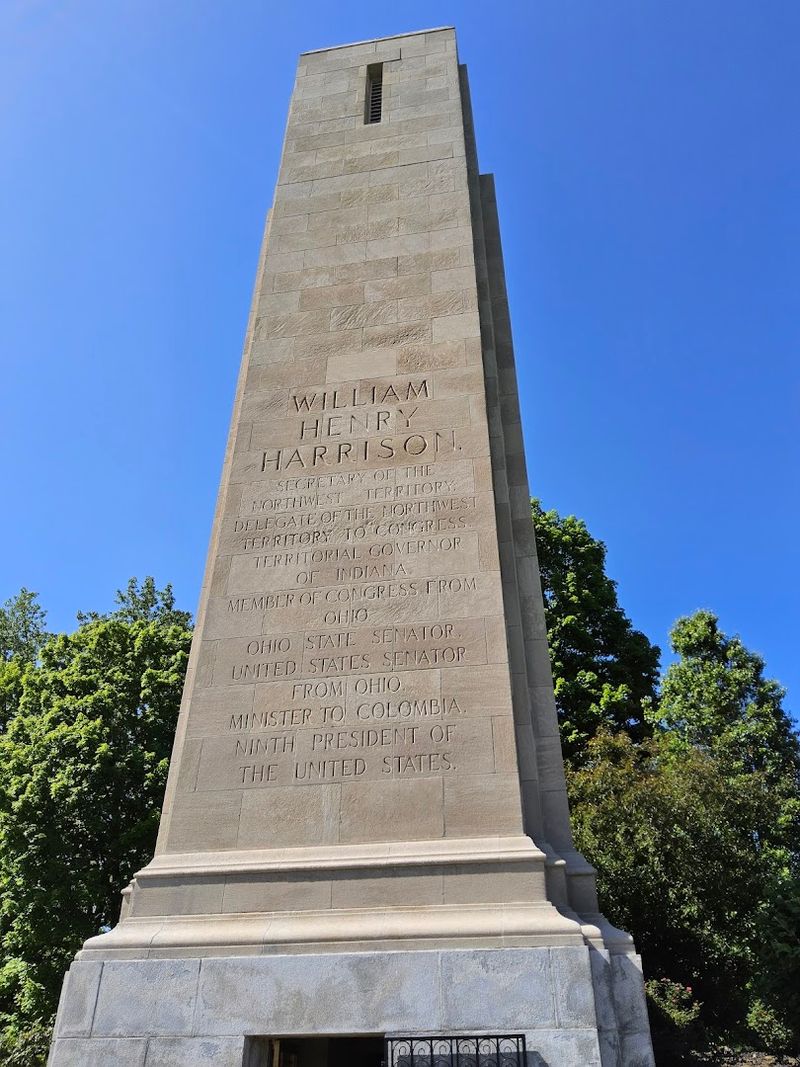
Most people know William Henry Harrison as the president who served the shortest term in American history, but that single fact barely scratches the surface of who he really was.
Harrison was a military general, a territorial governor, and a congressman before he ever stepped into the White House. He governed the Indiana Territory for 12 years and played a major role in shaping what is now the American Midwest.
He won the presidency in 1840 and took office in 1841 at the age of 68, making him the oldest person to assume the presidency up to that time. His famous campaign slogan, “Tippecanoe and Tyler Too,” referenced his military victory at the Battle of Tippecanoe against Indigenous forces in 1811.
His presidency lasted only 32 days, but the memorial makes clear, through its signage and design, that Harrison’s legacy stretches far beyond that brief presidential chapter.
The monument here in North Bend honors the full arc of his life, not just its brief presidential chapter, and that broader perspective makes the visit genuinely meaningful.
The Obelisk Up Close
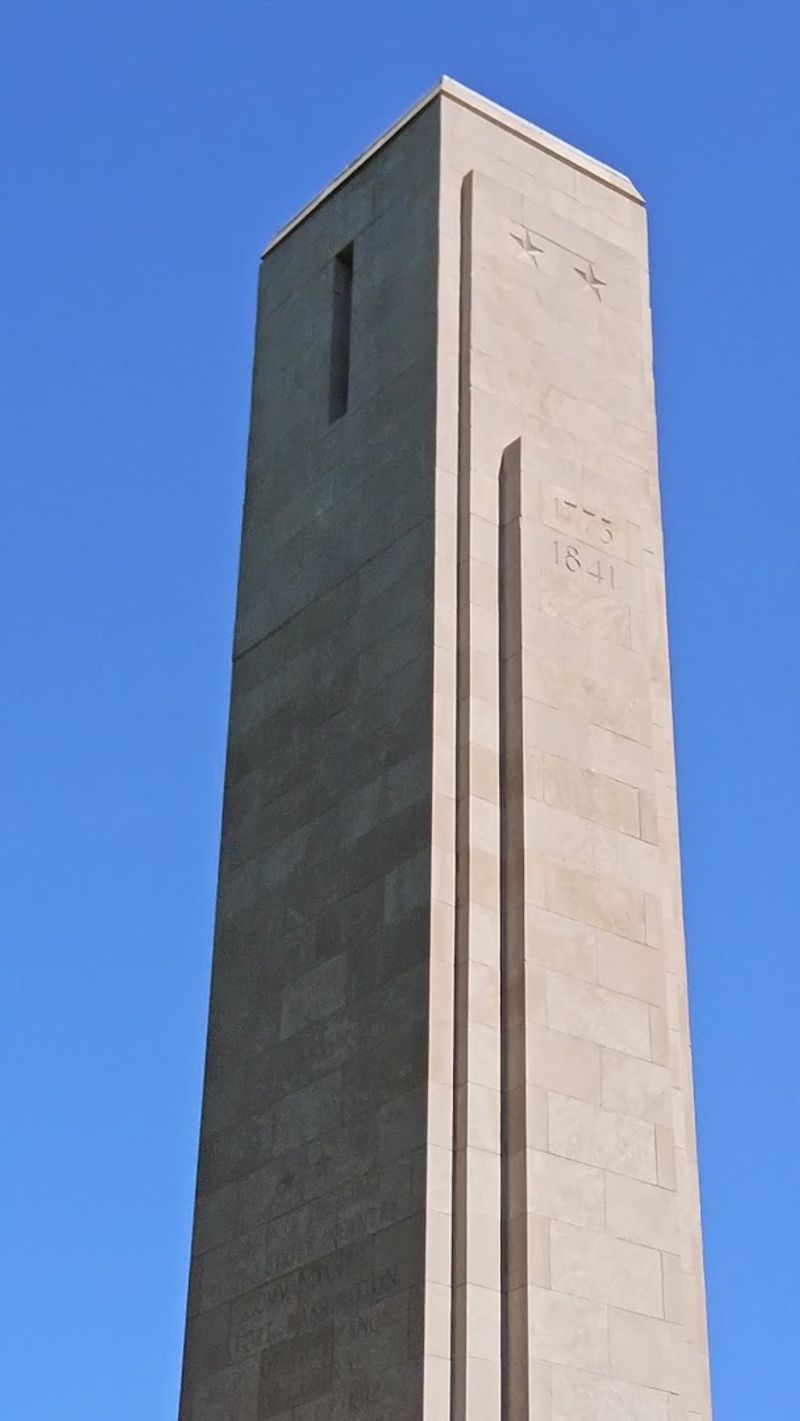
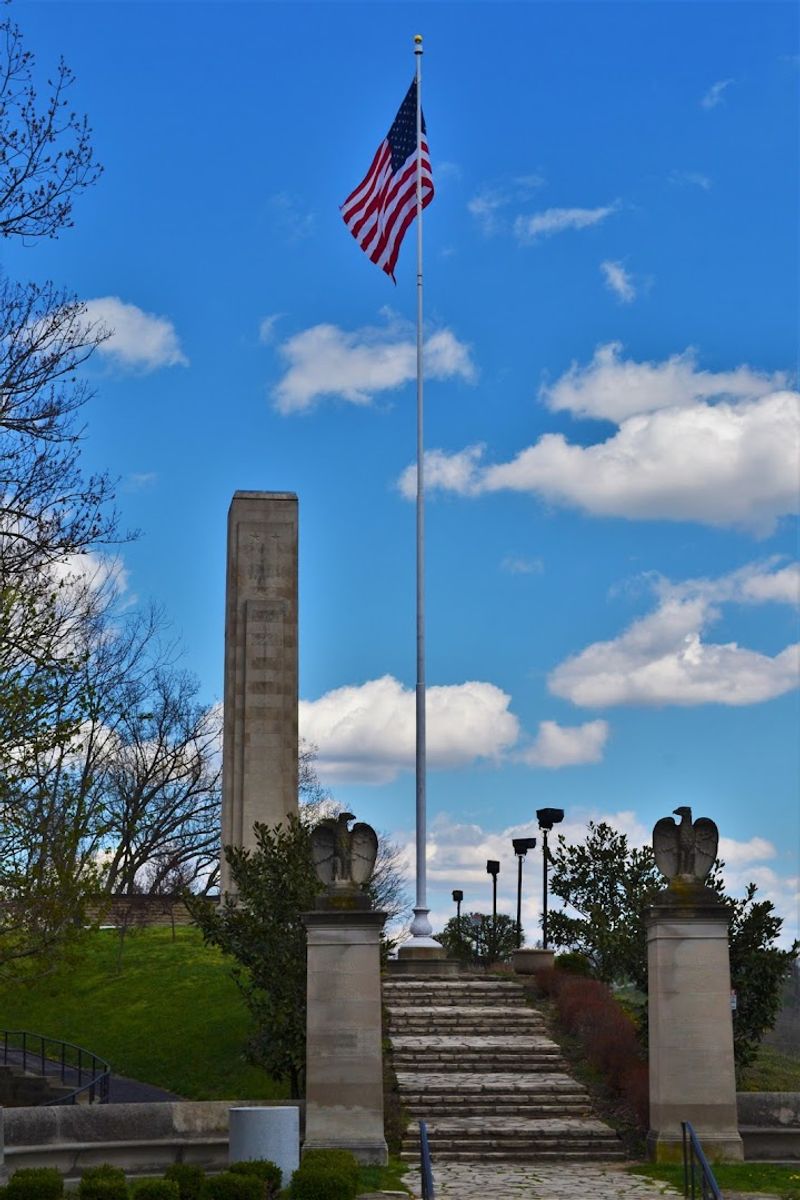
When you finally reach the top of the hill, the obelisk stops you in your tracks. It is tall, imposing, and unmistakably presidential, rising from the hilltop like a quiet declaration of significance.
The design is clean and dignified, with a chaste simplicity that feels appropriate for the setting. Several visitors have compared it to the Lincoln burial obelisk in Springfield, Illinois, and standing in front of it, I could understand why that comparison comes to mind.
The stone itself carries the weight of years, with some weathering visible on the carved details, but the overall structure remains impressive and well-maintained. Up close, you can appreciate the craftsmanship that went into its construction.
Inside the monument is the burial vault, where Harrison and his wife Anna are interred. The entrance layout is a little unexpected, as the tombs are positioned to the right rather than straight ahead when you walk in, which caught me off guard at first.
A tall flagpole stands nearby, adding a patriotic punctuation mark to the scene that feels both solemn and respectful without being overdone.
The View from the Hilltop
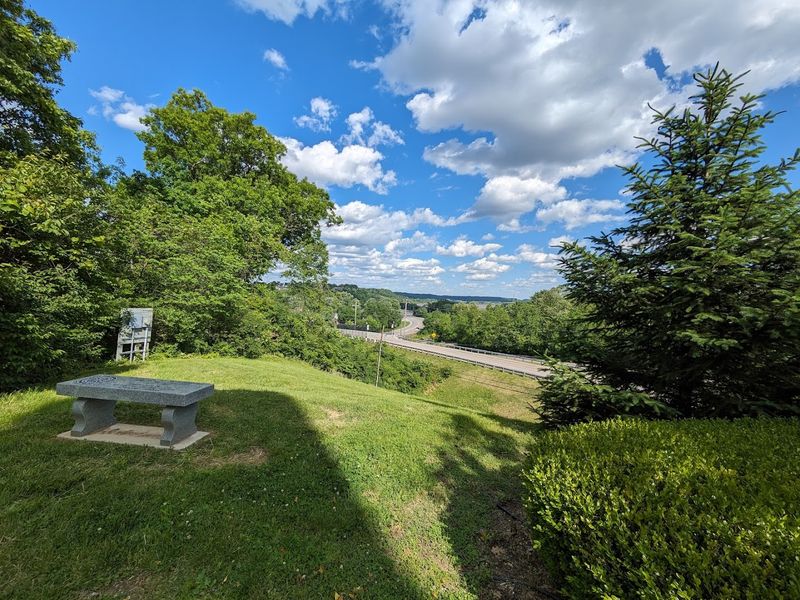
Few things surprised me more than the view waiting at the top of that hill. From the monument, you get a sweeping panoramic look at the Ohio River valley that stretches out below in a patchwork of greens and blues.
On a clear day, the river glimmers in the distance, and the rolling hills of the surrounding region frame the scene beautifully. In autumn, when the foliage turns, I can only imagine how spectacular this view must become.
Even on the warm summer day of my visit, the hilltop breeze made the overlook a genuinely refreshing spot to pause and take everything in. There is a sitting area near the monument where you can rest and absorb the landscape at your own pace.
The combination of the historic monument and the natural scenery creates a mood that is hard to replicate anywhere else. It is the kind of place where you find yourself standing quietly longer than you planned.
That view alone would justify the drive, but paired with the history surrounding you at every angle, it elevates the entire experience into something truly memorable.
The Symmes Family Connection
One of the most fascinating layers of this memorial is the story woven into the surrounding landscape about the Symmes family, Harrison’s in-laws.
Anna Harrison’s father, John Cleves Symmes, was one of the founders of this region of the Northwest Territory, which eventually became modern-day Ohio. His influence on the area predates the state itself, and signs along the route to the monument highlight just how significant that family legacy was.
The Symmes connection adds a rich early-American dimension to the visit that I was not expecting. Suddenly, the site is not just about one president but about an entire chapter of settlement, politics, and family history in the Ohio River valley.
Anna Harrison herself was a remarkable woman who lived more than two decades after her husband and became part of one of the most unusual family threads in presidential history. Her grandson, Benjamin Harrison, later became the 23rd President of the United States in 1889, long after Anna’s own lifetime.
Reading about all of this on the informational boards near the parking area was genuinely eye-opening, and it reframed everything I thought I knew about this quiet corner of Ohio.
Informational Displays and Self-Guided Tour
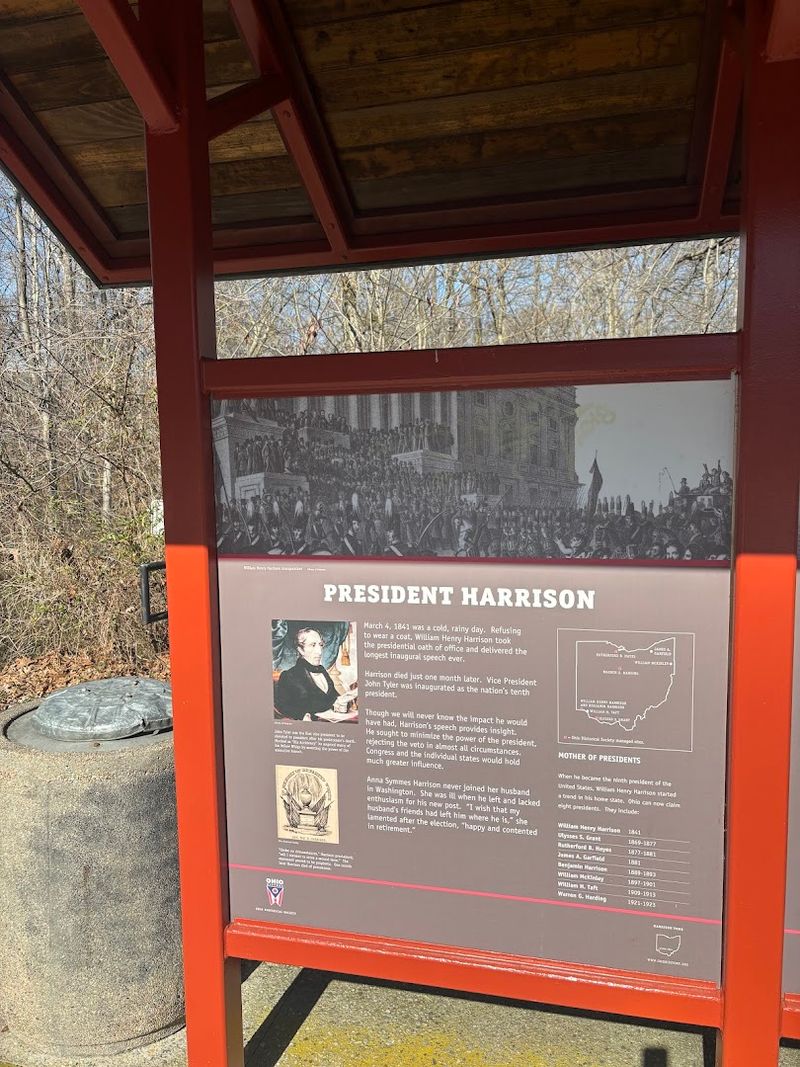
Not every historic site manages to educate visitors without a tour guide, but this one does it remarkably well.
The informational boards placed throughout the parking area and along the path do a solid job of telling Harrison’s story in digestible, well-organized sections.
Each panel covers a different aspect of his life, from his military career to his political achievements and his brief presidency. The writing on the signs is clear and accessible, making it easy for visitors of all ages to follow along without feeling like they are reading a textbook.
The self-guided format works in your favor here because you can move at your own pace and spend as much time as you want on the details that interest you most. I found myself rereading a few of the panels because the content was genuinely engaging.
Plan to allow at least an hour if you want to read the displays, enjoy the view, and spend time at the monument itself. Rushing through would mean missing context that makes the whole visit click into place.
The site is part of the Ohio History Connection network and is locally managed by the Harrison-Symmes Memorial Foundation, which helps care for the memorial and preserve the surrounding history.
Accessibility and Practical Visiting Tips
Getting the practical details right before a visit makes a real difference, and this site handles logistics better than many similar historic locations I have been to.
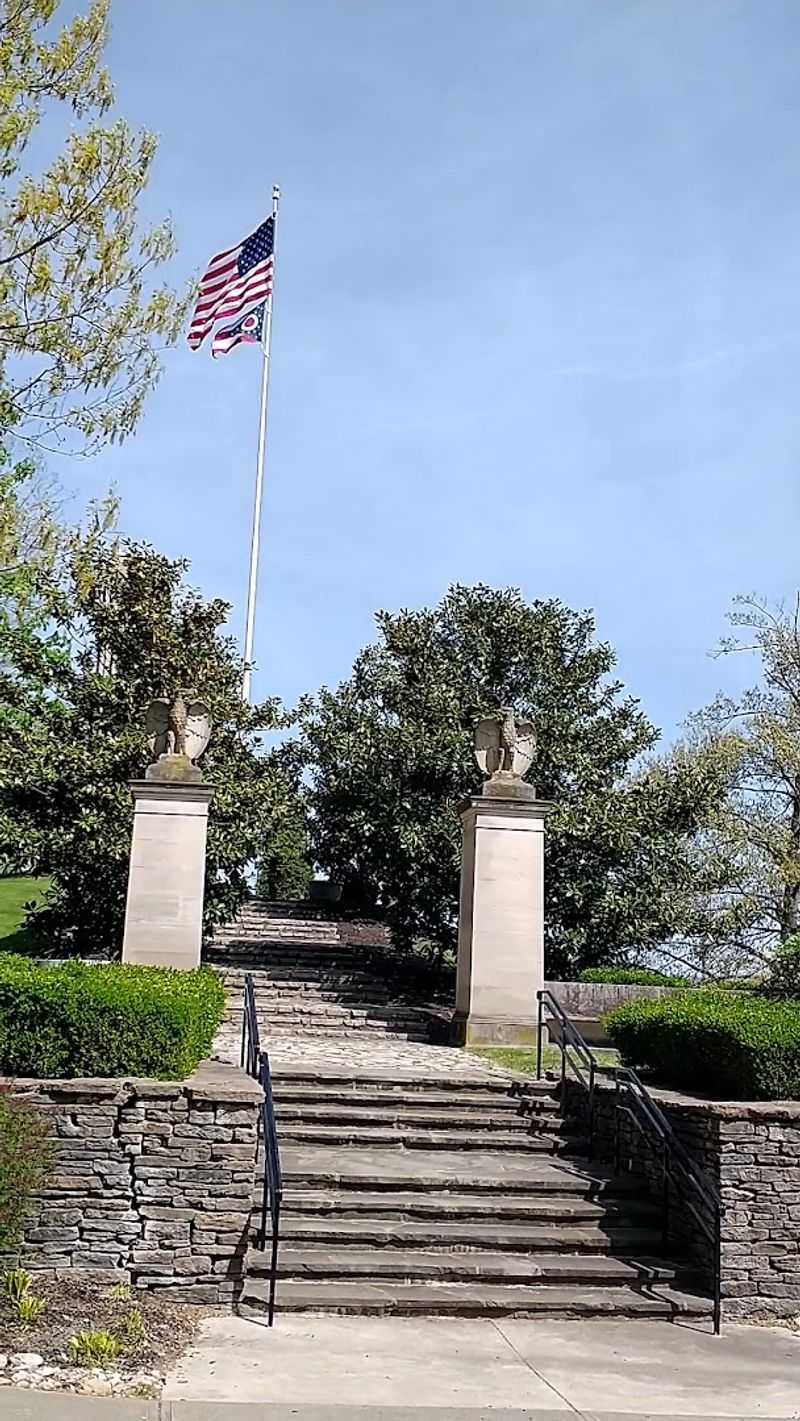
The parking area is small but adequate for most visits, as the site does not typically draw large crowds. There is a paved route to the monument, which makes the hilltop memorial easier to reach than the setting might suggest at first glance.
There is no admission charge to visit the grounds, which makes it an easy addition to any road trip or day out without budget concerns. The site is open year-round during daylight hours, so you have flexibility with your arrival time depending on your schedule.
One thing worth noting is that private tours are by appointment, and the Harrison-Symmes Memorial Foundation Museum is also open by appointment only. Volunteer availability can affect scheduling, so planning ahead matters if you want more than a self-guided visit.
Calling ahead or checking the website at hsmfmuseum.org before you go is a smart move.
Bring water and comfortable shoes if you plan to walk the nature path, and consider going on a weekday morning for the most peaceful experience. The site tends to be quiet, which honestly adds to its charm.
Why Harrison Deserves More Recognition
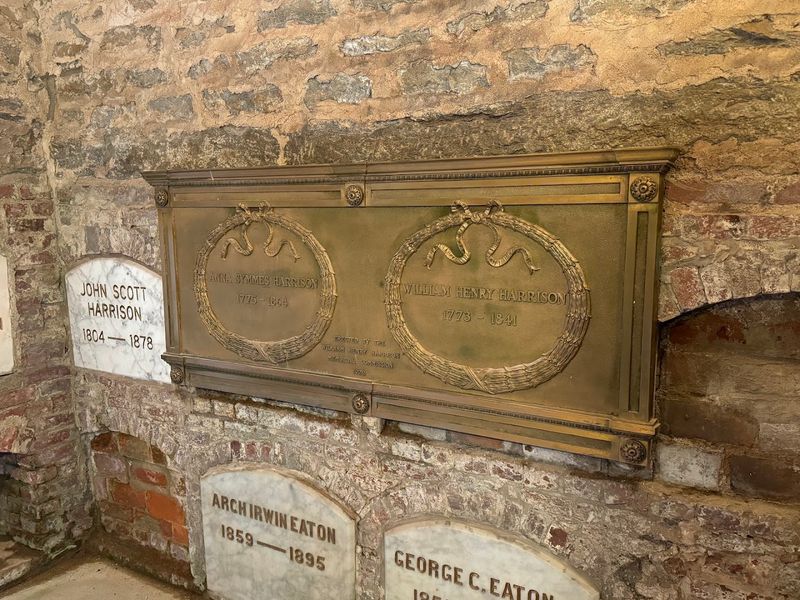
There is something a little bittersweet about a president who is mostly remembered for how briefly he served, especially when his full biography tells such a different story.
Harrison was a military leader, a territorial governor, and a politician who shaped the early American frontier in ways that still echo today. He governed the Indiana Territory for 12 years, negotiated treaties, and took part in some of the defining conflicts of the early 19th century.
The signage at this memorial makes a deliberate effort to present that fuller picture, and it succeeds. By the time you finish reading through the displays, the 32-day presidency feels like a footnote rather than the headline.
He was also an Ohio resident and public figure, serving in Congress from Ohio, in the Ohio State Senate, and later as a U.S. senator from Ohio before his presidential run. The memorial firmly connects him to Ohio, and the historical record supports that.
Spending time here gave me a new appreciation for a man I had previously filed away under “trivia answer.” History has a way of expanding when you actually show up to meet it in person.
Making the Most of Your Visit to North Bend
North Bend is a small, quiet community tucked along the banks of the Ohio River a few miles west of Cincinnati, and it has a character all its own that rewards a little extra exploration.
The memorial is the main draw, but the surrounding area offers scenic river views and a peaceful atmosphere that makes for a satisfying half-day or full-day outing. The drive along the river on the way in is lovely on its own.
If you are coming from a distance, pairing the visit with a stop in nearby Cincinnati makes geographic sense and gives you a fuller day of activities. The drive between the two is easy and pleasant, with river views along parts of the route.
I would suggest arriving in the morning when the light is soft and the grounds are at their quietest. The hilltop view looks particularly striking in morning light, and you will likely have the whole place to yourself.
Whether you are a dedicated history enthusiast or simply someone who appreciates a meaningful and scenic outdoor experience, this small Ohio town delivers something genuinely worth the detour. It is the kind of stop that stays with you long after you drive away.