
This Ohio Nature Preserve Turns A Simple Walk Into A Scenic Gorge Adventure
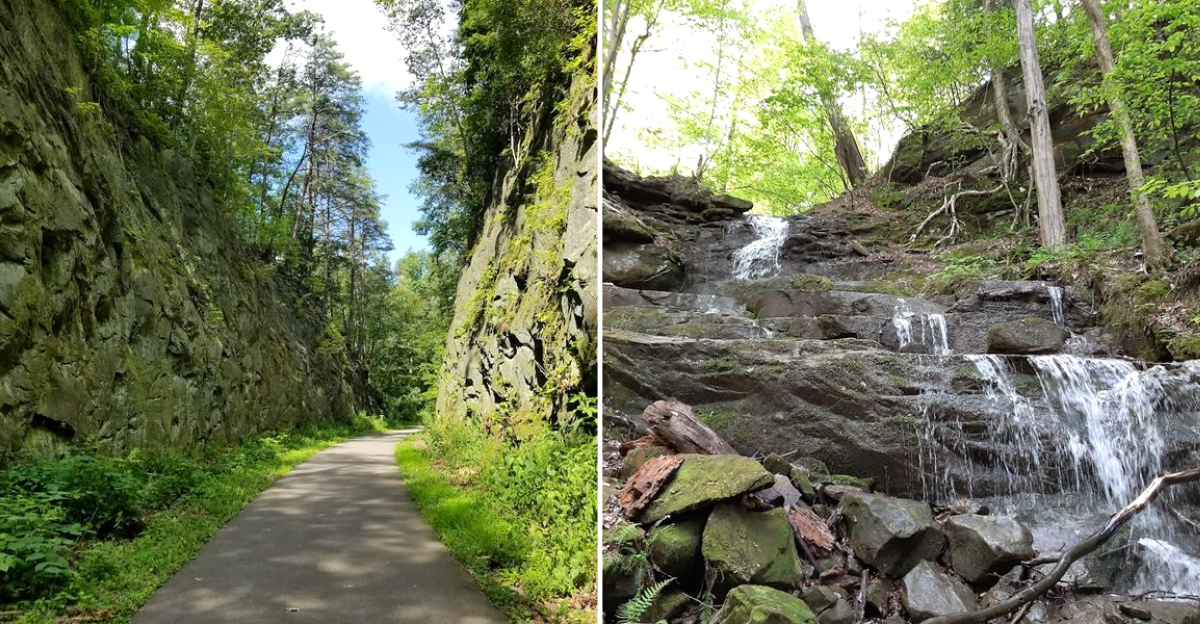
A simple Ohio walk gets a lot more interesting when sandstone cliffs rise beside the trail, and a river keeps pace like it planned the whole route.
The scenery here does not wait politely for a grand reveal. One minute you are easing into an afternoon stroll, and the next you are between golden rock walls, shaded forest, river views, and a path that feels far more adventurous than your step count expected.
This is a casual walk with gorge-level drama.
The preserve has that rare mix of easy access and real payoff, with paved stretches, rugged side trails, wildlife, history, and quiet corners that make everyday life feel pleasantly far away.
By the time the cliffs, river sounds, and forest light start working together, a short outing can turn into the kind of Ohio nature escape you keep thinking about long after the walk is over.
Where the Gorge Begins: First Impressions and Location
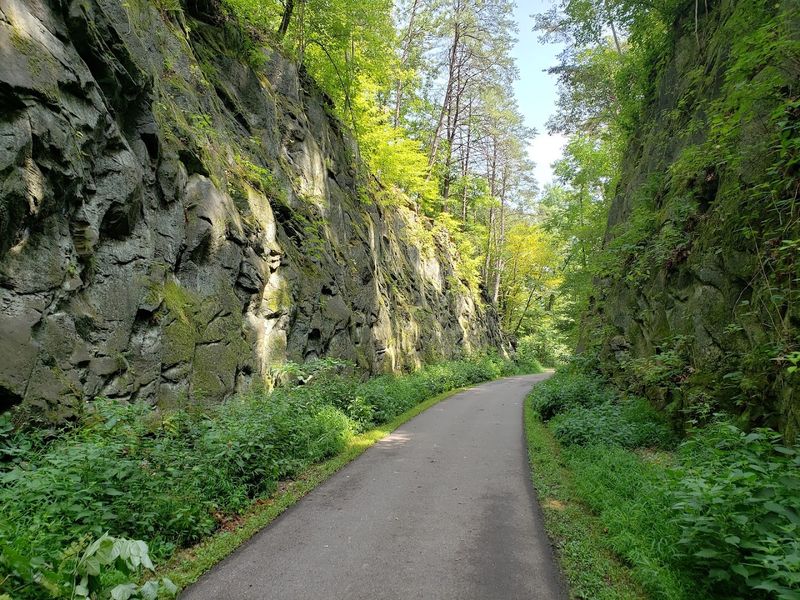
The first thing you notice at Blackhand Gorge State Nature Preserve is how quickly the everyday noise starts to fall away. One minute you are arriving like it is a normal Ohio outing, and the next you are walking into a wall of green that clearly has better plans for your afternoon.
The preserve is managed by the Ohio Department of Natural Resources and sits in Licking County in central Ohio. The parking lot is easy to use, and the restrooms near the trailhead are a small but very welcome detail before heading deeper into the gorge.
From the moment you pass the trailhead sign, the air feels cooler and calmer. Sandstone bluffs begin showing up within the first few minutes, and the Licking River soon joins the scene like it was hired to handle the soundtrack.
The preserve is free to enter, which makes the whole experience feel like one of Ohio’s better outdoor bargains. Access generally runs from one half hour before sunrise to one half hour after sunset, though it is always smart to check current ODNR notices before visiting because trail conditions can change.
For a simple walk that turns scenic almost immediately, head to Blackhand Gorge State Nature Preserve, 2200 Gratiot Rd SE, Heath, OH 43056.
The Paved Main Trail and What Makes It Special
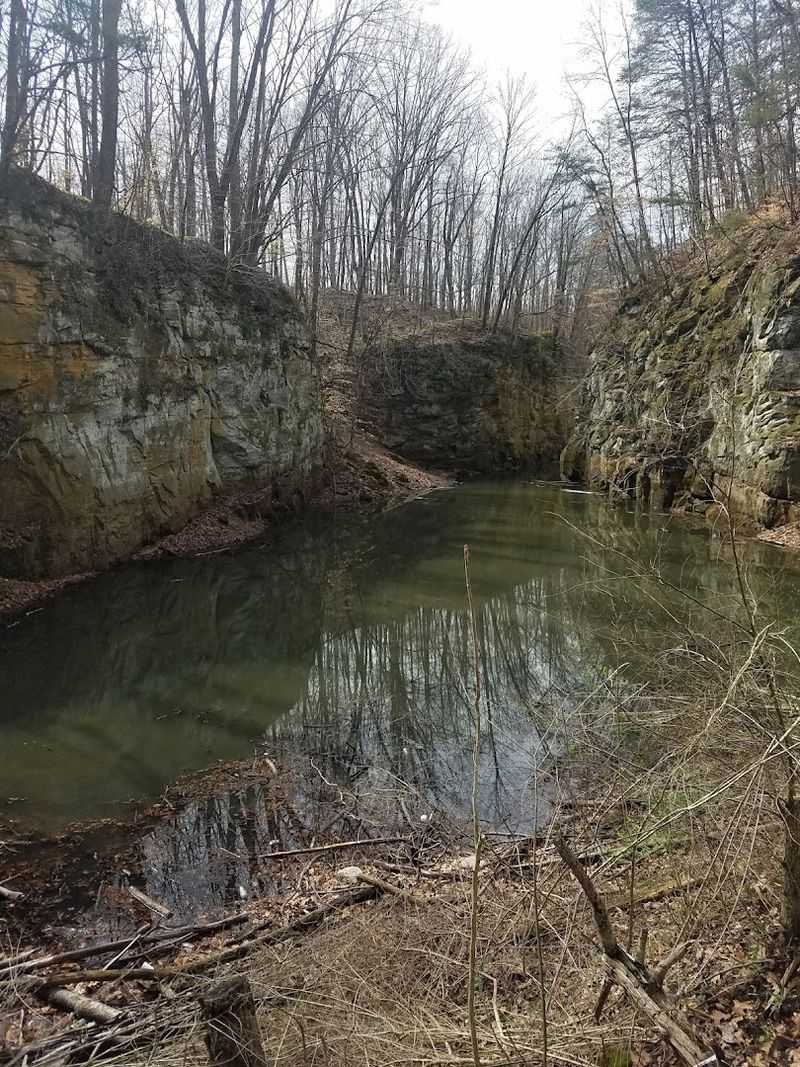
Not every nature preserve offers a paved trail, and the one here genuinely surprised me the first time I rounded a bend and saw smooth asphalt stretching ahead through the gorge.
The main Blackhand Trail runs about 4.3 miles one way, which means a full out-and-back gives you roughly 8.6 miles of mostly flat, shaded walking when the full route is open.
The path is wedged between sandstone rock bluffs on one side and the Licking River on the other, so you are essentially surrounded by scenery the entire time.
Almost the entire route is shaded, which makes it an excellent choice on hot summer days when other trails feel punishing.
Cyclists are welcome on the paved trail when it is open, and I passed several families on bikes during my visit, all of them moving at a comfortable pace and clearly enjoying the ride.
The incline is minimal throughout, so this trail works well for a wide range of fitness levels, from young kids to older adults.
It is also the only trail in the preserve where leashed pets are allowed, so your dog can join the adventure on the paved path, which is always a bonus when planning a day outdoors.
The Sandstone Cliffs and Black Hand Rock Formation
The geology here is genuinely one of the most interesting parts of the whole visit, and I say that as someone who usually skips the informational signs.
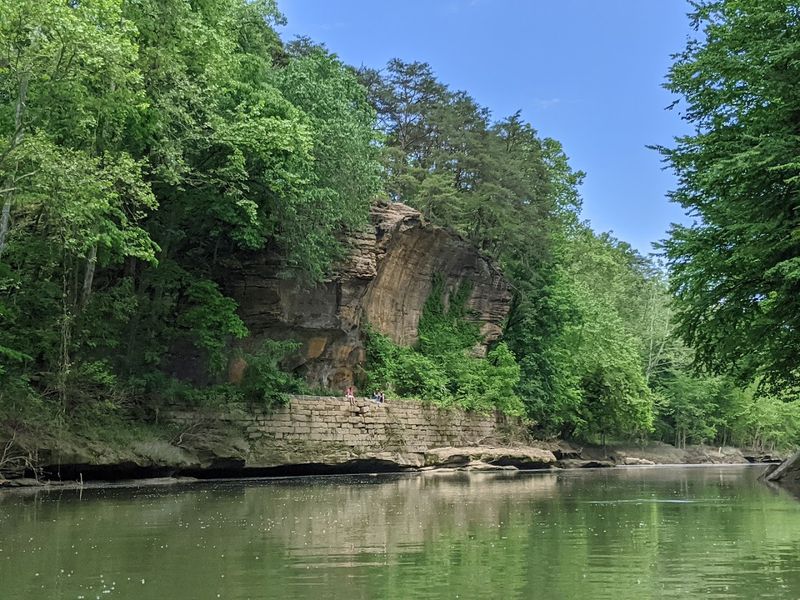
The cliffs are made of Black Hand sandstone, the same rock that forms the dramatic landscape at Hocking Hills State Park further south in Ohio.
Seeing that same distinctive rock here, rising in tall bluffs along the trail, gives the gorge a rugged and ancient quality that photographs struggle to fully capture.
The sandstone has a warm, golden-brown color that shifts in tone depending on the light, and in the late afternoon it practically glows.
There is a dedicated viewing deck near the site where the original Black Hand petroglyph once existed, a large carving made by Indigenous people that gave the gorge its name.
The petroglyph itself is no longer present, removed during canal construction in the 1800s, but the viewing area still offers a striking look at the bluff face.
Standing there and thinking about the thousands of years of human history connected to that rock wall made the whole hike feel more layered and meaningful than I expected.
The Unpaved Trails: Quarry Rim, Marie Hickey, and More
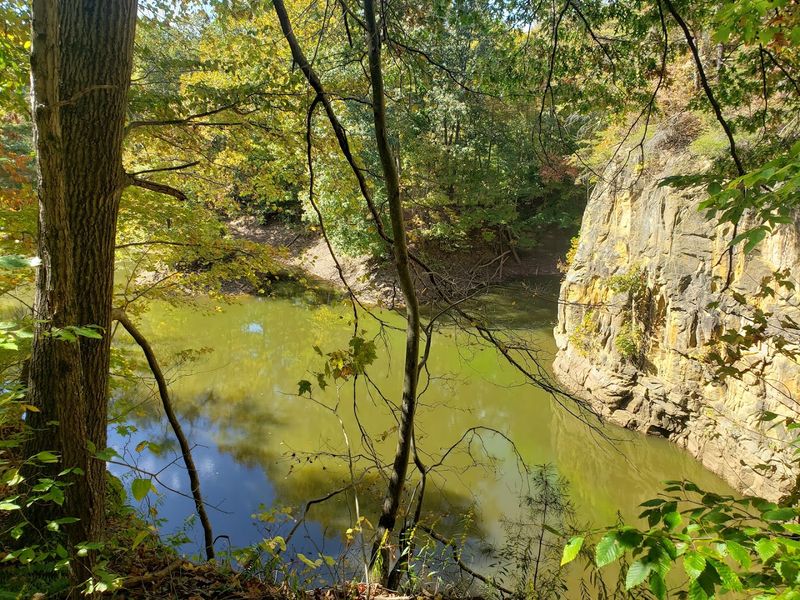
Once you have walked the paved trail, the unpaved side trails are where the preserve starts to reveal its more adventurous side.
The Quarry Rim Trail and the Marie Hickey Trail are two of the most talked-about options, though they are not accessed in exactly the same way, so checking the trail map before starting is a smart move.
These trails are rustic and unimproved, meaning exposed roots, rocky surfaces, and occasional mud patches after rain are all part of the experience.
I wore trail shoes and was glad I did, especially on the sections where the path climbs closer to the rim and the terrain gets noticeably more uneven.
Red arrow markers are posted on trees throughout these trails to keep you oriented, and detailed maps are available at trailheads, which removes most of the guesswork.
The views from the Quarry Rim section are worth every extra bit of effort when the trail is open, with sweeping looks down into the gorge that the paved trail simply cannot offer.
The Marie Hickey Trail felt quieter and more secluded, with noticeably fewer people, which gave the whole hike a more personal and immersive feel from start to finish.
The Historic Train Tunnel on the Canal Trail
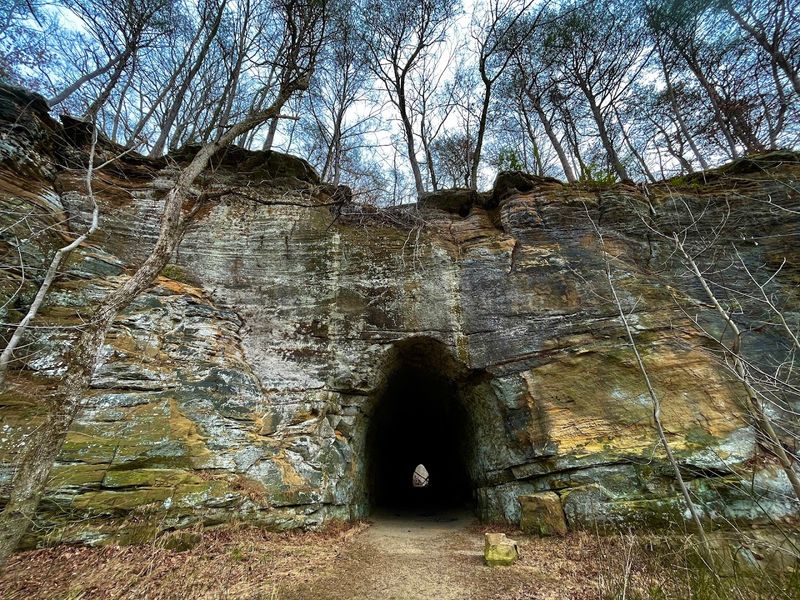
Few things on a nature hike carry the same quiet drama as stumbling across a tunnel carved through solid rock by people who lived over a century ago.
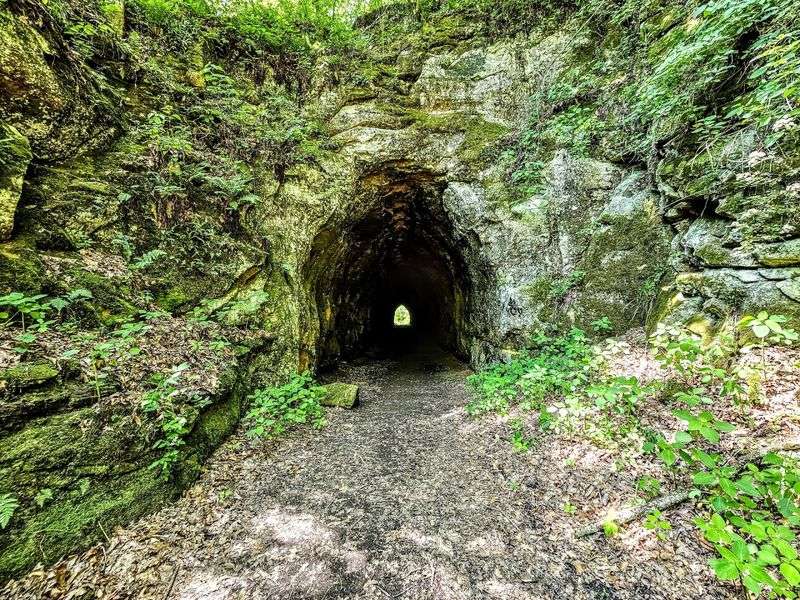
The old train tunnel sits along the Canal Trail, which runs on the opposite side of the Licking River from the main paved path.
Getting there requires a short half-mile hike, but that walk is absolutely worth the extra steps once you see the tunnel entrance emerging from the hillside.
The tunnel was part of Ohio’s extensive transportation history, a reminder that this gorge was once a busy corridor for canal boats and later for rail traffic moving goods across the state.
Kids especially love this feature, and I watched several young visitors run toward the tunnel entrance with the kind of excitement that only a genuine piece of history can produce.
There are no interpretive signs right at the tunnel itself, so doing a little reading beforehand helps you appreciate the context and the engineering involved.
The Canal Trail as a whole has its own quiet charm, with spots along the riverbank that feel completely separate from the busier main trail across the water.
Kayaking and River Access Along the Licking River
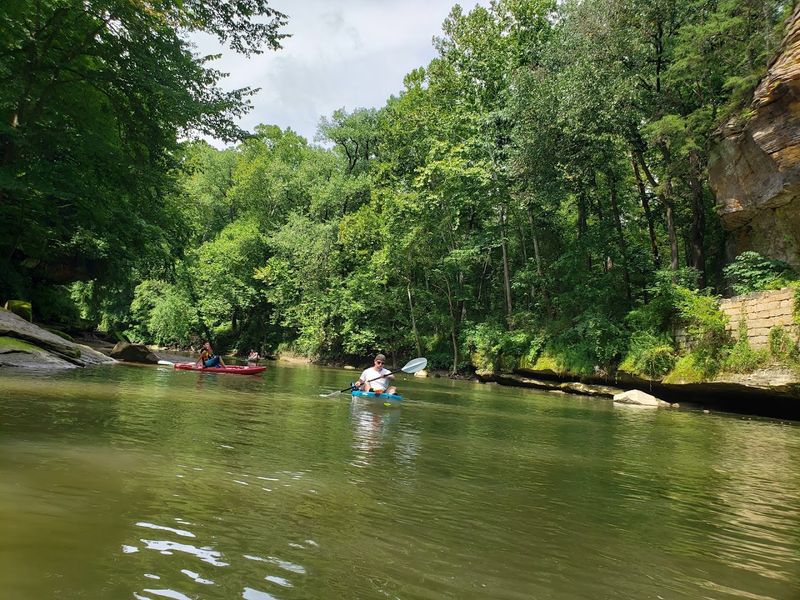
The Licking River is not just a backdrop here; it is an active part of what makes the preserve worth visiting more than once.
On weekends especially, the river fills up with kayakers working their way through the gorge, and watching them from the trail above gives you a completely different perspective on the landscape.
There are a few spots where trail access to the riverbank opens up, and my favorite was a small rocky beach area where families had gathered to look closely at fossils, stones, and shallow-water details without taking anything from the preserve.
The natural finds along the shoreline can be surprisingly interesting, and kids in particular tend to get absorbed in the search, comparing shapes and textures while keeping the rocks and fossils where they belong.
Access to the river is limited in most sections of the preserve, so the spots where you can actually get down to the water feel like small rewards for paying attention to the trail.
If you plan to kayak, the river conditions vary by season and rainfall, so checking current water levels before launching is a smart move.
The combination of trail hiking and river activity on the same visit makes for a genuinely full and satisfying outdoor day.
A Brief Look at the History Behind the Name
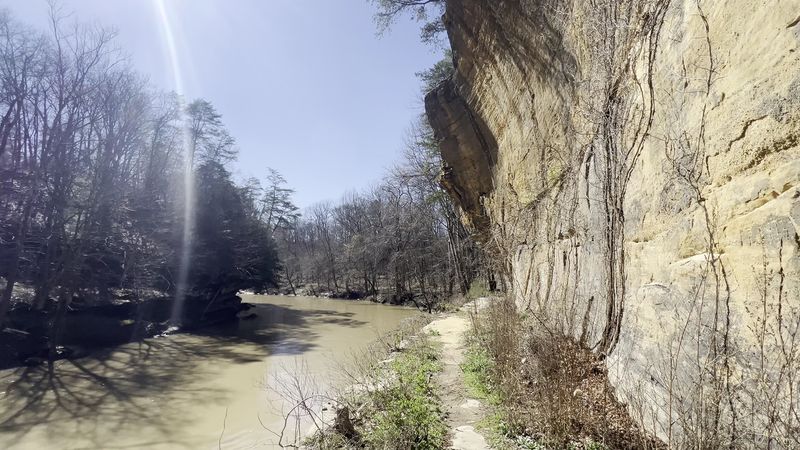
The name Blackhand Gorge carries a history that stretches back thousands of years, and understanding it adds real depth to what might otherwise feel like just a pretty hike.
The preserve takes its name from a large petroglyph, a hand-shaped carving in the sandstone bluff, that was made by Indigenous people associated with the Hopewell culture, with some estimates suggesting human presence in this area dating back to around 13,000 BC.
The carving was destroyed in the 1820s during the construction of the Ohio and Erie Canal, which ran directly through the gorge and transformed it into a major transportation corridor.
After the canal era ended, the railroad took over, and the old canal bed and rail lines are now part of the trail system you walk today.
Historical markers appear at several points along the main trail, and taking a few minutes to read them reframes the entire landscape as a living record of Ohio’s past.
The layers of history here, from ancient Indigenous culture to industrial transportation, are packed into a surprisingly compact stretch of land.
That contrast between wild nature and human history is part of what makes a visit here feel more substantial than a typical afternoon walk in the woods.
The Waterfall You Might Almost Miss
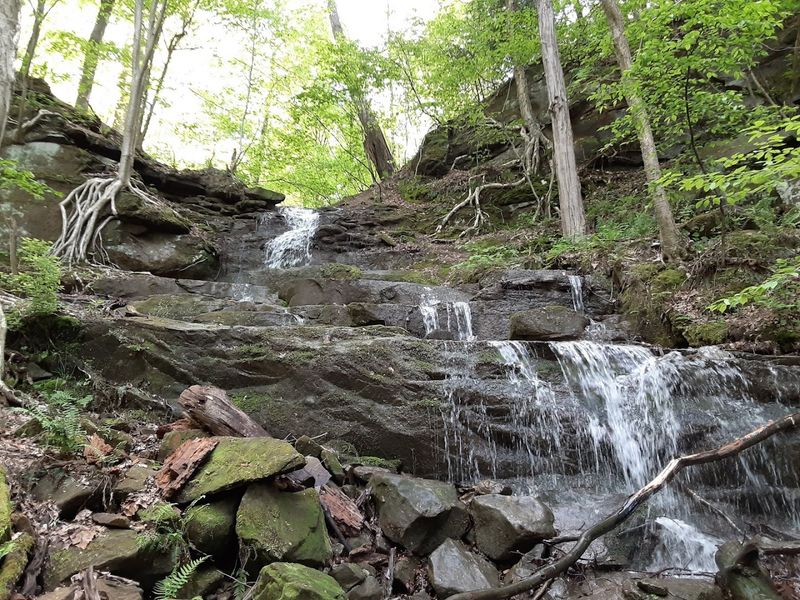
There are seasonal waterfall spots around Blackhand Gorge that do not appear on every map, and finding one feels like a small personal victory the first time it comes into view.
These falls usually flow best after a period of rainfall, so timing your visit after wet weather significantly improves the show.
The water drops over layered sandstone in a way that is quiet and graceful rather than dramatic, but the sound it makes in the surrounding silence of the gorge is genuinely lovely.
I almost walked past one the first time because my eyes were on the river, and I only caught it because another hiker paused ahead of me and pointed.
The area around the falls is mossy and green, with the kind of lush, damp atmosphere that makes you want to slow down and stay a while.
Photographing it requires a bit of patience since the light filtering through the trees changes quickly, but the resulting shots are worth the extra time spent adjusting angles.
Small features like this are part of what makes the preserve feel like it keeps giving you something new each time you visit.
Best Times to Visit and Practical Tips
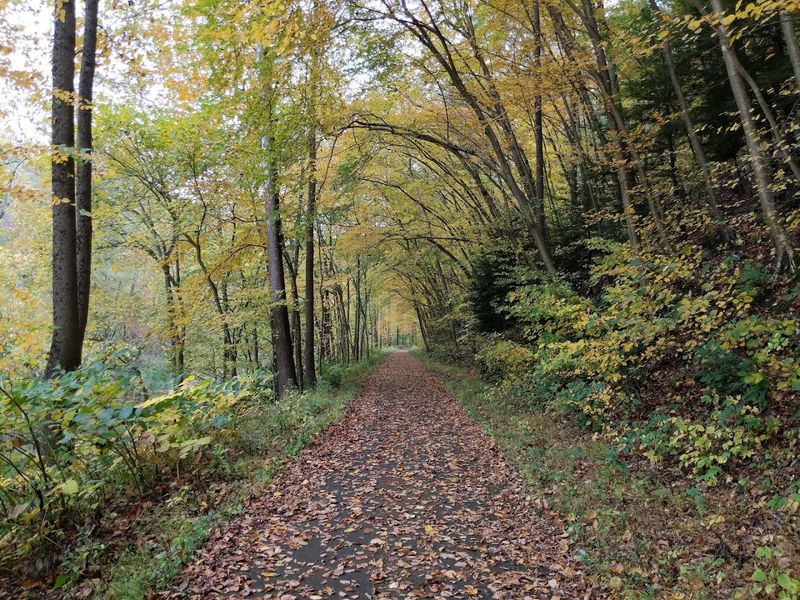
Timing your visit well makes a noticeable difference at a place this popular, and a few simple choices can completely change the experience.
Arriving early on weekends is especially important because the main parking lot fills up faster than you might expect, and finding a spot later in the morning can get frustrating on busy days.
Weekday mornings are the sweet spot for a quieter visit, and the trails feel almost entirely yours soon after the preserve opens.
Fall is widely considered the most visually spectacular season here, with the gorge walls and forest canopy turning vivid shades of orange, red, and yellow that reflect off the river below.
Spring brings rushing water and fresh green growth, making the landscape feel newly alive, while summer offers full shade and the busiest kayaking activity on the river.
Winter visits are possible and surprisingly peaceful, with the bare trees revealing rock formations that are hidden by foliage the rest of the year.
Bring water since there are no water fountains on the trail, wear shoes with grip for the unpaved sections, and check current ODNR trail alerts before visiting because closures and construction can affect which routes are available.
The Atmosphere That Keeps People Coming Back
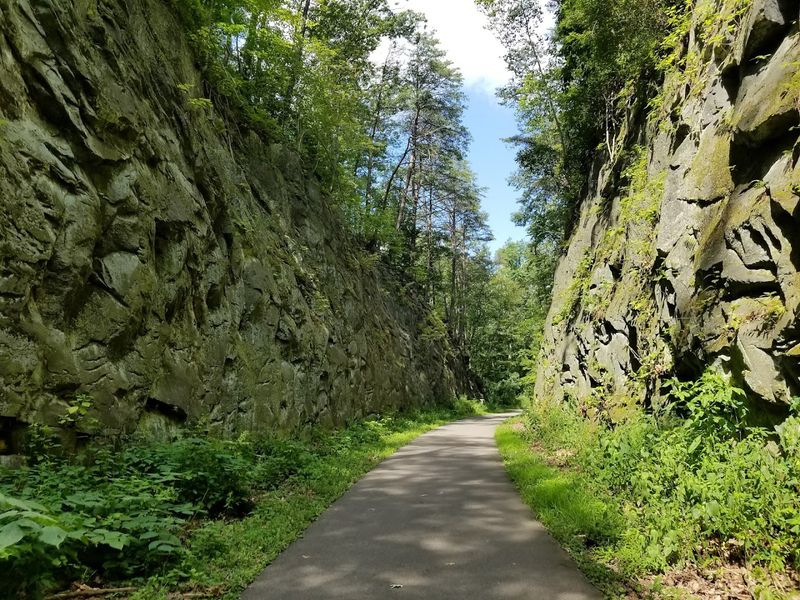
There is a specific quality to this place that is hard to name but easy to feel the moment you are standing in it.
The combination of the enclosed gorge, the river sounds, the towering rock walls, and the filtered forest light creates an atmosphere that genuinely quiets the mind in a way that a park without those elements simply cannot replicate.
I noticed it about twenty minutes into my first walk, when I realized I had stopped thinking about my to-do list and was just looking at the way sunlight moved across the sandstone.
The preserve earns its 4.8-star rating from nearly 1,700 reviews not because it is flashy or packed with amenities, but because it delivers a consistent and authentic natural experience every single time.
Families return here repeatedly, and it is easy to see why, because the trails offer something different at every season and every time of day.
The pace of the place encourages you to slow down, which is rarer than it sounds in a world that usually rewards rushing.
That unhurried, immersive quality is the real reason this gorge stays in your memory long after the drive home.
Final Thoughts on Why This Gorge Deserves Your Next Free Day
After spending a full day exploring every trail I could fit into the preserve’s open hours, I left with the specific kind of tiredness that only comes from actually being outside and moving through a beautiful landscape.
Blackhand Gorge State Nature Preserve is the kind of place that Ohio does quietly and consistently well, a natural space that requires no ticket, no reservation, and no special gear to enjoy at a basic level.
The paved trail makes it accessible to nearly everyone, while the unpaved routes give more experienced hikers something genuinely challenging and rewarding to work through.
The history layered into the landscape, from ancient Indigenous carvings to canal-era engineering, gives the whole experience an intellectual dimension that most outdoor spaces lack.
Whether you come for the geology, the wildlife, the river, or simply the need to stand somewhere quiet and wide open, this gorge delivers without any fuss.
The trail system, the fossils, the waterfall, the tunnel, and the sandstone cliffs all add up to a day that feels full in the best possible way.
Go once and you will already be planning the return trip before you reach the parking lot.