
This Ohio Road Trip Links A Storybook Castle, Hidden Gardens, And Waterfall Views
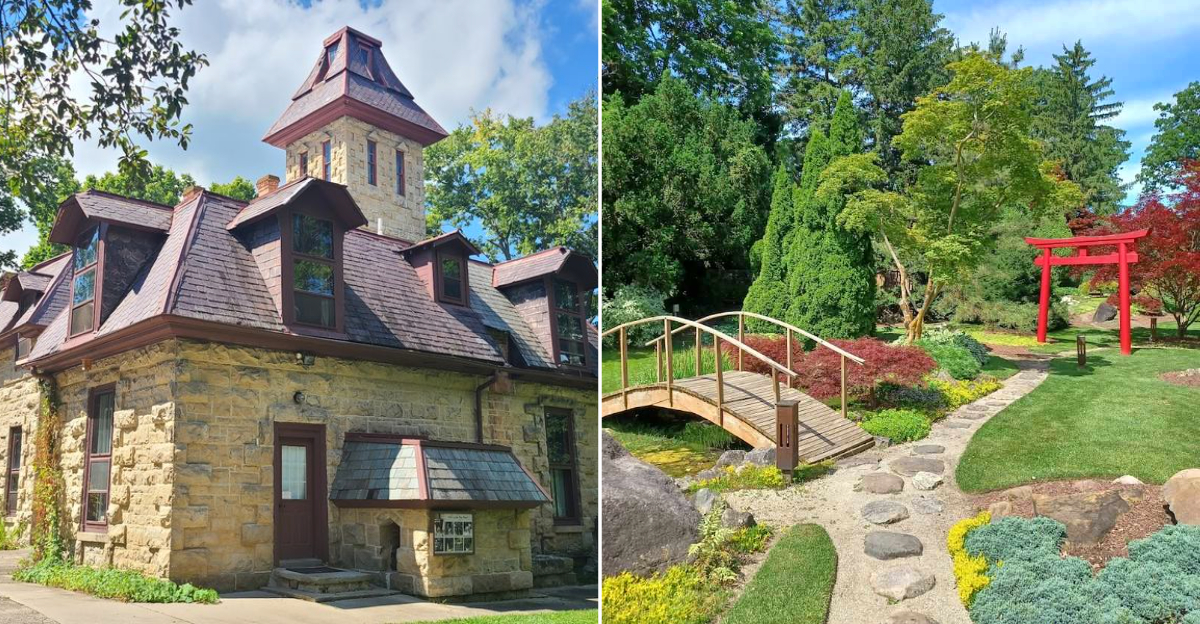
Ohio road trips get a lot more interesting when the stops feel like they belong in three different storybooks.
One route can move from a medieval-style castle with towers and a drawbridge to colorful garden paths, peaceful arboretums, and waterfalls that do not believe in being subtle.
This 13-stop journey brings together some of the state’s most memorable scenery, from elegant historic estates to leafy hidden corners and rushing water views that make the camera earn its keep.
Pack good walking shoes, charge the playlist, and leave room for a few “wait, this is in Ohio?” moments. This trip gives the Buckeye State plenty of chances to show off, and honestly, it takes full advantage.
1. Loveland Castle Museum, Loveland
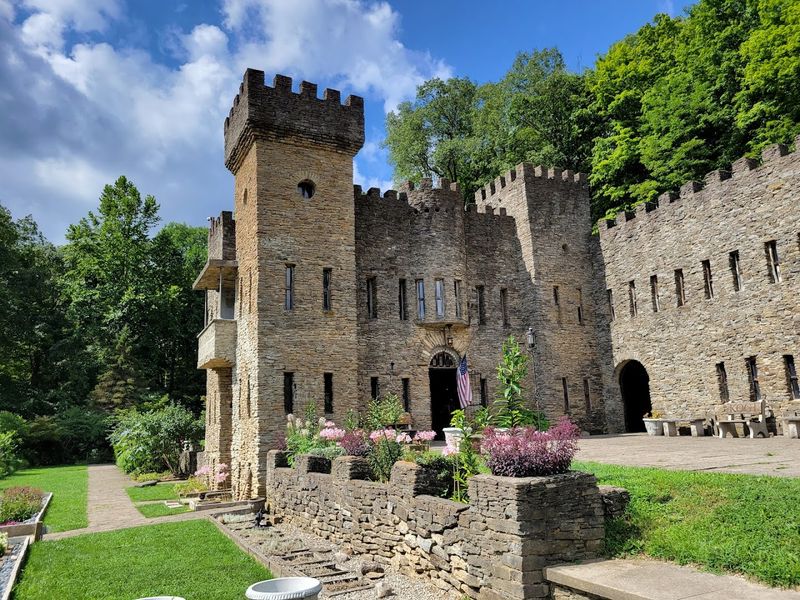
Built almost entirely by one man over several decades, Loveland Castle Museum sits along the Little Miami River in Loveland, Ohio, like something out of a fairy tale that actually came true.
Harry Andrews started constructing this medieval fortress in the 1920s, hauling stones from the riverbed one by one.
The result is a surprisingly convincing castle complete with towers, a moat, and a working drawbridge.
Inside, you will find suits of armor, medieval weapons, and handmade furniture that Andrews crafted himself.
The grounds are open for self-guided tours, and the whole experience feels wonderfully low-key and personal compared to a typical museum visit.
Kids absolutely love spotting the little details tucked into the stonework, and adults tend to walk around with wide eyes wondering how one person pulled this off.
Plan to spend at least an hour here, and bring comfortable shoes since the terrain around the castle is uneven.
Admission is very affordable, making this one of the best-value stops on the entire trip.
2. Piatt Castle Mac-A-Cheek, West Liberty
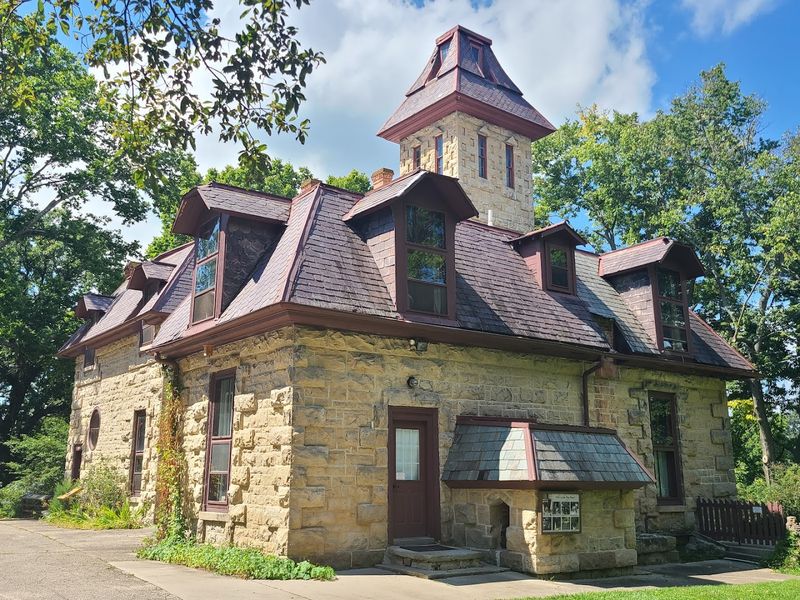
Tucked into the rolling countryside of West Liberty, Ohio, Piatt Castle Mac-A-Cheek looks like it was airlifted straight from another century and gently placed among the cornfields.
Built between 1864 and 1871 by Civil War general Abram Sanders Piatt, this historic stone castle is loaded with original family furnishings, oil paintings, and decorative details that have barely changed in over a century.
The facilitated self-guided tours here are genuinely fascinating, giving you a real sense of what wealthy Ohio life looked like in the post-Civil War era.
Ceilings are painted with elaborate murals, and the woodwork throughout the house is jaw-dropping in its intricacy.
The estate sits on beautifully maintained grounds that are worth exploring on their own before or after your tour.
Visiting during the 2026 season gives you the best chance of touring the castle, with weekend hours in spring and fall and daily hours from Memorial Day through Labor Day.
If you want a spot on this road trip that feels genuinely historic and a little theatrical at the same time, this is it.
3. Stan Hywet Hall & Gardens, Akron
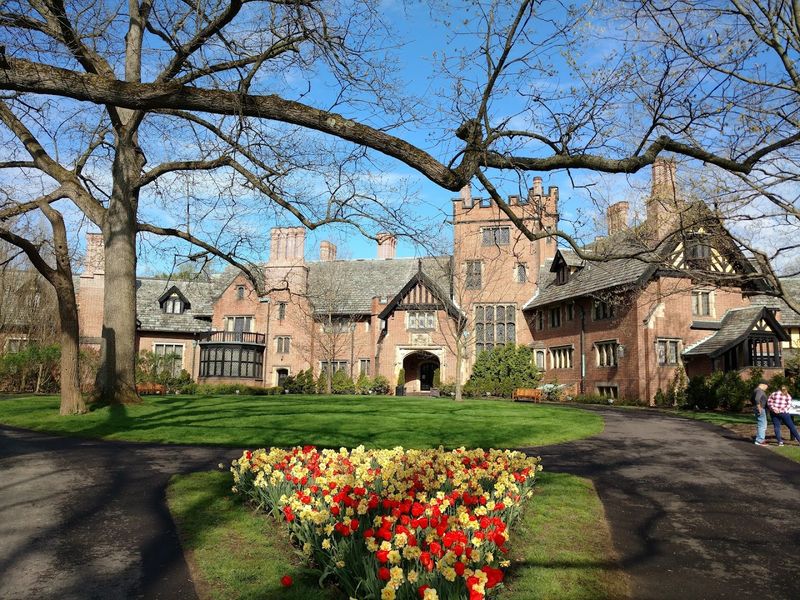
Few places in Ohio stop you in your tracks quite the way Stan Hywet Hall does the first time you see it.
The name means “stone quarry” in Old English, which is a fitting tribute to the land that once surrounded this Tudor Revival mansion in Akron, Ohio.
Built in 1915 by Goodyear Tire co-founder F.A. Seiberling, the 65-room estate is one of the largest historic homes open to the public in the entire United States.
The gardens are the real showstopper, though, with an English Garden, a Japanese Garden, and a birch-lined allée that turns golden and glowing in autumn.
Spring visits reward you with thousands of tulips and blooming crabapple trees that make the whole property look like a painting.
Tours of the manor house run regularly and cover the family’s fascinating history, their art collection, and the remarkable craftsmanship woven into every room.
Budget at least two to three hours here because rushing through Stan Hywet would be a genuine shame.
4. Inniswood Metro Gardens, Westerville
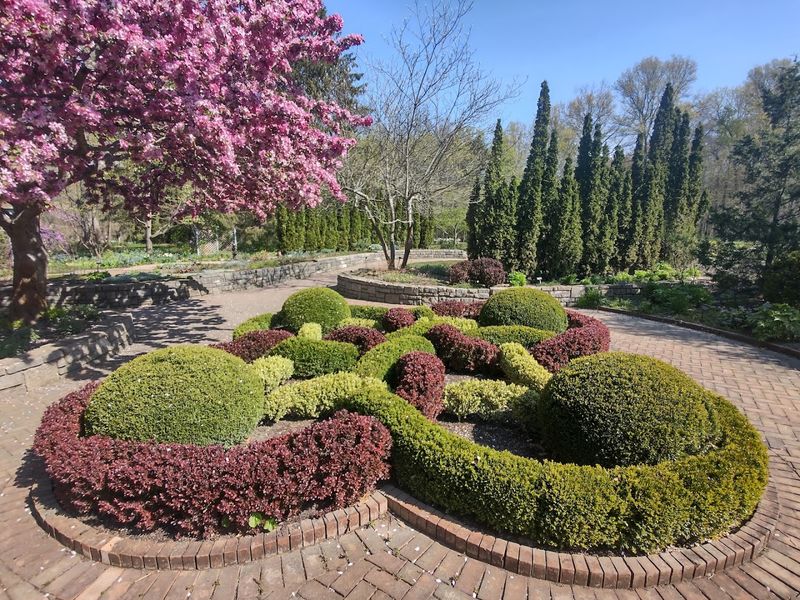
Hidden in plain sight in Westerville, Ohio, Inniswood Metro Gardens rewards anyone willing to wander its winding paths with one beautiful surprise after another.
The 123-acre park was originally a private estate owned by sisters Grace and Mary Innis, who spent decades cultivating a collection of plants that became the foundation of what visitors enjoy today.
Rock gardens, herb gardens, a rose garden, and woodland trails all coexist here in a way that feels both curated and completely natural.
Spring is arguably the most spectacular season to visit, when thousands of daffodils and tulips blanket the hillsides in waves of yellow, pink, and white.
Children have their own dedicated garden area with interactive features, making this an easy stop for families traveling with younger kids.
Admission is free, which makes Inniswood one of the most generous stops on this whole road trip.
Wear layers in early spring or late fall since the shaded woodland sections can feel significantly cooler than the open garden beds nearby.
5. Kingwood Center Gardens, Mansfield
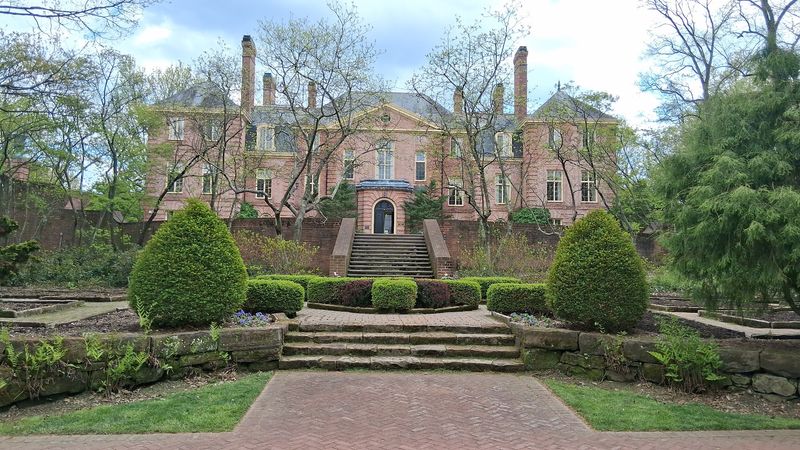
Mansfield, Ohio might not be the first city that comes to mind when you think about world-class gardens, but Kingwood Center Gardens has been quietly making the case for decades.
The 47-acre estate was once the private home of Charles Kelley King, and his French Provincial mansion still anchors the property with a sense of old-world grandeur.
What really draws visitors back year after year is the seasonal color, especially in spring, when tulips and other blooms fill the formal garden beds with bright, camera-ready displays.
Beyond tulips, the gardens rotate through seasonal plantings that keep things fresh from early spring through late fall.
Peacocks roam freely across the grounds, adding an unexpectedly whimsical element to the whole experience.
The greenhouse complex is worth a slow walk-through even in the colder months, offering warmth and greenery when the outdoor gardens are dormant.
Kingwood is proof that the most rewarding road trip stops are often the ones you did not know to expect.
6. Schedel Arboretum & Gardens, Elmore
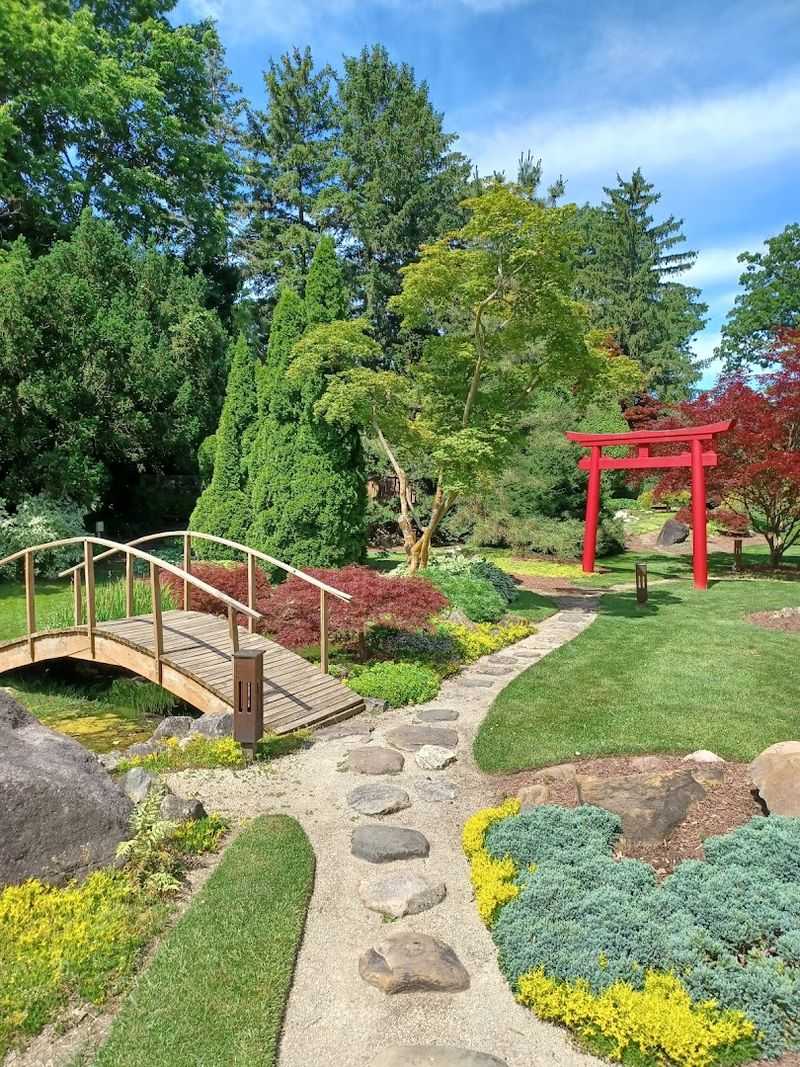
Not many people outside northwest Ohio have heard of Schedel Arboretum and Gardens, which honestly makes visiting it feel like stumbling onto a well-kept secret.
Located in Elmore, Ohio, this 17-acre estate was shaped by Joseph and Marie Schedel after they made the property their home in 1929, with a particular emphasis on garden design that gives the whole property a calm, meditative quality.
The bonsai collection alone is worth the trip, featuring trees that have been carefully trained for decades into shapes that seem almost impossible.
A koi pond, stone lanterns, and an arched wooden bridge add to the tranquil atmosphere, making this one of the most visually distinctive garden stops on the entire route.
The grounds also include a formal rose garden and a pergola-lined pathway that blooms with wisteria in late spring.
The estate is open seasonally, so checking hours before you go is a smart move.
Small in scale but enormous in beauty, Schedel rewards slow, unhurried exploration rather than a quick walk-through.
7. Schoepfle Garden, Wakeman
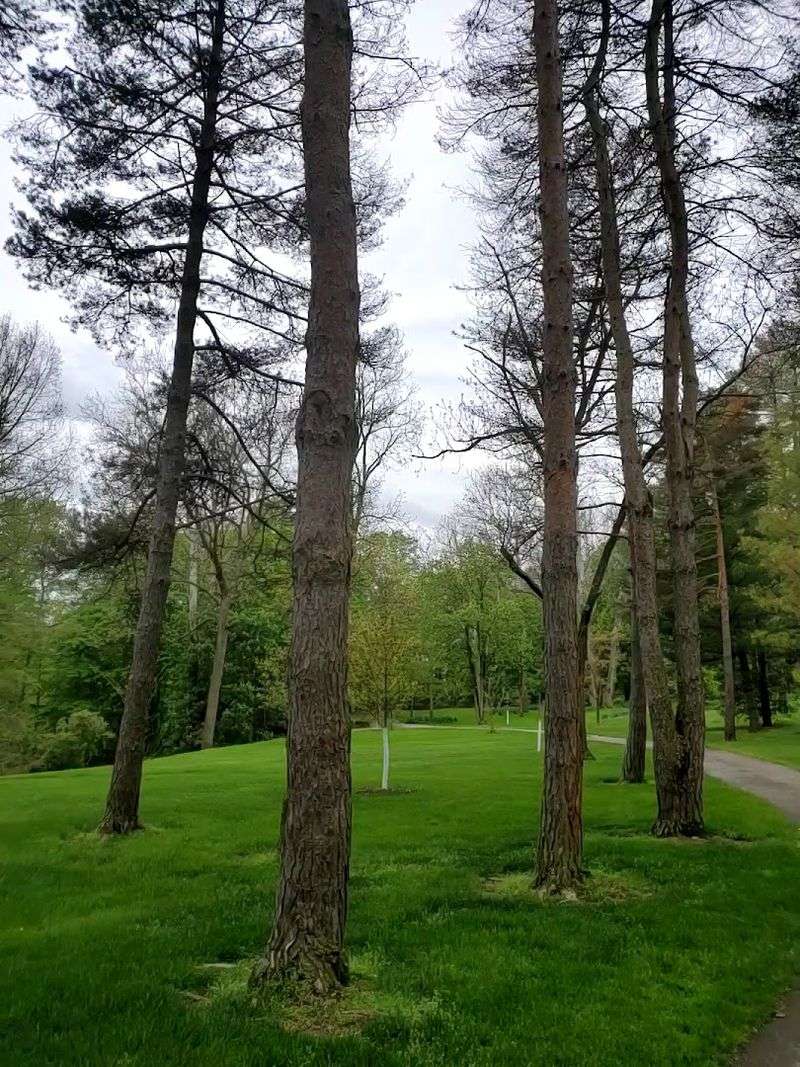
Some gardens announce themselves loudly, but Schoepfle Garden in Wakeman, Ohio, works its magic quietly through towering trees, a winding creek, and paths that feel genuinely removed from the modern world.
The 77-acre property was donated to the Lorain County Metro Parks by Otto Schoepfle in 1969, and it has been a beloved local retreat ever since.
Massive beech, oak, and tulip trees form a cathedral-like canopy overhead that makes even a simple walk feel like something special.
The Vermilion River runs along the edge of the property, adding the kind of gentle background soundtrack that no playlist can replicate.
Wildflowers carpet the forest floor in spring, with trilliums, Virginia bluebells, and trout lilies all making appearances depending on the week you visit.
Current garden rules do not permit dogs or other pets, so this stop is best planned without a four-legged companion.
Schoepfle is open daily from 8 AM to sunset, giving it an easy, no-pressure energy that feels refreshing midway through a long road trip.
8. The Holden Arboretum, Kirtland
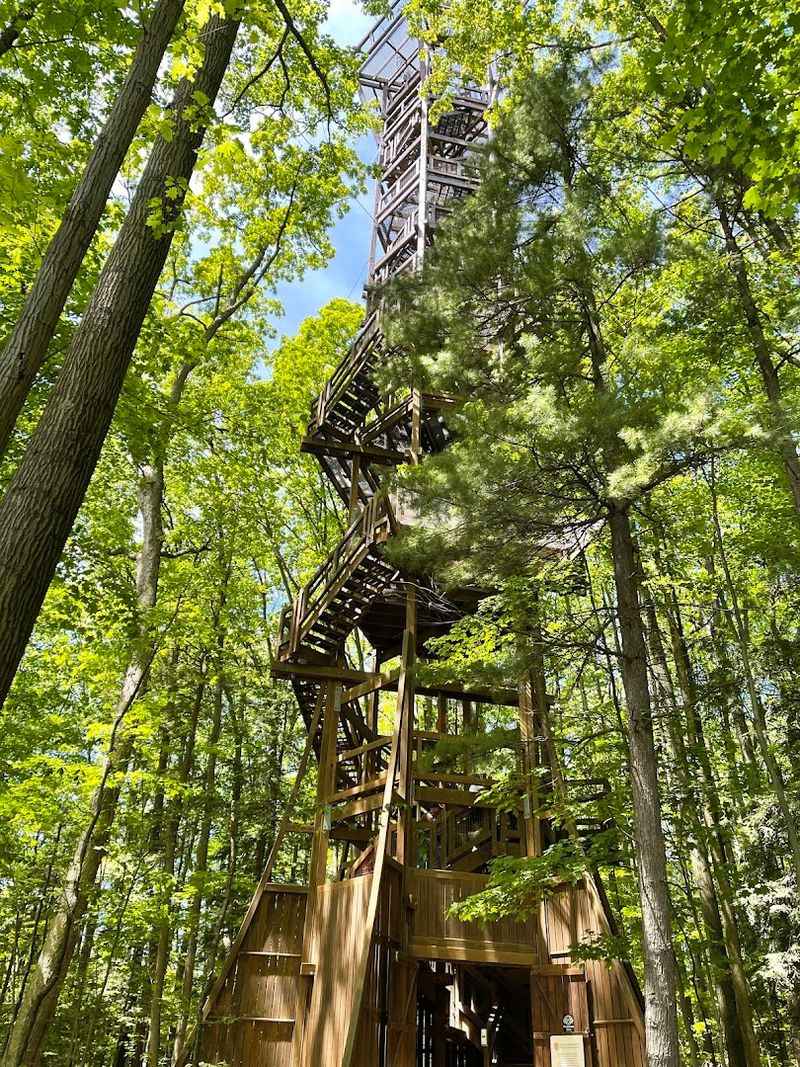
At nearly 3,600 acres, The Holden Arboretum in Kirtland, Ohio, is one of the largest arboreta in the entire country, and it carries that scale with impressive grace.
Founded in 1931, the arboretum has grown into a living collection of trees, shrubs, and wildflowers spread across forested hills, open meadows, and curated garden spaces.
The Murch Canopy Walk and Emergent Tower are highlights that literally elevate the experience, letting you stroll above the treetops and look out over the surrounding forest from a height that feels thrilling without being scary.
Rhododendron season in late May and early June turns the garden sections into something close to unreal, with massive blooms in shades of pink, purple, and white crowding every path.
The arboretum also runs excellent educational programs for families and school groups throughout the year.
Trails range from easy paved routes to longer woodland loops, so you can tailor the visit to your energy level.
Come hungry for beauty and leave with a camera full of photos you will actually use.
9. Franklin Park Conservatory and Botanical Gardens, Columbus

Right in the heart of Columbus, Ohio, Franklin Park Conservatory and Botanical Gardens manages to pack a surprising amount of wonder into its 40-acre setting.
The centerpiece is the stunning Victorian-style Palm House, a glass-and-iron greenhouse that was built in 1895 and still looks spectacular today.
Inside, you can walk through distinct biomes including a tropical rainforest, a Himalayan mountain environment, and a Pacific Island water garden, each one feeling completely different from the last.
The permanent collection of glass art by Dale Chihuly adds an extra layer of visual drama, with massive blown-glass sculptures placed throughout the conservatory in conversation with the plants around them.
Outdoor gardens expand the experience considerably in warmer months, with seasonal installations and blooming displays that change throughout the year.
The conservatory is open year-round, making it a reliable stop regardless of what the Ohio weather decides to do on any given day.
It is a full afternoon on its own and well worth building around.
10. Topiary Park, Columbus
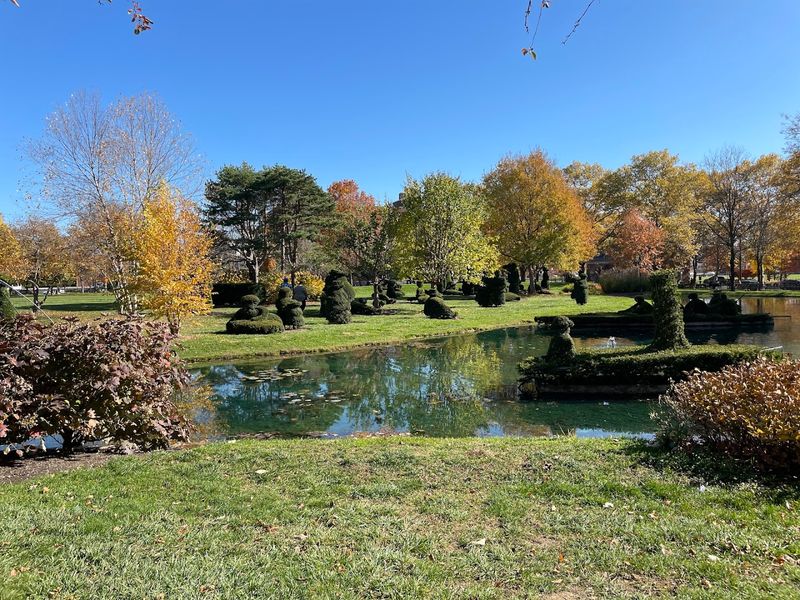
Topiary Park in Columbus, Ohio, is genuinely unlike anything else you will encounter on this road trip or probably anywhere else in the country.
The park recreates Georges Seurat’s famous pointillist painting “A Sunday on La Grande Jatte” entirely in living topiary, with 54 sculpted figures, eight boats, three dogs, a monkey, and a cat arranged around a reflecting pond.
Seeing it in person has a wonderfully surreal quality, like stepping into a painting that has been translated into three dimensions and then covered in leaves.
The park is maintained by the City of Columbus and is free to enter, which makes it an easy and rewarding detour from the conservatory just a short drive away.
Early morning visits are especially peaceful, with mist sometimes rising off the pond and the whole scene to yourself before the crowds arrive.
Autumn gives the surrounding trees a warm golden backdrop that contrasts beautifully with the green topiary figures.
It is quirky, creative, and completely memorable in the best possible way.
11. Brandywine Falls, Sagamore Hills Township
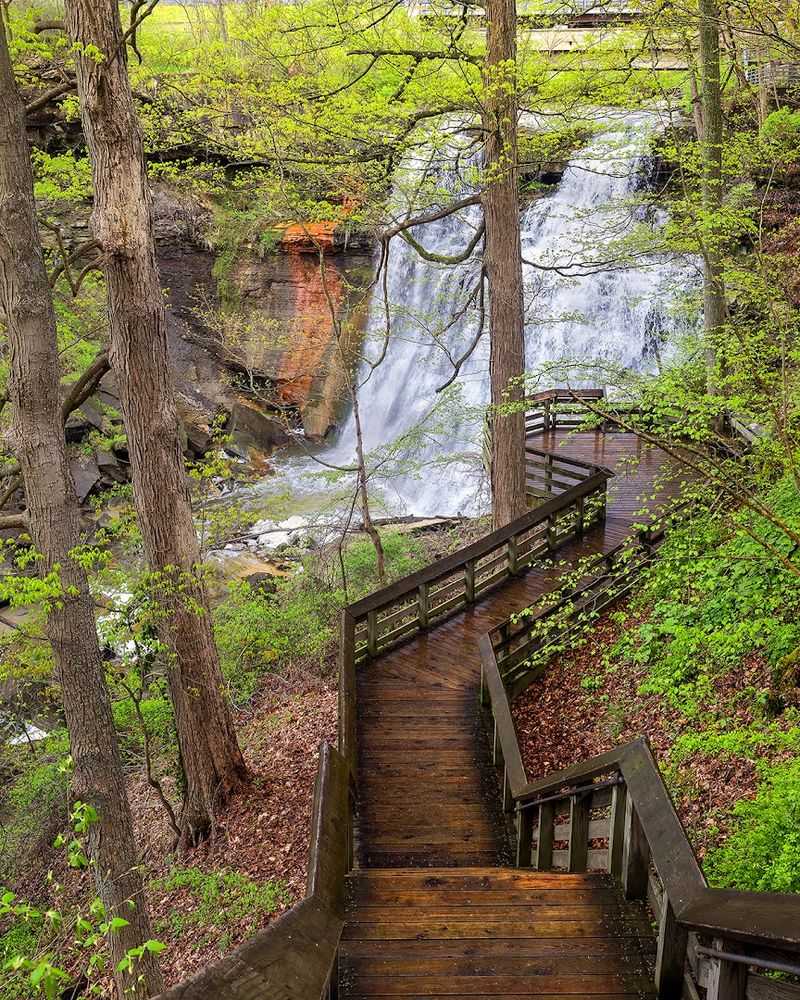
There is a moment on the boardwalk at Brandywine Falls when the sound hits you before the view does, a deep, steady rush that builds as you get closer and then suddenly the full 60-foot drop comes into view.
Located in Sagamore Hills Township, Ohio, within the Cuyahoga Valley National Park, Brandywine Falls is one of the most photographed waterfalls in the entire state, and it earns every click of the shutter.
The layered sandstone and shale cliffs frame the falls beautifully, especially after a rain when the water volume swells and the whole gorge feels alive with movement.
A well-maintained boardwalk and loop trail make the falls accessible to most visitors without requiring serious hiking gear.
Spring and early summer tend to produce the strongest water flow, while autumn surrounds the falls with brilliant foliage that reflects in the pool below.
Parking is free and the trail is short, so this is an easy stop even if you are running tight on time.
Few moments on this road trip match the simple, powerful reward of standing in front of these falls.
12. Hayden Run Falls, Dublin
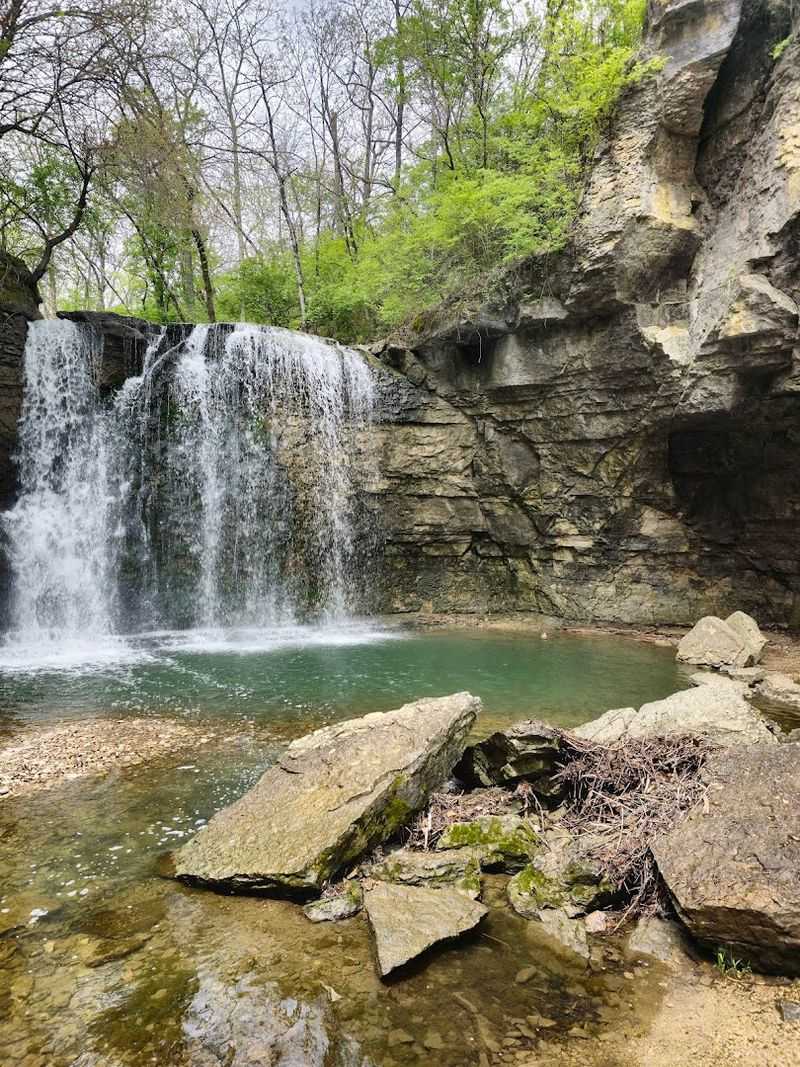
Hayden Run Falls in the Dublin area is the kind of spot that locals have been visiting for years while keeping surprisingly quiet about it to outsiders.
The falls drop about 30 to 35 feet inside a wooded ravine, creating a compact but memorable waterfall that feels much more secluded than its suburban surroundings suggest.
That tucked-away setting gives Hayden Run a distinctive character that photographs beautifully and feels genuinely peaceful in person.
The surrounding preserve is small but well-kept, with a short boardwalk leading from the parking area to the falls overlook.
Fall is the most popular season here, when the surrounding hardwood trees turn orange and red and frame the waterfall in warm, rich color.
The site is part of Hayden Falls Nature Preserve and is free to visit, which is always a welcome detail on a multi-stop road trip.
A visit here takes about 30 minutes, making it a perfect between-stops refresher that punches well above its weight.
13. Charleston Falls Preserve, Tipp City
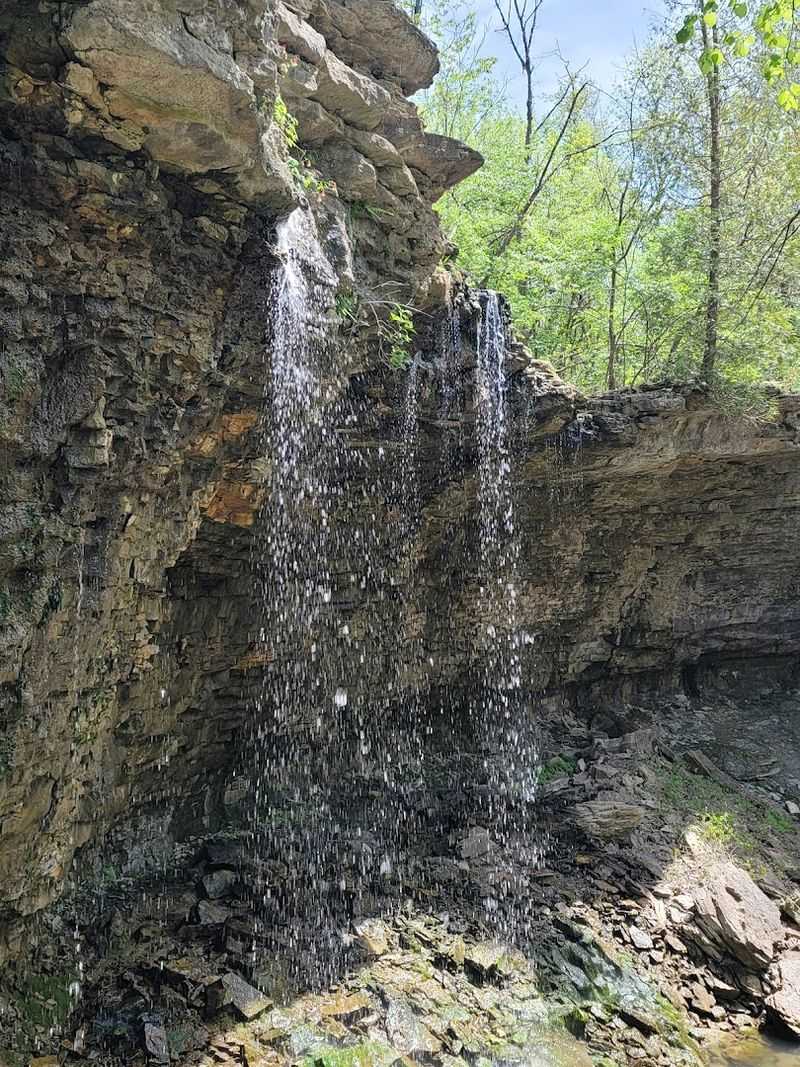
Southwest Ohio is not typically where people expect to find a 37-foot waterfall tucked inside a forested preserve, which is exactly what makes Charleston Falls Preserve near Tipp City so rewarding to discover.
The falls drop over rock strata also found in New York State and Canada, giving the site a geological character that goes well beyond its obvious visual appeal.
The limestone faces around the gorge support uncommon plants and create a cool, scenic setting around the falls that feels noticeably different from the open farmland just minutes away.
The preserve is managed by Miami County Park District and features a network of trails that loop through prairie, forest, and wetland habitats beyond the falls themselves.
Spring visits offer the highest water flow and the freshest greenery, though the wooded setting keeps things lush and interesting even in summer and fall.
Wildlife sightings are common here, with white-tailed deer, wild turkeys, and various songbirds all making regular appearances along the trails.
Charleston Falls is the kind of finale that makes you want to plan the whole trip again from the beginning.