
This Ohio Tower Climb Might Be One Of 2026’s Most Underrated View Stops
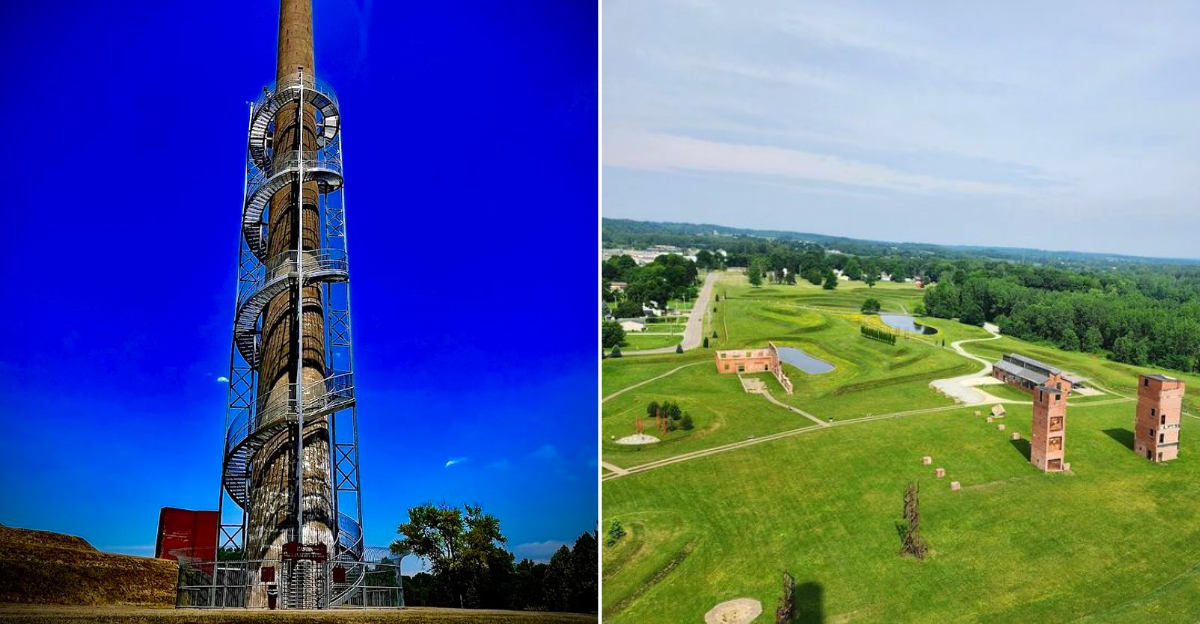
Central Ohio has a tower climb that feels like a small challenge with a big payoff. It is not flashy, crowded, or wrapped in tourist noise, which is exactly why finding it feels so satisfying.
The climb rises 140 feet inside a former industrial smokestack, turning an old piece of local history into one of the most unexpected view stops in Mount Vernon. Step by step, the park drops farther below, and the surrounding countryside starts opening up in every direction.
That is what makes this 2026 detour worth knowing about. It gives you history, height, public art, and a wide Ohio view without making the whole thing feel overplanned or overdone.
The Tower That History Built
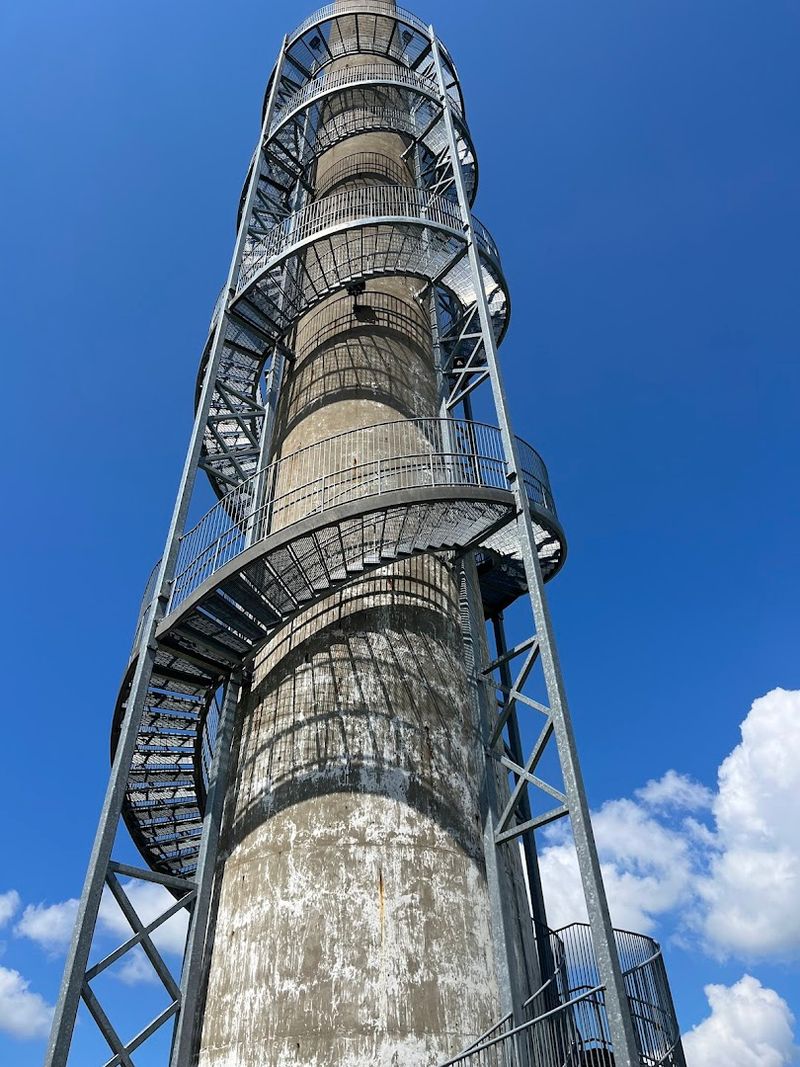
Not every landmark starts out as something beautiful, and that is part of what makes Rastin Observation Tower so interesting.
This Mount Vernon tower began as an industrial smokestack on the former Pittsburgh Plate Glass manufacturing site, then found a second life as one of central Ohio’s most unexpected view stops.
Instead of tearing it down, the community turned it into something people could climb, photograph, and remember.
That choice gives the whole structure a special kind of character. It is not just an observation tower dropped into a park for scenery.
It is a piece of local industrial history that has been reworked into public art, community pride, and a surprisingly memorable challenge for anyone willing to take the stairs.
From the ground, the narrow structure still has that old smokestack presence, tall, sturdy, and impossible to ignore once you spot it.
The industrial past is not hidden here, which is what makes the tower feel so authentic.
For a 2026 detour with history, height, and a view that rewards the climb, this underrated Ohio stop deserves more attention. You will find Rastin Observation Tower at Ariel-Foundation Park, 175 S Norton St, Mount Vernon, OH 43050.
What the Climb Actually Feels Like
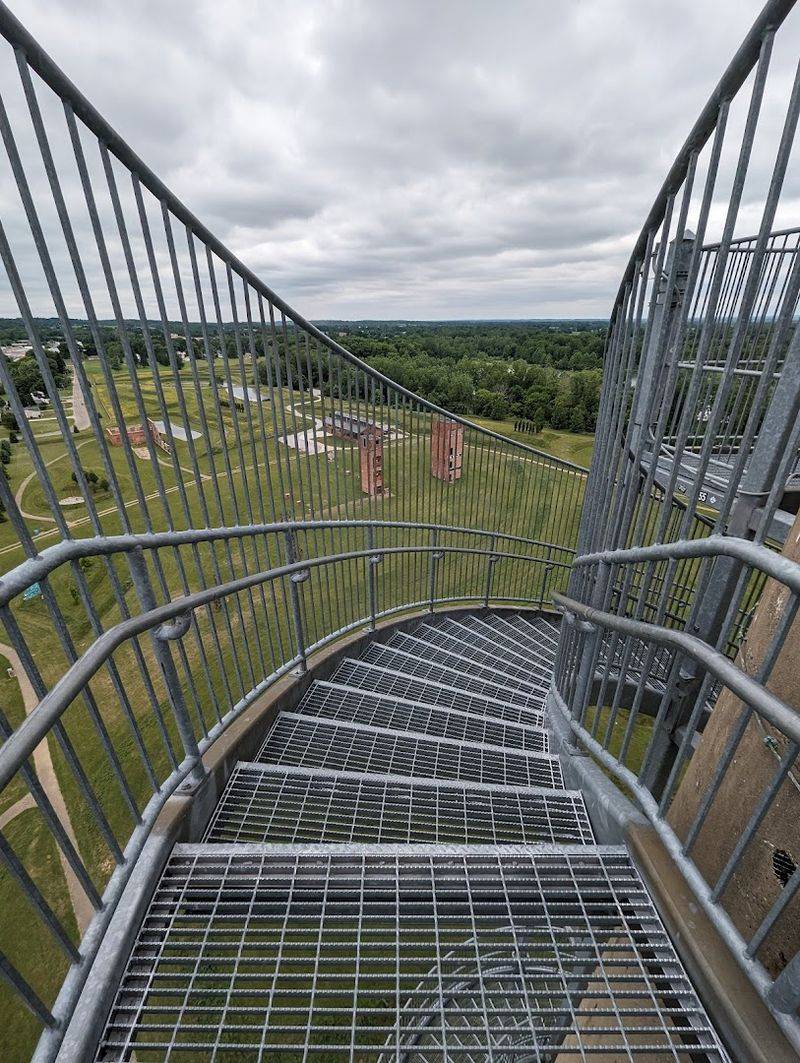
My legs felt it before my brain fully registered how high I was going.
The staircase at the Rastin Observation Tower spirals around the old smokestack, which means you are climbing beside a massive industrial structure that still feels rooted in its original purpose.
There are more than 220 steps leading to an observation deck 140 feet above the ground, while the smokestack itself rises much higher, making the ascent feel like a real achievement.
One visitor described it as “spooky,” and honestly, that word fits. The height, the exposed steel staircase, and the scale of the smokestack create a kind of suspense that ordinary park overlooks do not quite match.
The wind can feel stronger as you get higher, and the open view reminds you with every turn that you are climbing toward one of the most dramatic vantage points in Knox County.
By the time you reach the observation level, your heart is beating for two reasons: the climb and the anticipation of what is waiting just ahead.
The View From the Top
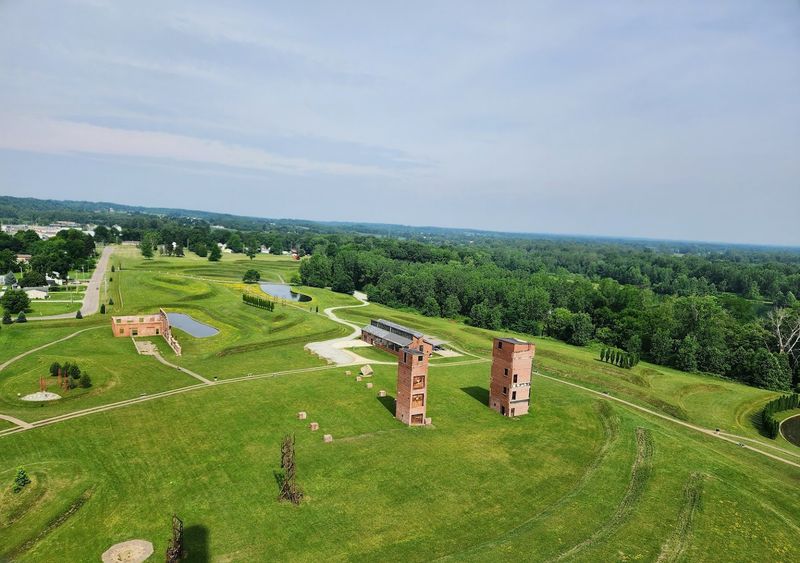
The moment you step onto the observation platform, the effort of the climb immediately fades.
From 140 feet up, the entire city of Mount Vernon spreads out in every direction in a full 360-degree panorama.
I could see rooftops, church steeples, tree lines, and rolling countryside stretching far beyond the edges of town. The park grounds below look like a carefully arranged garden from up here, with reflection ponds and landscaped paths forming neat geometric shapes.
On a clear day, the visibility reaches well into the surrounding Knox County countryside, giving you a sense of just how wide and open this part of central Ohio really is.
One climber described reaching the top as “a gift,” and that description holds up. The view is not just scenic; it is genuinely moving in a quiet, unhurried way that you do not expect from a small-town park.
The buzzards circling below the platform level are a memorable detail that adds a wild, untamed quality to a view that might otherwise feel purely peaceful. You are above their flight path, which is a rare feeling.
Ariel-Foundation Park Beyond the Tower
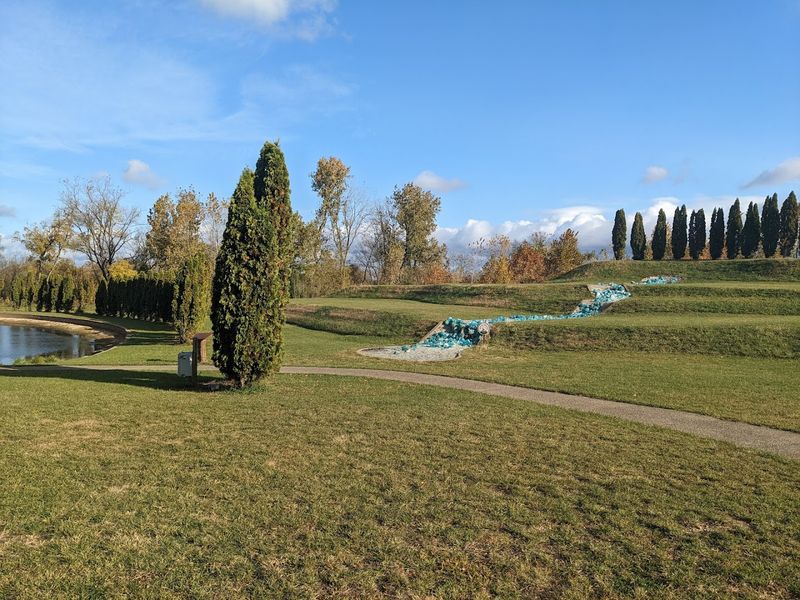
The tower is the headline act, but the park surrounding it is absolutely worth your time before or after the climb.
Ariel-Foundation Park is a thoughtfully designed green space built on the footprint of a former industrial site, and that contrast between past and present runs through every corner of it.
Reflection ponds sit quietly among tiered landscaping that creates a layered, almost theatrical visual effect as you walk through. The paths are clean, wide, and easy to follow, making the park accessible for all kinds of visitors.
Public art pieces are scattered throughout the grounds, and they range from sculptural installations to creative repurposings of old industrial equipment. The whole space feels like a curated experience rather than a simple city park.
I spent a good chunk of time just wandering the paths before I even approached the tower, and that time felt well spent. The park rewards slow, curious exploration.
Families, cyclists, solo walkers, and photography enthusiasts all seem to find their own rhythm here, which is a sign that the design genuinely works for a wide range of people and moods.
A Cyclist’s Favorite Landmark
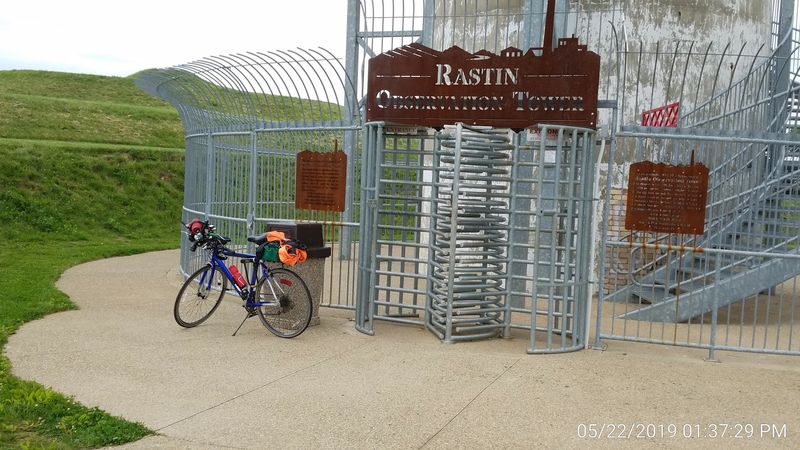
Cyclists who ride the Heart of Ohio Trail already know this tower by sight before they even arrive at the park.
The trail, which is part of the larger Ohio to Erie Trail system, passes right through Mount Vernon, and the Rastin Observation Tower greets southbound riders as they roll into town.
That visual arrival is something special. Seeing a 140-foot tower rise above the treeline as you approach on two wheels creates a genuine sense of arrival and reward after miles of pedaling.
The park makes it easy for cyclists to stop: there are places to lock up your bike, and the turnstile entrance to the tower is simple and welcoming. You do not need to navigate a parking lot or deal with any complicated access.
The combination of a long trail ride and a tower climb makes for a satisfying full-body day out. Your legs get the trail miles, and your lungs get the staircase.
At night, the tower is illuminated, and riders who pass through after dark have described seeing it lit up in red, white, and blue, which turns an already memorable landmark into something genuinely striking.
The Art That Surrounds the Structure
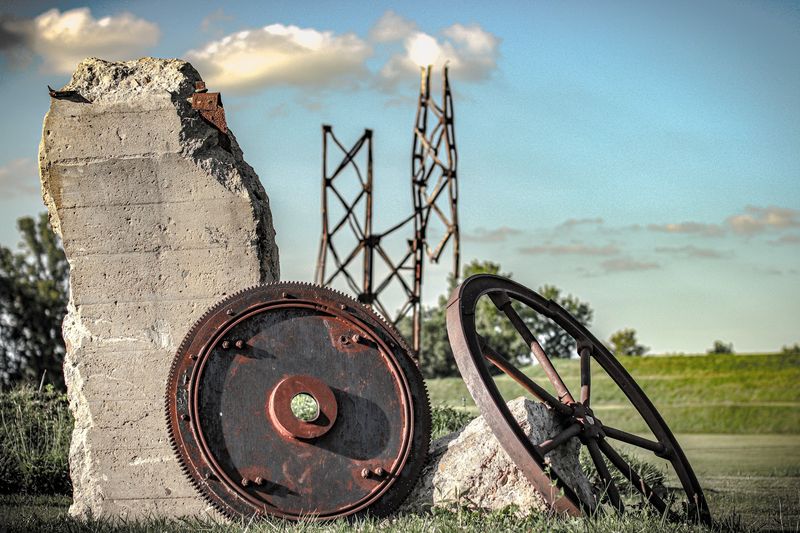
History turned into art is a phrase that fits this park more literally than you might expect.
The design philosophy behind Ariel-Foundation Park leans into the industrial past rather than erasing it, and the result is a space where art and history feel genuinely intertwined.
Old equipment and structural remnants from the Ariel Industries era have been worked into the landscape design, giving the park a texture and character that purely modern parks simply cannot replicate.
Sculptures and installations are placed throughout the grounds with enough spacing that each one gets its own moment. You are not overwhelmed by art; you discover it gradually as you move through the space.
The tower itself functions as a kind of anchor for all of this creativity. It is the tallest and most dramatic piece in the collection, even if it was not designed as art in its original industrial life.
Photography enthusiasts will find the combination of industrial textures, water reflections, and open sky genuinely rewarding.
Every angle offers something different, and the light changes the mood of the whole park as the day progresses.
When to Visit for the Best Experience
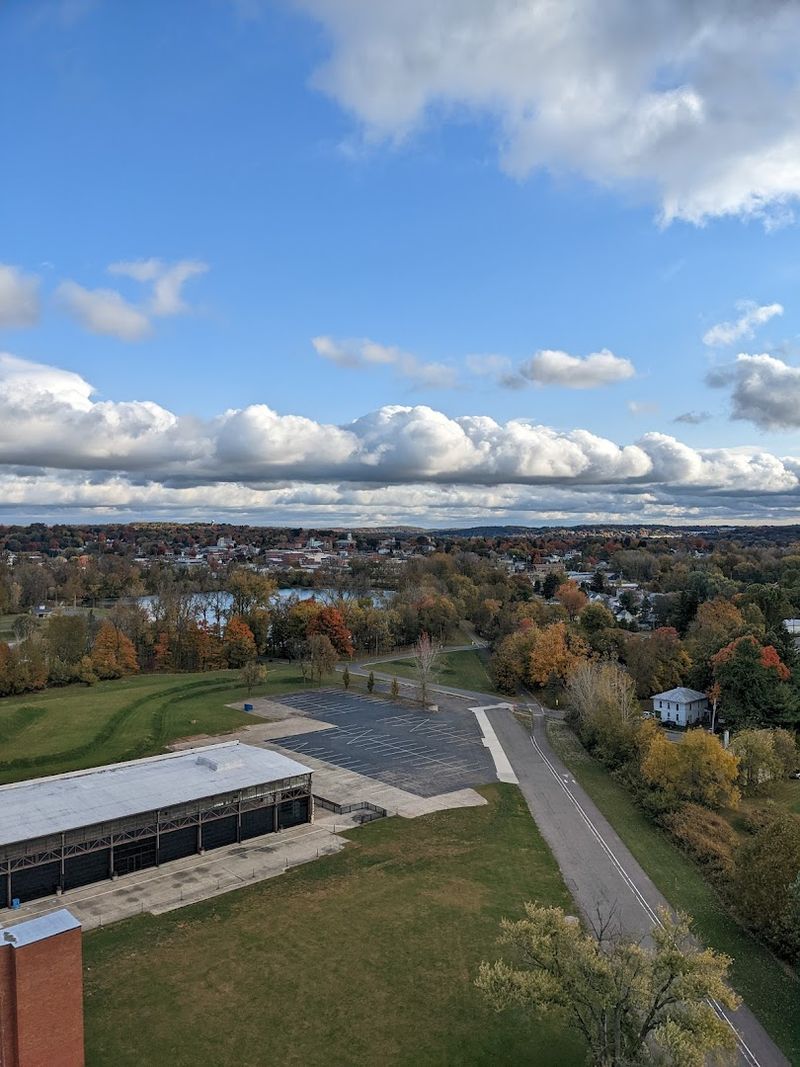
Timing your visit makes a real difference here. Clear days are the obvious choice for the tower climb, since the 360-degree view from 140 feet is only as good as the visibility allows.
Fall is a particularly strong season to visit. The surrounding Knox County countryside turns rich shades of orange, red, and gold, and seeing that color spread across the landscape from the top of the tower is a genuinely memorable experience.
Spring and early summer bring a lush, green softness to the park grounds that makes the reflection ponds especially photogenic. The landscaping looks its most intentional during these seasons.
One important practical note: at least one visitor reported finding the tower closed during posted open hours, so it is worth checking ahead before making a long drive specifically for the climb.
Morning visits tend to offer softer light and fewer crowds, which is ideal for both photography and a more personal experience at the top. The park feels quieter and more contemplative before the midday foot traffic picks up.
Evenings have their own appeal, especially if you want to see the tower illuminated after dark.
Knox County’s Tallest Structure
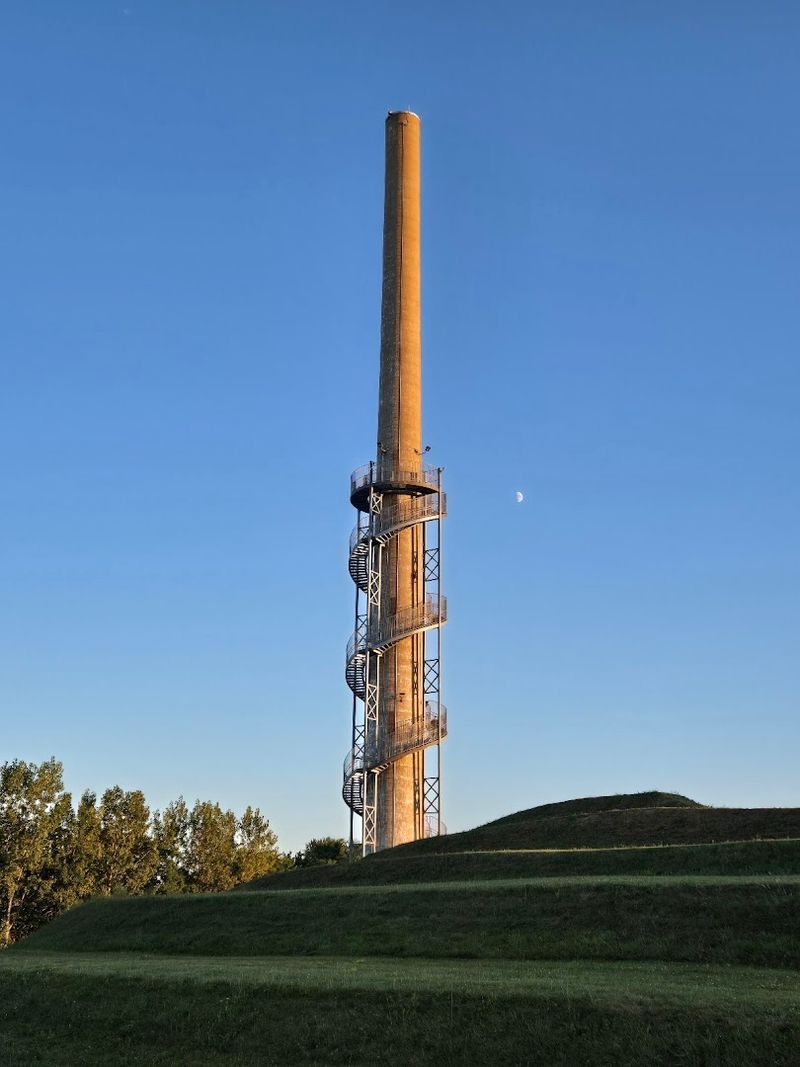
There is something quietly satisfying about standing on the observation deck of the tallest architectural structure in an entire county.
The Rastin Observation Tower holds that distinction in Knox County, with the old smokestack rising 280 feet above Ariel-Foundation Park.
The public observation deck sits at 140 feet, which still gives visitors a genuinely unusual view for a small Ohio city park. It is not just a tall thing; it is a tall thing you can actually climb.
From the observation platform, you can look out over a landscape that has very few structures competing with your sightline.
The low, spread-out character of Knox County works in your favor up there, giving the view an openness that taller urban towers rarely offer.
The feeling of being high above the surrounding park and city is one of those simple pleasures that is hard to explain and easy to feel. It puts the scale of the surrounding region into clear, immediate perspective.
For anyone who has spent time in central Ohio, that wide, flat-to-gently-rolling landscape takes on a whole new character when you see it from 140 feet above the ground.
Practical Tips Before You Go
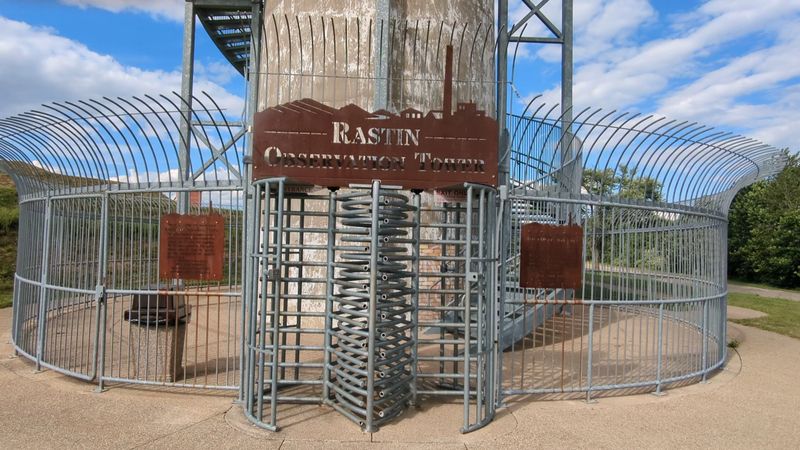
A few practical details will help you get the most out of your visit. The tower is free to climb when accessible, which is one of the most appealing things about it from a planning standpoint.
There is no ticket booth, no reservation required, and no admission fee standing between you and that 140-foot observation deck.
The staircase wraps around the old smokestack, giving the climb an industrial feel that fits the history of the park.
Wear comfortable shoes with good grip. The stairs are manageable, but they are real stairs connected to a real smokestack, and you will want to feel stable on your feet the whole way up.
Bring a camera or make sure your phone is charged. The view from the top genuinely rewards documentation, and you will want something to show people when you describe the experience later.
Check the park’s posted hours before you go, and consider calling ahead if you are driving a significant distance. The park is officially open seasonally, some areas are accessible year-round, and tower access can depend on weather and conditions.
Parking near the park is straightforward, and the grounds are easy to navigate once you arrive.
Why This Spot Deserves More Attention in 2026
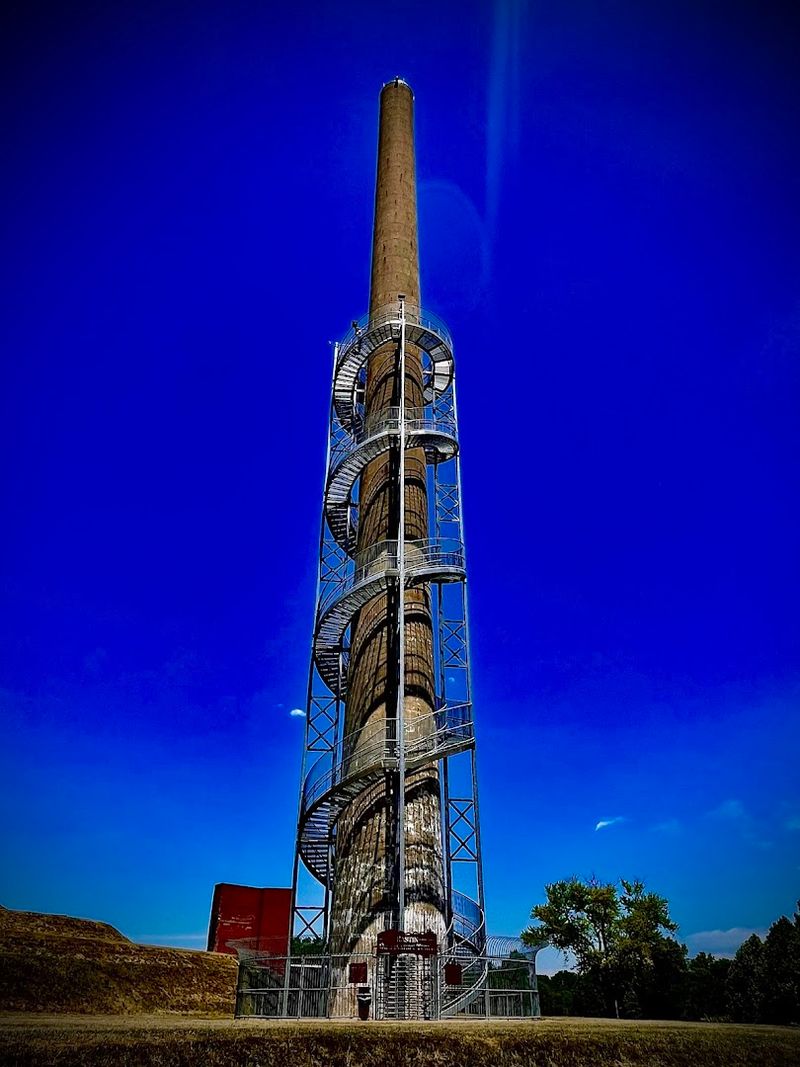
Most underrated travel spots share a common trait: they deliver a genuine experience without the noise and pressure of mass tourism. The Rastin Observation Tower fits that description almost perfectly.
The combination of industrial history, community-funded restoration, public art, cycling trail access, and a free 140-foot climb is genuinely rare. Most places offer one or two of those things.
This park offers all of them in one compact, well-maintained space.
In 2026, when travel trends are leaning toward authentic, off-the-beaten-path experiences rather than crowded bucket-list destinations, a place like this starts to look very appealing.
The tower is striking at night, lit up in bold colors that make it visible from a distance and give the whole park a different, more dramatic atmosphere after sunset. That alone makes it worth a second visit.
Knox County and Mount Vernon do not always make the shortlists for Ohio travel recommendations, but they probably should. The Rastin Tower is the kind of landmark that anchors a town’s identity in a way that feels earned rather than manufactured.
Spots like this are the reason road trips still feel worth taking.