
This Oldest Street In The US Sits In Florida And Feels Straight Out Of A European Village
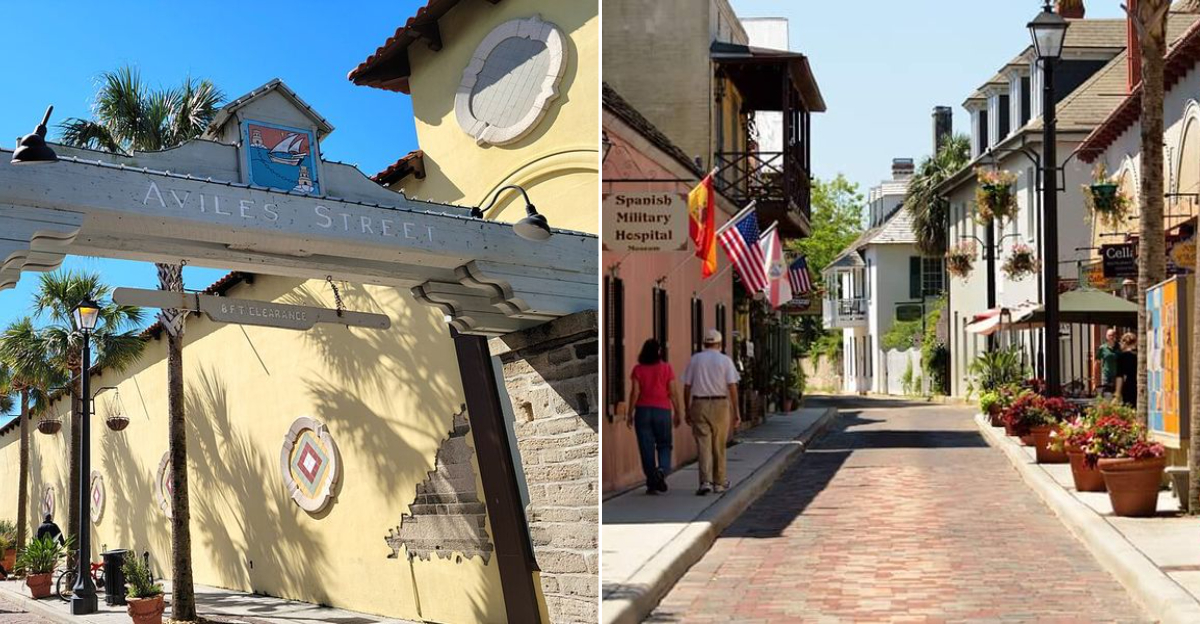
Walking down Aviles Street in St. Augustine feels less like sightseeing and more like slipping quietly into a story already in progress.
The stones under your feet carry that gentle unevenness of age, the kind that nudges you to slow down, and the pastel façades seem to hold sunlight a little differently, as if they’ve learned how to save it.
At first glance, the setting reads European, narrow lanes, iron balconies, tucked-away courtyards, but the longer you linger, the more you feel the distinctly Floridian pulse beneath it all.
Spanish, Minorcan, and Southern influences overlap here in a way that’s subtle, lived-in, and deeply local.
What draws me back isn’t just the history, though there’s plenty of it. It’s the small, specific moments that keep revealing themselves: a café window fogging from a fresh batch of pastries, a musician warming up under a shaded archway, a tiny shop where the owner greets you as if you’ve been stopping by for years.
The street has a rhythm you can hear if you give it your attention.
Spanish Colonial Stonework
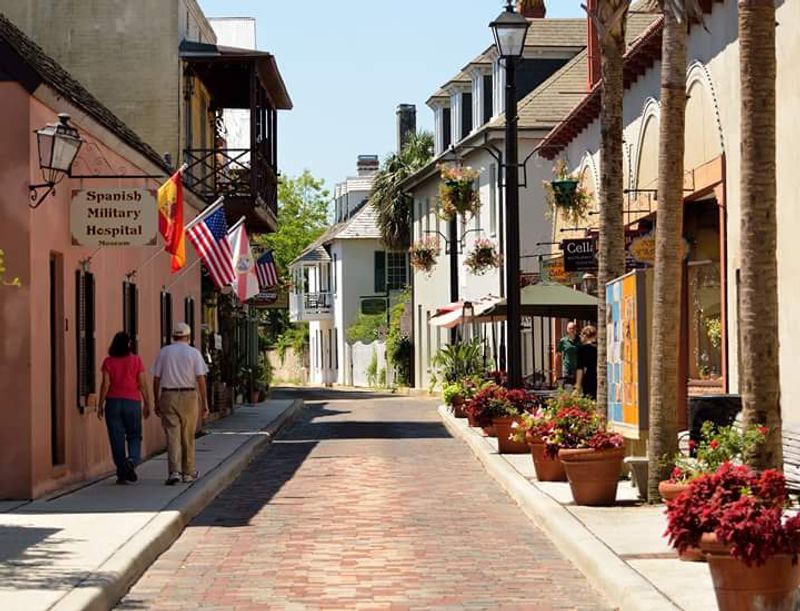
A soft crunch from coquina shells underfoot becomes the first hint that this street exists on a different clock entirely.
Cafes press their tables close to the walls, and espresso mingles with sea breeze in a way that feels both local and borrowed from far older cities.
Forks ping lightly at breakfast spots near 26 Charlotte Street where conversation rises in gentle waves.
A cortadito from Crucial Coffee makes a bright companion for studying how the stone absorbs coolness even at midday.
Spanish Colonial masonry anchors everything, turning the street itself into a kind of open-air archive.
The pastries you nibble vanish quickly because the textures around you make lingering feel effortless.
Look down often, because the unevenness sets your pace and invites you to move with the rhythm the stones prefer.
Balconies Above The Cobblestones
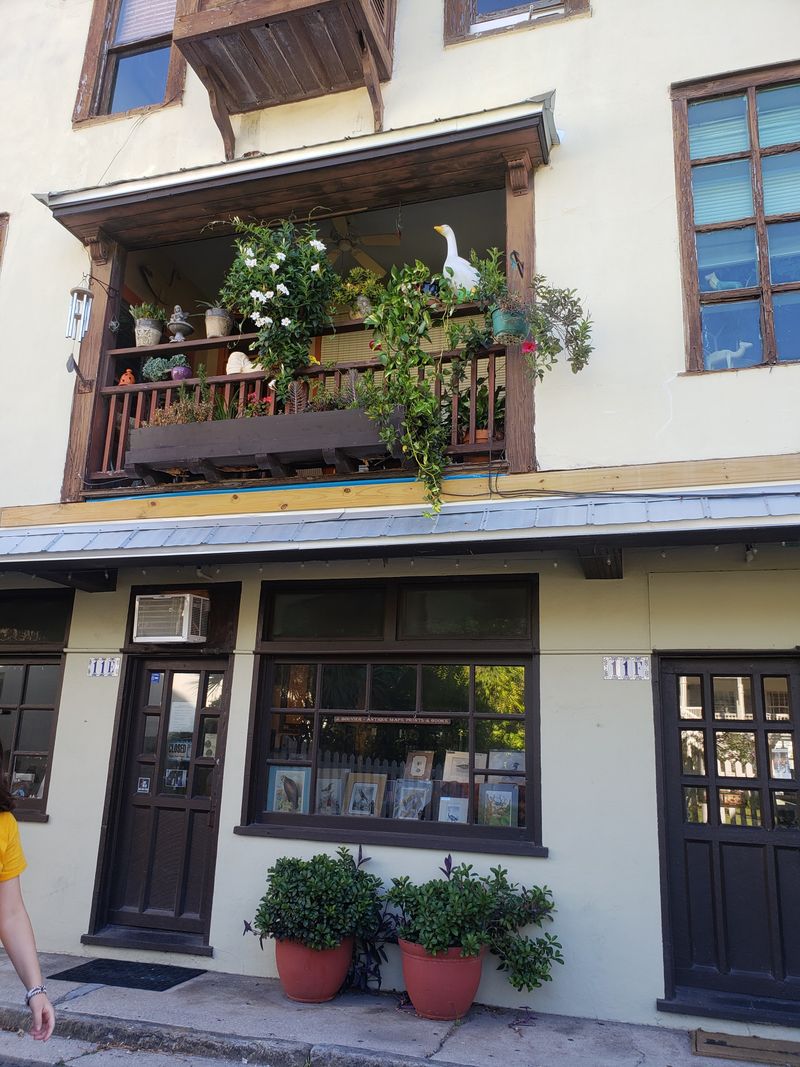
A glance upward reveals wrought iron balconies where ferns spill like soft fabric in the breeze.
Afternoon sun paints shifting stripes across the cobbles, giving the whole street a quiet theatricality.
Footsteps echo just enough to make the walkway feel like a private courtyard open to anyone who wanders.
An empanada from La Herencia Cafe rewards slow eating, especially when crumbs threaten to escape.
These upper perches echo Spanish influence preserved by steady restoration rather than nostalgia alone.
Shade beneath a balcony sharpens the flavor of whatever snack you carry.
With each bite, the narrowness of the lane turns simplicity into ceremony.
Artwork In Front Of The Spanish Military Hospital Museum
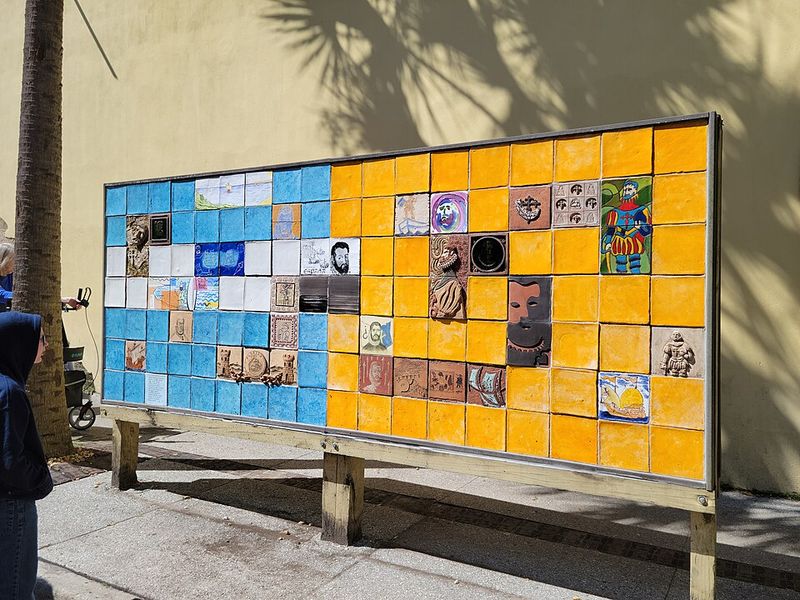
The mosaic panel outside the Spanish Military Hospital Museum catches the sun in shifting glints, its blue and ochre tiles forming a loose grid that feels both deliberate and slightly whimsical.
Faces, ships, saints, carved figures, and stamped seals appear between the squares, turning the surface into a layered timeline you can read in any direction.
People stop without planning to, tugged in by the quiet surprises embedded in the design.
Look closely and you notice glazed portraits and textured clay pieces that echo Spanish, Minorcan, and Indigenous influences shaping St. Augustine’s long story.
The installation acts like an open-air footnote to the museum beside it, reminding you that memory survives not in speeches but in small, patient details.
Standing here, you feel how the street holds its history lightly, without erasing the weight beneath it.
Step back for the full pattern, then lean in again to meet one tile at eye level, and bring a small pastry or coffee so the sweetness softens the moment while the wall keeps telling its tale.
Hidden Galleries
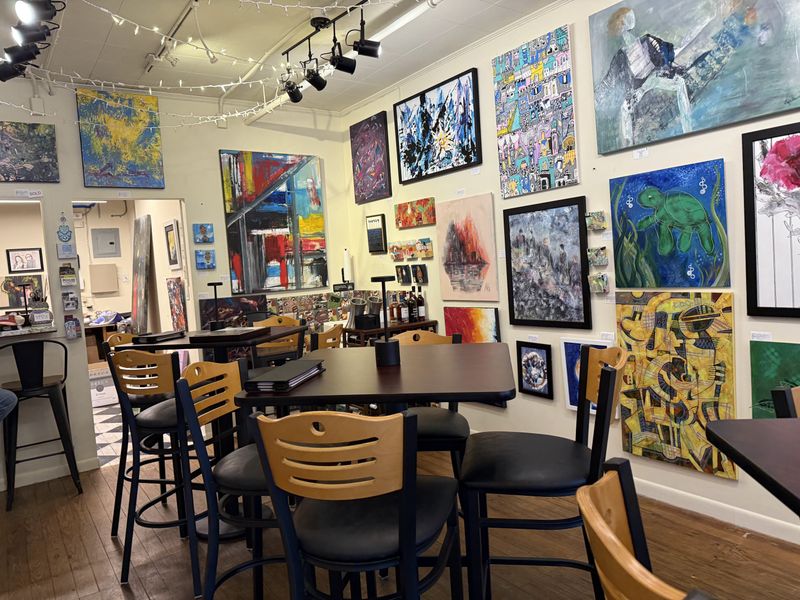
A narrow doorway might open onto a courtyard scented with rosemary, its leaves brushing against warm stucco.
Paintings lean casually against walls, and ceramic pieces rest on tables like they are waiting for conversation.
A faint guitar line sometimes drifts from deeper within the gallery, soft enough to feel borrowed rather than performed.
Inside, landscapes and small handcrafted pieces reflect the region’s palette without repeating it.
Many galleries occupy repurposed historic spaces, giving each room an intimate scale.
Buying something small ensures it travels easily while you continue the stroll.
When the courtyard gate closes behind you, the soft click feels like a page turning in a book you want to reread.
Flagler-Era Brickwork Details
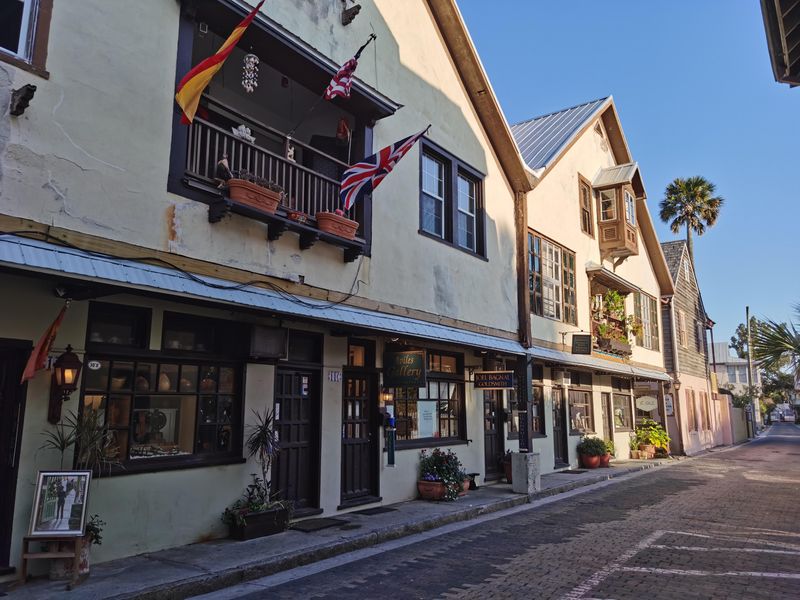
Step from coquina to brick and the decade shifts under your feet with a warmth that feels curated by the late sun.
Reddish tones glow between shadows, outlining careful patterns that hint at Flagler’s ambition without saying it aloud.
The shift in texture gives your walk a new rhythm, like the street guiding your tempo.
A pressed Cuban sandwich from a nearby deli pairs strangely well with this stretch, its crisp bread echoing the brick’s satisfying edges.
These bricks absorbed the Gilded Age gently, blending old forms and new optimism into something quietly durable.
Photograph corners instead of full buildings so the subtleties rise to the surface.
Then finish your last bite on a bench while noticing how two different centuries share the same pleasing crunch.
Spanish Military Hospital Museum
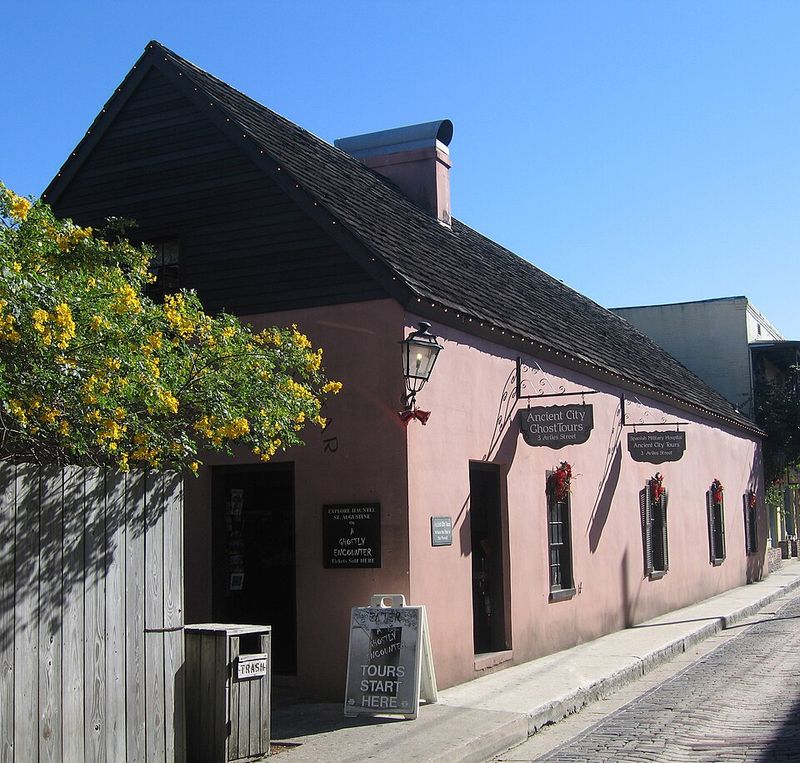
The façade of the Spanish Military Hospital Museum holds a muted solemnity that feels older than the neighboring shops.
Stepping inside, you sense the echo of 18th-century medical practice, reconstructed with detail that borders on intimate.
The stillness in the rooms feels curated, yet the creak of the floorboards keeps it grounded.
Sutures, instruments, and herbal remedies become small windows into a world shaped by necessity rather than convenience.
Minorcan and Spanish influences thread through the exhibits, binding cultural memory to medical history.
Guides speak with a calm precision that makes every explanation feel like a retrieved artifact.
Walking back outside, you register the modern air differently, as if the past left its hand briefly on your shoulder.
Lanterns That Glow At Dusk
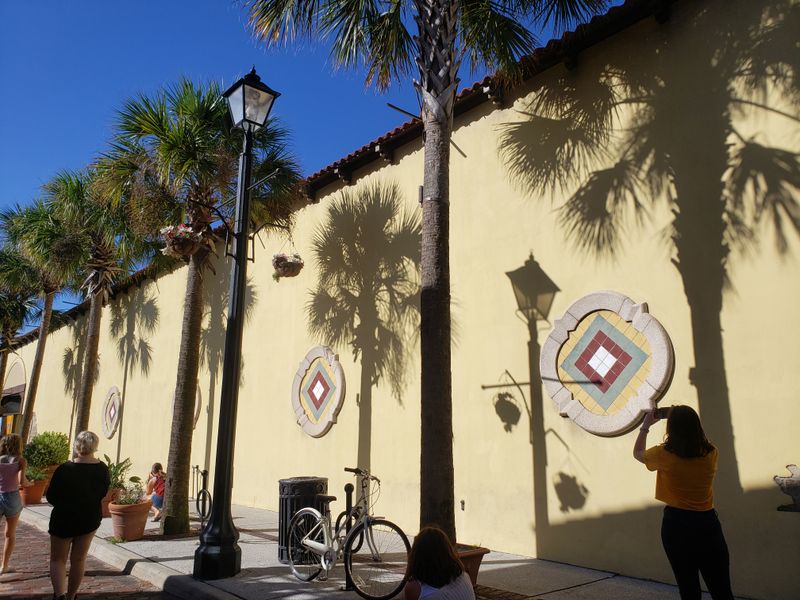
As daylight thins, lanterns along Aviles Street pool their light softly, turning the stones honey-colored.
The narrowing street feels suddenly intimate, like it has pulled itself inward for evening.
Shadows round the balconies and doorways, smoothing sharp angles into something gentler.
Ordering small tapas to carry, olives, manchego, a sliver of chorizo, makes the warm light taste even warmer.
The lane reads European at a glance, but the ocean air keeps Florida’s signature in the margins.
This is the hour when footsteps echo just enough to make you hear your own pace.
Save one olive for the softest lantern and make that your quiet dessert.
Small Museums Tucked Behind Arched Doors
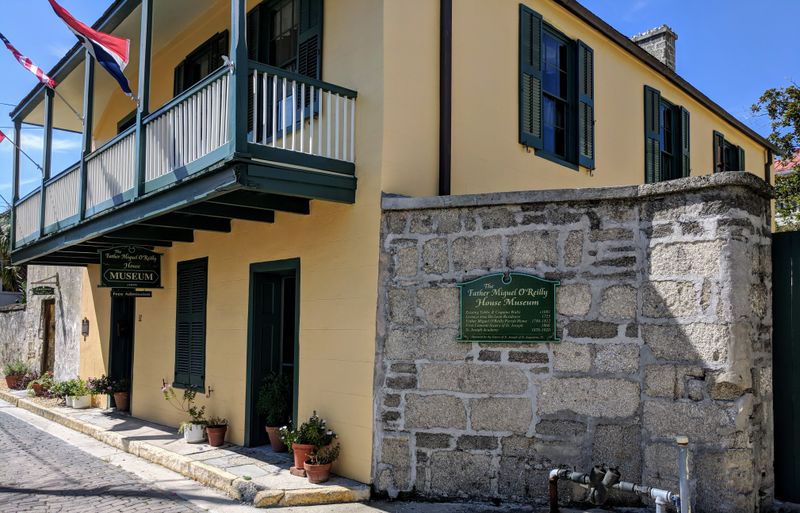
Arched entrances lead into compact museums that feel more like preserved rooms than institutions.
You can step inside for twenty unhurried minutes and come out with a fresh layer of context.
The scent of old wood settles around the exhibits like a polite host.
A bowl of Minorcan clam chowder beforehand adds datil heat that follows you into the first gallery.
These spaces keep local history close to the ground, clear and unembellished.
Hours vary by season, so checking ahead spares you a closed door.
Returning to the sunlight afterward feels like stepping from footnotes into a living paragraph.
Weathered Wooden Shutters
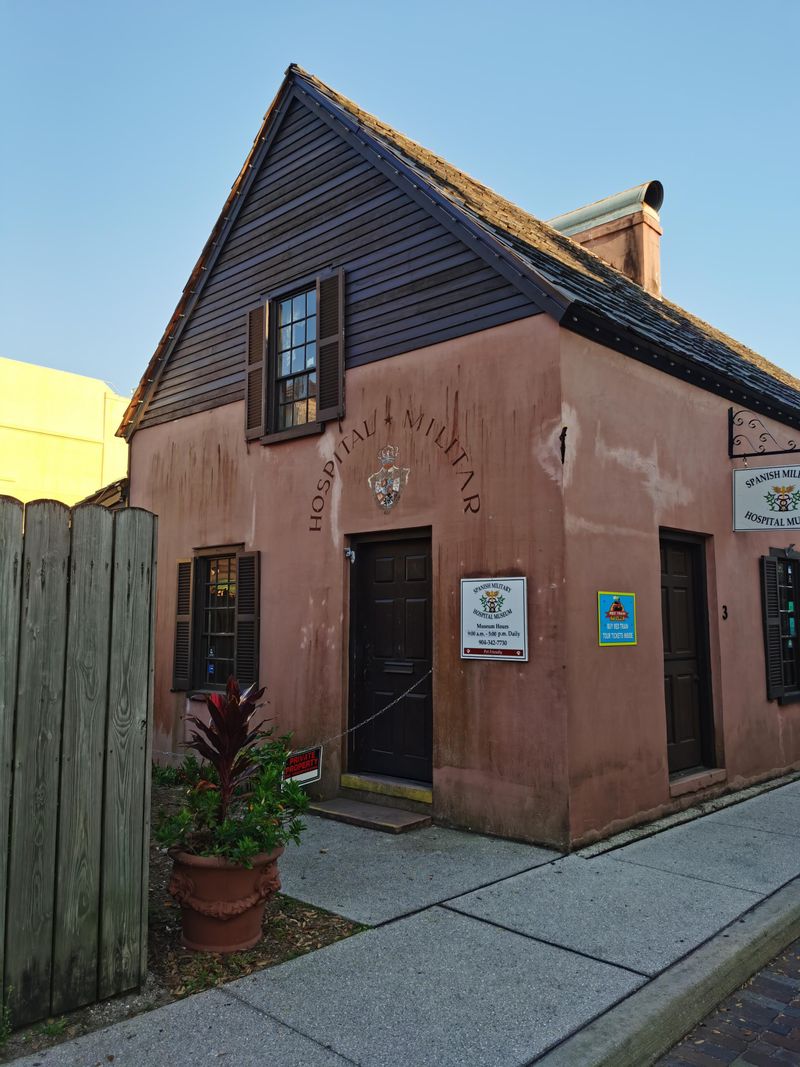
The shutters carry decades of paint in curled layers, their surfaces reading like small geological maps.
Metal latches chatter faintly whenever the breeze funnels down the street.
The wear looks intentional even though it wasn’t, a kind of accidental artistry.
A slice of key lime pie sharpens the colors around you, making each texture more pronounced.
These shutters served practical needs long before they charmed visitors, protecting glass from storms and sun.
Photograph the hinges and screws for truer memory than a wide shot ever gives.
Finish the last bite slowly while the breeze keeps both your mood and the shutters gently cooled.
Streetside Planters Overflowing With Bougainvillea
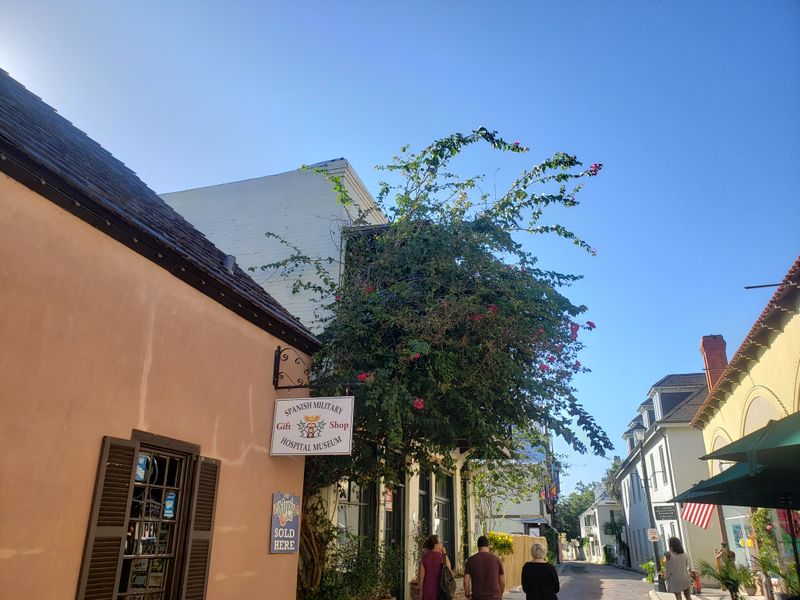
Magenta bougainvillea erupts from planters in a flourish so bold it softens the entire street.
Petals scatter across the stones like confetti waiting for music.
The effect leans Mediterranean, even though the humidity keeps it firmly Floridian.
A chorizo skewer or other savory bite balances the floral rush without competing.
The vines coax conversations to stretch longer than planned, urging a slower rhythm.
Lean in close to catch the dry, papery scent that feels older than the blooms themselves.
Continue walking while shadows from the leaves trace gentle shapes across your shoulder.
Aviles Street Gate Arch
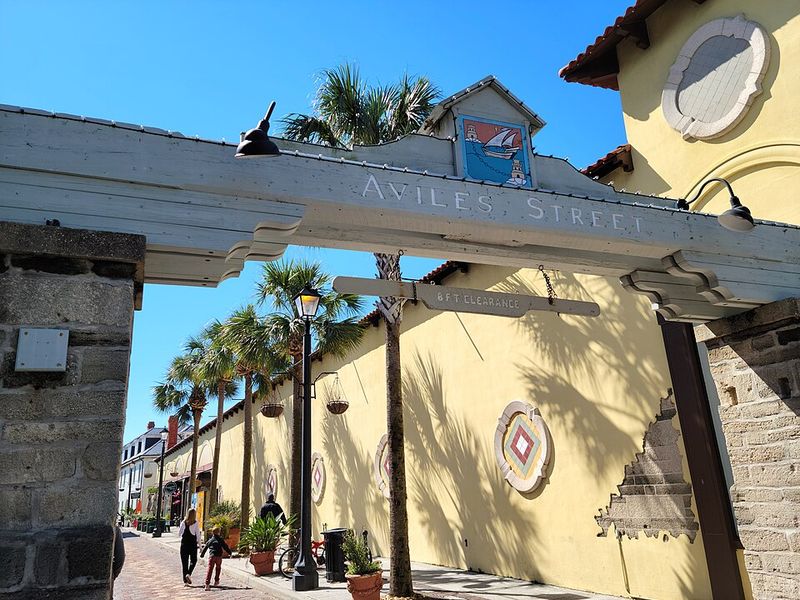
The gate arch stands like a quiet marker announcing a shift from ordinary streets to something more storied.
Light filters through at certain angles, outlining the roughness of the stonework.
It frames each passerby as if the street were briefly turning them into part of its own exhibit.
Photographs from this point tend to look composed even when accidental.
The arch hints at centuries of arrivals and departures, each leaving a trace.
Standing beneath it, you sense the weight of welcome more than the weight of history.
Crossing under feels less like entering a street and more like stepping into a remembered place.
Narrow Passages Leading To Secret Patios
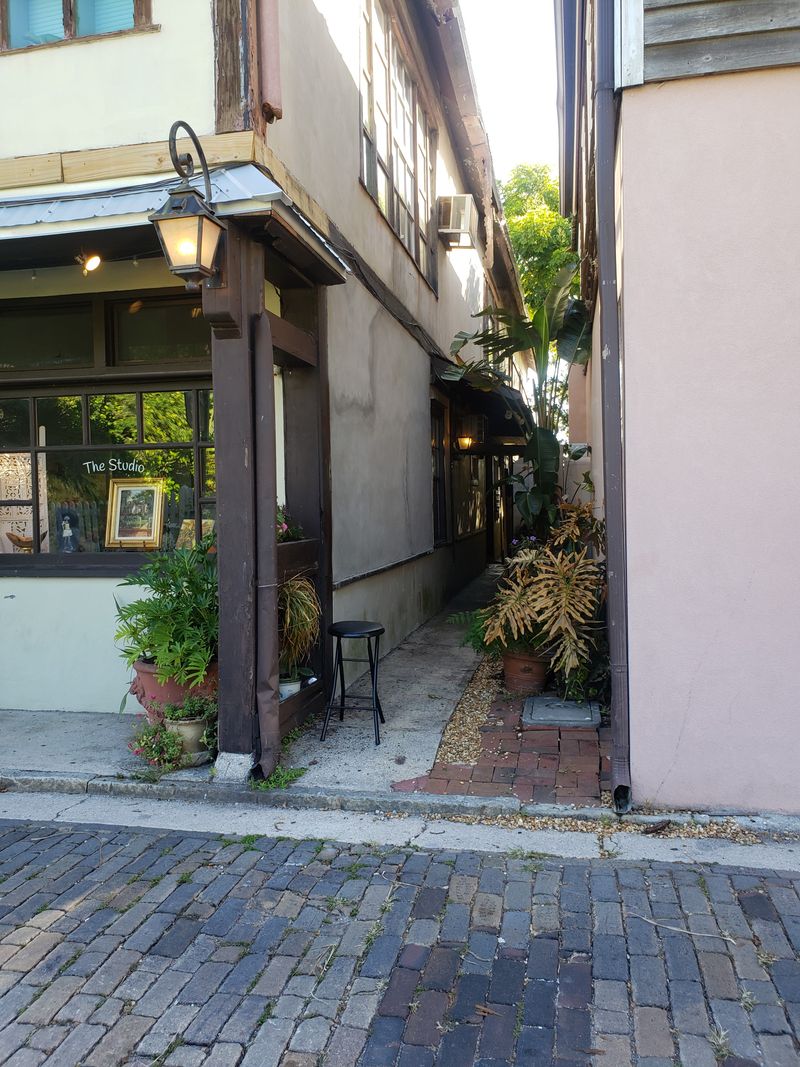
Slim passageways peel away from Aviles like quiet digressions in a well-told story.
The noise dims instantly, replaced by clinking glasses and the soft hum of a fountain.
String lights lend intention to even the most modest seating.
Order pinchos or a cheese plate and let the patio shape your pace.
These pathways once served as service alleys for early residences, and their scale still favors intimacy.
If a table is full, patience is rewarded quickly since most people linger only as long as the breeze does.
When your plate arrives, notice how flavors sharpen in sheltered air where the wind negotiates more gently.