
This Otherworldly Trail In Ohio Might Have The Most Wonderfully Weird Sculptures Around
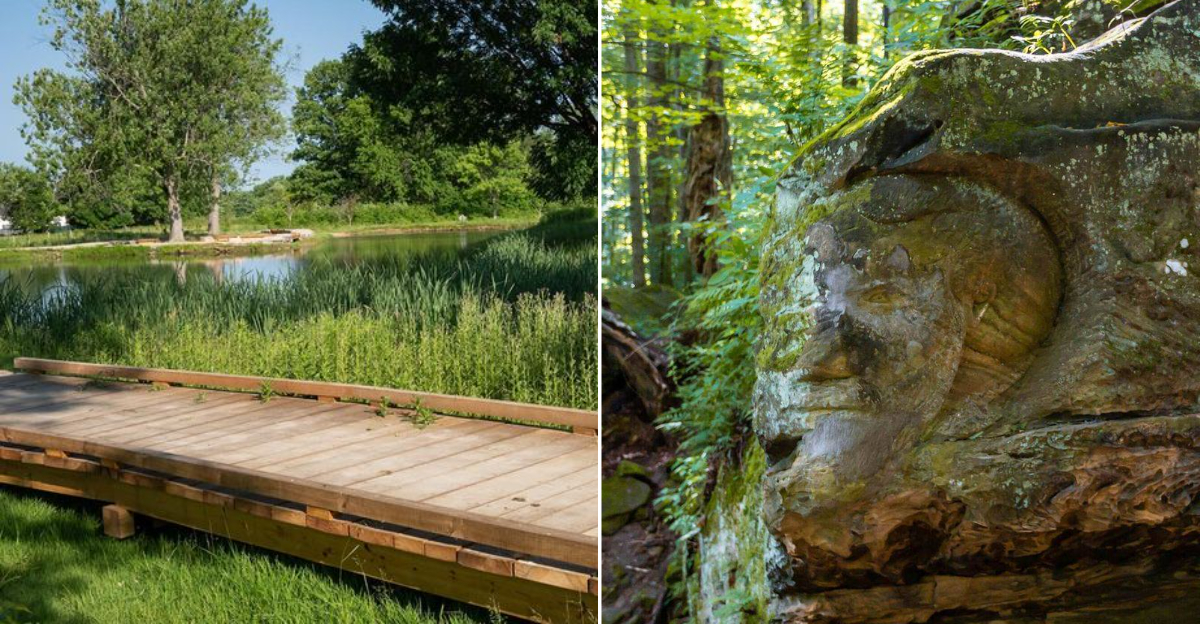
The Ohio woods can blur together after a while, but the first time I wandered into Worden’s Ledges, the forest suddenly felt unfamiliar in a way that made me stop and grin.
This short loop in Hinckley Reservation bends around sandstone walls etched with faces, ships, and a tired-looking sphinx that seems to be waiting for you. You squeeze under low branches, drift through cool rock corridors, and keep noticing carvings you somehow missed a moment earlier.
If you enjoy trails with personality, these tips will help you find the details, read the terrain, and enjoy a walk that feels like someone else’s imagination spilled into the forest.
Forest Loop To The Heart Of Worden’s Ledges
The loop at Worden’s Ledges is compact, roughly a half-mile to three-quarters depending on how you weave, and it’s the perfect size for lingering. You start under hardwoods and quickly meet walls of Berea sandstone, their edges softened by moss and decades of drizzle.
The path threads through rock corridors that feel purpose-built for wandering attention. Take it clockwise to reach carvings sooner, or counterclockwise for a slower reveal. Either way, the loop returns to its small trailhead near Ledge Road, making it easy to repeat.
I like a second lap with a different light angle; morning shadow lines sharpen faces, while afternoon glow warms the stone. Bring curiosity and a camera, you’ll use both more than once.
Sandstone Corridors That Feel Like A Hidden Gallery
The corridors are the show-stealers: tall, fluted sandstone walls rising like theater curtains on both sides of the path. Look for cross-bedding lines that read like tree rings, telling stories of ancient rivers that deposited this stone. Moisture darkens seams and encourages moss, which frames carvings naturally.
Even without sculpture, the geology feels curated, a gallery of texture and color. The passages are narrow in places, but never claustrophobic; they invite quiet pacing and side-glances to find details you missed.
After rain, the stone deepens to toffee and charcoal hues, and ferns glow neon under ledges. Listen for water droplets, then spot the tiny seeps that feed them. It’s the kind of space where footsteps hush themselves.
Carved Faces Peeking Out From Mossy Rock Walls
The first time a face appears, it feels accidental, just a suggestion of eyes, until you realize someone chiseled it deliberately. Several human profiles and masks peer from the walls, softened by time so they blend with lichens.
Step back, and the expressions sharpen; step close, and tool marks emerge like brushstrokes. Not every surface is carved, which makes the reveals more exciting. Rotate around each face to let light define it, side-light brings features forward.
These aren’t modern additions; they’re mid-20th-century carvings associated with Noble Stuart and the Worden family era. The quiet humor of a mossy eyebrow or lopsided grin fits the woods perfectly. If you’re patient, you’ll notice more faces than you counted the first pass.
Weathered Stone Sphinx Watching Over The Trail
The sphinx is the headliner, perched on its block like a guardian that wandered in from a desert dream. It’s weathered and softened, but the outline reads unmistakably: brow, nose, regal stillness. Find it along a ledge turn where the trail narrows, and notice how the forest frames it with hemlock and oak.
The sculpture’s age shows in rounded edges, no sharp lines survive Ohio winters for long. That patina makes it fit the landscape better, as if the woods adopted it.
Photographers: try a low angle to give it sky and presence. Respect the stone, no climbing, just admiration. The sphinx proves this place walks the line between folk art and natural wonder with steady, enigmatic grace.
Ship Carving Sailing Across A Rock Ledge
Among the most charming carvings is a ship that appears to drift across the sandstone. Its hull and rigging are simple but confident, like a sketch gifted to the woods. The position on the ledge gives it motion, as if it’s chasing wind through trees.
Catch it in late afternoon when shadows fall into the lines, making masts and sails pop. It’s a reminder that these works were made by hands with imagination, not by a committee with a blueprint. Stand to the right for the cleanest sightline; from the left, the relief blends into natural striations.
The ship looks best after light rain, when the stone’s contrast deepens and the “waterline” illusion becomes real.
George Washington Profile Etched Into The Cliff
The Washington profile is a local celebrity: a classic silhouette rendered in a few decisive cuts. Once you spot the forehead and nose, the rest locks in like a coin relief. It’s set at a comfortable viewing height, welcoming repeat looks as light shifts.
I like to step back and frame it with overhanging branches, letting leaves become a laurel. The piece invites conversation about folk memory in stone, how a national figure becomes part of a neighborhood walk.
Look for tool marks that curve around the cheek; they catch dew in the morning. Please resist tracing with fingers; oils accelerate erosion. A quiet nod feels appropriate, and somehow the profile nods back.
Names And Dates Hidden In The Old Homestead Stones
Scattered near the ledges are remnants from the Worden family homestead, including stones with names and dates. These aren’t flamboyant; they whisper from low walls and boulders, half-covered in moss. Reading them feels like meeting neighbors through time.
The inscriptions help orient the carvings within a lived-in place rather than a random art project. Bring a gentle eye and avoid chalk or rubbings, those harm surfaces. Instead, photograph with raking light to reveal lettering.
If you find initials you can’t parse, note the spot and check park resources later. The homestead fragments tie the trail to everyday stories: chores, winters, celebrations. I always pause here, letting the human timeline overlap with the sandstone’s ancient one.
Noble Stuart’s Story Behind The Carved Ledges
Noble Stuart, connected to the Worden family by marriage, is frequently credited with many of the carvings from the 1940s. His work reflects a playful but skilled hand, turning familiar figures into enduring curiosities. Learning his name changes the walk: the trail becomes a conversation between artist, stone, and weather.
Cleveland Metroparks and local histories outline this backstory, grounding the whimsy in real people. Imagine chiseling in winter quiet or summer shade, coaxing faces from old river rock. The carvings aren’t signed in a modern way; instead, their authorship lives through community memory.
Respect for that legacy looks like careful steps, no graffiti, and shared stories. The best tribute is noticing the details he left for you.
Spring Mud Summer Shade And Leafy Fall Color
Each season rewrites the mood. Spring brings mud and vivid moss, so wear treaded shoes and embrace puddles. Summer offers cool shade under dense canopy, making the stone glow with deep greens. Fall is theatrical, amber leaves drift into crevices, spotlighting carvings with natural confetti.
Winter can be stark and beautiful, but ice makes ledges slick; traction devices help. I like late October best, when low sun slants across the faces and a breeze sends leaves skittering down corridors.
Whatever the season, check the forecast: sandstone holds moisture and can be greasy after rain. The carvings endure, but the vibe shifts wonderfully with each weather change.
Quiet Weekday Visits Versus Busy Autumn Weekends
Timing changes the experience dramatically. Weekdays, especially mornings, feel contemplative; you’ll hear woodpeckers and your own footsteps. Autumn weekends can be busy with leaf-peepers, and narrow corridors bottleneck.
If crowds build, take a side pause and let the line flow, then slip back into your rhythm. Parking fills late morning on peak-color Saturdays, arrive early or aim for late afternoon. Winter weekdays are often empty and magical, with careful steps on icy patches.
Whenever you go, remember voices bounce in the stone hallways; a softer volume preserves the spell for everyone.
Simple Gear Tips For A Rocky Ohio Metroparks Trail
Footing first: wear shoes with real tread because sandstone, roots, and leaf litter can act like ball bearings. After rain or freeze-thaw, microspikes help, but they’re usually optional. Pack a small cloth to wipe your camera lens,humidity and mist soften images.
A headlamp isn’t necessary, yet a compact flashlight lets you rake light across carvings to reveal texture. Bring water and a light layer. The ledges can feel cooler than the parking lot.
Skip trekking poles unless stability is a concern, corridors are narrow. Most important gear is patience and good trail manners. You’ll see more by moving slowly than racing for the next “wow.”
Nearby Hinckley Lake And Scenic Stops After The Hike
Make a half-day of it by pairing the ledges with Hinckley Lake, just a short drive within the reservation. The loop around the lake offers open sky, water reflections, and heron sightings, a perfect contrast to the intimate rock corridors.
Stop at Spillway or Whipp’s Ledges area if you want additional sandstone vistas and short climbs. Picnic tables and seasonal facilities make it easy to linger. For maps, check Cleveland Metroparks kiosks or the online reservation guide before you go.
Ending at the lake at golden hour is a gentle way to come back to ordinary after the carvings’ dreamlike mood.