
This Peaceful Michigan Mission Is A Bright Portal To A Nearly Forgotten Past
The constant rhythm of clopping hooves and that thick, sweet fudge perfume eventually starts to feel like a fever dream, and that’s exactly when I duck away from the Main Street madness. Suddenly, the air changes.
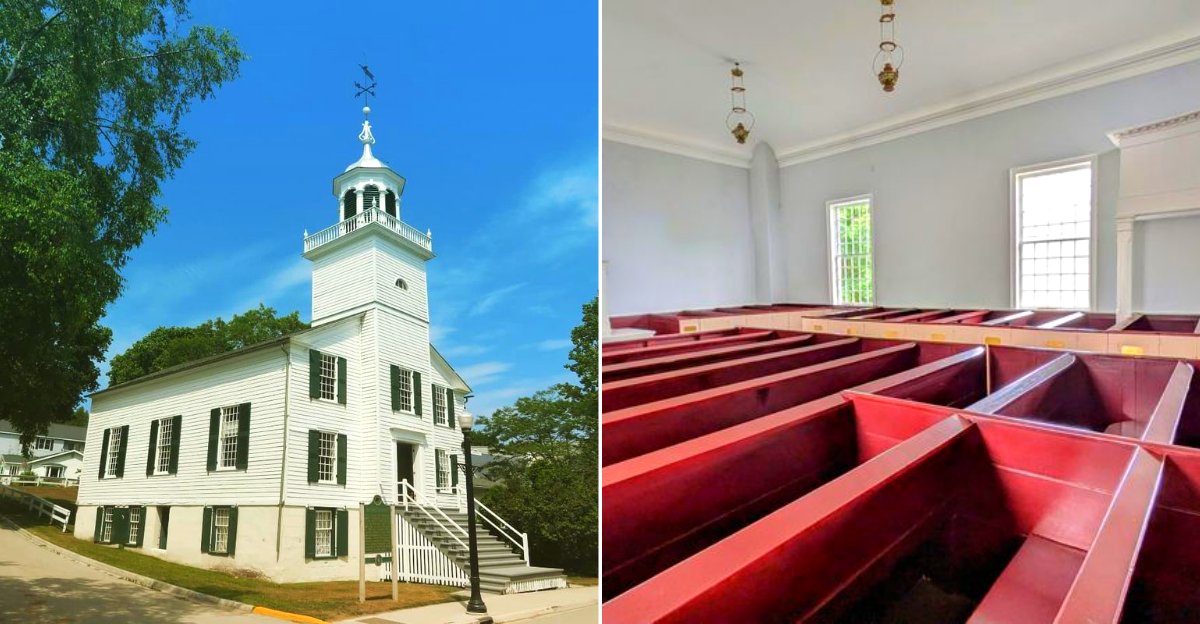
The noise drops an octave, and I’m standing in front of a white clapboard mission that feels like a long, cool drink of water.
This is the oldest surviving church in Michigan, and it doesn’t need to shout to get your attention. It just glows with a 19th-century simplicity that makes my buzzing phone feel like an intrusion.
I found myself sitting in the pews just to inhabit the silence, watching the light hit the wood and feeling the frantic energy of the island melt away into something much older and steadier.
Michigan history comes alive in this serene mission, offering a quiet sanctuary away from the bustling tourist crowds.
First Light On White Clapboard
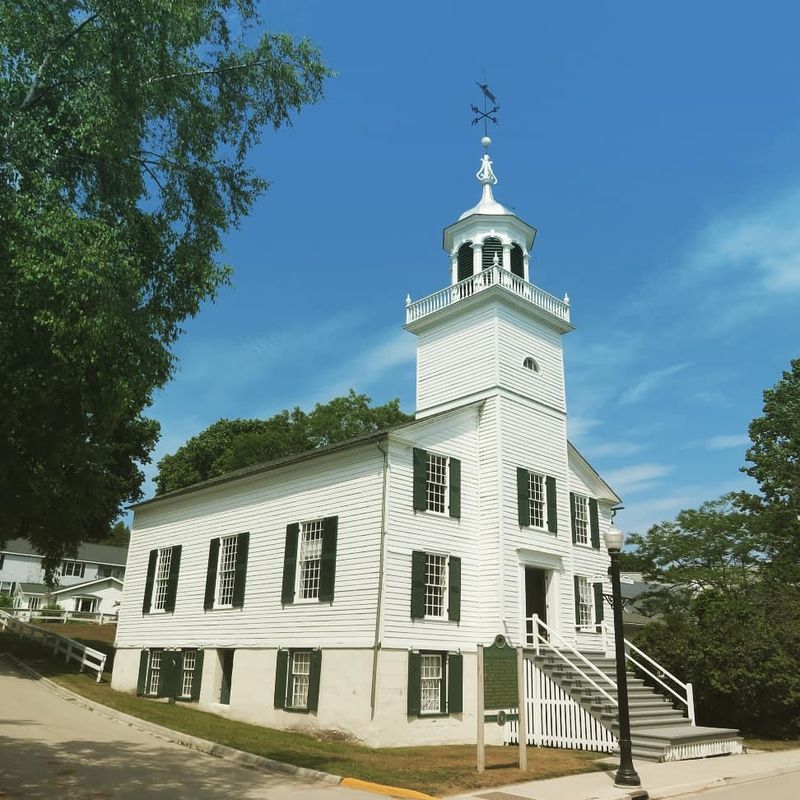
Morning lands softly on the clapboard, and the building seems to inhale the light. You notice the clear glass first, a modest choice that turns Lake Huron brightness into a gentle, usable glow. The trim is clean and restrained, a reminder that ornament can be presence, not noise.
This church’s vibe is calm rather than solemn, like a breath held and then released. It fits Mackinac Island’s pace, where wheels are hooves and time moves by ferry.
Arrive early for the empty pews and cool boards underfoot. Pause outside to let your eyes adjust, then slip inside slowly.
The Path To Michigan’s Oldest Church
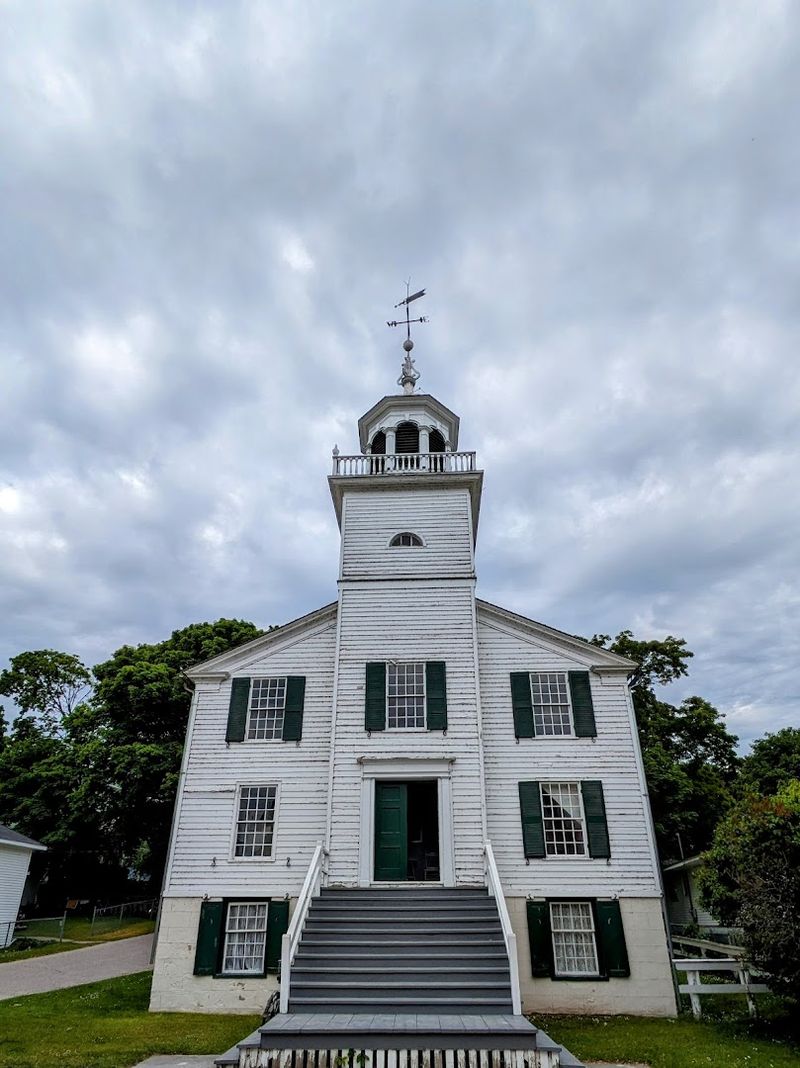
Traveling past the bustling harbor and the historic marina provides a steady transition into a quieter stretch of the coastline defined by white picket fences and meticulously preserved mid-19th-century architecture. The destination is Historic Mission Church at 7274 Main St, Mackinac Island, Michigan 49757.
This landmark is marked by a classic New England-style facade and a towering belfry that has overlooked the Straits of Mackinac since 1829, signaling your arrival at one of the state’s most significant religious sites.
Reaching this location places you at the entry point of a beautifully restored sanctuary known for its stark, elegant interior and historical authenticity. The walk or ride culminates at a peaceful site that serves as a testament to the island’s early missionary era and remains a favored venue for quiet reflection.
Listening To The Room
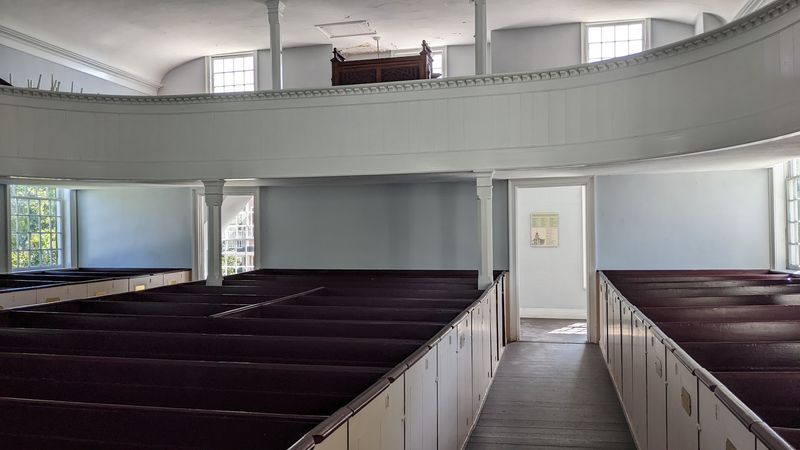
Sound behaves kindly here. Clear panes diffuse lake light, and wooden pews drink echoes until only a soft afterthought remains. Even a shoe scuff feels polite. That acoustic gentleness changes how people act.
Shoulders drop. Syllables shorten.
Mission Church was built for spoken words and unadorned music. The proportions make a human voice travel farther than you expect without technology. Try a whisper three pews back and hear it return, rounded and intact.
If a volunteer is present, ask where the voice carries best. Stand there for a count of five before speaking. The pause teaches you what the building already knows, and it’s amazing.
Tracing Layered Time
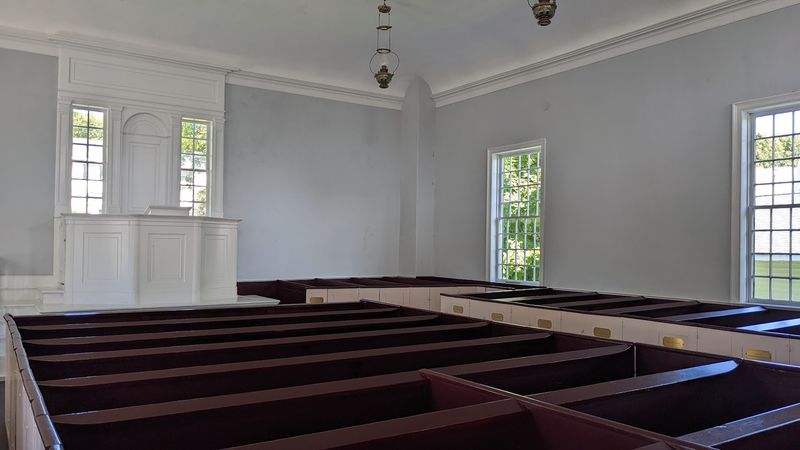
Edges tell the truth. Look where hands always go, and you will see time turned shiny. Pew ends are rounded by generations of coats and questions. The latch on the main door holds a simple logic that still feels right in the palm.
This is a restored nineteenth century Protestant church, the oldest surviving in Michigan. Preservation here favors clarity over theatrics, so evidence remains legible. Scan for nail heads, tool marks, and uneven boards that hold the record of past work.
Photograph small details rather than wide walls. People remember texture. Keep backpacks slim to avoid accidental bumps, and move along aisles like you would through a friend’s library.
Seasonal Doors And Island Rhythm
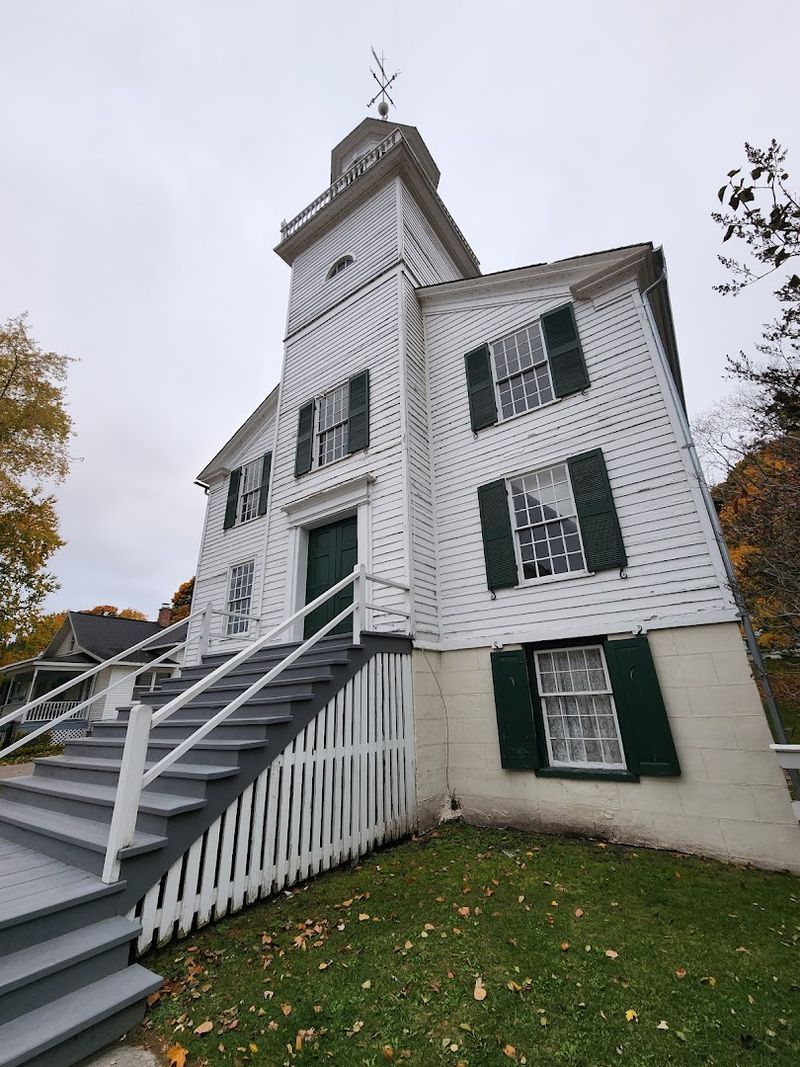
Doors do not always stand open here. Mackinac Island breathes by season, and Mission Church follows suit. Spring brings lilac scent and a lighter crowd. Summer invites wedding weeks and steady foot traffic.
Autumn trims the noise and sharpens the air.
Because the building is managed by Mackinac State Historic Parks, hours can shift with staffing and events. Check the official website before you plan your timing.
If you arrive to find it closed, there is still value in circling the exterior slowly. Read the setting. The neighborhood keeps a Victorian hush, and the lake sits just beyond like a patient neighbor.
Guides, Caretakers, And Good Questions
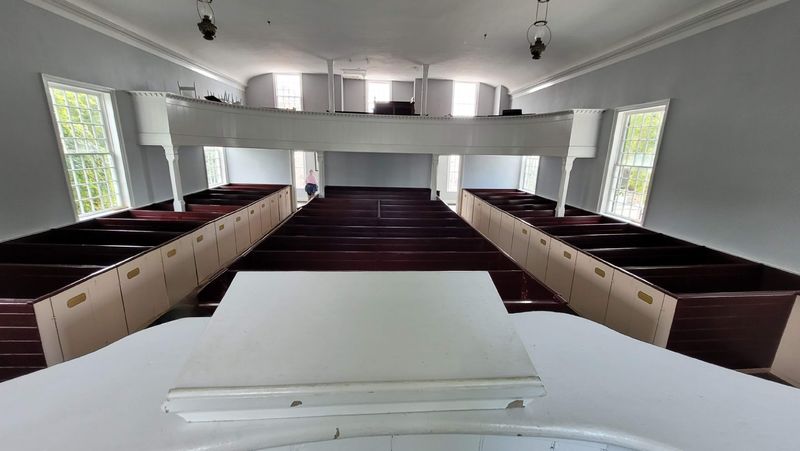
When staff or volunteers are present, the building gains a gentle narrator. They rarely oversell. Instead, they point out ordinary marvels, like how straight daylight makes wood behave or how a balcony changes pitch. Local caretakers keep interpretation grounded in verifiable history.
Good questions help. Ask about maintenance cycles, opening schedules, and what repairs reveal when boards come up. You will learn how small choices keep the room feeling honest.
For practicalities, carry a small bill for a donation box if one is present, and step aside to read signage without blocking the aisle. The quiet here is shared, not staged, so mirror the tone.
A Balcony That Edits Attention
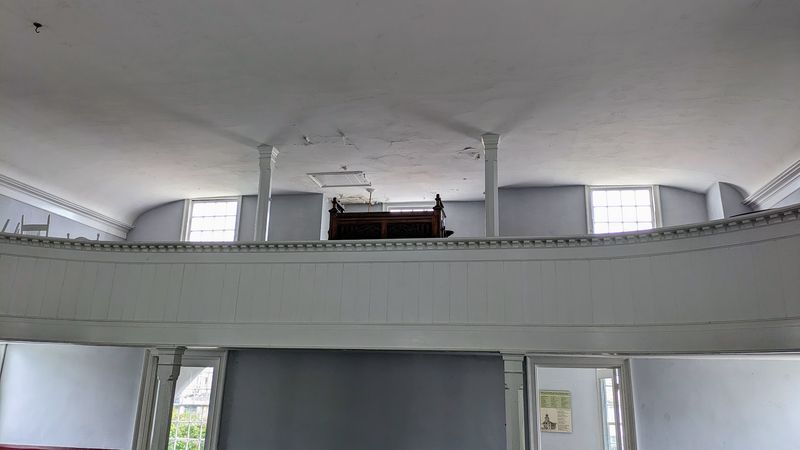
Climb to the balcony and the room redraws itself. Lines compress. The pulpit becomes a hinge, the pews a measured field. From up there, you understand how attention was choreographed without electricity.
Sightlines are crisp, and distractions drop away.
Historically, gallery seating extended capacity and balanced sound. Today it gives a practical vantage for photographs that respect the space. Hold the rail lightly and keep your camera low to avoid leaning out.
If a rope closes the stairs, honor it. The view from the floor will teach something different but equally useful. Let your eyes travel the grain along the rail and count the stories in the wood.
Light As The Main Decoration
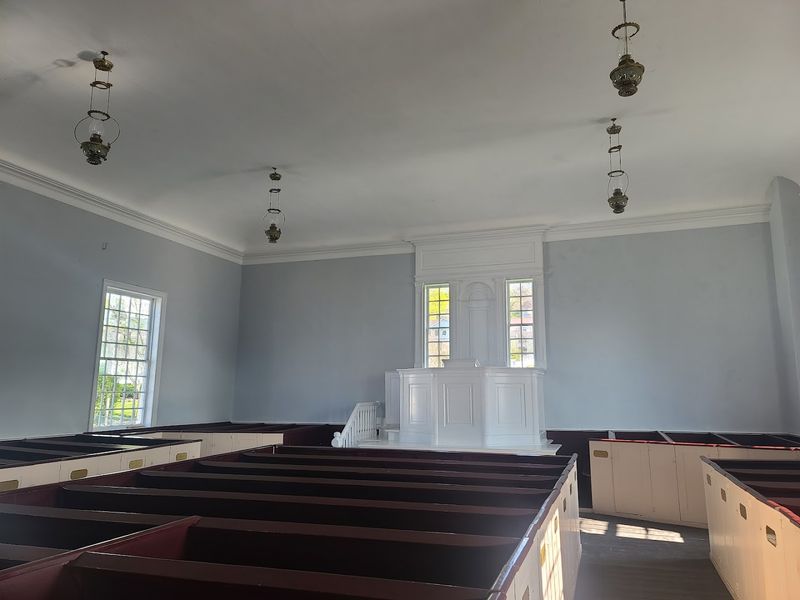
Decoration here arrives on a schedule set by the sun. Clear panes pull in lake sky without filtering it into colors. The floor turns into a quiet grid of light that migrates across pews through the day. Nothing sparkles.
Everything breathes.
You can track time by the window rectangles sliding across the aisle. Midday softens shadows, while late afternoon carves them. Choose your visit by what light you want to remember.
For photography, keep ISO low and let the room stay itself. For sitting, pick a bench where the sun lands on your shoulder, then move when the pattern drifts. You are in the slow company of sky.
Context On A Car Free Street
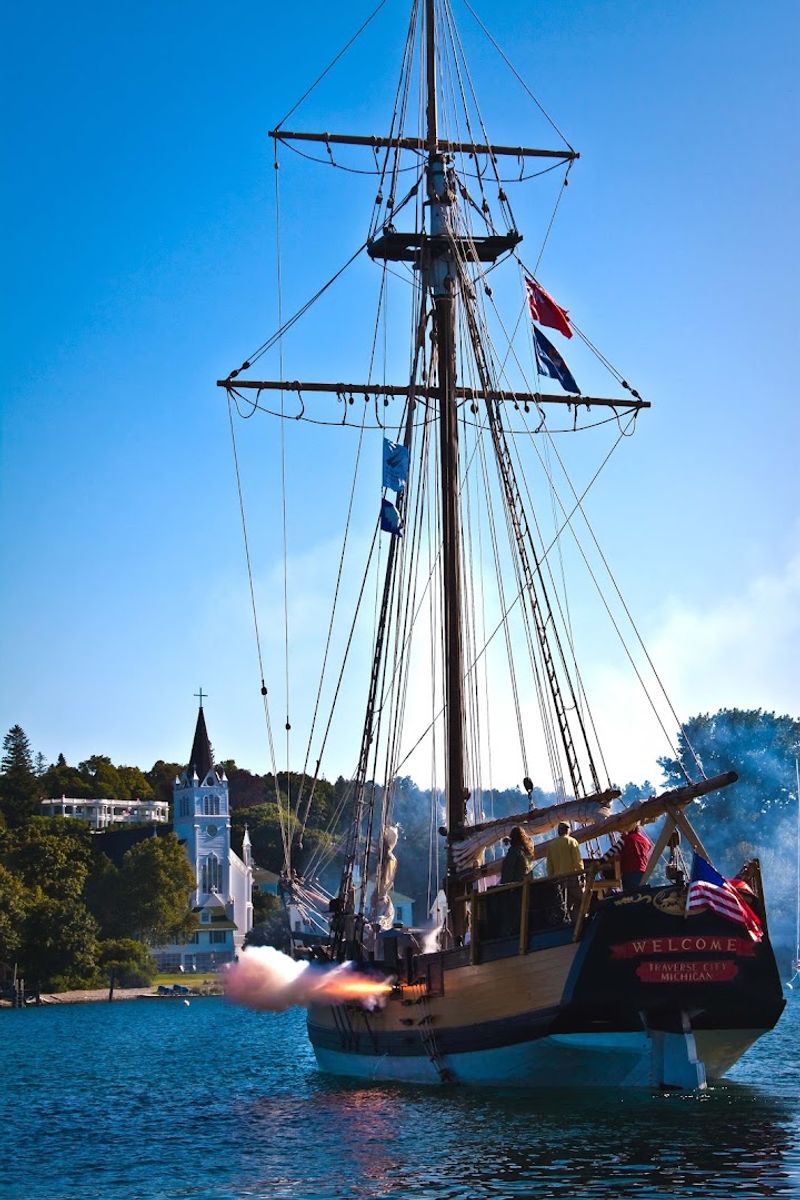
The approach sets the terms. Without cars, you hear handlebars click, hooves pass, and shoes scuff. That soft chorus puts you in a listening mood before you ever see the pews. The church sits along Main Street, yet it reads like a pause.
Because everything moves slower, plan a little extra time between ferry and visit. Lock your rented bike away from railings and entrances to protect paint and flow.
If a carriage tour glides past, watch heads turn at the same moment the white facade appears. The building still catches people mid sentence. It is not remote. It is simply tuned to a pace that history understands.
Weddings And Quiet Ceremonies
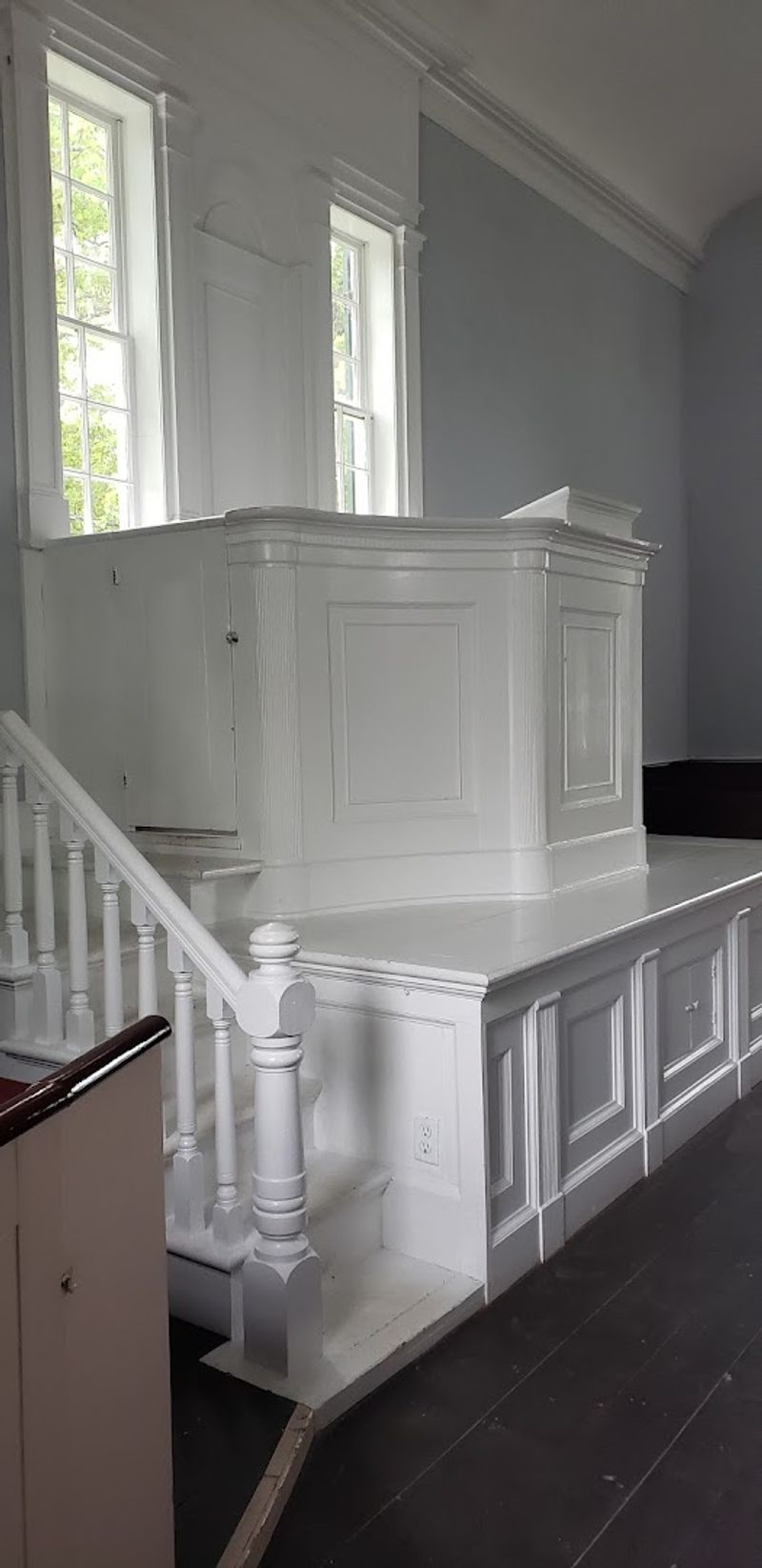
Rows of plain benches and an honest aisle make a persuasive case for ceremony. Many couples choose that modest stage, letting light do the decorating. Flowers stay small. Voices carry without microphones.
The space is eloquent by restraint.
Events here are arranged through Mackinac State Historic Parks, and availability shifts with season. Visit the official site for policies, fees, and time slots.
If you drop by during a rehearsal, step wide and use the side path. The dignity of the room grows when everyone treats it like a shared promise. Later, when the door closes, the church returns to its unadorned self as if folding a well kept suit.
Reading The Neighborhood
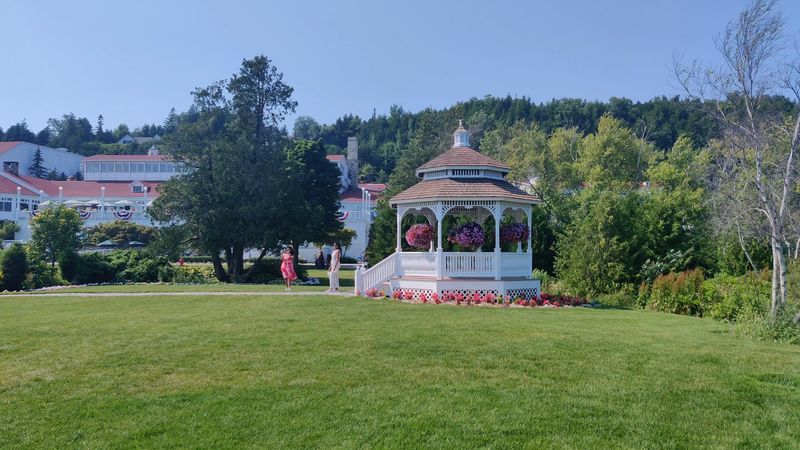
Give the block five slow minutes. Houses nearby hold porches that watch the street with measured interest. Pickets and shingles repeat like good handwriting. The lake keeps flashing between trunks, a reminder that water sets the color palette here.
Local culture favors tidiness over display in this corner of the island. That makes the church’s restraint feel native rather than imposed. Walk the sidewalk to feel how scale stays humane.
For comfort, wear shoes that like planks and uneven stone, and bring a thin layer for lake breeze that sneaks into shade. The best souvenir might be a remembered cadence, not a purchased thing.
When Silence Becomes The Exhibit
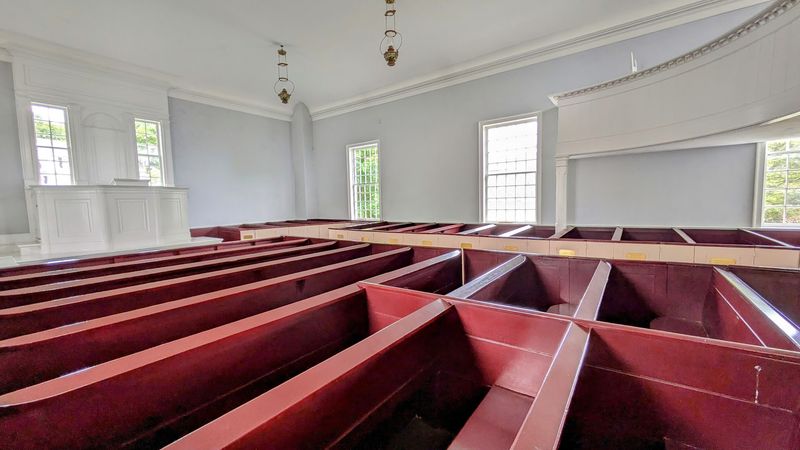
Some days, silence takes the lead. You open the door and find no one, only a held breath and wood remembering footsteps. In that pause, the building stops being backdrop and becomes the subject. You notice joints, shadows, air movement.
Preservation here is a technique of subtraction. Nothing extra fights the room. Sit three pews from the back and let your breathing match the lake rhythm outside.
Jot a line or two, then close the notebook so you do not miss the next small change in light. When you leave, do it slowly. Goodbyes should match the place they honor.