
This Pennsylvania Diner Serves Fish & Chips That Start Conversations Everywhere
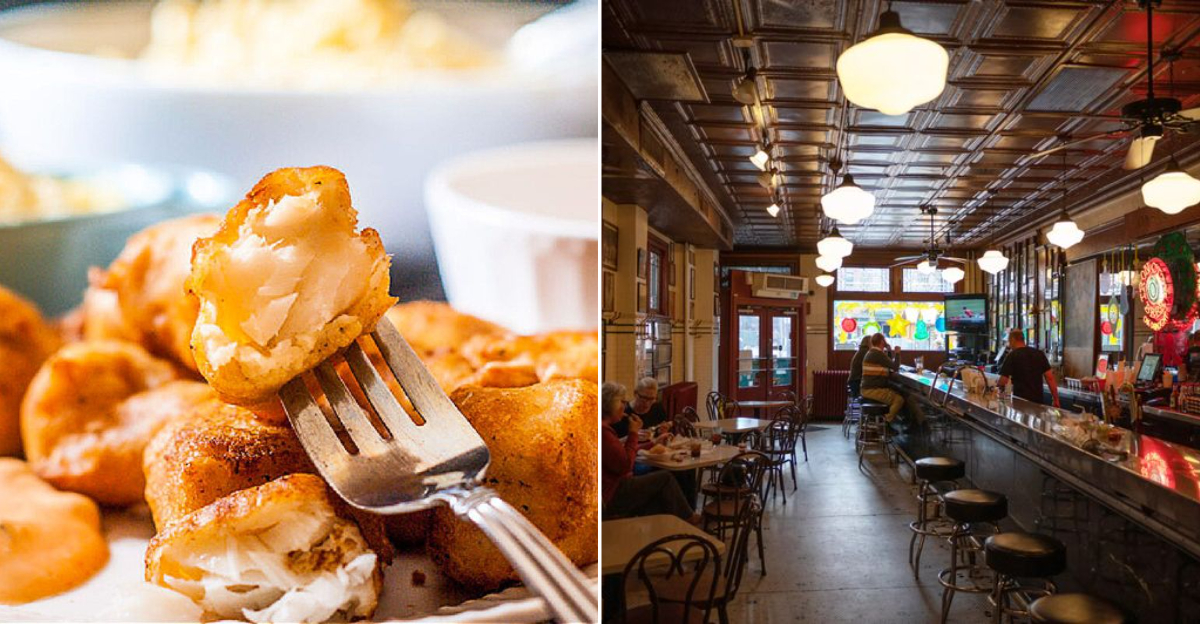
Market Square carries the weight of Pittsburgh’s past, and in one corner stands a dining room that has weathered it all. The Original Oyster House, serving since the 1800s, wears its age in the best ways: dark wood on the walls, fryer aromas drifting out the door, and a steady crowd that treats it like a second home.
Fish and chips remain the centerpiece, crisp, and plated in portions that satisfy without apology. The menu branches out to crab cakes, platters, and the city’s beloved jumbo fish sandwich, each one carrying a sense of tradition.
Sit down, listen to the hum of regulars swapping stories, and you’ll understand why this old diner still feels alive at the heart of the square.
Historic Ambiance
Step into Market Square and the diner feels like it’s been waiting forever. Wood-paneled walls and neon signs echo a different Pittsburgh, one built on grit and steel.
The Original Oyster House dates back to the 1870s, making it the city’s oldest fish spot. It’s endured through industrial highs and urban reinvention.
Locals often describe it as more than a restaurant. Sitting down feels like connecting to a past that hasn’t quite let go of the present.
Beer-Battered Cod Nuggets
Golden nuggets of cod arrive in baskets, fried crisp in a beer batter that adds heft without heaviness. Steam escapes when you break them open.
Serving nuggets instead of fillets was a choice rooted in practicality, smaller pieces fry faster, stay crisp longer, and offer more surface area for batter.
The result is a playful version of fish and chips that feels designed for Pittsburgh’s pace. People dunk, share, and clear baskets with surprising speed.
Jumbo Fish Sandwich
One fillet dwarfs the bun, spilling out from both sides until the sandwich looks more like a platter. It’s fried to golden, flaky, and absurd in size.
This became the city’s iconic fish sandwich, carried to offices and bars for decades. It’s less about refinement and more about sheer abundance.
I was surprised the first time I unwrapped one, it looked impossible. But the fish was tender, the batter still crisp, and suddenly the excess felt like the point.
The ‘Cod Father’
A thick coat of special batter wraps the fillet, puffing into golden armor that crackles on first bite. The texture is loud, almost theatrical.
The name is playful, but the preparation stays rooted in the diner’s history of frying fish since the 1800s. It’s made of simple ingredients, no shortcuts, no tricks.
Diners lean on this choice when they want maximum crunch. It’s the kind of dish that earns attention even before you taste it, sound alone setting the tone.
Columbo Italian-Breadcrumb Cod
This variation ditches batter for Italian breadcrumbs, yielding a thinner, more herb-flecked crust. The fish peeks through, subtle but present.
Pittsburgh’s Italian-American influence shaped this option, weaving neighborhood tradition into a seafood staple. It offers diners a lighter path without leaving the fryer behind.
The Columbo balances crispness with restraint. People who find beer batter too heavy often switch here, enjoying crunch that doesn’t overshadow the cod.
Classic Sides
Plates expand with classic sides: fries stacked in heaps or coleslaw chilled and creamy. The combination feels as important as the fish itself.
This setup speaks to Pittsburgh’s lunch culture, fast, affordable, and filling enough to power through a workday. The oyster house leaned into that rhythm early on.
I ordered mine with slaw and was glad I did. The tangy crunch broke up the fried richness, making every bite of cod sharper and brighter.
Maryland-Style Crab Cakes
Crab cakes appear golden at the edges, dense with meat rather than filler. They’re portioned modestly but deliver a strong hit of flavor.
Maryland’s style influenced these, simple seasoning, tight form, and crab as the star. That choice ties the diner to East Coast seafood traditions.
Customers often add them beside fish baskets. It’s a way of widening the meal without overloading, giving balance to a plate built mostly on cod.
Baked Scrod Alternative
For those avoiding the fryer, scrod comes out tender, baked until it flakes under a fork. The flavor stays clean and understated.
Adding scrod shows the diner’s willingness to keep seafood central while stepping outside the deep fryer. It rounds the menu for a broader crowd.
Health-conscious regulars often cite this as their go-to. It proves you can dine here without batter, yet still stay inside the tradition of simple seafood.
Market Square Location
The diner sits squarely in Market Square, surrounded by office towers and shops, but its neon and wood paneling root it in another time.
That placement is part of its magic, easy for workers, visitors, and locals to find, impossible to ignore if you’re walking the square.
The location anchors it as much as the food. It feels less like one stop among many and more like the square’s permanent fixture.
Local Institution Status
Generations of Pittsburghers keep returning, weaving it into their routines. Comfort food thrives because it feels reliable, and this place always delivers.
The oyster house earned loyalty by holding steady, same recipes, same approach, same unpretentious service. Consistency is its biggest strength.
Many families call it their fallback: if you don’t know where else to go, you know the fryer here will serve you right.
Quick Counter Service
At midday, orders fly, trays land, and customers cycle through in minutes. The energy feels choreographed but never forced.
That pace fits a downtown location where office workers only have short breaks. Speed becomes as important as flavor.
The efficiency has kept the oyster house thriving. Diners know they’ll get their meal quickly, even when the line stretches long.