
This Pennsylvania Forest Is Home To A Frank Lloyd Wright Masterpiece You Can Sleep In
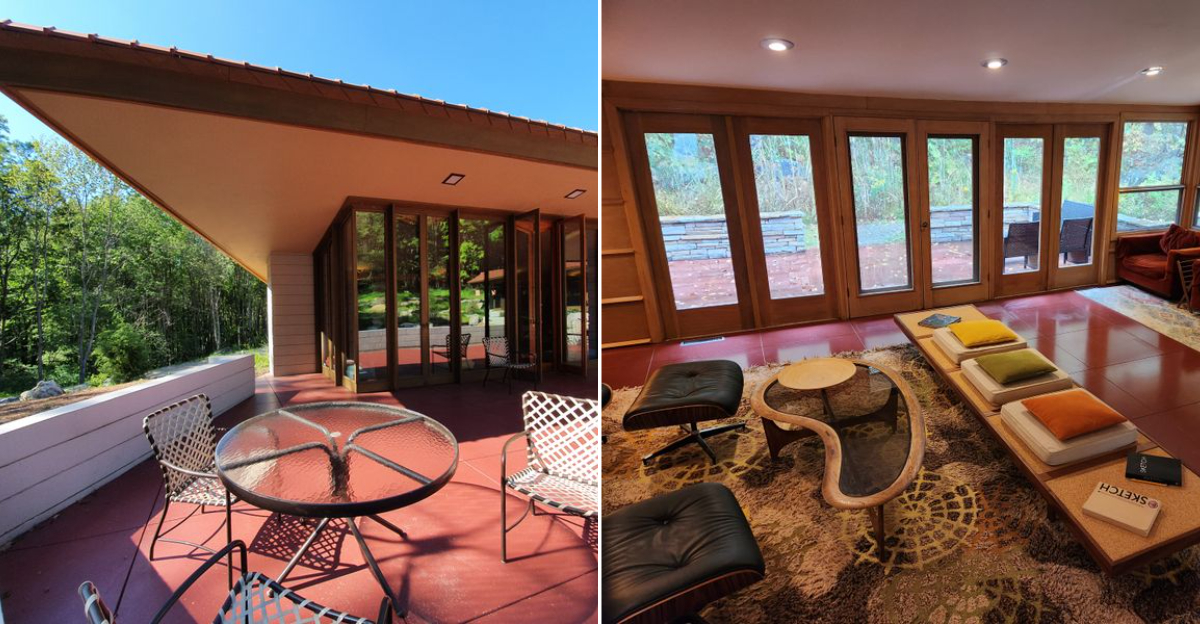
Pennsylvania is full of surprises, but few are as magical as finding world class architecture rising quietly among tall trees and winding forest paths.
Imagine stepping off a gravel drive and into a space shaped by vision, geometry, and nature itself. Clean lines, warm wood, wide windows, and light that pours in like it was invited.
Deep in the Pennsylvania woods, design lovers can stay overnight in a rare Frank Lloyd Wright–connected masterwork instead of seeing it behind velvet ropes.
A masterwork connected to Frank Lloyd Wright stands not behind velvet ropes, but open for an overnight stay.
It is part retreat, part history lesson, part dreamscape. Architecture meets adventure, forest meets form, and comfort meets creativity.
I remember standing still the first time I saw it through the trees. The structure seemed to belong there, as if it had grown from the hillside itself.
That quiet moment made me realize some trips are not about sightseeing at all. They are about stepping inside a story and staying the night.
A Prefabricated Marvel With Legendary Roots
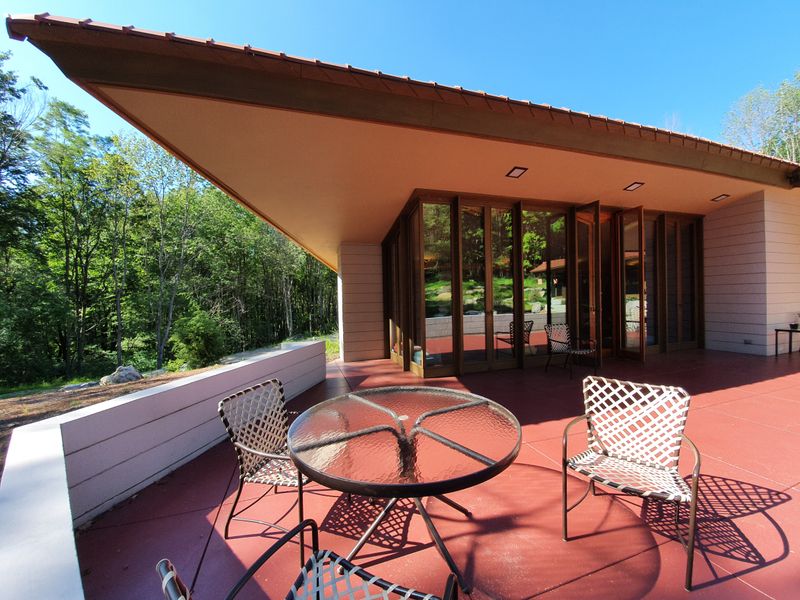
Picture building a house like assembling a giant puzzle. The Duncan House started as a Marshall Erdman prefab #1 plan, one of Wright’s modest Usonian homes, originally designed in the late 1950s.
Originally constructed for Donald and Elizabeth Duncan in Lisle, Illinois, this Usonian home represented Wright’s dream of affordable, beautiful housing for average Americans.
What makes this place truly special is how it challenged traditional homebuilding. Wright believed good design shouldn’t only belong to wealthy clients.
The prefab approach meant families could own a Wright-designed home without the typical hefty price tag.
I remember first learning about Usonian homes in college and thinking they sounded too good to be true. Years later, standing before the Duncan House proved Wright’s genius was very real indeed.
The home sits at 187 Evergreen Lane in Acme, Pennsylvania, where visitors can now explore its innovative design up close.
The Great Carport Controversy
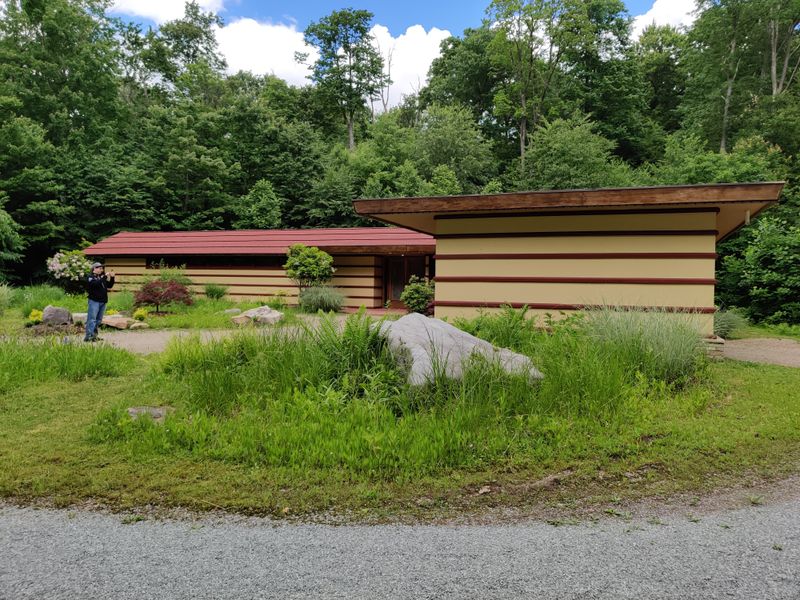
Frank Lloyd Wright had strong opinions about everything, especially carports. When Donald Duncan insisted on adding one to his new home, Wright pushed back hard.
The famous architect believed carports disrupted the clean lines and organic flow he worked so carefully to achieve.
This disagreement highlighted Wright’s uncompromising vision. He didn’t just design buildings.
Wright created complete living environments where every element served a purpose and contributed to the overall harmony.
The tension between client needs and artistic integrity makes architecture fascinating. Duncan needed somewhere to park his car, while Wright wanted visual perfection.
Eventually they reached a compromise, though Wright never fully embraced the addition.
Today’s visitors can see this historic carport and decide for themselves whether it enhances or detracts from the home’s beauty. The debate continues among architecture fans who tour the property.
An Abandoned Treasure Rescued From Decay
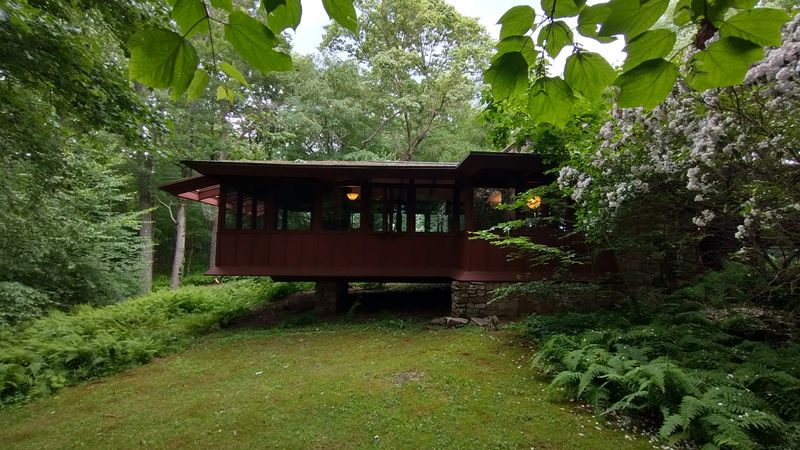
After Donald Duncan passed away, his beautiful Wright-designed home fell into neglect. The once-vibrant masterpiece sat empty and deteriorating, facing an uncertain future.
Many Wright buildings have been lost to demolition or decay, making what happened next even more remarkable.
Usonian Preservation Inc. stepped in to save this architectural gem from destruction. Rather than let it crumble in Illinois, they made the bold decision to disassemble the entire structure piece by piece.
Every board, window, and fixture was carefully documented and packed for transport.
Moving a house sounds unbelievable until you consider the alternative. Losing a Frank Lloyd Wright original would be like burning a rare painting.
The rescue mission took tremendous effort, planning, and resources.
In 2004, all those pieces were dismantled and moved to Pennsylvania, ready for a second life in a new forest setting.
The Missing Instruction Manual Mystery
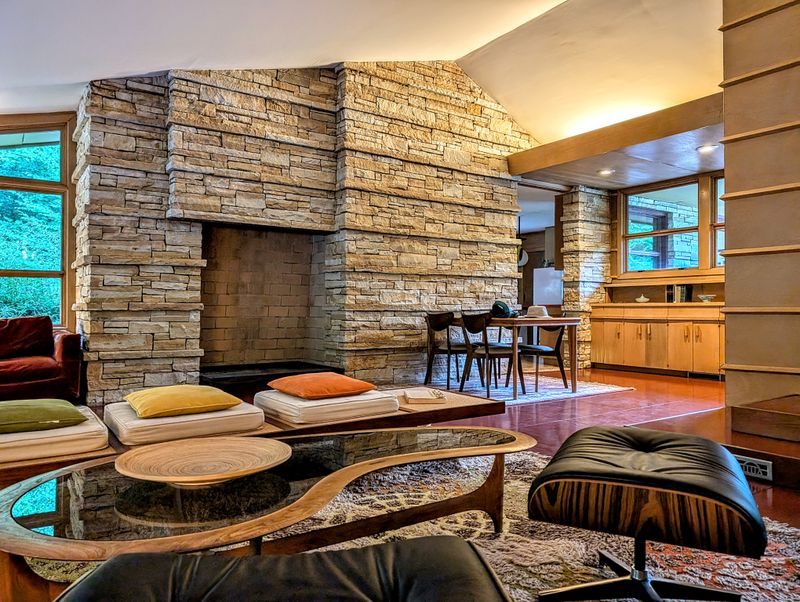
Imagine receiving a massive Lego set with thousands of pieces but no instructions. That’s exactly what happened when the Duncan House arrived at Polymath Park.
During the move from Illinois, some say a book with build details went missing.
Builders faced a daunting challenge. They had photographs and some basic knowledge, but reassembling a Frank Lloyd Wright home without proper documentation was like solving an incredibly complex puzzle.
Every board had a specific place, every angle mattered, and Wright’s designs followed precise geometric principles.
The construction team pressed forward anyway, using their expertise and careful study of available photos. Months into the project, someone later located that missing book.
By then, workers had already figured out most of the puzzle through determination and skill. The story shows how Wright’s logical design principles shine through even when instructions disappear.
Sleep Where Architecture History Was Made
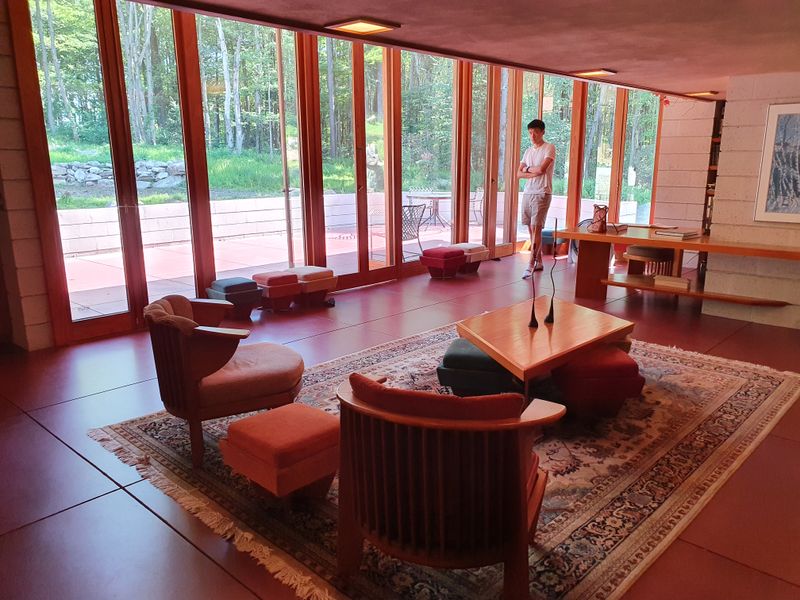
Most people tour famous buildings and leave. At the Duncan House, you can actually spend the night inside a piece of architectural history.
Polymath Park offers overnight rentals, letting guests experience Wright’s design philosophy in the most intimate way possible.
Waking up in a Wright home changes your perspective entirely. Morning light filters through geometric windows exactly as the architect intended.
You use the built-in furniture, walk across the original floors, and inhabit spaces designed with human comfort in mind.
One guest shared that staying overnight felt like traveling back in time to a special era. Another mentioned how much larger the interior feels compared to the exterior appearance.
Usonian Design Philosophy In Action
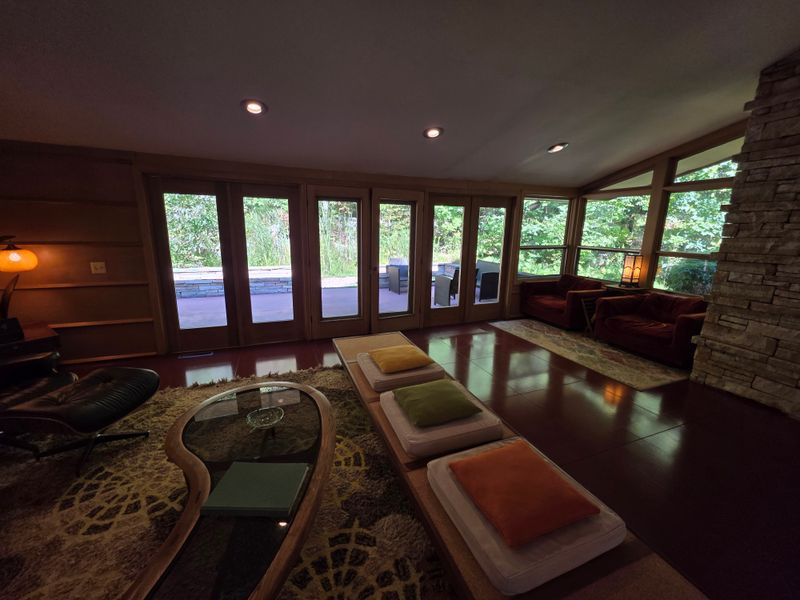
Wright called his affordable home designs Usonian, a term he created to describe a uniquely American architectural style.
These homes rejected unnecessary ornamentation in favor of clean lines, natural materials, and practical layouts. The Duncan House perfectly demonstrates these principles.
Visitors immediately notice how the house connects to its surroundings. Large windows bring the forest inside, while the low horizontal profile mimics the landscape.
Wright believed buildings should grow naturally from their sites rather than fight against nature.
Built-in furniture reduces clutter and maximizes space efficiency. Every closet, shelf, and seating area serves multiple purposes.
The open floor plan was revolutionary for the 1950s, when most homes featured separate, boxy rooms. Walking through the Duncan House today, these ideas still feel fresh and modern.
Wright was designing for the future, and that future is now our present in Pennsylvania forests.
Four Wright Homes In One Location
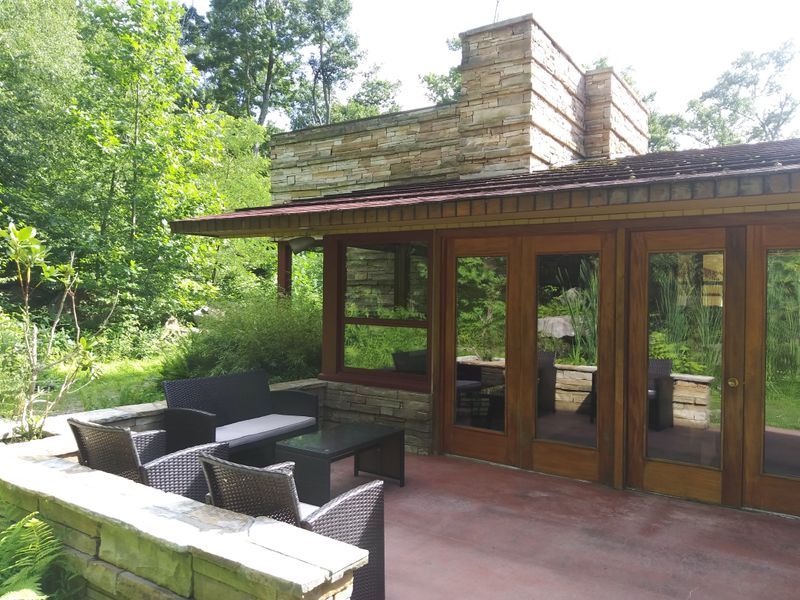
Polymath Park isn’t just about the Duncan House. This property has become home to two Frank Lloyd Wright houses and two apprentice designs, all restored with care.
Architecture enthusiasts can tour multiple Wright designs in a single visit, making it a premier destination for fans.
Each home showcases Wright’s vision and Berndtson’s fresh twist. Comparing them side by side reveals how Wright and apprentice Berndtson experimented with materials, layouts, and techniques across decades.
The park’s founders created something truly special by gathering these treasures in one accessible location.
When I visited, spending a full day exploring all four homes felt like taking a masterclass in American architecture. Each building tells its own story while contributing to the larger narrative of Wright’s genius.
The Pennsylvania setting provides a peaceful backdrop that lets the architecture speak for itself.
Tours are available through advance reservation, and knowledgeable guides share fascinating details about each structure’s history.
Perfect Placement In The Pennsylvania Woods
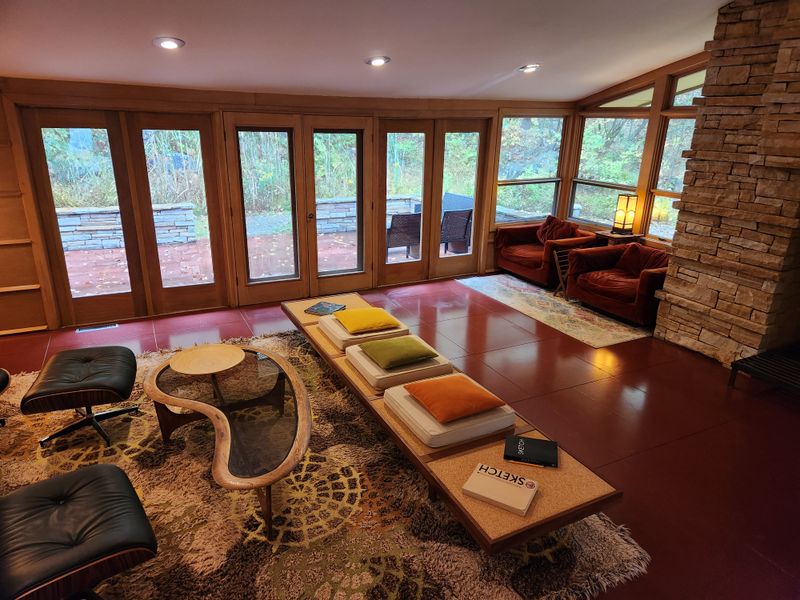
Frank Lloyd Wright would have approved of where the Duncan House ended up. The forested setting at Polymath Park mirrors Wright’s belief that buildings should harmonize with nature.
Tall trees surround the home, creating the intimate connection with landscape that Wright always sought.
The original Illinois location was suburban and flat. Pennsylvania’s rolling hills and dense woods offer something closer to Wright’s ideal vision.
Sunlight filters through leaves, casting changing shadows across the home’s exterior. Seasons transform the view from every window, providing constantly shifting natural artwork.
Taking a walk around the property reveals how thoughtfully the home was positioned.
The approach, the views, and the relationship between building and land all feel intentional and right. Restoration teams didn’t just rebuild a house.
They created the environment Wright envisioned, even if geography required moving it hundreds of miles from its birthplace to achieve that dream in the Keystone State.
Bring Your Own Food For Maximum Immersion
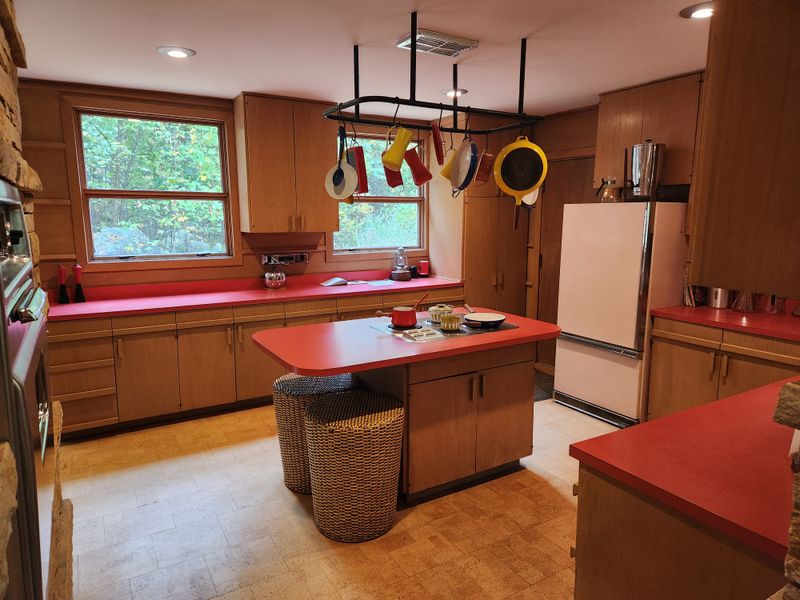
Smart overnight guests take advice from previous visitors and pack their own meals. While nearby restaurants exist, staying in means more time to absorb the Duncan House atmosphere.
Cooking in Wright’s kitchen and eating in his dining space deepens the immersive experience tremendously.
The home’s simplicity encourages slowing down and appreciating small details. Without rushing off to dinner reservations, you notice how light changes throughout the evening.
You discover clever storage solutions and design touches that aren’t obvious during quick tours.
One reviewer mentioned that bringing food beforehand, though requiring extra planning, gave them precious hours to truly experience living in the space.
You can sit quietly and imagine what daily life felt like for the original owners. The kitchen, though modest by modern standards, functions beautifully and reflects Wright’s focus on efficiency.
Making coffee in a Wright-designed home beats any fancy restaurant breakfast.
Architecture Designed For Real People
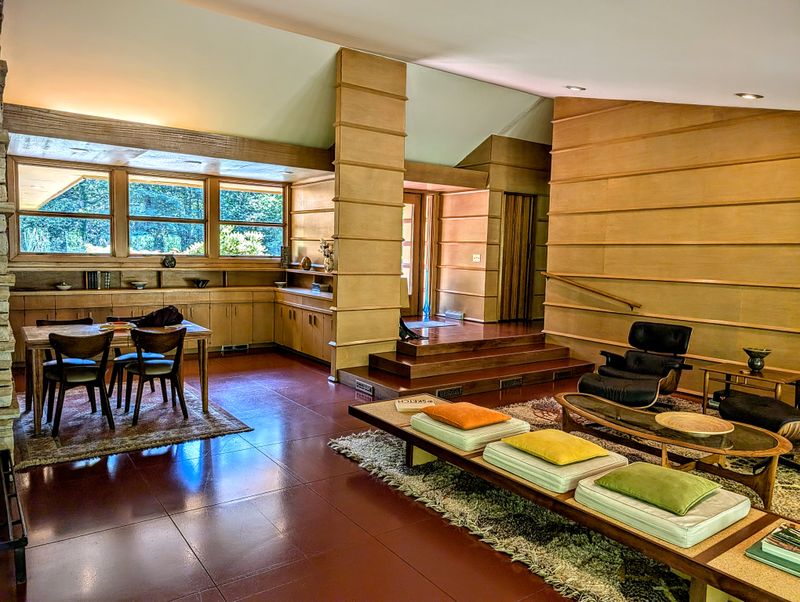
Wright famously said he designed for people, not for architectural magazines. The Duncan House proves he meant it.
Every dimension considers human comfort and movement. Ceilings height varies to create intimate spaces and more expansive areas.
Furniture sits at comfortable heights for actual use.
Unlike grand mansions that impress but intimidate, Usonian homes welcome you inside. The scale feels right for everyday living.
You can imagine raising children here, hosting friends, or simply relaxing after work. Wright rejected the idea that beautiful architecture required intimidating proportions or impractical layouts.
Touring the home reveals this human-centered approach everywhere. Doorways frame views perfectly.
Windows sit at heights that invite you to look outside. Storage appears exactly where you need it.
The 4.9-star rating on review sites reflects how visitors respond to Wright’s thoughtful design. People feel comfortable here, which was always Wright’s goal.
Architecture should enhance life, not complicate it, and the Duncan House succeeds beautifully.