
This Pennsylvania Incline Was Built In The 1800s To Serve As A Lifesaving Escape
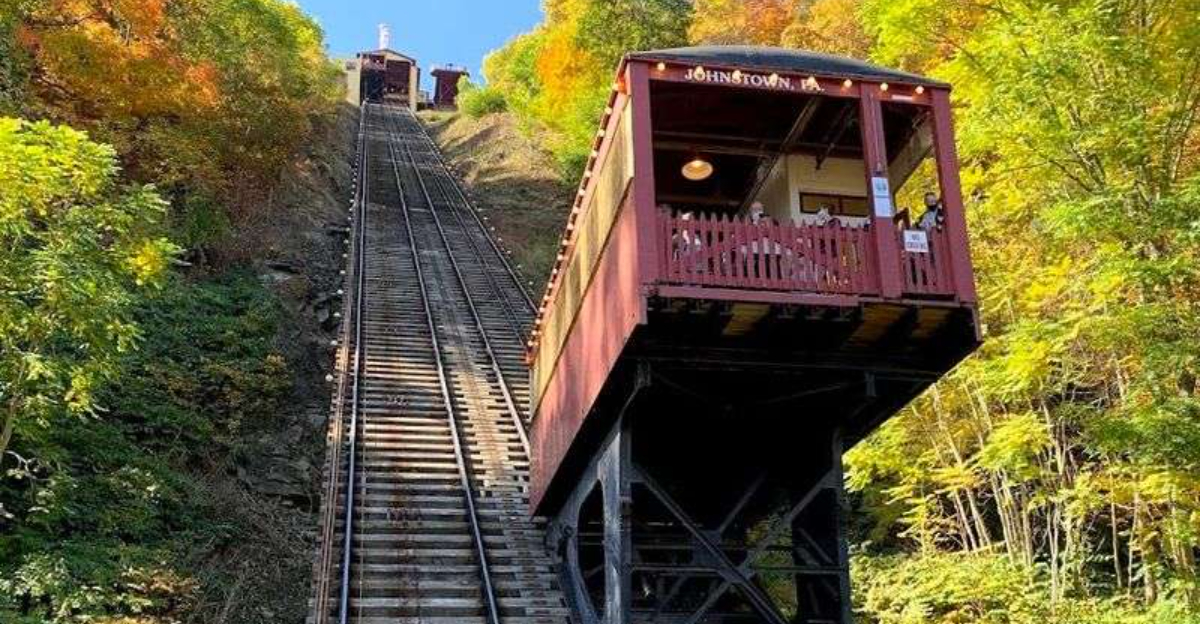
At first glance, it might seem like a simple ride up a steep hillside. Look a little closer, though, and it becomes something far more gripping: a piece of history built with real urgency, real purpose, and a story that still carries weight today.
Places like this have a way of turning an ordinary visit into something memorable because they do more than show you the past. They let you feel a little of its tension, ingenuity, and human drama.
That is part of what makes this landmark in Pennsylvania so fascinating. Built in the eighteen hundreds as a lifesaving escape, it is not just an engineering marvel.
It is a reminder that survival once depended on bold ideas and quick action. The climb, the view, and the history all come together in a way that feels both dramatic and surprisingly moving.
It is scenic, yes, but it is also the kind of stop that lingers in your mind long after the ride is over. The first time I visited a historic place like this, I expected a nice view and a quick photo.
Instead, I left thinking about the people who once relied on it when it mattered most.
Built After the Catastrophic Johnstown Flood of 1889
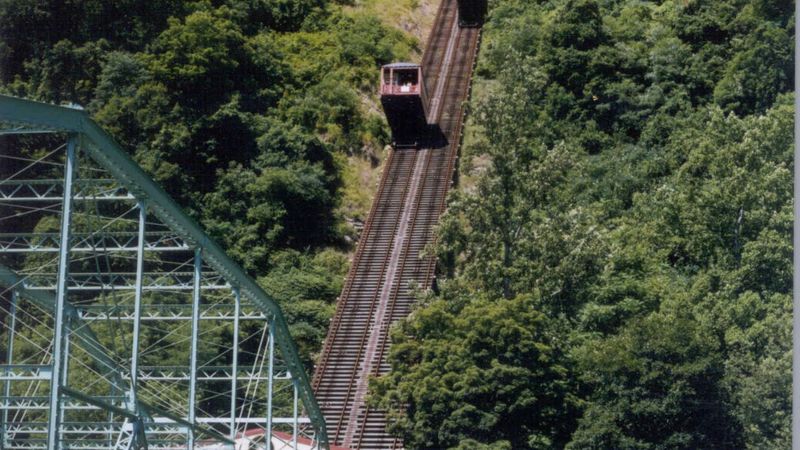
Few engineering projects in American history carry the emotional weight of the Johnstown Inclined Plane.
The devastating flood of 1889 wiped out much of the city below, and community leaders knew that residents needed a reliable escape route to higher ground.
The flood took more than 2200 lives, making it one of the worst disasters in United States history. That trauma sparked an urgent push to build infrastructure that could save lives in a future emergency.
The inclined plane was constructed directly in response to that tragedy, designed to move people rapidly up the steep hillside when floodwaters rose.
It stands today as a testament to human determination and the will to rebuild smarter.
Johnstown did not simply recover from the flood; it engineered its way toward a safer future, and the inclined plane is the most visible symbol of that resolve.
Completed in 1891, Just Two Years After the Flood
Speed of construction mattered deeply when lives were at stake. The Johnstown Inclined Plane was completed in 1891, just two years after the catastrophic flood reshaped the city and the surrounding valley.
For a project of this scale and complexity, that timeline was genuinely impressive. Engineers had to design a system capable of climbing a steep grade while also being sturdy enough to withstand decades of regular use and potential emergency deployment.
The rapid completion reflected both the urgency felt by city planners and the skill of the workers who built it. Interestingly, communities in neighboring Ohio were watching developments in Pennsylvania closely during this era, as industrial cities across the region were grappling with their own infrastructure challenges.
The inclined plane at Johnstown became a model of purposeful, practical engineering that other cities, including those in Ohio, took note of with genuine admiration.
Steepest Vehicular Inclined Plane in the World
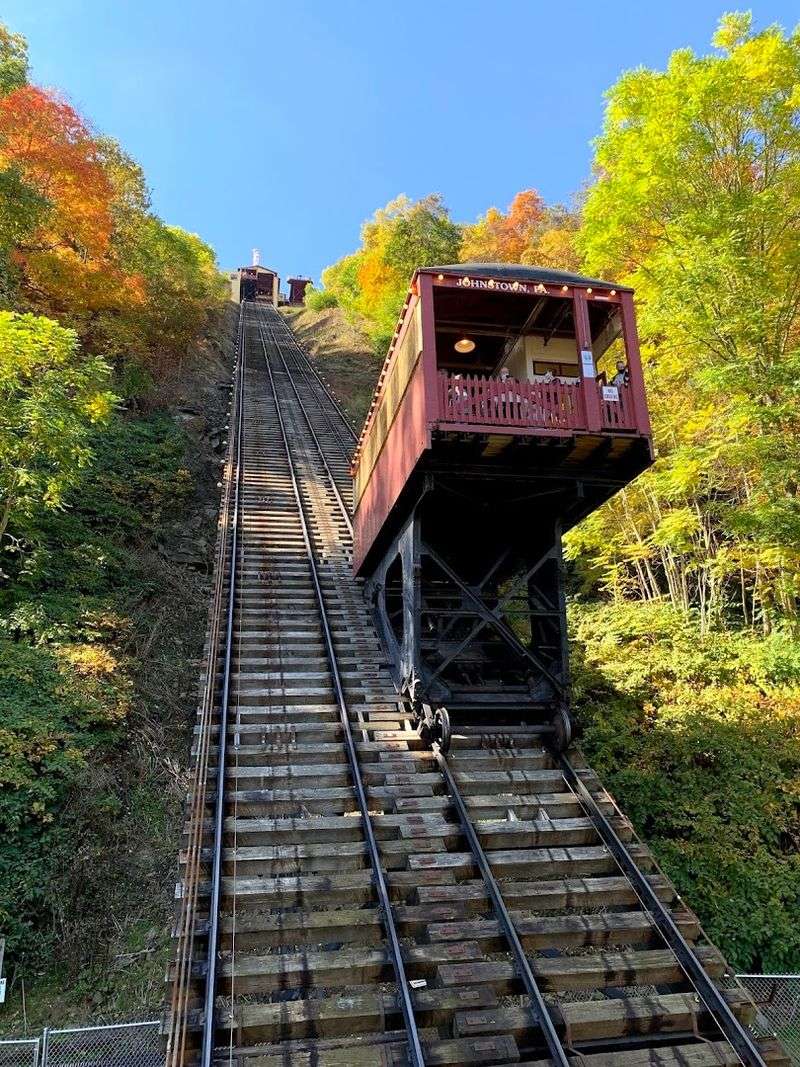
Here is a fact that stops most visitors in their tracks: the Johnstown Inclined Plane holds the record as the steepest vehicular inclined plane in the world.
The official history page gives the grade as 70.9 percent, which means the cars climb at an angle that feels dramatically steep even to seasoned riders.
What makes this even more remarkable is that the incline was designed from the very beginning to carry people, horses, and wagons to the new hilltop community of Westmont.
Cars, motorcycles, and even small trucks would later make the trip up and down the hillside over the decades.
Under normal operations, watching a car load onto the funicular is one of those experiences that makes you question the confidence of 19th-century engineers in the best possible way.
At the moment, though, the system is closed for rehabilitation, so that dramatic ride experience is temporarily on pause for visitors until the project is completed.
The Incline Runs on a Track Length of 896.5 Feet
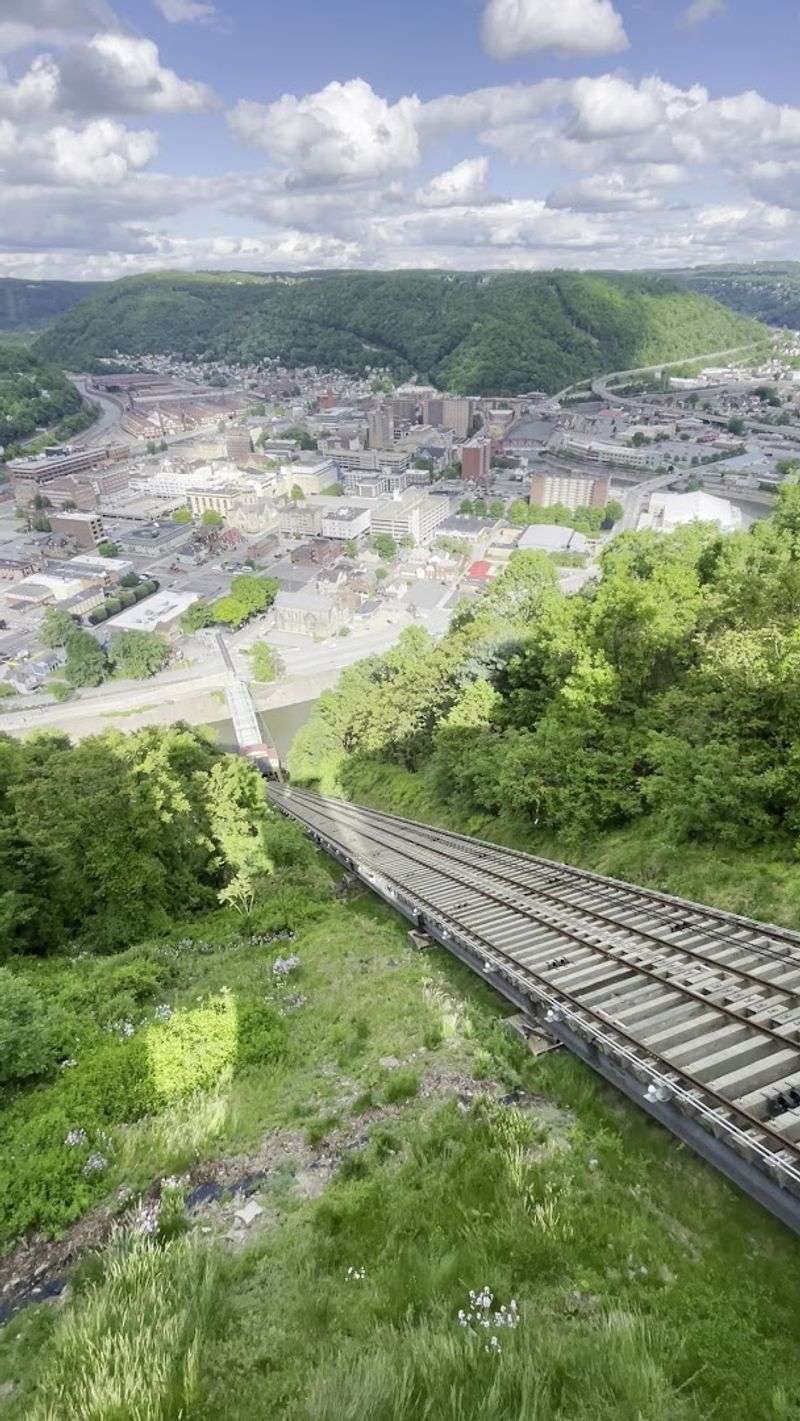
Numbers tell part of the story here. The track of the Johnstown Inclined Plane stretches 896.5 feet from the lower station to the upper terminal, giving passengers nearly a full quarter-mile of inclined travel up the mountainside.
That distance might not sound enormous, but when you factor in the steep angle and the vertical rise of approximately 502 feet, the engineering achievement becomes clear.
The cable system and counterbalance design allow the two cars to pass each other at the midpoint of the track, a classic funicular arrangement that has remained largely unchanged since the 19th century.
Every foot of that track was carefully engineered to handle the weight of vehicles and passengers under all weather conditions.
Cities in Ohio that operated their own inclines during the same era rarely matched the combination of length, grade, and vehicle capacity that the Johnstown system offered its community year after year.
It Served as an Evacuation Route During the 1936 Flood
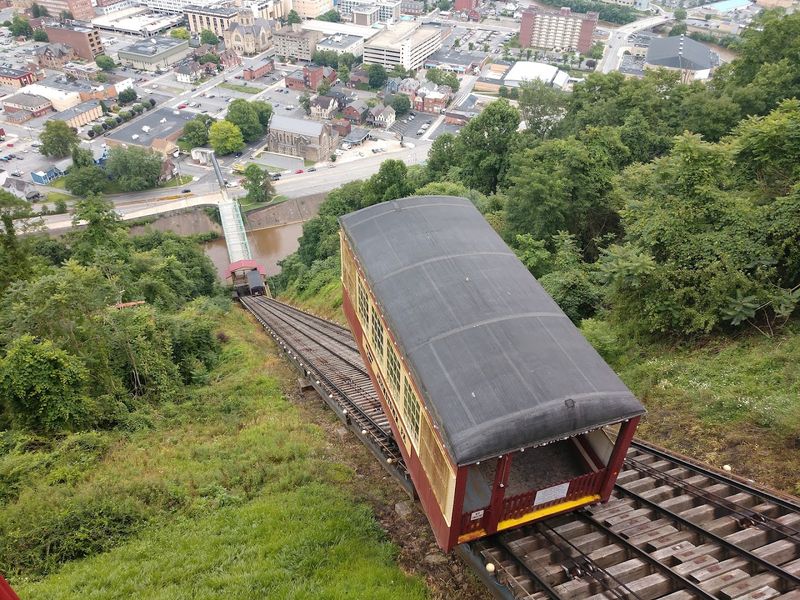
History repeated itself in Johnstown in 1936, when another devastating flood struck the city.
This time, the inclined plane was ready, and it did exactly what it was built to do: it moved people out of danger and up to safety on the hillside above.
During those critical hours, the funicular operated continuously, ferrying residents away from the rising waters below.
The fact that the system functioned reliably during a real emergency validated every design decision made back in 1891.
Stories from that evacuation describe long lines of people waiting calmly for their turn to board, trusting a machine that was already nearly five decades old.
That kind of faith in a piece of infrastructure speaks volumes about how well it was built and maintained.
Ohio residents reading about the 1936 Johnstown flood in their newspapers likely appreciated that smart planning had prevented the kind of catastrophic loss of life seen in 1889.
Used Again for Evacuation During the 1977 Flood
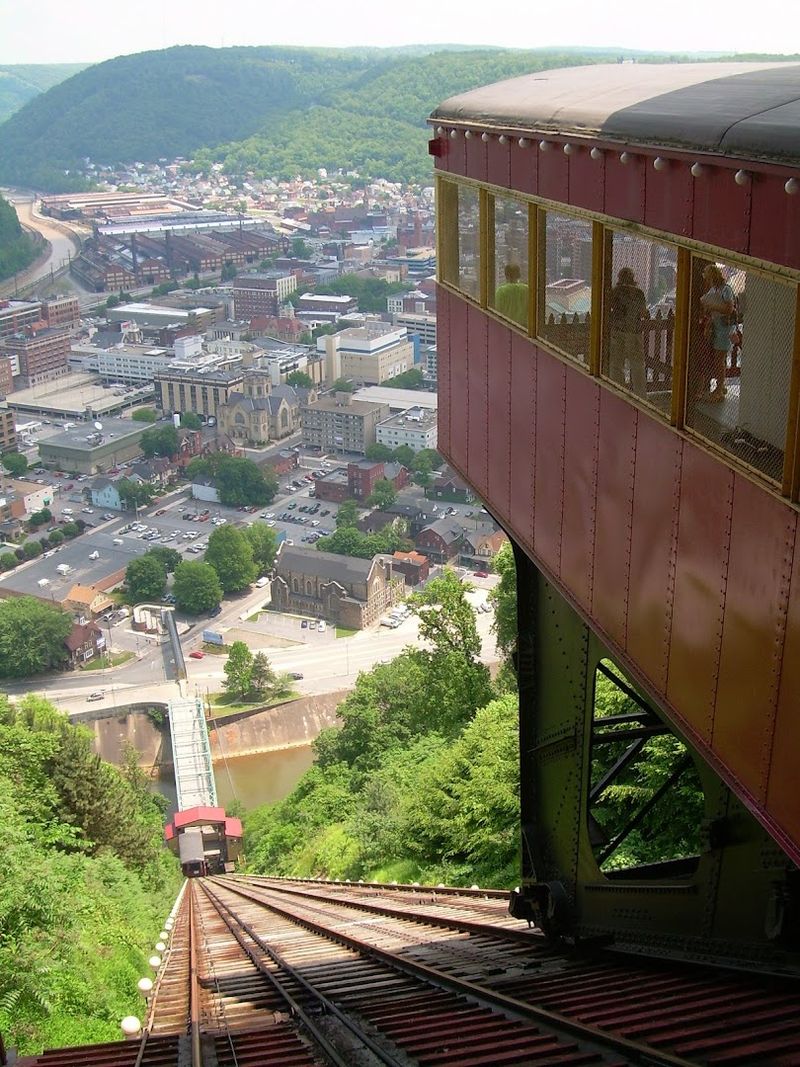
Remarkably, Johnstown was struck by yet another major flood in 1977, and the inclined plane answered the call for the second time in its history.
The system once again proved its worth by transporting residents up the hillside and away from the floodwaters that swept through the valley below.
By that point, the incline was 86 years old and still performing its original emergency function.
That kind of longevity and reliability is extraordinary for any piece of mechanical infrastructure, let alone one built in the 19th century.
The 1977 event cemented the inclined plane’s status not just as a historical curiosity but as a living, functional piece of community safety equipment.
While Ohio cities and others across Pennsylvania had long retired their own inclines to museum status, Johnstown kept theirs operational and ready for exactly this kind of moment, proving that preservation and practicality can absolutely coexist.
The Cars Can Transport Full-Sized Vehicles Up the Hill
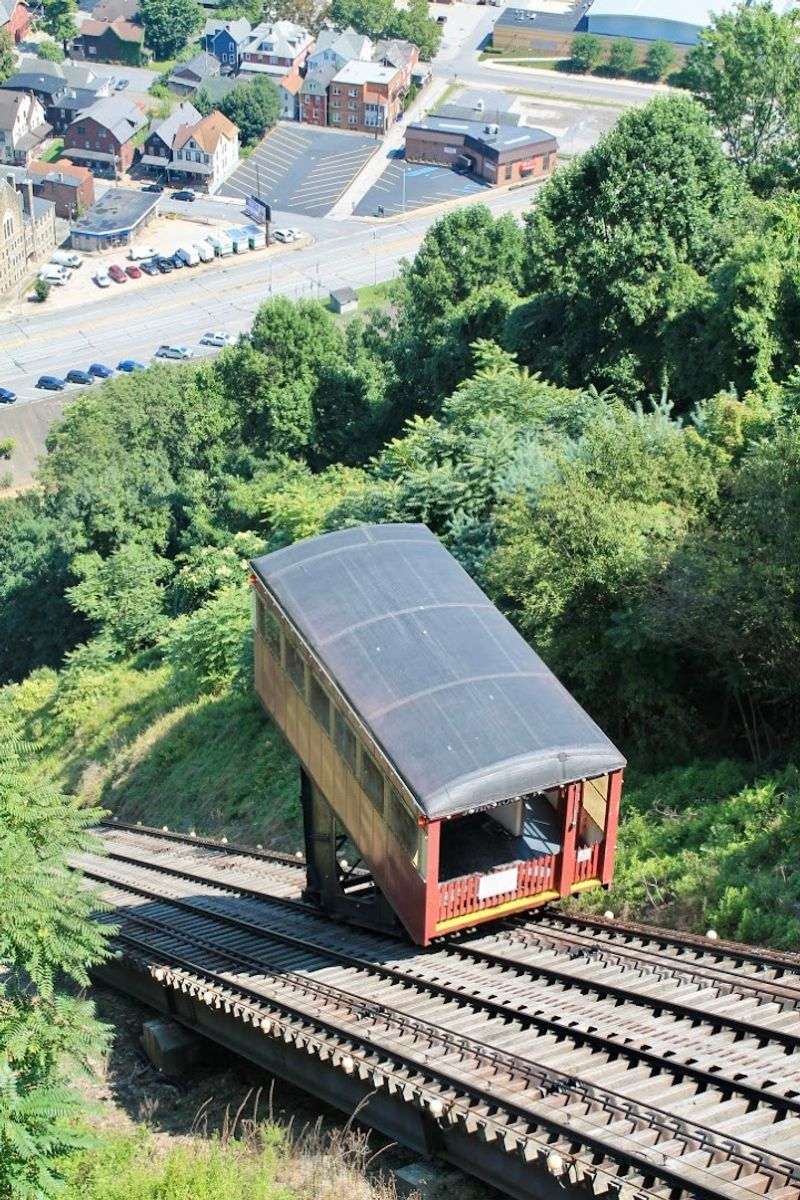
Most funicular railways around the world carry passengers on foot, but the Johnstown Inclined Plane was engineered with a much broader purpose.
From its earliest days, the system was designed to transport full-sized vehicles, including cars and motorcycles, up and down the steep hillside.
Each car on the incline is large enough to accommodate a standard automobile, making it one of the few funiculars in North America capable of this feat.
For residents living on the hill above the city, this feature made the incline a practical daily convenience, not just a tourist attraction.
Loading a car onto the platform and watching it tilt back as the incline begins its ascent is a genuinely surreal experience.
Ohio has its own fascinating transportation history, but even enthusiasts from that state tend to raise an eyebrow when they learn that a Pennsylvania hillside railway can swallow a full car and carry it nearly 900 feet uphill without breaking a sweat.
The Observation Deck Offers Panoramic Views of the Conemaugh Valley
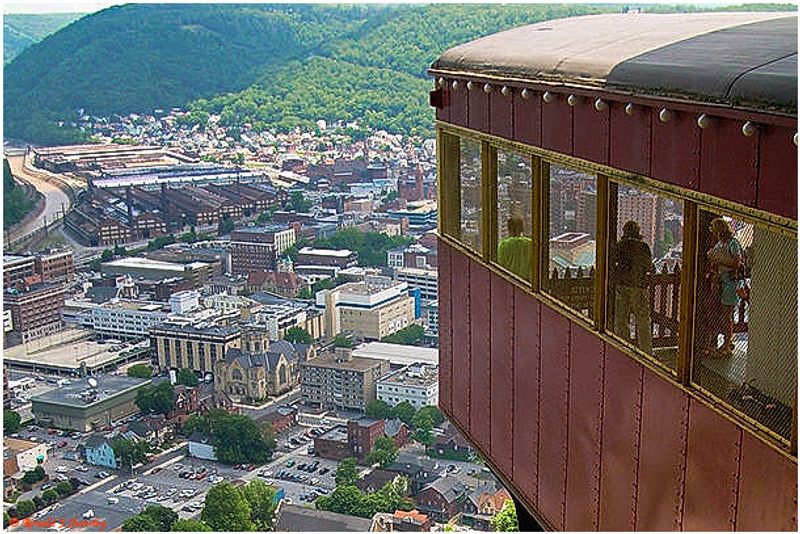
Reaching the top of the Johnstown Inclined Plane rewards visitors with one of the most striking views in all of western Pennsylvania.
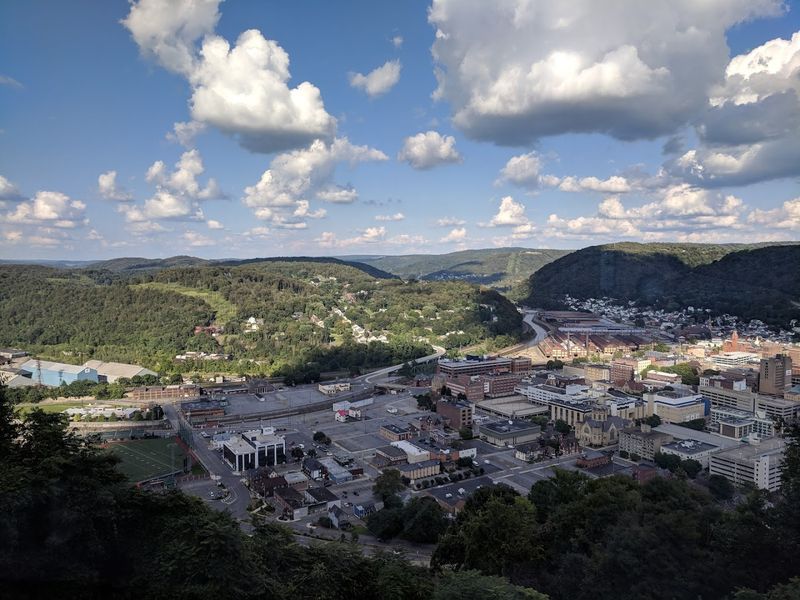
The observation deck at the upper station looks out across the entire Conemaugh Valley, giving a sweeping perspective of the city, the rivers, and the surrounding hills.
On a clear day, the view stretches for miles in every direction, framing Johnstown in a way that makes its geography suddenly make sense.
You can see exactly why flooding was such a persistent threat, with the rivers converging in the valley floor far below.
The park at the summit adds to the experience, with open green space, a large American flag, and room to simply sit and take it all in.
Visitors from Ohio and beyond consistently describe this viewpoint as one of the highlights of any trip to southwestern Pennsylvania, and it is easy to understand why once you are standing there.
A Visitor Center and Restaurant Sit at the Summit
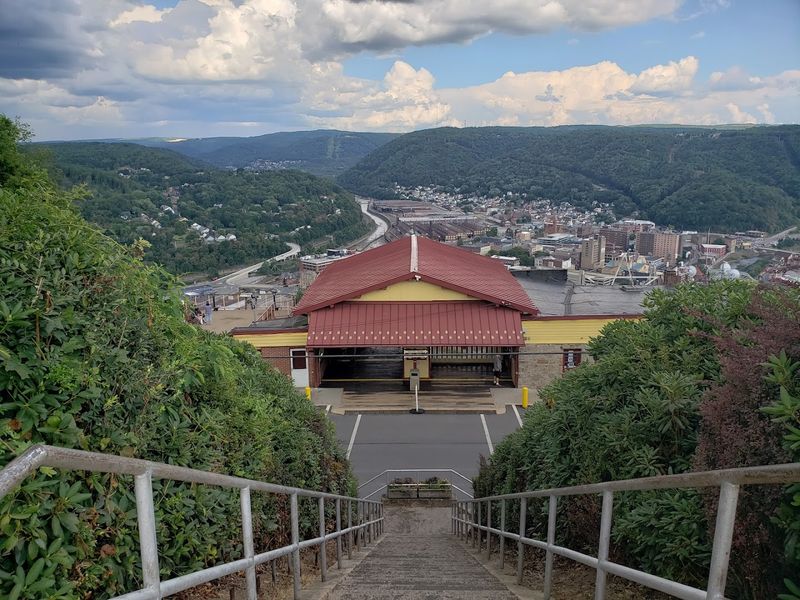
The experience at the Johnstown Inclined Plane does not currently end with a funicular ride to the top, because the Incline itself is closed during the rehabilitation project.
What is still available at the summit is more limited but still worth knowing before a visit.
The official FAQ says Edgehill Drive is open to pedestrians, the steps to the top of the mound are open, and the observation or waiting deck remains accessible.
That means visitors can still reach the overlook area and take in the valley views even while the ride is out of service.
A restaurant at the summit still rounds out the stop, since Asiago’s remains open during the project.
The giftshop, however, is closed at its physical location, with Inclined Plane items currently sold through the online store instead.
Still One of the Most Visited Landmarks in Western Pennsylvania
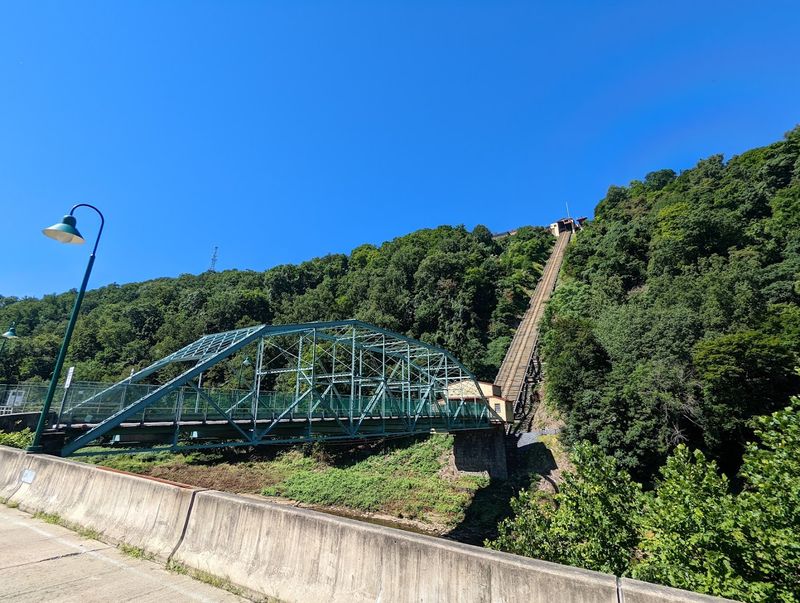
More than 130 years after it first opened, the Johnstown Inclined Plane continues to draw visitors from across the country and beyond.
With a rating of 4.7 stars from hundreds of reviews, it has earned its reputation as a must-see attraction in western Pennsylvania.
People travel from Pittsburgh, Altoona, and even from Ohio to experience the ride and take in the views.
The combination of genuine history, mechanical spectacle, and natural scenery creates something that appeals to a wide range of visitors, from history buffs to families looking for an unforgettable afternoon.
Mountain biking trails accessible from the summit add an adventurous dimension for the more athletically inclined, while the park and restaurant ensure that everyone in the group finds something to enjoy.
The Johnstown Inclined Plane is not a relic sitting behind glass; it is a living landmark that keeps earning new fans, including plenty of repeat visitors from Ohio who simply cannot stay away.