
This Pennsylvania Landmark Offers An Up-Close Look At Incredible Engineering
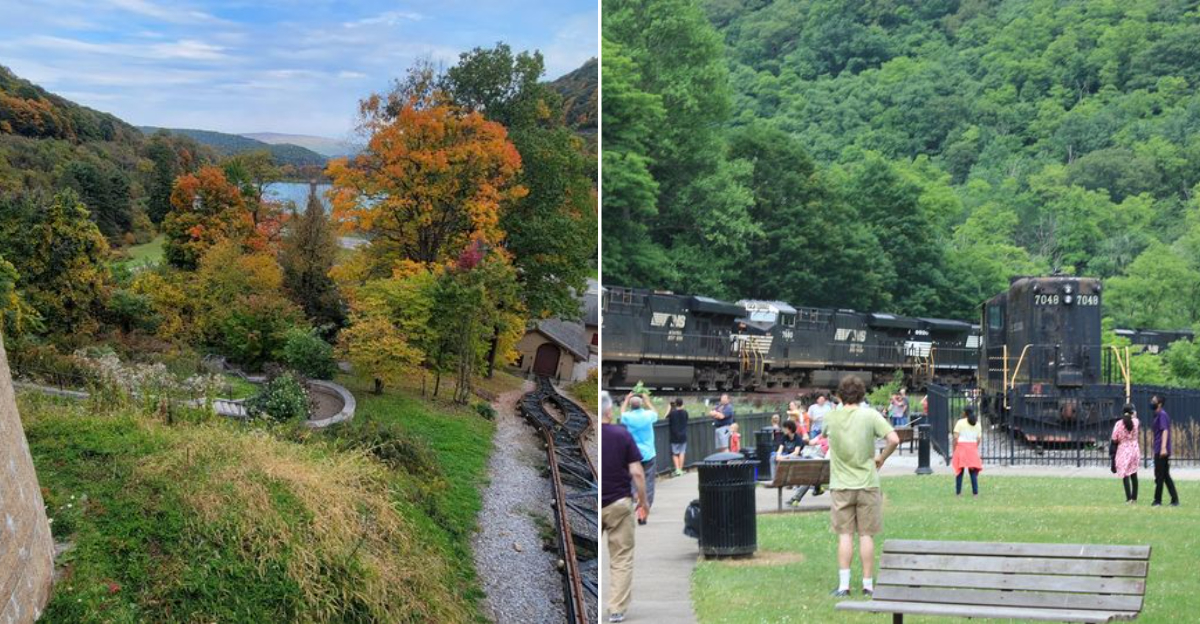
Some landmarks in Pennsylvania do more than impress, they quietly redefine what is possible. A sweeping arc of steel cuts through rolling hills with precision that feels almost artistic.
It is rail-bending brilliance, curve-of-the-century confidence, and the steady thunder of locomotives proving that smart design can stand the test of time.
Watching a train follow that perfectly measured bend feels like witnessing motion and math working in perfect harmony.
Metal meets mountain, wheels grip track, and the landscape becomes part of the engineering story.
Pennsylvania has long been shaped by innovation, and few sights capture that spirit so clearly. Standing near a structure like this gives you a new respect for vision and determination.
I have always been fascinated by how something so industrial can feel strangely graceful.
The first time I watched a train trace a massive curve from start to finish, I caught myself smiling without even realizing it. Some feats of engineering are powerful enough to spark a little awe every single time.
The Engineering Marvel Behind the Curve
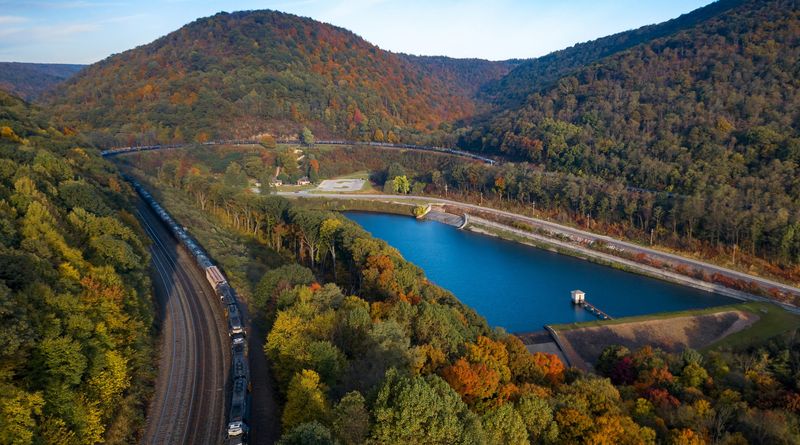
Before a single rail was laid at Horseshoe Curve, engineers faced a massive problem: how do you move trains over the Allegheny Mountains with grades they can actually handle?
The answer was a horseshoe-shaped loop of track that lengthened the route and reduced the climb, becoming part of the broader mountain crossing that also worked with the Gallitzin Tunnels.
Completed in 1854 by the Pennsylvania Railroad, the design let trains gain elevation much more gradually than a straight climb would allow.
The curve remains one of the most famous railroad engineering solutions in the country, and it helped transform Altoona into a major rail center.
The grade is often described in the roughly 1.8 percent range on the westbound climb, which sounds small but is actually serious work for heavy freight.
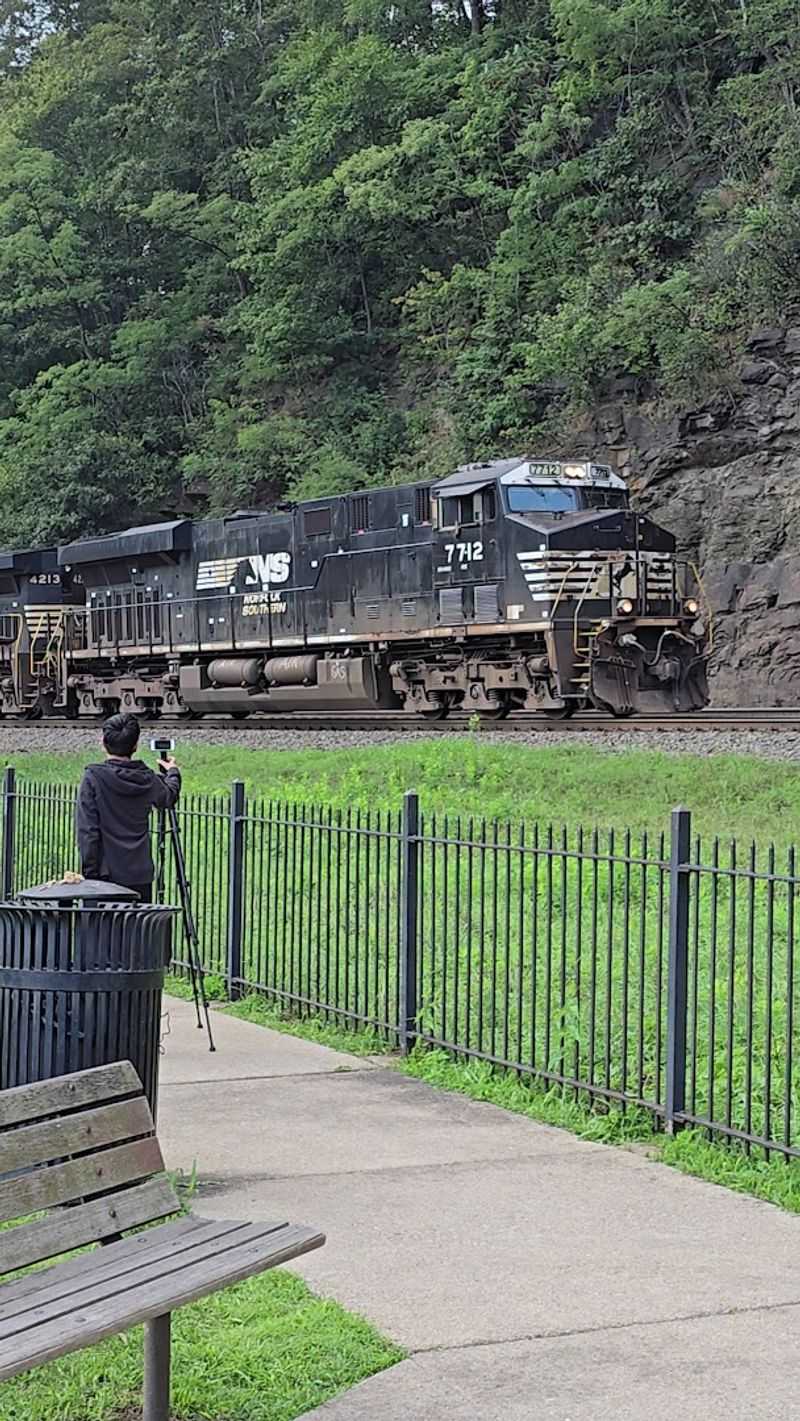
Engineers from across the country studied this design as a model for mountain railroading. Even today, active Norfolk Southern freight trains and Amtrak passenger trains use the route.
The fact that a solution drawn up in the 1850s still serves modern rail traffic says everything about the brilliance of its creators.
A National Historic Landmark Since 1966
Not every stretch of railroad track earns a federal designation, but Horseshoe Curve is no ordinary track.
The site was officially named a National Historic Landmark in 1966, a recognition that places it in the same category as some of the most significant locations in American history.
That designation means the site is protected and preserved for future generations to study and enjoy.
It also reflects how deeply the curve shaped American commerce, transportation, and westward expansion during the 19th century.
Interestingly, the curve was even considered a target during World War II, which speaks to how strategically vital it was to the nation’s supply chain at the time.
German saboteurs were reportedly dispatched to destroy it, though the plot was stopped before any damage occurred.
Knowing that history adds a whole new layer of meaning to standing there and watching a modern train roll by.
The Funicular That Takes You to the Top
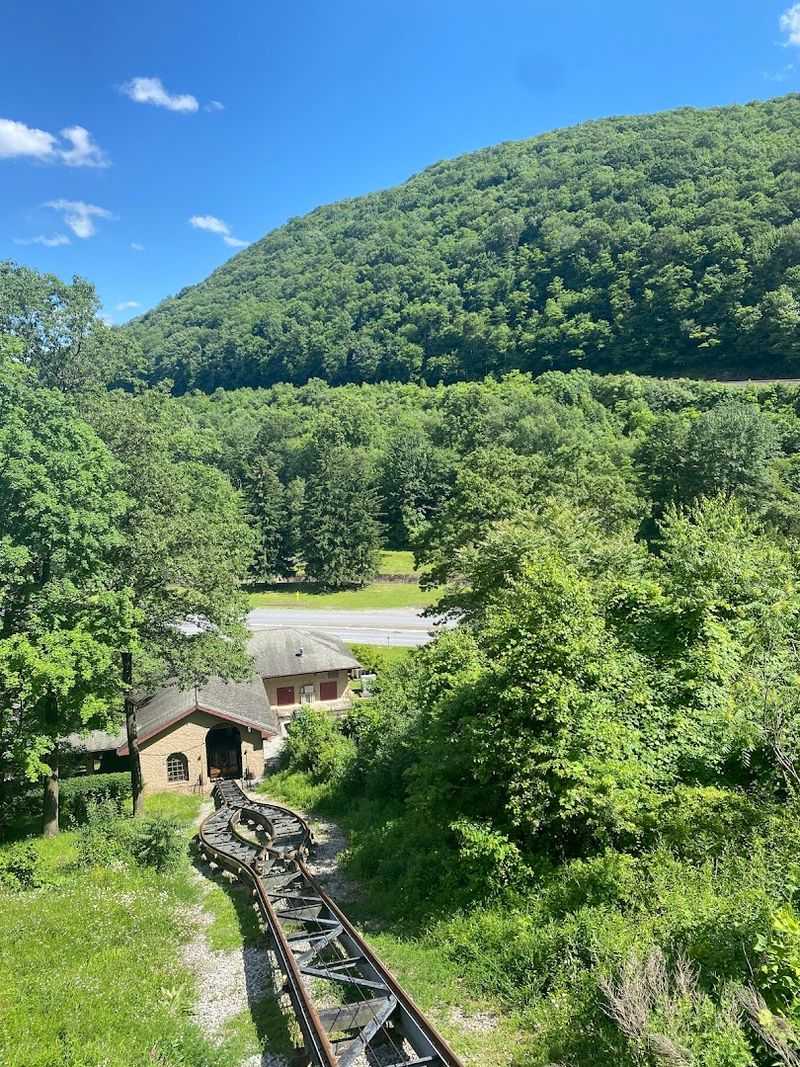
Getting up to the observation deck is part of the adventure at this landmark. A short funicular, sometimes called an incline or tram, has long carried visitors up the steep hillside to the viewing area above the tracks.
The ride itself only takes a minute or two, but it gives a clear sense of just how sharply the terrain rises here.
It has traditionally been the easiest and most accessible way to reach the top without breaking a sweat.
However, visitors absolutely need to check ahead before arriving, because the official site currently lists the funicular as not in operation and specifically advises checking Facebook or calling before a visit.
When it is unavailable, the alternative is climbing 194 steps, which is a solid workout but manageable for many visitors at a steady pace.
Either way, arriving at the observation platform and hearing the distant rumble of an approaching train makes the effort completely worth it.
194 Steps and a View Worth Every One
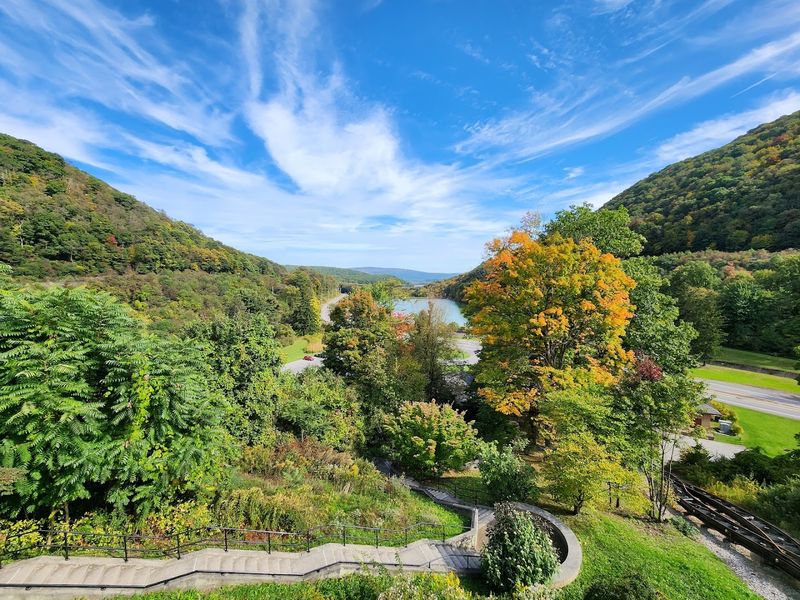
For those who prefer their sightseeing with a side of cardio, the 194-step staircase at Horseshoe Curve is a memorable climb.
The steps wind up through a wooded hillside and open up onto the observation platform, where the full scale of the curve becomes clear.
Benches and picnic tables are available at the top, so there is no need to rush back down after the climb. Many visitors bring snacks, settle in, and simply wait for the next train to appear around the bend.
The surrounding forest provides welcome shade on warm days, and the sound of wind through the trees is interrupted every so often by the distant horn of an approaching locomotive.
Seniors, families with children, and even visitors managing health challenges have made the climb successfully at a comfortable pace.
The reward at the top is a view and a feeling that no parking lot photo could ever capture.
Real Trains, Real Frequency, Real Thrills
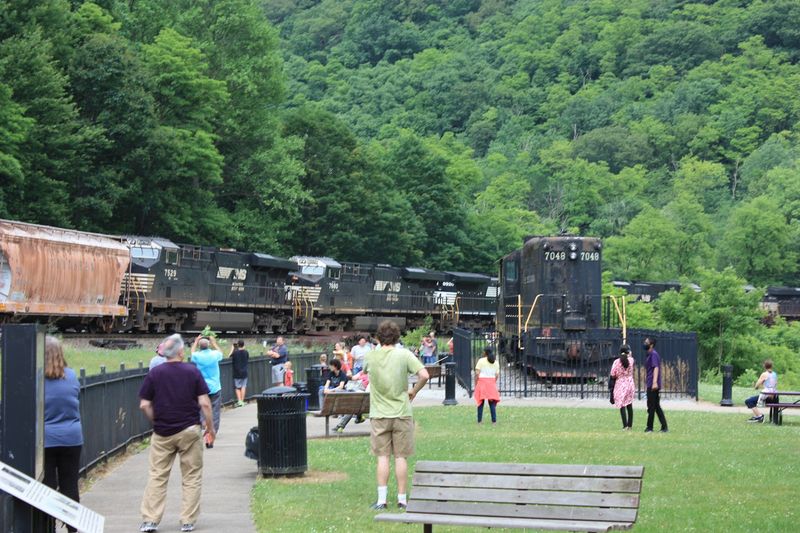
One of the biggest surprises for first-time visitors is how often trains actually pass through. This is not a museum with a static display or a scheduled tourist train that runs twice a day on weekends.
Horseshoe Curve sits on one of the busiest freight rail corridors in the eastern United States, so active Norfolk Southern trains roll through regularly throughout the day.
Amtrak passenger trains also use the line, giving visitors a chance to see both freight and passenger operations in one visit.
Some visitors have reported seeing two or even three trains within a single 90-minute window.
Watching a train that stretches nearly a mile long curl around the horseshoe shape, so that you can see the engine and the tail at the same time, is a perspective that simply cannot be replicated anywhere else east of Ohio. The locomotive horns add a dramatic soundtrack to the whole experience.
The Visitor Center and Museum on Site
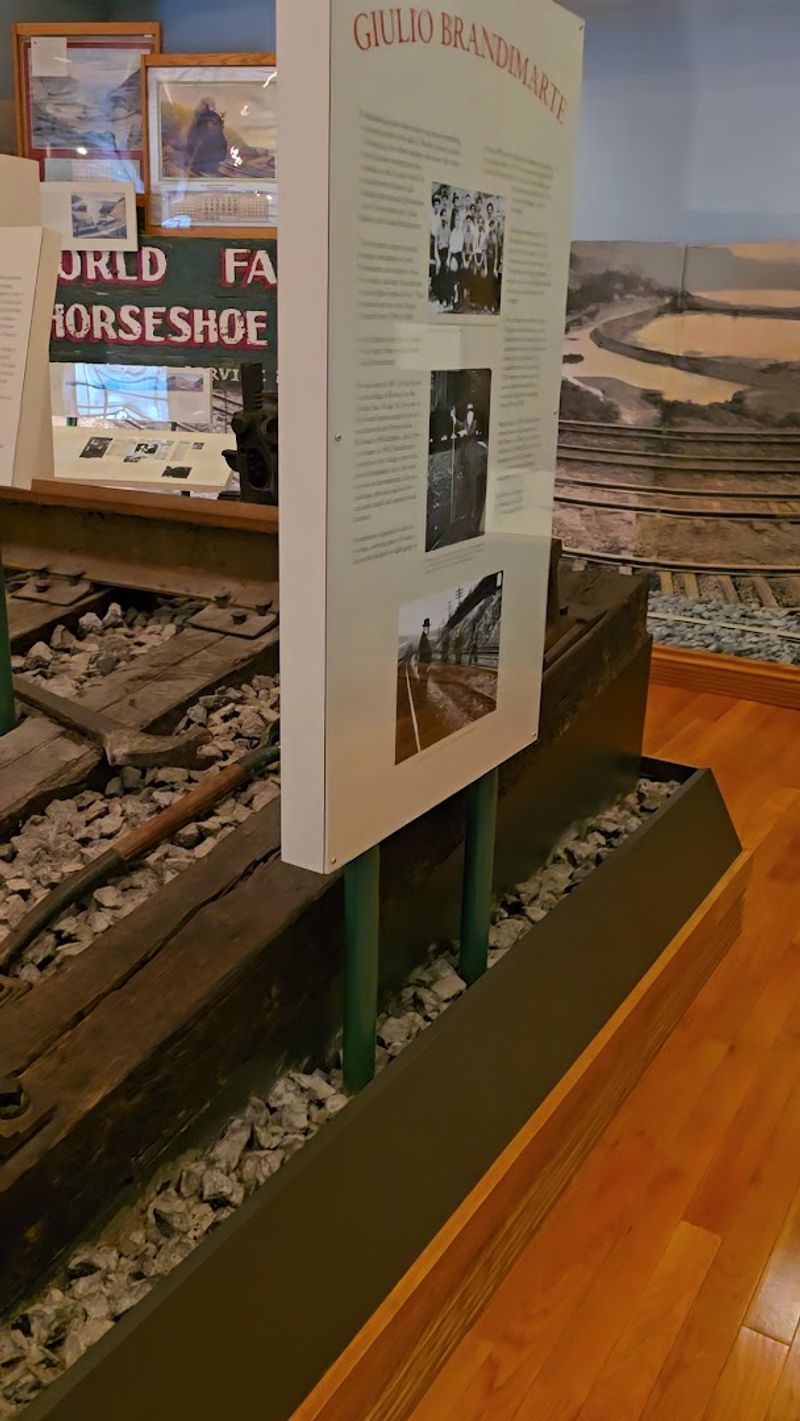
Before heading up to the tracks, most visitors spend time in the ground-level visitor center, which houses a small but well-curated museum about the history of the Pennsylvania Railroad and the curve itself.
The exhibits include historical photographs, artifacts, and informational panels that trace the construction of the line and its role in American industrial growth.
A short video presentation gives helpful context before the climb to the observation area.
A gift shop is also located in the visitor center, stocked with railroad-themed souvenirs, books, and keepsakes that make for meaningful mementos.
Staff members on site have been consistently described as friendly and knowledgeable, happy to answer questions about the history and the trains.
The museum is modest in size, but the quality of its content makes it a worthwhile stop rather than just a waiting room. Budget about 20 to 30 minutes there before heading uphill.
PRR 7048: The Steam Locomotive on Display
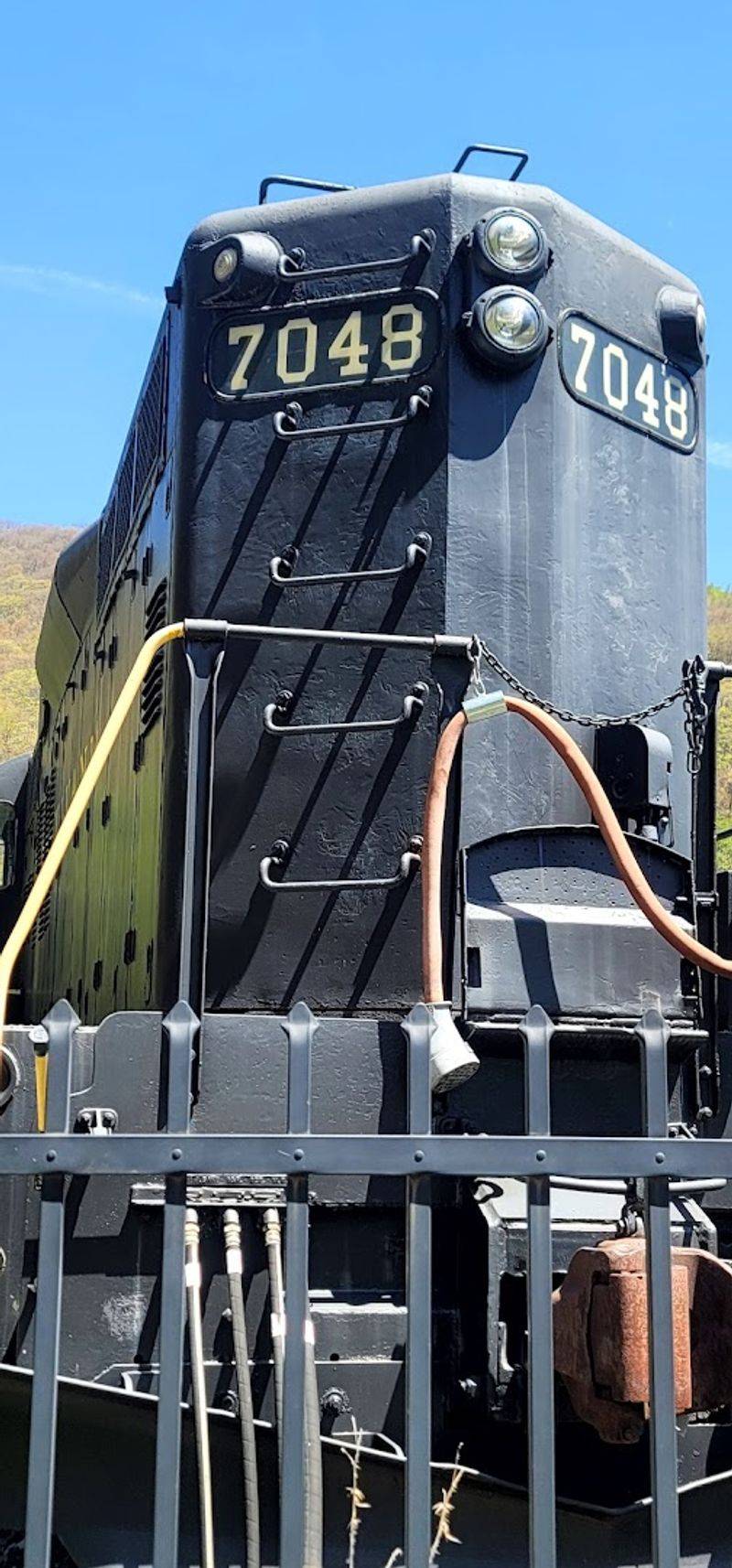
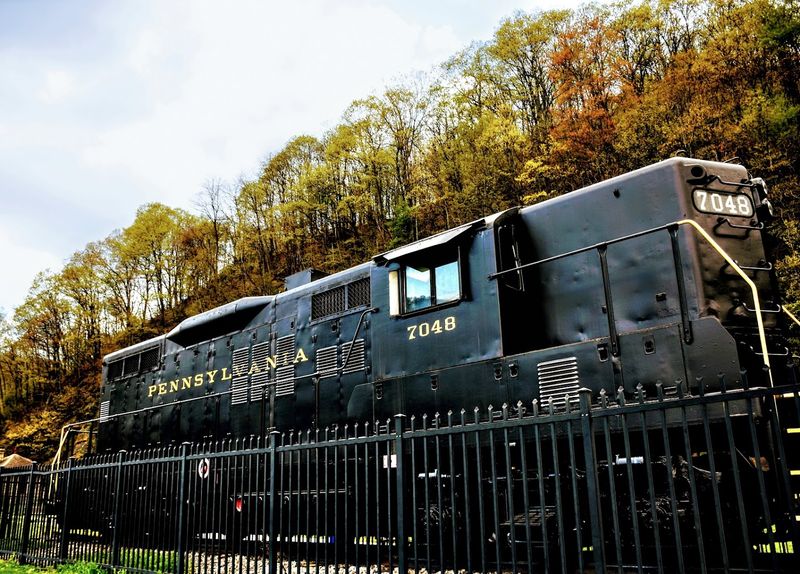
Parked near the visitor area is one of the most photogenic features of the entire site: PRR 7048, a preserved Pennsylvania Railroad locomotive that gives visitors a tangible, up-close look at the power tied to this landmark.
It is an impressive piece of railroad history and an easy stop for photos before or after heading uphill.
Standing next to a full-size locomotive is a humbling experience. The sheer scale of the wheels, the body, and the cab makes it easy to understand why rail equipment inspired so much awe during its working years.
PRR 7048 is not a steam engine, but a preserved GP9 diesel-electric locomotive that replaced PRR 1361 at the Curve in 1985 when the K4 steam locomotive was removed for restoration work.
That correction matters, because it changes what visitors are actually looking at when they stop for a closer look. It is a quiet but genuinely impressive exhibit that rewards those who take the time to look closely.
The Strategic Importance During World War II
Few railroad landmarks in America carry as much wartime significance as Horseshoe Curve.
During World War II, the curve was considered so critical to the movement of war materials and supplies that it became a target for enemy sabotage.
A group of German agents landed on American shores in 1942 with plans to destroy key infrastructure, including Horseshoe Curve.
The FBI intercepted the plot before any damage was done, but the incident underscores just how strategically vital this stretch of track was to the Allied war effort.
The story is told at the visitor center and adds a layer of historical gravity that goes well beyond trains and scenery.
It is a reminder that infrastructure is not just about convenience; it can be the backbone of a nation under pressure.
This piece of history alone makes Horseshoe Curve worth far more than a passing glance from the parking lot, connecting it to events that shaped the entire world.
Picnic Tables, Benches, and a Relaxed Atmosphere
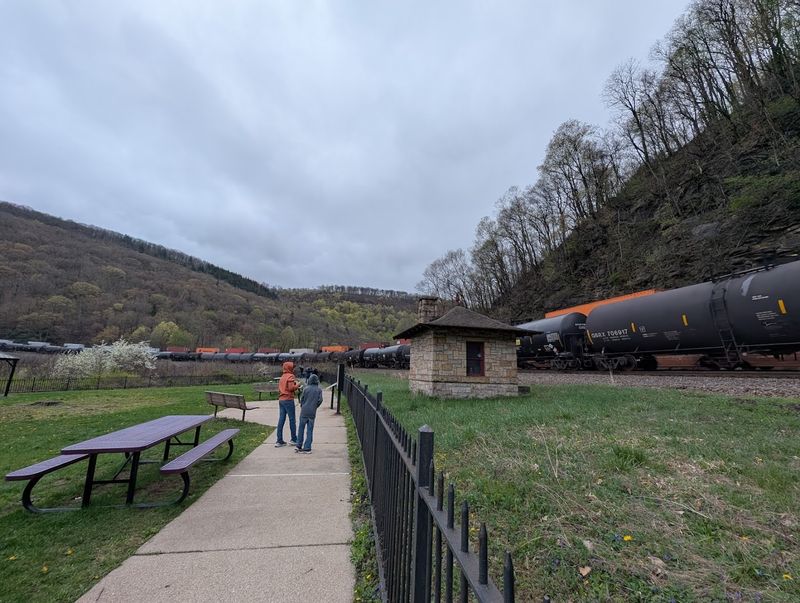
Not every great destination needs to be packed with activities to be worth the trip. Horseshoe Curve has a genuinely relaxed, unhurried atmosphere at the top that invites visitors to slow down and simply be present.
About seven picnic tables are available at the observation level, along with a small covered pavilion and several benches with backs for comfortable seating.
Families who bring lunch and settle in for an hour or two consistently report some of the most enjoyable visits, simply because they stay long enough to watch multiple trains pass.
The combination of mountain air, forest shade, and the periodic drama of a passing freight train creates an atmosphere that is hard to manufacture and impossible to rush.
It is the kind of place where putting your phone away for a while actually feels like a good idea. Bring snacks, bring patience, and let the mountain do the rest of the work for you.
Planning Your Visit: Practical Tips and Ticket Info
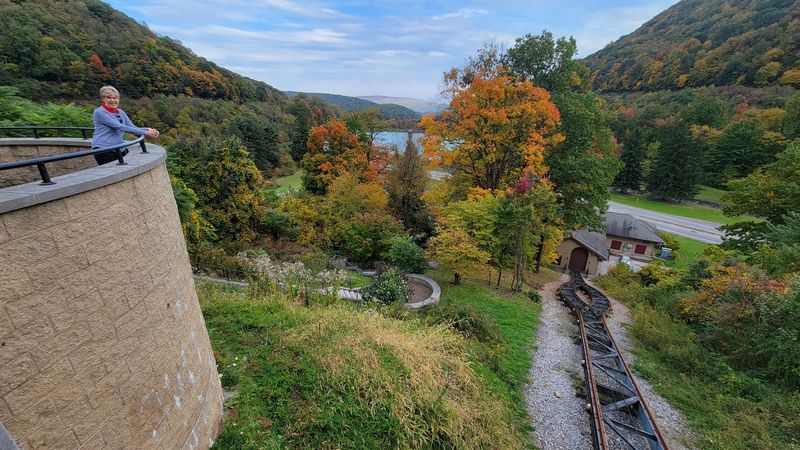
Getting the most out of a trip to Horseshoe Curve takes just a little advance planning. The site is located at 2400 Veterans Memorial Highway in Altoona, Pennsylvania 16601.
Tickets are available through the site’s booking system, and a combo ticket with the nearby Altoona Railroaders Memorial Museum is offered when both attractions are open.
The official pages do not clearly display a fixed ticket amount in the accessible text, so it is best to check the current booking page directly before visiting.
Visitors coming from neighboring states will find the drive through central Pennsylvania scenic and straightforward.
The best time to visit is often a weekday morning, when the crowds are lighter and the weather is usually more comfortable in warmer months.
Always check the website at railroadcity.org or call ahead before the trip, especially to confirm current hours and the status of the funicular, since the site specifically warns that temporary changes can happen.