
This Pennsylvania Museum Has The Largest Collection Of Rodin Sculptures Outside France
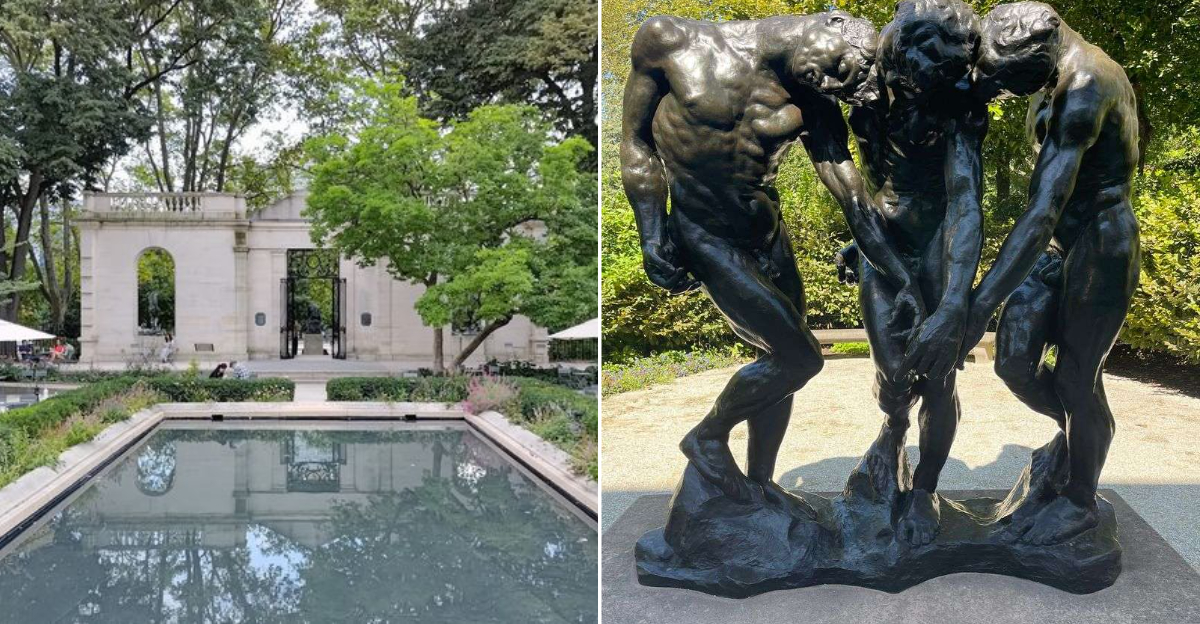
You do not have to cross the Atlantic to stand face to face with some of Auguste Rodin’s most famous work.
Philadelphia gives Pennsylvania an extraordinary art stop where sculpture takes center stage and the usual museum rush seems to slow down.
The collection brings together pieces that reward a closer look, especially when you notice how much movement and emotion can be carved into something completely still.
That contrast is what makes the experience stick. These are works people recognize from books and photographs, yet seeing them in person changes the scale of everything.
The first time I saw a Rodin sculpture up close, I expected to admire it for a minute and move on.
Instead, I caught myself circling it, looking at the hands, the posture, and the tiny details I had never noticed in pictures. I remember thinking that sculpture is much harder to rush past than a photograph.
Once you are standing beside it, curiosity keeps pulling you around to the other side.
A Movie Mogul Built It As A Gift To His City
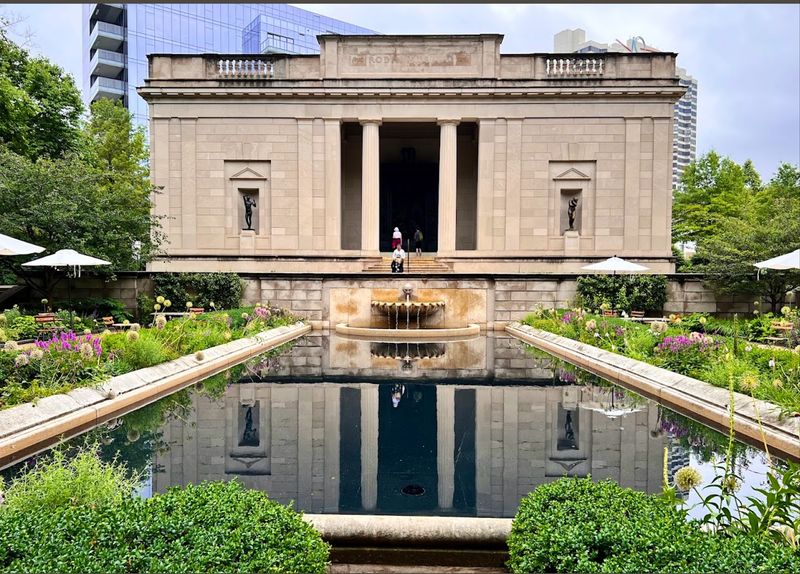
Credit for all of it goes to Jules Mastbaum, a Philadelphia cinema magnate who became captivated by Auguste Rodin’s work in Paris in September 1924.
He bought his first bronze that day, then spent two years assembling more than 150 sculptures for Philadelphia residents and future visitors.
Mastbaum hired French architects Paul Cret and Jacques Greber to design a building and garden along the Benjamin Franklin Parkway.
He never saw it finished, since the museum opened in 1929, just three years after his passing.
What strikes me is how little ego is baked into the place. There is no oversized portrait of the donor staring down at you, just the art he wanted people to see for almost nothing.
Pennsylvania has plenty of grand institutions, yet this one feels personal, like a gift handed over with a shrug.
Standing in the courtyard, I kept thinking about how one person’s enthusiasm turned into a permanent public treasure. Generosity, it turns out, ages beautifully in bronze.
More Rodin Here Than Anywhere Outside France
Mastbaum acquired more than one hundred fifty Rodin sculptures in two years, including works in bronze, marble, plaster and terracotta.
Today, the museum describes its holdings as one of the largest public collections of Rodin’s work outside Paris, still remarkable in Philadelphia.
Paris has the Musee Rodin and the artist’s home at Meudon. Outside France, other Rodin collections exist too, while Pennsylvania still holds one of the world’s most significant dedicated museums.
Size is not the point though. The collection was chosen with real care, so you get the greatest hits alongside studies, fragments and portrait busts that show how the man actually worked.
I found the density refreshing. Instead of wandering acres of galleries, you can see the sweep of one artist’s career in about an hour and still feel like you learned something lasting.
Bring curiosity rather than stamina. Big museums test your feet, while this one tests your attention, and that is a far more pleasant kind of workout.
The Thinker Guards The Front Gate
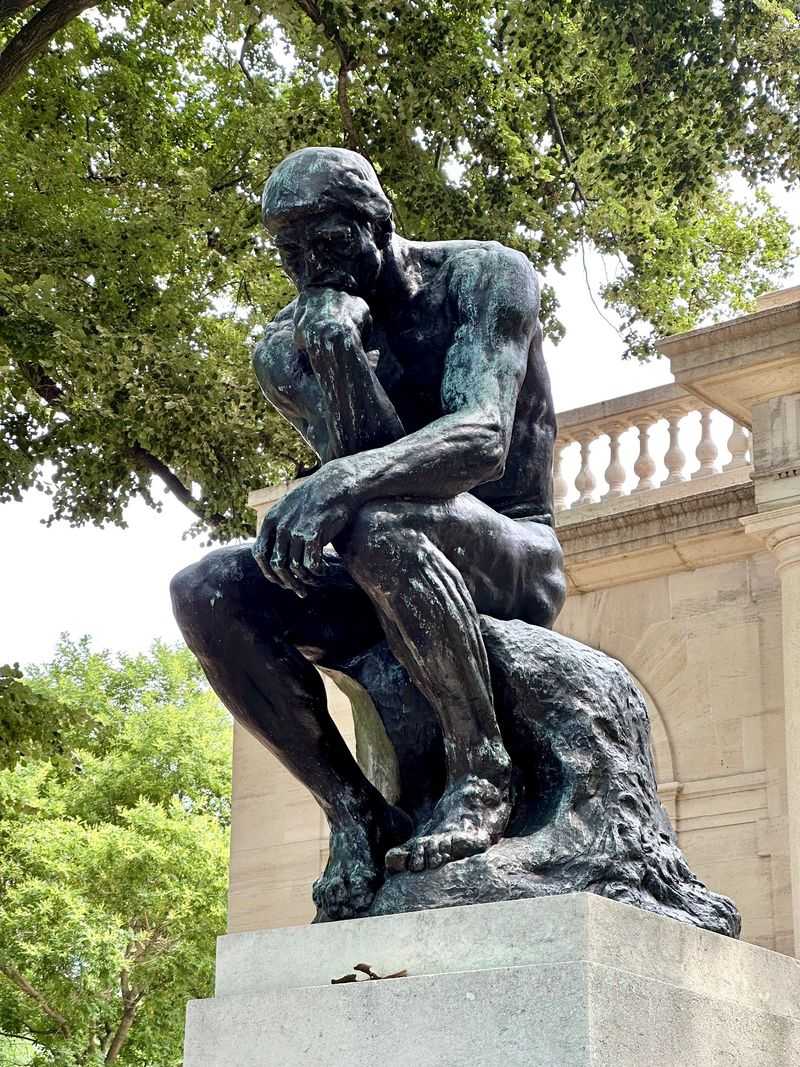
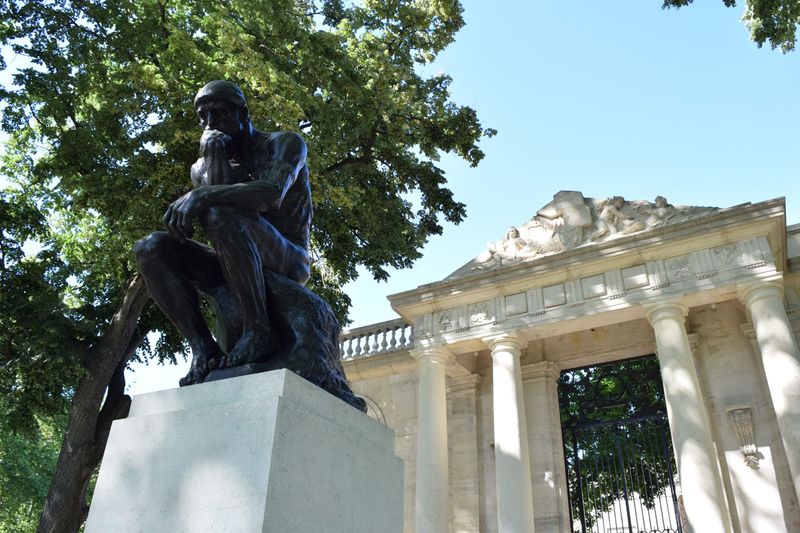
Sitting right at the entrance, before you pay a cent, is a full size bronze cast of The Thinker.
He faces the parkway, elbow on knee, permanently mulling something over while traffic rolls by.
Most people know the image from textbooks, phone cases and cartoons. Seeing the real weight of him, the ridged back muscles and the toes gripping the rock, rearranges the whole picture in your head.
Fun detail worth carrying with you: the figure began as a much smaller piece meant to sit at the top of a monumental doorway, representing the poet Dante looking down at his own imagined underworld.
Morning light hits him from the east and softens the bronze, so early visitors get the better photos. Afternoon gives you longer shadows across the stone base.
I circled him three times before going inside. Something about that quiet posture makes you slow down, and slowing down turns out to be the whole assignment here.
A Doorway Holding Two Hundred Figures
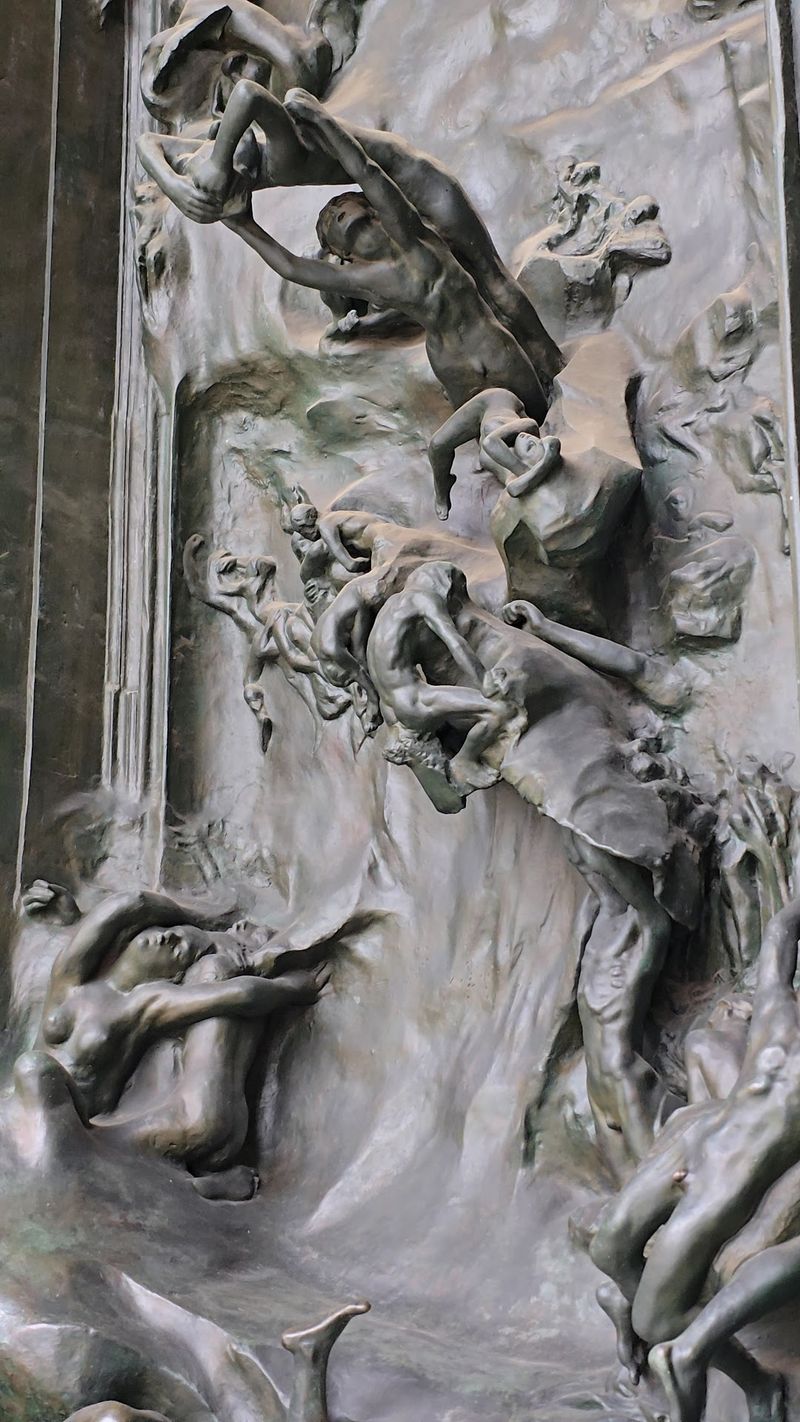
The Gates of Hell stands near the museum entrance and it is genuinely overwhelming up close.
More than two hundred human figures twist across the bronze surface, some barely emerging, others nearly breaking free.
Rodin worked on this commission for about thirty seven years and never considered it finished. It was originally meant for a decorative arts museum in Paris that was never built.
Here is the part that reframes everything else you see. Many of his most famous standalone sculptures, including The Thinker and The Kiss, started as small characters on this doorway before he enlarged them into independent works.
Give yourself a solid ten minutes with it. Step back for the whole composition, then move in close and follow individual bodies as they tumble and reach.
I noticed new figures every time my eyes moved. Few objects in Pennsylvania reward patient looking quite like this enormous unfinished door does.
Pay What You Wish, Every Single Day
Admission runs on a pay what you wish basis, which means you decide the number at the desk.
A suggested donation is posted, and nobody raises an eyebrow if you give less or more.
For travelers watching a budget, that policy is a small miracle. World class sculpture usually comes with a ticket price that stings, and this one simply does not.
Your contribution also supports the same organization that runs the Philadelphia Museum of Art.
Tickets to the larger institution typically include entry here as well, so check what you already hold before paying twice.
Practical tip from my own visit: bring a card or small bills, since the desk is quick and you will not want to hold up the short line behind you.
I gave more than the suggested amount and still felt like I came out ahead. Accessible art funding done right deserves a little extra in the box.
A French Chateau Facade On The Parkway
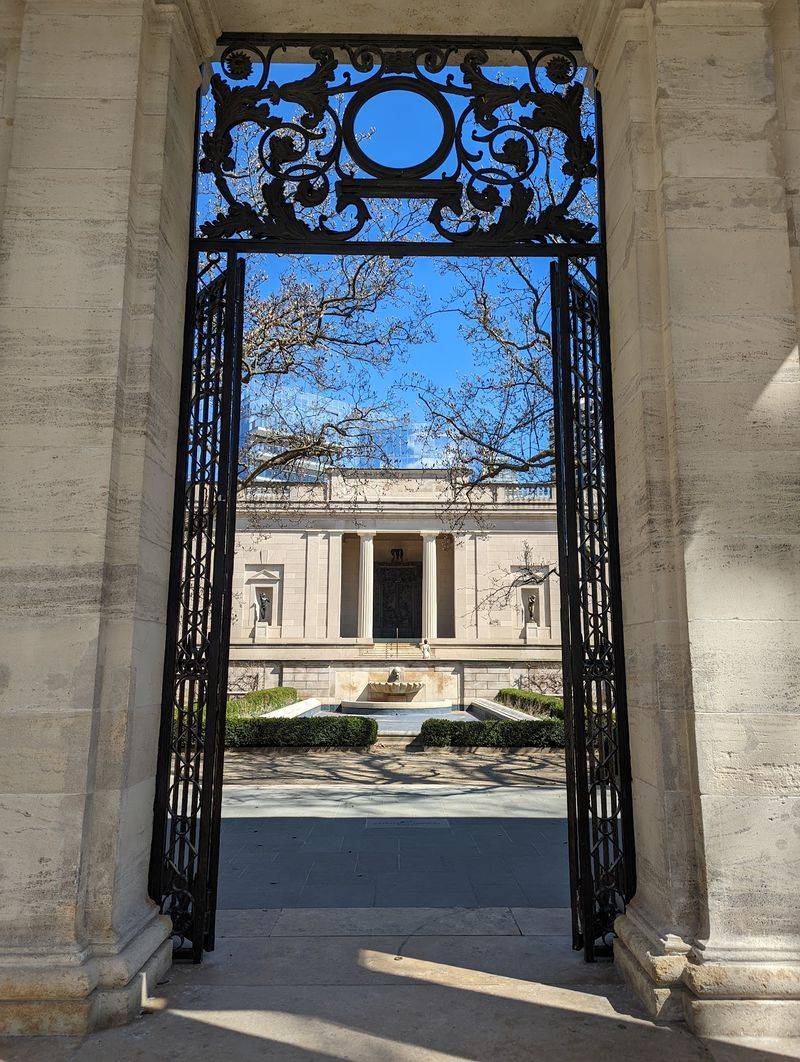
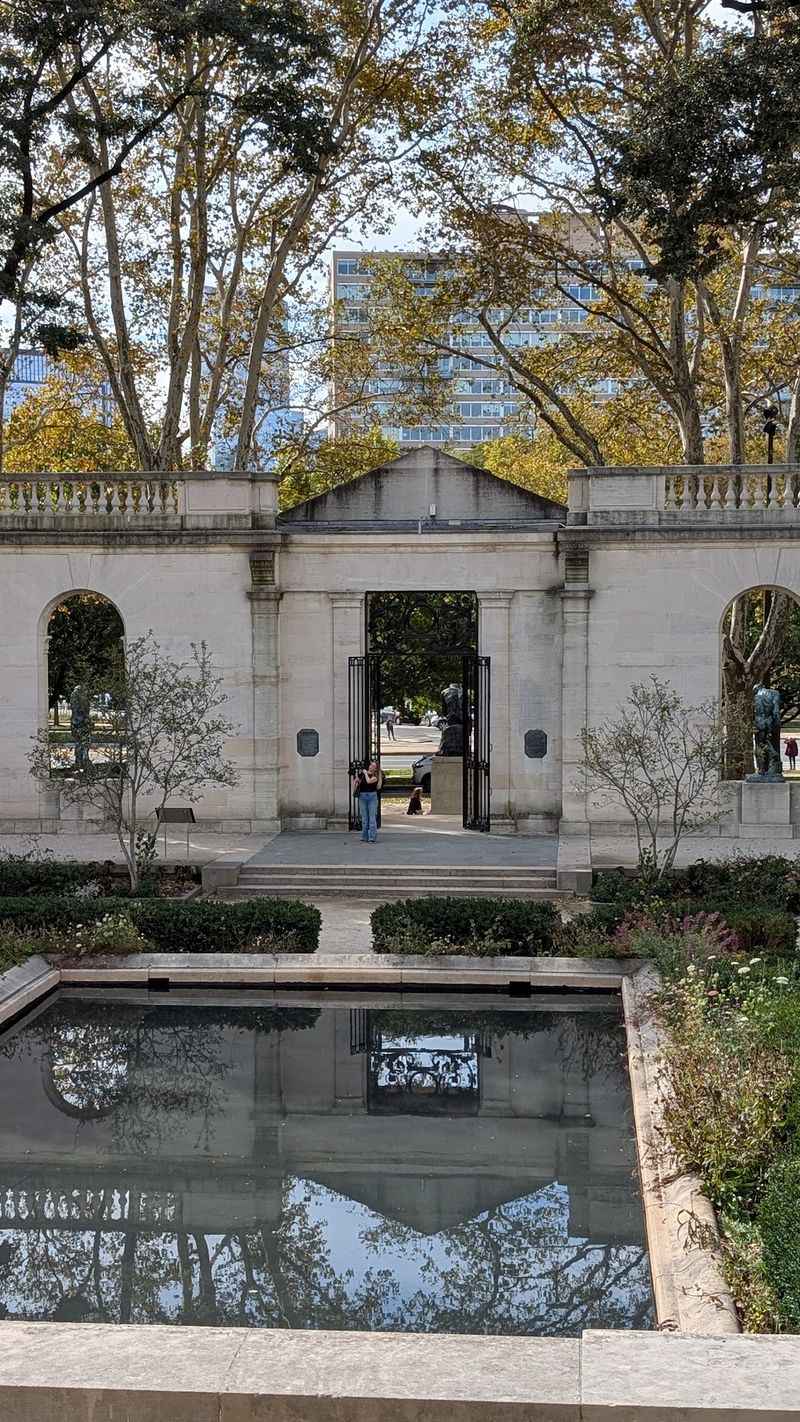
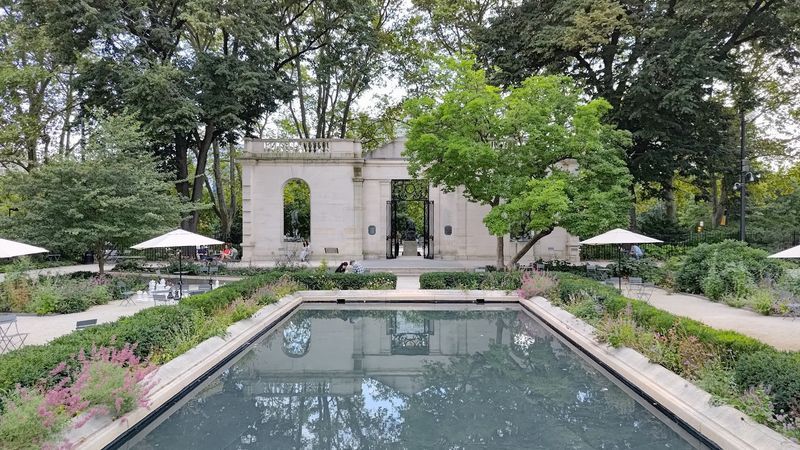
Before you reach the front door, you pass through a stone gateway that looks transplanted from the French countryside. That is essentially what it copies.
The design copies the facade of the Chateau d’Issy, a late seventeenth century building whose facade
Rodin had reassembled at his home in Meudon, outside Paris, from the original structure itself. Philadelphia’s architects rebuilt the same look here.
Walking through it creates a genuine shift. Parkway noise drops away, the trees close in overhead, and you are standing in a formal garden with a reflecting pool instead of a sidewalk.
Architect Paul Cret designed the building itself in an elegant Beaux-Arts style, letting the sculptures rather than the walls do the talking.
Wedding photographers have figured this out, and I watched one couple pose by the pool while I sketched nearby.
Honestly, if I had to pick a backdrop in Pennsylvania for a memorable photograph, this gateway would be near the top.
Marble Lovers And A Room Full Of Hands
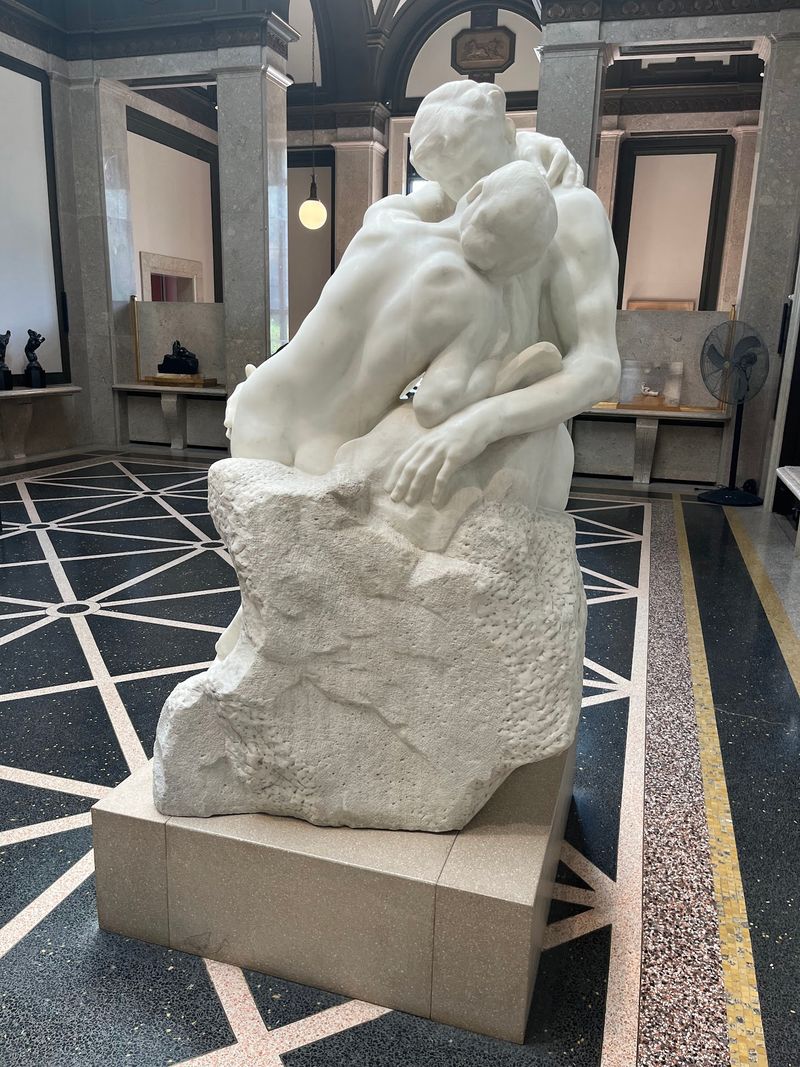
Inside, Henri Gréber’s marble copy of The Kiss stops most visitors cold.
Two figures lean into each other, and the stone somehow reads as soft, warm and alive.
Gréber carved the authorized replica after Rodin’s sculpture, and up close you can trace where the polished bodies fade into rough uncut stone block.
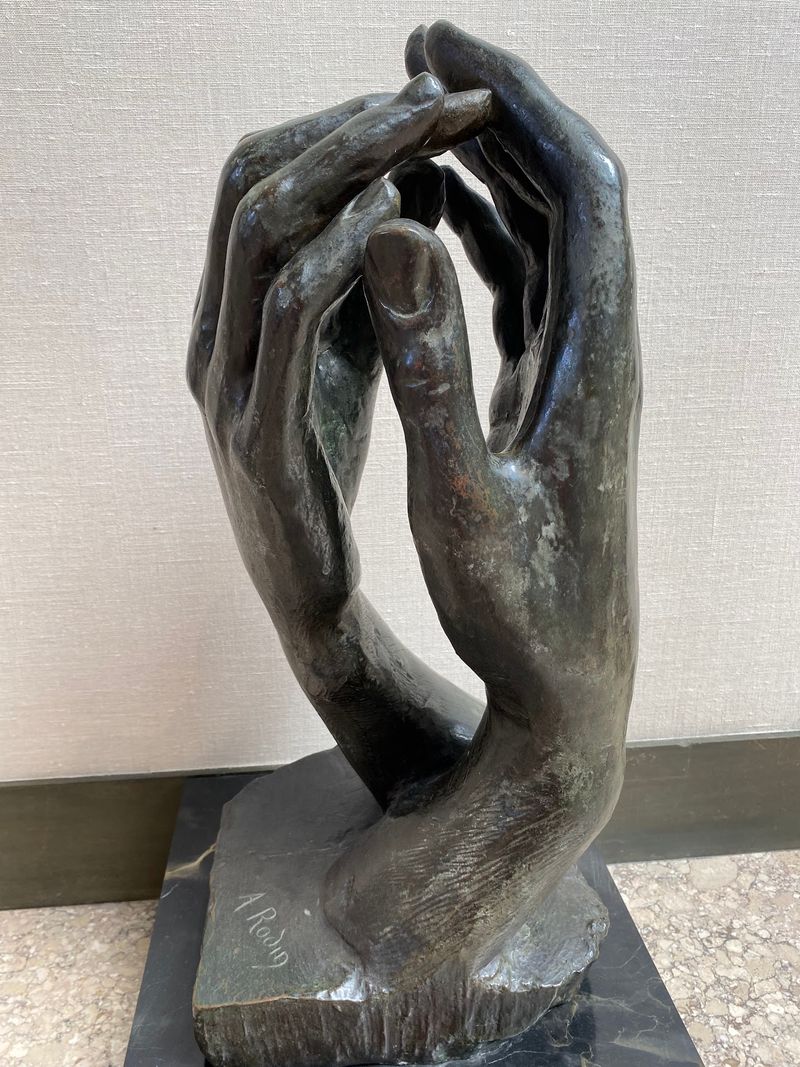
My favorite corner, though, holds the hands. Clenched, open, reaching, cupped, each one sculpted on its own and displayed like fragments of unfinished stories.
Other pieces worth hunting down include the colossal head of Saint John the Baptist, the fierce bust of writer Barbey d’Aurevilly, and plaster studies for the Burghers of Calais that reveal how the artist tested ideas.
Benches sit throughout the galleries, and using them changes the visit entirely. I sat with the hands for ten quiet minutes and left thinking about how much a single gesture can carry.
Take the slow route. Rushing past marble is a waste of good marble.
Sketchbooks Waiting For Your Terrible Drawings
Something I did not expect: the museum encourages visitors to pick up a sketchbook and draw whatever they see. No art degree required, no judgment offered.
My attempt at capturing a bronze torso looked like a lumpy potato with ambitions. I left it in the book anyway, right after someone else’s genuinely lovely study.
Drawing forces you to actually look, which is the trick. You start noticing where a shoulder twists, how light pools in a hollow, and why Rodin left certain surfaces deliberately rough and unfinished.
Kids take to it immediately, and adults usually loosen up after the first shaky line. Seating throughout the galleries makes it comfortable to settle in.
Set aside twenty extra minutes if you want to try. Rushing a sketch defeats the purpose entirely.
Of all the small pleasures I found in Pennsylvania that week, leaving a scribble in a shared museum sketchbook ranks weirdly high on the list.
Check The Calendar Before You Show Up
Here is the detail that trips people up. The museum is closed Tuesday, Wednesday and Thursday, opening only Friday through Monday from ten in the morning until five in the afternoon.
Show up midweek and the front door stays shut. That said, the grounds and outdoor sculptures remain visible, so the trip is not a total loss if you only want to see The Thinker and the garden.
Plan for roughly an hour inside if you move at a normal pace, or ninety minutes if you like sitting and staring. Guided tours run at certain times and the guides know their material well.
Spring brings blooms across the garden, while autumn light through the trees does something lovely to the courtyard.
I arrived on a Friday morning near opening and had entire rooms to myself. Weekend afternoons get busier, though this place never feels crowded the way bigger Pennsylvania museums can.
Pair It With Neighbors On The Parkway
Location does half the work here. The address, 2151 Benjamin Franklin Pkwy, Philadelphia, PA 19130, puts you on a stretch of road packed with cultural stops within easy walking distance.
The Barnes Foundation sits a few minutes away on foot, and the Philadelphia Museum of Art with its famous steps waits at the top of the parkway. Combining two of them makes an excellent three hour art morning.
Runners heading for those steps often pause at the garden here, which strikes me as the smartest rest break in the city.
Public transit and parking both work, though street parking along the parkway fills quickly on weekends. Walking from Center City takes about twenty minutes and passes fountains and open lawns.
My advice is simple. Start at the Rodin Museum while your brain is fresh, then move on to whatever comes next, because Pennsylvania rarely lines up this much art in such a tidy row.