
This Pennsylvania Roadside Stop Feels Like A Step Back In Time This April
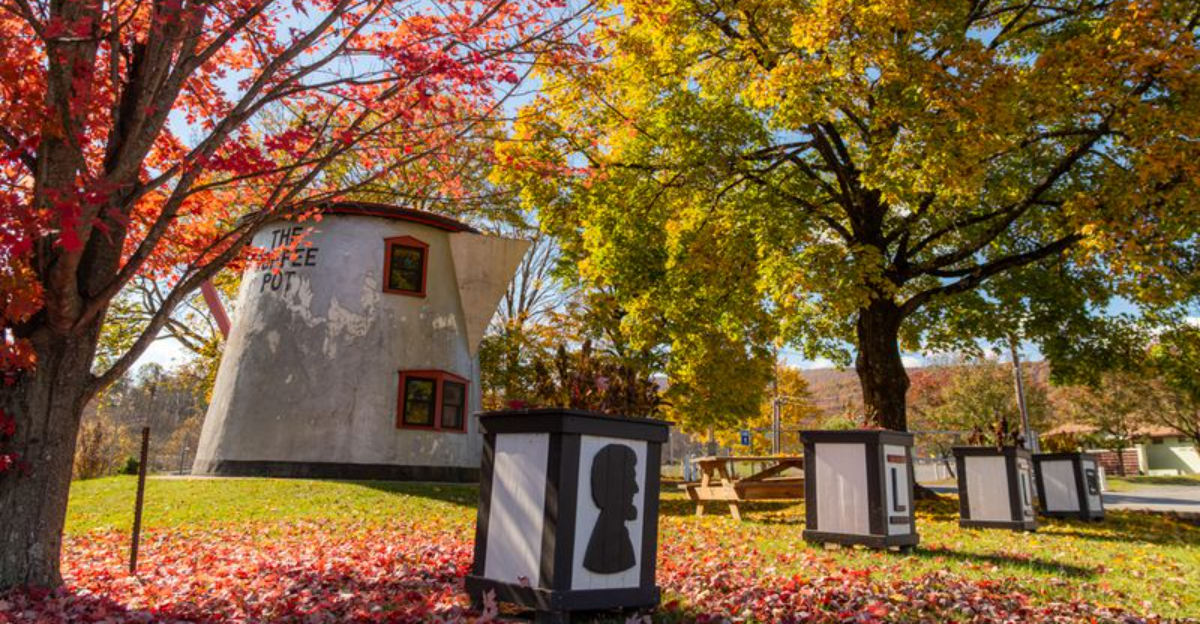
Blink once and a place like this can feel like it belongs to another era. The shape catches your eye, the nostalgia kicks in fast, and suddenly a simple roadside stop becomes the kind of detour that gives a day real personality.
That is the charm of old-school Americana when it still knows how to surprise you.
In April, with the sun a little warmer and the roads a little more inviting, Pennsylvania feels made for stops like this, places that turn an ordinary drive into a memory with character.
There is something irresistible about a destination that feels cheerful, quirky, and proudly out of step with the modern rush. It is part photo op, part time capsule, and part road trip reward.
The best roadside spots do not just break up the drive. They add flavor to it. They bring a little wonder, a little fun, and that satisfying feeling of finding something delightfully different when you least expect it.
That kind of retro charm never really goes out of style.
I know I would pull over for a place like this in a heartbeat, then spend way longer than planned smiling at it, taking photos, and feeling weirdly happy that the road still holds surprises.
A Giant Coffee Pot That Actually Existed As A Building
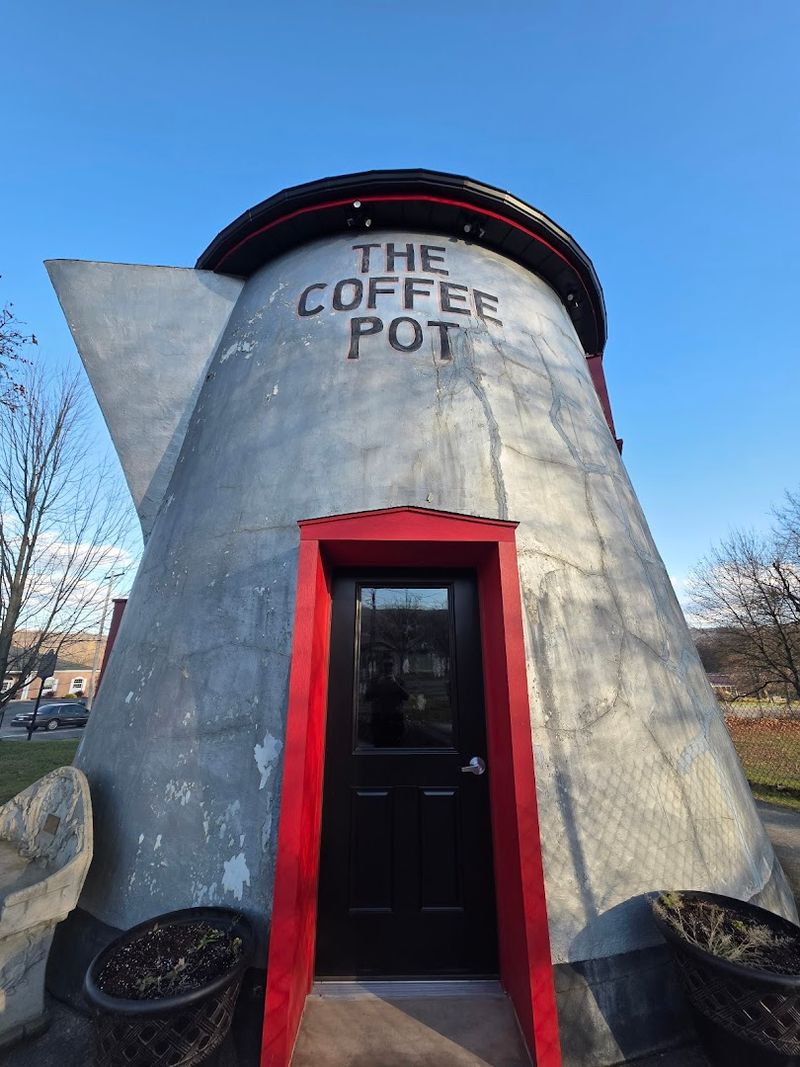
Back in the early 20th century, roadside businesses competed hard for attention, and one clever idea was to build your shop in the shape of what you sold.
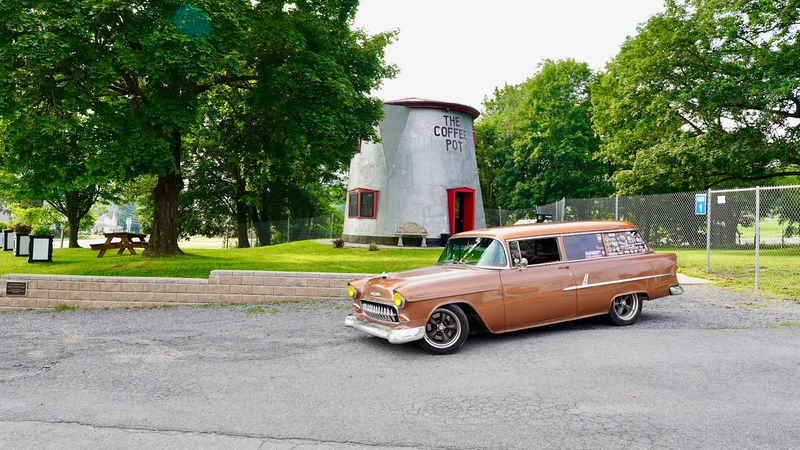
The Koontz Coffee Pot in Bedford, Pennsylvania is a surviving example of that wild, wonderful era of programmatic architecture, where the building itself was the advertisement.
Originally built in 1927, the structure served as a lunch stand designed to catch the eye of drivers rolling along the Lincoln Highway.
The pot stands about 18 feet tall, with a spout, a handle, and a lid that make it unmistakably, gloriously coffee-pot-shaped.
Very few of these novelty structures have survived to the present day, which makes spotting one in person feel genuinely exciting.
It is not just a photo opportunity, it is a small miracle of preservation sitting right there in south-central Pennsylvania.
The Lincoln Highway Connection That Makes This Stop Legendary
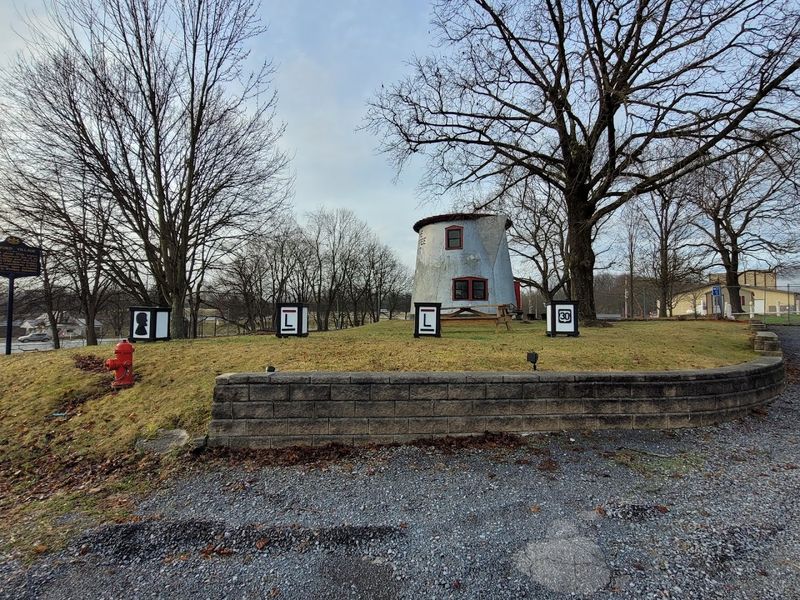
Few roads carry as much American history as the Lincoln Highway, the country’s first coast-to-coast automobile road stretching from New York to San Francisco.
The Koontz Coffee Pot was originally built to serve the steady stream of travelers moving along that legendary route through Pennsylvania.
In the 1920s, car travel was still a novelty, and roadside stops like this one were lifelines for hungry, caffeinated drivers who had no fast-food chains waiting at every exit.
The coffee pot stand was positioned to catch those road-weary travelers at just the right moment.
Today, driving the old Lincoln Highway through Bedford County feels like flipping through a history book one mile at a time.
Stopping at the Koontz Coffee Pot connects you directly to that chapter of American life, when the open road was brand new and every quirky roadside stand felt like a small adventure waiting to happen.
Where You Can Actually Find It Today
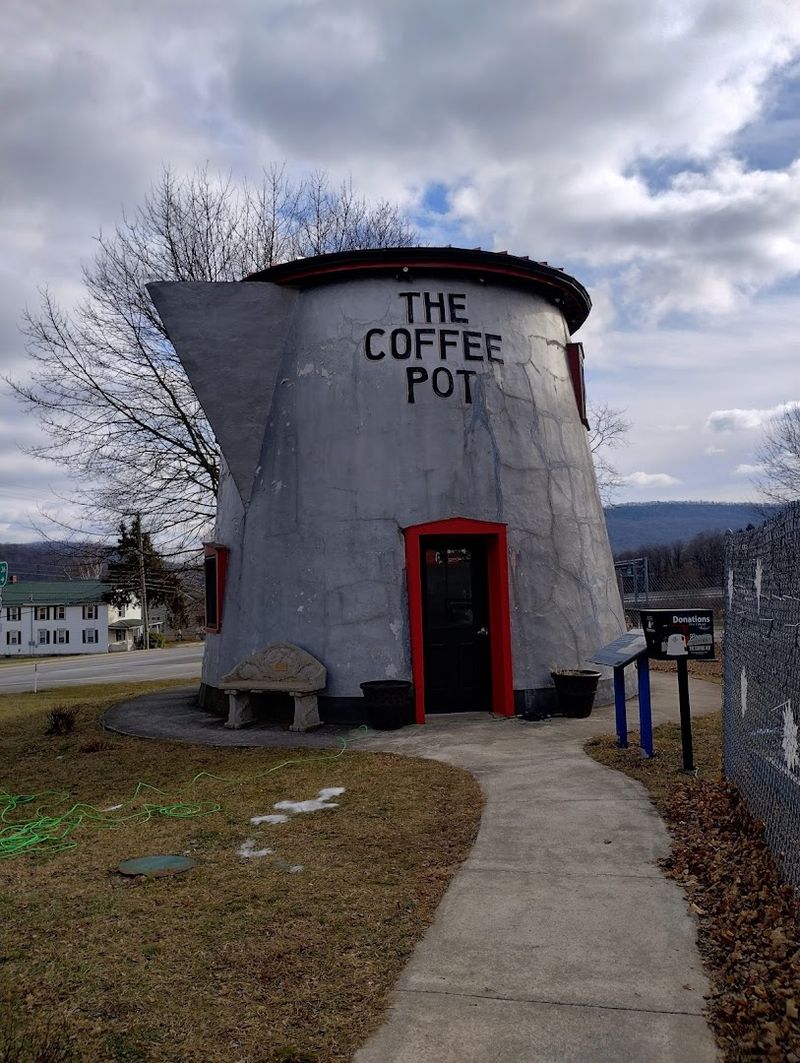
The Koontz Coffee Pot currently sits at the entrance to the Bedford County Fairgrounds, positioned just west of downtown Bedford along the Lincoln Highway corridor.
Getting there is straightforward whether you are coming off the Pennsylvania Turnpike or cutting through town on a back road, and the spot is easy enough to find without a detailed map.
Parking is limited near the structure, so plan accordingly if you are traveling in a group. The grounds around the coffee pot are generally easy to access, giving you a pleasant backdrop for photos without feeling like you stumbled into a forgotten lot.
One useful heads-up: this is best understood as an outdoor landmark rather than a regularly staffed attraction.
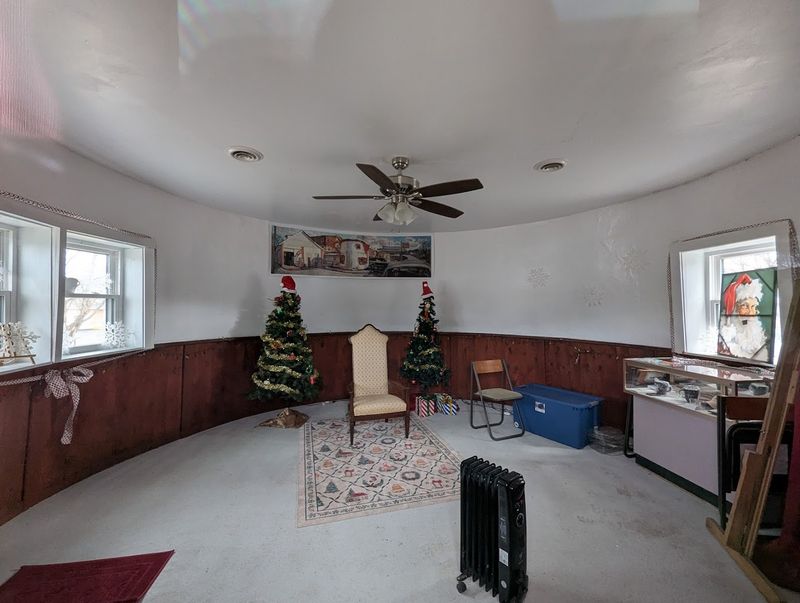
The structure is easy to view from outside, but the interior is typically closed except during some fairground events. That still makes it a very easy stop, and the historic setting adds to the fun.
Programmatic Architecture And Why It Matters
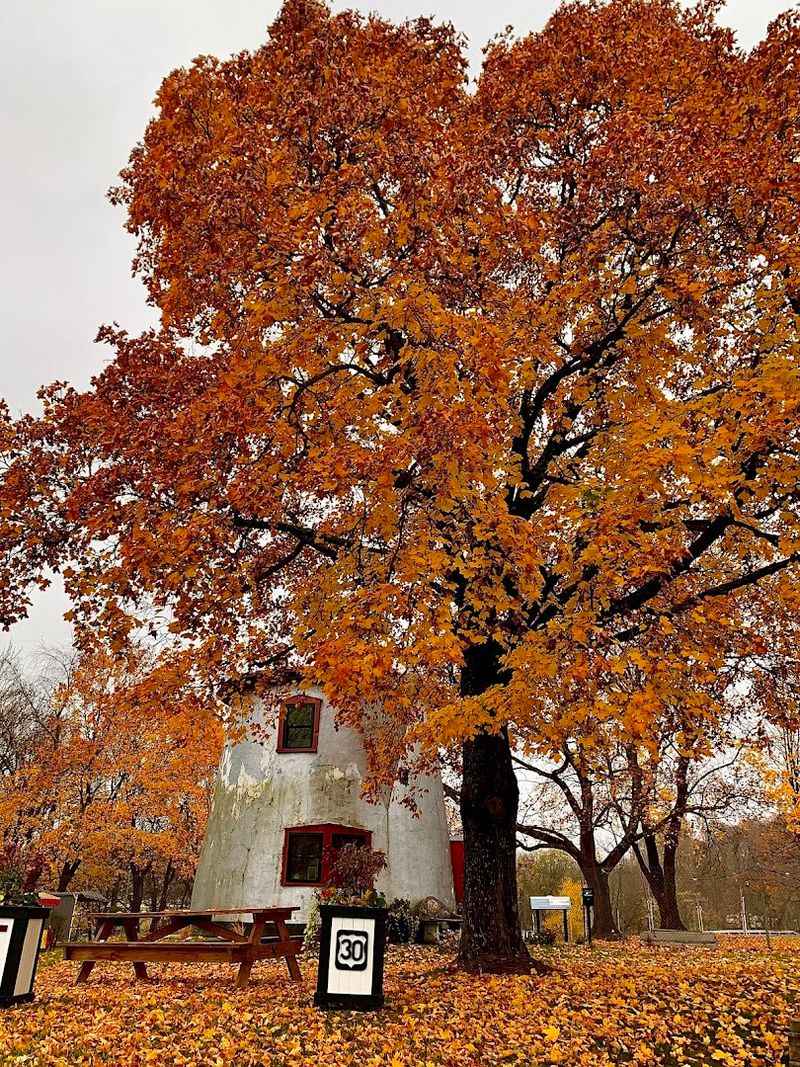
Programmatic architecture, sometimes called mimetic architecture, refers to buildings designed to look like the product or service sold inside.
Think giant hot dogs, oversized ducks, or in this case, a massive coffee pot standing roadside in Pennsylvania. These structures were marketing tools before billboards dominated every highway.
The Koontz Coffee Pot belongs to a very short list of surviving examples from that creative, slightly absurd golden age of roadside commercial design.
Most were torn down decades ago to make room for parking lots or chain stores, which makes the ones still standing genuinely rare and worth celebrating.
I find something deeply satisfying about the fact that people in the 1920s looked at a problem, which was how to get drivers to stop, and responded by building a 14-foot coffee pot.
No algorithm, no focus group, just pure visual creativity that still works a hundred years later when you round a corner and burst out laughing.
The Relocation Story Behind The Koontz Coffee Pot
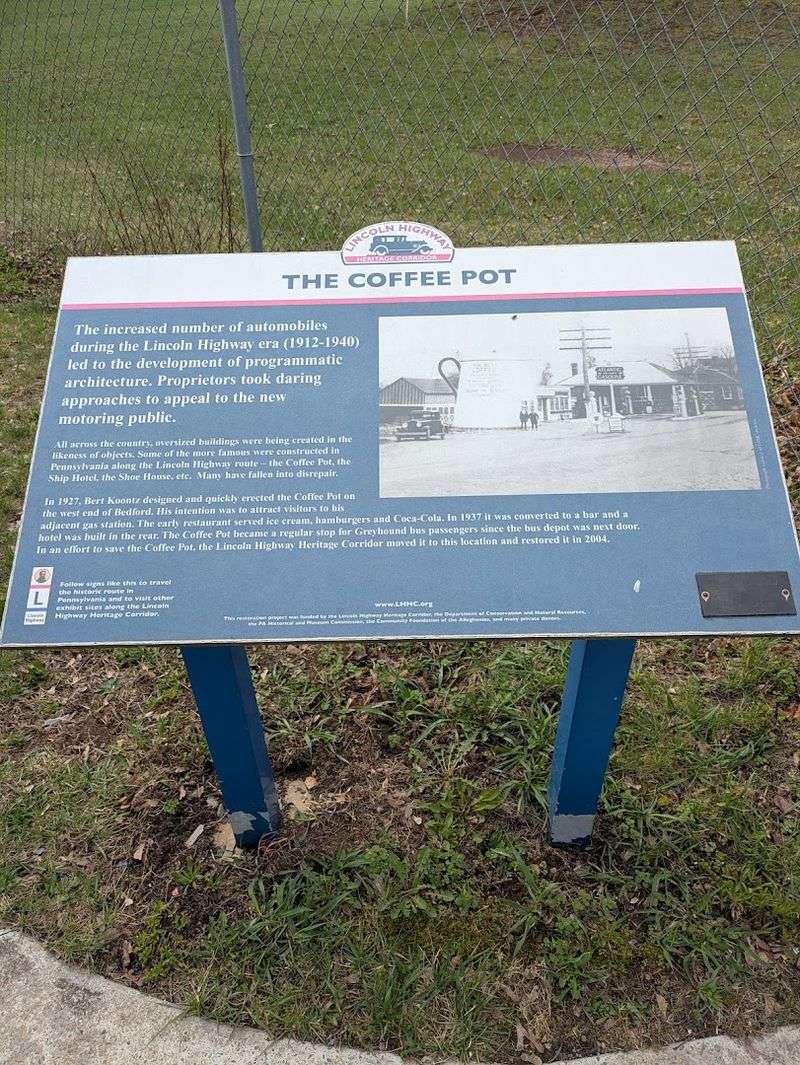
The Koontz Coffee Pot was not always standing in front of the Bedford Fairgrounds.
Originally, it sat at a different location along the Lincoln Highway near a gas station, where it served its original purpose as a roadside refreshment stand for passing motorists.
At some point in its history, the structure was relocated to its current spot, which is something preservation advocates sometimes have mixed feelings about.
Moving a building changes its original context, separating it from the specific street corner and landscape it was designed to inhabit.
Still, relocation almost certainly saved the Koontz Coffee Pot from demolition, and that trade-off feels worth it.
An informational sign near the structure explains the history of the move and gives visitors the broader picture of where it came from and why it ended up here.
Pennsylvania has a long tradition of fighting to keep pieces of its roadside past alive, and this is one of the better examples of that effort paying off.
What The Outside Looks Like Up Close
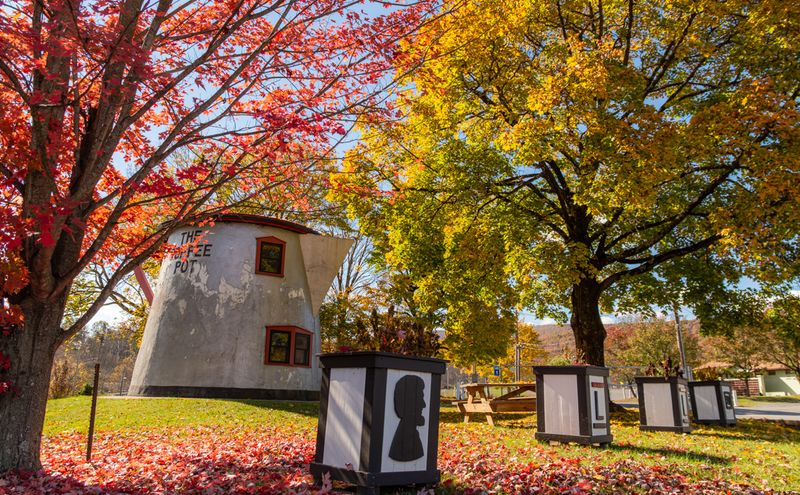
Standing next to the Koontz Coffee Pot for the first time, the scale of it catches you off guard in the best possible way.
The structure is built to resemble a classic stovetop percolator, complete with a curved spout jutting out from one side and a rounded handle arching on the other.
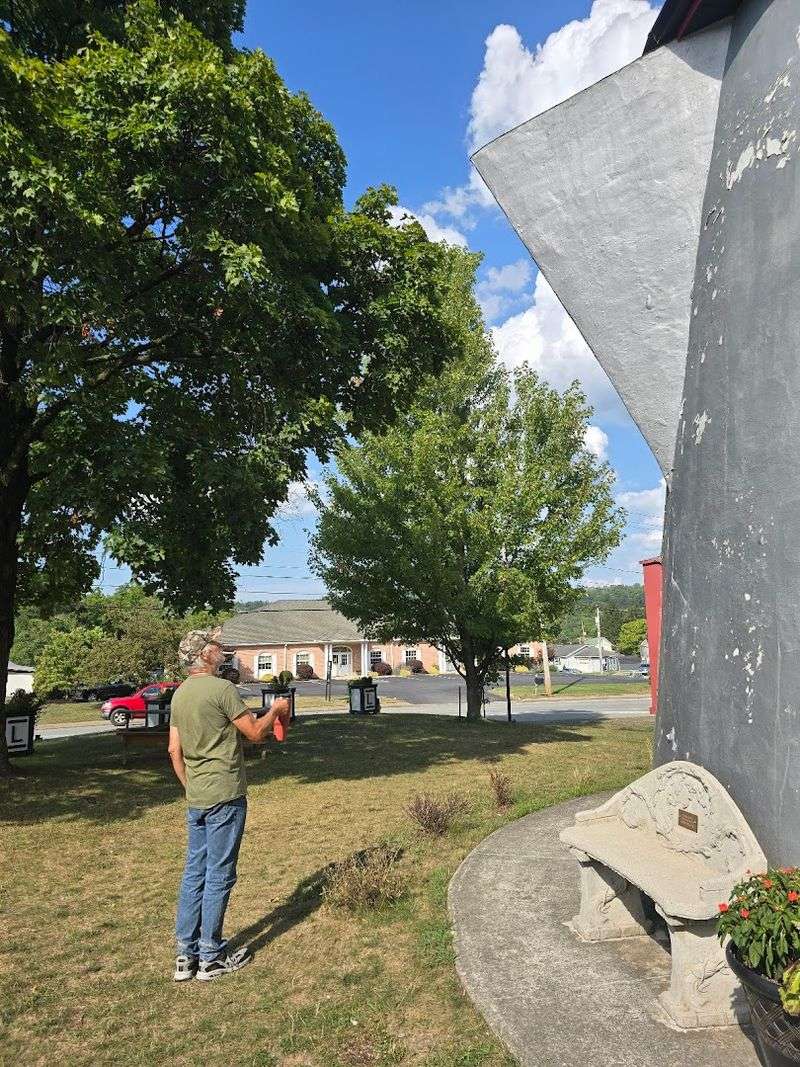
The exterior shows its age honestly, with weathering and wear that tells you this thing has been through decades of Pennsylvania winters without complaint.
A preservation effort has been underway to restore the structure, and current reporting notes that restoration fundraising is active again as the community prepares for the pot’s 100th birthday.
There is a small door on the building, though the interior is generally closed to visitors.
Even so, walking around the structure is worth it, because the shape and details are best appreciated from more than one angle. It feels playful, odd, and historically important all at once.
The Restoration Effort Keeping History Alive
The Koontz Coffee Pot has seen better days structurally, but a dedicated group has been working to rehabilitate the structure and prevent further deterioration.
Recent reporting says the Bedford County Fair organization maintains it today, and another fundraiser is underway for exterior restoration, structural fixes, and fresh paint before the 100th birthday arrives.
Visitors who stop by can see why that effort matters, and knowing that people are actively fighting to preserve this strange, wonderful little building makes the visit feel more meaningful.
It is not just a photo stop, it is a checkpoint in an ongoing story about what a community decides is worth saving.
Pennsylvania has a strong network of preservation advocates who work on projects exactly like this one, and the Koontz Coffee Pot is a good example of why that work matters.
Losing it would mean losing a tangible, three-dimensional piece of early 20th-century roadside culture that no photograph can fully replace.
April Visits And Why Spring Timing Works Perfectly
April hits a sweet spot for visiting outdoor landmarks like the Koontz Coffee Pot.
The Pennsylvania weather has typically softened enough to make standing outside comfortable, the crowds are lighter than summer, and the surrounding landscape starts showing green again after a long grey winter.
Morning light in April tends to be soft and flattering, which makes a real difference if you are hoping to get good photos of the structure without harsh shadows cutting across the surface.
Arriving early also means you are more likely to have the spot to yourself, which adds to the experience considerably.
Spring road trips along the old Lincoln Highway corridor feel especially rewarding because the route itself comes alive again after winter.
Pairing a stop at the Koontz Coffee Pot with other Bedford County landmarks makes for a genuinely satisfying day out, and the whole area rewards slow, curious driving rather than rushing to a destination.
The Photo Opportunity That Roadtrippers Cannot Resist
There is something about a giant coffee pot standing roadside that makes even the most camera-shy traveler pull out their phone without thinking twice.
The Koontz Coffee Pot has become a reliable stop for road trippers specifically because it delivers an instantly shareable, genuinely funny image that needs zero explanation.
The best angles tend to be from slightly below and to the side, which emphasizes the full height of the structure and captures both the spout and handle in the same frame.
Walking around the back to include the mural in a shot gives you something a little different from the standard front-facing photo everyone else takes.
I have seen people spend five minutes here and leave grinning, which is honestly a pretty strong return on a quick highway detour.
The Koontz Coffee Pot does not need much time to make an impression, and that efficiency is part of what makes it such a beloved stop along this stretch of Pennsylvania.
Bedford, Pennsylvania And The Broader Roadside Americana Scene
Bedford, Pennsylvania punches well above its weight when it comes to roadside curiosities and historical landmarks.
The town sits in a scenic valley in south-central Pennsylvania and has managed to hold onto a collection of quirky, historically interesting stops that reward explorers willing to get off the interstate.
The Koontz Coffee Pot is arguably the most visually striking of these stops, but Bedford also offers access to natural attractions, historic architecture, and the broader Lincoln Highway heritage that runs through the region.
Combining several stops into a single day trip turns a quick detour into a proper adventure.
Pennsylvania has always had a rich tradition of roadside culture, from giant novelty structures to historic inns and scenic overlooks, and Bedford sits comfortably in the middle of that tradition.
If you have never explored this corner of the state, April is an excellent time to start, and the coffee pot makes a perfect first stop on any itinerary.