
This Pennsylvania Shrine Keeps Remarkable Religious Relics And Historic Artifacts On Display
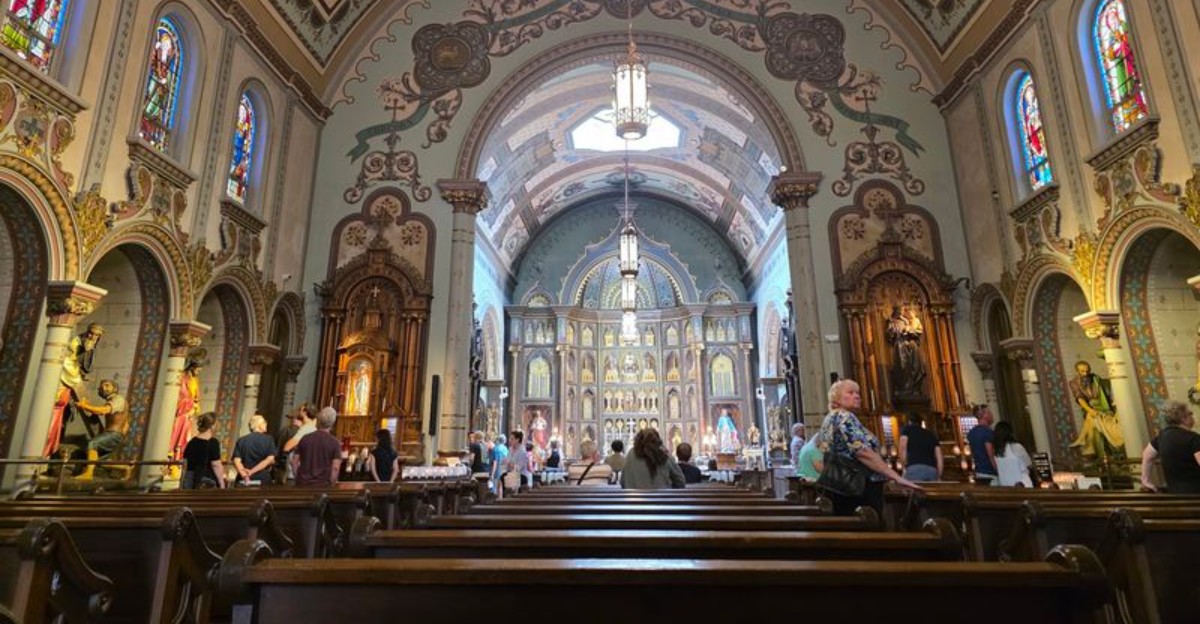
Open the door and the first instinct is to slow down. Inside this Pennsylvania shrine, religious relics and historic artifacts give visitors plenty of reasons to look twice.
Some pieces carry centuries of devotion behind them, while others offer a glimpse into the people and traditions that kept them preserved.
The experience is less about rushing from display to display and more about noticing what each object represents.
Places like this have a quiet pull. Even if you arrive out of curiosity, the history can make the visit feel unexpectedly personal.
I have walked into religious sites before expecting to spend only a few minutes, then found myself studying one small object far longer than anything else in the room.
It is funny how the most modest artifact can hold your attention once you know the story behind it.
I always leave places like that with the same thought: sometimes the smallest display carries the biggest weight.
One Of The World’s Largest Relic Collections
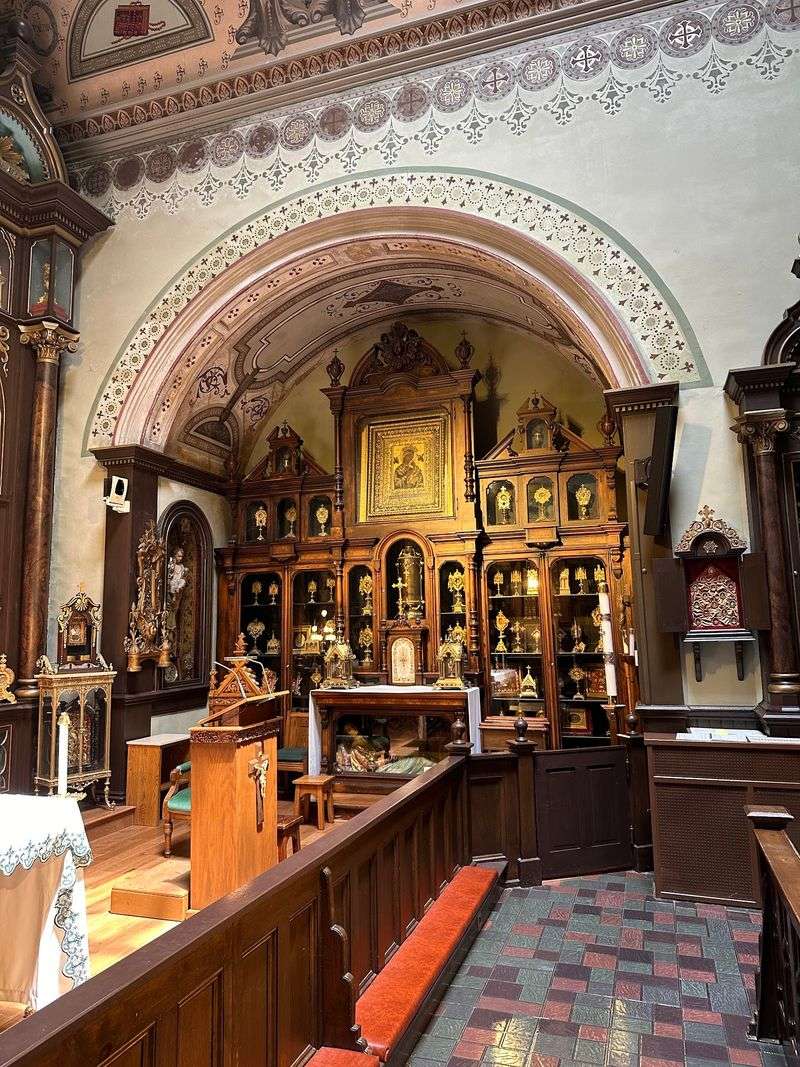
More than five thousand relics sit inside this chapel on a Pittsburgh hillside, making the collection one of the largest of its kind in the world.
Saint Anthony Chapel currently describes it as the largest collection of Christian relics outside the Vatican, with more than eight hundred reliquaries holding the individual pieces.
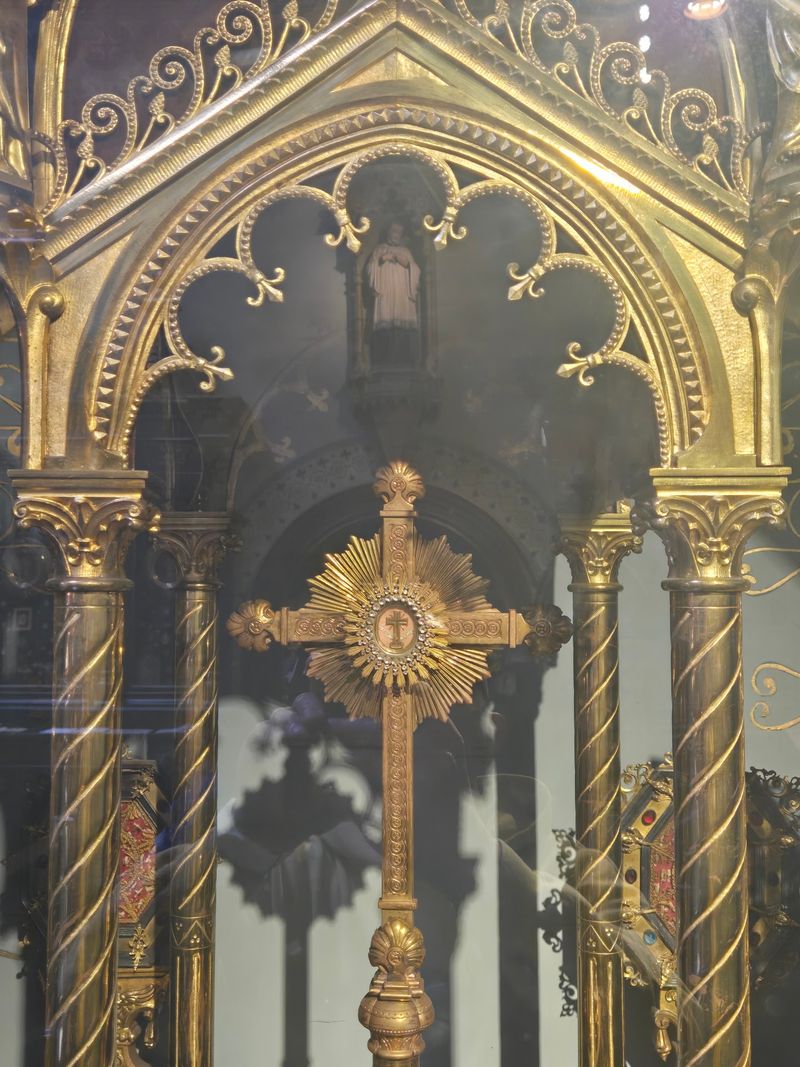
The relics are held in small containers called reliquaries, many of them made of brass, silver, or gildedmetal and shaped like tiny frames, crosses, or sunbursts.
What strikes most people first is the sheer density of it all. Cases run along both side walls and continue up toward the ceiling, packed edge to edge.
Saint Anthony Chapel does very little advertising, which is part of why so many Pennsylvania residents have never heard of it despite living an hour or two away.
I tend to assume that famous collections come with gift shops the size of airports and long ticket lines.
Finding out that one of the world’s largest relic collections sits in a quiet residential neighborhood, free to enter, genuinely rearranged my expectations.
Built In The Early 1880s On Troy Hill
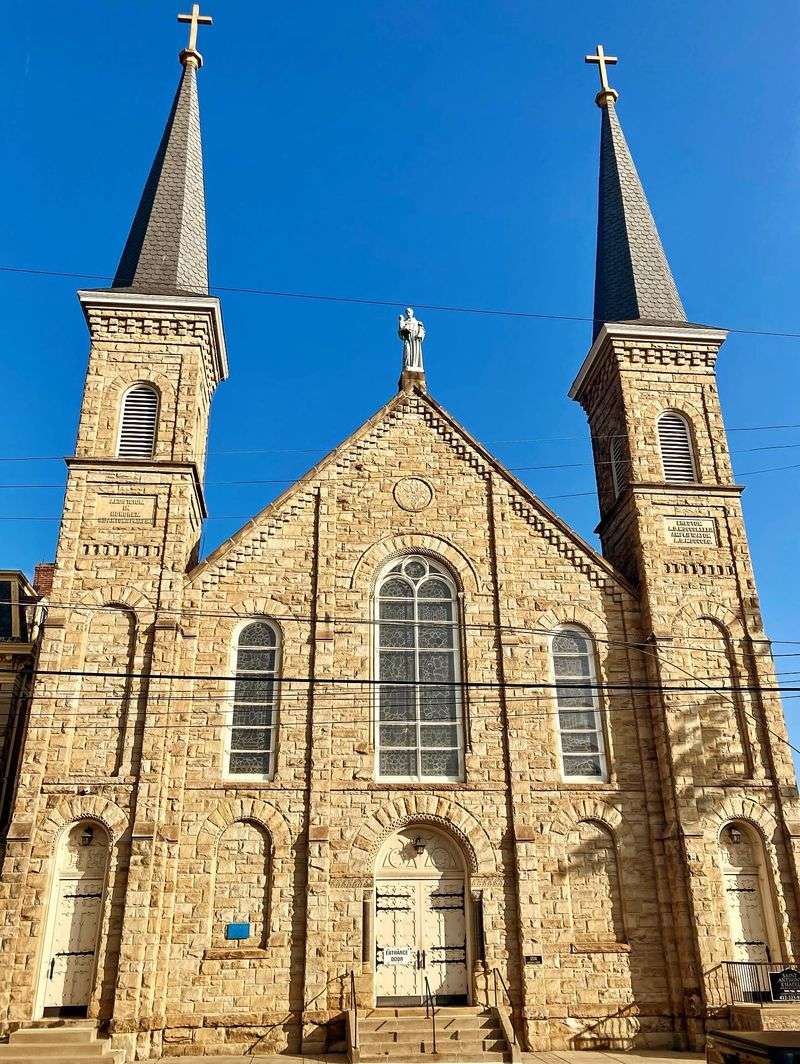
Father Mollinger began planning the chapel after returning from Europe in 1880.
Its first section was dedicated in 1883 on Troy Hill above Pittsburgh’s North Side.
Troy Hill was settled largely by German immigrants during the nineteenth century, and the streets still show that history in their narrow layouts and closely packed houses.
The chapel was expanded in 1892 to make room for the life-sized Stations of the Cross Father Mollinger had acquired in Europe.
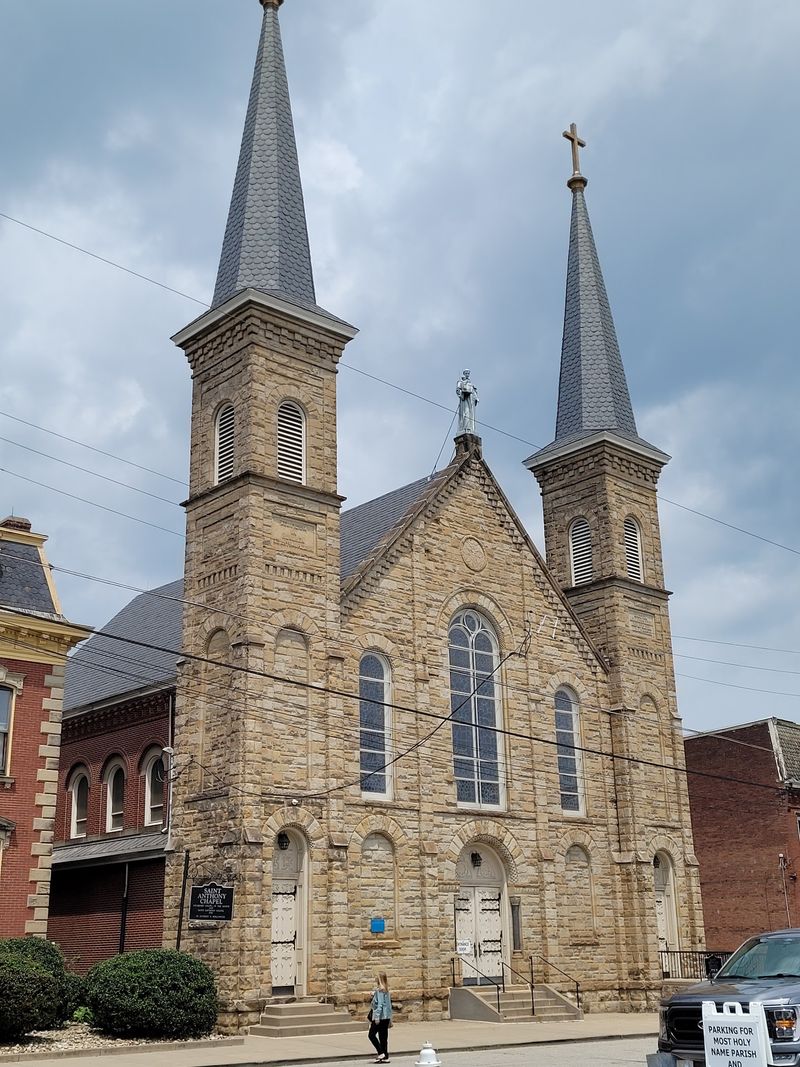
You will find it at 1700 Harpster Street, Pittsburgh, PA 15212, on a street so residential that first-time visitors sometimes drive past without realizing they have arrived.
The original chapel used brick walls, while the Romanesque addition added rough-cut stone, rounded arches, and two towers.
Getting there involves a climb. Troy Hill sits well above the river, and the roads leading up are steep and winding in the way Pittsburgh roads often are.
Ample free parking is available across the street, which is a mercy in a city where parking usually requires strategy and patience.
The Priest Who Gathered It All
Father Suitbert Mollinger, a Belgian-born priest who came to Pittsburgh in the 1860s, assembled nearly every piece in the collection.
He arrived from a wealthy family, and rather than spending that inheritance on comfort, he poured it into acquiring relics from across Europe.
Timing mattered enormously. Political upheaval across the continent during the nineteenth century led to monasteries and churches being closed, and sacred objects were scattered or sold off.
Mollinger saw an opportunity to preserve items that might otherwise have vanished, and he bought steadily for years.
He also served as pastor of Most Holy Name of Jesus parish nearby, and the chapel was originally built on land he purchased himself.
Beyond collecting, he became known regionally as a healer, and people traveled considerable distances to Troy Hill seeking his help.
I find the practical side of his story fascinating. Somebody had to arrange the shipping, handle the paperwork, and unpack thousands of fragile objects that crossed the Atlantic by steamship.
That is a logistics story hiding inside a religious one.
Life-Sized Stations Of The Cross
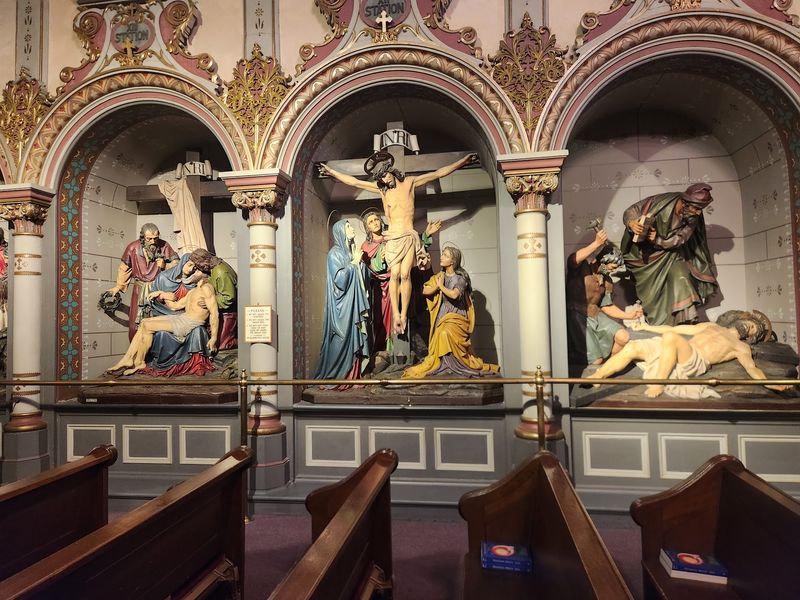
Fourteen scenes carved from wood line the chapel walls, and every figure stands at roughly human height.
Visitors consistently mention them before anything else, which says something considering the room also contains thousands of relics.
The Stations of the Cross depict the final hours of Jesus, and most churches represent them with small plaques or paintings. Here they are full-scale sculptural groups, hand carved and painted.
They were made in Europe and shipped to Pennsylvania, arriving in pieces that had to be assembled on site.
Standing among figures that are your own size changes the experience considerably compared with glancing at a wall carving above your head.
Details like folds in clothing, individual facial expressions, and painted skin tones have held up remarkably well across more than a century.
Preservation work over the decades has kept the colors from fading into muddiness, and the woodwork shows very little of the cracking you might expect.
If you only have a few minutes inside, walking the perimeter to see all fourteen is the way I would spend them.
Relics Connected To Well-Known Biblical Stories
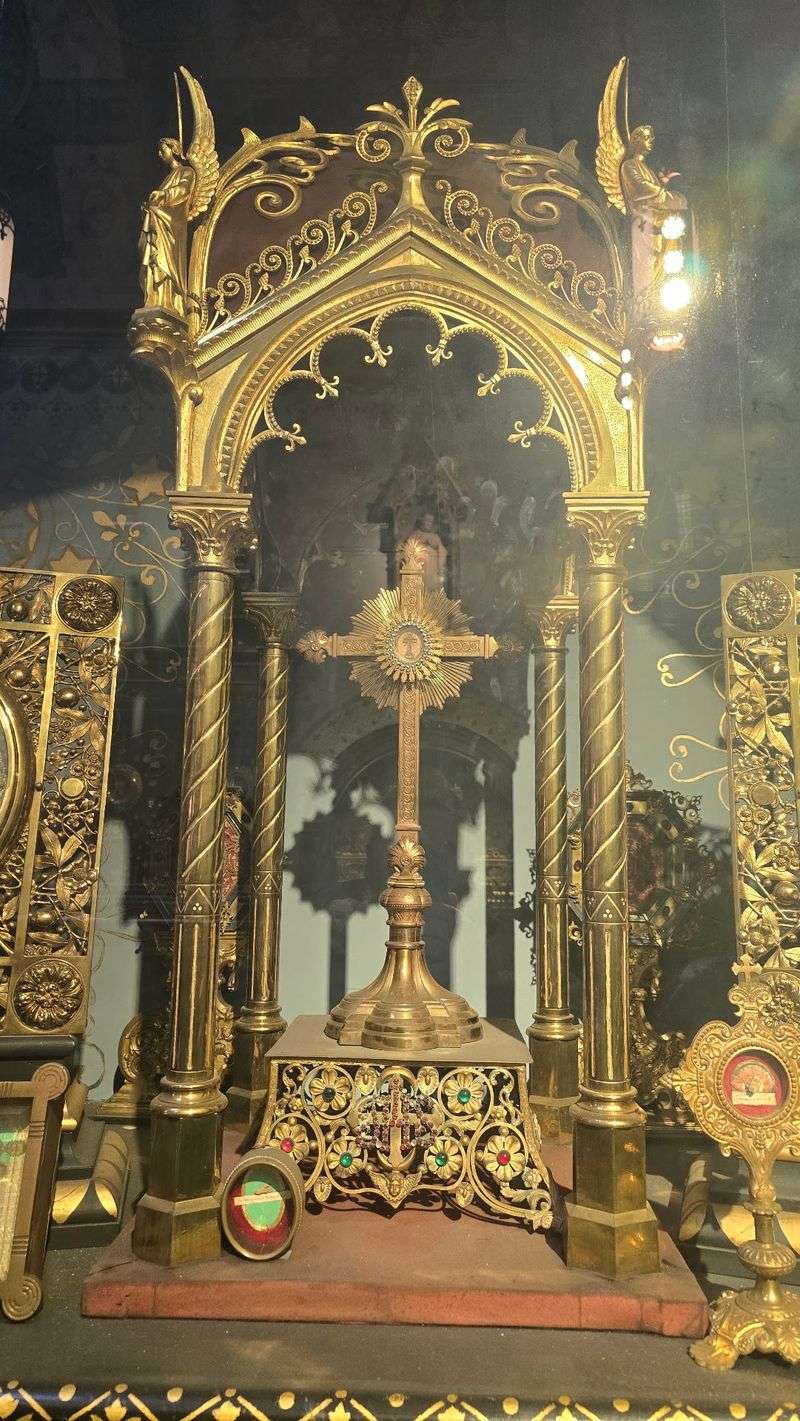
Among the thousands of items, several draw particular attention because of the stories attached to them.
The collection is said to include a splinter believed to come from the True Cross, a thorn associated with the Crown of Thorns, and a fragment of stone from the Holy Sepulcher.
There are also relics connected to the Blessed Mother, and items linked to Saint Joseph.
Each of the twelve apostles is represented, which is unusual even among large relic collections.
Authentication of medieval relics is a genuinely complicated subject, and historians have long debated how many such items across Europe can be verified.
Some visitors come with deep faith, others come out of pure historical curiosity, and the chapel welcomes both without much fuss.
The documentation that accompanied many pieces was recorded in catalogs, though matching a specific catalog entry to a specific case can take patience.
My own approach to places like this leans toward appreciating the human effort involved. Someone gathered, labeled, shipped, and arranged all of it, and that alone is worth an afternoon.
Volunteer Docents Who Know The Stories
Much of what keeps this place running comes down to volunteers who show up week after week.
Docents greet arrivals, answer questions, and often share far more background than any sign could provide.
Docent-led tours are scheduled on selected days, including current weekend dates, and reservations are recommended because seating is limited.
Because the staffing is volunteer-based, the depth of information you receive can vary depending on who is there that day.
Asking questions is encouraged, and many docents have spent years learning the collection’s history in detail.
The chapel does not run large-scale operations, so patience helps. Hours have shifted over the years, and it is smart to confirm before making the drive.
Current posted visitation hours run from noon to three, Monday through Thursday and Saturday and Sunday, with Fridays closed.
I have a soft spot for volunteer-run attractions in Pennsylvania and elsewhere, because the people telling the story usually chose to be there.
That enthusiasm comes through in ways a scripted recording never quite manages.
The Gift Shop And Small Museum Across The Street
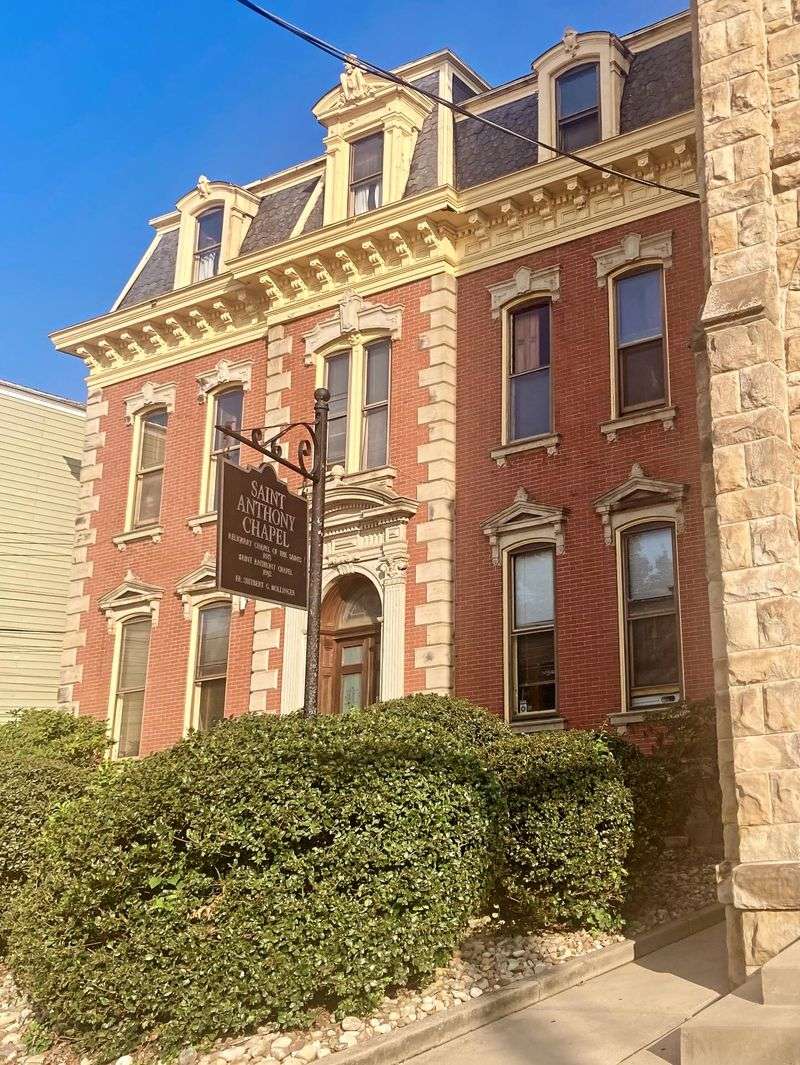
Directly across Harpster Street sits a modest building that plenty of visitors miss entirely.
Inside is a gift shop stocked with religious items including rosaries, medals, statues, and books.
Upstairs there is a small museum space that adds context to the chapel’s history and the man who built it.
Regulars often mention the upstairs section as the part people skip, which makes it the sort of detail worth knowing before you go.
Holy water is available at the chapel, and some visitors bring their own containers to fill.
The shop also handles arrangements for Mass intentions, a traditional practice within Catholic parishes.
Since both buildings sit within a few steps of each other, adding the shop and museum to your stop costs almost no extra time.
Restrooms are available in the chapel itself, which matters more than people admit when planning a trip up a steep Pennsylvania hillside.
Small museums attached to bigger attractions are frequently my favorite part of a visit, mostly because they tend to be quiet and unhurried.
Free Admission And Easy Parking
No ticket booth, no entry fee, no timed reservation system stands between you and the collection.
Admission is free, and donations support the chapel’s ongoing maintenance and preservation work.
Ample free parking is available in the lot across the street, which is uncommon for a Pittsburgh attraction of any kind.
The parking area serves the chapel and nearby church, giving visitors more room than the narrow neighborhood streets might suggest.
Troy Hill’s roads are narrow and steep, and drivers unfamiliar with Pennsylvania hill neighborhoods sometimes find the approach a little nerve-wracking.
GPS will get you there, though the final turns can feel like you are heading into someone’s driveway rather than toward a landmark.
Because the chapel remains an active place of prayer, quiet behavior is expected. Visitors may be praying while others are looking at displays.
Interior photography is not permitted, so keep the camera away while you are inside the chapel.
Free attractions that deliver this much history are rare enough that I keep a running mental list of them, and this one earned a spot.
Interior Artwork Beyond The Relics
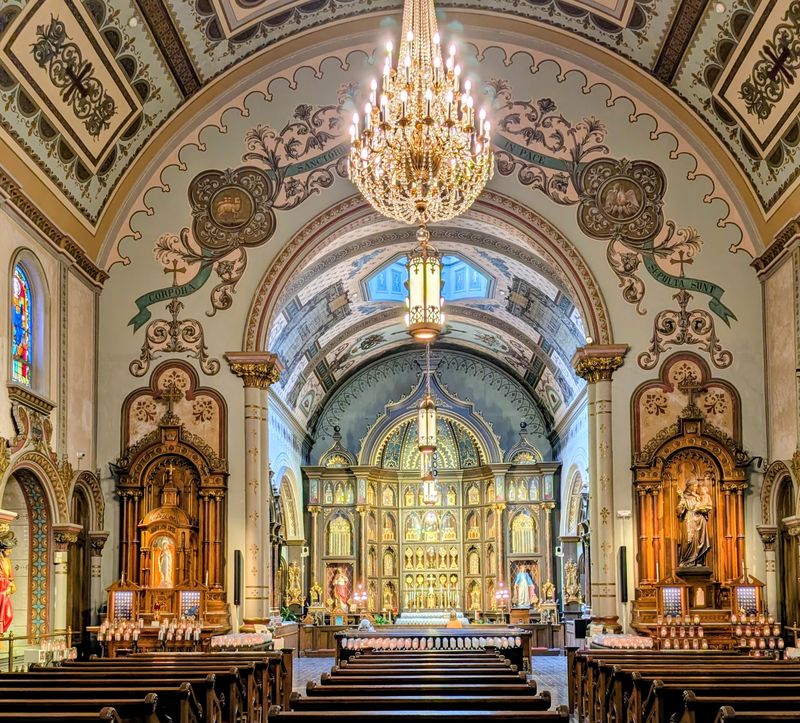
Even without a single relic, the room would still hold your attention.
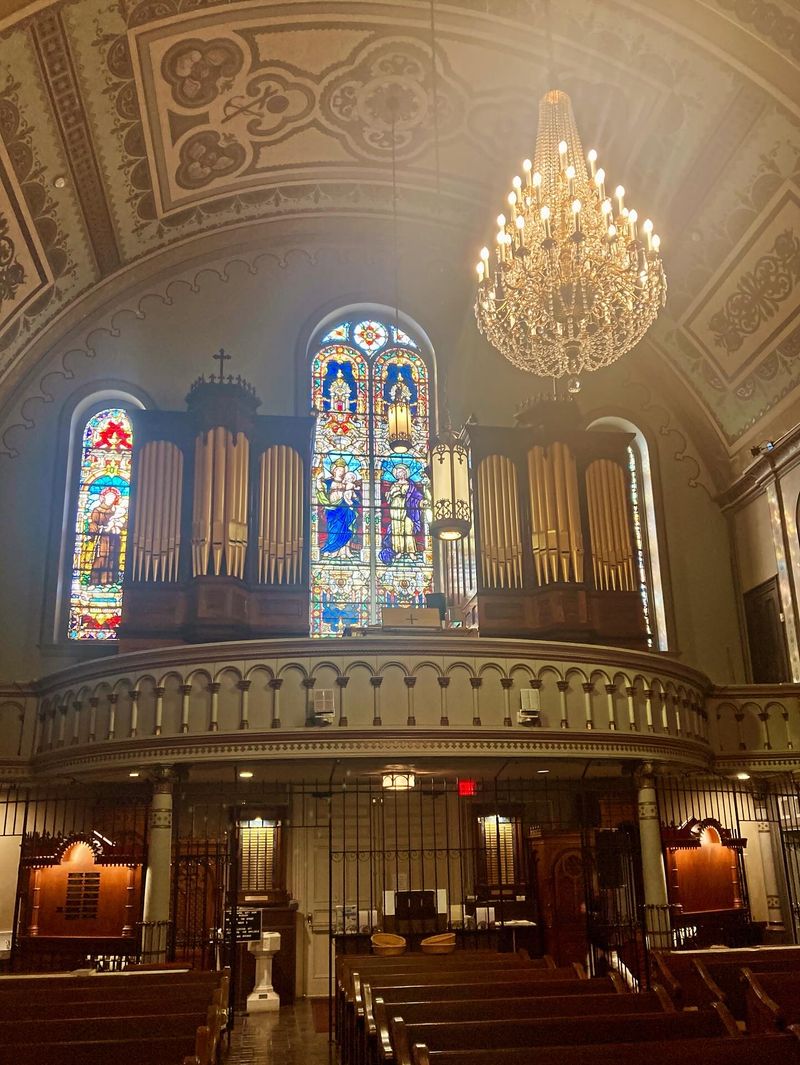
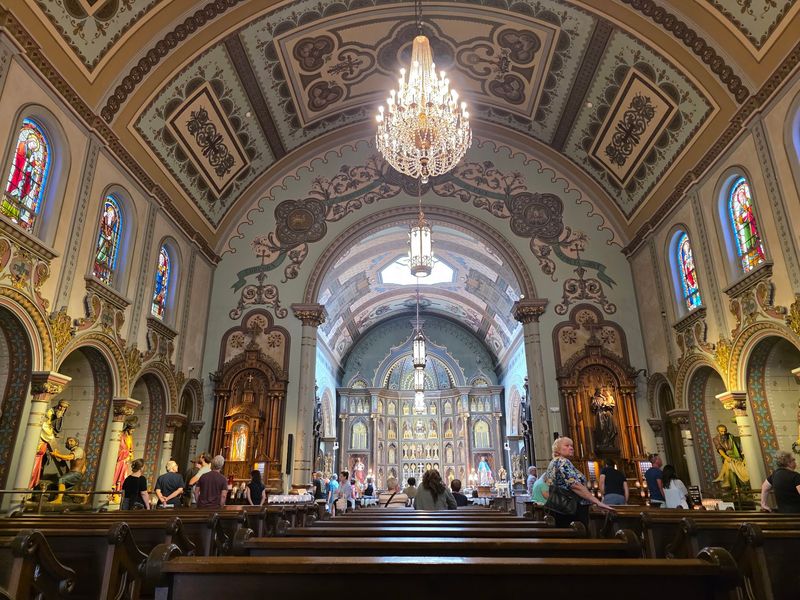
Stained glass windows filter colored light across the pews, and the ceiling carries painted decorative work typical of nineteenth century Catholic design.
The altar area is elaborately finished, and carved details appear throughout the woodwork and around the arches.
Preservation efforts over the years have kept the interior in strong condition, something visitors notice quickly when comparing it with other buildings of similar age.
Light behaves differently here depending on the time of day, and midday sun through the windows tends to bring out colors in the reliquary metals.
Because the chapel is compact, everything is visible from almost anywhere you stand, which is not true of large cathedrals.
The scale actually helps. You can absorb the whole room without walking a quarter mile of nave.
Pennsylvania has plenty of impressive historic churches, but very few pack this level of decorative detail into such a small footprint.
I find that smaller spaces stick in memory longer, probably because you are not busy trying to see everything at once.
Planning Your Visit To Troy Hill
Timing makes a real difference at a place with a three hour daily window.
The chapel opens at noon and closes at three, operating most days but shut on Fridays, so a Friday road trip will end in disappointment.
Hours have changed over the years because staffing depends on volunteers, and confirming ahead is a sensible habit.
Allow at least forty-five minutes inside, longer if a docent talk is offered while you are there.
Troy Hill sits close to Pittsburgh’s North Side, so pairing a visit with other stops in the area works well for a day out.
Comfortable shoes help, since the neighborhood streets are steep and sidewalks can be uneven.
Saint Anthony Chapel remains an active worship site, and Mass is celebrated there, meaning your visit may overlap with a service.
Traveling from elsewhere in Pennsylvania, you can reach it easily from downtown in well under twenty minutes without traffic.
My travel rule is simple. Places with short hours and no marketing budget usually reward the effort it takes to show up.