
This Pennsylvania Tick Map Is So Accurate People Plan Road Trips Around It
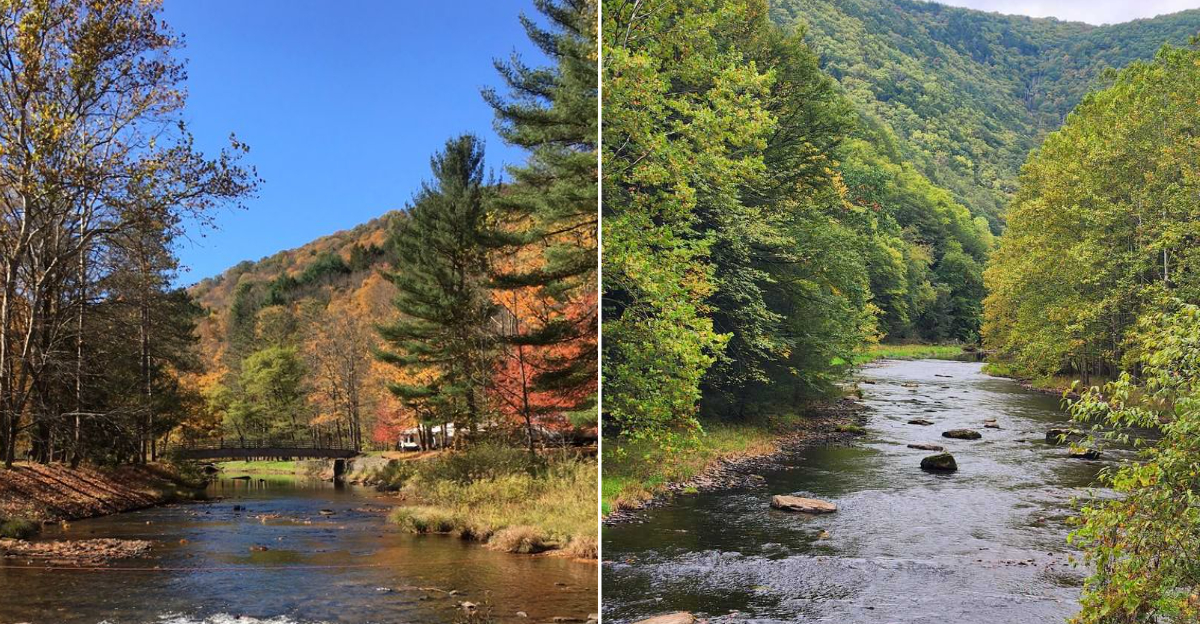
Nothing changes an outdoor plan faster than realizing the trail ahead may come with more tiny passengers than expected.
A detailed tick map can make Pennsylvania road trips a little smarter before the car even leaves the driveway.
Instead of treating every outdoor stop the same, travelers can check where tick activity is higher and decide how prepared they want to be.
It is not exactly glamorous trip planning, but neither is discovering a tick after the hike.
That practical edge is what makes a map like this surprisingly useful. A quick look beforehand can shape where you go and how you approach the day without taking the fun out of exploring.
My rule has become embarrassingly simple: if I am going anywhere grassy or wooded, I would rather know what I am dealing with first. I used to think checking for ticks afterward was enough.
Now I prefer the much less exciting, but much smarter, strategy of checking the map before I pick the route.
1. Cherry Springs State Park, Potter County
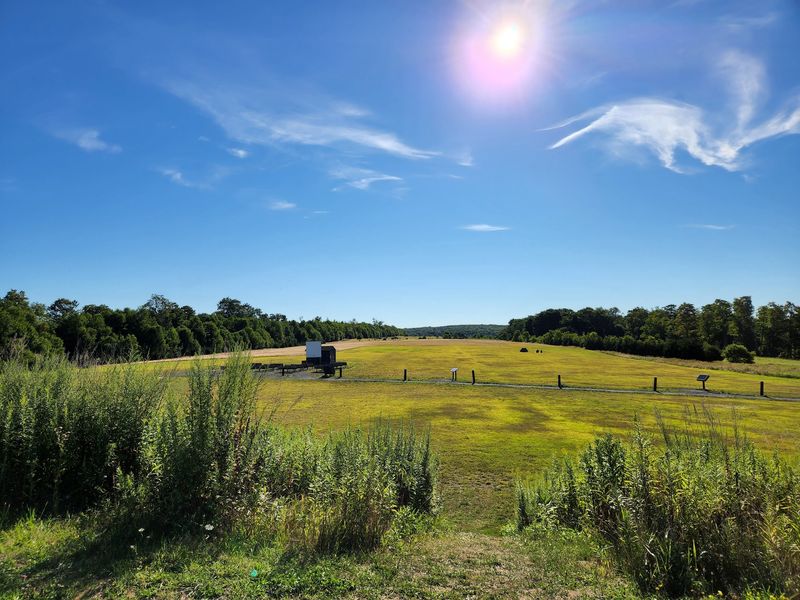
Stargazers show up here with red flashlights and long socks.
Cherry Springs State Park sits high on a plateau in Potter County, Pennsylvania, and its night sky ranks among the darkest in the eastern United States. Daylight reveals a quieter scene of mowed fields, spruce stands, and shaded forest edges.
Blacklegged ticks favor damp leaf litter under those trees, so the open astronomy field is the smarter place to set up a chair.
Treat clothing with permethrin a day early, push pant legs into socks, and run a full body check before you pack up.
Light colored pants make crawling hitchhikers far easier to spot, especially when your only light source is dim and red.
Nymph ticks peak in late spring and early summer, which happens to overlap with the busiest meteor shower crowds.
Cherry Springs rewards patience, so bring fine tipped tweezers, a lint roller, and a blanket you can shake out later.
The park sits at 4639 Cherry Springs Road, Coudersport, PA 16915, and the ridge road leading in offers views worth slowing down for.
2. Lyman Run State Park, Potter County
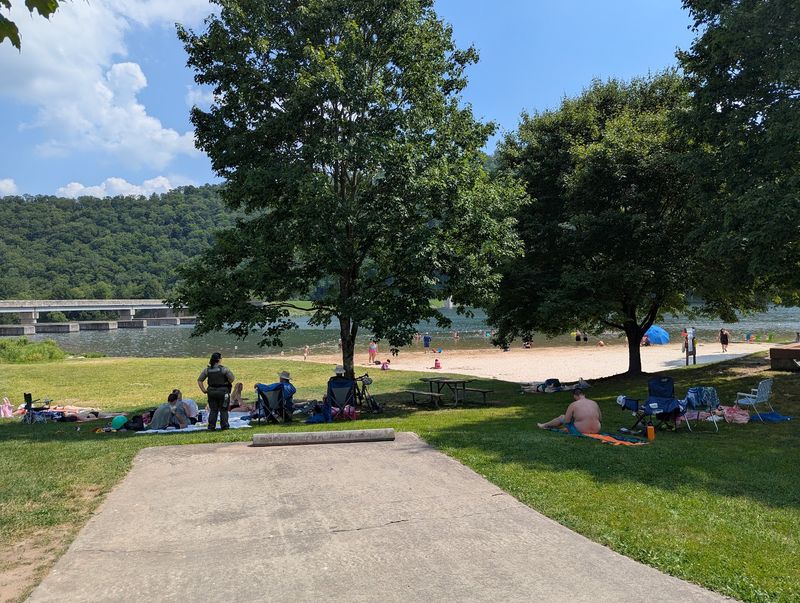
A cool mountain lake, a small beach, and plenty of leafy edges.
Lyman Run State Park covers close to 600 acres in Potter County, Pennsylvania, completely surrounded by the Susquehannock State Forest.
The 45 acre lake stays chilly through August, making the swimming beach a favorite reward after a warm morning on the trails.
Forest crowds in on nearly every side, and that shaded ground cover is exactly where blacklegged ticks wait for something warm to brush past.
Walking down the center of the path instead of the ferny shoulder cuts your odds dramatically.
Dogs roam the open ground near the campground, so check around their ears, toes, and collar line before they climb back into the car.
Ten minutes in a hot dryer destroys ticks hiding in clothing, and that trick works better than washing alone.
Lyman Run also connects to forest roads popular with mountain bikers, and autumn color arrives here earlier than most of the state.
Trout stocking in spring brings anglers to the run itself, though crowds stay pleasantly thin. Look for Lyman Run at 454 Lyman Run Road, Galeton, PA 16922.
3. Ole Bull State Park, Potter County
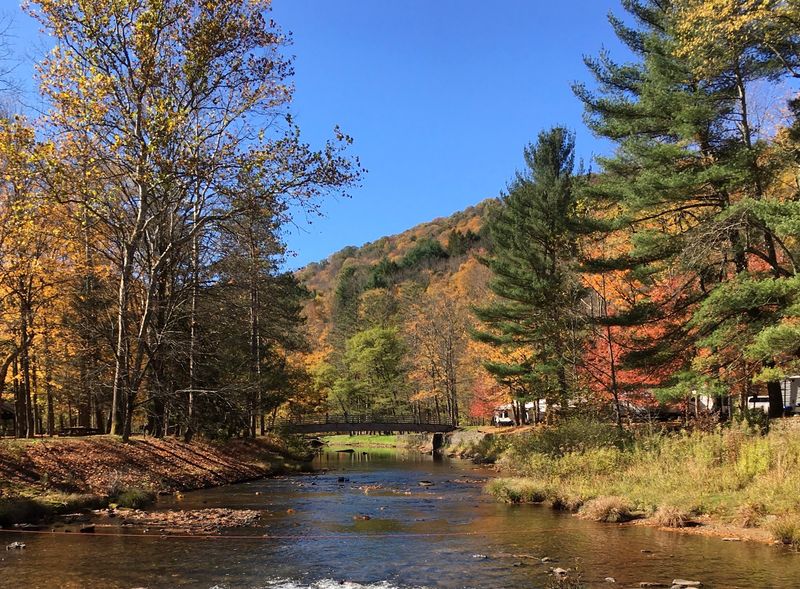
A Norwegian violinist once tried to build a colony on this ground.
Ole Bull State Park in Potter County, Pennsylvania, keeps that 1850s story alive with a short climb to the castle overlook, where old stone foundations still sit above Kettle Creek.
Locals call this stretch the Black Forest because the timber grows so thick, and thick timber means humidity, leaf litter, and ticks that stay active longer.
Creekside campsites are the main draw, though the strip where mowed grass meets the tree line is where most passengers get picked up.
Spray shoes and socks with permethrin the night before your trip, since the treatment needs hours to dry and then lasts through several washes.
A shower within two hours of coming indoors rinses off any tick that has not latched on yet.
Pennsylvania has reported more Lyme disease cases than any other state for years running, which is why tick mapping gets taken so seriously here.
Ole Bull fills up in July, while May mornings belong to trout anglers and almost nobody else. Find Ole Bull State Park at 31 Valhalla Lane, Cross Fork, PA 17729.
4. Leonard Harrison State Park, Tioga County
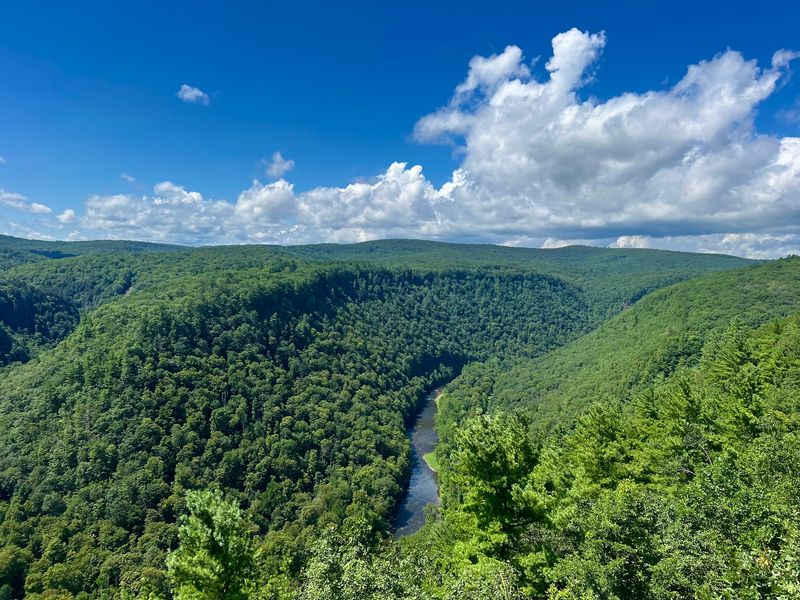
Eight hundred feet of canyon drops away just past the railing.
Leonard Harrison State Park guards the east rim of Pine Creek Gorge in Tioga County, Pennsylvania, and the main overlook takes about ninety seconds to reach from the parking area.
Anyone wanting more can take the Turkey Path down toward the creek, a steep mile of switchbacks, waterfalls, and wooden staircases.
That trail cuts through moist hardwood slopes, which is prime habitat for blacklegged ticks between April and October.
Because the path is narrow, brushing against vegetation is unavoidable, so treated socks and closed shoes matter more here than at most stops.
Check behind your knees and along your waistband when you reach the bottom, then again at the top while you catch your breath.
Leonard Harrison also has a visitor center with gorge exhibits and a small store for water refills.
Peak foliage usually lands in the second week of October, and the parking lot fills early on those weekends.
Leonard Harrison State Park is located at 4797 Route 660, Wellsboro, PA 16901, roughly ten miles west of town.
5. Colton Point State Park, Tioga County
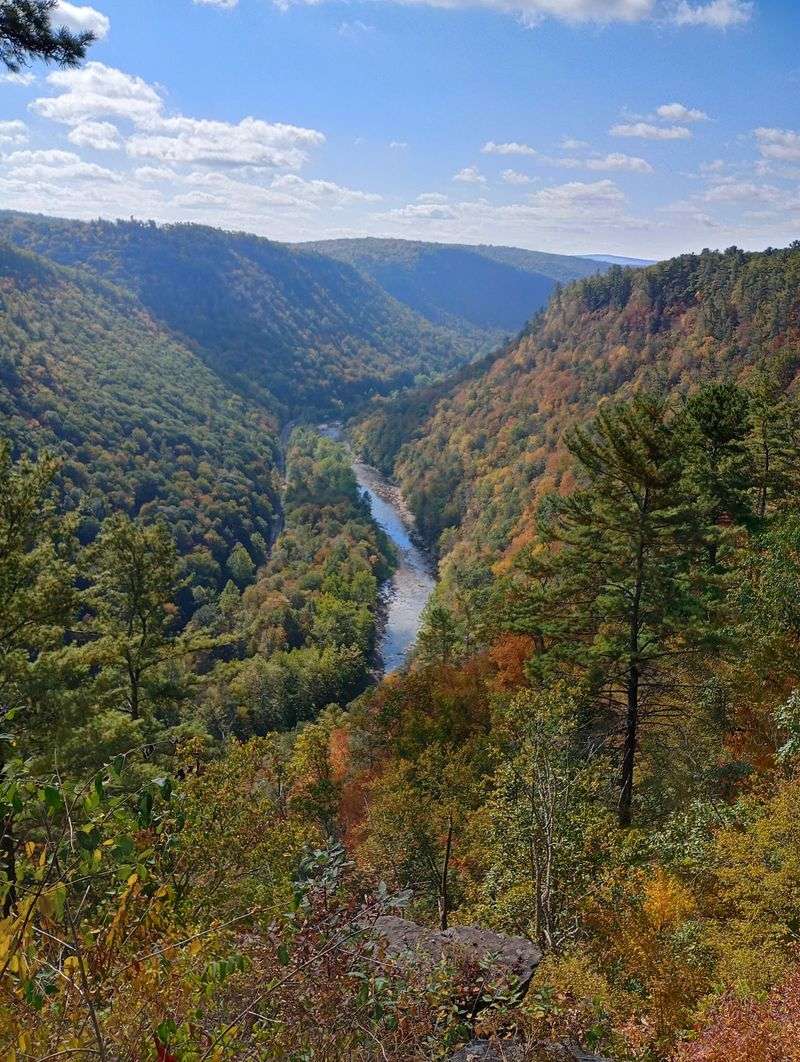
The quieter rim of the canyon rewards drivers willing to detour.
Colton Point State Park sits directly across Pine Creek Gorge from its busier neighbor, reachable only by a winding road in Tioga County, Pennsylvania.
Civilian Conservation Corps crews built the stone overlooks and picnic pavilions here in the 1930s, and much of that rustic work still stands.
The state maps do not rate individual parks, but wooded and brushy terrain still calls for tick precautions. Stick to gravel paths near the overlooks, and save the grassy shortcuts for another day.
A pair of light gaiters over your boots blocks the ankle level ambush, since ticks climb rather than fall from trees.
Colton Point offers a rustic campground with no showers, so plan your tick inspection routine around a camp lantern instead.
Morning fog settling into the gorge below the rim makes early arrival worth setting an alarm for.
Colton Point State Park can be found at 927 Colton Road, Wellsboro, PA 16901, and the access road gets tight for large trailers.
6. Hills Creek State Park, Tioga County
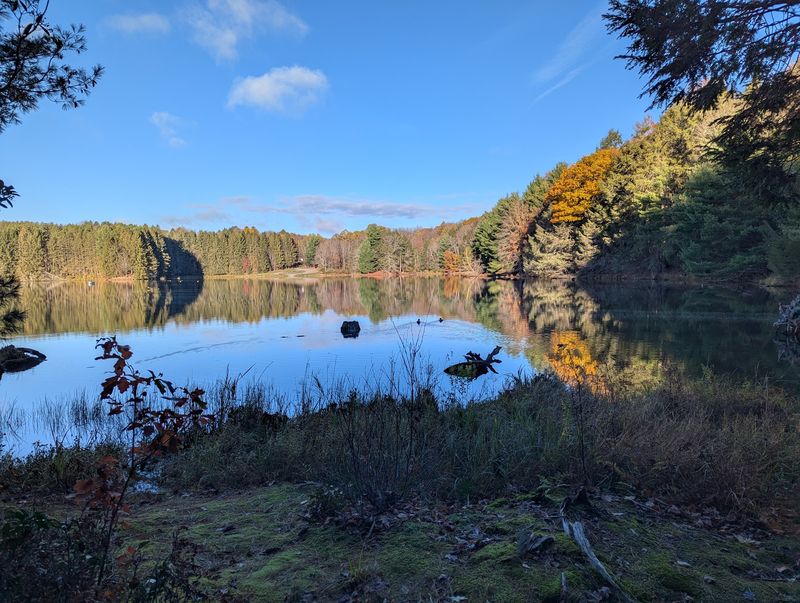
Beavers, herons, and a 137 acre lake keep this place lively.
Hills Creek State Park rests between the Allegheny foothills and the Endless Mountains in Tioga County, Pennsylvania, with a lake shaped for paddling rather than speed.
Boats stay electric or human powered, so mornings on the water stay peaceful enough to hear wildlife moving in the cattails.
State maps do not pinpoint this shoreline, but tall grass and brush are habitats where Pennsylvania officials recommend extra tick precautions.
Wearing light colored clothing helps, and tucking your shirt in removes the easiest route to your skin. Repellent with picaridin or twenty percent DEET on exposed skin covers what treated clothing cannot.
Hills Creek has cabins, cottages, and a swimming beach, which makes it a comfortable base for exploring the region.
Fishing here brings in largemouth bass and panfish, and ice fishing takes over once winter locks the lake down.
Hills Creek State Park is at 111 Spillway Road, Wellsboro, PA 16901, about a fifteen minute drive from the borough.
7. Mount Pisgah State Park, Bradford County
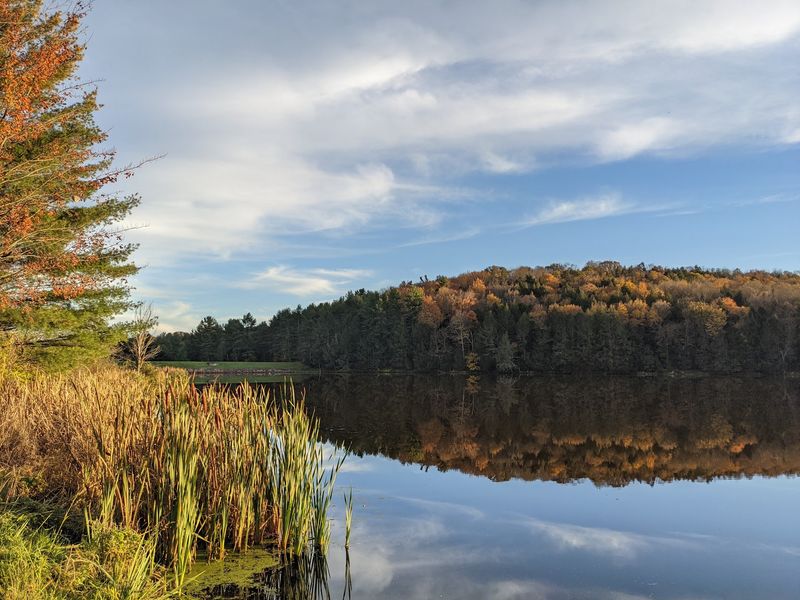
Rolling farm country wraps around a lake at the base of a mountain.
Mount Pisgah State Park sits below the 2,260 foot summit of Mount Pisgah in Bradford County, Pennsylvania, with Stephen Foster Lake as its centerpiece.
Open meadows and old field habitat cover much of the park, but Pennsylvania’s tick maps do not assign specific risk to individual trails here.
Meadow trails are gorgeous in July when wildflowers take over, but they are also where nymph ticks sit at knee height.
Long pants beat shorts every single time in that setting, no matter how warm the afternoon gets. Do a careful check of your scalp, since ticks often travel upward before settling in.
Mount Pisgah keeps a swimming pool, playground, and picnic areas that make it family friendly without much fuss.
Winter turns the slopes into sledding and cross country ski terrain, but blacklegged ticks can still become active during milder winter weather.
You will find Mount Pisgah State Park at 28 Entrance Road, Troy, PA 16947, sitting between Troy and Towanda in Bradford County.
8. Worlds End State Park, Sullivan County
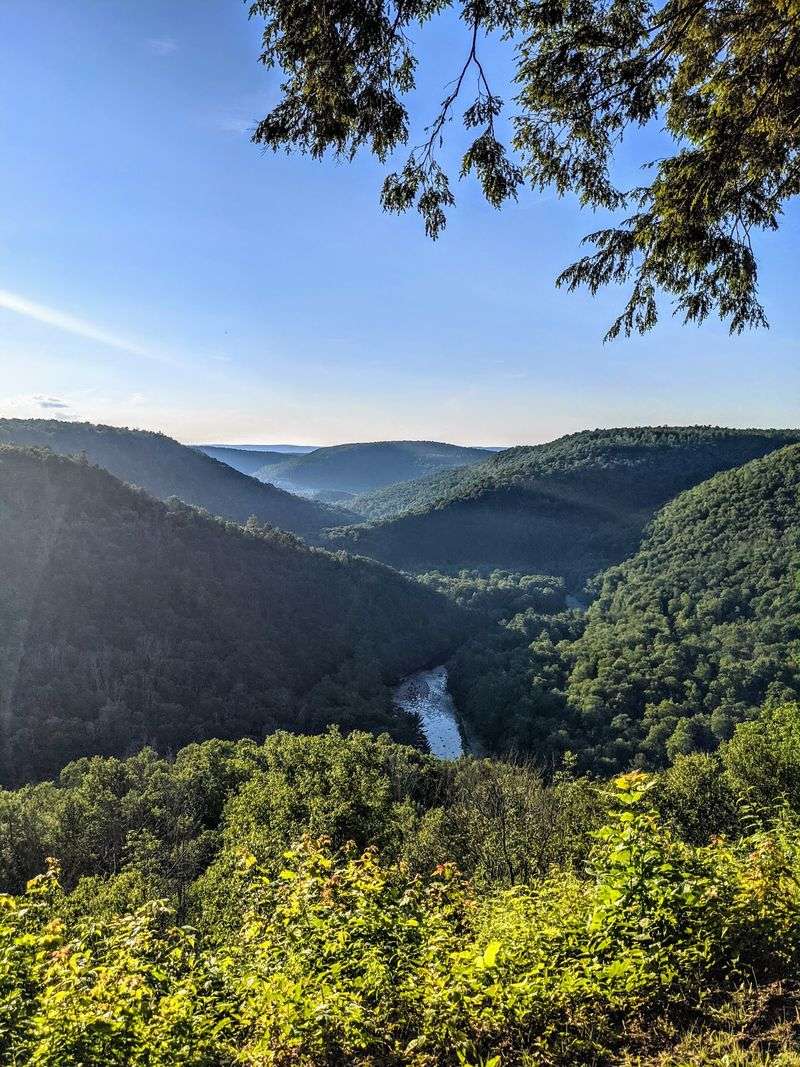
The name alone convinces people to make the drive.
Worlds End State Park occupies a tight S bend of the Loyalsock Creek gorge in Sullivan County, Pennsylvania, surrounded by Loyalsock State Forest.
Canyon Vista delivers the classic view, reachable by car or by a demanding climb from the valley floor.
Steep hemlock slopes hold moisture, and moisture keeps ticks active well into fall in this part of the state.
The Loyalsock Trail passes through, and its narrow corridor means constant brushing against vegetation, so treated pants earn their keep.
Carry a small mirror or ask a companion to check your back, because that is the spot most people miss.
Worlds End has stone cabins built by Depression era crews, and reservations for them disappear months ahead.
Swimming in the creek beside the natural rock ledges is a summer tradition here, though the water runs cold even in July.
Worlds End State Park is located at 82 Cabin Bridge Road, Forksville, PA 18616, along Route 154.
9. Kettle Creek State Park, Clinton County
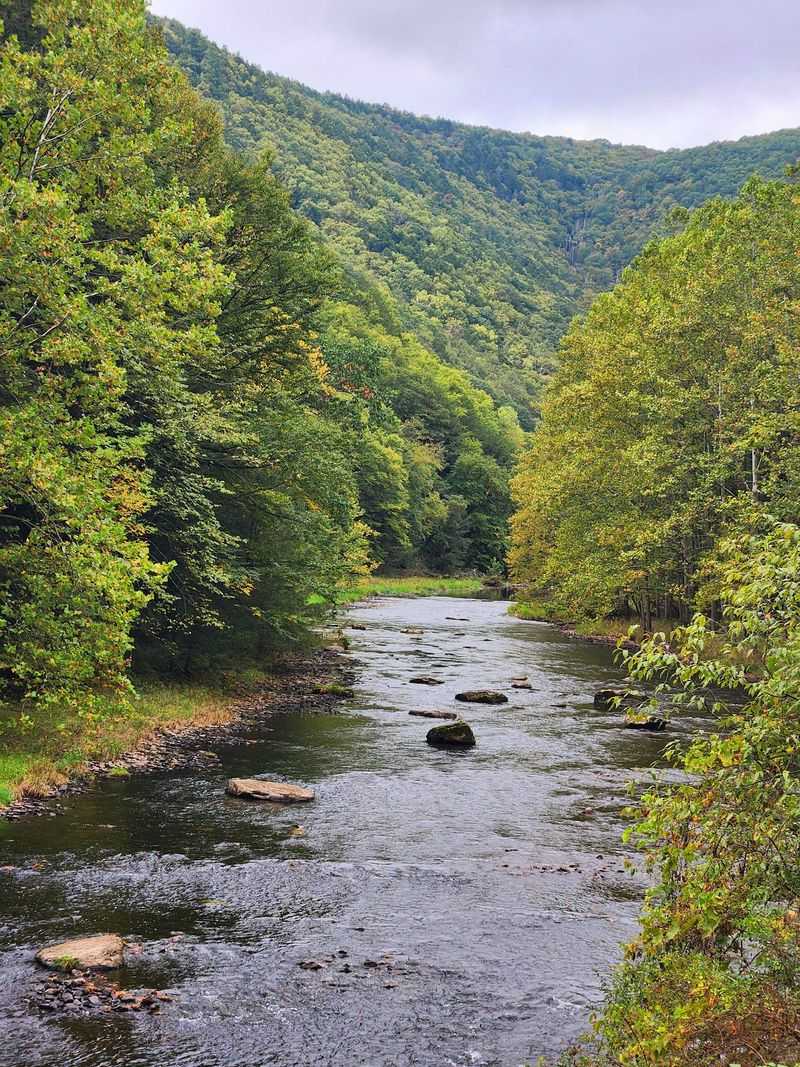
Remote enough that cell service quits before the entrance sign.
Kettle Creek State Park stretches along a narrow valley in Clinton County, Pennsylvania, hemmed in by Sproul State Forest on both sides.
The Alvin R. Bush Dam holds back a reservoir popular with paddlers, while the creek above it draws fly anglers all season.
Isolation is the appeal, though brushy and wooded areas still call for the same tick precautions recommended statewide.
Elk occasionally wander in from the nearby range, and large mammals help move ticks around the landscape.
Keep a tick removal tool in your pack rather than your car, since prompt removal lowers infection risk considerably.
Grab straight up with tweezers close to the skin, no twisting and no petroleum jelly tricks. Kettle Creek offers two campgrounds, and the upper one puts you steps from the water.
Stars here rival the more famous dark sky spots, minus the crowds. Kettle Creek State Park is at 97 Kettle Creek Park Lane, Renovo, PA 17764, roughly seven miles up from Route 120.
10. Hyner Run State Park, Clinton County
Small valley, big mountains, and a swimming pool fed by cold water.
Hyner Run State Park tucks into a side hollow of Sproul State Forest in Clinton County, Pennsylvania, covering just 180 acres.
Most travelers pair it with nearby Hyner View, where hang gliders launch over the West Branch Susquehanna River far below.
Mountain laurel and thick undergrowth blanket the surrounding slopes, habitat where Pennsylvania officials recommend taking routine tick precautions outdoors.
Sitting directly on logs or leaf piles is an easy way to collect passengers, so bring a ground cloth for breaks. Change into fresh clothes before the drive home and seal the worn set in a bag until laundry day.
Hyner Run keeps its campground open from early April through mid December, rather than operating throughout winter.
Spring brings laurel blooms and cool water in the run itself, perfect for wading feet after a climb. Hyner Run State Park sits at 86 Hyner Park Road, North Bend, PA 17760, near Route 120 and nearby Hyner.
11. Little Pine State Park, Lycoming County
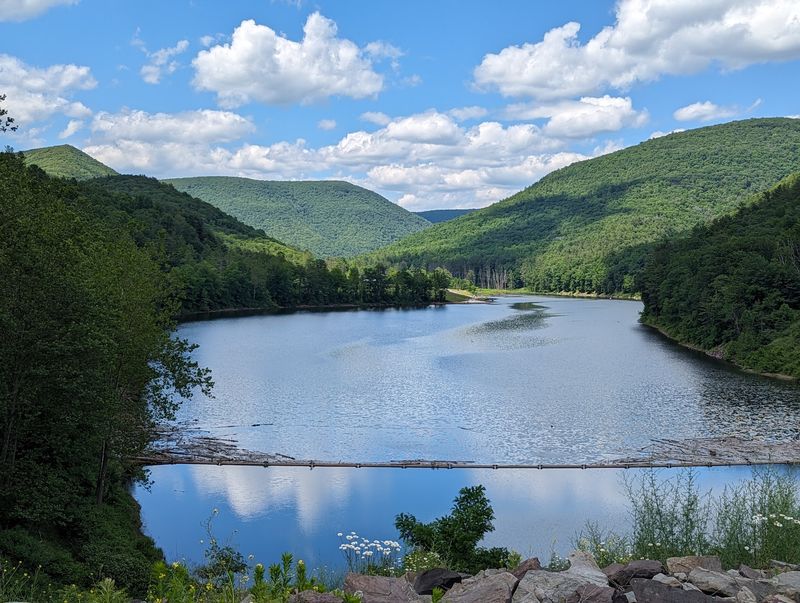
Steep ridges squeeze a 45 acre lake into a green valley.
Little Pine State Park anchors the Pine Creek valley in Lycoming County, Pennsylvania, inside the sprawling Tiadaghton State Forest.
Bald eagles nest nearby, and patient watchers usually spot one working the water in the early hours.
Trails climb hard from the valley floor through forest where statewide guidance recommends avoiding brush and checking for ticks afterward.
Hiking poles help you push vegetation aside instead of walking through it, a small habit that pays off.
Once back at the car, a quick clothing scan and a hand check along your beltline catches most stragglers.
Little Pine has a campground, a beach area, and a boat launch, all within easy walking distance of each other.
The nearby Pine Creek Rail Trail gives cyclists a flat sixty mile option running through the gorge. Autumn along the ridges here turns unbelievably bright, usually cresting in mid October.
Little Pine State Park is located at 4205 Little Pine Creek Road, Waterville, PA 17776.
12. Bald Eagle State Park, Centre County
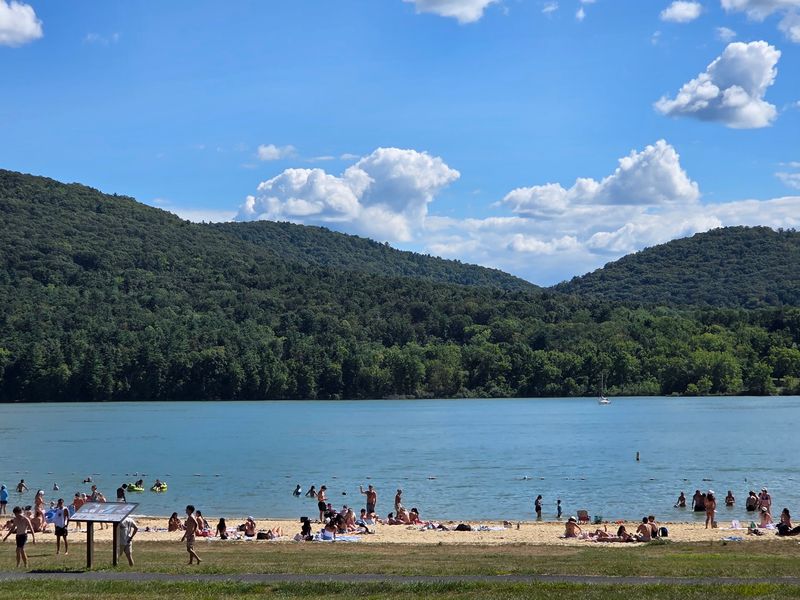
Sailboats lean into the breeze on a 1,730 acre reservoir.
Bald Eagle State Park spreads along Foster Joseph Sayers Reservoir in Centre County, Pennsylvania, with Bald Eagle Mountain rising behind it.
Boating gets serious here thanks to the marina and unlimited horsepower on much of the water.
Grassland restoration areas cover a good portion of the shoreline, but state tick maps do not assign park-specific risk directly to them.
Birders walking those meadows in June should treat shoes and socks and plan a thorough check afterward.
Pale colored gear is not just fashion advice, it genuinely makes a poppy seed sized nymph visible.
Bald Eagle also has an environmentally friendly lodge overlooking the lake, plus cabins and a large campground.
Fishing tournaments run through the warm months, and the beach stays busy on hot weekends. Winter draws ice anglers and eagle watchers to the same shoreline.
Bald Eagle State Park is at 149 Main Park Road, Howard, PA 16841, easy to reach from Interstate 80.
13. Black Moshannon State Park, Centre County
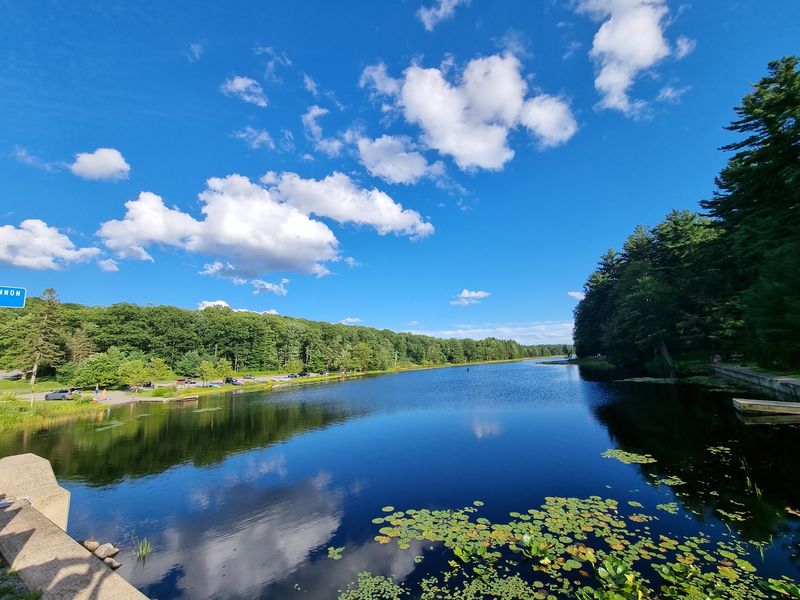
The water runs the color of strong tea, and that is natural.
Black Moshannon State Park protects one of the largest bogs in Pennsylvania, sitting atop the Allegheny Plateau in Centre County.
Tannins leaching from sphagnum moss and hemlock roots give the lake its famously dark tint.
A boardwalk crosses the wetland, letting you look for pitcher plants and sundews without soaking your boots.
Bog edges and adjacent forest hold plenty of moisture, and blacklegged ticks thrive wherever humidity stays high.
Stay on the boardwalk and the marked trails, both for the fragile plants and for your own ankles.
Black Moshannon rents cabins built during the 1930s, and they book quickly for summer weekends.
Paddling the lake at dawn puts you among mist, birdsong, and very few other boats.
Snowshoeing takes over in winter, when the surrounding state forest roads go quiet.
Black Moshannon State Park is located at 4216 Beaver Road, Philipsburg, PA 16866, along Route 504.
14. Parker Dam State Park, Clearfield County
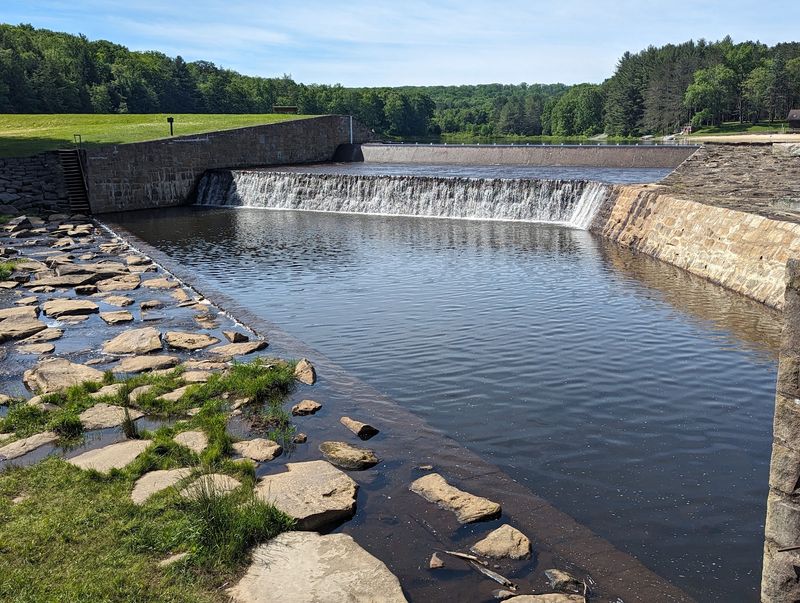
Log cabins here were hand built during the Great Depression.
Parker Dam State Park in Clearfield County, Pennsylvania, holds one of the best preserved Civilian Conservation Corps sites in the state, complete with an interpretive center.
A tornado tore through the surrounding forest in 1985, and the Beaver Dam Trail still passes evidence of that regrowth.
Young dense regrowth like that creates ideal cover for small mammals, which in turn carry ticks in impressive numbers.
Trails through those thickets call for treated clothing and a slow, careful check afterward, especially around the hairline.
Keep a tick in a sealed bag if one bites, since identification can matter if symptoms appear later.
Parker Dam has a swimming beach, boat rentals, and cabins that stay warm through winter stays.
Elk sometimes wander down from the nearby range, and the surrounding Moshannon State Forest offers endless quiet roads.
Parker Dam State Park is found at 28 Fairview Road, Penfield, PA 15849, a short hop off Interstate 80.