
This Pennsylvania Train Station Hides One Of America’s Oldest Public Markets With Amish Scrapple And Thai Noodles
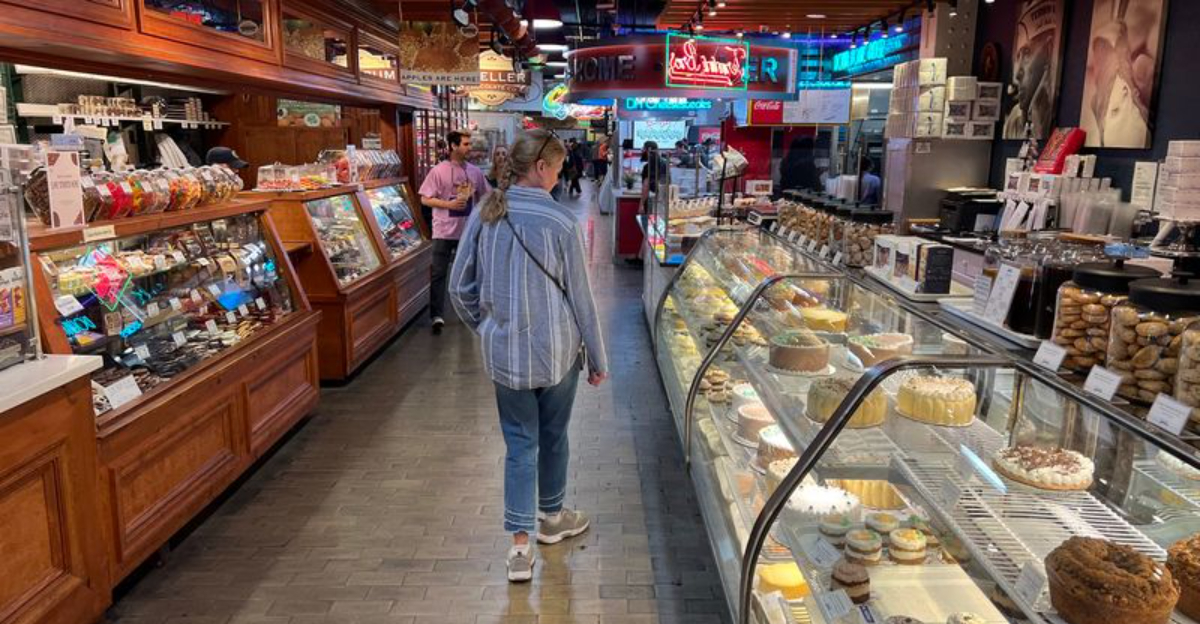
Some places make you feel like you have stumbled into the heartbeat of a city, and nothing does that quite like an old public market hidden inside a busy Pennsylvania landmark.
The energy hits fast. You hear the chatter, catch a dozen incredible smells at once, and realize this is not just a place to grab food. It is a full-on feast of history, flavor, and delicious surprise.
One counter promises old-school comfort, another brings bold global flavor, and somehow it all works together like the most tempting kind of beautiful chaos. That is what makes a market like this so unforgettable.
It is part culinary crossroads, part local tradition, and part sensory overload in the best possible way.
You can chase savory classics, dive into something spicy and unexpected, and leave feeling like you traveled much farther than one afternoon should allow.
It is lively, layered, and packed with the kind of food discoveries that make every lap around the stalls feel worth it.
I always lose all sense of direction in places like this because the moment I tell myself I am just there for one thing, I catch another amazing smell and start changing my plans on the spot.
Over 130 Years Of Feeding Philadelphia
Few markets anywhere in the United States can claim a history as long and rich as this one. Reading Terminal Market officially opened its doors in 1893, making it one of the oldest continuously operating public markets in the entire country.
To put that in perspective, the market was already decades old by the time states like Ohio were still building their own urban food infrastructure. Ohio has some great markets too, but Reading Terminal has a head start that is hard to match.
Through two World Wars, the Great Depression, and massive changes in how Americans shop and eat, this market kept going. It survived the decline of the railroad era and a long period of neglect before a major revival in the 1990s brought it back to full life.
Walking through it today, you feel that weight of history in the best possible way, like the walls themselves remember every meal ever served here.
A Train Station Turned Food Paradise
Most people do not expect to find a world-class food market hiding inside a former railroad terminal, but that is exactly the story of Reading Terminal Market in Philadelphia, Pennsylvania.
Back in 1892, the Reading Railroad Company needed a new terminal, and they built it right on top of an existing outdoor market at 12th and Arch Streets. Rather than shut the market down, they moved it indoors beneath the train shed.
The result was one of the most unusual and wonderful food destinations in the entire country.
The grand iron-and-glass roof that once sheltered arriving trains now shelters dozens of merchants selling everything imaginable.
Today, the address is 1136 Arch St, Philadelphia, PA 19107, and the market has earned a 4.7-star rating from nearly 46,000 reviewers. It is proof that some of the best surprises come from buildings with a double life.
Amish Vendors Straight From Lancaster County
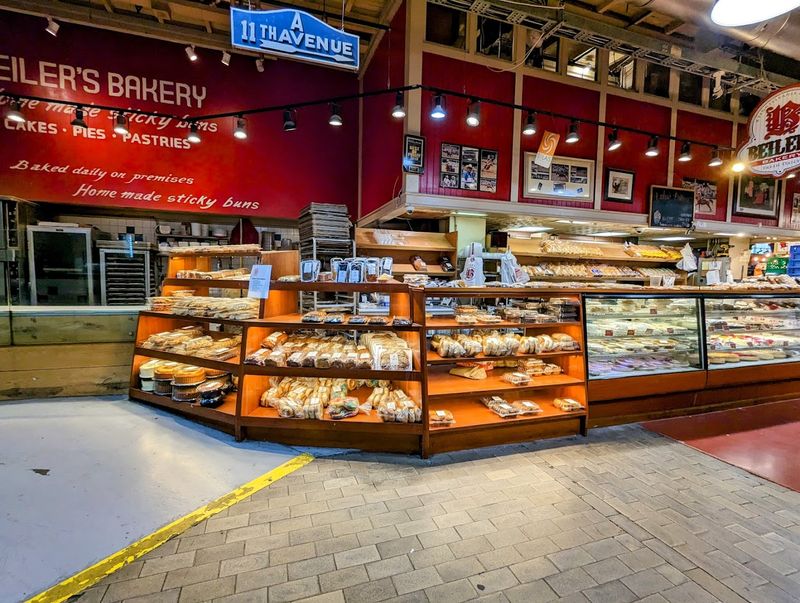
One of the most surprising and charming aspects of Reading Terminal Market is the presence of genuine Amish and Pennsylvania Dutch vendors who travel from Lancaster County, Pennsylvania, to sell their goods.
You will find stalls run by families with names like Beiler’s and Dutch Eating Place, offering homemade pastries, fresh-baked bread, shoofly pie, and the famously divisive scrapple.
Scrapple is a traditional Pennsylvania Dutch dish made from pork scraps and cornmeal, fried until crispy, and it has a devoted fan base here.
The Pennsylvania Dutch merchants are closed on Sundays, so timing your visit around the rest of the week gives you the fullest experience.
There is something genuinely special about buying a warm cinnamon roll from someone connected to traditions passed down across generations.
It is one of those market moments that reminds you food is always about so much more than just eating.
Scrapple: Philadelphia’s Most Polarizing Breakfast
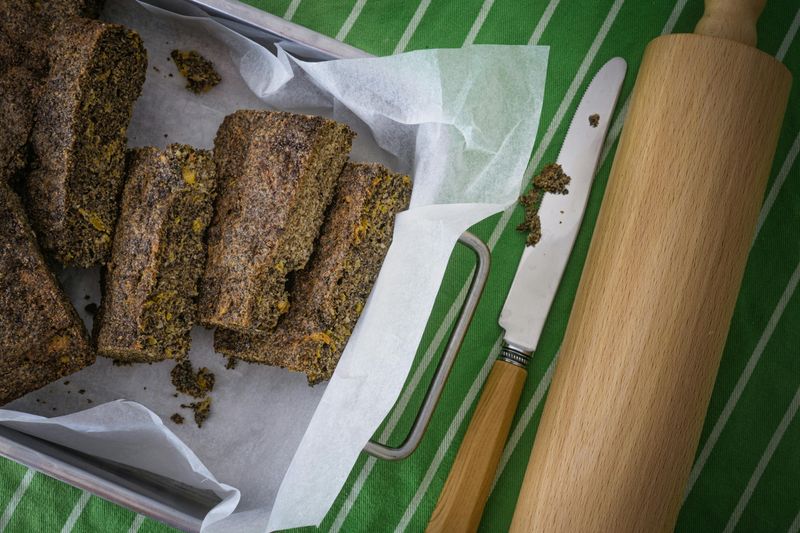
If you ask a Philadelphian about scrapple, you will get one of two reactions: absolute devotion or complete horror. There is rarely a middle ground.
Scrapple is made by combining pork trimmings with cornmeal, flour, and spices, then pressing the mixture into a loaf that gets sliced and pan-fried until the outside turns a deep golden brown.
The texture is crispy on the outside and soft in the middle, and the flavor is savory, smoky, and deeply satisfying.
Reading Terminal Market is one of the best places in Philadelphia to try it for the first time.
The Amish vendors here prepare it the traditional way, without shortcuts, and serve it as part of a proper breakfast plate.
Even visitors from places like Ohio, where scrapple is far less common, tend to walk away converted after one bite. Some foods just have that power, and scrapple at this market is definitely one of them.
Thai Noodles And A World Of Other Flavors

Scrapple and shoofly pie get a lot of attention, but Reading Terminal Market is far more than a Pennsylvania Dutch showcase.
The market is a genuinely international food destination with vendors representing cuisines from across the globe.
Thai noodle dishes sit a few stalls away from Cajun seafood, Filipino rice plates, Japanese sushi, and Indian curries.
You can find a proper Italian hoagie on one side of the market and a bowl of steaming Vietnamese pho on the other.
This kind of diversity reflects Philadelphia itself, a city built by wave after wave of immigrant communities who each brought their food traditions with them. The market became a living record of that culinary history.
Visitors from states like Ohio often comment that they have never seen this many food cultures represented under one roof. And honestly, after spending a few hours here, it is hard to argue with that reaction.
The Legendary Philly Cheesesteak Connection
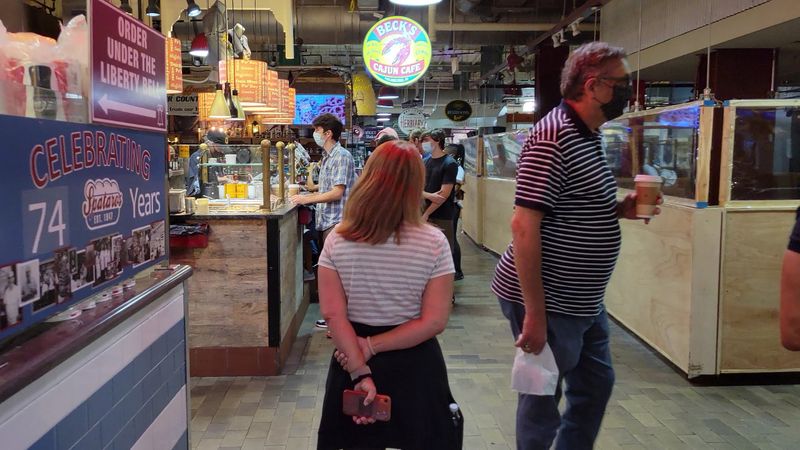
No visit to Philadelphia is complete without a proper cheesesteak, and Reading Terminal Market happens to be one of the best places in the city to find one.
Several vendors inside the market serve their own versions of this iconic sandwich, made with thinly shaved ribeye beef, melted cheese, and a soft hoagie roll.
The debate over which stall does it best is ongoing and passionate, which is part of the fun. What makes the cheesesteaks here stand out is the freshness of the ingredients.
The bread is often baked nearby, the beef is sourced from the market’s own butchers, and the whole thing comes together in minutes right in front of you.
People travel from Ohio, New York, and beyond specifically to eat a cheesesteak in Philadelphia, and many of them make Reading Terminal Market their first stop.
That kind of reputation takes generations to build, and this market has had plenty of time to earn it.
Fresh Produce, Butchers, And Real Grocery Shopping
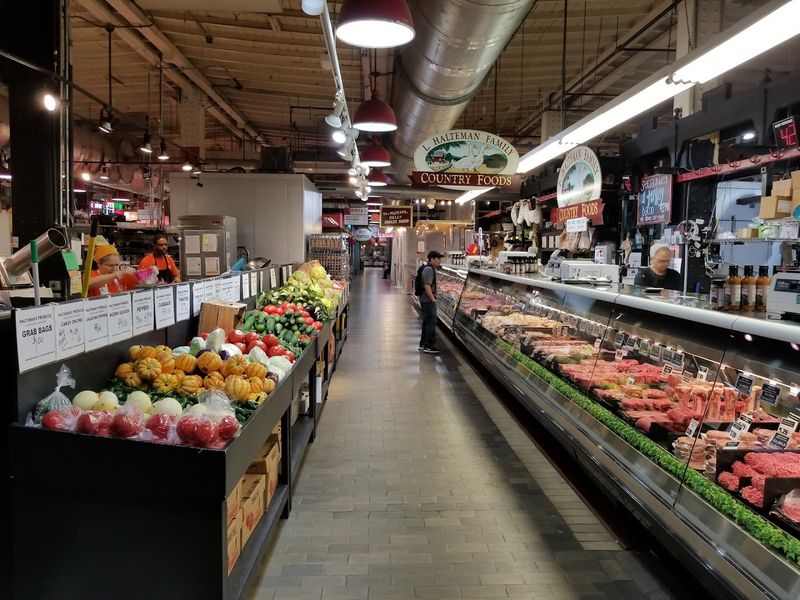
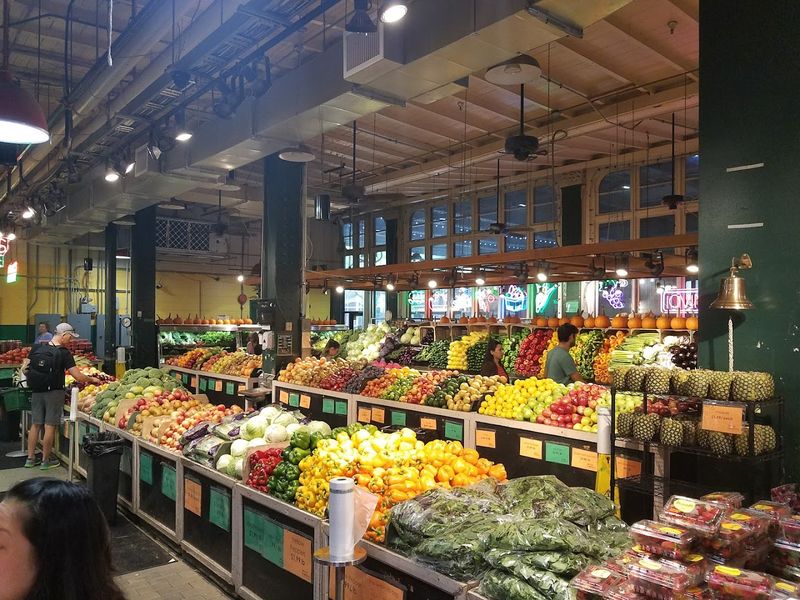
A lot of people come to Reading Terminal Market for the prepared food, but the market has always been a place where Philadelphia residents do their actual grocery shopping too.
You will find dedicated butcher stalls with whole cuts of meat, fresh fish counters stocked daily, produce vendors with seasonal fruits and vegetables, and specialty shops selling spices, cheeses, and imported goods.
This is not a theme park version of a market. It is a real, functioning place where real people buy real food.
That balance between tourist attraction and neighborhood staple is part of what makes the atmosphere so lively.
On any given morning, you might be standing next to a chef sourcing ingredients for a restaurant and a local family picking up dinner for the week.
The market even participates in programs like Too Good To Go, allowing shoppers to pick up discounted produce bags. Practical, affordable, and delicious: that combination is hard to beat anywhere in the country.
The Architecture That Still Wows Every Visitor
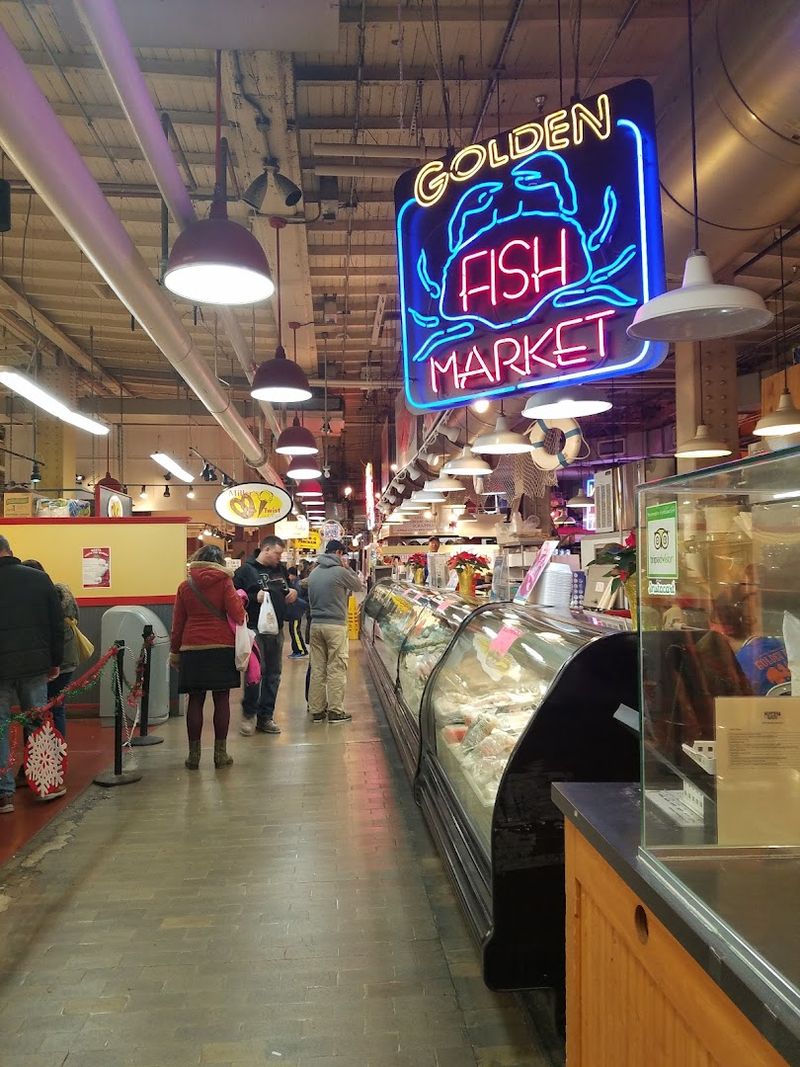
Before you even think about food, take a moment to look up. The ceiling of Reading Terminal Market is a remarkable piece of industrial architecture that dates back to the original 1893 construction.
The massive iron train shed spans the entire market floor, with exposed steel beams and large windows that let natural light pour in.
It is the kind of space that makes you feel small in the best possible way, like you are standing inside a piece of living history.
The neon vendor signs that line the stalls add a colorful contrast to all that old iron, giving the market a layered visual personality that ranges from Victorian to retro-modern in a single glance.
Photographers love it here, and it is easy to see why. The combination of historic structure and buzzing human activity creates a visual energy that no purpose-built food hall can replicate.
Ohio has beautiful markets, but this ceiling belongs to Philadelphia alone.
Weekend Crowds And How To Handle Them
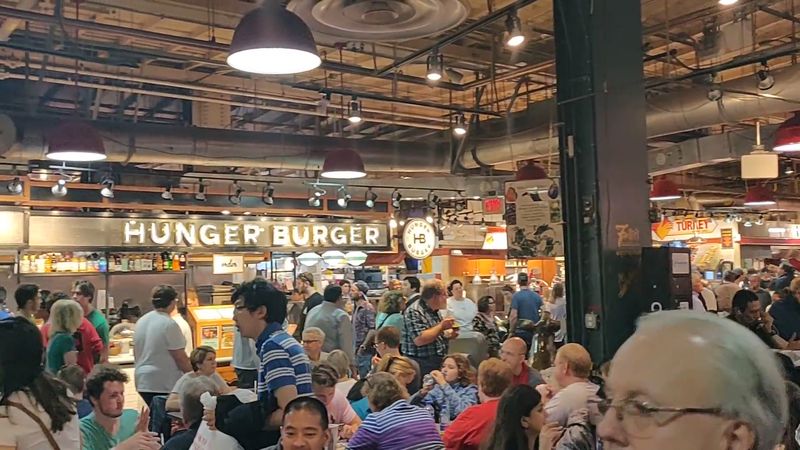
Reading Terminal Market is popular every single day, but weekends bring a completely different level of energy.
Saturday mornings in particular can feel like the entire city decided to show up for breakfast at the same time.
The market opens at 8 AM daily, and arriving early on a weekend is genuinely the best strategy.
The lines at popular stalls like Beiler’s Donuts and the cheesesteak vendors grow fast, and seating fills up quickly once the late-morning crowd rolls in.
If crowds are not your thing, a Tuesday or Wednesday visit gives you a much calmer experience while still offering nearly all the same vendors.
The Pennsylvania Dutch stalls are the main exception, as they are closed on Sundays. Parking near the market can be tricky, but the market offers a validation discount at nearby garages.
Visitors coming from Ohio or other out-of-state locations often find it easier to use public transit or rideshare services to avoid the hassle entirely.
Sweet Treats, Pretzels, And The Famous Flying Monkey
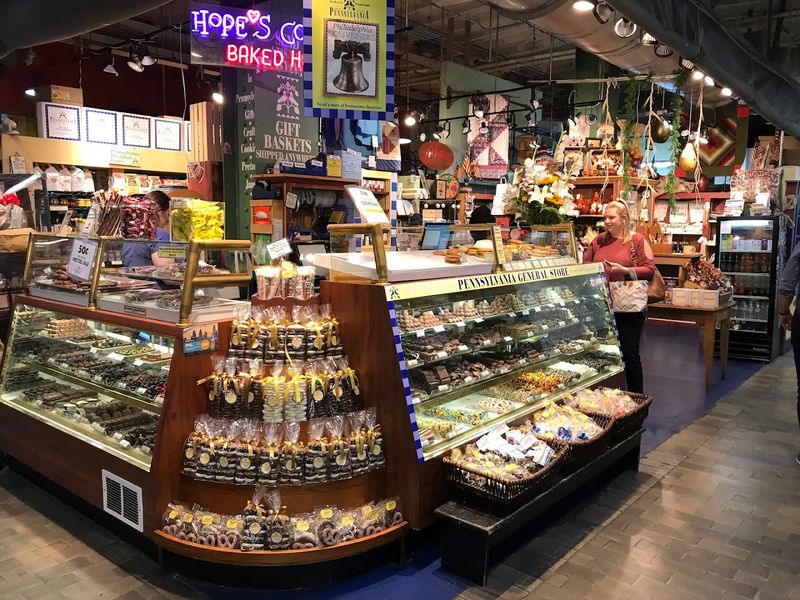
If savory food is not your priority, do not worry. Reading Terminal Market has a dessert scene that could easily justify a visit all on its own.
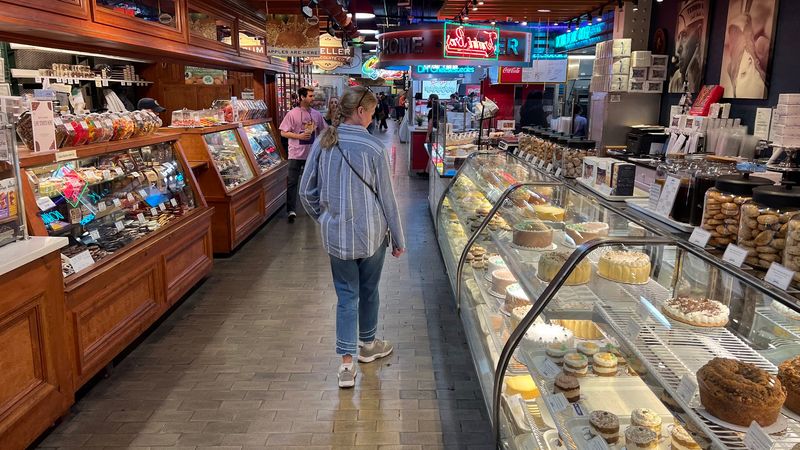
Miller’s Twist is famous for its soft pretzels, and you can smell them from across the market. The pretzel dogs are a particular standout, soft and salty and gone in about four bites.
Flying Monkey Bakery is another crowd favorite, known for creative, over-the-top baked goods like coconut almond crunch cookies that have developed a cult following among regular visitors.
The 4th Street Cookie Co. offers flavors like blueberry muffin cookies that taste like something from a nostalgic dream.
And if you want fresh fruit covered in chocolate, Wilt’s has you covered with strawberries and other treats.
People from Ohio, Boston, New York, and everywhere in between have declared this market their favorite sweet stop in the country.
After one visit, it becomes very easy to understand exactly why they feel that way.