
This Quiet Arkansas Lake Reveals An Unforgettable View Of The State’s Tallest Peak
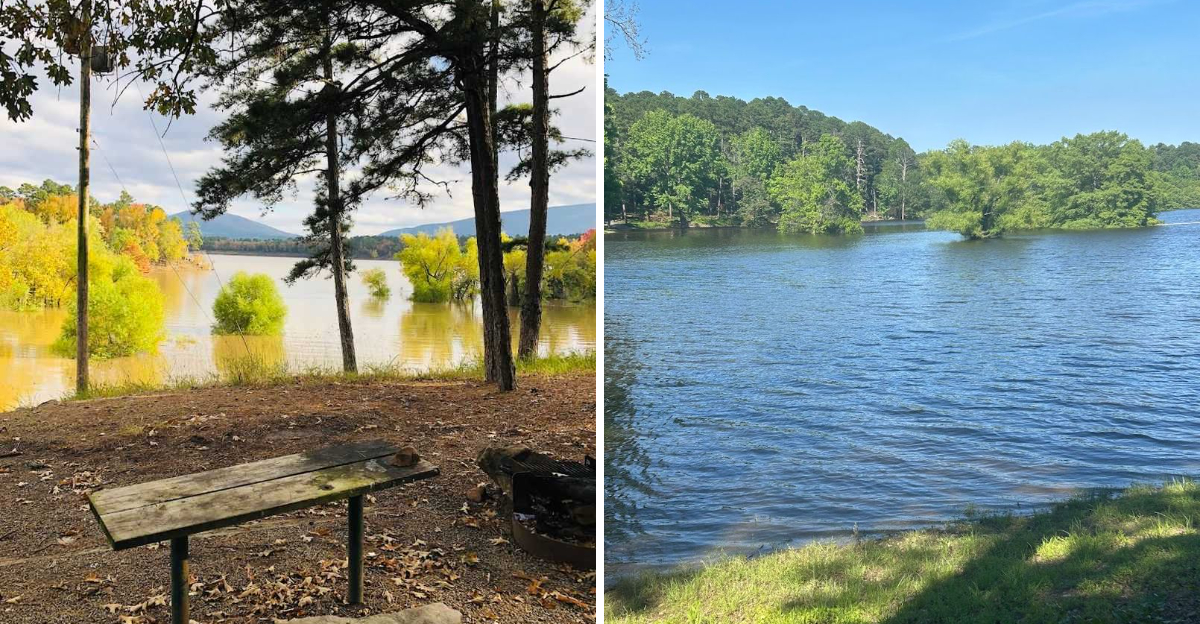
Most people heading through west-central Arkansas don’t stop here, and that’s exactly why it still feels so untouched. You arrive, step out, and the quiet hits first.
Then the view pulls you in. Calm water stretches out in front of you, framed by rolling ridgelines and the distant presence of the state’s tallest peak.
It’s the kind of place where time slows without asking. The shoreline spans roughly 54 miles, so you can keep exploring without seeing the same scene twice.
Light moves across the hills, reflections shift on the surface, and suddenly you’re just standing there, taking it all in. No rush.
No noise. Just space to breathe and look around.
Stay with me, because I’m about to share a few details that make this lake worth the stop. Give it a little time, and you will start noticing small moments that quietly stay with you long after leaving.
Hidden Ozark Shoreline Perspective
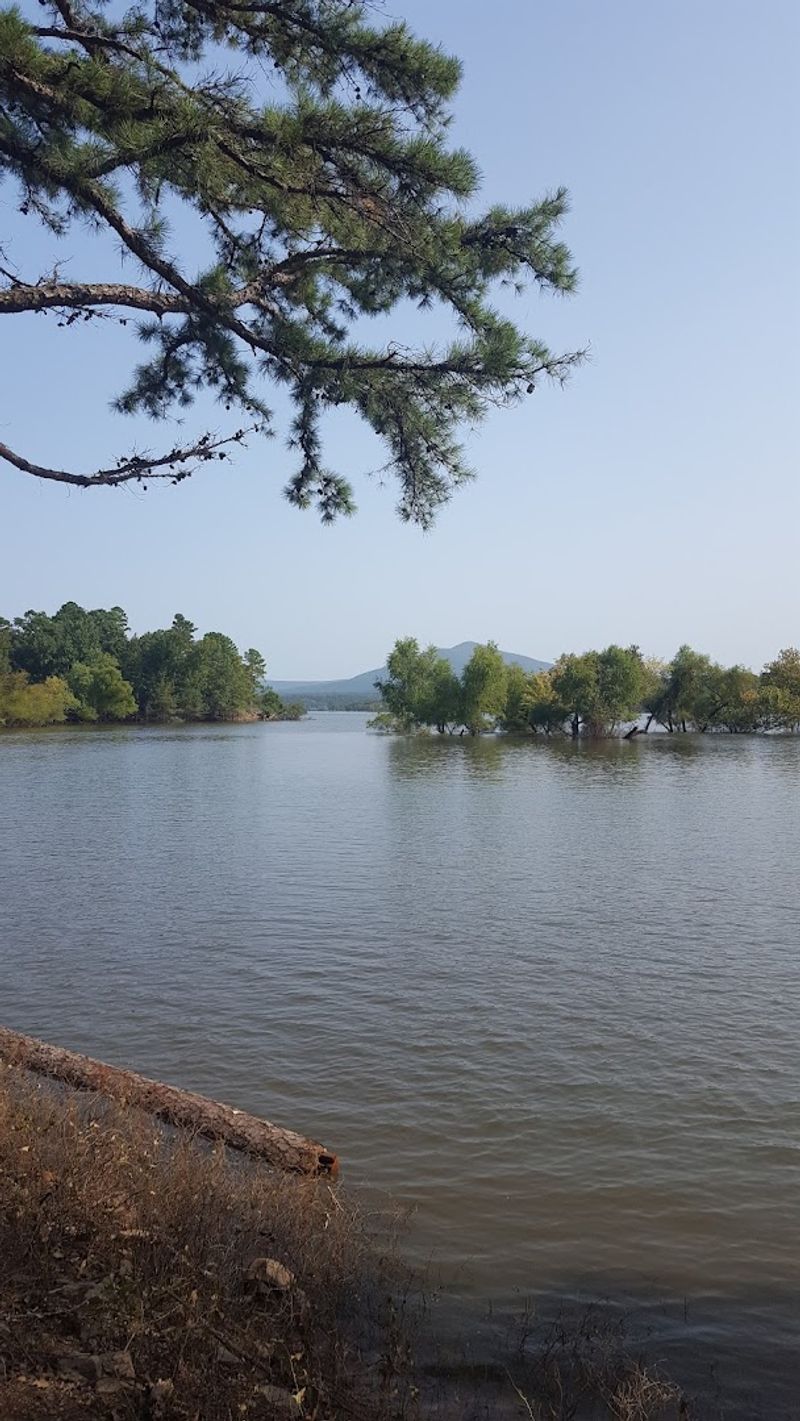
Nobody mentioned that a reservoir in west-central Arkansas could stop me completely in my tracks the moment I rounded the last bend of the access road.
Blue Mountain Lake was completed in 1947 by the U.S. Army Corps of Engineers, originally built to manage flooding along the Petit Jean River, but what it accidentally created was one of the most quietly stunning shoreline experiences in the entire region.
The lake covers approximately 2,890 acres, and with about 55 miles of shoreline, you can spend a full day just exploring the coves and inlets without ever feeling crowded.
Each section of the bank has its own personality, from exposed rocky points to soft sandy patches shaded by overhanging trees that dip their branches toward the water like they are checking their own reflection.
First-time visitors often underestimate how remote and untouched the shoreline feels, even though the campgrounds are clean and well-maintained nearby.
That combination of wild shoreline and comfortable facilities is exactly what makes this place so quietly addictive, and it all starts at Blue Mountain Lake in west-central Arkansas.
Mount Magazine Horizon Framing
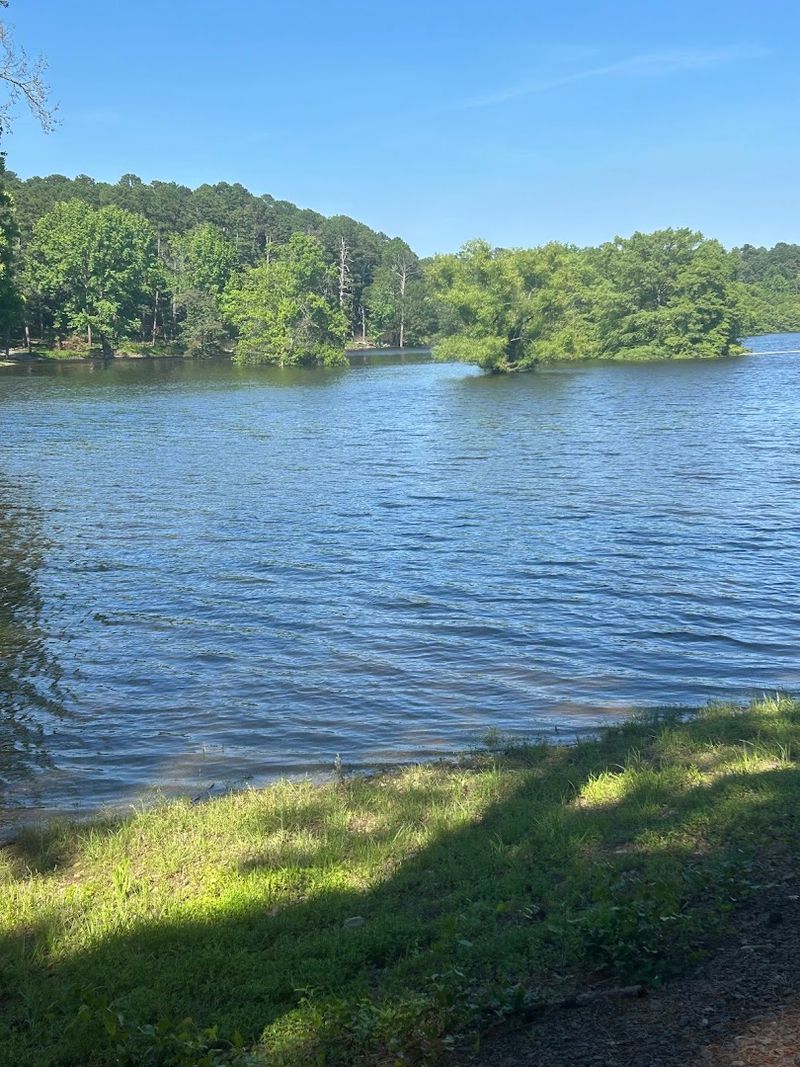
At the water’s edge, the horizon does something remarkable here that I have not experienced at many other lakes in the country.
Mount Magazine rises to 2,753 feet, making it the tallest point in Arkansas, and from certain spots along the Blue Mountain Lake shoreline, the flat-topped ridge fills the skyline in a way that feels almost theatrical.
The mountain sits close enough that you can make out the tree coverage changing with elevation, yet far enough away that the full profile frames itself cleanly above the water line.
Photographers who arrive at this lake without knowing about this view tend to use up half their memory cards before they even set up camp, which I completely understand from personal experience.
The Mount Magazine Scenic Byway along Highway 309 offers a complementary drive that connects the lake vista to the summit experience.
Seeing the peak from the water first and then driving up to stand on top of it later in the same day creates a satisfying sense of scale that very few Arkansas itineraries can match.
Tree Lined Peninsula Silhouette
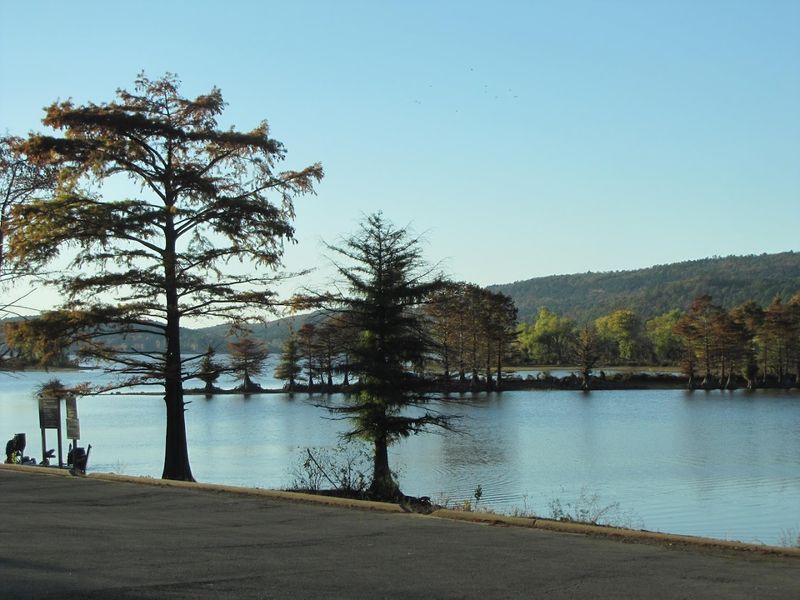
There is a particular moment at this lake, usually about thirty minutes before full dark, when the peninsulas jutting into the water turn into something that looks almost painted.
The hardwood and pine trees that line these land fingers grow dense enough to create a solid wall of canopy, and when the sky behind them shifts into softer colors, the silhouette they cast across the water becomes genuinely striking.
I found one peninsula on the eastern side of the lake where the trees leaned slightly outward over the water, and the reflection below was so crisp and symmetrical that I actually checked twice to make sure I was looking at water and not a mirror.
These peninsulas also serve a practical purpose beyond looking beautiful, because they create natural wind breaks that keep pockets of the lake unusually calm even on breezy afternoons.
Kayakers tend to hug the peninsula edges for exactly this reason, gliding along the quiet side while the open water chops up a little further out.
That interplay between the tree line and the water surface gives Blue Mountain Lake a layered visual quality that rewards anyone patient enough to slow down and actually look.
Calm Water Reflection Patterns
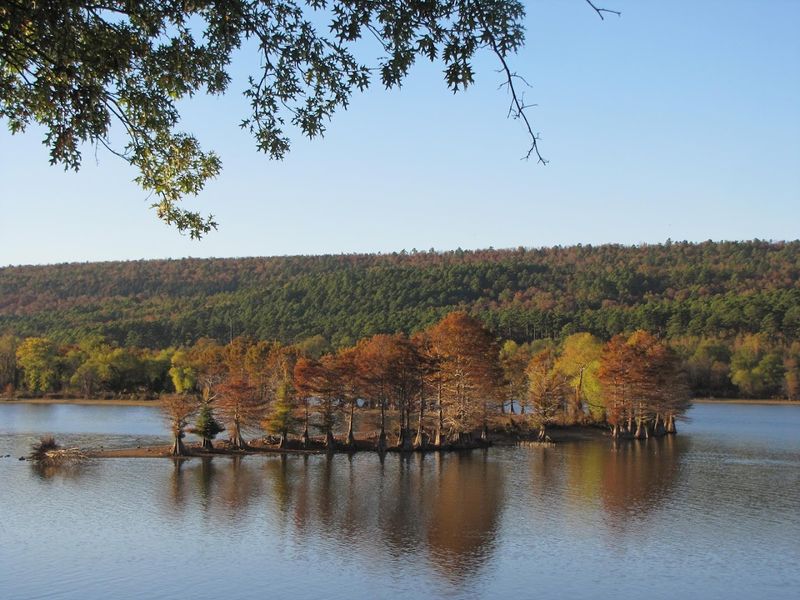
Early mornings at this lake operate on a completely different schedule than the rest of the world, and I say that as someone who does not naturally wake up before sunrise without a strong reason.
By around six in the morning, before any boat traffic begins, the surface of Blue Mountain Lake settles into a near-perfect mirror that doubles every hill, cloud, and treetop into the water below.
The reflection patterns that form during these calm windows are not random, they follow the exact contours of the shoreline and the ridge shapes behind it, creating a second landscape beneath the real one.
On one particular morning I counted three distinct layers in the reflection: the near bank, the mid-distance ridge, and the faint outline of Mount Magazine all stacked on top of each other in the water at my feet.
This kind of visual layering is what makes the lake a favorite among nature photographers who travel specifically to capture still-water reflections in natural settings.
The calm does not last forever once boats launch and the breeze picks up, so arriving early is less of a suggestion and more of a personal rule I now follow every single time.
Golden Hour Ridge Glow
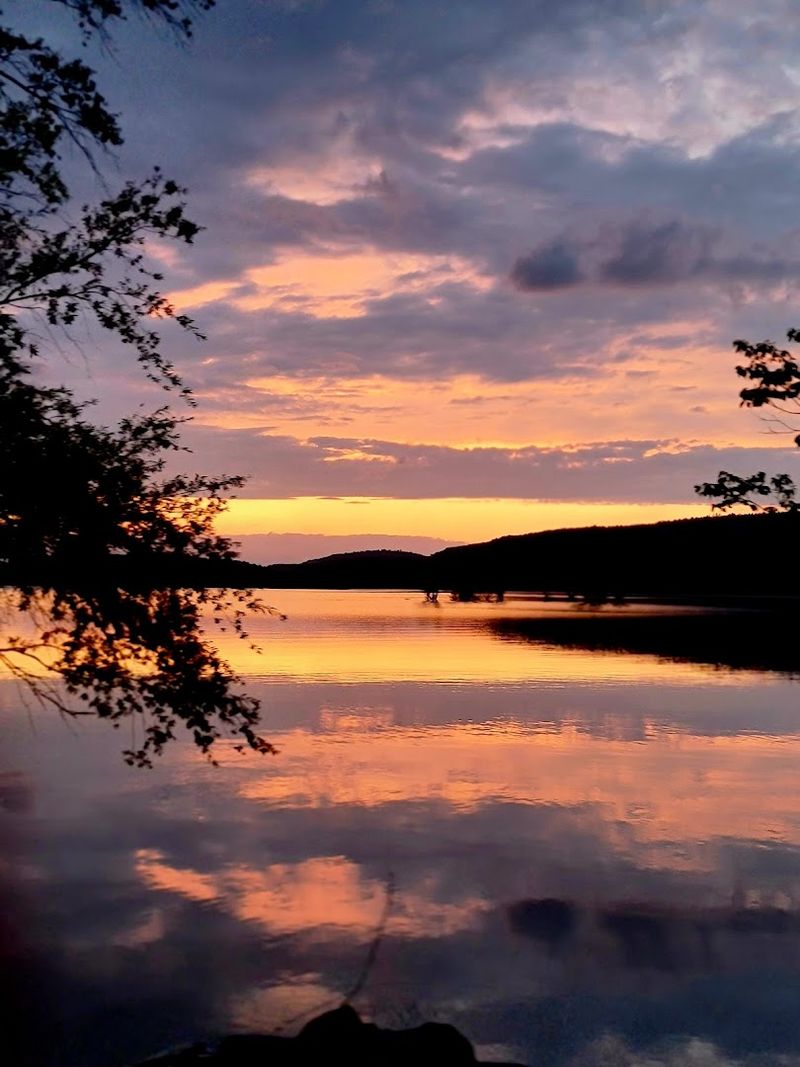
Sunset at this lake does not just happen to the sky; it happens to the entire landscape in a way that builds slowly and then delivers all at once.
The ridgelines surrounding Blue Mountain Lake face west in a way that catches the last hour of daylight at a low angle, turning the upper slopes of the hills into bands of orange and amber that glow against the darkening tree canopy below them.
One evening, I sat near a lakeside picnic area with a clear view across the water and watched the light travel down the hillside in real time as the sun dropped.
Several visitors who had come to the campground purely for fishing ended up standing at the shore with their phones out, completely distracted from whatever they had originally planned for that hour.
The reflection of this ridge glow on the water surface doubles the warmth of the colors and makes the whole scene feel significantly more dramatic than you might expect from a relatively small reservoir.
Regulars at the campground often mention that no two sunsets here look exactly the same, and after visiting multiple times myself, I have absolutely no reason to argue with that.
Seasonal Color Shifts Across Hills
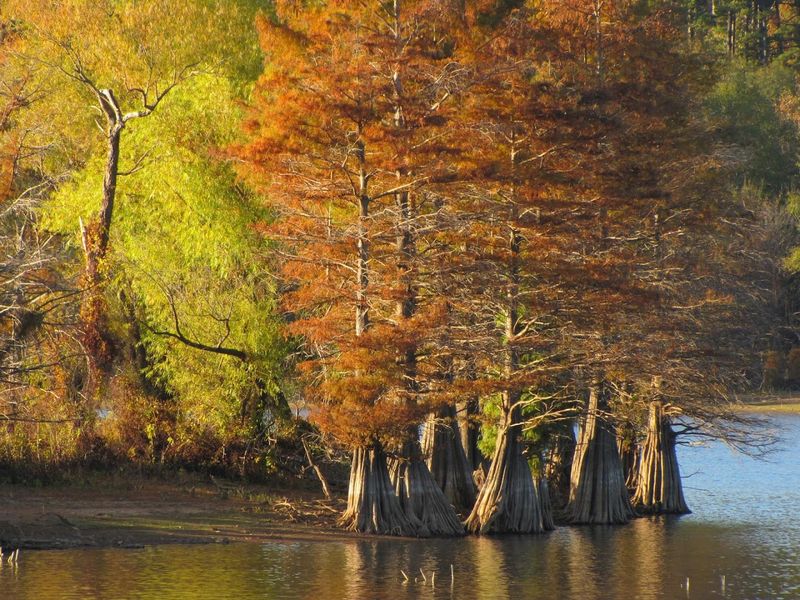
Timing a visit to this lake around the seasonal transitions is one of the smartest moves an outdoor traveler can make in this part of Arkansas.
In autumn, the hardwood forests covering the hills around the lake shift through a full palette of red, orange, and yellow that reflects off the water and creates a color saturation that genuinely surprises people who assumed fall foliage was mainly a northeastern thing.
Spring brings an equally compelling transformation, when the bare hillsides suddenly push out fresh green growth that seems almost electric against the dark water and the gray-brown bark of older trees.
Summer deepens everything into rich, layered greens that feel lush and almost tropical compared to the dry uplands just a few miles away from the lake’s moisture influence.
Winter strips the deciduous trees back to their structure and reveals the actual topography of the hills in a way that the full canopy hides, which gives the landscape a completely different kind of beauty.
Each season essentially hands you a new version of the same place, which is part of why so many visitors I met at the campground had already been there three or four times before.
Secluded Fishing And Kayak Access
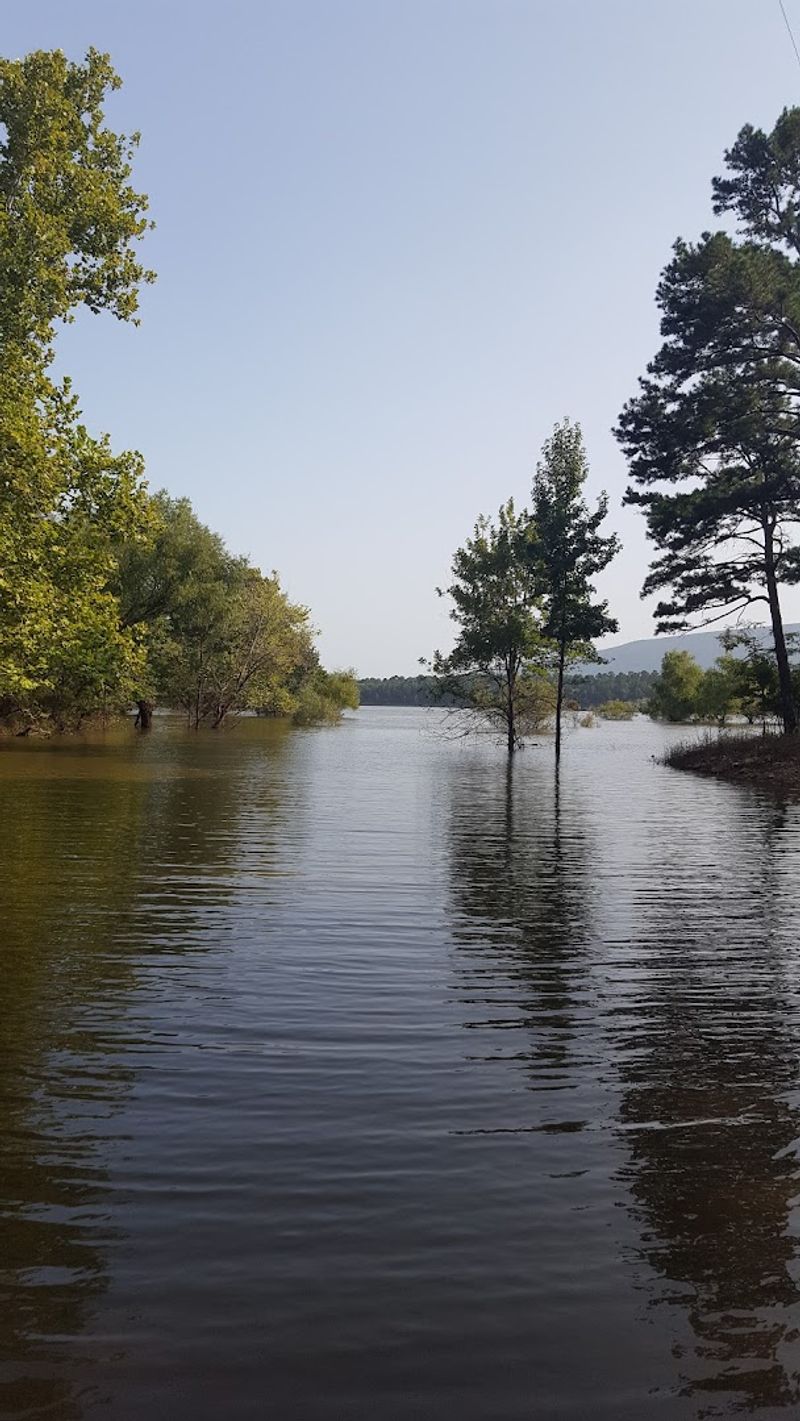
Pulling a kayak off the roof of a car and sliding it into the water here feels like accessing a private world that most people driving Highway 10 never even know exists.
Blue Mountain Lake holds an impressive variety of fish species, including largemouth bass, white bass, crappie, bream, and catfish, which means anglers of almost every preference have a legitimate reason to drop a line here.
The boat launching ramps are well-maintained and accessible, but the real reward for kayakers is the ability to paddle into the narrow coves and shallow backwaters where motorized boats simply cannot follow.
Waveland Park, located just upstream from Blue Mountain Dam, gives paddlers and anglers a convenient launch point with clean facilities and even a fish cleaning station that regulars have specifically praised for being practical and well-kept.
On a weekday morning, it is entirely possible to spend two or three hours on the water without seeing another paddler, which creates a level of solitude that feels increasingly rare at publicly accessible lakes.
The combination of diverse fish populations and quiet, navigable water makes this one of those destinations where both the fishing report and the scenery report come back equally strong.
Wildlife Sightings Along Quiet Banks
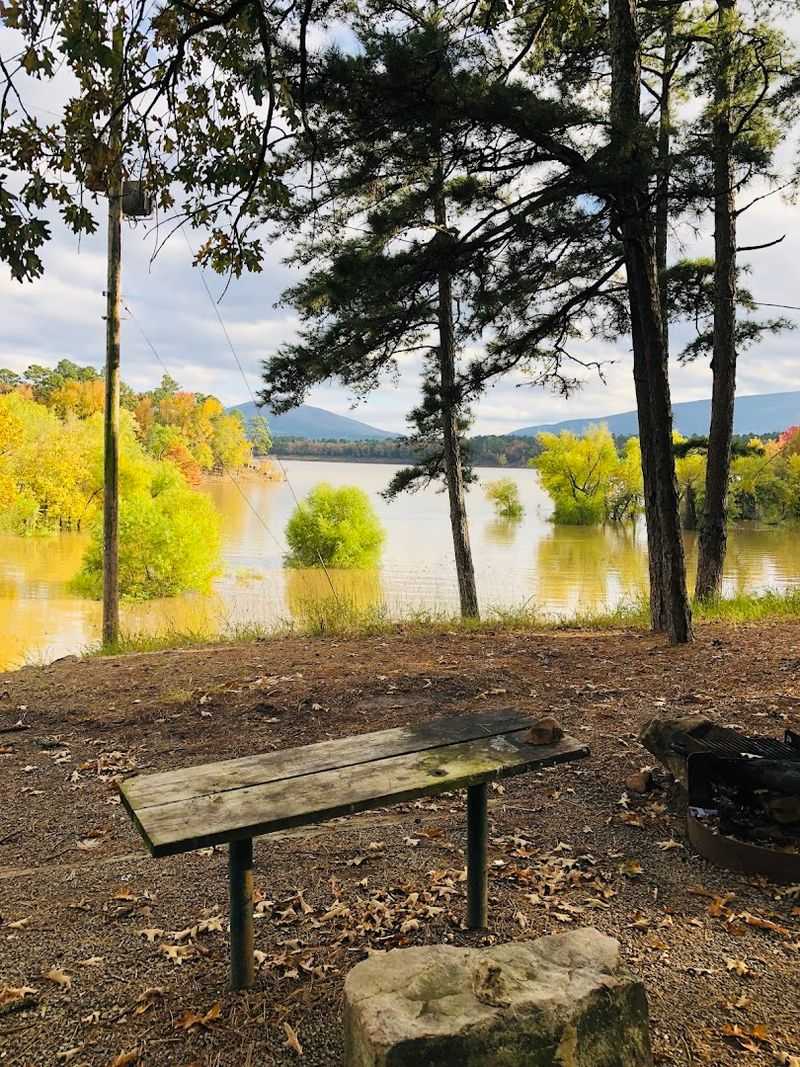
The stillness of this lake seems to lower the guard of the wildlife that lives around it, and I mean that in the best possible way for anyone carrying a pair of binoculars.
The Blue Mountain Wildlife Management Area encompasses 8,200 acres on both sides of the lake, managed by the Arkansas Game and Fish Commission, and that protected land buffer keeps the animal activity along the banks remarkably consistent.
On one early morning paddle, I spotted a great blue heron standing motionless in about six inches of water near a fallen log, so perfectly still that I paddled within twenty feet before it finally decided I was worth noticing.
White-tailed deer regularly appear at the water’s edge during the low-light hours of morning and evening, and the surrounding management area also supports populations of wild turkey, waterfowl, and black bear further back in the woods.
Birdwatchers find the lake particularly productive during spring and fall migration periods, when the water and the surrounding forest edges attract species that are just passing through the region.
The wildlife here does not feel like a bonus feature; it feels woven directly into the fabric of what makes a visit to this lake so consistently memorable and worth repeating.