
This Quiet Corner Of Colorado Lets You Walk Among The Actual Footprints Of Prehistoric Giants
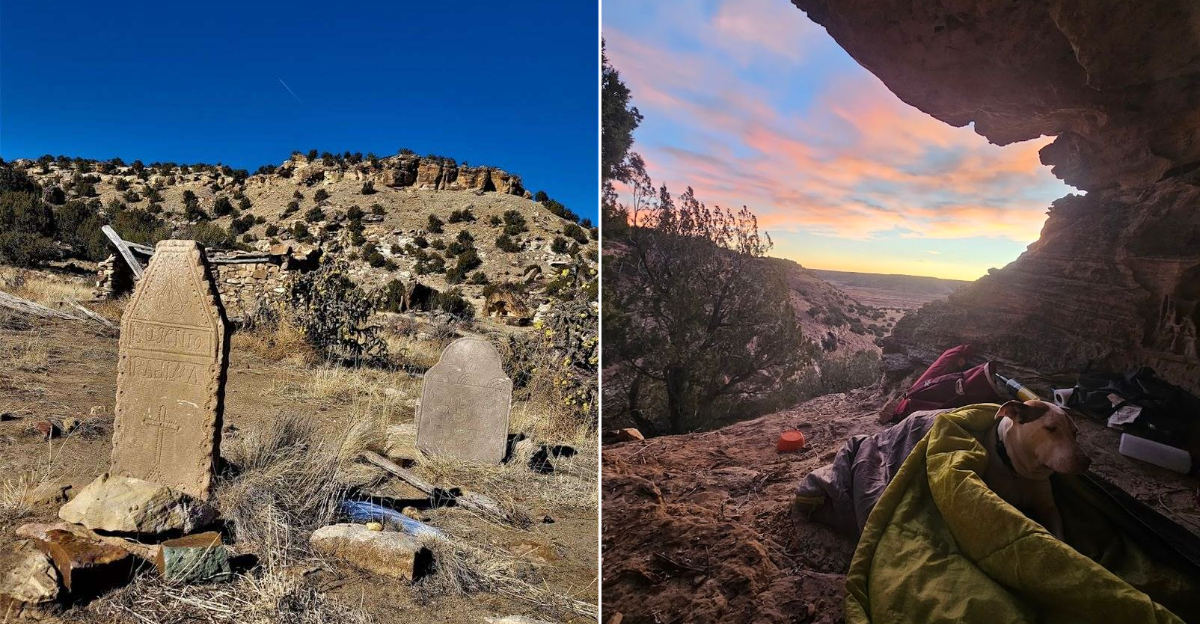
Some adventures ask for a camera, but this one practically begs for a time machine. Hidden in Colorado’s rugged southeastern landscape, this wild escape delivers the kind of jaw-dropping moment that makes you stop mid-hike and just stare.
Pressed into ancient stone are enormous dinosaur footprints, real ones, left behind by creatures that thundered across this ground roughly 150 million years ago. It is not a museum trick or a replica behind glass.
It is the real prehistoric deal, sitting out in open country like Earth decided to leave behind a giant autograph. The hike itself only adds to the thrill, weaving together dramatic rock formations, deep geologic storylines, traces of human history, and that glorious middle-of-nowhere feeling that makes everything seem bigger.
Out in Colorado, adventures usually come with big scenery, but this one adds something even better: the chance to walk where giants once walked and feel, for a few unforgettable steps, like the past is still alive beneath your boots.
The Trailhead That Starts It All: Withers Canyon Access Point
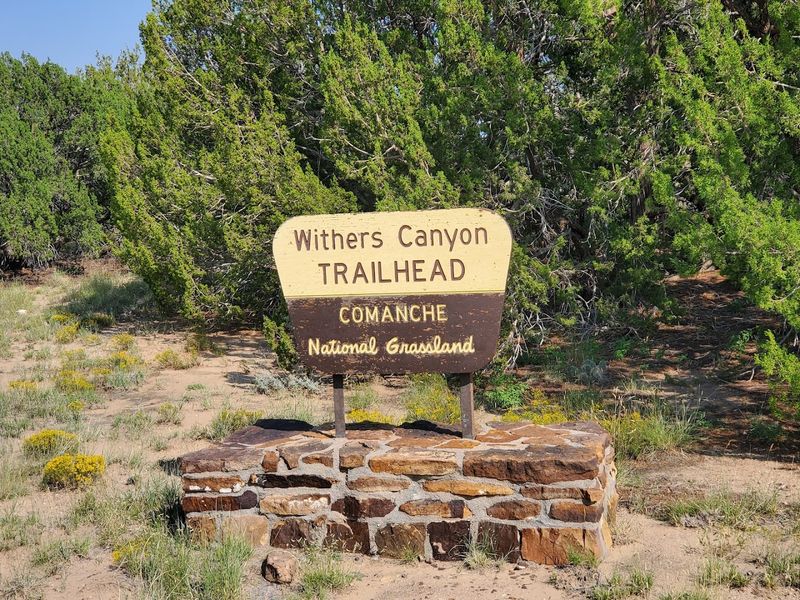
Most great adventures begin with a parking lot and a sign that quietly dares you to keep going. The Withers Canyon Trailhead, located near La Junta, Colorado 81050, is exactly that kind of place.
There is no fanfare, no gift shop, no admission booth. Just a modest trailhead that opens a door into one of the most geologically dramatic landscapes in Colorado.
The trail is open Monday through Friday, 8 AM to 4:30 PM, and remains closed on weekends. That schedule alone keeps the crowds thin and the experience genuinely peaceful.
Plan your visit on a weekday and you may have miles of canyon trail practically to yourself.
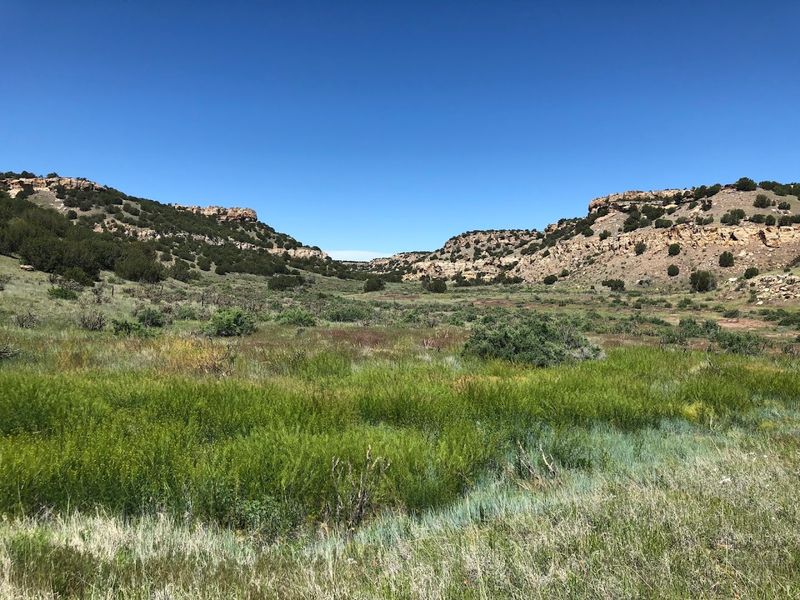
The initial descent into the canyon is steep enough to signal that something serious is waiting below. Once you drop into the canyon floor, the trail levels out and stretches ahead for miles of wide-open high-desert terrain.
A small campground near the trailhead offers four free sites with firepits, vault toilets, and no water hookups.
Pro Tip: Arrive right at 8 AM to maximize cool morning hours on the trail. The canyon offers almost no shade, and temperatures can climb fast even on mild days.
The Dinosaur Trackway: A Prehistoric Record Written in Stone
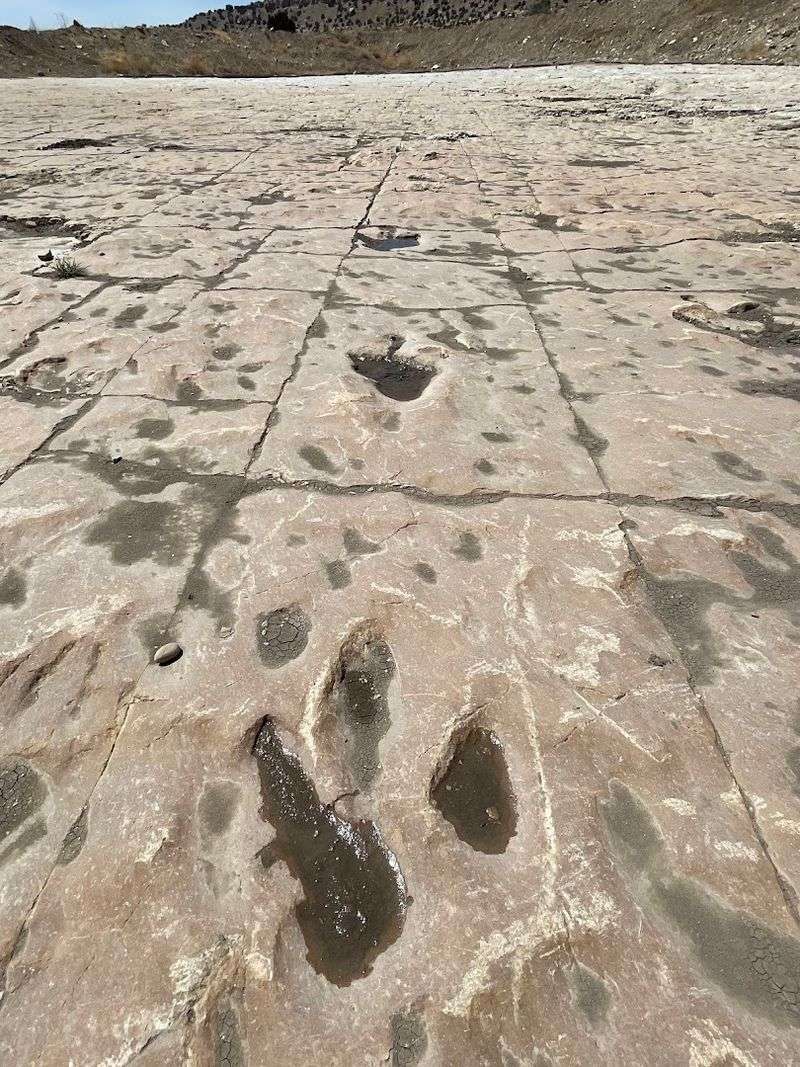
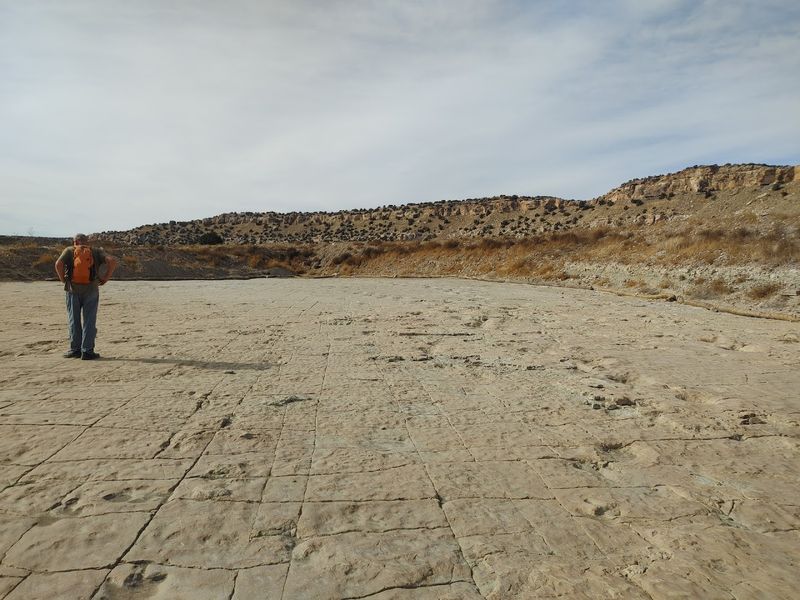
There is a specific kind of silence that settles over you when you realize what you are actually looking at. The dinosaur trackway at Picket Wire Canyonlands stretches for nearly a quarter mile along the banks of the Purgatoire River and contains over 1,300 individual tracks left by at least two species of dinosaurs, including the massive Brachiosaurus and the predatory Allosaurus.
These are not replicas. Nobody cast them in fiberglass or roped them off behind museum glass.
They are the original impressions, pressed into the Morrison Formation mudflat roughly 150 million years ago and slowly revealed by erosion over time. Standing next to a single Brachiosaurus print, which can measure over three feet across, puts the scale of these animals into an entirely different category than any documentary ever could.
Part of the trackway sits on the opposite bank of the Purgatoire River. Spring flooding can make that section inaccessible, so visiting in late summer or fall gives you the best chance of seeing the full site without wet boots.
Why It Matters: This is officially recognized as the longest known dinosaur trackway in North America, making it a genuinely world-class natural landmark hiding in plain sight in southeastern Colorado.
The Long Walk In: What 11.5 Miles Actually Feels Like
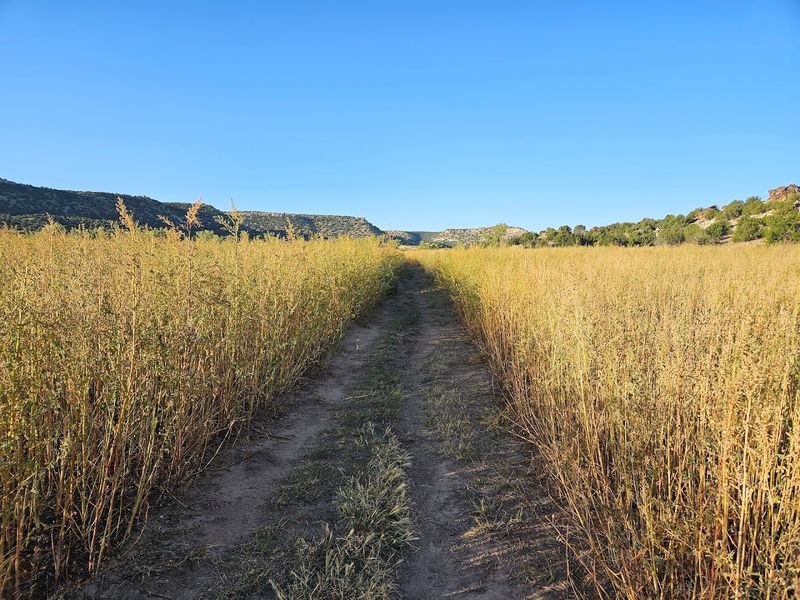
Eleven and a half miles round trip sounds intimidating until you realize that approximately 95 percent of the trail is completely flat. The Purgatoire River canyon floor is wide, well-maintained, and even mowed along the edges to keep thorny vegetation off your legs.
The Forest Service has done a genuinely thoughtful job keeping this trail walkable for a broad range of fitness levels.
The real challenge is not the terrain. It is the sun.
There is almost no shade from the moment you leave the canyon rim until you return to it. Visitors consistently report that six quarts of water for two people is the absolute minimum for a summer or warm-weather trip.
Signs at the trailhead are direct about the heat risk, and the warnings should be taken seriously.
Starting at sunrise is the single most effective strategy for a comfortable experience. The early morning light also transforms the canyon walls into something that looks like a painter went a little overboard with the earth tones.
Plan for eight hours total if you intend to reach the trackway and spend meaningful time there.
Best Strategy: Pack more water than you think you need, start at first light, and build in at least 30 minutes at the trackway itself rather than rushing the turnaround.
History Layered Into Every Mile: Ruins, Petroglyphs, and the Dolores Mission
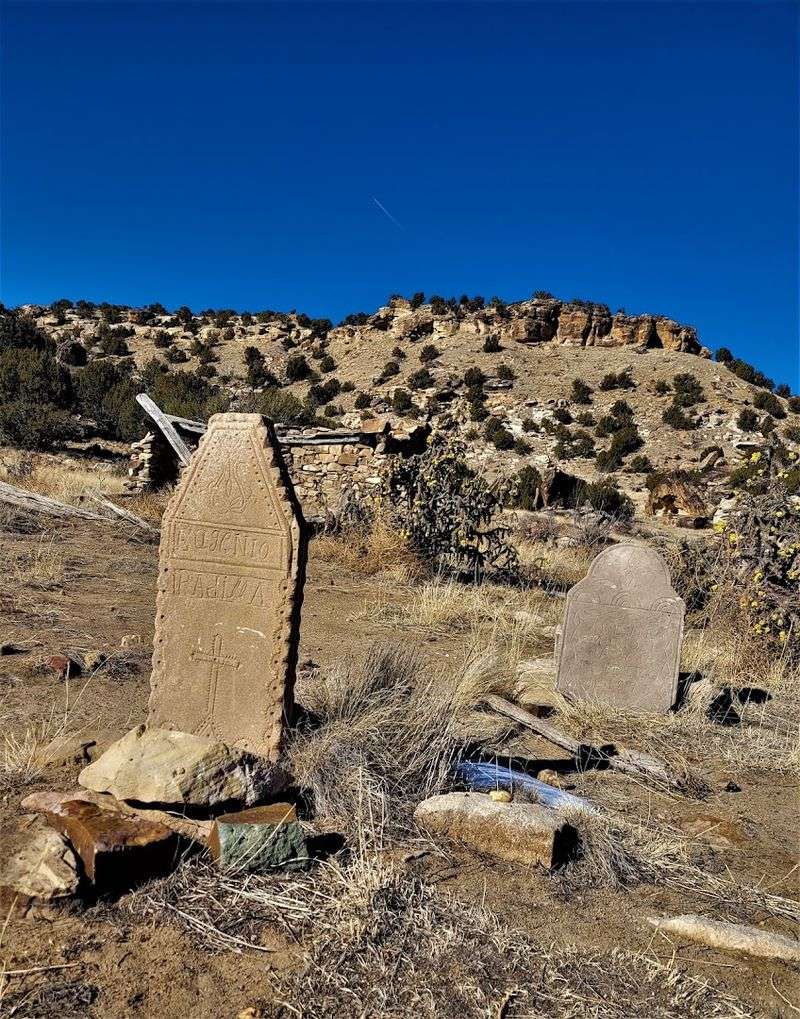
The dinosaur tracks get the headline billing, but the trail to reach them is essentially a living history museum with no entrance fee and no audio guide. Along the way, hikers pass the ruins of the historic Dolores Mission, a Spanish colonial-era site that adds a layer of human story to a landscape already thick with geological drama.
Further along, the Rourke Ranch ruins appear as a reminder that people once tried to make a permanent life in this remote canyon. Scattered petroglyphs carved into canyon walls by Indigenous peoples add yet another chapter to a place where time seems to compress rather than pass.
Visitors on guided tours have noted stops at the mission, a small natural arch, the ranch ruins, and the petroglyphs before even reaching the trackway.
Keeping your eyes open on the trail pays off in other ways too. Roadrunners dart across the path.
Tarantulas appear with surprising frequency, especially in the fall during what locals call the tarantula migration. Mountain lion prints have been spotted on the trail, a reminder that this canyon is genuinely wild country.
Insider Tip: Guided tours offered through the Comanche National Grassland provide access to all historical stops with expert interpretation, a worthwhile option for first-time visitors.
Camping Under Stars With Zero Light Pollution
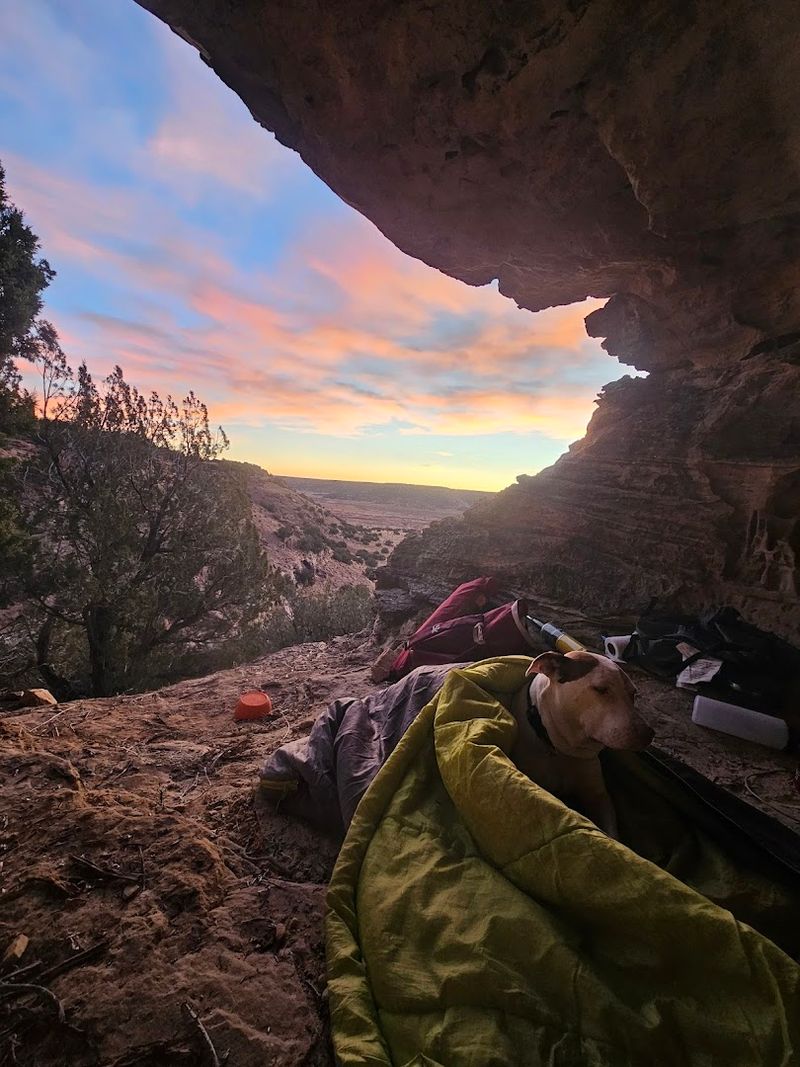
Four campsites sit right at the trailhead, and they are free. That combination alone makes this one of the more underrated camping spots in the state.
Each site comes with a firepit and grill, and the vault toilet on-site has earned genuinely enthusiastic praise from visitors, which says something about how well the Forest Service maintains this location.
There is no water, no trash service, and essentially no cell signal. For people who consider those features rather than drawbacks, the campground delivers something rare: genuine solitude within driving distance of civilization.
Visitors who camped in July reported going two full nights with only one other party nearby, and sometimes none at all.
The night sky here is extraordinary. With no nearby city glow to compete with, the Milky Way appears overhead with the kind of clarity that makes you feel slightly embarrassed about how long you went without seeing it properly.
Coyotes call from somewhere upstream and the canyon walls bounce the sound around in ways that make the darkness feel alive rather than empty.
Who This Is For: Campers who want a free, maintained, genuinely remote site with trail access from the tent door and a sky that justifies the drive from anywhere in Colorado.
Wildlife, Tarantulas, and the Canyon’s Surprising Cast of Characters
Nobody expects tarantulas to be a highlight of a hiking trip, and yet here we are. The area around Picket Wire Canyonlands experiences a notable tarantula migration each fall, typically in September and October, when male tarantulas wander in search of mates.
One camping group reported seeing 28 tarantulas on the drive in from the highway alone, plus a campsite companion that spent two hours by the fire before retreating to its burrow.
For the record, these are docile, slow-moving creatures that pose no meaningful threat to people. One visitor described a tarantula crawling onto their hand and sitting quietly near the campfire warmth before moving on.
It is the kind of wildlife interaction that sounds alarming in a text message and becomes a great story by the time you get home.
Beyond the tarantulas, the canyon hosts roadrunners, herons wading in the shallows of the Purgatoire River, and a healthy bird population along the bluffs. Mountain lion prints have been spotted on the main trail, which is worth knowing before you set out.
The wildlife here is not a background detail; it is an active part of the experience.
Best For: Nature lovers, curious families, and anyone who wants a wildlife encounter that goes well beyond the typical deer-by-the-highway sighting.
Final Verdict: Why This Hidden Canyon Belongs on Your Colorado List
Picket Wire Canyonlands via Withers Canyon Trailhead is the kind of place that rewards people who do a little homework and show up prepared. The combination of the largest dinosaur trackway in North America, genuine human history, dramatic canyon geology, free camping, and remarkable wildlife density makes this one of the most content-rich hiking destinations in the entire state of Colorado.
The trail demands respect. Heat management is the primary concern, and the distance is real.
But the terrain is flat and well-maintained, making the hike achievable for reasonably fit adults and older children who can handle a full day on their feet. Visiting in September or October offers cooler temperatures, the tarantula migration, and beautiful fall light on the canyon walls.
La Junta sits roughly two and a half hours southeast of Colorado Springs, making this a viable weekend destination rather than a casual afternoon detour. The drive itself passes through open grassland with the kind of wide-sky emptiness that recalibrates your sense of scale before you even arrive.
Key Takeaways: Start early, bring more water than seems reasonable, plan for a full day, visit on a weekday, and do not skip the historical stops along the trail. The footprints at the end are worth every step.