
This Quiet Michigan Byway Follows A Forested River Through Spectacular Fall Color
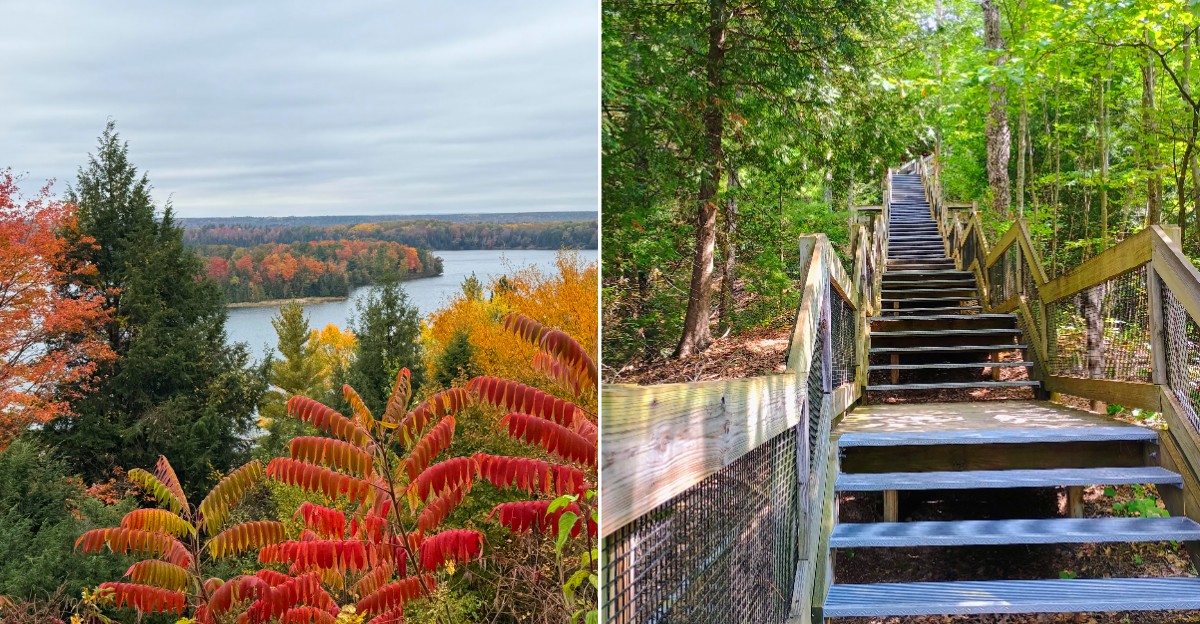
Twenty-two miles doesn’t sound like much of a road trip. In Michigan, though, that distance can easily swallow an entire afternoon when every bend in the road offers another excuse to pull over.
I have a weakness for scenic drives that refuse to be rushed, especially when autumn turns the forest into a patchwork of gold, orange, and evergreen.
Along the Au Sable River, wooded roads lead to sweeping overlooks where the valley stretches out below, and the scenery looks almost too carefully arranged to be real.
Michigan’s River Road National Scenic Byway offers 22 miles of spectacular fall foliage, forested landscapes, historic landmarks, and breathtaking views of the Au Sable River near Oscoda.
There’s history here, too, including a monument to the region’s logging past and a long staircase that rewards curious travelers with another perspective.
Bring comfortable shoes and forget the stopwatch. The best part of this drive is discovering how often you’ll want to stop.
A Short Road With A Long View
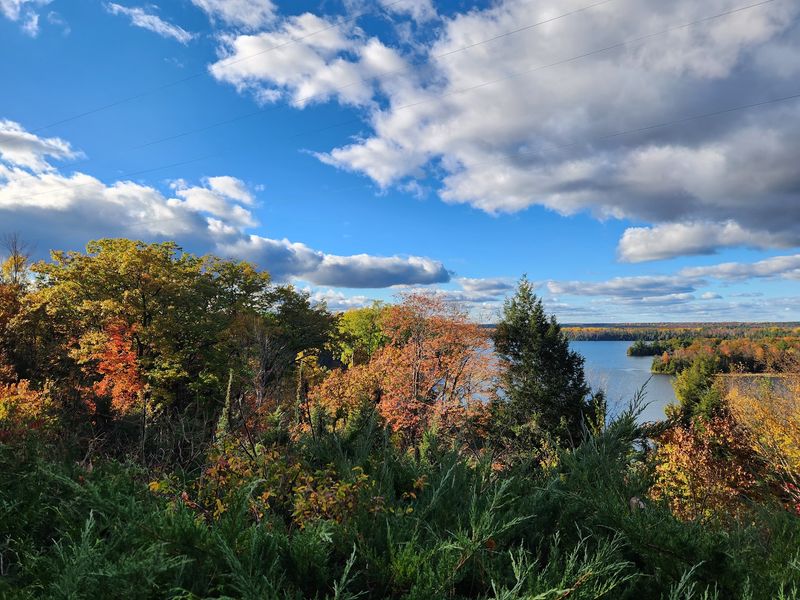
The River Road National Scenic Byway crosses more than twenty miles of forest beside the Au Sable River west of Oscoda, Michigan. Enter the route from U.S. Highway 23 in Oscoda or from Michigan Highway 65 farther inland.
Lumberman’s Monument at 4551 River Road offers an easy reference stop along the byway, marked by three large bronze lumbermen above the river valley. The roadside overlooks and forest turnouts are spaced along the drive rather than at a single destination.
Use the monument’s designated visitor area if stopping there and follow River Road in either direction for additional overlooks. Stay on signed public roads and use marked pull-offs, especially during busy fall-color weekends.
Begin Above The River
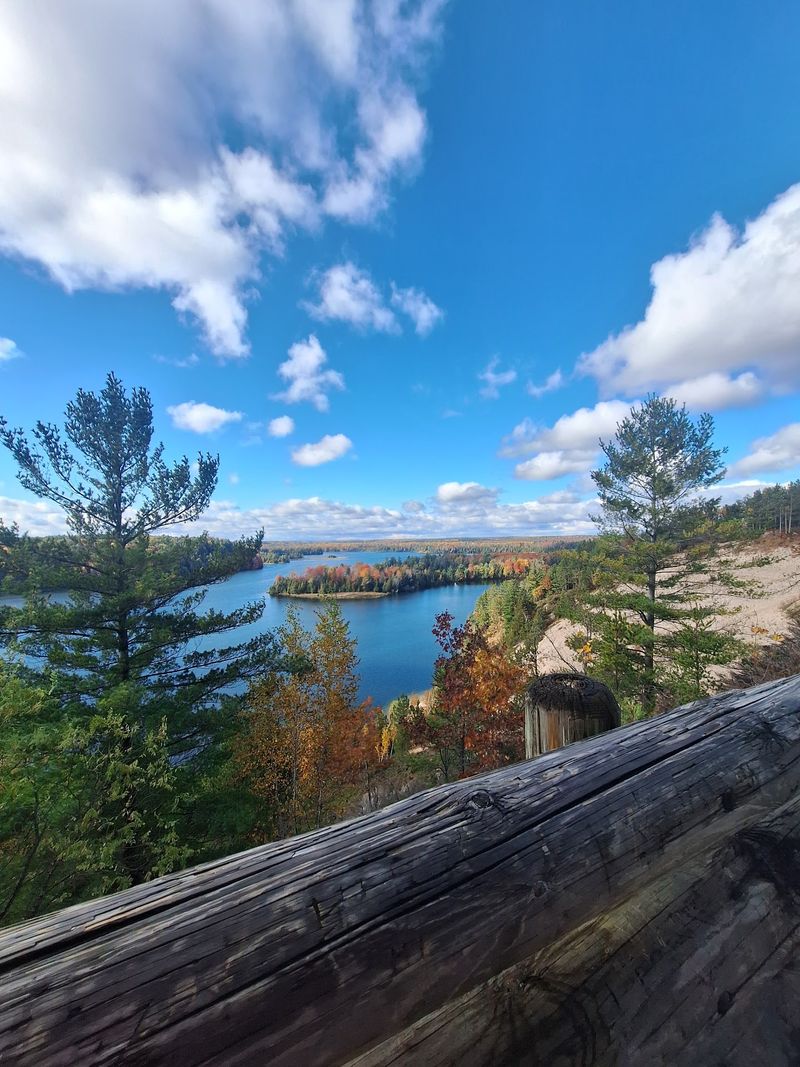
Before tackling a trail, give the upper overlook at Lumberman’s Monument your attention. From this high bank, Cooke Dam Pond spreads below wooded slopes, offering a clear introduction to the river valley and its generous sense of space.
Use the monument as your arrival point, then get your bearings before heading farther along River Road. Check the Forest Service listing for current directions, seasonal visitor center hours, and any site notices.
The view from above is a worthwhile stop on its own, especially if stairs are not part of your day. Keep everyone behind protective barriers, and resist edging closer for a photograph. There is plenty to see without asking the bluff to become an adventure of the wrong kind.
Autumn Keeps Its Own Calendar
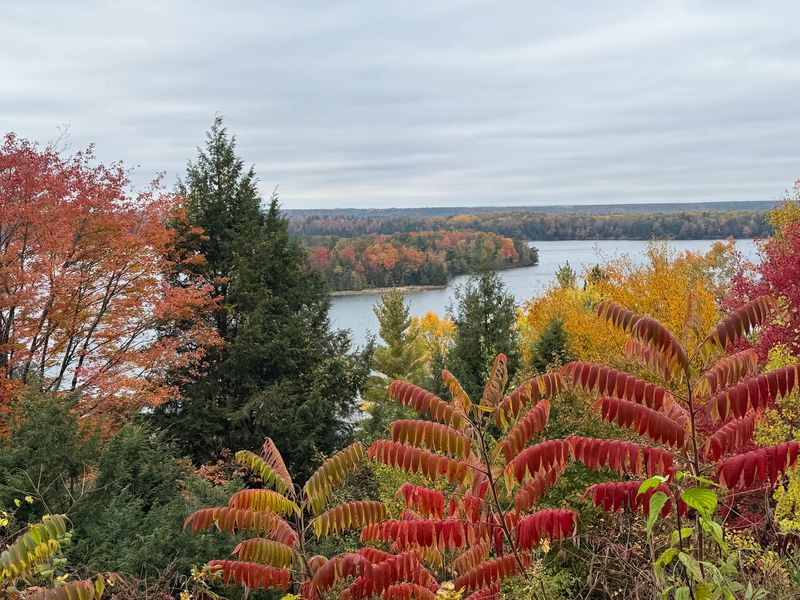
Gold does not arrive here by appointment. Late September through mid-October is a useful planning window for fall foliage, but weather can shift both the timing and the strength of the display.
Check recent local foliage updates before choosing a date, especially if your trip depends on bright leaves. A calendar gives you a starting point, not a promise.
The mix of hardwoods and evergreen pines helps the landscape hold its interest through different stages of autumn. Green branches give the brighter patches some contrast, while fallen leaves add color along the paths. Pack a warm layer even when the forecast looks friendly. An exposed overlook can feel quite different from the sheltered parking area where you first stepped outside.
Three Figures Tell A Tougher Story
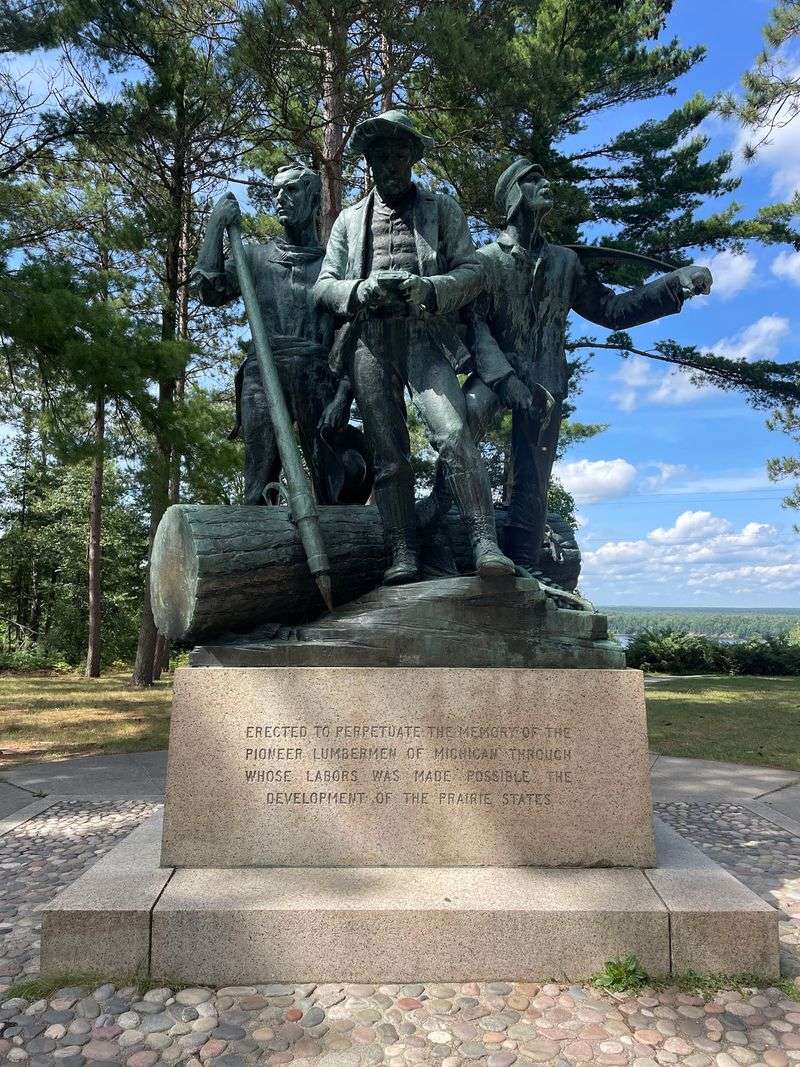
Three bronze workers bring a human scale to all that forest. Dedicated in 1932, Lumberman’s Monument was created by sculptor Robert Ingersoll Aitken and honors the people who worked in Michigan’s lumber industry.
The figures represent a timber cruiser, a sawyer, and a log driver. Their different jobs help explain how standing trees became timber moving toward distant markets.
Spend a few minutes with the interpretive signs rather than treating the sculpture as background for a photograph. The river below once carried white pine logs, so the view and the memorial belong to the same story. What looks peaceful today was also a workplace, and a dangerous one. That contrast gives this stop more weight than its lovely setting first suggests.
Count The Climb Before Going Down
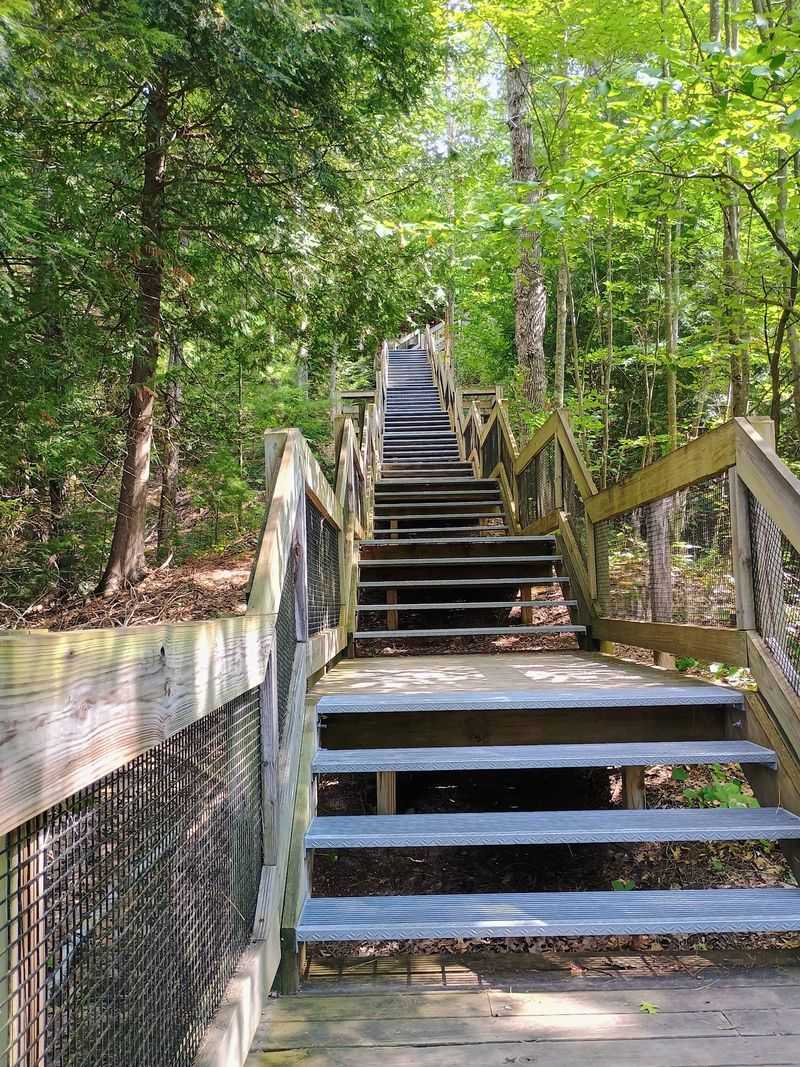
The staircase offers a simple bargain: a closer river view now, a climb later. At Lumberman’s Monument, 272 steps lead down toward the water, changing the valley from a broad scene into something much more immediate.
Decide whether the return trip suits everyone before starting. This is not a step-free route, and the uphill half deserves more thought than the downhill enthusiasm usually allows.
Wear shoes with dependable grip, carry water, and take your time around fallen leaves or wet wood. Pause at landings without blocking others. Staying above is a perfectly good choice, too. The upper overlook delivers the landscape without the stair workout, and nobody needs to earn a beautiful view by arriving back at the car thoroughly exhausted.
A Floating Kitchen Explains The River
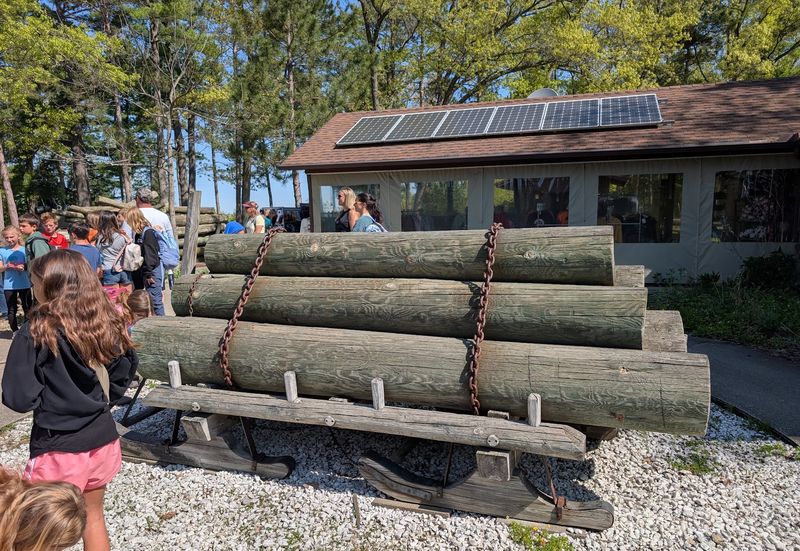
A kitchen may be the last thing you expect to find in a logging story. Near the foot of the monument stairs, a replica wanigan shows how meals traveled with crews working along the river.
These floating kitchens supported workers during log drives, when timber moved downstream and hungry people needed feeding along the way. It is a practical detail that makes a large industry easier to picture.
Read the nearby interpretation before climbing back up. Suddenly, the river is more than scenery: it is a transport route, a workplace, and part of the camp’s daily routine. Check current access notices before planning your descent around this exhibit, since conditions and maintenance can affect what is available during any particular visit.
Walk Beneath The Color
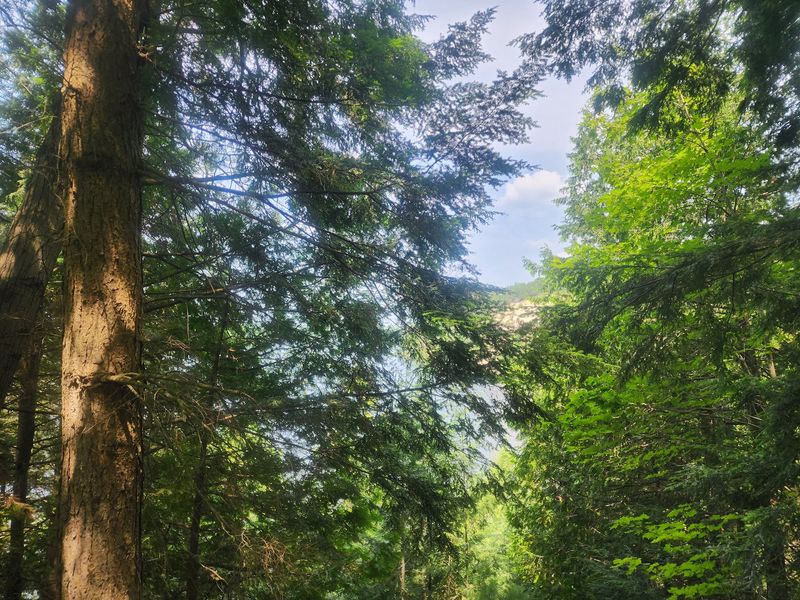
Leaves overhead create a different kind of show from leaves across a valley. Around Lumberman’s Monument, the Forest Discovery Trail offers a shorter way to explore the woods, with interpretation about the landscape and its history.
For a longer outing, the Highbanks Trail connects with the monument area and follows stretches of forest above the river. Choose your distance before setting off, rather than assuming every path makes a convenient loop.
Download a current trail map, carry water, and leave enough daylight for the return. Fallen leaves can hide roots and make trail edges less obvious. A slow pace has its rewards here: bark patterns, pine needles, and small changes in light are easier to notice when your boots stop setting deadlines.
The River Changes Shape
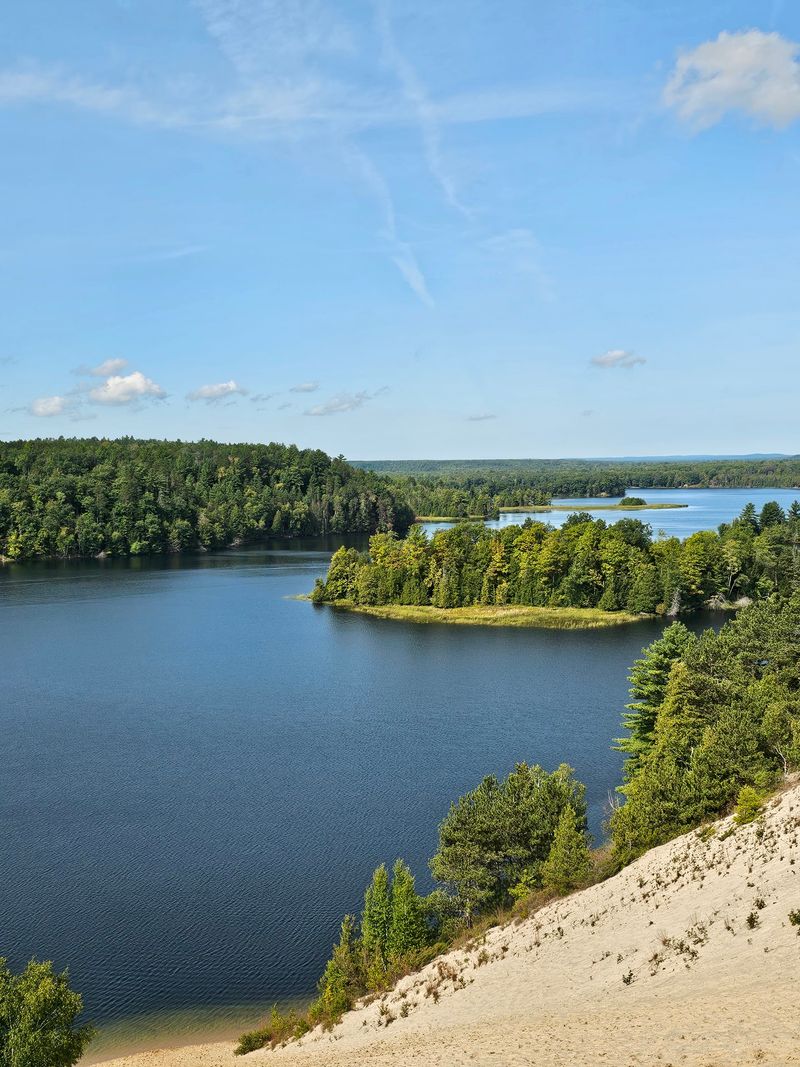
Broad water can fool the eye into expecting a lake. Around Lumberman’s Monument, the Au Sable widens into Cooke Dam Pond, a reminder that dams have helped shape parts of the river seen along this drive.
That wider surface gives autumn color another role. On calm days, reflections may stretch the wooded banks into the water; when wind picks up, the scene becomes more textured and less tidy.
Watch for those changes instead of judging the outing by one ideal photograph. A cloudy afternoon can soften harsh contrasts, while sunlight may pick out a single slope. Use established overlooks for pictures, keep your feet on firm ground, and let the river decide whether it feels like being a mirror that day.
Quiet Comes From Leaving Room
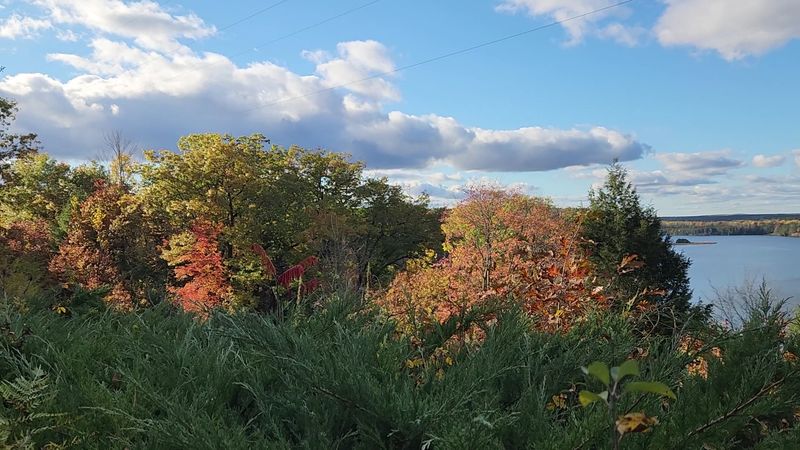
A quiet drive works better without a crowded schedule. River Road has enough overlooks and walking options to fill a day, but trying to collect every stop can turn a restful outing into a small administrative job.
Build in a picnic break at an established recreation area, and bring drinking water rather than counting on every seasonal facility being open. Pack out food scraps and other trash.
Leave space between your plans so an interesting exhibit or a patch of sunlight can hold your attention. Quiet is not guaranteed, especially during popular foliage weekends, but patience helps. Keep music low, share viewpoints, and let other visitors have their turn at the railing. The forest does not need everyone’s soundtrack playing at once.
Save Daylight For The Last Look
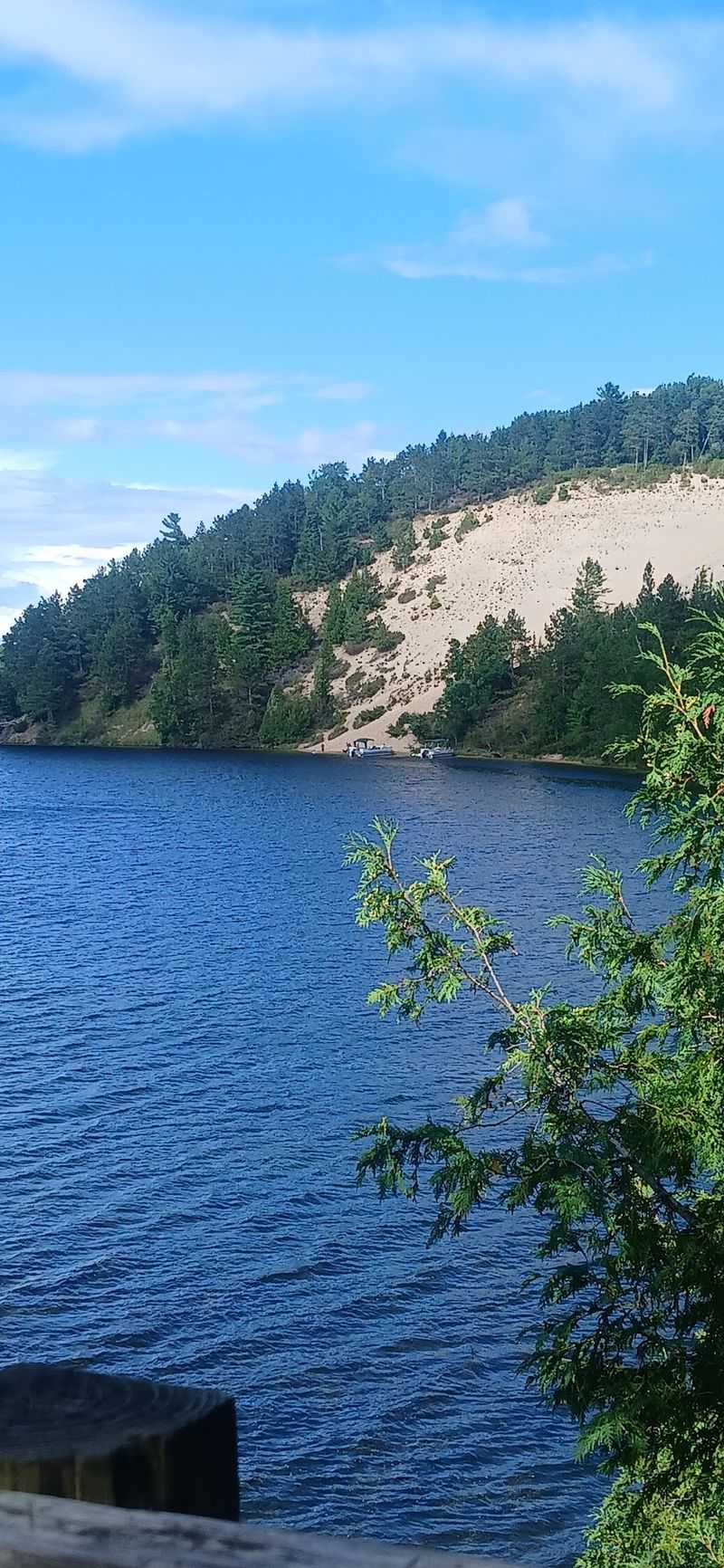
Late light can give the valley a softer finish, but it also shortens your margin for wandering. If you hope to linger near sunset, complete longer walks first and know the route back to your vehicle.
Before leaving home, check Forest Service notices for closures, trail conditions, and seasonal services. Download directions while you have a reliable connection, and bring a small flashlight if your plans approach dusk.
Keep the final stop simple: an established overlook, a warm layer, and enough time to stand still. There is no need to chase every last bright leaf. A thoughtful visit to this byway ends with attention, not mileage, and the river valley offers plenty to remember after the colors have slipped into evening shadow.
Bring Binoculars For The Quiet Moments

A patch of open water can hold your attention longer than another bend in the road. Around Foote Pond, the wider river offers places to watch for waterbirds, with bright shoreline trees adding a colorful backdrop.
Bring binoculars rather than trying to move closer to anything you spot. Bald eagles occur along the Au Sable, but sightings are never promised.
Use designated viewing areas, keep voices low, and leave birds plenty of space. Even when nothing dramatic appears, watching ripples and scanning bare branches gives everyone a pleasant reason to slow down before returning to the drive through the autumn woods.
Pack Lunch Before The Trees Take Over
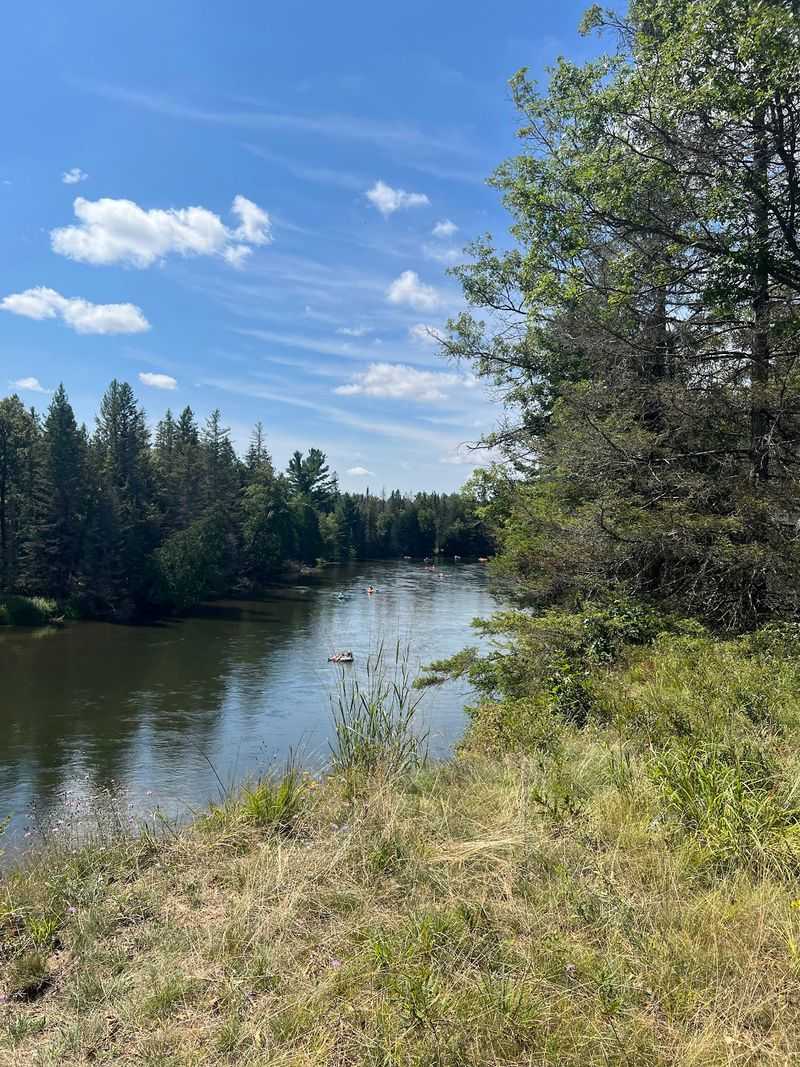
Lunch tastes better when nobody has to turn around to find it. Pick up sandwiches, fruit, and drinking water before leaving Oscoda or another nearby town, since food stops are limited along the forested route.
Choose an established picnic area instead of stopping on a narrow shoulder. Check posted rules and seasonal notices, and bring a bag for every scrap, including apple cores.
A thermos of something warm helps when river breezes feel sharper than expected. Keep your meal simple, give other visitors room, and leave the table clean so the next travelers can enjoy their own break beneath the leaves.
Let The Pines Frame The Color
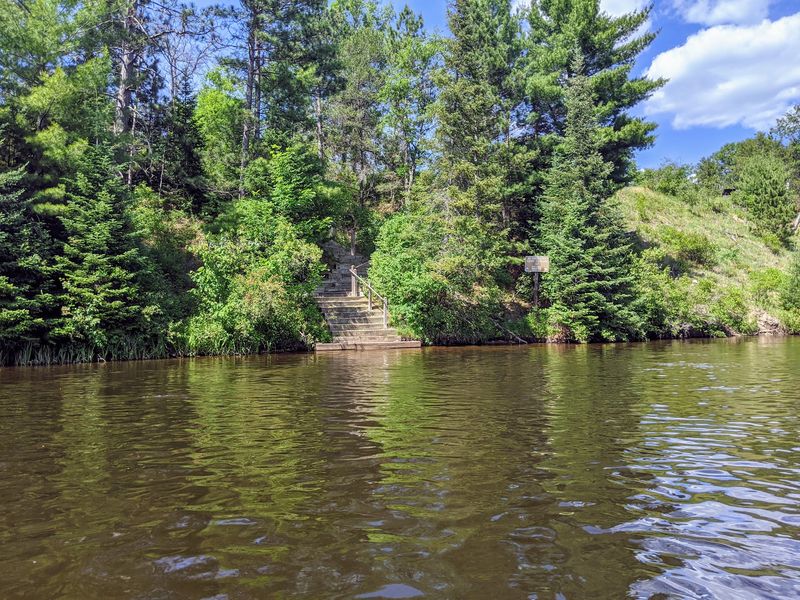
Not every tree needs to turn orange to make autumn shine. The pines along River Road stay green, setting off the yellows and reds of nearby hardwoods and giving the forest a layered look.
For photographs, try framing a bright hillside between darker evergreen branches. Cloudy skies can soften harsh shadows, while a sheltered river bend may offer reflections when the water settles.
Take pictures from safe, designated stops, never from the travel lane. Look behind you before stepping backward for a wider shot. Sometimes the strongest picture includes fewer trees, a little water, and one clear splash of fall color.