
This Quiet Mississippi Town Has Been Keeping A Low Profile, But It’s Finally Stepping Into The Spotlight
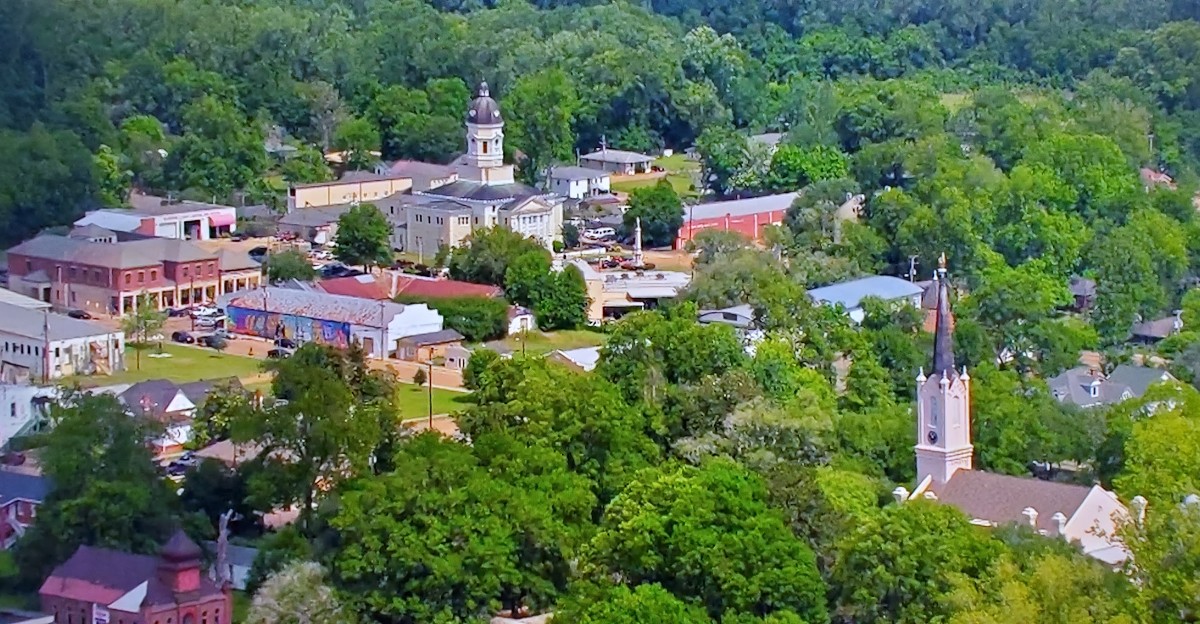
A golden hand sits on top of a church steeple here, pointing straight at the sky. I can’t imagine a better way for a town to say, look up.
The welcome sign quotes a famous general who supposedly found the place too beautiful to burn. Down the road, 23 giant columns stand in a field with no house attached.
I like how this town keeps its biggest stories in plain sight.
The chandeliers in one church came off a steamboat. The oldest synagogue in Mississippi wears a Russian-style dome.
Honestly, every street corner seems to have a plot twist waiting.
For years, this little town stayed quiet while bigger names grabbed the headlines. Now new trails, fresh signs, and restored landmarks are pulling people off the highway.
A Town Sign With A Legend You Will Want To Read Twice
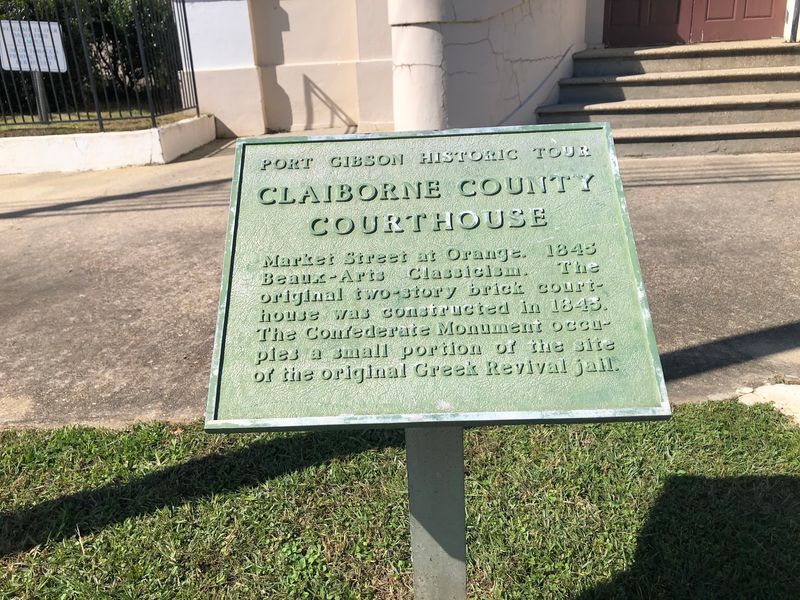
Most welcome signs just say hello. The one in Port Gibson repeats a legend that General Ulysses S.
Grant called the town too beautiful to burn.
That line traces back to the Civil War. In 1863, Grant’s army moved through during the Vicksburg Campaign, and the town was spared destruction.
Whether Grant truly said those words is part of the fun. Legends tend to grow, but the preserved streets give the story real weight.
Port Gibson also has deep roots in Mississippi. It’s the third-oldest European-American settlement in the state, with French colonists arriving in 1729.
The town was officially chartered on March 12, 1803. That makes it older than Mississippi’s statehood, which is a fun fact to drop on a road trip.
Today it serves as the county seat of Claiborne County. Around 1,269 people lived here as of the 2020 census, so it really is small.
Small doesn’t mean sleepy, though. In 2004, Port Gibson was named a Preserve America Community, and it’s also a Main Street Community.
Snap a photo at the sign before heading downtown. It sets the mood for everything that follows, and the backstory makes it worth a second look.
Look Up, Because A Golden Hand Is Pointing The Way
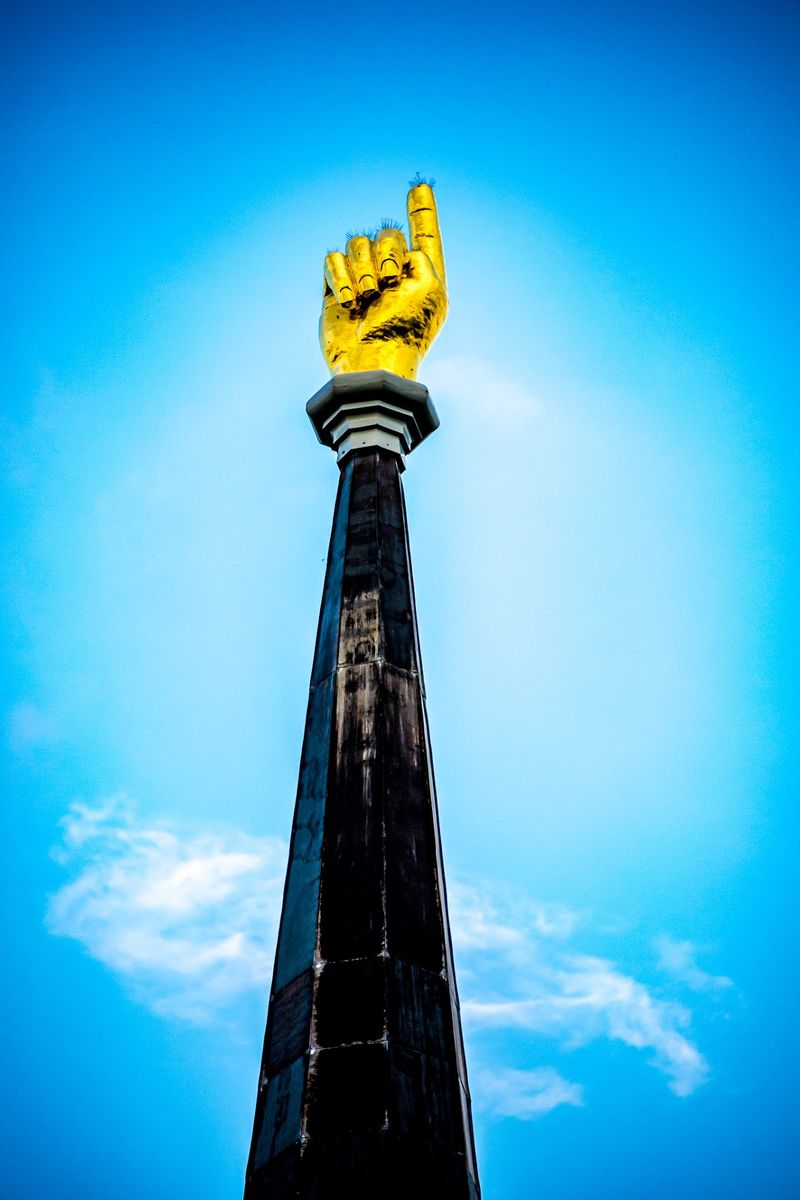
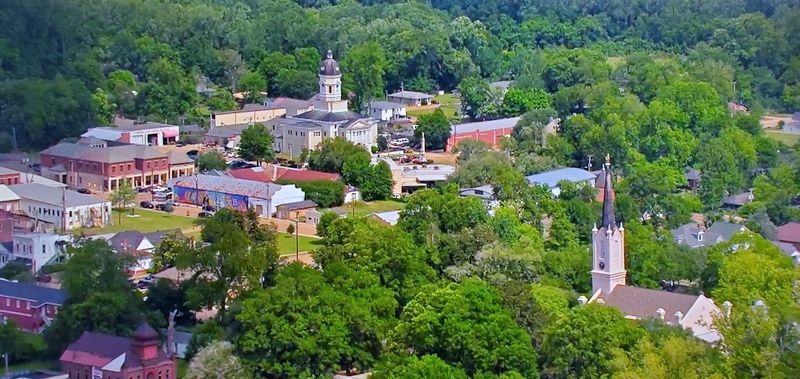
Plenty of steeples end with a cross or a simple point. At First Presbyterian Church, a gold hand sits on top with one finger aimed toward heaven.
You can spot it from a distance. It’s easily one of the most memorable rooftop features in all of Mississippi.
The surprises keep going inside. The church’s chandeliers came from the Robert E.
Lee steamboat, a famous name from the river’s busy past.
Think about that for a second. Lights that once swung above a riverboat now hang in a small-town sanctuary.
This church makes an easy first stop downtown. Bring a camera with a decent zoom if you want a clear shot of that pointing hand.
Morning light usually makes for good steeple photos, but any clear day works. Just watch where you’re stepping while staring at the sky.
It’s also a good reminder to slow down here. Port Gibson rewards people who notice the details others drive right past.
Respect that this is an active place of worship. Admire it from the sidewalk, and check ahead before planning any visit inside the building.
A Synagogue With A Dome That Seems Borrowed From Another Continent
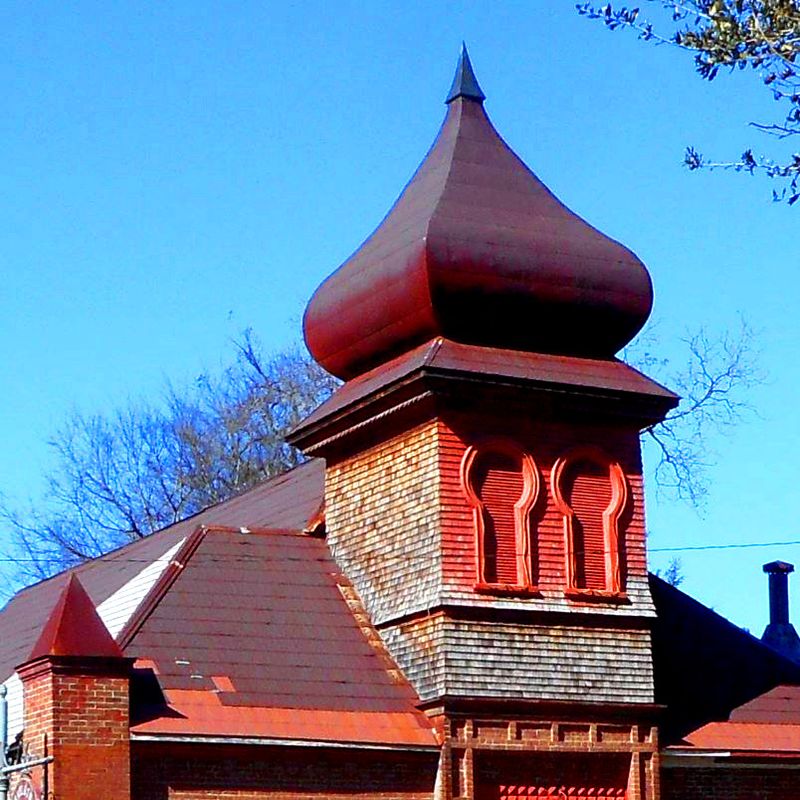
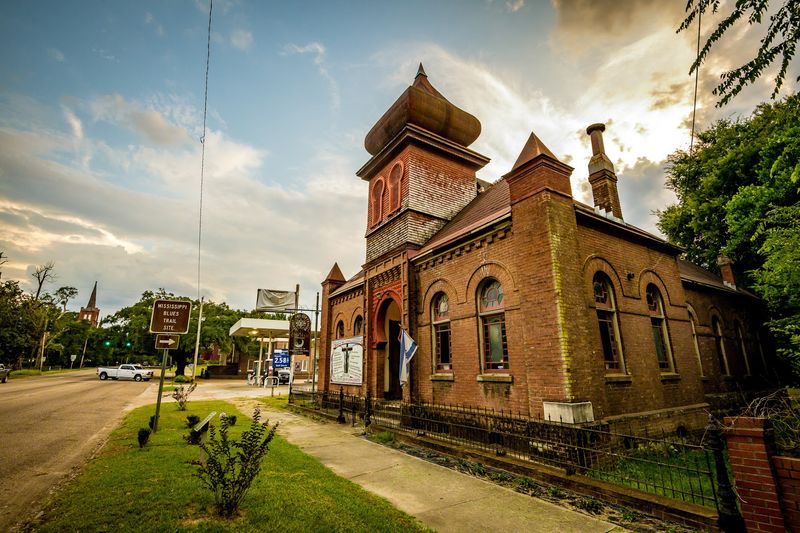
Nobody expects onion domes in rural Mississippi. Yet Temple Gemiluth Chessed sits right in Port Gibson, topped by a striking Russian-style dome.
The building went up in 1892. It’s the oldest synagogue in Mississippi, which alone makes it worth a stop.
Here’s another record. It’s also the only Moorish Revival-style building in the entire state.
Moorish Revival design borrows ideas from Spanish and North African architecture. Seeing it on a quiet Southern street feels a little like a plot twist.
The temple tells a bigger story too. Jewish families helped shape life and business in many Mississippi river towns during the 1800s.
The Welcome and Heritage Center, also called the Bernheimer Building, carries a name connected to that era of downtown commerce. Ask staff there for more background on local history.
For photos, step back across the street. You’ll fit the whole facade and that dome into one frame.
Pair this stop with the church and its golden hand nearby. Together, they show how much architectural variety one small town can pack into a few blocks.
Your Best First Stop Comes With A 200-Year-Old Bible
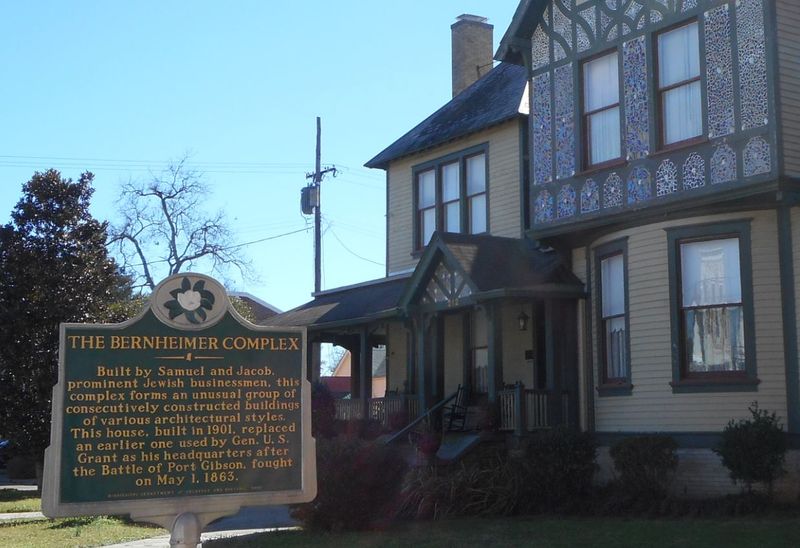
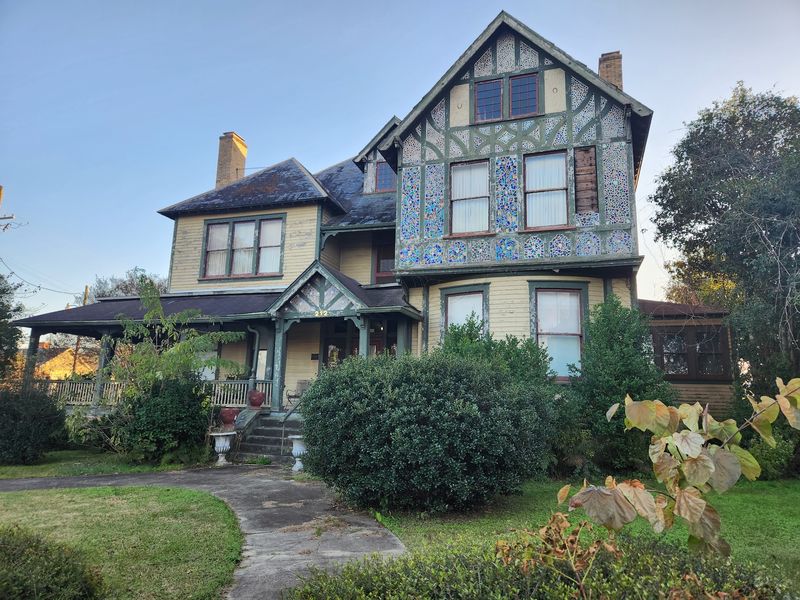
Trip planning gets a lot easier with a friendly home base. The Port Gibson Welcome and Heritage Center handles that job nicely.
You’ll find it in the Bernheimer Building at 210 Walnut Street, Port Gibson, MS 39150. It’s open Monday through Wednesday from 8 AM to 5 PM.
On Thursday and Friday, hours run from 8 AM to 4 PM. Weekend travelers should plan ahead, since it’s a weekday stop.
There’s also a Chamber of Commerce Visitor Center at 1601 Church Street. It’s open Monday through Thursday from 10 AM to 3 PM.
Both spots offer tourist information and souvenirs. They also display historical items worth a slow look.
The star piece is founder Samuel Gibson’s family Bible, around 200 years old. Holding history that close to the town’s beginning feels pretty special.
Grab maps and ask about seasonal events while you’re there. Small towns often have happenings that never make it onto big travel sites.
Starting here also helps you plan a smart route. Port Gibson’s best sights spread out around the countryside, so a little guidance saves time.
Twenty-Three Columns Are Standing Guard Over Nothing At All
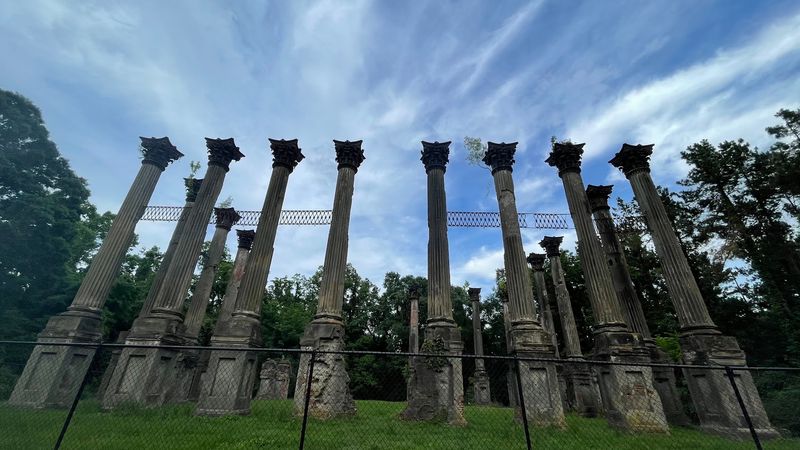
Twenty-three Corinthian columns rise from a grassy field, holding up only sky. Welcome to Windsor Ruins, one of the most haunting sights in Mississippi.
These columns once belonged to the largest antebellum Greek Revival mansion in the state. It was built between 1859 and 1861.
During the Civil War, the house served as an observation platform and a hospital. A fire in 1890 destroyed the mansion, leaving only these columns behind.
The ruins sit about 10 to 12 miles southwest of Port Gibson on Rodney Road, also known as Highway 552. The drive itself feels peaceful and rural.
In 2025, the Mississippi Department of Archives and History finished a preservation and stabilization project. It added a walking trail and new interpretive signs.
Those signs share stories of the plantation owners and the enslaved people who lived there. That fuller picture makes a visit far more meaningful.
The site is open daily from dawn until dusk. Late afternoon light makes the columns glow, so time your visit if photos matter to you.
Wear comfortable shoes for the trail. Bug spray in warmer months is a smart idea too.
Climb A Tower And Poke Around Old Forts At Grand Gulf
A mastodon bone sharing space with Civil War muskets? That’s the kind of museum mix waiting at Grand Gulf Military Park.
The park sits about 8 miles northwest of Port Gibson, off Highway 61. It covers roughly 400 acres and is a Mississippi Landmark.
It preserves the memory of the old town of Grand Gulf and the battle fought there. You can explore Fort Cobun and Fort Wade on foot.
The museum holds early photographs, maps, scale models, and uniforms. Cannonballs and muskets round out the collection nicely.
Outside, there’s an observation tower, hiking trails, and a cemetery. A memorial chapel also stands on the grounds.
Families will like the picnic areas. Campgrounds make it possible to stretch a day trip into an overnight adventure.
The park is open from 9 AM to 5 PM daily. The museum operates from 9 AM to 4:30 PM and closes on Mississippi state holidays.
Pack water and snacks for the trails. Kids who think history is boring may change their minds after spotting that mastodon bone.
The First Shots Rang Out Near A Simple Cypress House
History doesn’t always happen in grand buildings. Sometimes it starts at a modest farmhouse, like the A.K.
Shaifer House.
Built in 1826, this two-story cypress home witnessed the first shots of the Battle of Port Gibson shortly after midnight on May 1, 1863. Fighting continued throughout the day.
The battle was a key part of Grant’s Vicksburg Campaign. Union General John A.
McClernand used the house as his headquarters.
Afterward, it became a hospital for wounded soldiers. That’s a lot of history for one quiet country home.
The Mississippi Department of Archives and History owns the house today. A restoration project began in 2006 as part of the Mississippi Civil War Trails program, and the restored house was dedicated in November 2007.
The house occasionally hosts living history events. Ask at the Welcome Center whether anything is on the calendar during your trip.
Civil War fans will want to link this stop with Grand Gulf. Together they tell the story of how the campaign unfolded across this landscape.
Even casual visitors will appreciate the setting. It’s quiet and shady, a good spot to pause and imagine how much changed here in just a few days.
Some Of The Town’s Proudest Stories Come From The 1960s And The Blues
Port Gibson’s history isn’t only about columns and cannons. The town also played an important role in the Civil Rights Movement.
During the 1960s, it became a focal point for protests and economic boycotts. Charles Evers led many of those efforts.
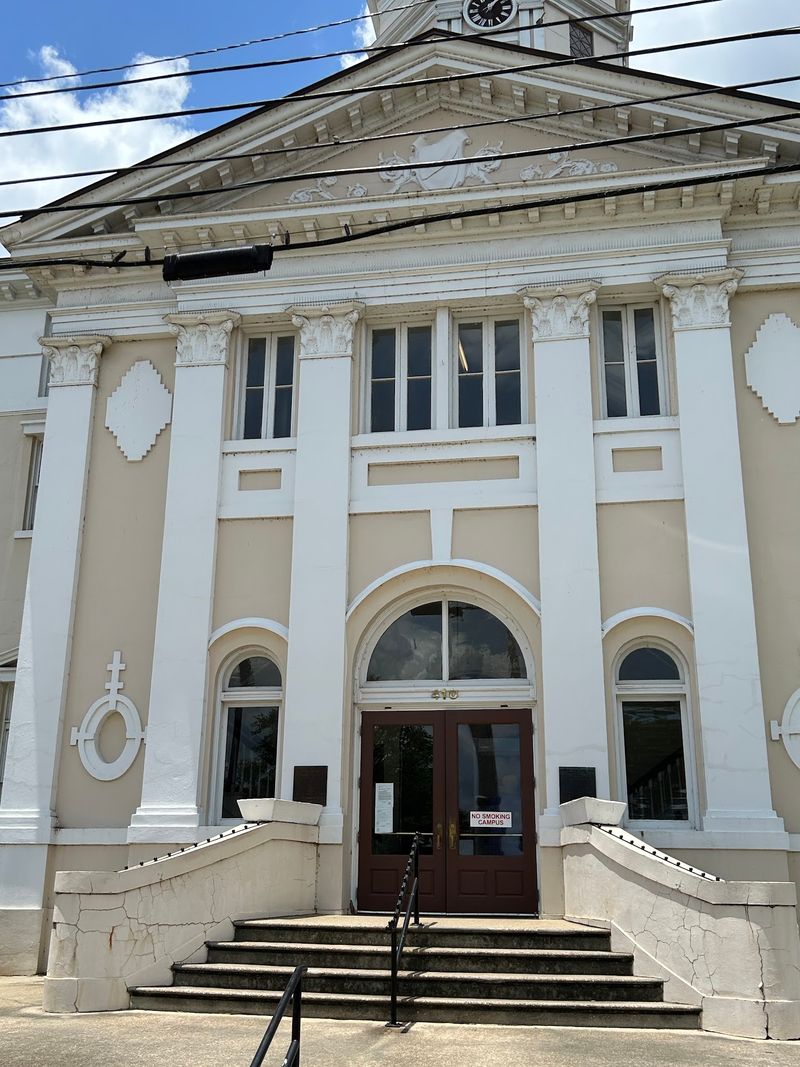
A permanent exhibit called No Easy Journey tells that story. You’ll find it in the County Administration Building.
It’s a powerful stop that adds depth to any visit. The exhibit shows how ordinary residents pushed for real change.
Music lovers get their own reason to linger. A Mississippi Blues Trail marker honors the Rabbit Foot Minstrels.
This African American touring tent show company was headquartered in Port Gibson between 1918 and 1950. It helped shape the development of the blues.
Picture a traveling show carrying music from town to town across the South. Although the company originated in Florida, Port Gibson became its headquarters in 1918, giving this small town an important place in blues history.
Read the marker slowly, then queue up some early blues on the drive out. It turns a quick history stop into a soundtrack for the rest of your trip.
Sleep In History, Then Follow The Trace To An Ancient Mound
Henry Clay once gave a speech from the front gallery of Idlewild in 1844. Today this 1830s home at 107 Idlewild Drive offers tours daily from 8 AM to 5 PM.
Look for its 12-foot-tall interior doors and windows. They make regular houses feel tiny.
For an overnight stay, Collina Plantation Inn offers bed and breakfast rooms. The Greek Revival home dates to around 1831 and sits on 8.5 acres.
Isabella Bed and Breakfast is another local choice. Vicksburg, about 25 miles north, adds plenty of hotel options too.
Port Gibson also sits right along the Natchez Trace Parkway. That makes it easy to explore beyond town limits.
Stop at the Sunken Trace near milepost 41.5. The old path is worn deep into the earth by countless travelers.
Farther along, Emerald Mound covers eight acres and stands 35 feet high, with smaller mounds on top bringing its total height to about 60 feet. It’s the second-largest Mississippian-period ceremonial mound in the United States.
Check dates for the annual Port Gibson Main Street Heritage Festival. It features music, arts, guided tours, and a venison cook-off, a fun way to see Mississippi hospitality in action.