
This Quirky Delta Town In Arkansas Is Full Of Charm, History, And Riverside Strolls
This Delta town in Arkansas has the kind of quiet that sneaks up on you. I came in expecting a short stop before getting back on the road.
That did not happen. The fields seemed to stretch forever, and the river kept showing up like it wanted to be part of the story.
Downtown felt worn in the right way, not polished for visitors, just real. I kept slowing down.
One block became another. One conversation turned into a note I did not want to forget.
Before long, my boots were muddy from the levee trail and my afternoon had turned into three days. That is the thing about this place.
It does not beg for attention. It gives you small reasons to stay, then another, then another.
By the end, I understood why leaving felt harder than it should have for a simple road trip in late afternoon light.
Riverfront Quiet Beneath Big Delta Skies
At the edge of the St. Francis River, I felt the kind of quiet that city life rarely offers. Flat Delta land stretched behind me, wide and still under the open sky.
The sky above Marked Tree does something dramatic at dusk, turning from pale blue to deep orange in long, slow brushstrokes that feel almost theatrical.
I watched a great blue heron stand motionless at the water’s edge for nearly ten minutes, completely unbothered by my presence or the soft wind moving through the willows.
The riverfront here is not manicured or polished, and that rawness is exactly what makes it worth standing in.
Locals told me the St. Francis has a personality of its own, rising and falling with the seasons in ways that have shaped every generation of people who built their lives along its banks.
There are no crowds, no entry fees, and no tour guides pointing out landmarks.
Just open sky, moving water, and the satisfying stillness of a Delta afternoon that belongs entirely to Marked Tree, Arkansas, a city in Poinsett County.
Old Storefronts With Small-Town Soul

Weathered brick and peeling paint tell more honest stories than any museum placard, and the storefronts along Marked Tree’s main corridor are full of both.
I walked slowly past buildings that have seen timber booms, cotton harvests, and quiet decades in between, each facade carrying the texture of a town that has worked hard and endured longer.
A few of the old commercial spaces still hum with activity, while others sit patient and still, their windows dusty but their bones solid.
A small-town main street feels more honest when it has not been renovated into uniformity, because the imperfections are where the character lives.
Historically, Marked Tree’s economy was built on timber and farming, with cotton and soybeans driving generations of local commerce, and you can feel that agricultural identity baked into the architecture itself.
I stopped in front of one old building and tried to imagine it during the town’s busiest decades, full of merchants, farmers, and the everyday noise of a working Delta community.
The storefronts stand quietly now, but they carry that history with remarkable dignity.
Where Two Rivers Shape The View
One geographic detail stuck with me more than almost anything else. Near Marked Tree, the St. Francis River and the Little River run so close together that they are sometimes only a quarter of a mile apart, yet they flow in completely opposite directions.
That kind of hydrological quirk sounds like something from a puzzle book, but near the stretch where the waterways draw close, you can almost feel the landscape holding its breath between the two.
The rivers have shaped the town’s identity in practical and poetic ways, influencing where roads were built, where floods have struck, and how generations of residents have oriented their daily lives.
I spent a long morning near the area where the two waterways nearly converge, and the scene felt quietly surreal in the best possible way.
Fishermen work these banks with practiced ease, reading the water in ways that take years to learn.
The vegetation along both rivers is thick and green, with cypress and cottonwood leaning toward the current in that particular way trees do when they have grown up beside moving water.
Two rivers, one small town, and a geography that refuses to be ordinary.
Sunken Lands And Soft Waterlight
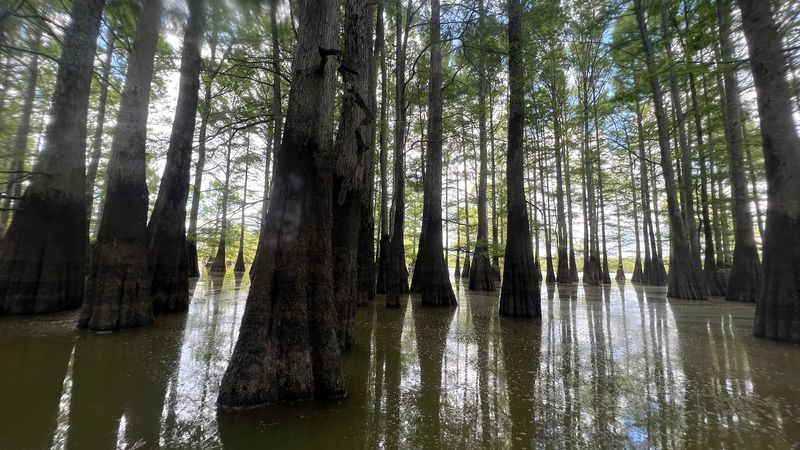
The St. Francis Sunken Lands Wildlife Management Area near Marked Tree carries geological drama quietly. A visit here feels like crossing a landscape that the earth itself once rearranged.
The New Madrid Earthquakes of 1811 and 1812 were among the most powerful seismic events in North American recorded history, and they permanently altered the terrain here, dropping land and creating the sunken, water-filled expanses that now define this wildlife area.
I arrived early on a foggy morning when the water was perfectly still and the light moved across the surface in long, silver ribbons that made the whole scene feel dreamlike.
Waterfowl hunting and fishing draw visitors throughout the year, and the area has earned a loyal following among outdoor enthusiasts who appreciate its raw, undeveloped character.
Marked Tree sits near the southern end of the New Madrid Seismic Zone, which gives the region a geological significance that most visitors never expect from a small Delta town.
I crouched at the water’s edge and watched a pair of wood ducks glide through the mist with the kind of unhurried grace that only wild places produce.
The sunken lands hold their own kind of beauty, shaped by forces far beyond human scale.
Historic Streets With A Weathered Glow
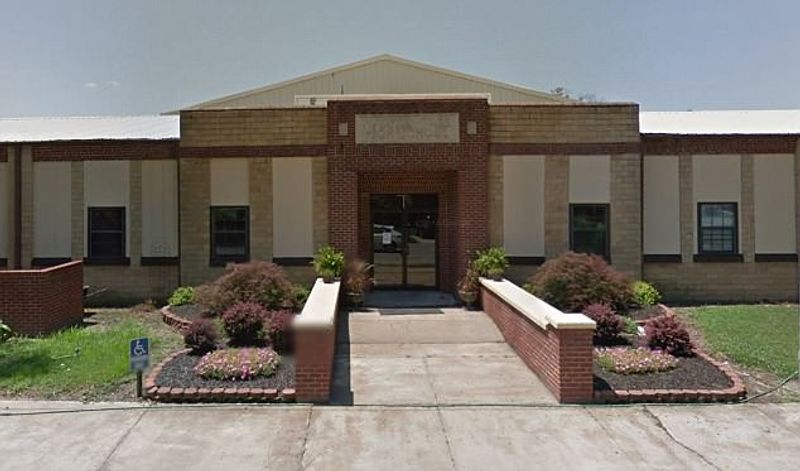
The older streets of Marked Tree made me slow down on a clear afternoon. I kept pausing to look at details that most people probably drive past without noticing.
The Delta light seems to settle into old brick differently than anywhere else, giving weathered buildings a warm amber tone that photographs beautifully and feels even better in person.
The town’s history is layered in unexpected ways, and one of the most striking chapters involves World War II, when Marked Tree housed a German prisoner-of-war camp, one of two located in Poinsett County, where prisoners performed agricultural labor in the surrounding fields.
That piece of history surprised me, and it reframed the quiet streets in a way I had not anticipated when I first arrived.
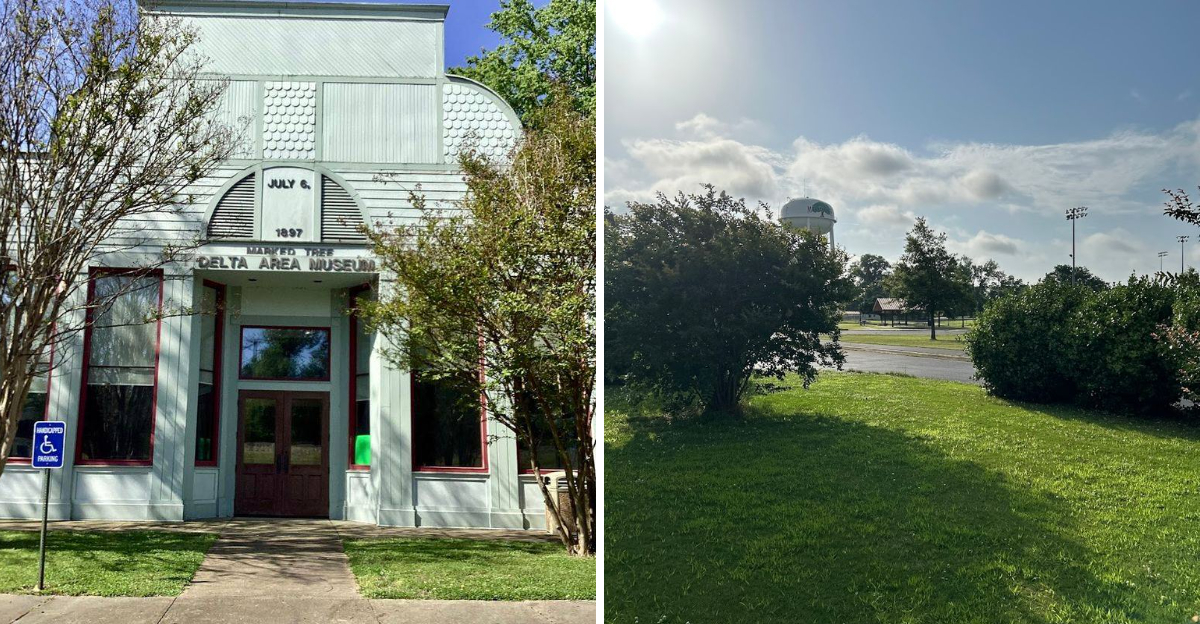
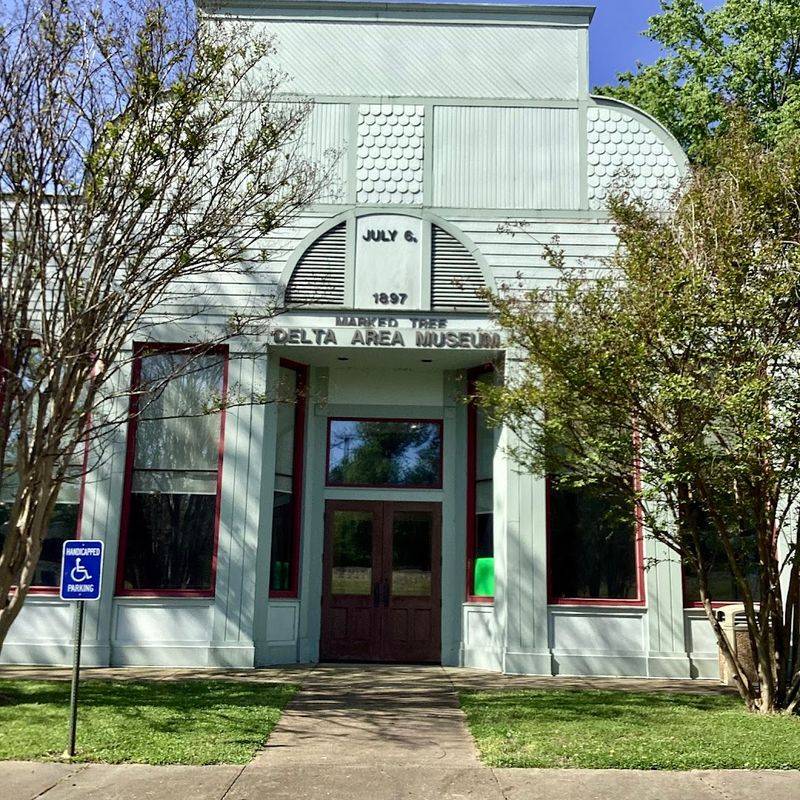
The Marked Tree Delta Area Museum, which opened in 1993, brings much of this layered past into focus, with exhibits covering 700-year-old Native American pottery and a detailed replication of the old Verser Hospital.
I spent over an hour inside and still felt like I had only scratched the surface of what the town has witnessed.
Historic streets rarely glow quite like these do when the afternoon sun gets low.
Levee Views Beyond The Cotton Fields
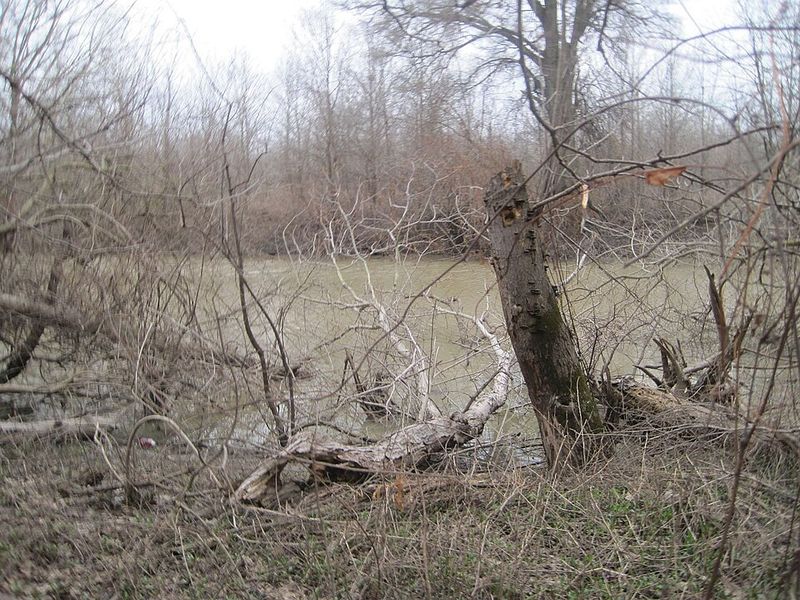
The levee near Marked Tree is worth the climb. Once you reach the top, the view reminds you just how vast and flat this part of the Delta truly is.
Cotton fields stretch outward in every direction, their rows running in clean parallel lines toward a horizon so wide it feels like the edge of the world.
I stood up there for a long time, watching the wind move through the cotton in slow, rolling waves that made the whole field look like a living thing breathing in the afternoon heat.
The levee system along the St. Francis River has been critical to the town’s survival, managing floodwaters that have tested this community across multiple generations.
A short drive away, the Marked Tree Lock and Siphons add another layer to that story, with structures built for flood control and river navigation that are now listed on the National Register of Historic Places and recognized by the U.S. Army Corps of Engineers as unique architectural achievements.
Engineering and agriculture have always worked together out here, shaping the land into something productive and, on a clear day, genuinely striking.
The levee view is the kind of scene that stays with you long after you have driven away.
Hidden Corners Along The Bend
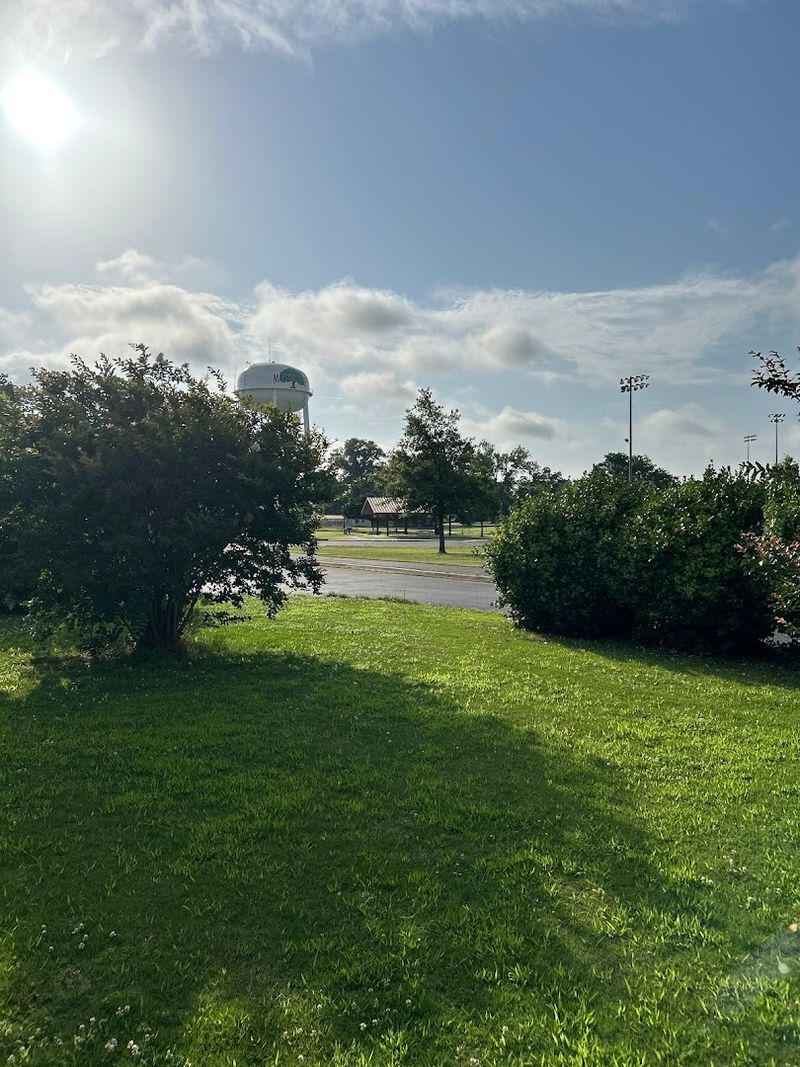
Not every worthwhile spot in a small town announces itself with a sign, and some of the best moments I had in Marked Tree came from following a dirt path down toward the river without knowing exactly where it would lead.
The bends in the St. Francis River create natural pockets of shade and stillness where the water slows and the trees lean in close, forming the kind of sheltered, intimate spaces that feel like they belong to no one and everyone at the same time.
I found one such spot on my second afternoon, a sandy bank tucked behind a stand of cottonwood trees where the only sounds were the current and a few birds moving through the branches.
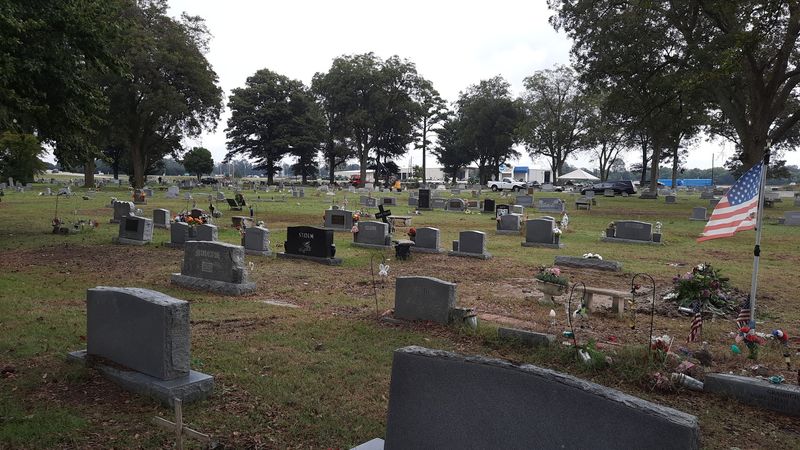
The history of the town’s name connects directly to the river’s edge, though local accounts differ on whether the original marked oak stood along the Little River or the St. Francis River.
According to the best-known version, the tree was marked with a foot-high letter M and used by a band of outlaws in the 1830s as a meeting point.
The original tree was said to have fallen during a flood in 1890, and after a tree believed to be the same one was recovered in 1971, the story became part of the town’s public memory through a historical marker.
Every bend in this river seems to hold a story waiting to surface.
Delta Stillness In Every Frame
The Delta has a kind of stillness that photographers chase and writers struggle to describe. Marked Tree offers it in abundance at almost any hour of the day.
I found myself stopping repeatedly just to look, not at any single landmark or attraction, but at the overall composition of the place, the flat land, the wide sky, and the way everything seems to hold itself in careful balance.
Early mornings are especially rewarding, when mist rises off the river and the light arrives gradually, filling the landscape from the edges inward in a way that feels almost choreographed.
The town’s population of around 2,286 people, as recorded in the 2020 census, means that Marked Tree moves at a human pace, one where you can actually hear yourself think and notice details that faster places swallow whole.
I took more photographs here than I expected to, not of grand monuments or famous landmarks, but of ordinary scenes that carried extraordinary quiet, a rusted gate and a flooded field catching the sky.
The Delta has a visual language all its own, and Marked Tree speaks it fluently.
Every frame you capture here feels like a small act of preservation.