
This Recreated 1890s Village Is An Arkansas Time Capsule Hiding In Plain Sight
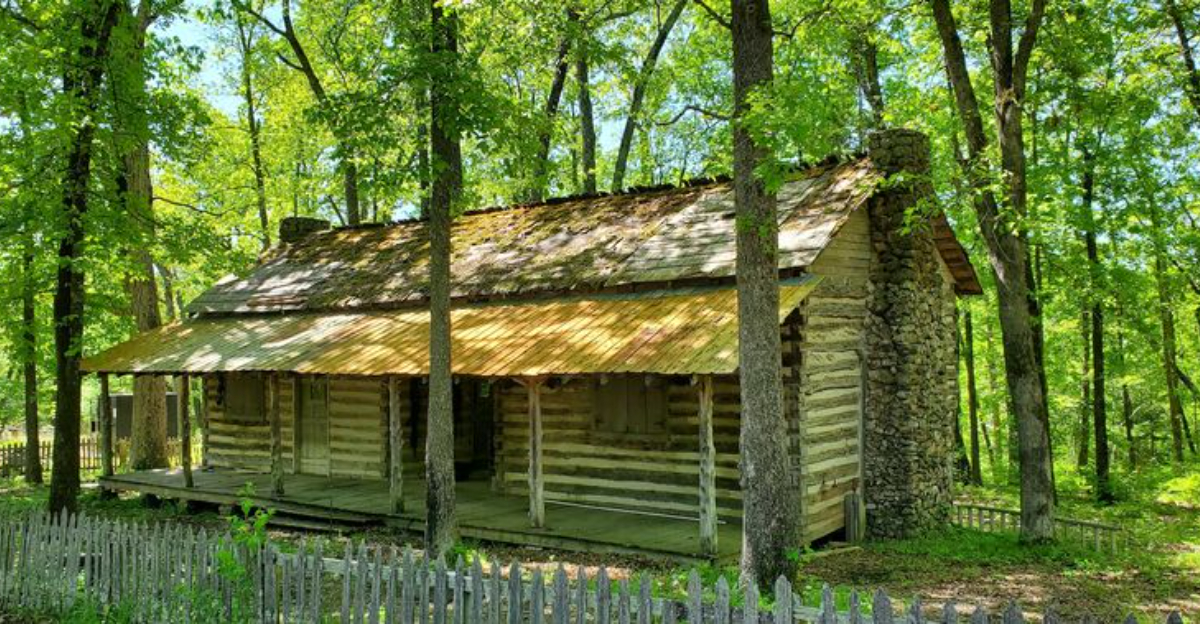
There’s a spot in northern Arkansas where time doesn’t move the way you expect. You arrive thinking it’ll be a quick look around.
Then you start walking, and suddenly you’re not in a hurry anymore. The buildings aren’t replicas.
The tools aren’t props. Everything feels lived in, like the past never fully packed up and left.
I pulled in curious but not overly excited. That changed fast.
One step inside, and I was hooked. I kept noticing small details, things that made the stories feel real instead of distant.
Before I knew it, I had filled pages with notes, picked up a few gemstones, and gained a deeper respect for the people who made a life here from scratch. It stays with you longer than expected.
And trust me, once you hear what makes this place special, your idea of a weekend road trip might shift completely.
A Living Time Capsule Born In 1960
Some places earn their reputation slowly, and this one has been doing exactly that since the early 1960s.
When I first stepped through the entrance, I honestly did not expect to feel so transported.
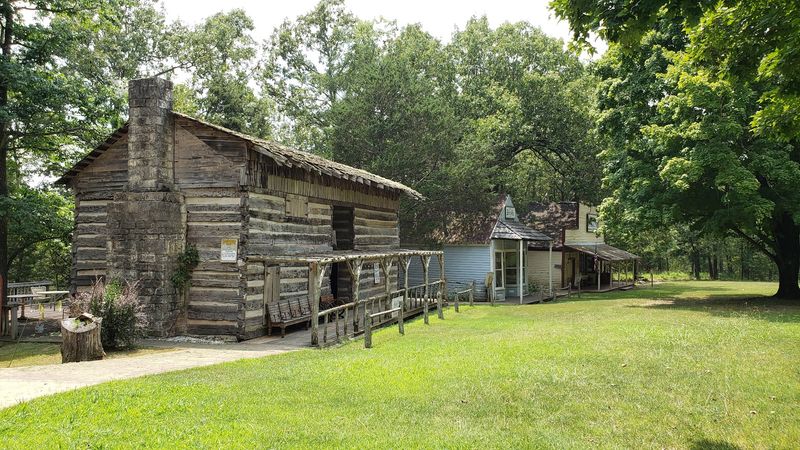
The whole concept behind the attraction is an assembled Ozark pioneer settlement inspired by the late 1800s, built as a tribute to the families who first made their homes in one of America’s most rugged and remote regions.
Founded with the specific goal of honoring those early settlers, the village came together piece by piece over the years, gathering genuine structures and artifacts from across the Ozark mountain region.
What makes it different from a typical museum is that the history here is not behind glass or roped off behind velvet barriers.
You walk right through it, stand inside the same walls those pioneers once used, and touch the same textures they lived with daily.
The whole experience carries a quiet, unhurried energy that you rarely find at bigger tourist spots.
You can find all of this waiting for you at Mountain Village 1890, located at 1011 C S Woods Blvd, Bull Shoals, AR 72619.
Around A Dozen Historic Buildings Relocated From Across The Ozarks
Moving entire buildings from their original foundations to a new site is no small feat, and the effort shows in every weathered plank.
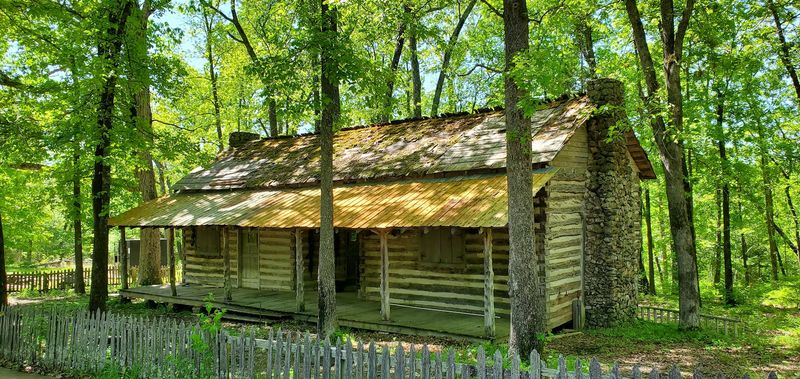
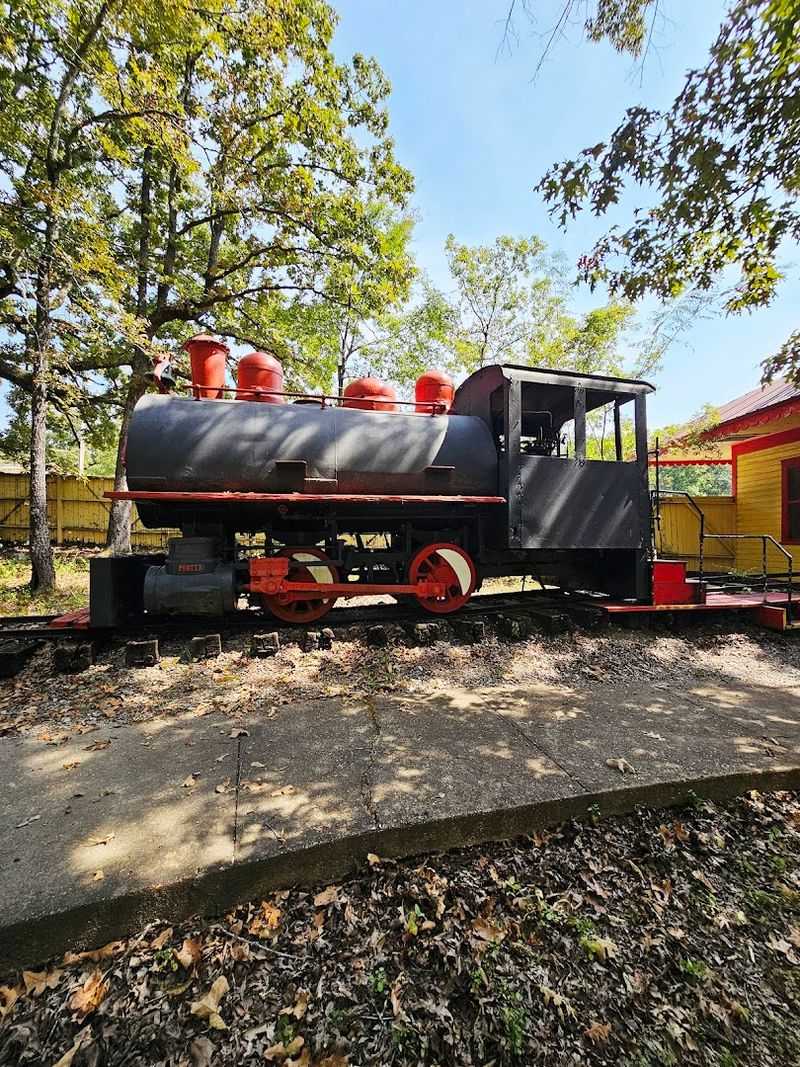
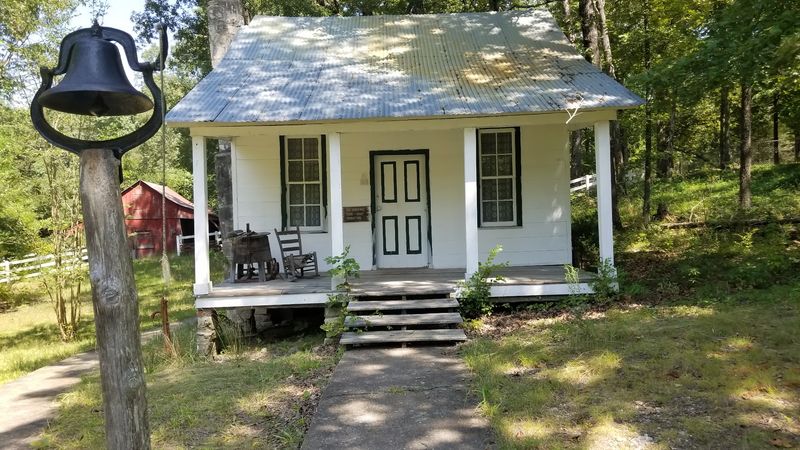
The village features around a dozen historic structures plus additional outbuildings, all carefully relocated from various sites across the Ozark mountain region.
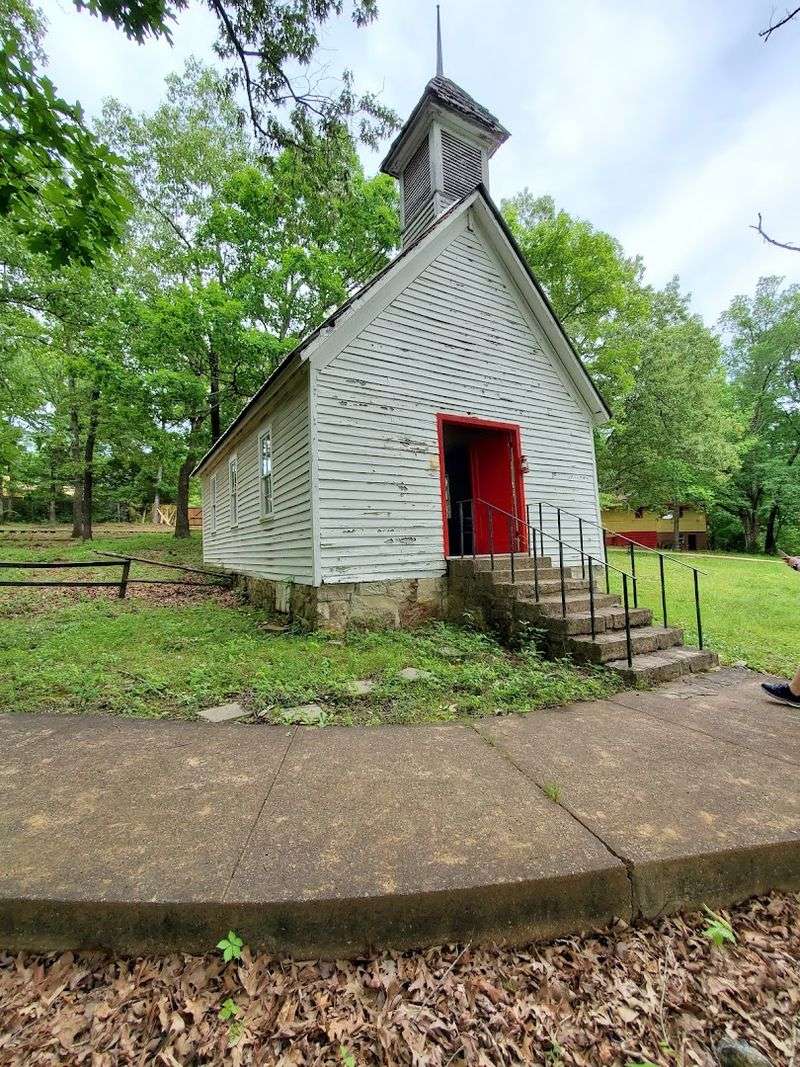
Among them you will find a church, a depot, and several other structures, each one chosen because it tells a specific story about what daily life looked like in the late 1800s.
I spent a good chunk of time just standing inside the church, imagining the community gatherings that once filled it with voices and footsteps.
The depot had this wonderful stillness to it, like time had simply decided to stop and wait there for a while.
Every structure carries its own personality, shaped by the people who built it, used it, and eventually left it behind.
The fact that these buildings were brought together from different corners of the Ozarks means you get a broad, honest picture of regional pioneer life in a single walkable space.
Seeing them all together in one setting makes the history feel layered and surprisingly alive.
Original Tools, Furnishings, and Farm Equipment on Display
History has a way of hitting differently when you are standing two feet away from the actual objects people used to survive.
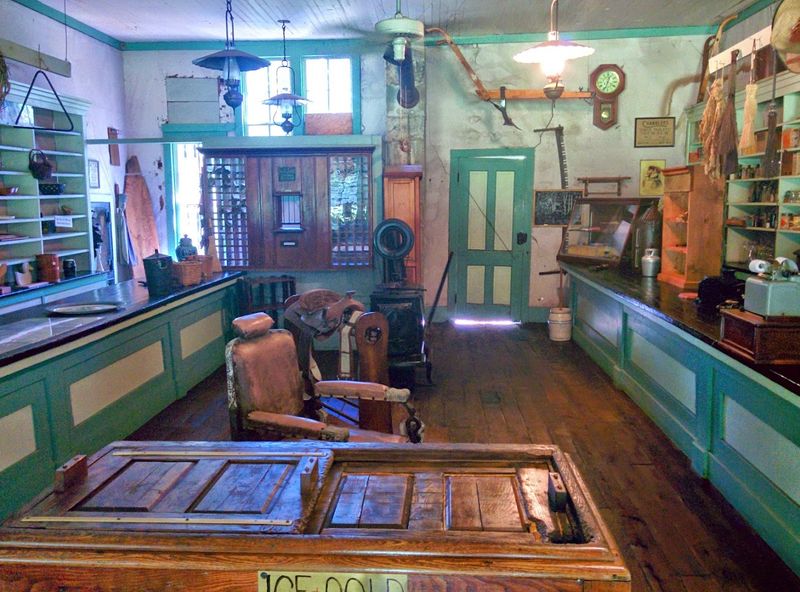
Throughout the village, visitors encounter real tools, original furnishings, and authentic farm equipment that were genuinely used by Ozark mountain families in the 1800s.
Most items are original, though some pieces are carefully chosen period-appropriate additions, which still sets this collection apart from many other historical attractions.
I remember pausing at a worn wooden plow and thinking about how many seasons of hard work it must have seen before ending up here.
The general store is a particular highlight, stocked with old clothing, tinctures, and household goods that paint a surprisingly detailed picture of everyday commerce in a remote mountain community.
Visitors who enjoy getting close to history will appreciate that many items can be examined up close rather than admired only from a distance.
The jail cell, post office, and various household interiors each add another layer to the story, making the tour feel more like a conversation with the past than a lecture about it.
Every artifact quietly insists that these were real people living real, complicated lives.
Preserving Ozark Heritage Through Ongoing Efforts
Recognition for preserving regional history has come through continued interest and restoration efforts rather than formal national designation.
The work done at Mountain Village 1890 reflects a strong commitment to maintaining the cultural and architectural heritage of the Ozark region.
For a small attraction set in the hills of northern Arkansas, that dedication stands out and shows what careful preservation can accomplish over time.
I will admit that learning more about the effort behind the site after my visit gave me a fresh appreciation for everything I had walked through.
The structures that looked pleasantly old suddenly felt like irreplaceable pieces of a broader historical story, not just local curiosities.
Ongoing maintenance and restoration help ensure the buildings remain accessible so future visitors can experience the same sense of connection that current guests enjoy.
For history lovers planning a trip through Arkansas, this level of care is a solid reason to move the village higher on the itinerary.
Few places this size carry that kind of dedication to preserving everyday pioneer life.
Self-Guided Tours Let You Explore at Your Own Pace
Not everyone wants to follow a guide on a strict schedule, and the self-guided tour format here feels like a genuinely thoughtful choice.
Visitors are free to move through the village at whatever pace suits them, pausing as long as they like in front of the buildings that catch their attention most.
The signs throughout the village are clear and easy to read, offering background on each structure without overwhelming you with information all at once.
I personally spent nearly twice as long as expected at the depot and the church, simply because the details kept pulling me back for a second look.
The paths are in reasonable condition, and spots that could be a potential trip hazard are clearly marked, which I appreciated as someone who tends to wander with eyes fixed on buildings rather than the ground.
Staff members are available and, based on my experience, genuinely funny and helpful without being pushy or hovering.
For families with kids, the open format means younger visitors can move at their own energy level without disrupting anyone else’s experience.
The whole tour runs roughly 30 to 45 minutes, though it is easy to stretch that if you are the curious type.
Bull Shoals Caverns Right Next Door
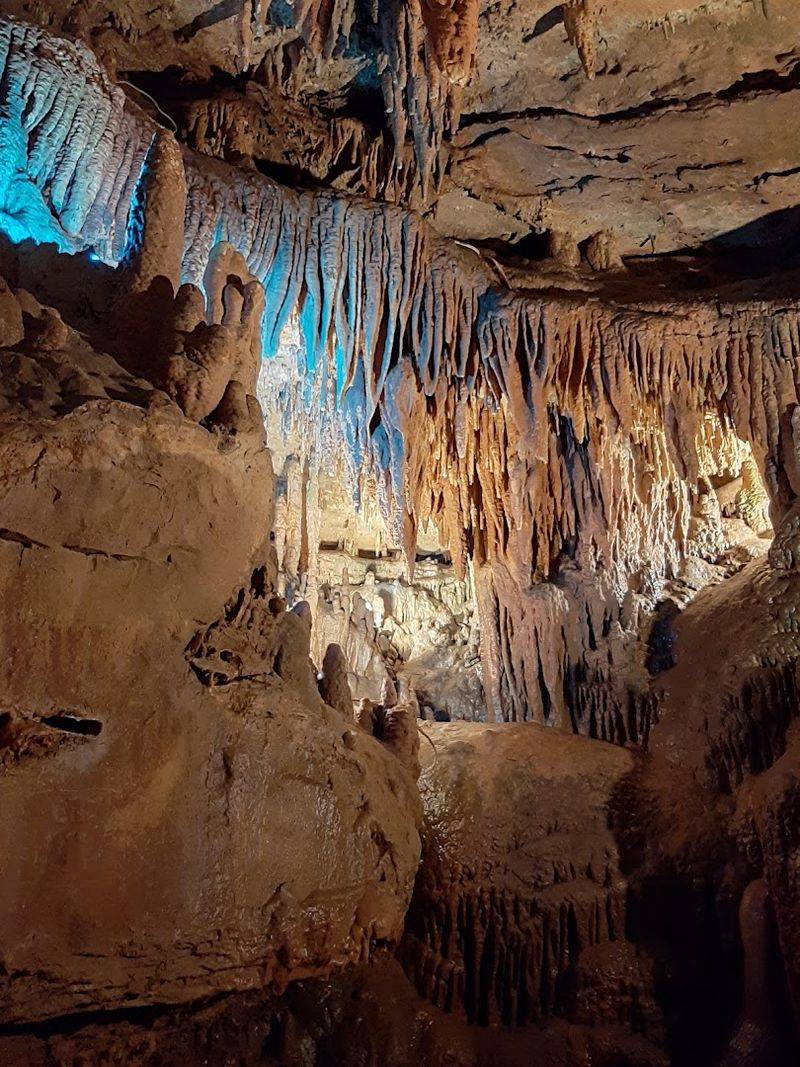
Right next to the village sits one of the most underrated underground experiences in Arkansas, and combining both attractions in a single visit is absolutely the right move.
Bull Shoals Caverns offers guided tours along well-lit concrete trails that wind through natural formations including impressive stalactites and stalagmites built up over thousands of years.
The caverns maintain a constant temperature of 59 degrees Fahrenheit year-round, which makes them a surprisingly refreshing stop on a warm Arkansas afternoon.
One reviewer mentioned that the cave is about 600 feet from front to back, making the round trip roughly 1,200 feet total, which is manageable for most visitors but worth noting if mobility is a concern.
The guide I encountered during my visit clearly loved the subject, sharing stories about the cavern’s history including the discovery of a moonshine distillery inside the cave back in the 1950s, which honestly made the whole experience feel like an adventure novel.
The cave tour adds significant value to the overall visit, turning what might be a short stop into a full half-day outing.
Few attractions in this part of Arkansas pack this much variety into one location.
Gemstone Panning For An Interactive Hands-On Experience
If you have ever wanted to sift through a trough of water and gravel hoping to find something sparkling, this is your moment.
Gemstone panning is one of the most popular activities at the village, offering visitors an interactive, hands-on experience that fits perfectly alongside the historical setting.
It is the kind of activity that kids absolutely love, but I watched plenty of adults get just as caught up in the hunt, leaning over the sluice with full concentration and competitive energy.
The appeal is simple: you never quite know what you are going to find, and that small element of surprise keeps the excitement going even after the first few scoops.
For families looking to keep younger visitors engaged throughout the trip, gemstone panning provides a satisfying physical activity that breaks up the walking and reading portions of the visit.
It also serves as a natural souvenir opportunity, since anything you find goes home with you as a tangible memory of the day.
I left with a small collection of colorful stones that now sit on my desk as a reminder of a genuinely unexpected afternoon in the Arkansas hills.
Few historic sites offer this kind of tactile fun alongside their educational content.
A Historic Church Available For Private Wedding Ceremonies
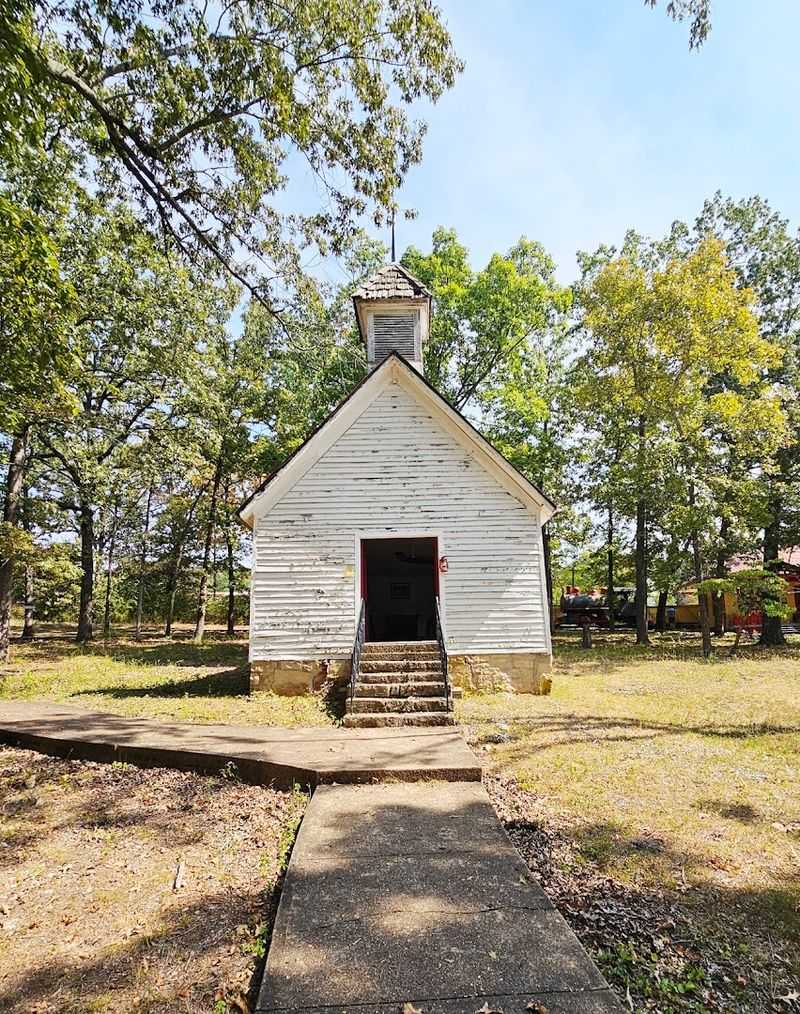
Few wedding venues offer a setting where the building itself is over a century old and carries the weight of actual pioneer history in its walls.
The church within the village is available for private wedding ceremonies by appointment, offering couples a setting that no modern event space could replicate.
Standing inside it, I could immediately understand the appeal: the wooden pews, the soft light filtering through old windows, and the complete absence of anything commercial or manufactured give the space a rare, honest charm.
For couples who want a ceremony that feels rooted in something meaningful rather than just visually striking, this church delivers on both counts.
The fact that it is a functioning historic structure rather than a reconstructed prop makes the experience even more meaningful for those who care about authenticity.
Booking is done by appointment, so anyone interested should contact the site directly to discuss availability and details.
It is also worth knowing that the village operates seasonally, with hours that can vary depending on the time of year, so planning ahead is essential for any special event.
Checking the latest hours and policies at 1890village.com before your visit is always a smart first step.