
This Recreated Illinois Fort Is The Little-Known Spot Where Lewis And Clark’s Great Journey Started
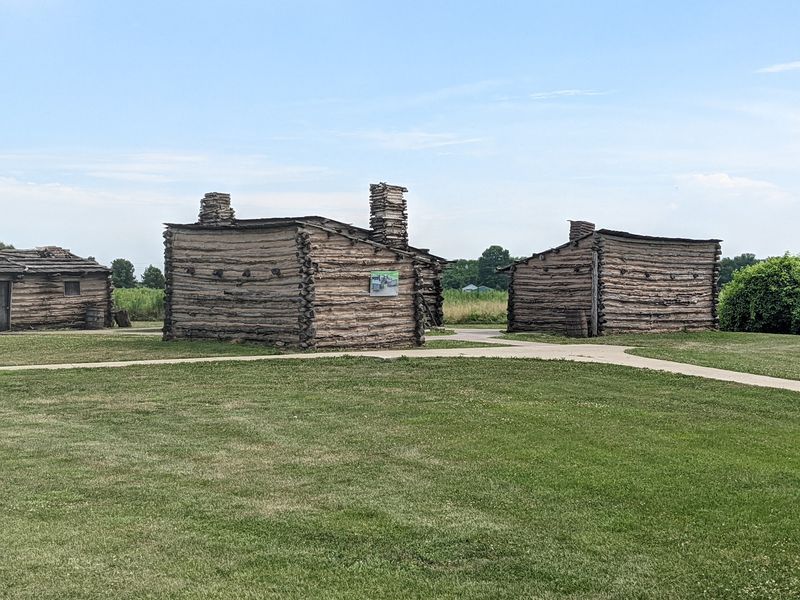
Long before the Corps of Discovery paddled west into the unknown, they spent a whole shivering winter in Illinois getting ready. That winter camp still lives on in Hartford, where a recreated fort and a giant boat wait to be explored for free.
It’s the kind of place that turns a boring afternoon into a real adventure your kids will remember. Best of all, you can spend a couple of hours here without spending a single dollar.
Where The Story Begins In Hartford
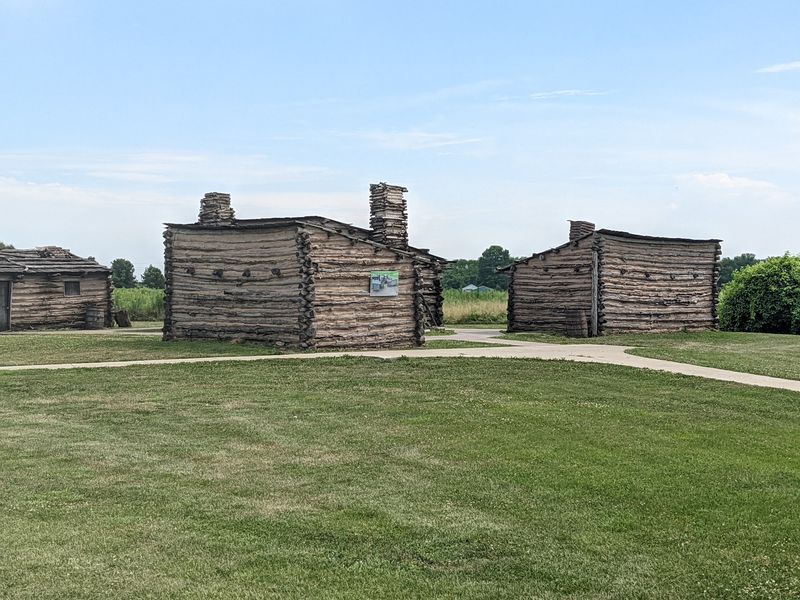
Right where the Mississippi and Missouri Rivers meet, in the small town of Hartford in Madison County, sits a spot most Illinois families drive past without a second thought. That’s a shame, because this is where one of the biggest journeys in American history actually got its start.
Officially known as the Lewis and Clark (Camp River Dubois) State Historic Site, it marks the very ground where the Corps of Discovery camped through the winter of 1803 and 1804. From here, the crew pushed off westward in the spring of 1804.
The place is part outdoor recreated fort and part indoor museum, so you get a bit of everything in one visit. Walking the grounds gives you a genuine connection to the past, standing on land those explorers once knew well.
Locals treasure it as a humble, overlooked gem rather than a flashy tourist trap. And since it sits so close to the river confluence, you’re getting history and scenery bundled together in one easy stop.
The Winter Camp That Prepared An Expedition
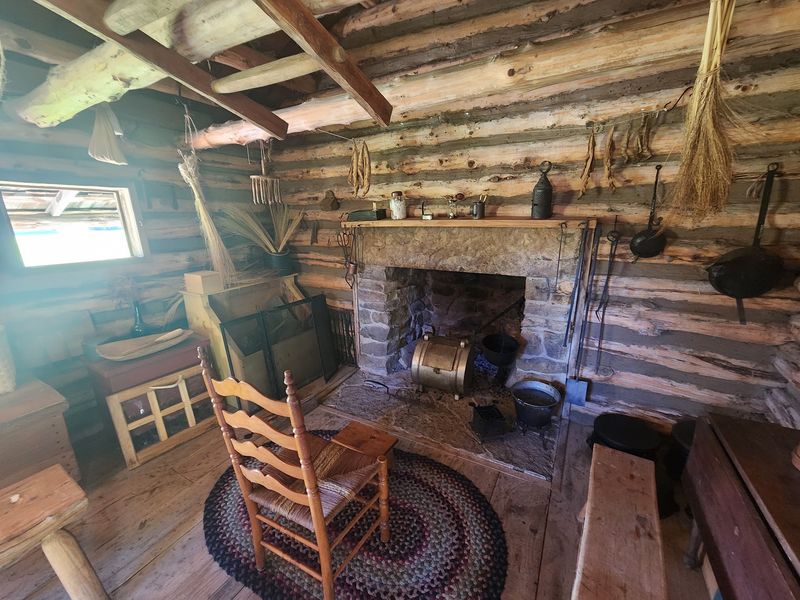
Imagine cramming a whole crew into log cabins during an Illinois winter while gathering the supplies for a trip across a continent. That’s exactly what happened at Camp River Dubois, and the story behind it is what makes this site so special.
From December 1803 through May 1804, the men who would become the Corps of Discovery trained, built shelters, and packed everything they’d need. It was the practice run before the real thing, the quiet chapter that made the famous journey possible.
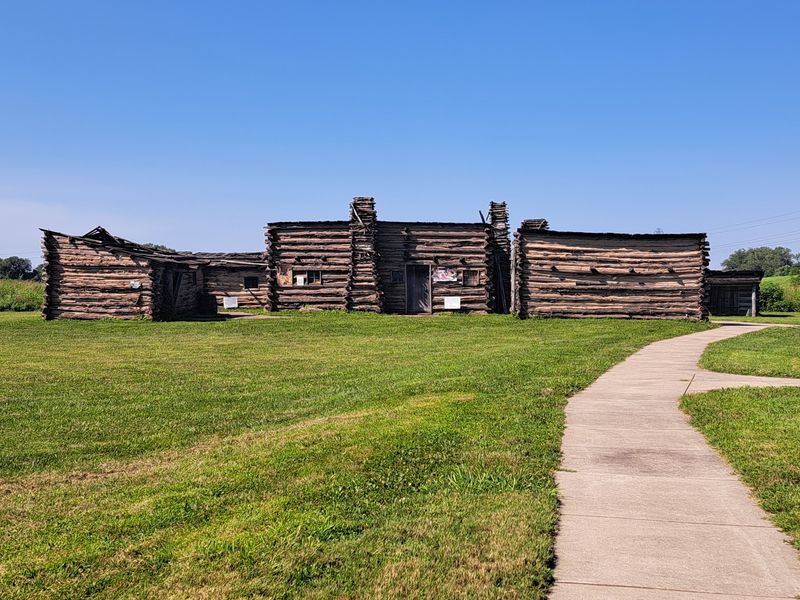
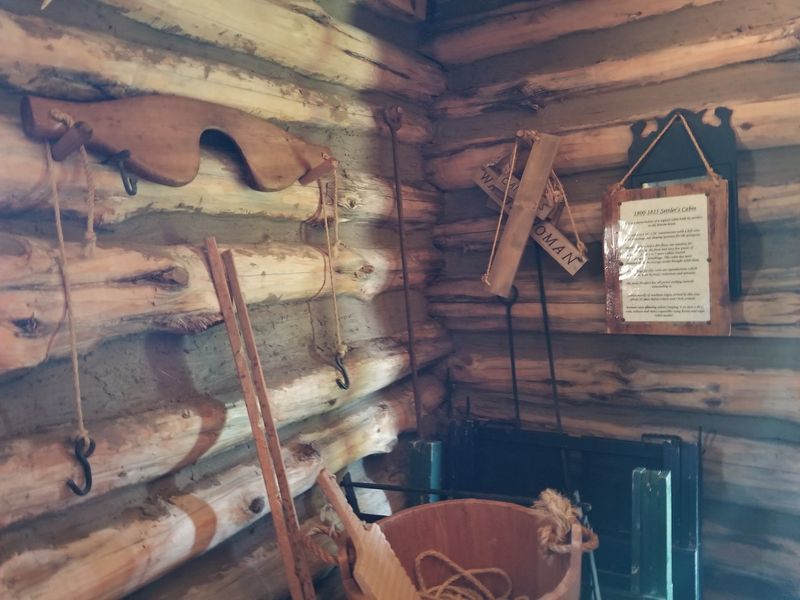
The reconstructed camp lets you peek at how those early explorers lived day to day. Replica cabins show the tight quarters and simple tools that got them through the cold months.
It’s worth knowing that the outdoor buildings have seen better days, and parts have been closed off for repairs at times. Even so, you can still look through windows and gaps to picture frontier life.
Standing there, the history stops feeling like a textbook chapter and starts feeling real. For kids especially, it’s an eye-opening look at how people once survived with so little.
A 55-Foot Keelboat You Can Peer Inside
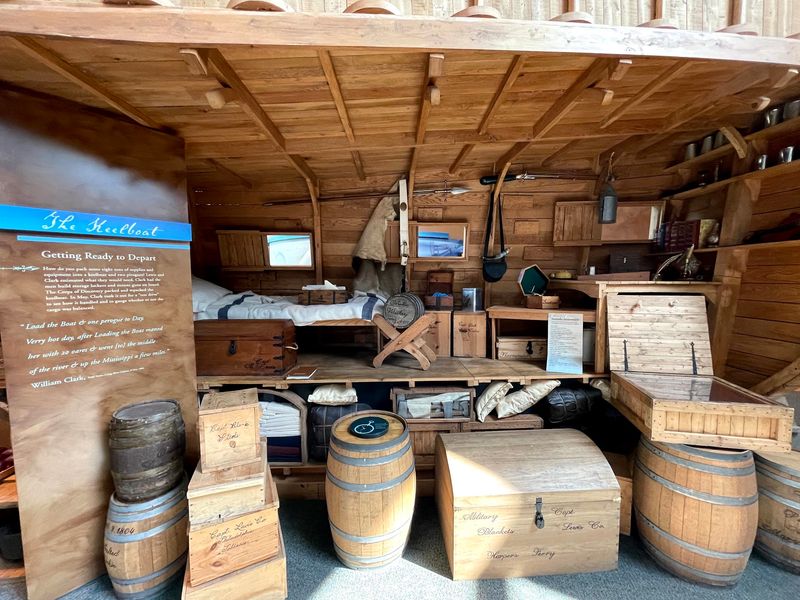
The showstopper here floats right in the middle of the museum, and it’s hard to overstate how much it grabs your attention. A full-scale, 55-foot replica of the expedition’s keelboat stands cut away on one side so you can see straight into its belly.
That clever cutaway reveals how every barrel, crate, and bit of gear was packed for the long haul. Suddenly you understand just how much planning went into hauling supplies up an unfamiliar river.
Visitors regularly call the keelboat the highlight of the whole trip, and it’s easy to see why. Standing beside something that large gives you a real sense of the challenge those explorers faced.
Kids tend to gravitate toward it too, craning their necks to spot the tiny details tucked inside. It turns an abstract history lesson into something you can walk right up to and study.
Seeing the boat to scale drives home the difficulty of the mission better than any picture could. For that reason alone, plenty of folks say the stop is worth the drive.
Six Galleries Packed With Discovery
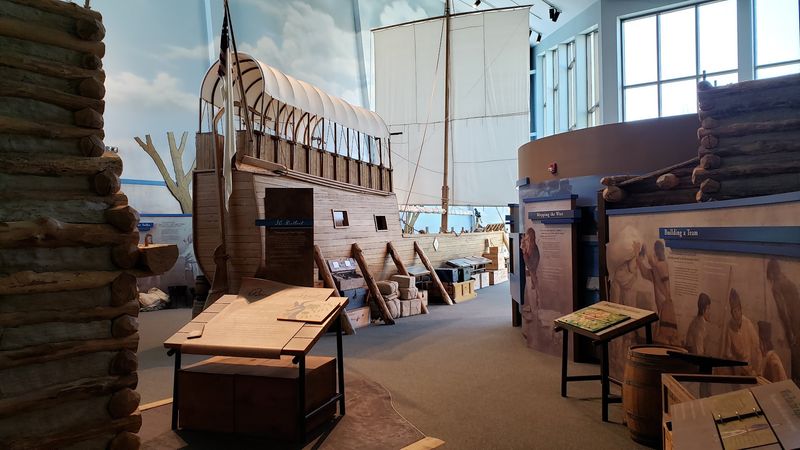
Step inside the 14,000-square-foot Interpretive Center and you’ll find six galleries that carry you through the entire expedition, phase by phase. Each space builds on the last, so you follow the journey almost like the crew did.
Hands-on exhibits keep things lively for curious minds of every age. Younger visitors love the interactive pieces, while grown-ups get lost in the maps, tools, and endless surprising facts.
One detail families get a kick out of is spotting the spelling mistakes in the explorers’ original notes. Little touches like that make the history feel wonderfully human rather than stuffy.
The displays go deep, covering the whole trip and not just the winter at camp. Plan on spending an hour or two soaking it all in, though history buffs could easily linger longer.
A few of the window-side panels have faded from years of sunlight, so some are trickier to read. That small quirk aside, the exhibits show off a real depth of research and care.
It’s a genuinely engaging museum that manages to teach without ever feeling like homework.
A Short Film In The Convergence Theater
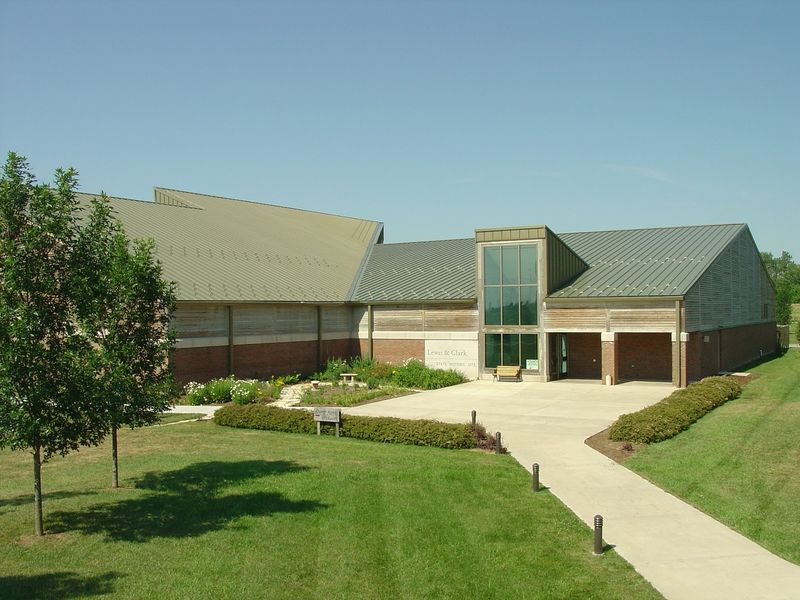
When your feet need a rest, the Convergence Theater offers the perfect pause in the visit. A short film, running around 12 to 15 minutes, sets the scene for everything you’re about to explore.
The comfortable, nicely sized theater gives you a chance to sit back and let the story wash over you. Many visitors mention the video as a genuinely worthwhile part of the day, not just filler between exhibits.
It works especially well as a starting point, giving kids and adults alike the big picture before wandering the galleries. That context makes the boat, the cabins, and the artifacts click into place.
Honest note: some folks have found the audio a little rough around the edges. It doesn’t ruin the experience, but it’s fair to set expectations.
What the film does best is tie the whole visit together, connecting the winter camp to the sweeping journey west. For families juggling short attention spans, a 12-minute movie hits the sweet spot.
Grab a seat, catch your breath, and let the expedition come to life on screen.
Friendly Volunteers Who Bring It To Life
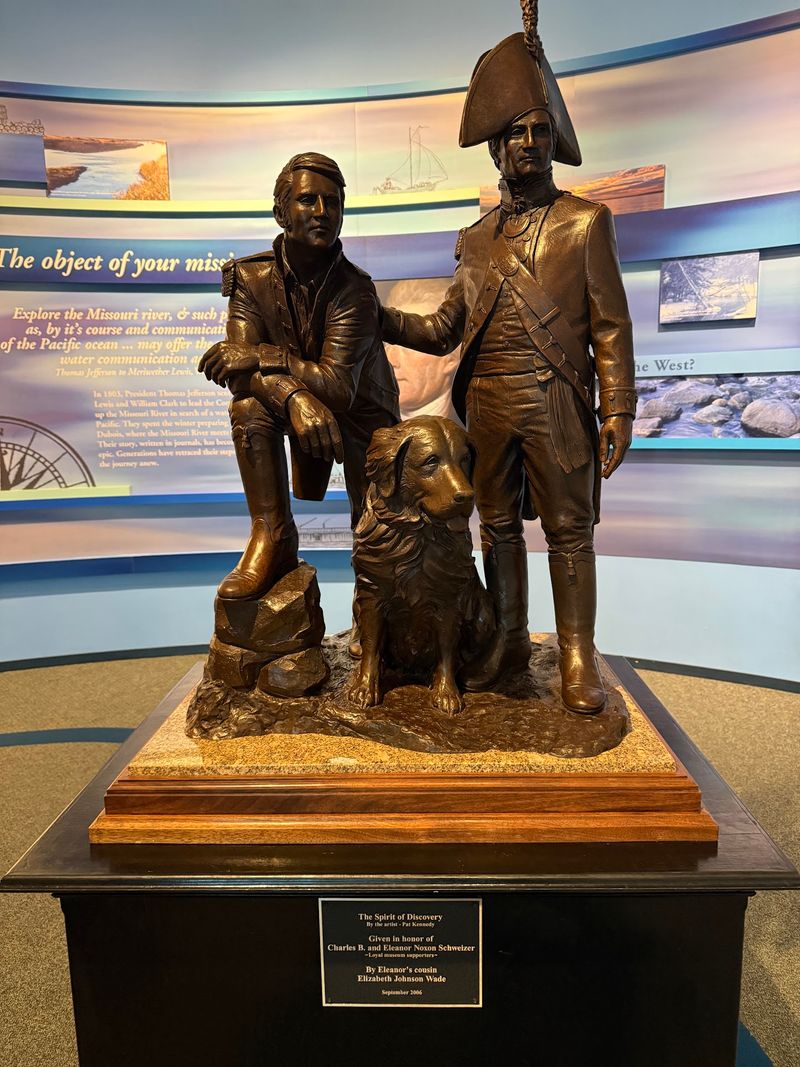
Ask anyone who’s visited what stuck with them most, and the answer often isn’t an exhibit at all. It’s the people.
The volunteers and staff here are the beating heart of the whole place.
Warm, knowledgeable, and clearly in love with the subject, they’re happy to chat, answer questions, and share stories you won’t find on any panel. That enthusiasm rubs off fast, even on kids who thought a history museum sounded dull.
Families with children get a special treat through the Junior Ranger program. Kids receive booklets that keep them hunting for answers throughout the museum, staying engaged instead of restless.
At the end, staff ask each child what they learned and lead them through a Junior Ranger oath. Little ones walk away beaming, and parents get a memory worth talking about for years.
Interpreters often roam the grounds too, adding color to the reconstructed camp. Their care makes the difference between a quick look and a real experience.
Simply put, the human touch here turns a good stop into a memorable one for the whole family.
Free Admission And Easy Planning
Here’s the part budget-minded Illinois families will love most: getting in costs nothing. Admission and parking are both completely free, with donations gently welcomed but never required.
The site sits at 1 Lewis and Clark Trail in Hartford, and it’s an easy drive of about 20 minutes from the Gateway Arch area. That makes it a natural add-on to a bigger river-region day trip.
Doors are open Wednesday through Sunday from 9 a.m. to 5 p.m., with the site closed Mondays and Tuesdays. During the summer stretch between Memorial Day and Labor Day, it often runs daily, so calling ahead to confirm hours is a smart move.
Getting around is a breeze thanks to paved parking, ramps, push-button doors, and wheelchair-friendly trails. Restrooms stay clean, and a modest gift shop offers keepsakes that won’t blow your budget.
A visit typically fills an hour or two, leaving plenty of daylight for other stops. Signing the guest book on your way in is a nice little tradition.
For a free outing this rich, it’s tough to beat the value.
River Views And A Verdict Worth Sharing
Save a little time to step outside, because the setting rivals the exhibits. A memorial stone and interpretive panel look out toward the meeting point of the Mississippi and Missouri Rivers, the same waters that carried the expedition west.
You can drive the levee road for wide river views or stretch your legs on the adjacent Confluence Trail. Both add a peaceful, scenic bookend to an afternoon of history.
The grounds feel calm and well kept, an easy place to slow down and soak in the surroundings. Springtime weekdays tend to be quiet, letting you explore at your own pace.
Pulling it all together, this recognized Site #1 on the Lewis and Clark National Historic Trail delivers big without asking for a penny. Nearby, the Confluence Tower offers panoramic views if you want to keep the day going.
For Illinois families chasing an affordable outing with real substance, it checks every box: free, educational, and genuinely memorable. Bring the kids, chat with the volunteers, and marvel at that keelboat.
It’s a humble local treasure that earns its bragging rights.