
This Remarkable Ohio Natural Wonder Tells A Story Written 12,000 Years Ago
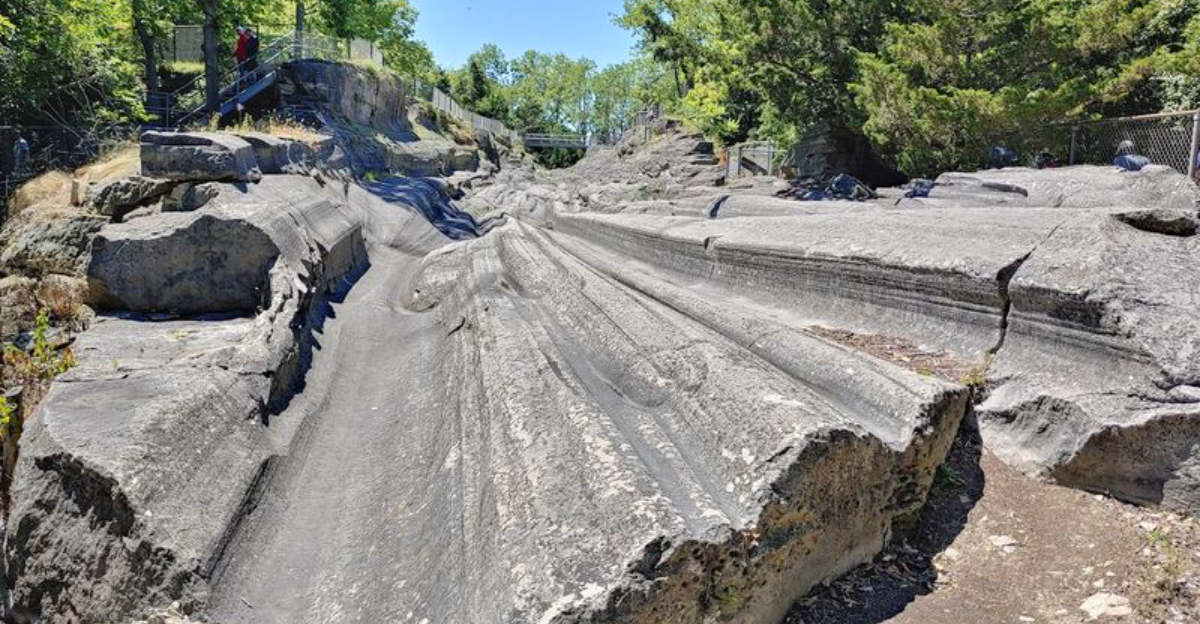
There is a place in Ohio where the landscape still holds the marks of something that happened around 12,000 years ago. Long before people lived here, powerful water flowing beneath a giant glacier carved deep lines into the limestone below.
Seeing those marks in person feels a little unreal. They are enormous, sharply defined, and still sitting out in the open on a small Lake Erie island.
This is not a replica or a museum piece. It is a real part of the natural world, preserved in plain sight.
What makes it even more impressive is what it reveals. Ancient glaciers, fossil-rich stone, and the raw force that shaped this part of Ohio all come together in one remarkable place.
It is one of the most fascinating natural history sites in the Midwest, and it leaves a lasting impression.
The Story Behind the Grooves
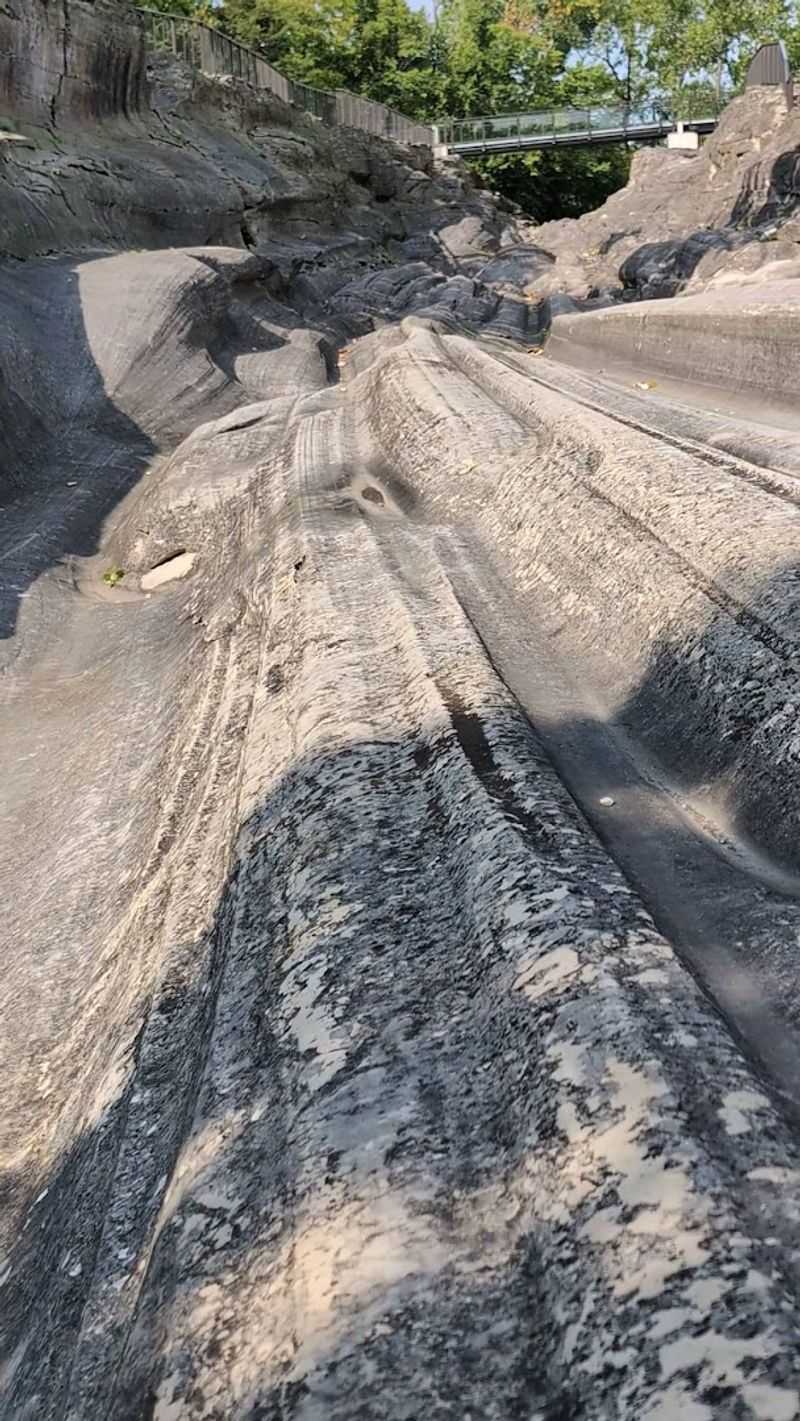
Most people drive past roadside geology without a second thought, but the Glacial Grooves Geological Preserve on Kelleys Island stops you cold the moment you see what is actually there.
Around 12,000 years ago, powerful water flowing beneath a giant glacier moved across what is now northern Ohio. That force carved slowly but relentlessly into the exposed limestone bedrock beneath.
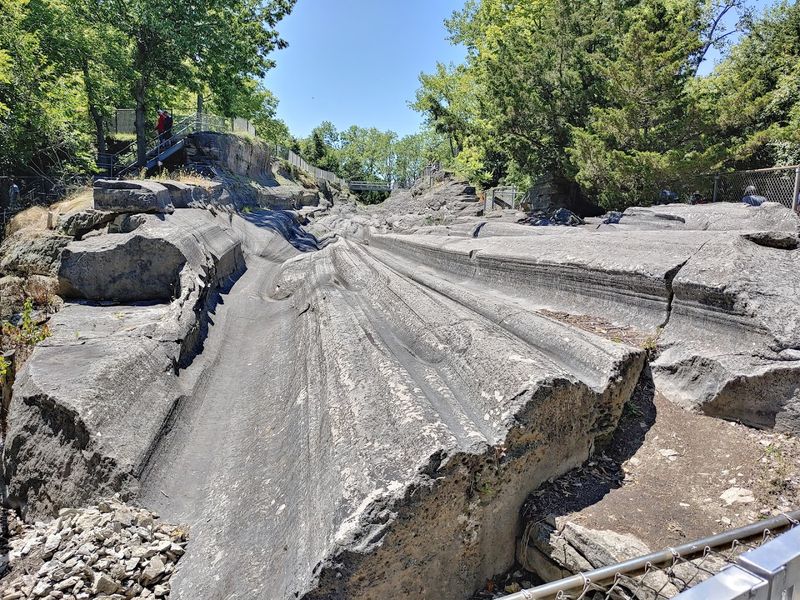
The result is a series of parallel grooves that are more than 400 feet long, about 33 feet wide, and 10 feet deep in places. Scientists consider this one of the largest and most accessible examples of glacial grooves in the world.
The preserve sits at 739 Division St, Kelleys Island, OH 43438, right in the heart of the island. The fact that this site survived at all is something of a minor miracle, since a neighboring limestone quarry removed much of the surrounding rock before preservation efforts stepped in.
What remains is breathtaking, and the story it tells about ancient ice is written in stone.
What the Landscape Actually Looks Like
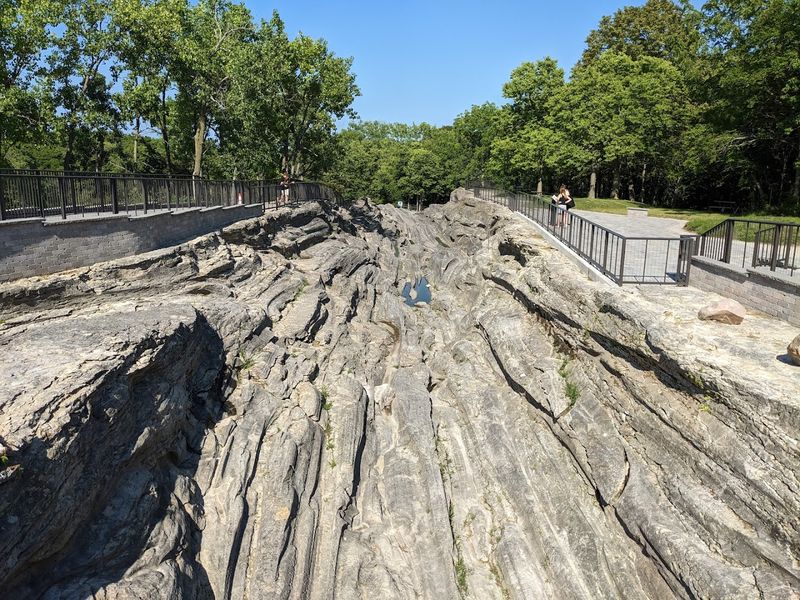
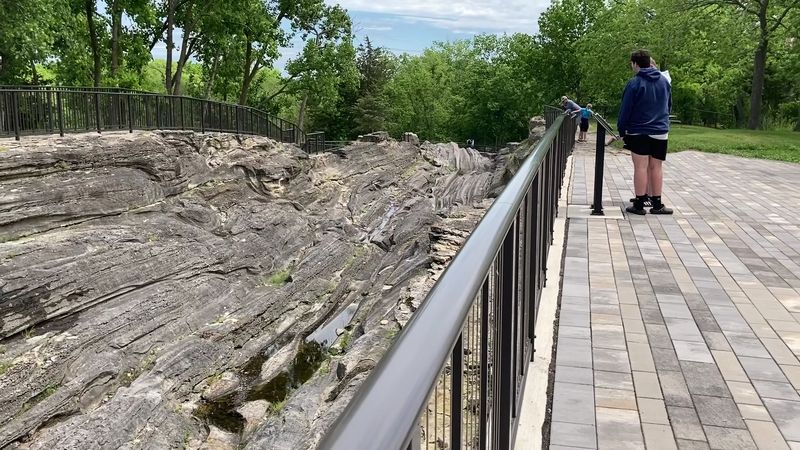
Nothing quite prepares you for the scale of it. You walk up to the viewing area and suddenly there it is, a long open trench of grooved limestone stretching out in front of you like something a giant dragged its fingers across.
The grooves run in nearly perfect parallel lines, smooth and curved at the bottom, with walls that rise sharply on either side. The limestone itself has a pale gray color that almost glows on a sunny day, and the contrast against the surrounding green trees makes it look almost unreal.
The site is set slightly below the surrounding ground level, which gives viewers on the walkway a clear overhead perspective of the full length of the grooves. You can see every detail from above, including the rippled texture along the walls where the ice pressed hardest.
The surrounding landscape is genuinely beautiful, with mature trees lining the edges and a quiet, natural atmosphere that feels completely separate from the rest of the busy island.
The Fossils Hidden in Plain Sight
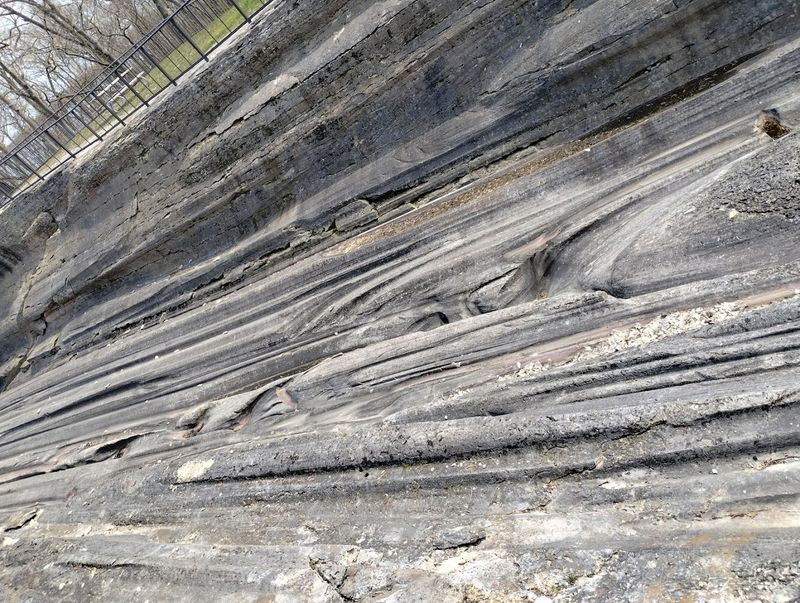
Here is something that surprises almost every first-time visitor: the limestone beneath your feet is packed with fossils. Long before any glacier arrived, this part of Ohio sat at the bottom of a shallow tropical sea.
The creatures that lived in that sea, including corals, brachiopods, and crinoids, left their impressions in the sediment when they passed on, and that sediment eventually hardened into the limestone you see today.
The fossils are embedded right in the rock walls and floor of the grooves, visible to the naked eye once you know what you are looking for.
The informational plaques around the site do a great job of pointing out what to look for and explaining how to identify different fossil types. My personal favorite discovery was a rounded coral impression sitting right at eye level on one of the exposed walls.
It is a strange and wonderful thing to stand in Ohio and realize you are looking at the remains of a tropical ocean that existed hundreds of millions of years ago.
Getting to Kelleys Island
Reaching the Glacial Grooves is part of the adventure, and it starts before you even set foot on the island. Kelleys Island sits in Lake Erie off the northern coast of Ohio, and most visitors arrive by ferry from Marblehead, though the island can also be reached by private boat or by air.
The Kelleys Island Ferry crossing from Marblehead takes about 20 minutes and runs year-round, weather permitting. You can bring your car across, but honestly, the island is small enough that a golf cart or bicycle works perfectly well for getting around.
Several rental shops near the ferry dock offer golf carts by the hour or the day, and that is genuinely the most fun way to explore. The preserve itself has dedicated golf cart parking, which tells you everything about how people typically get around on the island.
Plan your visit between late spring and early fall for the best experience. The ferry schedule shifts with the seasons, so checking ahead before your trip saves you from any unwanted surprises at the dock.
The Walkways and Viewing Areas
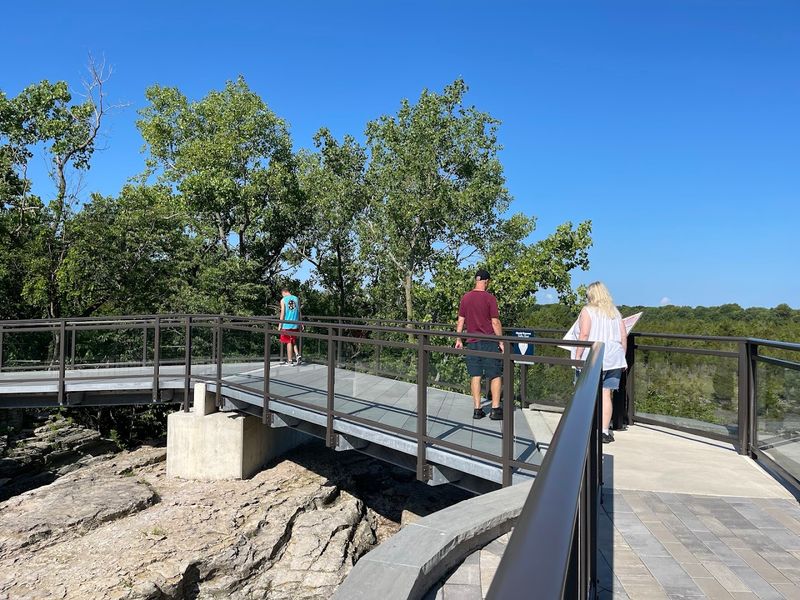
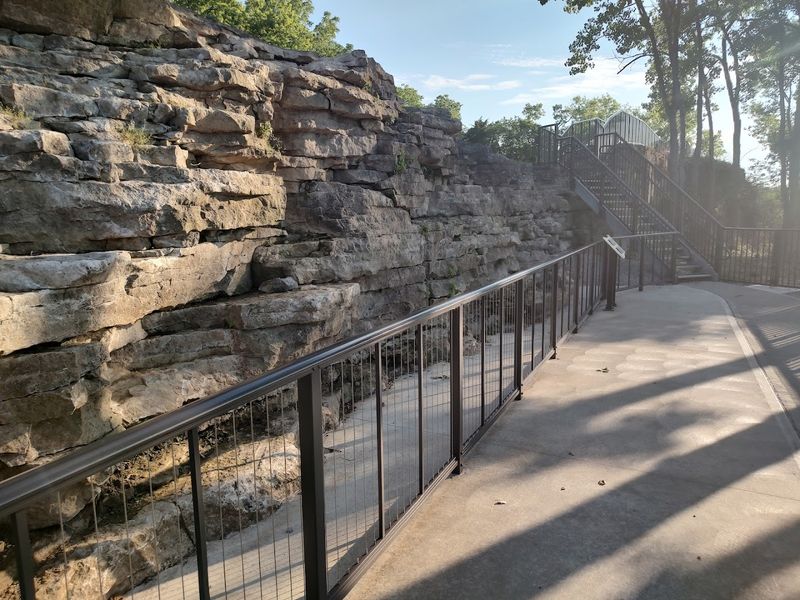
The preserve has gone through a serious renovation in recent years, and the results are impressive. Where there was once old chain-link fencing and worn stone paths, there are now wide custom paver walkways, high-quality railings, and multiple dedicated observation points.
A wide gravel accessible path runs from the parking area all the way up to the main observation area, making the site genuinely welcoming for visitors with mobility considerations. The bridge that crosses over the grooves has been widened, and the sightlines from every viewing spot are clear and unobstructed.
I spent a good chunk of time just moving from one observation point to the next, because each angle reveals something slightly different about the shape and depth of the grooves. The designers clearly thought carefully about how to let people experience the site without disturbing it.
One original section of the old pedestrian stone walkway has been kept intact as a nod to the history of the preserve itself, which is a small but thoughtful detail worth noticing when you visit.
What the Informational Signs Teach You
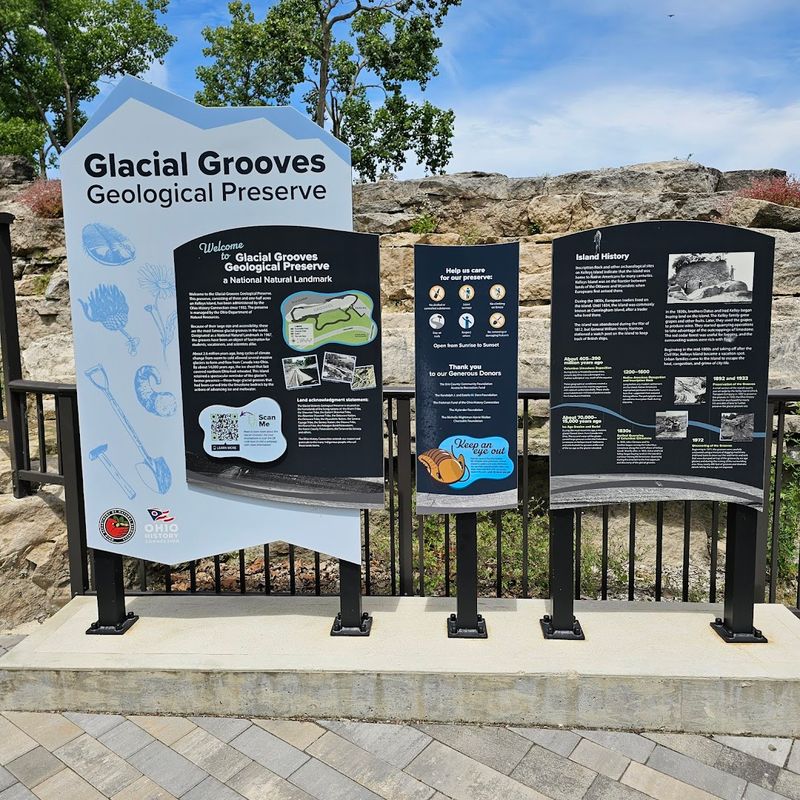
Science education does not always stick, but the interpretive displays at this preserve have a way of making ancient geology feel genuinely exciting. The signs are well-written, visually clear, and placed at exactly the right moments along the path.
One display explains how the Laurentide Ice Sheet advanced south across the Great Lakes region, carrying embedded rocks that ground against the bedrock below. Another walks you through the timeline of glacial activity and explains why the grooves at this site are so unusually well preserved.
There are also signs dedicated to the fossil record in the limestone, complete with labeled diagrams that help you match what you are reading to what you are actually seeing in the rock. My favorite detail was a scale comparison showing just how thick the glacier was when it passed over this spot, something like a mile of ice overhead.
Kids especially seem to respond well to these displays, and I watched more than a few young visitors suddenly get very interested in rocks once the signs connected the dots for them.
The Old Quarry Overlook
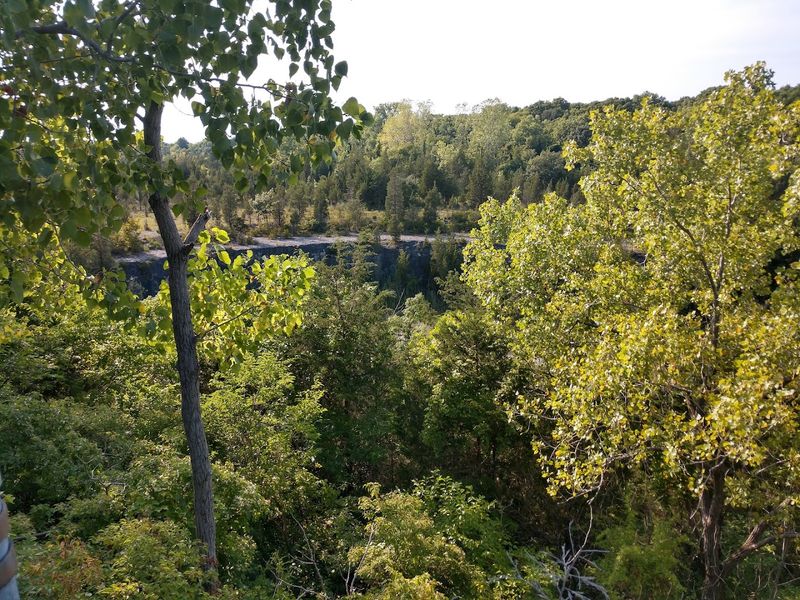
Most visitors focus entirely on the grooves themselves, and that is understandable. But the trail around the preserve also leads to several points where you can look out over the old limestone quarry that once operated right next door.
The quarry is no longer active, and nature has started to reclaim parts of it, but the exposed rock walls still show the dramatic cuts made by industrial blasting decades ago. The contrast between those sharp, jagged quarry walls and the smooth, rounded glacier-carved grooves nearby is genuinely striking.
Standing at one of the overlook points, you can see how much of the original glacial groove field was lost to quarrying before the site was protected. It is a sobering reminder that preservation efforts matter and that what remains today survived partly by luck.
The views from the upper trail sections are also just beautiful in their own right, looking out over the treetops and catching glimpses of Lake Erie in the distance. It adds a completely different dimension to the visit beyond the geology alone.
Best Time to Visit and Practical Tips
The preserve is open daily from sunrise to sunset, which gives you a wide window to plan around. Arriving early in the morning on a weekday is the best strategy if you want the place mostly to yourself, since weekends can get crowded, especially in July and August.
There is no admission fee to enter the preserve, which makes it one of the best free natural history experiences in Ohio. Free parking is available on site, with a dedicated section for golf carts that fills up fast on busy days.
Wear comfortable walking shoes since the paths are well maintained but the terrain around the edges of the site can be uneven. Sunscreen is worth bringing because the main viewing area is largely open to the sky with limited shade.
The preserve can be reached at 419-746-2546 if you need current information before your visit. Combining the grooves with nearby North Shore Alvar and the state park beach makes for a full and satisfying day on the island.
Why This Site Matters to Science
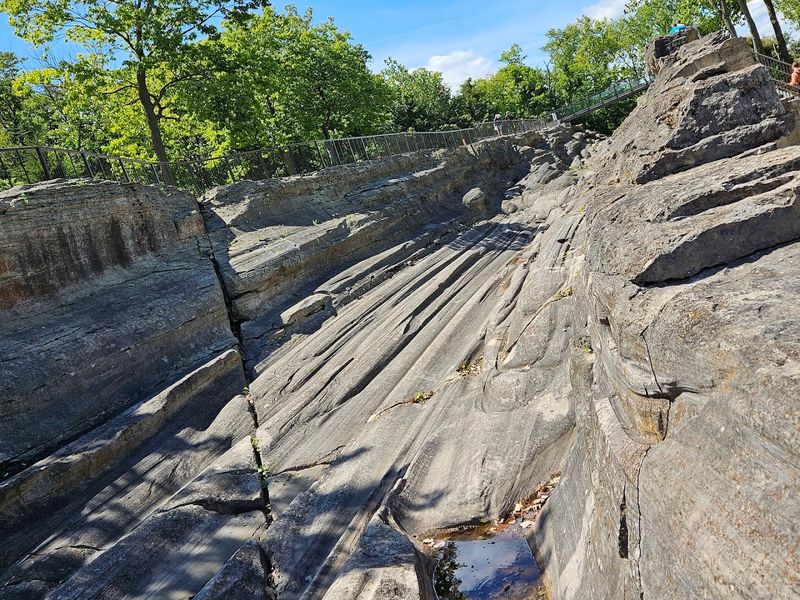
At nearly 400 feet long, the glacial grooves at Kelleys Island are recognized as the largest and most accessible example of their kind on the planet. That is not a local tourism claim.
It is a designation backed by geologists who have studied glacial landforms across North America and Europe.
The grooves provide direct physical evidence of the direction and movement of the Laurentide Ice Sheet as it advanced and retreated across the Great Lakes region. Researchers can read the angle, depth, and shape of the grooves to understand how the glacier moved and how much pressure it exerted on the rock below.
The site also contributes to a broader understanding of how the Great Lakes themselves were formed, since the same glacial forces that carved these grooves also scoured out the basins that eventually filled with water to create the lakes we know today.
For anyone with even a passing interest in Earth science, standing next to these grooves and knowing what they represent is a quietly powerful experience that no textbook fully captures.
A Place Worth Coming Back To
There are destinations you visit once and check off a list, and then there are places that stay with you and keep pulling you back. The Glacial Grooves Geological Preserve at Kelleys Island falls firmly into the second category.
Part of it is the sheer physical presence of the site. The grooves are big enough and old enough that they put your own timeline in perspective in a way that feels grounding rather than overwhelming.
Part of it is also the setting, a quiet island in Lake Erie where the pace of life slows down and the natural world feels close.
Visitors who return after several years consistently notice the improvements to the walkways and facilities, and the preserve continues to be maintained with genuine care.
The combination of free access, excellent educational content, and a truly world-class geological feature makes it one of the most underrated natural attractions in Ohio.
Whether it is your first visit or your fifth, the grooves always have something new to offer, and the island always gives you a good reason to stay a little longer.